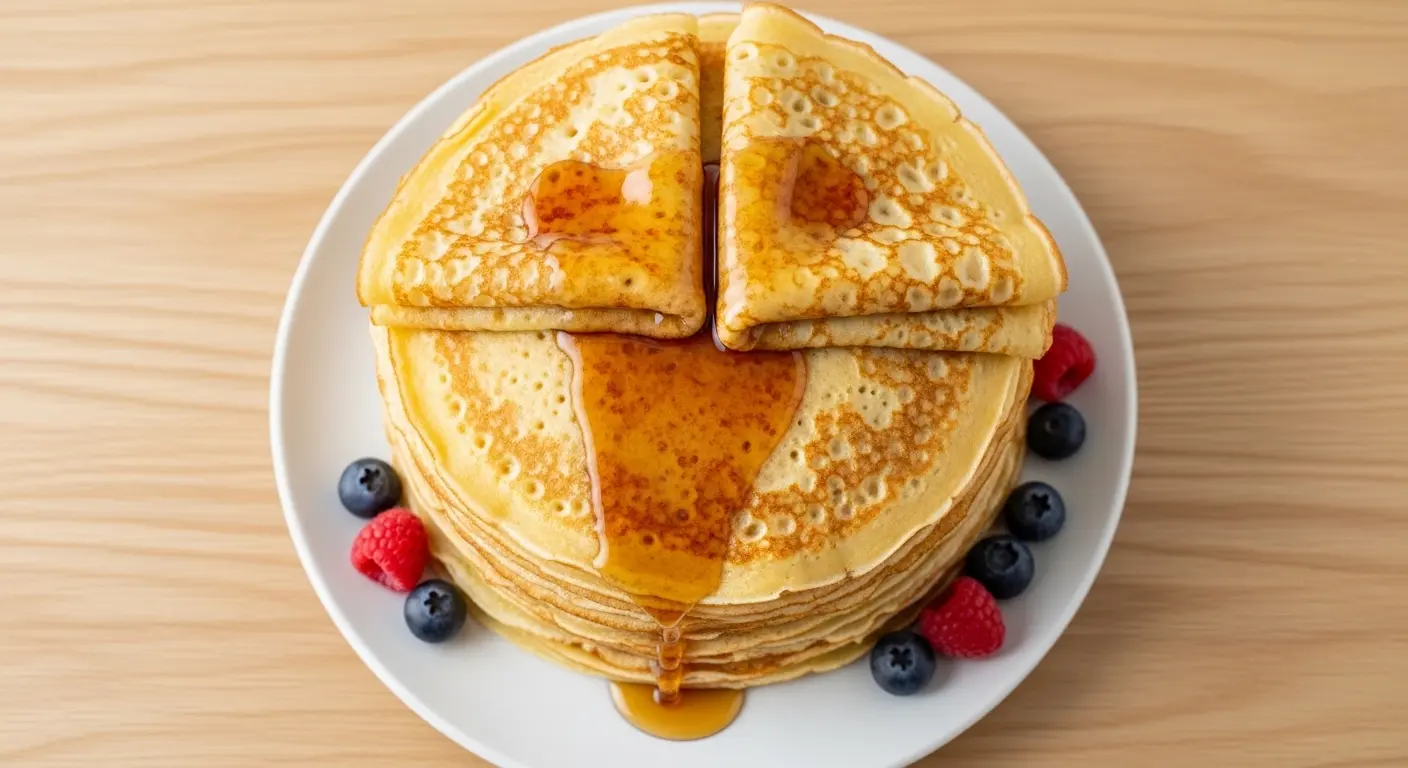
If you’ve ever thought making crepes at home was too complicated, I’m here to change your mind. This easy crepe recipe uses simple ingredients you probably already have in your kitchen and comes together in just minutes.
The magic of crepes lies in their versatility. You can fill them with sweet toppings like fresh berries and whipped cream for breakfast, or savory ingredients like ham and cheese for dinner.
Unlike thick, fluffy pancakes, crepes are delicate, thin, and have those beautiful lacy edges that make them look restaurant-quality. The best part is that once you master the simple swirling technique, you’ll be making perfect crepes every single time.
This recipe has been tested countless times and produces crepes that are tender enough to fold without tearing, yet sturdy enough to hold all your favorite fillings. The addition of melted butter in the batter ensures each crepe has a subtle richness and helps prevent sticking in the pan.
Resting the batter is a crucial step that many people skip, but it makes all the difference. During this time, the flour fully absorbs the liquid, resulting in a smoother batter and more tender crepes.
You might also enjoy: Easy French Toast Recipe

Why You’ll Love This Easy Crepe Recipe
This recipe delivers consistently perfect results without any fancy equipment or special skills. You’ll love how forgiving it is, even if your first crepe isn’t picture-perfect.
The method is simple and stress-free. Using a blender eliminates lumps and cuts your prep time in half. You won’t need to spend time whisking or worrying about flour clumps.
It’s incredibly versatile. Make a batch for breakfast with sweet toppings, then use the same batter for savory lunch crepes filled with vegetables and cheese. The neutral flavor works beautifully with any filling you can imagine.
The ingredients are budget-friendly. You won’t need to make a special trip to the store. Flour, eggs, milk, and butter are pantry staples that most home cooks always have on hand.
They freeze wonderfully. Make a double batch and freeze extras with parchment paper between each crepe. You’ll have a quick breakfast or dessert ready in minutes whenever the craving hits.
Kids love helping with these. The swirling motion is fun to master, and children feel proud when they flip their first crepe successfully. It’s a wonderful recipe to teach basic cooking skills.
Ingredients
This recipe requires just a handful of basic ingredients that work together to create perfectly tender, delicate crepes. The proportions are carefully balanced to ensure the batter spreads easily and cooks evenly.
- 1 cup (125g) all-purpose flour
- 2 large eggs, room temperature
- 1/2 cup (120ml) whole milk, room temperature
- 1/2 cup (120ml) water, room temperature
- 2 tablespoons (28g) unsalted butter, melted and cooled
- 1/4 teaspoon salt
- 1 tablespoon (12g) granulated sugar (optional, for sweet crepes)
- Additional butter for greasing the pan
Read Also: Classic French Toast Recipe
Kitchen Equipment Needed
Having the right tools makes the crepe-making process smooth and enjoyable. While you don’t need specialized equipment, a few key items will help you achieve the best results.
- Blender or large mixing bowl with whisk
- 8-inch or 10-inch non-stick skillet or crepe pan
- Measuring cups and spoons
- Rubber spatula
- 1/4 cup measuring cup or small ladle
- Plate for stacking finished crepes
- Paper towel for greasing the pan
Recommended Products for This Recipe
These carefully selected products will help you achieve restaurant-quality crepes with ease and consistency.
1. Le Creuset Toughened Nonstick PRO Fry Pan
This professional-grade nonstick pan distributes heat evenly, preventing hot spots that can burn your crepes. The durable coating ensures your crepes release effortlessly every time, and the comfortable handle stays cool during cooking. This pan will serve you well for years of crepe making.
2. Vitamix Professional Series 750 Blender
A high-powered blender creates the smoothest batter possible, eliminating any lumps or inconsistencies. The variable speed control lets you blend gently to avoid overworking the batter. While any blender works, this one makes the process effortless and produces superior results.
3. OXO Good Grips Silicone Flexible Turner
The thin, flexible edge of this turner slides under delicate crepes without tearing them. Its heat-resistant silicone won’t scratch your nonstick pan, and the angled design gives you better control when flipping. This tool makes the intimidating part of crepe-making much easier.
4. European Butter, High-Fat Content
Premium European-style butter with higher fat content adds exceptional richness and flavor to your crepes. The extra fat also improves the texture, making your crepes more tender and preventing them from becoming rubbery. It’s a small upgrade that makes a noticeable difference.
This pairs beautifully with Belgian Waffle Recipe for a complete breakfast spread.
Step-by-Step Instructions
Follow these detailed instructions to create perfectly thin, golden crepes that would impress any French chef. Take your time with the first few crepes as you get comfortable with the technique.
1. Prepare the Crepe Batter
- Add the flour and salt to your blender (or large mixing bowl if whisking by hand)
- Crack the eggs into the blender, making sure they’re at room temperature for better blending
- Pour in the milk, water, and melted butter that has cooled to room temperature
- Add the sugar if making sweet crepes
- Blend on medium speed for 15-20 seconds until completely smooth, or whisk vigorously if making by hand
- Stop the blender and scrape down the sides with a rubber spatula to ensure no flour pockets remain
- Blend for an additional 5-10 seconds to incorporate any scraped-down ingredients
- The batter should have the consistency of heavy cream and pour easily
2. Rest the Batter
- Transfer the batter to a bowl or pitcher if it’s in the blender
- Cover the container with plastic wrap or a clean kitchen towel
- Refrigerate for at least 30 minutes, or up to 24 hours for best results
- This resting period allows the flour to fully hydrate and any air bubbles to dissipate
- The gluten in the flour also relaxes during this time, ensuring tender crepes
- Before using, give the batter a gentle stir as some separation may have occurred
- If the batter seems too thick after resting, add 1-2 tablespoons of water to thin it slightly
3. Heat Your Pan
- Place your non-stick skillet or crepe pan over medium heat
- Let it heat for 2-3 minutes until evenly hot but not smoking
- Test the temperature by sprinkling a few drops of water on the surface
- The water should sizzle and evaporate immediately when the pan is ready
- Take a stick of butter or use a paper towel dipped in melted butter
- Lightly coat the entire bottom of the pan with a thin layer of butter
- You want just enough to prevent sticking without creating puddles
4. Pour and Swirl the Batter
- Hold the pan handle in your dominant hand and lift it slightly off the heat
- Pour approximately 1/4 cup of batter into the center of the hot pan
- Immediately tilt and rotate the pan in a circular motion
- The batter should flow toward the edges and create a thin, even layer
- Work quickly as the batter begins to set within seconds
- If you have bare spots, add a tiny bit more batter and tilt to fill them
- Return the pan to the heat once the batter has spread evenly
- The entire bottom of the pan should be covered with a thin layer of batter
5. Cook the First Side
- Let the crepe cook undisturbed for 45-60 seconds over medium heat
- Watch for the edges to begin pulling away from the sides of the pan
- The surface should appear mostly dry with small bubbles forming
- The underside will develop a light golden color with delicate brown spots
- Resist the urge to peek or lift the crepe too early
- When the edges look dry and lacy, gently slide a rubber spatula under one edge
- Loosen the entire crepe carefully, working your way around if needed
6. Flip the Crepe
- Once loosened, use your fingers or the spatula to grip the edge of the crepe
- Quickly but gently flip it over in one smooth motion
- If you’re nervous, you can use a spatula to help guide it
- The second side cooks much faster, usually only 20-30 seconds
- Look for light golden spots to develop on this side as well
- The crepe should move freely in the pan when you shake it gently
- Don’t worry if your first few crepes aren’t perfect; they’re still delicious
7. Remove and Stack
- Slide the finished crepe onto a plate when both sides are lightly golden
- Stack the crepes directly on top of each other as you finish cooking
- The residual heat and steam will keep them soft and pliable
- Wipe the pan with your butter-coated paper towel between each crepe
- This ensures consistent browning and prevents sticking
- Continue the process until all the batter is used
- Adjust the heat if needed; if crepes brown too quickly, reduce to medium-low
8. Serve or Store
- Serve the crepes immediately while still warm for the best texture
- Fill them with your chosen sweet or savory ingredients
- Fold them in quarters, roll them into cylinders, or fold them in half
- If not serving immediately, cover the stack with foil to keep them warm
- For storage, let the crepes cool completely before stacking with parchment paper between each one
- Transfer to an airtight container or zip-top bag
- Refrigerate for up to 2 days or freeze for up to 2 months
Another favorite: Easy Waffle Recipe
Tips for Success
These tried-and-true tips will help you avoid common mistakes and create perfect crepes every single time you make this recipe.
Rest the batter without exception. Even if you’re in a rush, give the batter at least 30 minutes in the refrigerator. This step is non-negotiable for tender, non-rubbery crepes. The resting time allows the flour proteins to relax and the starches to absorb liquid properly.
Maintain consistent heat throughout cooking. Medium heat is your sweet spot for most stovetops. If your crepes are browning too quickly or burning, reduce the heat slightly. If they’re taking too long to set, increase it just a bit. Every stove is different, so adjust accordingly.
Use room temperature ingredients for smoother batter. Cold eggs and milk don’t blend as smoothly and can cause the melted butter to solidify into small clumps. Let your eggs and milk sit on the counter for 30 minutes before starting.
Master the swirl technique with practice. Your first crepe is almost always a practice round. Don’t get discouraged if it’s thick, oddly shaped, or tears. By the third or fourth crepe, you’ll find your rhythm. The key is to work quickly before the batter sets.
- Grease the pan lightly between each crepe
- Pour the batter into the center, not around the edges
- Use a consistent amount of batter for uniform size
- Let the crepe cook undisturbed until the edges dry
- Cool melted butter before adding to the batter
- Stir gently after resting to recombine any separation
- Don’t flip too early or the crepe will tear
Read Also: Buttermilk Pancake Recipe
Serving Suggestions
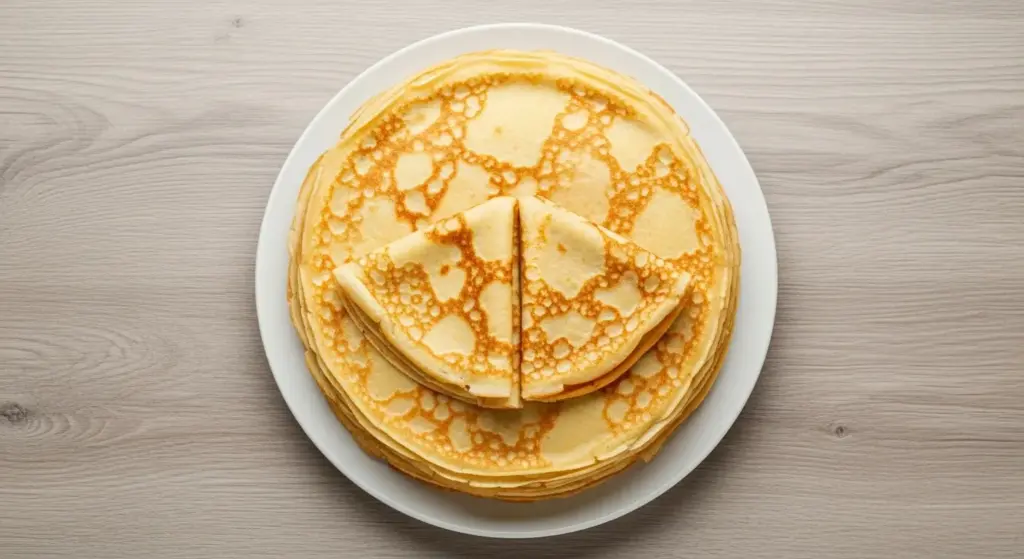
Crepes shine when paired with complementary toppings and fillings that enhance their delicate texture. The neutral flavor makes them a perfect canvas for endless combinations.
For sweet breakfast crepes, classic French-style fillings work beautifully. Spread with butter, sprinkle with granulated sugar, and finish with a squeeze of fresh lemon juice. Roll them up and dust with powdered sugar for an elegant presentation. Fresh berries with whipped cream create a light, refreshing option. Nutella spread with sliced bananas satisfies chocolate cravings. Warm berry compote topped with vanilla ice cream transforms crepes into a dinner-party-worthy dessert.
For savory variations, the possibilities are endless. Fill with Classic Egg Salad for a protein-packed lunch. Sautéed mushrooms with gruyere cheese make an earthy, sophisticated filling. Ham and swiss cheese with dijon mustard creates a French cafe-style meal. Spinach, feta, and sun-dried tomatoes offer Mediterranean flavors. Smoked salmon with cream cheese and capers brings brunch elegance to your table.
- Fresh strawberries and whipped cream
- Nutella with toasted hazelnuts
- Lemon curd and blueberries
- Caramelized apples with cinnamon
- Ricotta cheese with honey
- Classic Deviled Eggs as a side
- Scrambled eggs with cheddar
- Grilled vegetables with goat cheese
- Chicken and mushroom in cream sauce
- Ratatouille filling for dinner
For a lighter option, try: Air Fryer French Toast Recipe
Variations to Try
Once you’ve mastered the basic recipe, these creative variations will keep your crepe game exciting and delicious. Each adds a unique twist while maintaining the essential crepe texture.
Chocolate crepes add indulgence to dessert time. Replace 2 tablespoons of flour with unsweetened cocoa powder for rich chocolate flavor. These work beautifully with vanilla ice cream, fresh cherries, or a drizzle of chocolate ganache. The subtle chocolate taste complements both sweet and surprisingly savory fillings like cheese.
Whole wheat crepes offer a nuttier, healthier option. Substitute half the all-purpose flour with whole wheat flour for added fiber and nutrients. The texture remains tender while providing a more complex flavor. These pair especially well with savory fillings and roasted vegetables.
Herb and cheese crepes elevate savory preparations. Add 2 tablespoons of finely chopped fresh herbs like parsley, chives, or dill to the batter along with 1/4 cup of grated parmesan. These make exceptional vessels for egg scrambles, grilled chicken, or sautéed greens.
- Lemon zest crepes (add 1 teaspoon finely grated lemon zest)
- Vanilla bean crepes (add 1 teaspoon vanilla extract)
- Buckwheat crepes (replace all flour with buckwheat flour)
- Gluten-free crepes (use gluten-free 1-to-1 flour blend)
- Cinnamon sugar crepes (add 1/2 teaspoon cinnamon)
- Orange crepes (add 1 tablespoon orange zest)
- Savory cheese crepes (add 1/4 cup shredded cheese to batter)
Read Also: Old Fashioned Pancake Recipe
Storage and Reheating
Proper storage keeps your crepes fresh and ready to enjoy for days or even months. Follow these guidelines to maintain their perfect texture.
Refrigerator storage works well for short-term keeping. Let the crepes cool completely to room temperature before stacking. Place a small square of parchment paper or wax paper between each crepe to prevent sticking. Transfer the stack to an airtight container or wrap tightly in plastic wrap. Store in the refrigerator for up to 3 days.
Freezing extends shelf life significantly. Layer cooled crepes with parchment paper between each one, then place the entire stack in a large freezer-safe zip-top bag. Press out as much air as possible before sealing. Label with the date and freeze for up to 2 months. The parchment paper allows you to remove individual crepes without thawing the entire batch.
- Thaw frozen crepes in the refrigerator overnight
- Microwave individual crepes for 15-20 seconds to warm
- Reheat a stack wrapped in foil at 300°F (150°C) for 10 minutes
- Pan-warm individual crepes over low heat for 30 seconds per side
- Avoid high heat which makes them rubbery
- Don’t microwave too long or edges will become tough
- Fill crepes just before serving for best texture
You might also enjoy: German Pancake Recipe
Nutritional Facts
Per serving (1 plain crepe, makes approximately 12 crepes):
- Calories: 62
- Total Fat: 2.5g
- Saturated Fat: 1.4g
- Cholesterol: 35mg
- Sodium: 60mg
- Total Carbohydrates: 8g
- Dietary Fiber: 0.3g
- Sugars: 1g (if using optional sugar)
- Protein: 2g
- Vitamin A: 3% DV
- Calcium: 2% DV
- Iron: 4% DV
Note: Nutritional values are approximate and will vary based on specific brands used and optional ingredients added. Fillings and toppings will significantly increase these values.
This technique works wonderfully in Ihop Pancake Recipe as well.
Health Benefits of Key Ingredients
The simple ingredients in crepes provide more nutritional value than you might expect, especially when compared to heavier breakfast options.
Eggs deliver complete protein and essential nutrients. Each crepe contains a portion of egg that provides high-quality protein, vitamin D, B vitamins, and choline. These nutrients support muscle health, brain function, and energy production. The protein also helps keep you satisfied longer than carbohydrate-only breakfasts.
Milk contributes calcium and vitamin D for bone health. Using whole milk provides fat-soluble vitamins that help your body absorb nutrients more efficiently. The calcium content supports strong bones and teeth, while vitamin D aids in calcium absorption and immune function.
All-purpose flour supplies energy through complex carbohydrates. While not a whole grain, the flour in crepes provides quick energy for your morning. The relatively small amount per crepe keeps the calorie count reasonable compared to thick pancakes or waffles.
- Lower in calories than traditional pancakes
- Provides balanced macronutrients from eggs, milk, and flour
- Contains B vitamins for energy metabolism
- Offers protein to support satiety
- Supplies calcium for bone health
- Includes healthy fats from butter for nutrient absorption
- More easily digestible than heavy breakfast foods
- Versatile enough to pair with nutrient-dense fillings
Read Also: Classic Hummus Recipe
Frequently Asked Questions
1. Why do I need to rest the crepe batter?
Resting allows the flour to fully absorb the liquid, which creates a smoother batter and more tender crepes. During this time, the gluten strands relax, preventing tough or rubbery texture.
The resting period also lets air bubbles rise to the surface and dissipate, resulting in crepes with a more uniform appearance. Even a 30-minute rest makes a noticeable difference in the final texture.
2. Can I make crepes without a blender?
Absolutely, you can whisk the ingredients by hand in a large bowl. Start by whisking the eggs, then gradually add the milk and water while whisking constantly.
Add the flour and salt last, whisking vigorously to eliminate any lumps. The key is to whisk thoroughly until completely smooth, which takes a bit more effort than using a blender but produces equally delicious results.
3. Why are my crepes tearing when I flip them?
Crepes tear when they’re flipped too early, before the edges have set properly. Wait until you see the edges pulling away from the pan and the surface looks mostly dry.
Another common cause is insufficient butter in the pan or batter that’s too thin. Make sure to butter the pan lightly between each crepe and check your batter consistency if tearing continues.
4. Can I make the batter ahead of time?
Yes, crepe batter actually improves with time in the refrigerator. You can make it up to 24 hours in advance for even better results.
Store the batter in an airtight container in the refrigerator and give it a gentle stir before using. If it seems too thick after sitting, add a tablespoon or two of water to thin it back to heavy cream consistency.
5. What’s the difference between crepes and pancakes?
Crepes contain more liquid and less flour than pancakes, creating a much thinner batter that spreads easily. They also typically include melted butter in the batter rather than just using it for greasing.
Pancakes are thick and fluffy from leavening agents like baking powder, while crepes are thin and delicate with no leavening. The cooking technique differs too, with crepes requiring a swirling motion to spread the batter thin.
For a complete seafood feast: Lobster Bisque Recipe
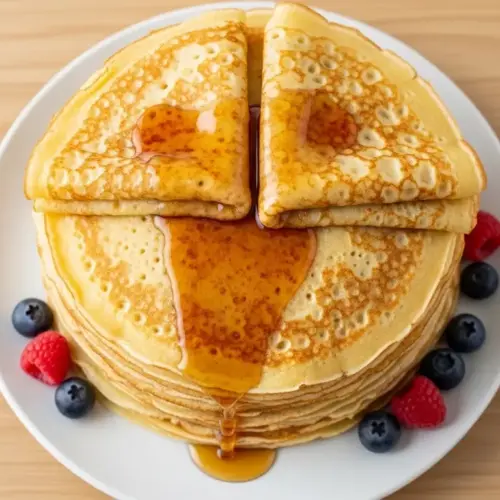
Easy Crepe Recipe

Equipment
- Blender or large mixing bowl with whisk - For smooth, lump-free batter
- 8-inch or 10-inch non-stick skillet or crepe pan - Le Creuset Toughened Nonstick PRO Fry Pan recommended
- Measuring cups and spoons
- Rubber spatula - For scraping down blender sides
- 1/4 cup measuring cup or small ladle - For portioning batter
- Plate - For stacking finished crepes
- Paper towel - For greasing the pan
- Silicone Flexible Turner - OXO Good Grips recommended (optional)
- Airtight container or zip-top bag - For storage (optional)
Ingredients
- 1 cup all-purpose flour - 125g
- 2 large eggs - room temperature
- 1/2 cup whole milk - 120ml, room temperature
- 1/2 cup water - 120ml, room temperature
- 2 tablespoons unsalted butter - 28g, melted and cooled
- 1/4 teaspoon salt
- 1 tablespoon granulated sugar - 12g (optional, for sweet crepes)
- additional butter - for greasing the pan
Suggested Sweet Fillings
- fresh berries
- whipped cream
- lemon juice - fresh, with granulated sugar and butter
- Nutella
- bananas - sliced
- lemon curd
- blueberries
- caramelized apples - with cinnamon
- ricotta cheese - with honey
Suggested Savory Fillings
- ham
- Swiss cheese
- Dijon mustard
- sautéed mushrooms - with gruyere cheese
- spinach
- feta cheese
- sun-dried tomatoes
- smoked salmon
- cream cheese
- capers
- scrambled eggs - with cheddar cheese
- grilled vegetables - with goat cheese
- chicken - with mushroom cream sauce
- ratatouille
Instructions
- Add flour, salt, eggs, milk, water, melted butter, and sugar (if using) to a blender. Blend on medium speed for 15-20 seconds until smooth, scraping down sides as needed.
- Transfer batter to a bowl, cover, and refrigerate for at least 30 minutes (or up to 24 hours). Stir gently before using.
- Heat an 8-10 inch non-stick skillet over medium heat for 2-3 minutes. Lightly grease with butter using a paper towel.
- Pour ¼ cup batter into the center of the hot pan. Immediately tilt and rotate the pan to spread batter thinly and evenly over the entire bottom.
- Cook the crepe undisturbed for 45-60 seconds until edges pull away and surface appears mostly dry with small bubbles. Loosen edges with a spatula.
- Quickly and gently flip the crepe using your fingers or a spatula. Cook the second side for 20-30 seconds until light golden spots appear.
- Slide the finished crepe onto a plate and stack directly on top of others. Re-grease the pan between each crepe and continue until all batter is used.
- Serve warm with sweet or savory fillings. Store cooled crepes with parchment paper between each in an airtight container for up to 3 days refrigerated or 2 months frozen.
Notes
- Rest the batter without exception: Even 30 minutes makes a noticeable difference for tender, non-rubbery crepes.
- Use room temperature ingredients: Cold eggs and milk can cause melted butter to solidify into clumps. Let ingredients sit out for 30 minutes before starting.
- Maintain consistent medium heat: Adjust up or down as needed. If crepes brown too quickly, reduce heat; if too slow, increase slightly.
- The first crepe is always a practice round: Don’t get discouraged if it tears or is oddly shaped. You’ll find your rhythm by the third or fourth crepe.
- Make-ahead option: Batter can be made up to 24 hours in advance. Store in an airtight container in the refrigerator and stir before using.
- Freezing instructions: Cool crepes completely, stack with parchment paper between each, and seal in a freezer bag. Freeze for up to 2 months.
- Reheating: Microwave individual crepes for 15-20 seconds, or reheat a stack wrapped in foil at 300°F (150°C) for 10 minutes. Avoid high heat which makes them rubbery.
- Gluten-free variation: Substitute all-purpose flour with a gluten-free 1-to-1 flour blend for excellent results.
- Chocolate crepes: Replace 2 tablespoons of flour with unsweetened cocoa powder for rich chocolate flavor.
- Savory herb crepes: Add 2 tablespoons finely chopped fresh herbs (parsley, chives, or dill) and ¼ cup grated Parmesan to the batter.
Final Thoughts
Making crepes at home is one of those skills that seems intimidating at first but becomes second nature with just a little practice. Once you’ve made a batch or two, you’ll wonder why you ever thought they were difficult.
The beauty of this easy crepe recipe lies in its simplicity and versatility. You can make sweet crepes for Sunday brunch, savory ones for a light dinner, or both from the same batch of batter.
Give this recipe a try this weekend and discover how rewarding homemade crepes can be. I’d love to hear how yours turn out, so please leave a comment below sharing your favorite filling combinations or any tips you discover along the way!
Recommended:
- Basic Crepe Recipe
- French Toast Casserole Recipe
- Breakfast Casserole Recipe
- Kodiak Pancake Recipe
- Gluten Free Pancake Recipe
- Betty Crocker Pancake Recipe
- Pancake Recipe Without Milk
- Filipino Hot Cake Recipe
- Easy Granola Recipe
- Homemade Granola Recipe