If you have ever stood in your kitchen on a lazy weekend morning, wondering what to make for breakfast, a classic french toast recipe is probably one of the first things that comes to mind. And for good reason.
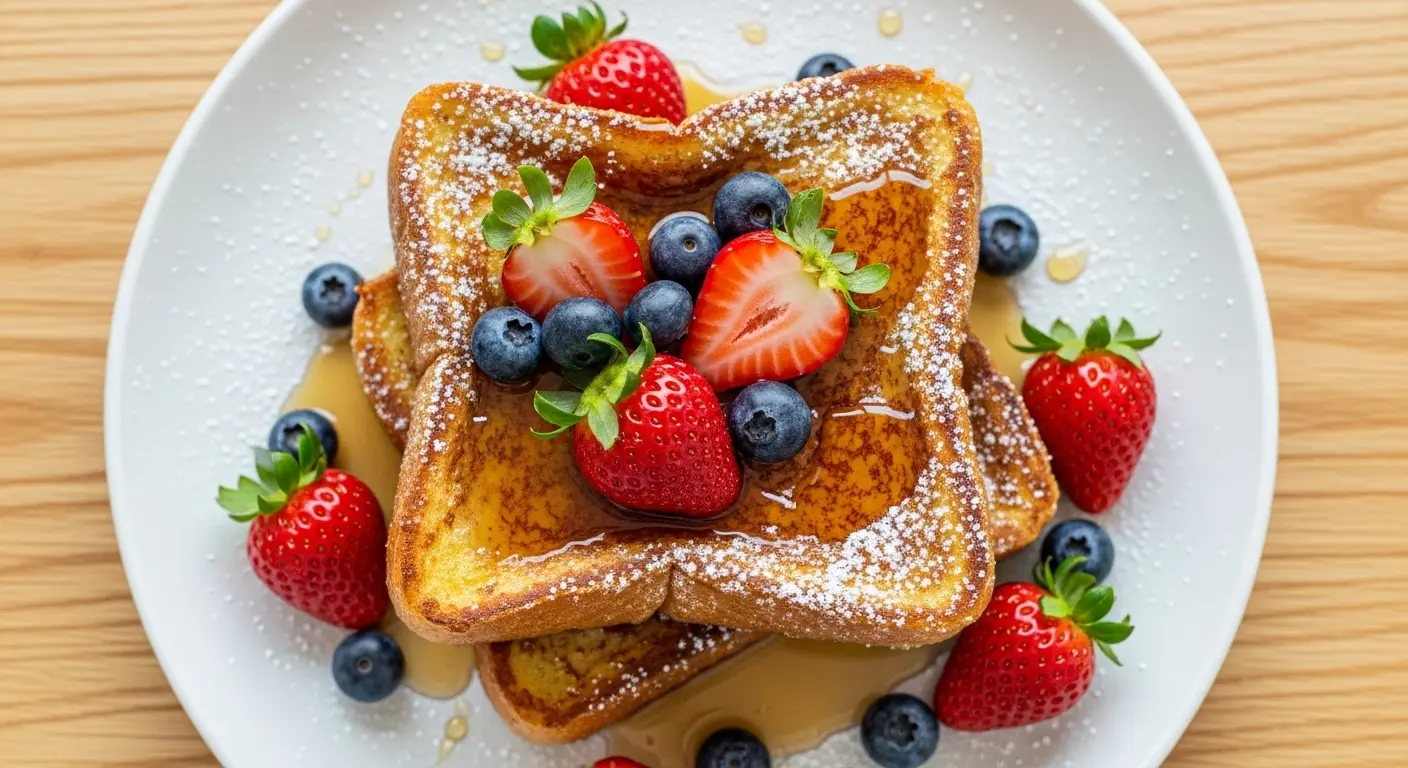
This beloved breakfast dish has been a staple on tables for generations, and it is easy to see why. Thick slices of sturdy bread are soaked in a warm, cinnamon-vanilla custard made from eggs and milk, then cooked in a buttery skillet until golden and crisp on the outside while staying tender and custardy on the inside.
The beauty of classic French toast lies in its simplicity. You do not need anything fancy or out of the ordinary to pull it off. Most of the ingredients are things you probably already have tucked away in your fridge or pantry.
What makes this recipe stand out from the dozens of French toast versions out there is the balance of technique and flavor. Using thick-cut bread that is ideally a day or two old gives you the best soaking ability without falling apart. The custard is kept simple on purpose so the warm notes of vanilla and cinnamon can truly shine.
This recipe delivers every single time, from a quiet Sunday brunch to feeding a hungry family. It comes together in about 20 minutes from start to finish, and the results taste far more impressive than the effort involved.
If you love egg-based breakfasts, you might also enjoy our Easy French Toast Recipe for another quick and satisfying morning option.

Why You’ll Love This Classic French Toast Recipe
This classic French toast recipe checks every box a great breakfast should. It is fast, forgiving, and endlessly customizable without ever straying from the comforting flavors you already love.
One of the best things about this dish is how forgiving it is for beginners. Even if you have never cooked French toast before, the steps are straightforward, and small adjustments along the way can make all the difference.
The custard base is thick enough to coat each slice evenly but not so heavy that the bread becomes soggy or falls apart. That ratio of egg to milk is key, and this recipe gets it just right.
Cinnamon and vanilla extract do the heavy lifting when it comes to flavor. Together, they create a warm, aromatic custard that smells incredible as it hits the hot butter in the skillet.
You can serve it sweet with maple syrup and fresh berries, or dress it up with whipped cream and powdered sugar for a more indulgent brunch spread.
- Incredibly quick. From cracking the first egg to plating the last slice, this recipe takes about 20 minutes total.
- Uses simple, everyday ingredients. Eggs, milk, bread, butter, cinnamon, and vanilla are all you need to get started.
- Perfectly customizable. Swap the bread, adjust the spices, or load up on toppings to suit your taste.
- Great for meal prep. French toast freezes beautifully, so you can make a big batch and reheat throughout the week.
- Family friendly. Kids and adults alike tend to go back for seconds with this classic version.
For another crowd-pleasing breakfast option, check out this Air Fryer French Toast Recipe that delivers a wonderfully crisp result with less hands-on cooking.
Ingredients
Choosing the right ingredients is what separates good French toast from truly great French toast. The bread you pick matters most, so go for something thick-cut and slightly sturdy. Brioche, challah, and sourdough are all top choices because they soak up the custard beautifully without turning to mush. If your bread is a day or two old, even better, as stale bread absorbs liquid far more evenly than fresh.
- 8 thick slices of bread (brioche, challah, or sourdough work best), cut about 3/4 inch (2 cm) thick
- 3 large eggs
- 3/4 cup whole milk (180 ml) (or heavy cream for a richer custard)
- 1 tablespoon (15 ml) vanilla extract
- 1 teaspoon (2 g) ground cinnamon
- 1 tablespoon (12 g) granulated sugar
- Pinch of salt
- 2 tablespoons (30 g) unsalted butter (for cooking, plus extra for serving)
- Maple syrup, for serving
- Powdered sugar, for dusting (optional)
- Fresh berries or sliced fruit, for serving (optional)
You might also enjoy pairing this with a warm French Toast Casserole on days when you want to feed a bigger crowd with less work.
Kitchen Equipment Needed
You do not need a lot of specialized tools to make classic French toast. A good nonstick skillet or griddle is the most important piece of equipment here, as it gives you even heat distribution and prevents sticking without the need for excessive butter or oil. A shallow dish that is wide enough to lay a bread slice flat is essential for dipping, and a sturdy whisk will help you get a smooth, well-combined custard quickly.
- Large nonstick skillet or griddle (at least 12 inches / 30 cm)
- Shallow baking dish or wide bowl (for dipping the bread)
- Whisk
- Spatula (a wide, flat one works best for flipping without breaking the bread)
- Measuring cups and spoons
- Cutting board
- Wire cooling rack or baking sheet (to hold cooked slices while you finish the rest of the batch)
Recommended Products for This Recipe
Investing in a few quality tools and ingredients can truly elevate your French toast from good to exceptional. The products below are handpicked based on performance and how much they improve the final result.
1. Lodge 12-Inch Cast Iron Skillet
A well-seasoned cast iron skillet delivers unmatched, even heat, which is exactly what you need to get that perfect golden-brown crust on every slice. Cast iron also retains heat beautifully, so your French toast stays warm and crisp even as you cook in batches.
2. Challah Bread
Challah is one of the all-time best breads for French toast. Its slightly sweet, egg-enriched crumb absorbs the custard like a dream while holding its shape during cooking. The result is a tender, almost custard-like interior with a delicate golden exterior.
3. Pure Vanilla Extract
Not all vanilla extracts are created equal. A high-quality pure vanilla extract adds depth and warmth to the custard that artificial versions simply cannot replicate. It makes a noticeable difference in the final flavor of your French toast.
4. Real Maple Syrup
Drizzling real maple syrup over your finished French toast is one of those small upgrades that completely transforms the dish. The complex, caramel-like sweetness of genuine maple syrup pairs perfectly with the warm cinnamon custard.
5. OXO Good Grips Silicone Spatula
Flipping French toast requires a spatula that is wide, sturdy, and slender enough to slide under each slice cleanly. The OXO Good Grips silicone spatula fits the bill perfectly and is gentle enough to use on nonstick surfaces without scratching them.
If you are looking for another versatile breakfast to add to your rotation, this Dutch Baby Recipe is a gorgeous, impressive option that requires surprisingly little effort.
Step-by-Step Instructions
1. Prepare Your Bread
- If your bread is fresh, consider toasting the slices lightly in your oven at 250°F (120°C) for about 10 minutes before you begin. This removes some moisture and mimics the effect of slightly stale bread, which absorbs the custard more evenly and holds its shape better during cooking.
- Slice your bread into pieces that are approximately 3/4 inch (2 cm) thick. Slices that are too thin will fall apart when dipped, while slices that are too thick may not cook through properly in the center.
- Arrange the slices on a cutting board or plate and set them aside while you make the custard.
2. Make the Custard
- Crack the 3 large eggs into your shallow baking dish or wide bowl.
- Add the 3/4 cup (180 ml) whole milk, 1 tablespoon (15 ml) vanilla extract, 1 teaspoon (2 g) ground cinnamon, 1 tablespoon (12 g) granulated sugar, and a pinch of salt to the dish with the eggs.
- Whisk everything together vigorously for about 30 seconds until the mixture is smooth, fully combined, and slightly frothy. You want to make sure the egg yolks are completely incorporated and there are no streaks of egg white visible.
- Taste the custard at this point. It should have a noticeable vanilla and cinnamon flavor. If you prefer a more pronounced sweetness, you can add an extra teaspoon of sugar here.
3. Heat Your Skillet
- Place your large nonstick skillet or griddle over medium heat. Allow it to heat up for about 1 to 2 minutes before adding the butter. This ensures the butter melts evenly and starts to sizzle right away.
- Add 1 tablespoon (15 g) of unsalted butter to the skillet and let it melt completely. Tilt the pan gently to coat the surface evenly with melted butter.
- You will know the pan is ready when the butter has melted and you see tiny bubbles beginning to form around the edges. Do not let the butter brown at this stage, as that can lead to uneven cooking and a bitter taste.
4. Dip the Bread in the Custard
- Pick up one slice of bread and dip it into the custard mixture. Let it soak for about 3 to 5 seconds on the first side so the custard soaks into the bread without oversaturating it.
- Flip the slice over and soak the other side for another 3 to 5 seconds. The bread should be well coated on both sides but should not be dripping excessively or falling apart.
- Gently lift the slice out and let any excess custard drip back into the dish for a couple of seconds before placing it in the skillet.
- Repeat with as many slices as will fit in your skillet in a single layer without crowding. Leave a little space between each slice so they cook evenly.
5. Cook the French Toast
- Cook the first side of the bread for about 2 to 3 minutes, undisturbed. You are looking for a deep golden-brown color on the bottom of each slice. Resist the urge to lift or move the slices too early, as you want a nice, even sear.
- Use your wide spatula to carefully flip each slice. The cooked side should be golden and slightly crisp to the touch.
- Cook the second side for another 2 to 3 minutes until it is also golden brown and the center of the bread feels set rather than raw and wet.
- If your skillet starts to look dry between batches, add another tablespoon (15 g) of butter before starting the next round. Keep the heat at medium, and reduce it slightly to medium-low if the slices are browning too quickly before the centers finish cooking.
6. Keep Warm and Serve
- Transfer each finished slice to a wire cooling rack or a baking sheet set in a low oven at 200°F (93°C) to keep warm while you cook the remaining slices. Placing them on a wire rack rather than a plate prevents the bottom from steaming and getting soggy.
- Once all the slices are cooked, plate them up immediately. Stack them in a small pile or fan them out on the plate for a more polished presentation.
- Top with a pat of butter, a generous drizzle of maple syrup, a dusting of powdered sugar, and any fresh fruit you like.
If you enjoy making egg-based breakfast dishes, our Scrambled Eggs Recipe is another simple classic that pairs beautifully alongside French toast for a full brunch spread.
Tips for Success
Getting perfect French toast every time comes down to a few key details that most recipes gloss over. The thickness of your bread, the temperature of your pan, and how long you soak each slice all play a major role in the final result. Pay attention to these tips and you will see a noticeable difference.
- Use day-old or stale bread. Fresh bread has too much moisture and tends to fall apart when soaked. Bread that is a day or two old absorbs the custard more evenly and holds its shape during cooking. If you only have fresh bread, toast it lightly in the oven first to dry it out.
- Do not oversoak the bread. Dipping each slice for about 3 to 5 seconds per side is the sweet spot. Leaving it submerged for too long will make the bread soggy and difficult to cook through properly.
- Keep your heat at medium. A pan that is too hot will brown the outside before the inside has a chance to cook. Medium heat gives you time to develop that golden crust without burning.
- Add butter between batches. As you cook multiple rounds, the butter in the pan gets used up. Add a fresh tablespoon before each new batch to maintain that rich, buttery flavor and prevent sticking.
- Use a wide spatula. A narrow spatula can tear the bread when flipping. A wide, flat spatula slides under each slice cleanly and makes for a confident, clean flip every time.
- Keep finished slices warm in the oven. Set your oven to 200°F (93°C) and place cooked slices on a baking sheet. This keeps them warm without continuing to cook them further.
For a fun twist on a classic breakfast, our Baked Oatmeal Recipe is another make-ahead friendly option that works beautifully for busy mornings.
Serving Suggestions
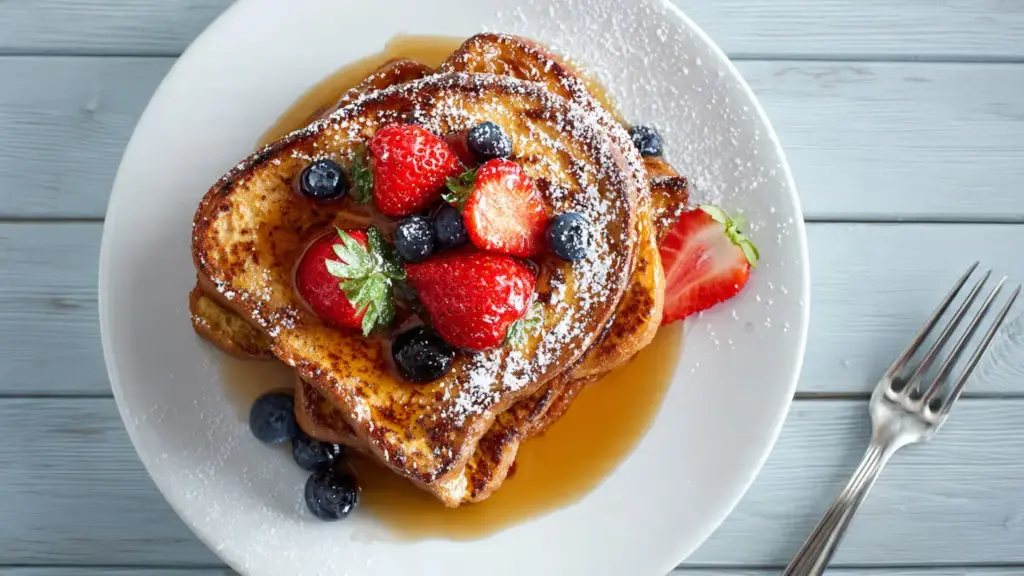
Classic French toast is one of those dishes that shines no matter how you dress it up. The warm, cinnamon-spiced custard in every bite pairs beautifully with both sweet toppings and simple, clean accompaniments. Here are some of the best ways to serve it, from the most traditional to a few slightly more creative options.
- Classic sweet toppings. A generous drizzle of real maple syrup, a dusting of powdered sugar, and a pat of melting butter are the tried-and-true combination that never goes out of style. Pair with our Honey Butter for an extra layer of richness.
- Fresh fruit. Sliced strawberries, blueberries, raspberries, or banana rounds add a bright, refreshing contrast to the warm custard. Top with a spoonful of our homemade Strawberry Sauce for an elevated finish.
- Whipped cream and berries. A dollop of freshly whipped cream alongside a handful of mixed berries turns French toast into a brunch-worthy centerpiece.
- Alongside savory sides. Crispy bacon, Breakfast Potatoes, or a simple egg dish rounds out the meal and adds balance to the sweetness.
- With a warm drink. A cup of coffee or tea is the perfect companion. Our Cold Brew Coffee Recipe is a smooth, rich option that complements the cinnamon and vanilla beautifully.
- Smoothie on the side. A glass of Strawberry Banana Smoothie adds a fresh, fruity element and makes the meal feel more complete.
Read Also: Breakfast Casserole Recipe
Variations to Try
One of the best things about classic French toast is that it serves as an excellent base for experimentation. Once you have the standard version down, you can start swapping ingredients or adjusting flavors to create entirely new versions without changing your basic method. Each variation below uses the same core technique, just with a few tweaks to the custard or the bread.
- Brioche French Toast. Swap your regular bread for thick-cut brioche. Its buttery, slightly sweet crumb creates an incredibly rich and tender result that feels more indulgent than the standard version.
- Stuffed French Toast. Spread cream cheese, peanut butter, or a thin layer of jam between two slices of bread before dipping and cooking. This turns French toast into a heartier, more filling meal.
- Nutmeg and Cardamom French Toast. Replace the cinnamon with a pinch of ground nutmeg and a pinch of ground cardamom for a warm, slightly spicy twist that feels a little more exotic.
- Brown Sugar French Toast. Swap the granulated sugar for an equal amount of packed brown sugar. This adds a deeper, caramel-like sweetness to the custard that pairs beautifully with pecans on top.
- Citrus French Toast. Add a teaspoon of freshly grated orange or lemon zest to the custard along with the vanilla. The bright citrus note cuts through the richness and adds a lovely, fresh dimension.
- Sourdough French Toast. Use thick-cut sourdough bread instead of brioche or challah. The slight tang of the sourdough creates a more complex flavor profile and holds up exceptionally well to the custard.
Another fantastic way to enjoy similar flavors in a hands-off format is our Loaded Breakfast Skillet Recipe, which brings together eggs, bread, and morning staples in one pan.
Storage and Reheating
French toast is best enjoyed fresh off the skillet, but it stores and reheats surprisingly well if you have leftovers. The key is to cool it properly before storing and to use the right reheating method to bring back that golden, crisp exterior without drying it out.
- Refrigerator storage. Allow your cooked French toast to cool completely at room temperature before placing it in an airtight container or sealing it in a zip-top bag. Store in the refrigerator for up to 3 days.
- Freezer storage. For longer storage, arrange the cooled slices in a single layer on a baking sheet and freeze for about 1 hour until firm. Then transfer them to a freezer-safe bag or container, placing a sheet of parchment paper between each slice to prevent sticking. Frozen French toast keeps well for up to 2 to 3 months.
- Reheating in a skillet. Place the slices in a nonstick skillet over medium-low heat with a small pat of butter. Cook for about 2 minutes per side until warmed through and crisp again. This is the best method for restoring that golden crust.
- Reheating in a toaster. Pop the slices into a toaster and toast on a medium setting until golden and warm. This works especially well for frozen slices and takes only a minute or two.
- Reheating in the oven. Spread the slices on a baking sheet and warm in a preheated oven at 350°F (175°C) for about 8 to 10 minutes. This method works best when reheating a larger batch at once.
For another breakfast that reheats beautifully and works well for busy mornings, try our Egg Bites Recipe.
Nutritional Facts
The nutritional information below is based on one serving of this classic French toast recipe, which is approximately 2 slices (about 200 g cooked) made with whole milk and cooked in butter. Keep in mind that the exact values will shift depending on the type of bread you use, the amount of butter added during cooking, and any toppings you include.
| Nutrient | Amount per Serving (2 slices) |
|---|---|
| Calories | 310 kcal |
| Total Fat | 12 g |
| Saturated Fat | 5 g |
| Cholesterol | 175 mg |
| Sodium | 380 mg |
| Total Carbohydrates | 38 g |
| Dietary Fiber | 1.5 g |
| Total Sugars | 8 g |
| Protein | 10 g |
| Vitamin A | 310 IU |
| Calcium | 110 mg |
| Iron | 1.8 mg |
Switching from whole milk to a lower-fat milk will reduce the overall fat and calorie count. Using a smaller amount of butter for cooking, or switching to a cooking spray, is another easy way to bring the numbers down if that is a priority for you.
You might also enjoy our Easy Overnight Oats Recipe as a lighter, make-ahead breakfast alternative on mornings when you want something nutritious and quick.
Health Benefits of Key Ingredients
While classic French toast is certainly a comfort food, the core ingredients it relies on do bring some genuine nutritional value to the table. Eggs, milk, and whole grain bread each contribute important nutrients that support a balanced morning meal.
- Eggs. Eggs are one of the most nutrient-dense foods available. They are an excellent source of high-quality protein, and each egg contains meaningful amounts of vitamin D, choline, and selenium. Choline in particular plays a critical role in brain health and cognitive function, making eggs a smart choice for a morning meal.
- Whole milk. Milk is a rich source of calcium, which is essential for strong bones and teeth. It also provides vitamin D, potassium, and B vitamins like riboflavin and vitamin B12. Using whole milk in the custard adds a small amount of healthy fat that helps your body absorb the fat-soluble vitamins more effectively.
- Bread (especially whole grain varieties). Choosing a whole grain or sourdough bread adds dietary fiber, B vitamins, and complex carbohydrates to your French toast. Sourdough bread in particular has a lower glycemic index than white bread, meaning it digests more slowly and provides a steadier energy release.
- Cinnamon. Beyond its wonderful flavor, cinnamon has been studied for its potential to support healthy blood sugar levels. It contains antioxidants called polyphenols, which may help reduce inflammation in the body.
- Vanilla extract. Pure vanilla extract contains small amounts of antioxidants and has been used in traditional medicine for centuries. While the quantity used in this recipe is modest, it contributes to the overall flavor without adding significant calories.
If you are looking for another egg-forward breakfast that packs in the protein, our Cloud Eggs Recipe is a visually stunning and nutritious option worth trying.
Frequently Asked Questions
1. What is the best type of bread to use for classic French toast?
The best bread for French toast is something thick-cut and sturdy enough to absorb the custard without falling apart. Brioche, challah, and sourdough are the top three choices across most cookbooks and food blogs. Brioche and challah have an egg-enriched crumb that soaks up liquid beautifully and stays tender during cooking. Sourdough adds a slight tang and holds its shape exceptionally well. Avoid thin-sliced sandwich bread, as it tends to become soggy and tear easily once dipped.
2. Can I make French toast with stale bread?
Not only can you, but stale bread is actually ideal for French toast. Bread that has dried out a bit over a day or two absorbs the egg custard more evenly and holds together better during cooking. Fresh bread contains too much moisture already, which can lead to a soggy, undercooked center. If you only have fresh bread on hand, you can toast the slices in the oven at 250°F (120°C) for about 10 minutes to remove some of the moisture before dipping.
3. How do I prevent French toast from being soggy?
There are a few common reasons French toast turns out soggy, and all of them are easy to fix. First, do not oversoak the bread. A quick 3-to-5-second dip on each side is enough. Second, make sure your pan is hot enough before you start cooking. A properly preheated skillet with melted butter will sear the outside quickly and create a barrier that keeps the inside from becoming waterlogged. Third, use bread that is thick enough and sturdy enough to handle the custard without breaking down.
4. Can I make French toast ahead of time?
Absolutely. French toast freezes exceptionally well, making it a great candidate for meal prep. Cook a large batch, let the slices cool completely, then freeze them in a single layer before transferring to a freezer-safe bag. When you are ready to eat, reheat in a skillet with a little butter, in a toaster, or in the oven at 350°F (175°C). The texture will not be quite as fresh as when first cooked, but it will still be warm, flavorful, and satisfying.
5. What can I substitute for eggs in French toast?
If you need to make French toast without eggs, there are a couple of workable options. One popular approach is to replace the eggs with 1/3 cup (80 ml) of cornstarch mixed into the milk. This creates a lighter batter that still coats the bread and produces a golden exterior. Another option is to simply omit the eggs entirely and use only milk, vanilla, and cinnamon. The result will be less custard-like in the center but will still taste good, especially with flavorful toppings.
For another versatile and egg-friendly breakfast, our Shakshuka Recipe is a bold, flavorful option that works beautifully for brunch.
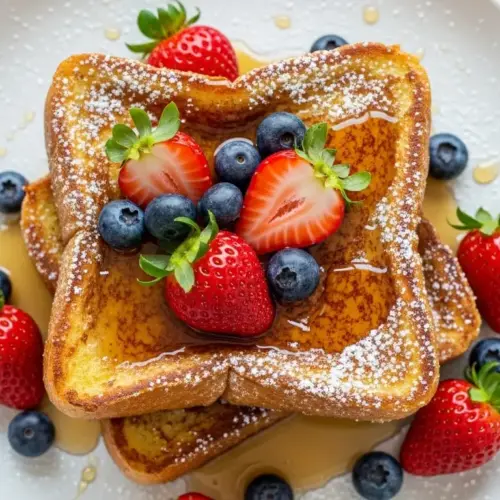
Classic French Toast

Equipment
- Large nonstick skillet or griddle - at least 12 inches / 30 cm
- Shallow baking dish or wide bowl - for dipping the bread
- Whisk
- Spatula - wide, flat one works best for flipping
- Measuring cups and spoons
- Cutting board
- Wire cooling rack or baking sheet - to hold cooked slices while finishing the batch
Ingredients
- 8 slices thick slices of bread - brioche, challah, or sourdough, cut about 3/4 inch (2 cm) thick; day-old or stale preferred
- 3 large eggs
- 3/4 cup whole milk - 180 ml (or heavy cream for a richer custard)
- 1 tablespoon vanilla extract - 15 ml
- 1 teaspoon ground cinnamon - 2 g
- 1 tablespoon granulated sugar - 12 g
- salt - pinch
- 2 tablespoons unsalted butter - 30 g, for cooking plus extra for serving
For Serving
- maple syrup - for serving
- powdered sugar - for dusting (optional)
- fresh berries or sliced fruit - for serving (optional)
Instructions
- If using fresh bread, toast slices lightly in the oven at 250°F (120°C) for 10 minutes. Slice bread to 3/4 inch thick if needed.
- Crack eggs into a shallow dish. Add milk, vanilla extract, cinnamon, sugar, and salt. Whisk vigorously until smooth and frothy.
- Heat skillet over medium heat for 1-2 minutes. Add 1 tablespoon butter and let melt, coating the surface evenly.
- Dip each bread slice in custard for 3-5 seconds per side. Let excess drip off before placing in skillet. Cook in batches without crowding.
- Cook first side 2-3 minutes until deep golden brown. Flip and cook second side another 2-3 minutes until golden and set.
- Transfer cooked slices to a wire rack or baking sheet in a 200°F oven to keep warm. Repeat with remaining slices, adding butter as needed.
Notes
- Use day-old or stale bread for best absorption and structure; toast fresh bread lightly if needed.
- Do not oversoak bread—3 to 5 seconds per side prevents sogginess.
- Maintain medium heat to achieve golden crust without burning the outside before the inside sets.
- Add fresh butter between batches to maintain flavor and prevent sticking.
- Use a wide spatula for clean flips without tearing the bread.
- Keep finished slices warm in a 200°F oven on a wire rack to avoid sogginess.
- French toast freezes well: cool completely, freeze in single layer, then store in freezer bag up to 2-3 months.
- Reheat in skillet with butter, toaster, or oven at 350°F to restore crisp exterior.
- Customize with brioche for richer texture, brown sugar for caramel notes, or citrus zest for brightness.
- Serve with maple syrup, fresh berries, whipped cream, or savory sides like bacon for balance.
Final Thoughts
Classic French toast is one of those recipes that never goes out of style, and for good reason. It is simple enough to throw together on a weekday morning but special enough to make the centerpiece of a leisurely weekend brunch.
Once you master the basics of this recipe, you will find yourself reaching for it again and again. The custard is warm and fragrant, the bread is golden and tender, and the whole kitchen smells incredible while it cooks.
Give this recipe a try the next time you are in the mood for a comforting breakfast. And if you have any tips, favorite toppings, or variations you love, drop them in the comments below. I would love to hear how it turned out for you.
Recommended:
- Old Fashioned Pancake Recipe
- Belgian Waffle Recipe
- Easy Waffle Recipe
- Buttermilk Pancake Recipe
- German Pancake Recipe
- Avocado Toast Recipe
- Breakfast Burrito Recipe
- Breakfast Skillet Recipe
- Basic Overnight Oats Recipe
- Caramel Sauce Recipe