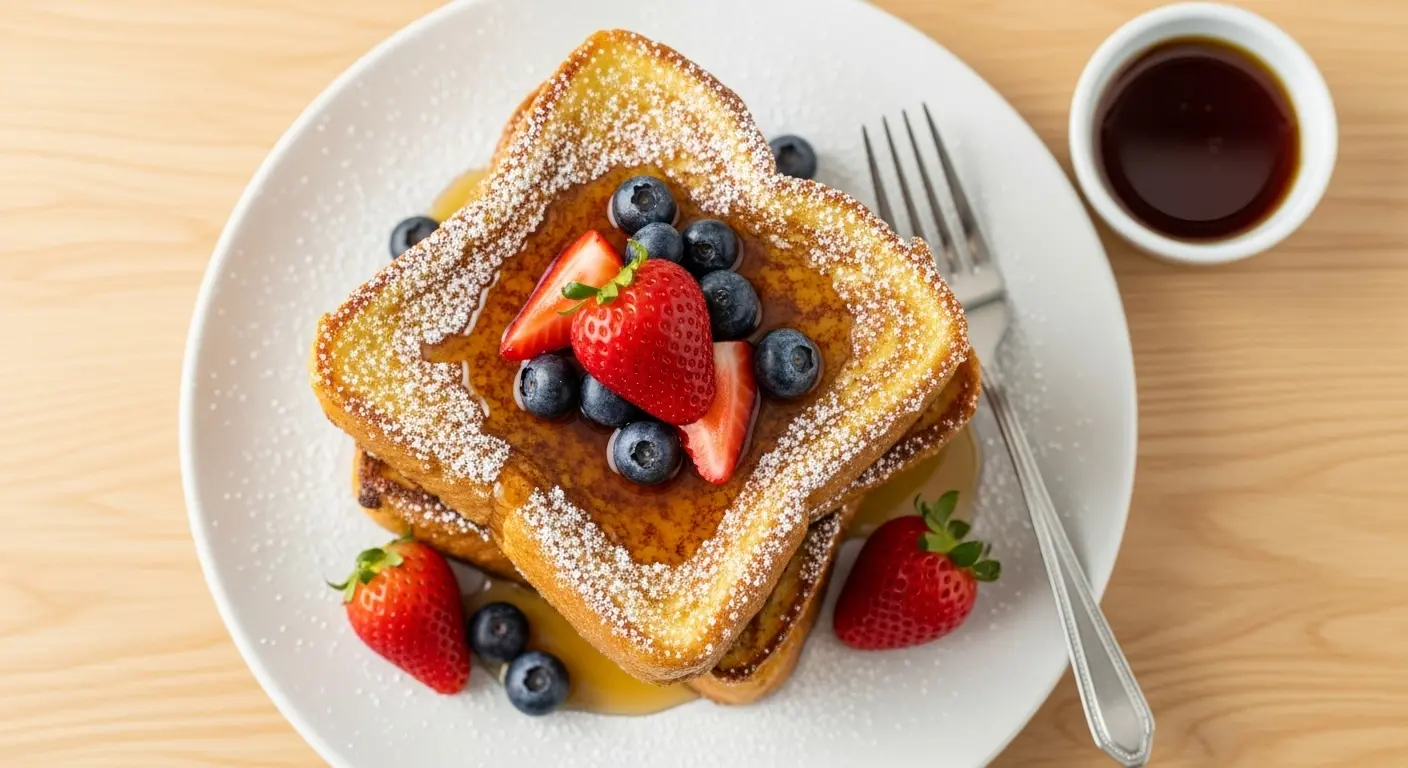
Few breakfasts come together as quickly or taste as satisfying as an easy french toast recipe made right on your stovetop. Golden on the outside, custard-soft on the inside, and ready in about 20 minutes, this is the kind of morning meal that feels indulgent without demanding much effort at all.
This recipe uses the classic custard base you will find across most well-loved french toast recipes: eggs, milk, vanilla extract, and ground cinnamon. The magic happens when thick slices of sturdy bread soak into that spiced custard and hit a buttered skillet. The proteins in the egg set as they cook, creating that signature golden crust, while the milk keeps everything tender and moist inside.
What makes this version “easy” is not a shortcut or a compromise on flavor. It is simply a streamlined approach that skips anything unnecessary and focuses on the techniques that actually matter, like choosing the right bread and not rushing the soaking step. Once you nail those two things, you are golden, literally.
If french toast is already a regular on your weekend menu, this easy version delivers all the same comfort with a bit less fuss. And if it is brand new to your rotation, this is the perfect place to start.
You might also enjoy: Pumpkin Pancake Recipe

Why You’ll Love This Easy French Toast Recipe
This recipe is built around the principle that the best breakfast foods do not need to be complicated. You likely already have every single ingredient sitting in your kitchen right now, which means zero grocery store trips.
The whole process from mixing the custard to plating the last golden slice takes right around 20 minutes. That includes prep, cooking, and everything in between.
Kids and adults alike tend to go crazy for this one. The warm cinnamon-vanilla flavor hits all the right notes for a cozy, satisfying bite.
It also scales beautifully. Making breakfast for two or feeding a crowd on a lazy Sunday morning, just adjust the quantities and keep cooking in batches.
Day-old or slightly stale bread is actually ideal for this recipe, which means you have a built-in way to use up bread before it goes to waste.
- Ready in about 20 minutes from start to finish
- Made with simple pantry staples you already have on hand
- Produces a golden, crispy exterior with a fluffy, custard-like center
- Scales easily for one person or a full family breakfast
- Works great with stale bread, so nothing goes to waste
- Kid-friendly and endlessly customizable with your favorite toppings
If you are a fan of this recipe, you might also enjoy making Air Fryer French Toast for a hands-off version with an extra-crispy finish.
Ingredients
Choosing the right bread is the single most important decision you will make for this recipe. Thick-cut, sturdy breads like brioche, challah, or sourdough hold up beautifully in the custard without falling apart. Thin sandwich bread works in a pinch, but it tends to get soggy. If all you have is day-old bread, even better, the slight dryness helps it absorb the custard without becoming a mess.
For the custard itself, whole milk gives you the richest result, but 2% works perfectly well too. The eggs are non-negotiable; they are what give the custard its body and allow it to set into that signature golden crust on the skillet. A generous pour of pure vanilla extract adds warmth and depth, while ground cinnamon rounds out the flavor beautifully.
- 4 large eggs
- 1 cup (240 ml) whole milk
- 1 teaspoon (5 ml) pure vanilla extract
- 1/2 teaspoon ground cinnamon
- 1/4 teaspoon salt
- 8 thick slices (about 1 inch / 2.5 cm thick) of brioche bread, challah, or sourdough
- 2 tablespoons (30 g) unsalted butter, divided (for cooking)
- Maple syrup, powdered sugar, or fresh fruit for serving
Read Also: French Toast Casserole Recipe
Kitchen Equipment Needed
You do not need anything fancy to pull this off. A skillet or griddle is the star of the show here, and a nonstick surface is your best friend for preventing sticking without needing to drown the pan in oil. A shallow dish or baking dish wide enough to lay a slice of bread flat is essential for dipping, since you need even coverage on both sides. A whisk does a much better job than a fork at fully combining the eggs and milk into a smooth custard.
- Nonstick skillet or griddle (at least 10 inches / 25 cm)
- Shallow baking dish or casserole dish for soaking
- Whisk
- Spatula
- Cutting board
- Knife for slicing bread
- Measuring cups and spoons
- Plate or baking sheet for keeping cooked slices warm
This recipe also pairs wonderfully with a breakfast skillet for a complete morning spread.
Recommended Products for This Recipe
Getting the best results starts with using quality ingredients and the right tools. The products below are recommended based on their performance and how much of a difference they make in the final dish.
1. Brioche Bread (Thick-Cut)
Brioche is the gold standard bread for french toast. Its naturally enriched, slightly sweet crumb soaks up the custard beautifully without falling apart, and it caramelizes to a gorgeous golden color in the pan. Look for a loaf that is thick-cut or slice your own at about 1 inch thick.
2. High-Quality Pure Vanilla Extract
A good vanilla extract makes a noticeable difference in the custard. Pure vanilla has a complex, rounded flavor that pairs perfectly with cinnamon and eggs, while imitation vanilla can taste a bit flat by comparison. A single bottle lasts for months, so it is a worthwhile investment.
3. Lodge Cast Iron Skillet
While a nonstick skillet works well, a well-seasoned cast iron skillet delivers an unbeatable sear on the outside of each slice. Cast iron holds heat incredibly evenly, which means more consistent browning from edge to edge. It is also incredibly durable and will last a lifetime.
4. Kerrygold Unsalted Butter
Butter is your cooking fat here, and the quality matters more than you might think. Kerrygold is a grass-fed butter with a rich, creamy flavor that adds a subtle depth to the french toast as it cooks. Using unsalted butter also gives you full control over the saltiness of the dish.
5. Microplane Grater (for Fresh Nutmeg)
If you want to take the spice profile up a notch, freshly grated nutmeg adds a warmth that pre-ground versions simply cannot match. A Microplane makes the job effortless and produces a fine, aromatic grate in seconds.
You might also enjoy trying your hand at Buttermilk Pancakes for another beloved breakfast staple.
Step-by-Step Instructions
1. Slice Your Bread
- Use a sharp knife and a cutting board to slice your bread into pieces that are approximately 3/4 to 1 inch (2 to 2.5 cm) thick. Slices thinner than this will become too soggy and may fall apart during cooking, while slices that are too thick will not cook through properly in the center.
- If you are using a pre-sliced loaf, check the thickness and consider cutting slices in half horizontally if they are on the thinner side.
- Set the sliced bread aside on a plate or cutting board. If your bread is fresh and not at all stale, you can place the slices on a baking sheet and toast them lightly in a 300°F (150°C) oven for about 5 minutes per side to dry them out slightly. This step is optional but helps the bread absorb the custard more effectively.
2. Make the Custard
- Crack the 4 large eggs into your shallow baking dish or a medium bowl. Using your whisk, beat the eggs until the yolks and whites are fully combined and the mixture looks uniform in color, about 15 to 20 seconds.
- Pour in the 1 cup (240 ml) of whole milk and whisk again until the mixture is smooth and slightly frothy, about another 10 to 15 seconds.
- Add the 1 teaspoon (5 ml) of pure vanilla extract, the 1/2 teaspoon of ground cinnamon, and the 1/4 teaspoon of salt. Whisk everything together until the cinnamon is fully incorporated and you do not see any dry pockets of spice floating on the surface. The custard should be a pale, golden-tan color with a slightly thin, pourable consistency.
- If you are making the custard directly in your shallow baking dish, you are all set to move on to the next step. If you whisked it in a separate bowl, pour the custard into your shallow dish now so the bread slices can lay flat for even soaking.
3. Preheat Your Skillet
- Place your nonstick skillet or griddle on the stovetop and set the heat to medium. Allow it to heat up for about 2 minutes before you start cooking. A properly preheated pan is the key to getting that golden-brown exterior without burning.
- Add 1 tablespoon (15 g) of the unsalted butter to the skillet. Let it melt completely, swirling the pan gently to coat the cooking surface in an even layer. The butter should melt smoothly without browning or smoking. If it browns immediately, your heat is too high. Lower it slightly and wait a moment before proceeding.
4. Soak the Bread
- Lay one slice of bread flat into the custard mixture. Let it soak for about 3 to 5 seconds on the first side. The bread should absorb the custard visibly, but you do not want it sitting so long that it starts to fall apart or become waterlogged.
- Gently flip the slice over using a spatula and soak the second side for another 3 to 5 seconds. Both sides should be evenly coated and slightly saturated with the egg custard.
- Repeat this process with as many slices as will comfortably fit in your skillet without crowding. Typically, this means 3 to 4 slices at a time, depending on the size of your pan. Crowding the skillet will cause the bread to steam rather than sear, and you will lose that crispy golden crust.
5. Cook the French Toast
- Carefully transfer the soaked bread slices into the preheated, buttered skillet. You should hear a gentle sizzle when the bread hits the pan. If there is no sizzle at all, your pan is not hot enough.
- Cook the first side without disturbing the slices for about 3 to 4 minutes. You are looking for the bottom to turn a deep golden brown. Resist the urge to peek too early or move the slices around, as this prevents proper browning.
- Using your spatula, carefully flip each slice over. The cooked side should be a rich, even golden color. Cook the second side for another 2 to 3 minutes until it is also golden brown and the center of the bread feels set rather than raw and wet.
- Once cooked, transfer the french toast to a plate or a baking sheet. If you are cooking in batches, place the finished slices in a 200°F (93°C) oven on a baking sheet to keep them warm while you cook the remaining bread.
6. Cook the Remaining Batches
- Add the remaining 1 tablespoon (15 g) of butter to the skillet before starting your next batch. If the skillet looks dry or if any browned bits are accumulating, wipe it out gently with a paper towel before adding fresh butter.
- Soak the next batch of bread slices in the custard using the same 3 to 5 second method on each side, then cook them following the same timing as the first batch.
- Continue until all 8 slices of bread have been soaked and cooked. You may need to add a small amount of additional butter between batches if the pan starts looking dry.
7. Serve and Enjoy
- Transfer all the cooked french toast slices to your serving plate. Dust generously with powdered sugar if desired, or drizzle with warm maple syrup.
- Top with your choice of fresh fruit like sliced strawberries, blueberries, or banana slices for added color and freshness.
- Serve immediately while the french toast is still hot and crispy. French toast is at its absolute best in the first few minutes after cooking, when the contrast between the crispy outside and the tender custard center is at its peak.
A warm bowl of Scrambled Eggs on the side rounds out this breakfast beautifully.
Tips for Success
Getting perfect french toast every single time comes down to a few key habits. The most common mistake is using bread that is too thin or too fresh. Thick, slightly stale bread absorbs the custard without disintegrating, which is exactly what you want. Another tip that makes a huge difference is controlling your heat; medium heat is the sweet spot, as too high a temperature will burn the outside before the inside cooks through.
- Choose the right bread. Brioche, challah, sourdough, or any thick-cut sturdy bread works best. Avoid thin sandwich bread, as it tends to fall apart in the custard.
- Use slightly stale bread. Day-old bread absorbs the custard more efficiently without becoming soggy. If your bread is fresh, toast the slices lightly in the oven first to dry them out.
- Do not skip the soaking step. Each side of the bread needs 3 to 5 seconds in the custard. Rushing this step results in bland, dry french toast.
- Keep your heat at medium. Too high and the outside burns before the inside sets. Too low and the bread steams instead of searing to a golden crust.
- Do not crowd the pan. Cook in batches of 3 to 4 slices at a time. Overcrowding lowers the pan temperature and leads to uneven cooking.
- Add butter between batches. A fresh tablespoon of butter for each round keeps the pan greased and adds flavor to every slice.
- Keep finished slices warm. Place cooked french toast on a baking sheet in a 200°F (93°C) oven while you finish the remaining batches.
For another incredible breakfast option, check out this Dutch Baby Recipe that bakes up in the oven with even less hands-on work.
Serving Suggestions
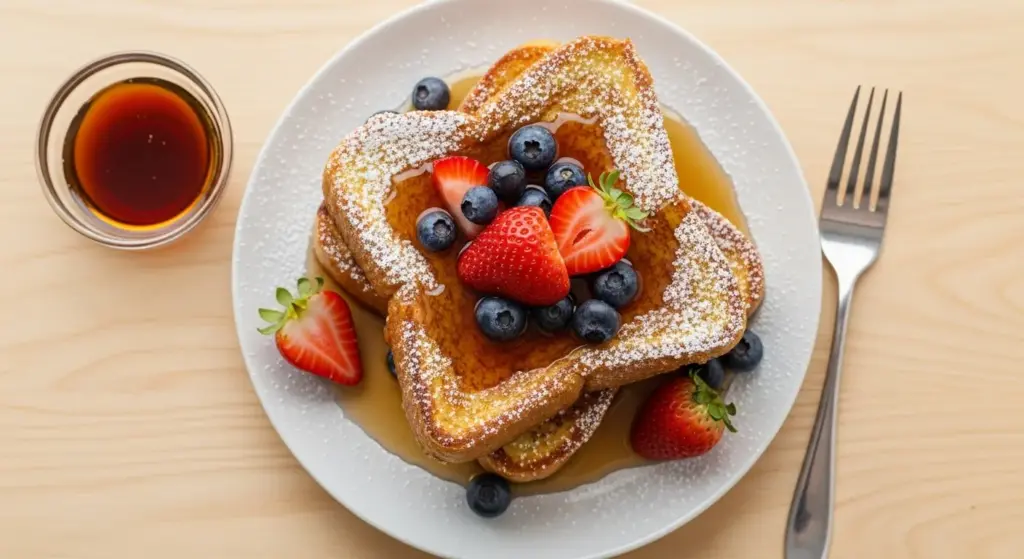
French toast is incredibly versatile when it comes to toppings and sides, so you can customize it to match your mood or the season. A classic combination is a generous drizzle of real maple syrup and a pat of butter melting on top, which keeps things simple and satisfying. For something a little more elevated, try topping your slices with fresh berries, a dollop of whipped cream, and a dusting of powdered sugar for a brunch-worthy presentation.
- Drizzle with warm maple syrup and top with a pat of unsalted butter for a timeless classic
- Pile on fresh strawberries, blueberries, or sliced bananas for a fruit-forward topping
- Dust generously with powdered sugar for a light, sweet finish
- Serve alongside Air Fryer Bacon for a full breakfast spread
- Top with a drizzle of homemade Caramel Sauce for an indulgent treat
- Pair with a side of Breakfast Potatoes for a hearty, filling meal
- Spread a thin layer of Honey Butter on top and let it melt into the warm toast
- Serve with a side of Fruit Salad for a refreshing contrast
Variations to Try
Once you have mastered the classic version, there are so many directions you can take this recipe. French toast is remarkably forgiving and adaptable, which is part of why it has remained a breakfast staple for generations. Small swaps in the custard or the bread can completely change the character of the dish without adding any real effort.
- Stuffed French Toast. Spread a layer of cream cheese, peanut butter, or fruit jam between two slices of bread before soaking and cooking for a filled version.
- Overnight French Toast. Soak the bread in the custard the night before, refrigerate, and bake in the oven the next morning for a casserole-style version. This method works beautifully for feeding a crowd at brunch.
- Pumpkin Spice French Toast. Add 2 tablespoons of pumpkin puree and a pinch of pumpkin spice to the custard for a seasonal autumn twist.
- Nutmeg French Toast. Add a pinch of freshly grated nutmeg alongside the cinnamon for a warmer, more complex spice profile.
- Banana Foster French Toast. Top cooked slices with sauteed bananas cooked in brown sugar and butter for a decadent finish.
- Berry Topped French Toast. Toss fresh mixed berries with a little sugar and a squeeze of lemon, then spoon over the cooked french toast.
- Orange Zest French Toast. Add 1 teaspoon of fresh orange zest to the custard for a bright, citrusy flavor.
Read Also: Easy Crepe Recipe
Storage and Reheating
French toast is best enjoyed fresh off the skillet, but it stores and reheats surprisingly well if you have leftovers. The key to good reheating is using a method that brings back some of the crispiness on the outside rather than just warming it through. A microwave will make it soft and chewy, which is fine in a pinch, but the toaster or skillet will give you a much better result.
- Refrigerator. Let the french toast cool completely, then store in an airtight container in the fridge for up to 3 days. It will soften slightly as it sits, but it reheats well.
- Freezer. Lay cooled slices in a single layer on a baking sheet and freeze for about 1 hour until firm. Transfer to a freezer-safe bag or container, separating slices with parchment paper to prevent sticking. Freeze for up to 2 months.
- Reheating in a toaster. Place a slice in the toaster and toast on medium heat until warmed through and slightly crispy on the outside. This is the quickest and easiest reheating method.
- Reheating in a skillet. Melt a small pat of butter in a skillet over medium-low heat. Add the french toast and warm for about 2 minutes per side until heated through and golden again.
- Reheating in the oven. Place slices on a baking sheet in a single layer and bake at 350°F (175°C) for about 8 to 10 minutes until warmed through and crispy on the edges.
- Reheating in the microwave. Wrap a slice loosely in a damp paper towel and microwave for 20 to 30 seconds. This method is fast but will not restore crispiness.
For a make-ahead breakfast that reheats beautifully, you might also love trying Baked Oatmeal.
Nutritional Facts
The following nutritional information is estimated per slice of french toast, based on the recipe as written (8 slices total, using whole milk and brioche bread). Actual values may vary depending on the specific bread and milk you use.
| Nutrient | Per Slice |
|---|---|
| Calories | 210 kcal |
| Total Fat | 7 g |
| Saturated Fat | 3 g |
| Cholesterol | 105 mg |
| Sodium | 220 mg |
| Total Carbohydrates | 28 g |
| Dietary Fiber | 1 g |
| Total Sugars | 5 g |
| Protein | 8 g |
| Vitamin A | 180 IU |
| Calcium | 60 mg |
| Iron | 1.2 mg |
Note: Nutritional values do not include optional toppings like maple syrup, powdered sugar, butter, or fresh fruit.
For a lighter morning option that still packs plenty of flavor, try making Easy Overnight Oats.
Health Benefits of Key Ingredients
While french toast is definitely a comfort food, the core ingredients each bring something nutritionally worthwhile to the table. Eggs are one of the most complete sources of protein available, and they contain essential amino acids that support muscle repair and overall energy throughout the morning. Whole milk adds calcium and vitamin D, both of which are important for bone health and immune function.
- Eggs. Packed with high-quality protein and essential amino acids, eggs provide sustained energy and support muscle maintenance. They also contain choline, a nutrient important for brain health and cognitive function.
- Whole Milk. A solid source of calcium, vitamin D, and B vitamins, whole milk supports bone density and helps the body absorb nutrients more effectively. The healthy fats in whole milk also help you feel full longer.
- Cinnamon. Beyond its warm, sweet flavor, ground cinnamon has been linked to improvements in blood sugar regulation. It also contains antioxidants that may help reduce inflammation in the body.
- Vanilla Extract. Pure vanilla extract contains small amounts of antioxidants and has been traditionally associated with calming properties. It also adds flavor depth without adding significant calories or sugar to the custard.
- Bread (Brioche or Challah). These enriched breads provide carbohydrates for quick energy, along with some protein and B vitamins. Choosing a bread made with whole grains or fewer added sugars can boost the nutritional profile of your french toast.
Pair your french toast with a side of Loaded Breakfast Skillet to build a more balanced and protein-rich morning meal.
Frequently Asked Questions
1. What is the best bread for easy french toast?
Brioche, challah, and sourdough are the top choices because they are thick, sturdy, and have enough structure to hold up in the custard without falling apart. Thick-cut white bread or Texas toast also works well. The key is to avoid thin sandwich bread, which tends to become too soggy and fragile during the soaking and cooking process.
2. Can I make french toast with stale bread?
Absolutely. Stale or day-old bread is actually preferred for french toast. Bread that has dried out slightly absorbs the egg custard more efficiently and holds its shape better during cooking. If your bread is completely fresh, you can dry it out by toasting the slices lightly in a 300°F (150°C) oven for about 5 minutes per side before soaking.
3. Why does my french toast come out soggy?
Soggy french toast usually comes down to one of two issues: the bread was soaked too long in the custard, or the cooking temperature was too low. Each side of the bread only needs 3 to 5 seconds in the custard. For cooking, make sure your skillet is properly preheated to medium heat before adding the bread. A well-heated pan creates a crispy sear that seals in the custard and prevents sogginess.
4. Can I use a plant-based milk instead of whole milk?
Yes, you can substitute any unsweetened plant-based milk like almond, oat, or soy milk in a one-to-one ratio. The custard will be slightly less rich compared to using whole dairy milk, but it will still taste great and cook up nicely. Oat milk tends to be the closest in texture and fat content to whole milk, so it is a solid first choice if you are looking for the most similar result.
5. How do I keep french toast warm while cooking in batches?
Place your cooked slices on a baking sheet in a single layer and keep them in an oven preheated to 200°F (93°C). This low temperature is warm enough to keep the french toast hot without continuing to cook it or drying it out. Once all your batches are done, serve immediately for the best texture and flavor.
For another quick and satisfying breakfast idea, try making Shakshuka on a weekday morning.
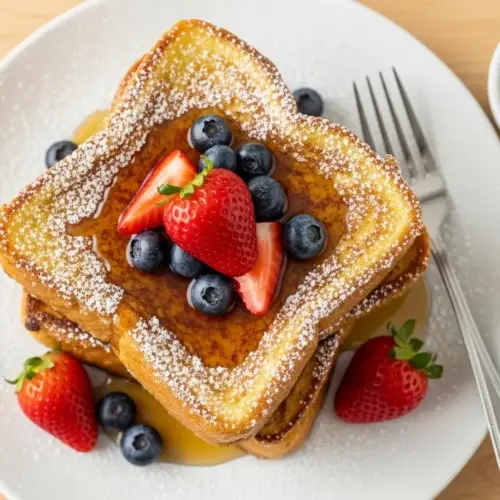
Easy French Toast

Equipment
- Nonstick skillet or griddle - at least 10 inches / 25 cm
- Shallow baking dish or casserole dish - for soaking the bread
- Whisk
- Spatula
- Cutting board
- Knife - for slicing bread
- Measuring cups and spoons
- Plate or baking sheet - for keeping cooked slices warm
Ingredients
- 4 large eggs
- 1 cup whole milk - 240 ml; 2% milk works too
- 1 teaspoon pure vanilla extract - 5 ml
- 1/2 teaspoon ground cinnamon
- 1/4 teaspoon salt
- 8 thick slices brioche bread - about 1 inch / 2.5 cm thick; challah or sourdough also work; day-old or stale preferred
- 2 tablespoons unsalted butter - 30 g, divided for cooking
For Serving
- maple syrup - warm, for serving
- powdered sugar - for dusting
- fresh fruit - such as strawberries, blueberries, or banana slices
Instructions
- Slice the bread into 3/4 to 1 inch thick pieces. If using fresh bread, lightly toast slices in a 300°F oven for 5 minutes per side to dry them out slightly.
- In a shallow dish, whisk together the eggs until uniform. Add the milk and whisk until smooth and frothy. Stir in the vanilla extract, cinnamon, and salt until fully combined.
- Preheat a nonstick skillet over medium heat for 2 minutes. Add 1 tablespoon butter and swirl to coat the pan evenly.
- Dip each bread slice in the custard for 3-5 seconds per side until evenly coated but not falling apart. Soak only as many slices as will fit comfortably in the skillet.
- Place soaked slices in the hot skillet. Cook for 3-4 minutes until deep golden brown on the bottom, then flip and cook 2-3 minutes more until the second side is golden and the center is set.
- Transfer cooked slices to a plate or baking sheet in a 200°F oven to keep warm. Add remaining butter to the skillet (wiping if needed) and repeat with remaining slices.
- Serve hot with powdered sugar, warm maple syrup, and fresh fruit. Enjoy immediately while the exterior is crispy and the interior is tender.
Notes
- Day-old or slightly stale bread is ideal as it absorbs the custard better without becoming soggy.
- Use thick (about 1 inch) slices of sturdy bread like brioche, challah, or sourdough; avoid thin sandwich bread.
- Maintain medium heat to achieve golden browning without burning the outside before the inside cooks.
- Do not overcrowd the pan—cook in batches of 3-4 slices to ensure proper searing.
- Keep finished slices warm in a 200°F oven while preparing remaining batches.
- Leftovers can be refrigerated up to 3 days or frozen up to 2 months; reheat in a toaster, skillet, or oven to restore crispiness.
- Variations: Add a pinch of nutmeg, stuff with cream cheese or jam, or make pumpkin spice by adding pumpkin puree.
- For a plant-based version, substitute unsweetened oat milk (closest in texture) for dairy milk.
- Serve with classic toppings like maple syrup and butter, or elevate with fresh berries and whipped cream.
- The recipe scales easily for small or large groups.
Final Thoughts
Easy french toast is one of those recipes that proves breakfast does not have to be complicated to be incredibly satisfying. With just a handful of pantry staples and about 20 minutes of your time, you can have a plate of golden, custard-soft, perfectly spiced french toast that tastes like it came from your favorite brunch spot.
Give this recipe a try this weekend and see just how simple and delicious homemade french toast can be. We would love to hear how it turned out, so feel free to drop a comment below and share your experience or your favorite topping combination.
Recommended:
- Classic French Toast Recipe
- Old Fashioned Pancake Recipe
- Easy Waffle Recipe
- Belgian Waffle Recipe
- Breakfast Casserole Recipe
- Breakfast Burrito Recipe
- Avocado Toast Recipe
- Cloud Eggs Recipe
- Egg Bites Recipe
- Strawberry Sauce Recipe