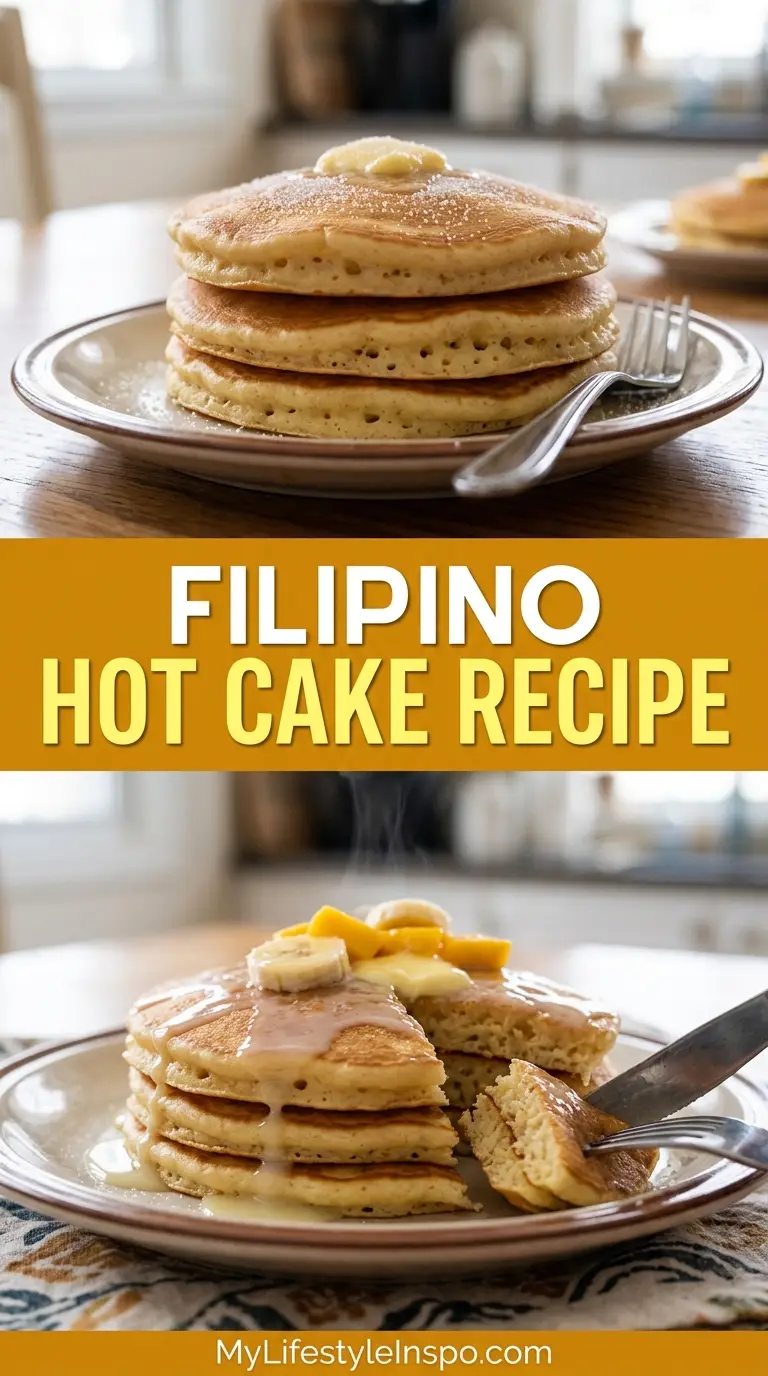
Filipino hot cake recipe brings the taste of street food right to your kitchen. These thin, spongy pancakes are a beloved snack in the Philippines, featuring a signature golden yellow color and a delightfully sweet flavor.
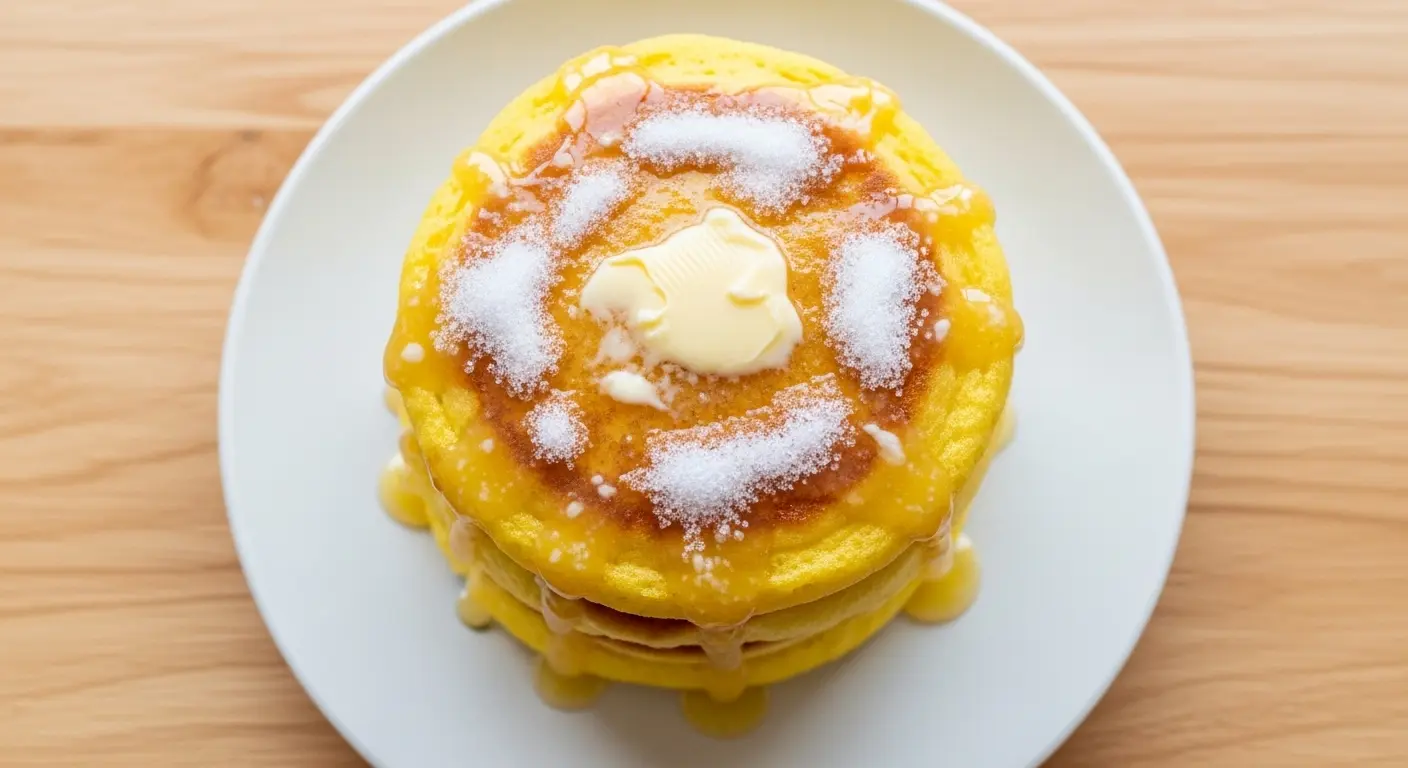
Unlike traditional American pancakes served for breakfast with syrup, Filipino hot cakes are typically enjoyed as an afternoon merienda (snack), generously slathered with margarine and sprinkled with sugar for that perfect combination of buttery sweetness.
Growing up in the Philippines or spending time there, you’ve likely seen vendors selling these golden treats from food carts near schools and busy street corners. The aroma of hot cakes cooking on a griddle is irresistible, bringing back memories of childhood snacks.
What makes these hot cakes special is their unique texture, thin yet spongy with a slight chewiness that sets them apart from other pancakes. The simple ingredients come together to create something truly comforting and delicious.
This recipe captures that authentic street food experience, allowing you to recreate these nostalgic treats at home. The addition of yellow food coloring gives them that characteristic bright appearance that makes them instantly recognizable.
For similar breakfast favorites, you might enjoy our buttermilk pancake recipe.
Why You’ll Love This Filipino Hot Cake Recipe
Filipino hot cakes offer a unique twist on traditional pancakes that’s both simple and satisfying. These treats are incredibly easy to make with pantry staples you likely already have at home.
The recipe requires minimal preparation time and comes together quickly, making it perfect for busy afternoons or impromptu snacks. The thin, spongy texture creates a delightful eating experience that’s different from thick, fluffy American pancakes.
Here’s what makes this recipe so appealing:
- Quick and easy: Ready in under 30 minutes from start to finish
- Budget-friendly: Uses simple, affordable ingredients found in most kitchens
- Nostalgic flavor: Authentic taste that brings back memories of Filipino street food
- Versatile serving: Perfect as a snack, breakfast, or light dessert
- Kid-friendly: The sweet taste and fun yellow color make them a hit with children
- Customizable: Easy to adjust sweetness or add your favorite toppings
Read Also: Old Fashioned Pancake Recipe
Ingredients
This Filipino hot cake recipe uses basic ingredients that come together to create something special. The key to authentic hot cakes lies in getting the ratios right for that perfect thin, spongy texture.
- 1 cup (125g) all-purpose flour: Forms the base of the batter
- 1/4 cup (50g) granulated white sugar: Adds sweetness to the hot cakes
- 1 teaspoon (4g) baking powder: Helps create the spongy texture
- 1/4 teaspoon (1.5g) salt: Enhances flavor and balances sweetness
- 1 large egg: Provides structure and richness
- 1 cup (240ml) evaporated milk: Gives hot cakes their characteristic flavor
- 1 tablespoon (15ml) vegetable oil: Adds moisture to the batter
- 1/4 teaspoon yellow food coloring: Creates the signature golden color
- Margarine or butter (for spreading): Traditional topping for hot cakes
- Granulated sugar (for sprinkling): Adds the classic sweet finish
Another recipe you’ll love is our German pancake recipe.
Kitchen Equipment Needed
Having the right tools makes preparing Filipino hot cakes much easier. The beauty of this recipe is that it requires only basic kitchen equipment that most home cooks already own.
- Mixing bowls (2, medium-sized): One for dry ingredients, one for wet ingredients
- Whisk or fork: For mixing the batter smoothly
- Non-stick skillet or griddle: Essential for easy flipping and preventing sticking
- Measuring cups and spoons: For accurate ingredient measurements
- Ladle or 1/4 cup measuring cup: For portioning batter evenly
- Spatula: For flipping the hot cakes
- Pastry brush (optional): For spreading margarine on hot cakes
- Plate: For stacking finished hot cakes
Recommended Products for This Recipe
These carefully selected products will help you achieve the best results with your Filipino hot cakes and make the cooking process more enjoyable.
1. Lodge Pre-Seasoned Cast Iron Griddle
This flat griddle provides even heat distribution across the entire surface, allowing you to cook multiple hot cakes at once with consistent results. The pre-seasoned surface develops a natural non-stick coating over time. It’s perfect for getting that golden-brown color on your hot cakes without burning.
2. Carnation Evaporated Milk
This brand of evaporated milk delivers the authentic, slightly caramelized flavor that’s essential for Filipino hot cakes. Its rich, creamy texture contributes to the signature taste that sets these pancakes apart from regular American pancakes. The quality and consistency are reliable for perfect results every time.
3. OXO Good Grips Silicone Spatula
This flexible silicone spatula makes flipping hot cakes effortless, with a thin edge that easily slides under delicate pancakes. The heat-resistant material won’t melt or warp, and the comfortable grip gives you excellent control. It’s an essential tool for achieving perfectly shaped hot cakes.
4. AmeriColor Soft Gel Paste Food Coloring
Professional-quality gel food coloring gives your hot cakes that vibrant yellow color without adding excess liquid to the batter. A little goes a long way, and the concentrated formula ensures consistent color throughout. It’s the secret to achieving that authentic street food appearance.
If you’re looking for more breakfast ideas, try our easy waffle recipe.
Step-by-Step Instructions
Follow these detailed instructions to make perfect Filipino hot cakes every time. Taking your time with each step ensures the best texture and flavor.
1. Prepare the Dry Ingredients
- Sift the all-purpose flour into a large mixing bowl to remove any lumps and aerate the flour.
- Add the granulated white sugar to the sifted flour.
- Add the baking powder to the bowl.
- Add the salt to the bowl.
- Whisk all the dry ingredients together until they’re evenly combined and there are no pockets of baking powder or sugar.
- Set the bowl aside while you prepare the wet ingredients.
2. Mix the Wet Ingredients
- Crack the large egg into a separate medium-sized mixing bowl.
- Beat the egg lightly with a whisk or fork until the yolk and white are fully combined and slightly frothy.
- Pour in the evaporated milk and whisk it together with the beaten egg.
- Add the vegetable oil to the mixture and continue whisking until everything is well incorporated.
- Add the yellow food coloring to the wet mixture, starting with just a few drops.
- Whisk until the color is evenly distributed throughout the liquid.
- Adjust the amount of food coloring if you want a deeper yellow color, remembering that the final hot cakes will be slightly lighter than the batter.
3. Combine Wet and Dry Ingredients
- Pour the wet ingredient mixture into the bowl with the dry ingredients.
- Using a whisk or fork, gently stir the ingredients together.
- Mix until just combined, being careful not to overmix the batter.
- Some small lumps are okay; overmixing will develop the gluten in the flour and make the hot cakes tough and chewy instead of spongy.
- Let the batter rest for about 5 minutes, which allows the flour to fully hydrate and the baking powder to activate.
- The batter should be thin and pourable, similar to crepe batter rather than thick pancake batter.
4. Heat the Pan
- Place your non-stick skillet or griddle on the stove over medium-low heat.
- Let it heat for about 2 to 3 minutes until it reaches the right temperature.
- Test the heat by sprinkling a few drops of water on the surface; they should sizzle and evaporate immediately.
- Lightly grease the pan with a small amount of vegetable oil or butter using a paper towel.
- Wipe away any excess oil so there’s just a thin film coating the surface.
5. Cook the Hot Cakes
- Using a ladle or 1/4 cup measuring cup, pour the batter onto the hot pan.
- For traditional Filipino hot cakes, make them about 3 to 4 inches (7.5 to 10 cm) in diameter.
- The batter should spread naturally into a thin, round shape.
- Cook the hot cake for about 1 to 2 minutes on the first side.
- Watch for small bubbles to form on the surface and the edges to look dry and slightly set.
- When you see these signs, use your spatula to gently flip the hot cake.
- Cook the second side for another 1 to 1.5 minutes until it’s golden brown.
- Transfer the cooked hot cake to a plate.
6. Continue Cooking Remaining Batter
- Repeat the cooking process with the remaining batter.
- Lightly grease the pan between batches if the hot cakes start to stick.
- You should get approximately 8 to 10 hot cakes from this recipe, depending on the size you make them.
- Stack the finished hot cakes on a plate as you go.
- Keep them warm by covering the plate loosely with aluminum foil if desired.
7. Add Toppings and Serve
- While each hot cake is still warm, spread a generous amount of margarine or butter over the top surface.
- The heat from the hot cake will melt the margarine, creating a glossy coating.
- Sprinkle granulated sugar liberally over the margarine.
- The sugar will stick to the melted margarine and create a sweet, slightly crunchy topping.
- Serve the hot cakes immediately while they’re warm for the best taste and texture.
- Stack them on a serving plate for a classic presentation.
You might also enjoy: Ihop Pancake Recipe
Tips for Success
These tips will help you achieve the perfect Filipino hot cakes every time. Small adjustments can make a big difference in texture and flavor.
- Don’t overmix the batter: Stir just until the wet and dry ingredients are combined. Overmixing develops gluten, which makes the hot cakes tough and chewy instead of tender and spongy.
- Use medium-low heat: If your pan is too hot, the outside will brown before the inside cooks through. Medium-low heat allows the hot cakes to cook evenly.
- Let the batter rest: Allowing the batter to sit for 5 minutes after mixing gives the flour time to absorb the liquid and results in a better texture.
- Use evaporated milk: This ingredient is key to authentic Filipino hot cakes. Regular milk will work in a pinch, but evaporated milk provides the characteristic caramelized, slightly sweet flavor.
- Grease the pan lightly: Too much oil makes the hot cakes greasy. Use just enough to prevent sticking.
- Wait for bubbles before flipping: Patience is important. Flipping too early can cause the hot cake to tear or stay raw in the middle.
- Adjust food coloring to preference: The yellow color is traditional, but you can omit it if you prefer. The flavor won’t change.
For another delicious pancake variation, check out our gluten free pancake recipe.
Serving Suggestions
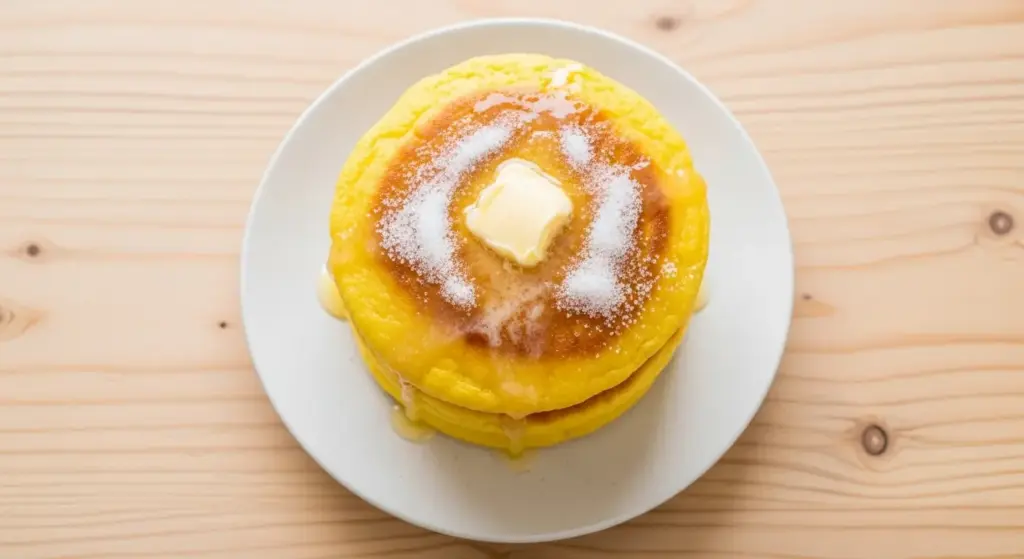
Filipino hot cakes are delicious on their own, but there are many creative ways to enjoy them. The classic preparation with margarine and sugar remains the most popular, but feel free to experiment.
Traditional Filipino style calls for spreading margarine or butter on warm hot cakes and sprinkling them generously with white granulated sugar. The heat melts the margarine, and the sugar creates a sweet, slightly crunchy topping that’s simply irresistible.
Here are more serving ideas:
- With condensed milk: Drizzle sweetened condensed milk over the hot cakes for extra richness and sweetness
- Rolled style: Roll the hot cakes like a wrap with margarine and sugar inside for easy, on-the-go eating
- With ice cream: Serve warm hot cakes as a base for vanilla or ube ice cream
- Afternoon snack: Pair with hot coffee, tea, or cold ginger ale for a classic Filipino merienda
- With fruit: Top with sliced bananas, strawberries, or mangoes for a fresher take
- Savory version: Skip the sugar and spread with cheese for a sweet-savory combination
- Breakfast plate: Serve alongside scrambled eggs and bacon for a Filipino-inspired breakfast
Variations to Try
While the classic Filipino hot cake recipe is wonderful on its own, experimenting with variations can bring new flavors to this beloved treat. These adaptations maintain the essential character while adding interesting twists.
- Ube hot cakes: Add 2 tablespoons of ube halaya (purple yam jam) to the batter for a purple color and unique flavor
- Pandan hot cakes: Replace the vanilla extract with 1/2 teaspoon pandan extract for a fragrant, Southeast Asian twist
- Chocolate hot cakes: Mix 2 tablespoons of cocoa powder into the dry ingredients for chocolate-flavored hot cakes
- Cheese hot cakes: Sprinkle grated cheddar or quickmelt cheese on top instead of sugar for a sweet and savory combination
- Coconut hot cakes: Replace half the evaporated milk with coconut milk for a subtle coconut flavor
- Banana hot cakes: Mash half a ripe banana into the wet ingredients for natural sweetness and flavor
- Extra spongy version: Add 1/2 teaspoon more baking powder for an even spongier texture
Another variation you’ll enjoy is our kodiak pancake recipe.
Storage and Reheating
Proper storage keeps your Filipino hot cakes fresh and delicious for several days. These storage tips ensure you can enjoy them even after the initial cooking session.
- Room temperature storage: Hot cakes can be kept at room temperature in an airtight container for up to 1 day if your kitchen is cool
- Refrigerator storage: Store leftover hot cakes in an airtight container or zip-top bag in the refrigerator for up to 5 days
- Freezer storage: Place parchment paper between each hot cake and store in a freezer-safe container or bag for up to 2 months
- Reheating in microwave: Place 2 to 3 hot cakes on a microwave-safe plate and heat for 20 to 30 seconds until warm
- Reheating on stovetop: Warm hot cakes in a dry skillet over low heat for about 30 seconds per side
- Reheating from frozen: Thaw overnight in the refrigerator before reheating, or microwave directly from frozen for 45 to 60 seconds
- Best texture tip: Hot cakes taste best when eaten fresh, but reheating on a stovetop rather than in the microwave helps maintain their texture better
For a different breakfast treat, try our Belgian waffle recipe.
Nutritional Facts
Here’s the approximate nutritional information per hot cake (based on recipe making 10 hot cakes, without toppings):
- Calories: 95
- Total Fat: 2.5g
- Saturated Fat: 0.8g
- Cholesterol: 22mg
- Sodium: 110mg
- Total Carbohydrates: 15g
- Dietary Fiber: 0.4g
- Sugars: 6g
- Protein: 3g
- Calcium: 65mg
- Iron: 0.6mg
Note: Nutritional values are approximate and will vary based on specific brands of ingredients used and the amount of margarine and sugar added as toppings. Adding margarine and sugar significantly increases the calorie and fat content.
Health Benefits of Key Ingredients
While Filipino hot cakes are undeniably a treat, several ingredients offer nutritional benefits. Understanding what each component contributes helps you appreciate the recipe beyond just its delicious taste.
The evaporated milk used in this recipe provides calcium and vitamin D, which support bone health and immune function. It also contains protein that helps with muscle maintenance and satiety.
Here are the health benefits of other key ingredients:
- Eggs: Excellent source of high-quality protein, choline for brain health, and vitamins B12 and D
- All-purpose flour: Provides carbohydrates for energy, and enriched flour contains added iron and B vitamins
- Milk: Rich in calcium for strong bones and teeth, plus phosphorus and potassium
- Vegetable oil: Contains healthy unsaturated fats that help absorb fat-soluble vitamins
- Baking powder: Contains calcium carbonate, which contributes to your daily calcium intake
You might also like our pancake recipe without milk.
Frequently Asked Questions
1. What’s the difference between Filipino hot cakes and American pancakes?
Filipino hot cakes are thinner and spongier than American pancakes, with a slightly chewy texture. They’re traditionally served with margarine and sugar rather than syrup, and they’re typically eaten as an afternoon snack instead of breakfast. The addition of evaporated milk gives them a unique, slightly caramelized flavor that American pancakes don’t have.
2. Can I make Filipino hot cakes without food coloring?
Yes, you can absolutely omit the yellow food coloring. The hot cakes will still taste authentic, though they won’t have the signature golden color that’s traditional for Filipino street food. The color is purely for appearance and doesn’t affect the flavor or texture at all.
3. Why are my hot cakes chewy instead of spongy?
Chewy hot cakes usually result from overmixing the batter, which develops too much gluten in the flour. Mix the wet and dry ingredients just until combined, leaving some small lumps. Also, make sure you’re using medium-low heat and not cooking them too long, as overcooking can make them tough.
4. Can I use regular milk instead of evaporated milk?
Regular milk can be substituted, but the flavor won’t be quite as authentic. Evaporated milk has a concentrated, slightly caramelized taste that’s characteristic of Filipino hot cakes. If you only have regular milk, you might try simmering it to reduce it slightly before using, though this adds extra preparation time.
5. How do I prevent my hot cakes from sticking to the pan?
Make sure you’re using a good non-stick pan or griddle and that it’s properly heated before adding batter. Grease the pan lightly with oil or butter between batches. Using too much grease can make the hot cakes greasy, while too little causes sticking, so finding the right balance is key.
For more breakfast inspiration, check out our easy French toast recipe.
Filipino Hot Cakes

Equipment
- Mixing bowls - 2 medium-sized; one for dry ingredients, one for wet ingredients
- Whisk or fork - For mixing the batter smoothly
- Non-stick skillet or griddle - Essential for easy flipping and preventing sticking
- Measuring cups and spoons - For accurate ingredient measurements
- Ladle or 1/4 cup measuring cup - For portioning batter evenly
- Spatula - For flipping the hot cakes
- Pastry brush - For spreading margarine on hot cakes (optional)
- Plate - For stacking finished hot cakes
Ingredients
Batter
- 1 cup all-purpose flour - 125g, sifted
- 1/4 cup granulated white sugar - 50g
- 1 tsp baking powder - 4g
- 1/4 tsp salt - 1.5g
- 1 large egg
- 1 cup evaporated milk - 240ml; do not substitute with regular milk for best results
- 1 tbsp vegetable oil - 15ml
- 1/4 tsp yellow food coloring - gel or liquid; adjust for desired color depth
For Cooking
- vegetable oil or butter - small amount, for greasing the pan between batches
For Serving
- margarine or butter - generous amount, for spreading on warm hot cakes
- granulated sugar - for sprinkling over margarine
Instructions
- Sift the flour into a large mixing bowl, then add the sugar, baking powder, and salt. Whisk together until evenly combined with no pockets of baking powder.
- In a separate bowl, lightly beat the egg, then whisk in the evaporated milk, vegetable oil, and yellow food coloring until fully combined and evenly colored.
- Pour the wet ingredients into the dry ingredients and stir gently until just combined — do not overmix; small lumps are fine. Let the batter rest for 5 minutes.
- Heat a non-stick skillet or griddle over medium-low heat for 2–3 minutes, then lightly grease with a thin film of oil or butter using a paper towel.
- Pour about 1/4 cup of batter per hot cake onto the pan; cook for 1–2 minutes until bubbles form on the surface and edges look set, then flip and cook 1–1.5 minutes more until golden brown.
- Transfer each hot cake to a plate and repeat with remaining batter, lightly re-greasing the pan as needed. You should get 8–10 hot cakes total.
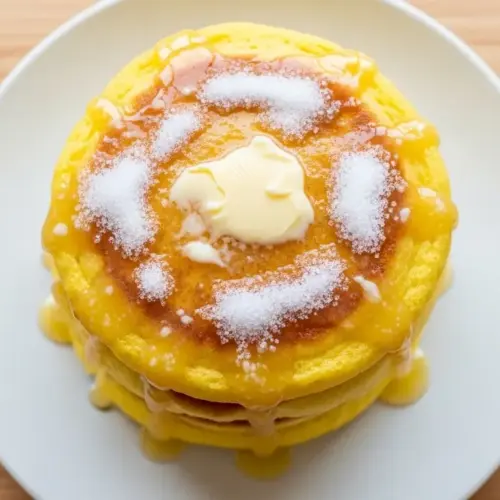
- While still warm, spread each hot cake generously with margarine or butter and sprinkle with granulated sugar; serve immediately for the best taste and texture.
Notes
- Don’t overmix: Stir just until the wet and dry ingredients are combined — overmixing develops gluten and makes the hot cakes tough instead of spongy.
- Use evaporated milk: This is key to authentic Filipino hot cakes; it provides a slightly caramelized, concentrated flavor that regular milk cannot replicate.
- Let the batter rest: The 5-minute rest allows the flour to fully hydrate and the baking powder to activate for a better texture.
- Medium-low heat is essential: Too high a heat browns the outside before the inside cooks through; patience ensures even, golden results.
- Wait for bubbles before flipping: Flipping too early tears the hot cake or leaves it raw in the center.
- Food coloring is optional: Omitting the yellow coloring does not affect flavor or texture — it’s purely for the traditional appearance.
- Milk substitution: If you only have regular milk, simmer it gently to reduce slightly before using to approximate the richness of evaporated milk.
- Storage: Store leftover hot cakes in an airtight container in the refrigerator for up to 5 days, or freeze with parchment between each for up to 2 months.
- Reheating: Reheat in a dry skillet over low heat for 30 seconds per side to best preserve texture; microwave for 20–30 seconds if you’re in a hurry.
- Variations: Try adding 2 tbsp ube halaya for purple ube hot cakes, or replace half the evaporated milk with coconut milk for a subtle tropical twist.
Final Thoughts
Filipino hot cakes bring the authentic taste of Philippine street food right into your home kitchen. This simple recipe uses everyday ingredients to create something truly special that will transport you back to childhood memories or introduce you to a beloved Filipino treat.
The combination of thin, spongy texture with sweet margarine and sugar creates a uniquely satisfying snack that’s perfect any time of day. Give this recipe a try and experience why generations of Filipinos have loved these golden pancakes. Share your results in the comments below, or tell us about your favorite way to enjoy hot cakes!
Recommended:
- Classic French Toast Recipe
- Betty Crocker Pancake Recipe
- Breakfast Casserole Recipe
- French Toast Casserole Recipe
- Air Fryer French Toast Recipe
- Easy Banana Bread Recipe With Self Rising Flour
- Starbucks Banana Bread Recipe
- Sweet Cornbread Recipe
- Skillet Cornbread Recipe
- Easy Granola Recipe