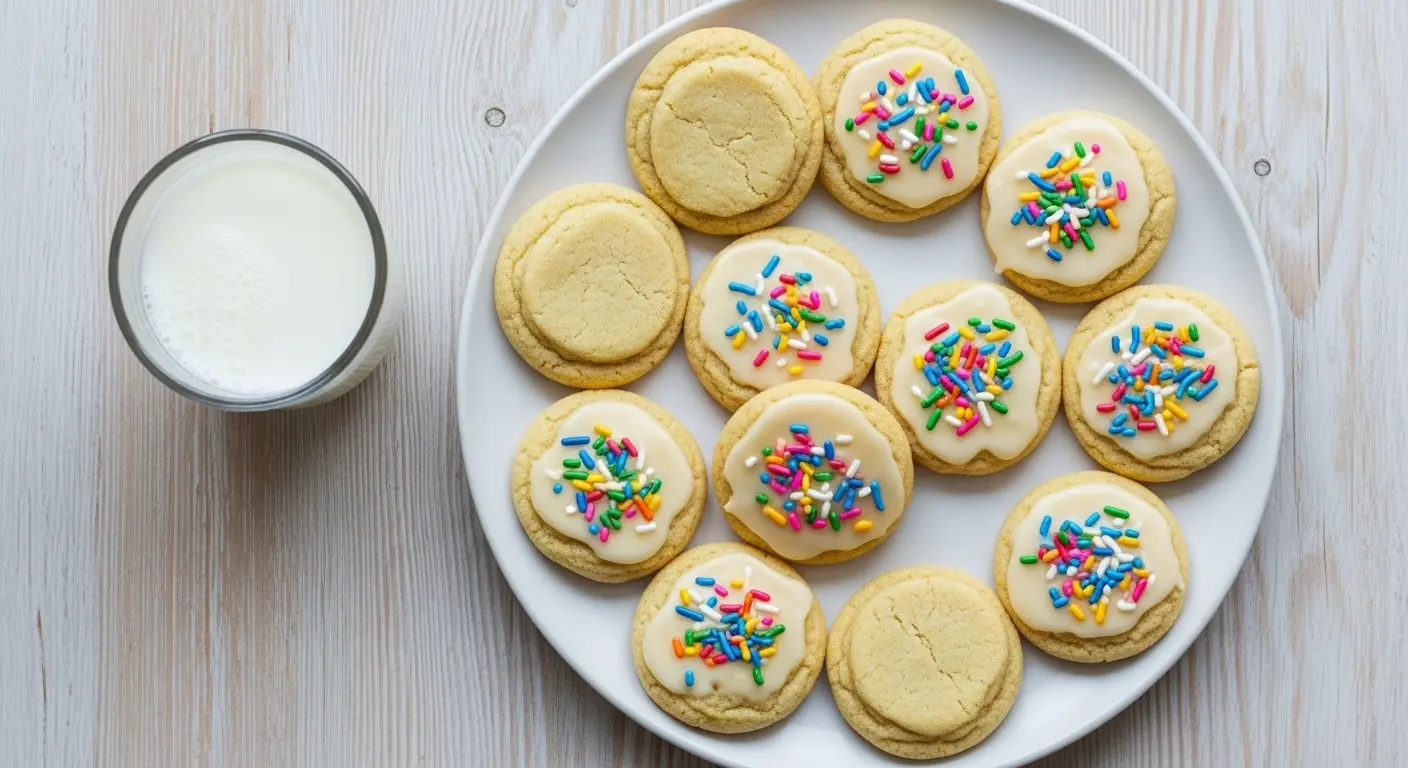
If you have ever dreamed of baking cookies that taste like they came straight from a bakery, this easy sugar cookie recipe is exactly what you need. Soft, buttery, and loaded with classic vanilla flavor, these cookies come together in about 30 minutes with ingredients you probably already have on hand.
No complicated techniques. No overnight chilling. Just a simple dough that yields perfectly tender cookies every single time.
These sugar cookies are incredibly versatile, too. You can enjoy them completely plain, roll them in colored sugar for a festive touch, or frost them with a simple glaze or royal icing for any occasion. If you love baking cookies but want something approachable and foolproof, this is the one to start with.
Baking for the holidays, a school bake sale, or just a Tuesday afternoon treat, this recipe delivers every time. And if you already love cookie baking, you might also enjoy our Sugar Cookies Recipe for another take on this classic treat.

Why You’ll Love This Easy Sugar Cookie Recipe
This recipe checks every box when it comes to a go-to sugar cookie. The dough is quick to mix, requires no chilling, and bakes up in under 15 minutes.
Each cookie has a beautifully soft, pillowy center with just a hint of golden color around the edges. That texture is achieved by using a combination of butter and baking powder, which creates lift without making the cookies cakey or dense.
The flavor is simple but deeply satisfying. Vanilla extract provides that warm, classic sweetness that makes sugar cookies so beloved in the first place.
These cookies also hold up beautifully to decorating. Whether you want to top them with sprinkles, a buttercream swirl, or a thin layer of icing, the slightly firm surface means everything stays in place.
- Comes together in about 30 minutes from start to finish
- Requires only 7 common pantry ingredients
- No chilling the dough required
- Yields approximately 24 cookies per batch
- Soft and chewy on the inside with lightly golden edges
- Perfect base for frosting, sprinkles, or enjoying plain
- Great for beginners and seasoned bakers alike
You might also enjoy: Cut Out Sugar Cookie Recipe
Ingredients
This recipe keeps things simple on purpose. Every ingredient plays a specific role in creating the perfect texture and flavor, so it is worth paying attention to a few details when measuring and preparing them.
Using unsalted butter gives you full control over the saltiness of the cookie, and softening it to room temperature beforehand ensures it creams smoothly with the sugar. The combination of baking powder and a pinch of salt works together to give the cookies just enough lift while keeping them tender rather than tough.
- 1 cup (226 g) unsalted butter, softened to room temperature
- 3/4 cup (150 g) granulated sugar
- 1 large egg, at room temperature
- 1 teaspoon (5 ml) pure vanilla extract
- 2 1/2 cups (312 g) all-purpose flour
- 1 teaspoon (4 g) baking powder
- 1/4 teaspoon (1.5 g) salt
- Optional: 1/4 cup (about 50 g) sprinkles or colored sugar for topping
Read Also: Single Serving Sugar Cookie Recipe
Kitchen Equipment Needed
Having the right tools on hand before you start makes baking sugar cookies a smooth and enjoyable experience. You do not need anything fancy here, but a few key pieces of equipment will make a noticeable difference in your results.
A stand mixer or hand mixer is essential for properly creaming the butter and sugar together, which is the foundation of a soft, tender cookie. Baking sheets lined with parchment paper ensure the cookies do not stick and bake evenly without burning on the bottom.
- Stand mixer or hand mixer
- Large mixing bowl
- Medium mixing bowl
- Baking sheets (at least 2)
- Parchment paper
- Measuring cups and spoons
- Cookie scoop (2-tablespoon size recommended)
- Spatula or rubber scraper
- Wire cooling rack
- Whisk
This technique also pairs wonderfully with a Cookie Skillet Recipe if you ever want to try baking sugar cookie dough in a skillet for a warm, shareable dessert.
Recommended Products for This Recipe
These are a few products I recommend based on quality and performance that can genuinely elevate your sugar cookie baking experience.
1. KitchenAid Stand Mixer
A reliable stand mixer takes the guesswork out of creaming butter and sugar. It ensures you hit the right consistency every time without overworking the dough, which is one of the most common causes of tough cookies.
2. Nielsen-Massey Pure Vanilla Extract
Vanilla extract is the star flavoring in sugar cookies, so using a high-quality version makes a real difference. Nielsen-Massey is a well-regarded brand known for its rich, smooth vanilla flavor that holds up beautifully during baking.
3. OXO Good Grips Cookie Scoop
Portioning dough evenly is the easiest way to ensure all your cookies bake at the same rate. The OXO cookie scoop has a smooth trigger mechanism that makes it fast and consistent, which is especially helpful when baking multiple batches.
4. Silpat Silicone Baking Mat
A silicone baking mat provides a nonstick surface that distributes heat evenly, giving you cookies with smooth, golden bottoms and no sticking. It is also reusable, so it is a smart long-term investment for any home baker.
5. Bob’s Red Mill All-Purpose Flour
Flour quality matters more than most bakers realize. Bob’s Red Mill all-purpose flour is a dependable, widely available option that gives you consistent results across a range of baked goods, including sugar cookies.
The same buttery, simple dough base used here also works beautifully in a Snickerdoodle Cookie Recipe if you enjoy adding a cinnamon-sugar twist.
Step-by-Step Instructions
Follow these detailed steps carefully, and you will end up with a batch of perfectly soft, golden sugar cookies. Each step is broken down so that even first-time bakers can feel confident in the process.
1. Preheat Your Oven and Prepare Your Baking Sheets
- Set your oven to 350 degrees Fahrenheit (175 degrees Celsius) and allow it to fully preheat before you begin baking. An accurate oven temperature is one of the most important factors in getting cookies that are golden on the outside and soft on the inside.
- Line two large baking sheets with parchment paper. This prevents the cookies from sticking to the pan and also helps them bake more evenly by creating a slight barrier between the dough and the hot metal surface.
- Set the prepared baking sheets aside and move on to mixing your dough.
2. Cream the Butter and Sugar
- Place the softened unsalted butter (1 cup / 226 g) into a large mixing bowl or the bowl of your stand mixer fitted with the paddle attachment.
- Add the granulated sugar (3/4 cup / 150 g) to the bowl with the butter.
- Beat the butter and sugar together on medium speed for about 2 to 3 minutes, until the mixture is light, fluffy, and pale in color. This creaming step is critical because it incorporates air into the dough, which contributes to a softer, more tender cookie. Do not rush this step or skip ahead.
- Use a rubber spatula to scrape down the sides of the bowl once during creaming to make sure everything is evenly incorporated.
3. Add the Egg and Vanilla Extract
- Crack the egg (1 large, at room temperature) into the creamed butter and sugar mixture.
- Pour in the vanilla extract (1 teaspoon / 5 ml) as well.
- Beat on medium speed for about 30 seconds to 1 minute, just until the egg and vanilla are fully combined and the mixture looks smooth and uniform. Avoid overmixing at this stage, as it can begin to develop too much gluten in the flour when it is added next.
- Scrape down the sides of the bowl again with your spatula to ensure nothing is sitting at the edges unmixed.
4. Mix the Dry Ingredients
- In a separate medium bowl, whisk together the all-purpose flour (2 1/2 cups / 312 g), baking powder (1 teaspoon / 4 g), and salt (1/4 teaspoon / 1.5 g).
- Whisking the dry ingredients together before adding them to the wet mixture ensures that the baking powder and salt are evenly distributed throughout the dough. If they clump in one spot, you might end up with an unevenly flavored or risen cookie.
- Set the dry ingredient mixture aside until you are ready to combine it with the wet ingredients.
5. Combine Wet and Dry Ingredients
- With your mixer on low speed, gradually add the dry ingredient mixture to the wet ingredients in two to three additions. Adding it all at once can cause flour to puff up and make a mess, and it also increases the risk of overmixing.
- Mix on low speed just until the flour is fully incorporated and no dry streaks remain. The dough should look slightly crumbly at first but come together into a cohesive, soft mass as you continue mixing.
- Stop mixing the moment the dough looks uniform. Overmixing at this point will develop too much gluten, which leads to tough, dense cookies rather than soft and tender ones.
- Use a spatula to fold in any remaining bits of dry flour that may be clinging to the sides or bottom of the bowl.
6. Portion the Dough
- Use a 2-tablespoon cookie scoop to portion the dough into evenly sized balls. Consistent sizing is important because it ensures all the cookies bake at the same rate and finish at the same time.
- If you do not have a cookie scoop, use two spoons or your hands to roll the dough into balls that are roughly 1.5 inches (about 4 cm) in diameter.
- If you would like to add sprinkles or colored sugar, gently press a small amount onto the outside of each dough ball now, before baking. This gives them a decorative, sparkly appearance without needing any additional steps after baking.
- Place the dough balls onto your prepared parchment-lined baking sheets, spacing them about 2 inches (5 cm) apart. This spacing allows the cookies to spread slightly during baking without running into each other.
7. Bake the Cookies
- Transfer the baking sheets to your preheated oven and bake for 9 to 11 minutes. The exact baking time may vary slightly depending on your oven and the size of your cookies, so start checking at the 9-minute mark.
- The cookies are done when the edges are just barely set and have the faintest hint of golden color, but the centers still look slightly underdone and soft. They will continue to firm up as they cool on the pan, so pulling them out a little early is better than leaving them in too long.
- Avoid opening the oven door frequently during baking, as this can cause the temperature to drop and lead to uneven cooking.
- If you are baking two sheets at once, swap their positions on the oven racks halfway through the baking time to ensure even browning.
8. Cool the Cookies
- Remove the baking sheets from the oven and set them on a heat-safe surface.
- Allow the cookies to cool on the baking sheet for about 5 minutes. They will be very soft and fragile right out of the oven, so moving them too soon can cause them to break apart.
- After 5 minutes, use a spatula to gently transfer the cookies to a wire cooling rack to cool completely. Cooling them on a rack allows air to circulate underneath, which prevents the bottoms from becoming soggy.
- Once fully cooled, the cookies are ready to enjoy plain, frost, or decorate as you like.
Read Also: Peanut Butter Cookie Recipe
Tips for Success
A few small adjustments can make a big difference when it comes to baking the best possible sugar cookies. These tips are based on common mistakes and the insights that come from testing this recipe repeatedly.
The single most important tip is to avoid overbaking. Sugar cookies should come out of the oven looking slightly underdone in the center, because they will set up and firm as they cool. Cookies that look perfectly done in the oven will almost always end up dry and crumbly once they cool down.
- Make sure your butter is truly softened to room temperature before creaming. Cold butter will not cream properly and can lead to a dense, tough dough. If you forgot to set it out, cut it into small cubes and let it sit for 15 to 20 minutes.
- Measure your flour accurately by spooning it into the measuring cup and leveling off the top with a straight edge. Scooping flour directly from the bag packs it too tightly and adds excess flour, which dries out the cookies.
- Do not overmix the dough once the flour has been added. Mix on low speed and stop as soon as the dough comes together. Overmixing develops gluten, which makes cookies tough rather than tender.
- Keep an eye on oven temperature. If your oven runs hot, your cookies may brown too quickly on the bottom before the centers are set. An oven thermometer can help you dial in the right temperature.
- Bake similar-sized cookies together on the same sheet. If you mix large and small dough balls on one pan, the smaller ones will finish baking before the larger ones, leading to uneven results.
Our Oatmeal Cookie Recipe uses a similar creaming technique, so it is a great next recipe to try once you have mastered this one.
Serving Suggestions
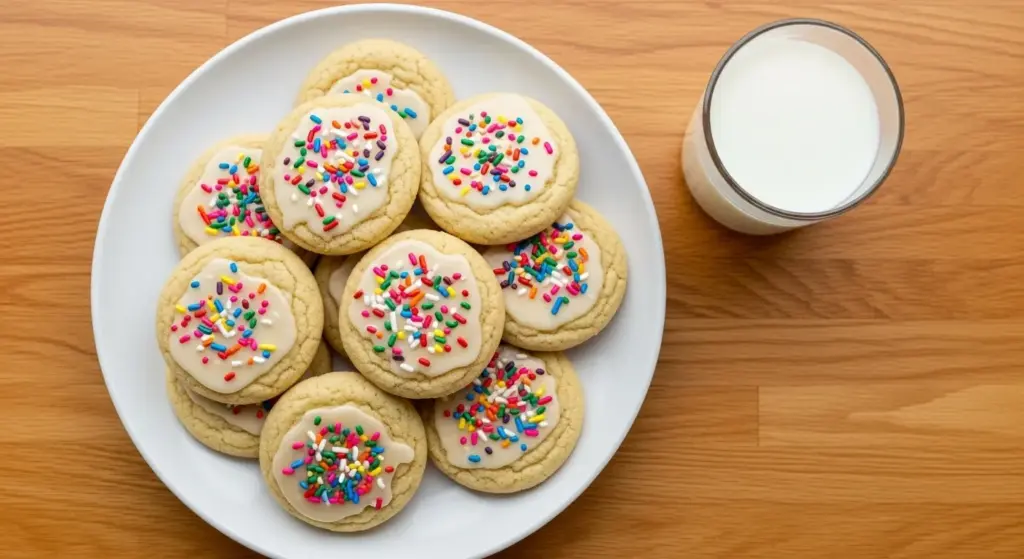
Sugar cookies are one of the most versatile treats in your baking repertoire. They are wonderful on their own, but they also pair beautifully with a wide range of accompaniments and presentation styles.
For a simple everyday treat, serve them alongside a cold glass of milk or a cup of tea. The buttery sweetness of the cookies is perfectly complemented by something cold or warm to sip on. For a more festive occasion, arrange them on a tiered serving plate and top each one with a swirl of buttercream or a drizzle of melted white chocolate.
- Pair with a tall glass of cold milk for the ultimate classic cookie experience
- Top with a thin layer of Easy Royal Icing and let it set before serving for a polished, bakery-style look
- Add colorful sprinkles on top of the icing while it is still wet for a fun, celebratory presentation
- Use two cookies to sandwich a scoop of vanilla ice cream for a simple homemade ice cream sandwich
- Arrange on a holiday cookie tray alongside Shortbread Cookies and Gingerbread Cookies for a festive spread
- Crush a few plain cookies into crumbs and sprinkle them over yogurt or pudding as a dessert topping
- Package individually in cellophane bags tied with ribbon for a thoughtful homemade gift
Variations to Try
Once you have mastered the base recipe, there are so many directions you can take these cookies. Small tweaks to the dough or toppings can completely change the flavor and feel of the final cookie.
One of the easiest and most popular variations is adding a splash of almond extract alongside the vanilla. Even just 1/4 teaspoon adds a warm, nutty depth that many people find irresistible in sugar cookies.
- Almond Sugar Cookies: Add 1/4 teaspoon (1 ml) of almond extract along with the vanilla extract for a nutty, aromatic twist that pairs beautifully with a simple white icing.
- Lemon Sugar Cookies: Replace the vanilla extract with 1 teaspoon (5 ml) of lemon extract and add 1 tablespoon (15 ml) of lemon zest to the dough for a bright, citrusy flavor.
- Chocolate Dipped: Melt 1 cup (170 g) of semi-sweet chocolate chips and dip the cooled cookies halfway into the chocolate. Set on parchment paper until the chocolate is fully set.
- Cinnamon Sugar Cookies: Roll each dough ball in a mixture of 2 tablespoons granulated sugar and 1 teaspoon ground cinnamon before baking for a warm, spiced variation.
- Funfetti Cookies: Fold 1/4 cup (about 42 g) of rainbow jimmies sprinkles into the dough just before portioning for a colorful, celebratory cookie.
- Peppermint Cookies: Swap the vanilla for 1 teaspoon (5 ml) of peppermint extract and top with crushed candy canes after baking for a holiday favorite.
If you enjoy cookie variations, our Best Chocolate Chip Cookies Recipe is another must-try for your baking rotation.
Storage and Reheating
Storing sugar cookies properly keeps them soft and flavorful for days after baking. The key is keeping them in an airtight environment and away from moisture, which can make them soggy or cause them to dry out unevenly.
Unfrosted cookies will last longer than frosted ones, so if you are planning to store them for more than a day or two, consider holding off on the icing until you are ready to serve.
- Room Temperature: Store completely cooled cookies in an airtight container with a sheet of parchment paper between each layer to prevent sticking. They will stay fresh for up to 4 to 5 days. Adding a small piece of bread to the container helps absorb excess moisture and keeps the cookies softer longer.
- Refrigerator: Place cookies in an airtight container in the fridge for up to 1 week. This is especially helpful if your kitchen is warm or humid, as it slows down the drying process.
- Freezer: Unfrosted, completely cooled cookies can be frozen in an airtight container or freezer bag for up to 2 to 3 months. Place parchment paper between layers to prevent them from sticking together. To thaw, simply leave them at room temperature for about 30 minutes to 1 hour.
- Freezing the Dough: If you want to save time on future batches, portion the dough into balls and freeze them on a baking sheet until solid. Transfer to a freezer bag and store for up to 2 months. Bake directly from frozen, adding 2 to 3 extra minutes to the baking time.
- Reheating: If you want a warm cookie, microwave a single cookie for about 5 to 8 seconds. Be careful not to overheat, as this can make the cookie tough or dry.
Our Shortbread Cookie Recipe has a similar storage profile, so the same tips apply if you enjoy baking that classic treat as well.
Nutritional Facts
The nutritional information below is based on one cookie from a standard batch of 24 cookies, made using the exact ingredients listed in this recipe without any optional toppings or icing.
| Nutrient | Amount per Cookie |
|---|---|
| Calories | 145 |
| Total Fat | 7 g |
| Saturated Fat | 4.5 g |
| Cholesterol | 30 mg |
| Sodium | 40 mg |
| Total Carbohydrates | 19 g |
| Dietary Fiber | 0.4 g |
| Total Sugars | 6.5 g |
| Protein | 1.8 g |
Keep in mind that these values are approximate and will change depending on the size of your cookies, any substitutions you make, and any toppings or icing you add. Adding sprinkles, chocolate, or frosting will increase both the calorie count and sugar content per cookie.
If you enjoy tracking nutrition alongside your baking, our Eggnog Cookies Recipe includes similar nutritional details for easy reference.
Health Benefits of Key Ingredients
While sugar cookies are certainly a treat and best enjoyed in moderation, a few of the core ingredients do bring some nutritional value to the table. Understanding what each ingredient contributes can help you appreciate the recipe from a more balanced perspective.
Eggs are one of the most nutrient-dense foods available. They are an excellent source of high-quality protein, vitamin D, choline, and B vitamins, all of which play important roles in brain health, energy metabolism, and cell repair.
- Eggs: Provide complete protein, vitamin D, choline, and B12, all of which support brain function, energy production, and overall cellular health.
- Butter: Contains fat-soluble vitamins A, D, E, and K, which are important for vision, bone health, immune function, and blood clotting. Butter also adds the rich flavor that makes sugar cookies taste so satisfying.
- All-Purpose Flour: Contributes B vitamins and some iron, both of which are essential for energy and oxygen transport in the body. Flour also provides the structure that holds the cookie together during baking.
- Vanilla Extract: While used in small amounts, vanilla contains antioxidants that may help protect cells from damage. It also adds depth of flavor that reduces the need for excessive amounts of sugar.
Our Banana Pudding Recipe features eggs and vanilla as well, so it is another dessert worth exploring if you enjoy these flavors.
Frequently Asked Questions
1. Can I make the dough ahead of time?
Absolutely. You can prepare the dough, wrap it tightly in plastic wrap, and refrigerate it for up to 24 hours before baking. If the dough has been chilled for more than a few hours, let it sit at room temperature for about 10 to 15 minutes before scooping so it is easier to work with.
2. Why did my sugar cookies come out dry and crumbly?
The most common reason is overbaking. Sugar cookies should come out of the oven when the edges are just barely set and the centers still look slightly underdone. They firm up as they cool, so pulling them out a minute or two early makes a big difference.
Too much flour is another frequent culprit. If the flour is packed too tightly into the measuring cup, you end up with significantly more than the recipe calls for, which dries out the dough.
3. Can I use salted butter instead of unsalted?
Yes, you can use salted butter in a pinch. However, the amount of salt in salted butter varies by brand, so it is a good idea to reduce or omit the additional salt called for in the recipe to avoid an overly salty cookie. Unsalted butter remains the preferred choice for more precise flavor control.
4. How do I know when the cookies are done baking?
Look for edges that are just barely golden and a center that still appears slightly soft and underdone. The cookies will continue to set and firm up on the baking sheet as they cool, so they should not look fully done while still in the oven.
5. Can I add mix-ins to the dough?
Yes, sugar cookie dough is a great base for mix-ins. You can fold in chocolate chips, sprinkles, chopped nuts, or dried fruit just before portioning. Add about 1/4 to 1/2 cup of your chosen mix-in and gently fold it into the finished dough with a spatula.
If you enjoy experimenting with cookie mix-ins, our Chewy Chocolate Chip Cookies Recipe is a fantastic starting point for inspiration.

Easy Sugar Cookies

Equipment
- Stand mixer or hand mixer
- Large mixing bowl
- Medium mixing bowl
- Baking sheets - at least 2
- Parchment paper
- Measuring cups and spoons
- Cookie scoop - 2-tablespoon size recommended
- Spatula or rubber scraper
- Wire cooling rack
- Whisk
Ingredients
- 1 cup unsalted butter - 226 g, softened to room temperature
- 3/4 cup granulated sugar - 150 g
- 1 large egg - at room temperature
- 1 teaspoon pure vanilla extract - 5 ml
- 2 1/2 cups all-purpose flour - 312 g
- 1 teaspoon baking powder - 4 g
- 1/4 teaspoon salt - 1.5 g
- 1/4 cup sprinkles or colored sugar - about 50 g, optional for topping
Instructions
- Preheat oven to 350°F (175°C). Line two large baking sheets with parchment paper.
- Cream softened butter and granulated sugar on medium speed for 2-3 minutes until light and fluffy. Scrape down the bowl.
- Add egg and vanilla extract. Beat on medium speed for 30-60 seconds until smooth. Scrape down the bowl.
- In a separate bowl, whisk together flour, baking powder, and salt.
- Gradually add dry ingredients to wet on low speed until just combined. Do not overmix. Dough will be soft.
- Use a 2-tablespoon cookie scoop to portion dough into balls. Roll in sprinkles or colored sugar if desired. Place 2 inches apart on prepared sheets.
- Bake for 9-11 minutes until edges are barely golden and centers still look slightly soft. Rotate pans halfway if baking two sheets.
- Cool on baking sheet for 5 minutes, then transfer to a wire rack to cool completely.
Notes
- Avoid overbaking; cookies should look slightly underdone in the center as they firm up while cooling.
- Measure flour by spooning into the cup and leveling off to prevent dry cookies.
- Butter must be properly softened to room temperature for best creaming and texture.
- Do not overmix after adding flour to keep cookies tender rather than tough.
- Store unfrosted cookies in an airtight container at room temperature up to 4-5 days; add a slice of bread to keep them soft.
- Freeze baked unfrosted cookies up to 2-3 months or freeze dough balls for up to 2 months and bake from frozen.
- Variations: Add 1/4 tsp almond extract, lemon zest, or roll in cinnamon sugar before baking.
- Use high-quality vanilla extract for the best flavor.
- Dough can be made ahead and refrigerated up to 24 hours; let sit at room temp before scooping.
Final Thoughts
This easy sugar cookie recipe is one of those baking staples that everyone should have in their back pocket. It is simple, reliable, and delivers soft, buttery cookies that disappear fast no matter who you share them with.
The best part is how forgiving and flexible this recipe is. Once you have the basics down, you can customize it in endless ways to suit any occasion or craving.
We hope you enjoy making these cookies just as much as we do. Give the recipe a try and let us know how they turn out in the comments below. We would love to hear about any fun variations you tried or tips that worked especially well in your kitchen.
Recommended:
- Monster Cookie Recipe
- No Bake Cookie Recipe
- Oatmeal Raisin Cookie Recipe
- Peanut Butter Blossom Cookies Recipe
- Fudge Stripe Cookies Recipe
- Fig Cookie Recipe
- Cherry Chip Cookie Recipe
- Almond Macaroon Cookie Recipe
- Chewy Oatmeal Chocolate Chip Cookie Recipe
- Old Fashioned Chocolate Chip Cookie Recipe