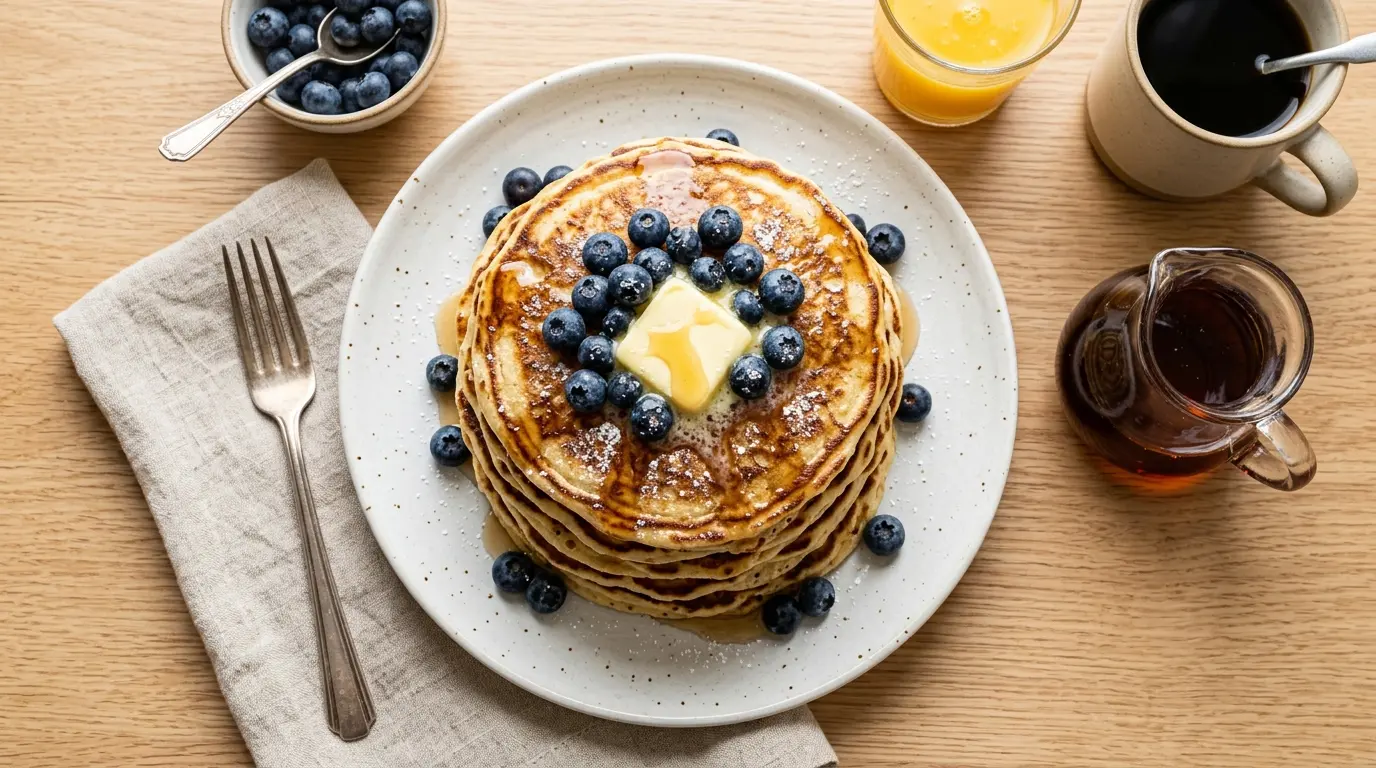
If you have a jar of sourdough starter sitting in your fridge, this sourdough pancake recipe is exactly what you should be making with it.
These aren’t just regular pancakes with a twist. The fermented starter adds a subtle tang, a cloud-like fluffiness, and a depth of flavor that you simply can’t get from a boxed mix.
The best part? You only need one bowl and about 30 minutes. No elaborate prep, no overnight sponge required for the same-day version.
Sourdough discard pancakes have become a weekend staple in so many households, and once you try them, it’s easy to understand why. The batter comes together quickly, the pancakes cook up golden with those gorgeous crispy butter-fried edges, and they hold syrup like a dream.
Whether you’re a seasoned sourdough baker or you just started a starter last week, this recipe is beginner-friendly and deeply satisfying.
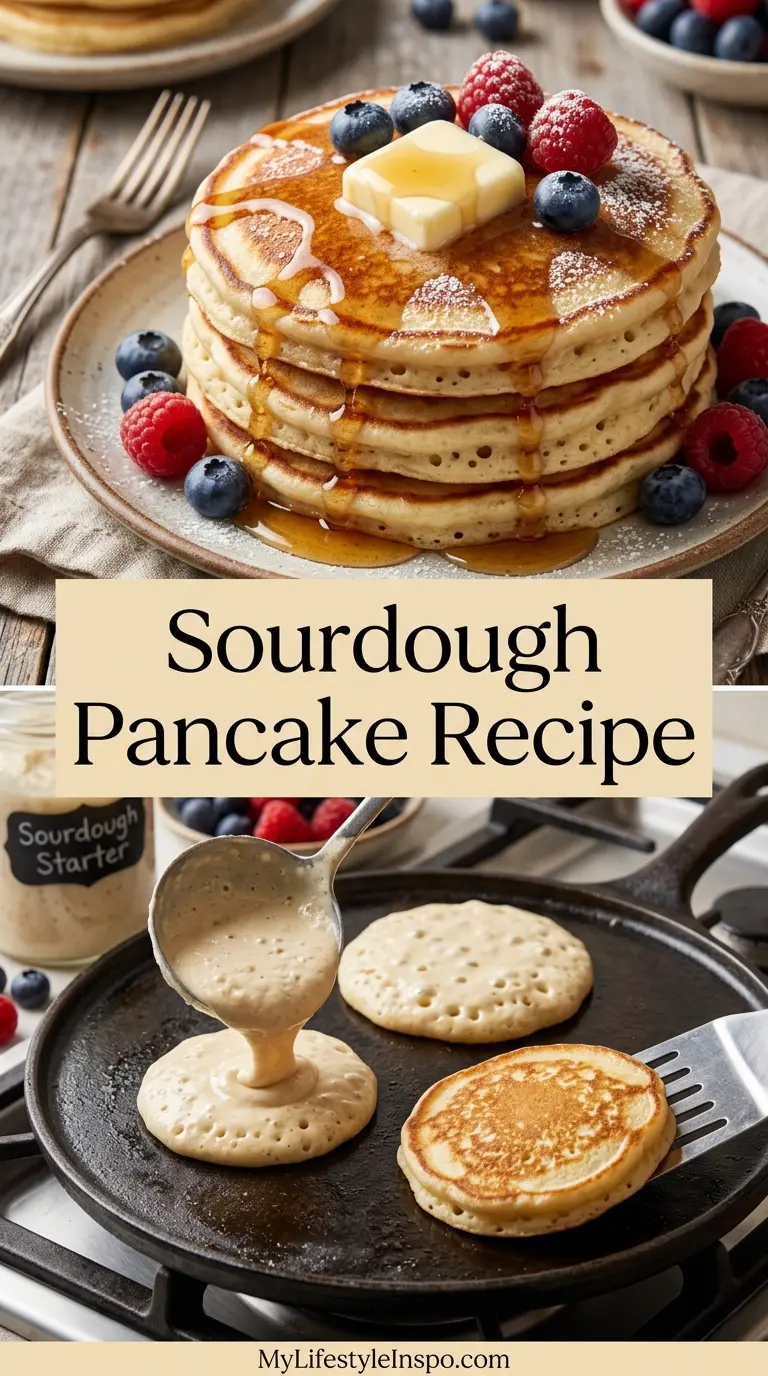
Why You’ll Love This Sourdough Pancake Recipe
These pancakes hit every mark that a great breakfast should.
They’re incredibly fluffy on the inside while staying slightly crisp around the edges from butter cooking, giving you that perfect textural contrast in every bite.
The sourdough starter adds a gentle tang that makes the flavors more interesting without tasting overly sour, complementing sweet toppings like maple syrup beautifully.
They also use up your sourdough discard, meaning nothing goes to waste from your regular starter feeding routine.
Here’s what makes this recipe stand out:
- Fluffy and light texture: The combination of sourdough starter with baking powder and baking soda creates an exceptionally airy crumb.
- Rich, complex flavor: The fermentation process gives these pancakes a mild tang that takes them well beyond basic.
- One bowl, minimal dishes: Everything comes together in a single mixing bowl for easy cleanup.
- Uses sourdough discard: A smart and delicious way to reduce waste from your sourdough baking routine.
- Ready in under 30 minutes: No overnight prep required for the same-day version.
- Easily customizable: Add blueberries, chocolate chips, or a pinch of cinnamon with zero fuss.
For another classic morning stack, check out the Old Fashioned Pancake Recipe.
Ingredients
You likely have most of these on hand already. The star of the show is the sourdough discard, which should be unfed and taken straight from the fridge for this recipe. It doesn’t need to be bubbly or active since the baking powder and baking soda handle the rise.
- 1 cup (240 g) sourdough discard (unfed, straight from the fridge)
- 1 cup (125 g) all-purpose flour, spooned and leveled
- 1 cup (240 ml) whole milk
- 2 large eggs
- 2 tablespoons (28 g) unsalted butter, melted and slightly cooled, plus more for cooking
- 2 tablespoons (25 g) granulated sugar
- 1 teaspoon baking powder
- 1/2 teaspoon baking soda
- 1/2 teaspoon fine salt
- 1 teaspoon pure vanilla extract
Your sourdough discard doesn’t need to be fresh. Up to two weeks old works perfectly well here since you’re not relying on it for rise. For guidance on maintaining your starter, visit the Sourdough Starter Recipe.
Kitchen Equipment Needed
You don’t need any specialized equipment to make these pancakes. A few basic items are all it takes to get perfectly golden results every time.
- Large mixing bowl
- Medium bowl (for dry ingredients)
- Whisk
- Rubber spatula or wooden spoon
- Cast iron skillet or non-stick griddle pan
- Wide pancake spatula (at least 5-6 inches wide for easier flipping)
- Measuring cups and spoons
- Ladle or 1/4 cup measuring cup for portioning batter
- Baking sheet (optional, for keeping cooked pancakes warm in the oven)
- Kitchen thermometer (optional, for checking pan temperature)
You might also enjoy the Easy Waffle Recipe if you prefer cooking with a waffle iron, since this batter works brilliantly in one too.
Recommended Products for This Recipe
These are products chosen based on genuine quality and performance that make a real difference in your results.
1. Lodge Cast Iron Skillet
A cast iron skillet is the gold standard for cooking pancakes. It holds heat evenly and consistently, which means your pancakes cook at a steady temperature from start to finish without hot spots. The result is that gorgeous, uniform golden-brown crust that a flimsy non-stick pan simply can’t deliver.
2. OXO Good Grips Wide Flexible Spatula
Flipping a sourdough pancake with a narrow spatula is a recipe for a broken pancake. A wide, flexible spatula gives you full support under the pancake so you can flip with confidence and keep that fluffy interior intact. This is one tool that immediately improves your pancake game.
3. King Arthur All-Purpose Flour
The quality of your flour genuinely matters in a simple recipe like this. King Arthur All-Purpose Flour has a consistent protein content that gives you reliable structure and tenderness every single time. It’s the brand that serious bakers trust, and it makes a noticeable difference in the final texture.
4. Pure Maple Syrup
Real maple syrup is not a luxury here. It pairs with the tangy notes of sourdough in a way that processed pancake syrup simply cannot replicate. The natural caramel and earthy undertones in a good Grade A dark maple syrup complement these pancakes perfectly.
If you’re looking for a gluten-free morning option, the Gluten Free Pancake Recipe is a great alternative to bookmark as well.
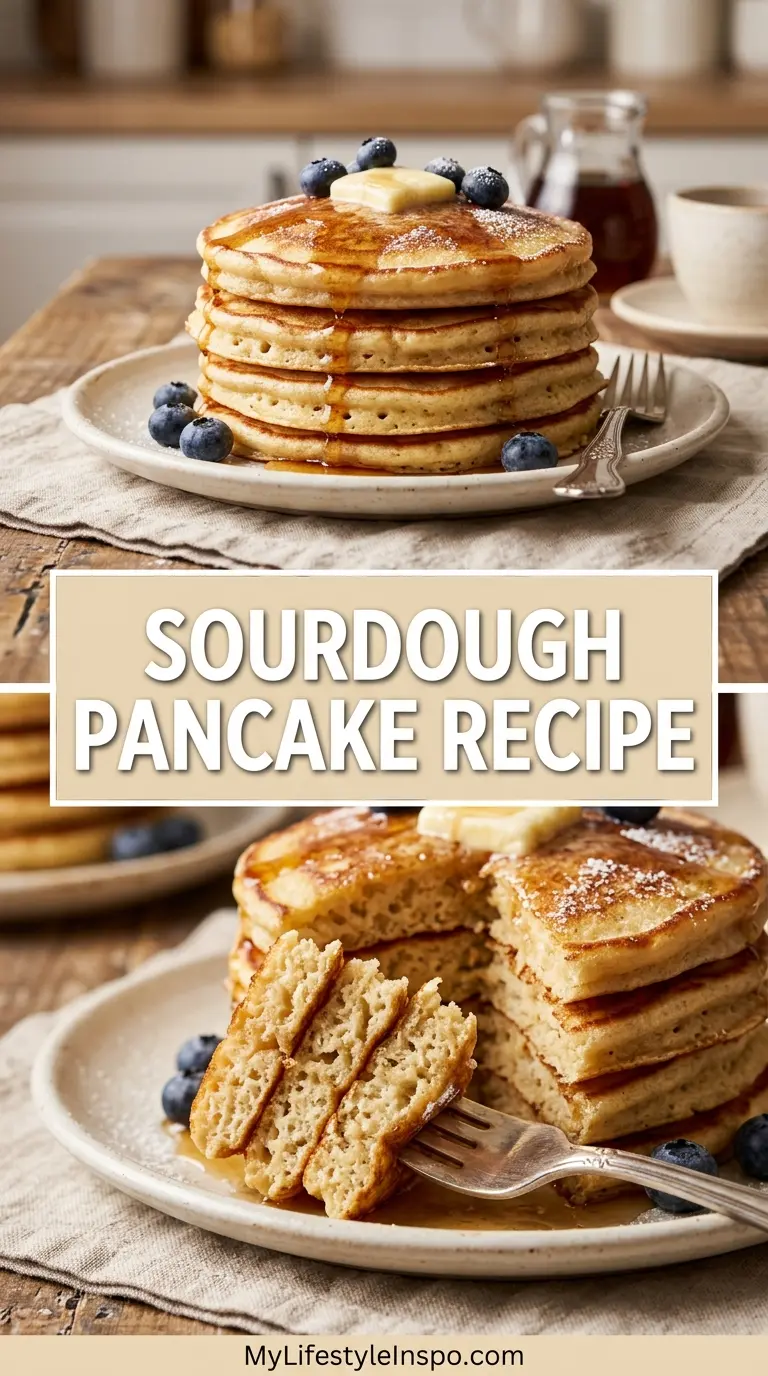
Step-by-Step Instructions
1. Prepare Your Dry Ingredients
- In a medium bowl, add 1 cup (125 g) of all-purpose flour, 1 teaspoon baking powder, 1/2 teaspoon baking soda, 2 tablespoons (25 g) granulated sugar, and 1/2 teaspoon fine salt.
- Whisk these dry ingredients together until they’re evenly combined with no streaks of baking soda or powder visible. This step prevents any pockets of leavening in the finished batter, which could create uneven bubbles and texture in your pancakes.
- Set the bowl aside on the counter while you prep the wet ingredients.
2. Combine the Wet Ingredients
- In your large mixing bowl, add 1 cup (240 g) of sourdough discard straight from the fridge.
- Crack in 2 large eggs and add 1 cup (240 ml) of whole milk.
- Pour in 2 tablespoons (28 g) of melted, slightly cooled unsalted butter and 1 teaspoon of pure vanilla extract.
- Whisk the wet ingredients together until everything is fully incorporated and the mixture looks smooth and consistent. It’s fine if the sourdough discard takes a moment to fully break up into the mixture.
3. Mix the Batter
- Pour the dry ingredient mixture into the large bowl with the wet ingredients.
- Using a rubber spatula or whisk, gently fold the two together until just combined. You want to stop mixing as soon as you no longer see streaks of flour, even if the batter still looks a little lumpy.
- Do not overmix. This is the most important tip for fluffy pancakes. Overmixing develops the gluten in the flour, which leads to dense, rubbery pancakes. A few lumps are perfectly fine and actually a sign of a well-mixed batter.
- Let the batter rest for 5 minutes while you preheat your pan. This brief rest allows the flour to fully hydrate and gives the baking powder time to activate slightly, leading to fluffier results.
4. Preheat and Prep the Pan
- Place your cast iron skillet or non-stick griddle over medium-low to medium heat.
- Allow the pan to preheat for at least 2-3 minutes. A properly preheated pan is critical for even cooking and getting those golden edges.
- To test if the pan is ready, flick a few drops of water onto the surface. If they dance and evaporate immediately, the pan is at the right temperature. If they sit there doing nothing, give it another minute.
- Once ready, add about 1/2 teaspoon of unsalted butter to the pan and let it melt, swirling to coat the surface. The butter should foam gently but not turn brown immediately. If it browns very quickly, your pan is too hot. Reduce the heat slightly and wait 30 seconds before continuing.
5. Cook the First Test Pancake
- Pour approximately 1/4 cup (60 ml) of batter into the center of the pan. It should spread naturally into a round shape about 4-5 inches wide.
- Watch the edges of the pancake carefully. After about 2-3 minutes, you should see the edges start to look matte and set, and small bubbles will form across the surface and begin to pop without filling back in.
- When the edges look dry and the surface has lost its shiny, wet look, it’s time to flip.
- Slide your wide spatula fully under the pancake in one smooth, confident motion and flip it over quickly. Don’t hesitate on the flip, as a slow and uncertain flip is what causes tears.
- Cook the second side for 1 to 2 minutes. It will be golden brown but usually not as evenly golden as the first side, which is completely normal.
- Transfer the test pancake to a plate and taste it. Adjust your pan temperature if needed before continuing. This test pancake is your quality check.
6. Cook the Remaining Pancakes
- Add a fresh small pat of butter to the pan between each pancake. The butter is what creates those slightly crispy, flavorful edges.
- Continue pouring 1/4 cup portions of batter for each pancake, working in batches that fit your pan without crowding. Pancakes need space so the steam can escape properly around each one.
- Repeat the cooking process for each batch: cook until bubbles form and edges are set (2-3 minutes), flip, cook 1-2 more minutes, and transfer to a plate.
- If you’re cooking a large batch, keep finished pancakes warm by placing them in a single layer on a baking sheet in a 200°F (93°C) oven while you finish the rest.
7. Serve and Enjoy
- Stack your sourdough pancakes onto plates immediately after pulling them from the oven.
- Top generously with a pat of cold butter, a drizzle of pure maple syrup, and any fresh fruit you like.
- Serve hot for the best texture and flavor.
Read Also: Cracker Barrel Pancake Recipe
Tips for Success
A few small details make a significant difference between good pancakes and truly great ones. Keep these in mind every time you make this recipe.
- Don’t overmix the batter: Stir just until the flour disappears. Lumpy batter is ideal batter. Overmixing activates gluten and results in tough, flat pancakes.
- Let the batter rest: Even 5 minutes of resting time allows the flour to fully absorb the liquids, leading to a thicker, fluffier batter.
- Always make a test pancake first: Your first pancake is a calibration tool. Use it to gauge temperature and timing before committing to the full batch.
- Use a wide spatula: A narrow spatula forces you to flip awkwardly and increases the risk of tearing. A wide 5-6 inch spatula makes flipping effortless.
- Cook on medium-low to medium heat: Too high and the outside burns before the center sets. Low and steady is the key to that even golden color.
- Add fresh butter for each pancake: Don’t rely on cooking spray for this recipe. Butter is what creates the signature crispy golden edges that make sourdough pancakes special.
- Use cold sourdough discard directly from the fridge: Active, bubbly starter can make the pancakes overly tangy and may react unpredictably with the added leaveners. Cold discard gives a mild, pleasant flavor.
Another crowd-pleasing breakfast stack to add to your rotation is the IHOP Pancake Recipe.
Serving Suggestions
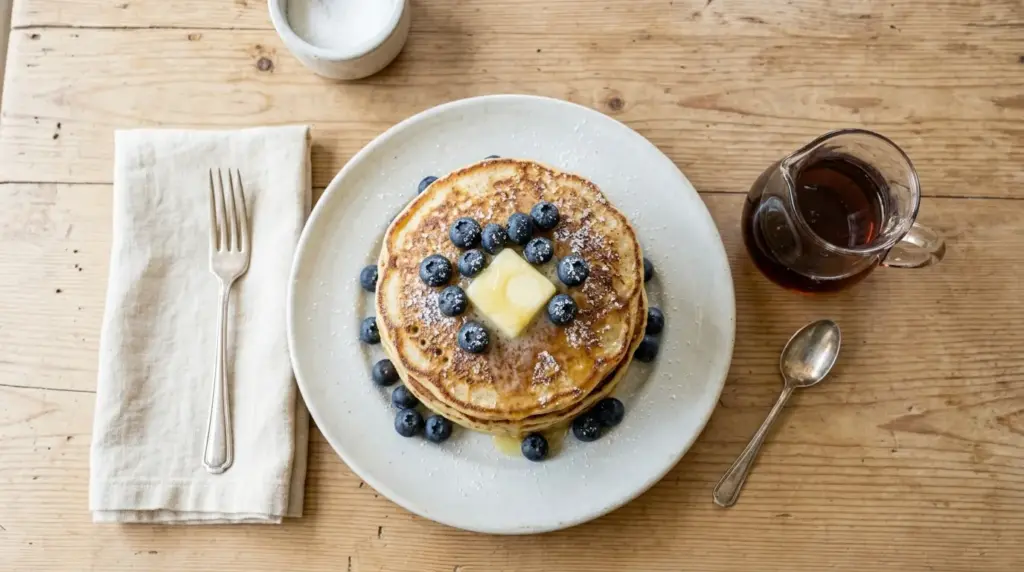
These pancakes are incredibly versatile and pair beautifully with both classic and creative toppings. The mild tang of the sourdough plays well with both sweet and savory accompaniments.
Fresh fruit and real maple syrup is the classic combination that never disappoints. The natural sweetness of berries or sliced banana cuts through the tang perfectly, while good maple syrup adds earthy, caramel notes that complement the fermented flavor of the batter.
Here are some of the best ways to serve sourdough pancakes:
- Fresh berries and maple syrup: A timeless pairing that highlights the sourdough flavor without competing with it.
- Whipped cream and sliced peaches: Especially lovely in summer when peaches are at their peak.
- Cinnamon Butter: A sweet, spiced compound butter that melts into the warm pancakes and adds irresistible flavor.
- Lemon curd and fresh raspberries: The citrus tang pairs beautifully with the slight sourness of the sourdough.
- A side of crispy bacon or sausage: For a complete savory-sweet breakfast plate.
- Nut butter and sliced banana: Peanut or almond butter adds protein and richness.
- Caramel Sauce and sea salt: For a more indulgent weekend brunch situation.
For another breakfast favorite that pairs well on the same table, try the Easy French Toast.
Variations to Try
Once you’ve mastered the base recipe, it’s easy to put a creative spin on these pancakes for different occasions.
- Blueberry sourdough pancakes: Fold 3/4 cup (110 g) of fresh or frozen blueberries into the finished batter just before cooking. Drop a few extra berries onto each pancake after pouring the batter into the pan.
- Chocolate chip sourdough pancakes: Stir 1/2 cup (85 g) of semi-sweet chocolate chips into the batter. These are especially popular with kids and make a fantastic weekend treat.
- Cinnamon-spiced sourdough pancakes: Add 1 teaspoon of ground cinnamon and a pinch of nutmeg to the dry ingredients for a warm, spiced flavor profile.
- Lemon ricotta sourdough pancakes: Replace 1/4 cup (60 g) of the sourdough discard with whole milk ricotta and add 1 teaspoon of fresh lemon zest. The ricotta makes the pancakes even more tender and rich.
- Whole wheat sourdough pancakes: Swap half the all-purpose flour for whole wheat flour for a heartier, nuttier pancake. Add a splash or two of extra milk to compensate for the extra thirst of whole wheat.
- Buttermilk sourdough pancakes: Replace the whole milk with buttermilk for an extra-tangy, super-fluffy pancake. The additional acidity reacts with the baking soda and creates an even better rise.
Read Also: German Pancake Recipe
Storage and Reheating
Sourdough pancakes store beautifully, which makes this an ideal recipe to double for meal prep. You can have a quick, satisfying breakfast ready in under two minutes on a busy weekday morning.
- Refrigerator: Stack cooled pancakes with a small piece of parchment paper between each one to prevent sticking, then store in an airtight container or zip-top bag.
- Freezer: Arrange pancakes in a single layer on a baking sheet and freeze for 1-2 hours until solid. Transfer to a zip-top freezer bag with parchment between layers and freeze for up to 3 months.
- Reheating in the toaster: Pop frozen or refrigerated pancakes directly into the toaster for 1-2 cycles. This method restores the crispy edges brilliantly and is the fastest option.
- Reheating in the oven: Place pancakes on a baking sheet in a single layer and warm at 325°F (165°C) for 8-10 minutes until heated through.
- Reheating in the microwave: Stack 2-3 pancakes on a microwave-safe plate, cover with a damp paper towel, and heat for 45-60 seconds. Note that the microwave makes them softer and won’t restore the crispy edges.
- Batter storage: If you prefer to store the uncooked batter, keep it covered in the refrigerator for up to 24 hours. Stir gently before using and expect slightly less rise from the leaveners.
You might also enjoy: Pancake Recipe Without Milk
Nutritional Facts
The following nutritional information is an estimate per serving (2 pancakes), based on the ingredients and quantities listed in this recipe. Actual values may vary depending on specific brands and toppings used.
| Nutrient | Amount Per Serving (2 pancakes) |
|---|---|
| Calories | ~290 kcal |
| Total Fat | 10 g |
| Saturated Fat | 5.5 g |
| Cholesterol | 105 mg |
| Sodium | 410 mg |
| Total Carbohydrates | 40 g |
| Dietary Fiber | 1 g |
| Total Sugars | 8 g |
| Protein | 9 g |
| Calcium | 120 mg |
| Iron | 2 mg |
Note: Nutritional values do not include butter, maple syrup, or any toppings added at serving time.
For another nutritious and filling breakfast choice, try the Easy Overnight Oats Recipe.
Health Benefits of Key Ingredients
Beyond being delicious, sourdough pancakes offer some genuine nutritional advantages over standard pancakes made with conventional leavening alone.
The fermentation process in sourdough starter breaks down phytic acid, an antinutrient found in grains that can block the absorption of minerals like zinc, iron, and magnesium. Using sourdough discard in your pancake batter means your body can absorb more of the minerals present in the flour than it could from a standard mix.
Here’s a look at what the key ingredients bring to the table:
- Sourdough discard: Contains beneficial organic acids from fermentation that support digestive health and may contribute to a lower glycemic response compared to standard pancakes.
- Eggs: A complete protein source providing all essential amino acids, along with vitamins D, B12, and choline for brain health.
- Whole milk: Supplies calcium, vitamin D, and protein for bone health. The fat content in whole milk also helps create a more tender and richly flavored pancake.
- All-purpose flour: Provides carbohydrates for energy along with small amounts of iron and B vitamins.
- Butter: A source of fat-soluble vitamins A, D, E, and K, and contributes to satiety and flavor.
- Vanilla extract: Contains small amounts of antioxidants and contributes to flavor in a way that reduces the need for added sugar.
For more ways to enjoy the benefits of sourdough baking, try the Easy Sourdough Bread Recipe.
Frequently Asked Questions
1. Can I use active sourdough starter instead of discard?
You can, but it’s not recommended for this recipe. Active, freshly fed starter is bubbly and full of active yeast and bacteria, which can cause the batter to react too aggressively with the baking powder and baking soda. The result is often pancakes that rise too quickly and then collapse, or that taste more intensely sour than most people prefer. Cold, unfed discard produces a gentler tang and more predictable results.
2. My batter is very thick. Should I thin it out?
The consistency of sourdough discard varies from baker to baker depending on hydration, so a thicker batter is common. If your batter is too thick to pour and spread naturally, add milk one tablespoon at a time until it reaches a pourable consistency, similar to thick heavy cream. Avoid adding too much liquid at once, as it’s easy to overshoot and end up with a batter that’s too thin.
3. Why are my sourdough pancakes coming out flat?
Flat pancakes are almost always the result of one of three issues. First, your leaveners may be old or expired. Test baking powder by dropping a teaspoon into hot water; it should bubble vigorously. Second, overmixing the batter develops gluten and prevents the pancakes from rising. Third, a pan that’s too hot will cause the outside to set before the inside has a chance to puff up. Try reducing your heat and allowing the batter to rest for 5 minutes before cooking.
4. Can I make the batter ahead of time?
Yes, with some caveats. You can mix the batter and store it covered in the refrigerator for up to 24 hours. However, the baking powder and baking soda begin to lose their potency once they’re mixed into the wet batter, so pancakes made from day-old batter will be slightly less fluffy than freshly made ones. If you want to prep ahead, mix the dry ingredients and wet ingredients separately and combine them right before cooking.
5. Do sourdough pancakes taste very sour?
Not at all. The sourdough flavor in these pancakes is very mild, more of a subtle background tang than the bold sourness you’d associate with sourdough bread. Most people describe the flavor as richer and more interesting than a standard pancake, rather than sour. If you find even a slight tang too much, using fresher discard (within a week) will result in a milder flavor than older, more acidic discard.
Read Also: Belgian Waffle Recipe
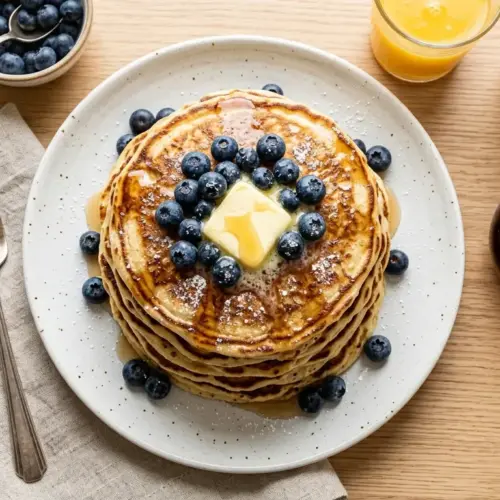
Sourdough Pancake Recipe

Equipment
- Large mixing bowl
- Medium bowl - for dry ingredients
- Whisk
- Rubber spatula or wooden spoon
- Cast iron skillet or non-stick griddle pan
- Wide pancake spatula - at least 5-6 inches wide for easier flipping
- Measuring cups and spoons
- Ladle or 1/4 cup measuring cup - for portioning batter
- Baking sheet - optional, for keeping cooked pancakes warm in the oven
- Kitchen thermometer - optional, for checking pan temperature
Ingredients
- 1 cup sourdough discard - 240g, unfed, straight from the fridge
- 1 cup all-purpose flour - 125g, spooned and leveled
- 1 cup whole milk - 240ml
- 2 large eggs
- 2 tablespoons unsalted butter - 28g, melted and slightly cooled, plus more for cooking
- 2 tablespoons granulated sugar - 25g
- 1 teaspoon baking powder
- 1/2 teaspoon baking soda
- 1/2 teaspoon fine salt
- 1 teaspoon pure vanilla extract
For Serving (Optional)
- Fresh berries - blueberries, raspberries, or sliced strawberries
- Pure maple syrup
- Whipped cream
- Sliced banana
- Nut butter - peanut or almond butter
- Crispy bacon or sausage - for a savory-sweet plate
- Lemon curd
Instructions
- In a medium bowl, whisk together 1 cup all-purpose flour, 1 teaspoon baking powder, 1/2 teaspoon baking soda, 2 tablespoons granulated sugar, and 1/2 teaspoon fine salt until evenly combined with no streaks.
- In a large mixing bowl, combine 1 cup sourdough discard, 2 large eggs, 1 cup whole milk, 2 tablespoons melted unsalted butter, and 1 teaspoon vanilla extract. Whisk until smooth and consistent.
- Pour the dry ingredients into the wet mixture. Gently fold with a rubber spatula or whisk just until combined and no streaks of flour remain. The batter should be slightly lumpy. Do not overmix. Let the batter rest for 5 minutes.
- Preheat a cast iron skillet or non-stick griddle over medium-low to medium heat for 2-3 minutes. Test readiness by flicking water onto the surface; it should dance and evaporate immediately. Add 1/2 teaspoon butter and swirl to coat.
- Pour 1/4 cup of batter into the center of the pan. Cook until bubbles form across the surface and edges look set, about 2-3 minutes. Slide a wide spatula under and flip confidently. Cook the second side for 1-2 minutes until golden. Transfer to a plate.
- Add a fresh pat of butter to the pan between each pancake. Continue pouring 1/4 cup portions, cooking in batches without overcrowding. Keep finished pancakes warm on a baking sheet in a 200°F oven if desired.
- Stack pancakes on plates and top generously with butter, maple syrup, and fresh fruit. Serve immediately for the best texture and flavor.
Notes
- Do not overmix the batter: Stir just until the flour disappears. Lumpy batter is ideal for fluffy pancakes.
- Let the batter rest for at least 5 minutes to allow the flour to hydrate and the leaveners to activate.
- Always make a test pancake first to gauge the heat and adjust your pan temperature if needed.
- Use cold, unfed sourdough discard straight from the fridge for the best mild flavor. Discard up to two weeks old works well.
- If your batter is too thick to pour, add milk one tablespoon at a time until it reaches a thick heavy cream consistency.
- For variety, fold in 3/4 cup fresh or frozen blueberries, 1/2 cup chocolate chips, or 1 teaspoon cinnamon into the batter before cooking.
- Store cooled pancakes in an airtight container in the refrigerator for up to 4 days or freeze for up to 3 months with parchment between layers.
- Reheat pancakes in the toaster for crispy edges, in the oven at 325°F for 8-10 minutes, or in the microwave covered with a damp paper towel for 45-60 seconds.
- For extra tangy pancakes, substitute buttermilk for the whole milk. For a heartier version, replace half the flour with whole wheat flour and add a splash more milk.
- Refrigerate leftover batter covered for up to 24 hours, but expect slightly less rise from the leaveners. Stir gently before using.
Final Thoughts
This sourdough pancake recipe is one of those recipes that earns a permanent spot in your weekend rotation.
It’s the kind of breakfast that turns an ordinary Saturday morning into something worth waking up early for.
The combination of golden crispy edges, a cloud-soft interior, and that subtle fermented flavor is genuinely hard to beat.
If you’ve been letting your sourdough discard go to waste, this is the recipe that will change that habit for good.
Give these pancakes a try this weekend, and feel free to drop a comment below with your favorite toppings or any variations you tried. It’s always great to hear how you made the recipe your own!
Recommended:
- Kodiak Pancake Recipe
- Betty Crocker Pancake Recipe
- Scallion Pancake Recipe
- Potato Pancake Recipe
- Easy Protein Pancakes Recipe
- Honey Butter Recipe
- Strawberry Sauce Recipe
- Breakfast Casserole Recipe
- Easy Crepe Recipe
- Dutch Baby Recipe