If you’re looking for a dish that turns an ordinary night into something worth celebrating, this lobster mac and cheese recipe is exactly what you need.
Rich, velvety, and packed with sweet chunks of tender lobster, it takes the classic comfort of macaroni and cheese and elevates it into something truly spectacular.
The secret to making this dish as good as any restaurant version (or better) comes down to a few key choices: freshly shredded cheese, a well-seasoned béchamel sauce base, and not overcooking the lobster.
Whether you’re making it for a holiday dinner, a special date night, or just because you deserve something indulgent, this recipe is easy enough for home cooks of all levels.
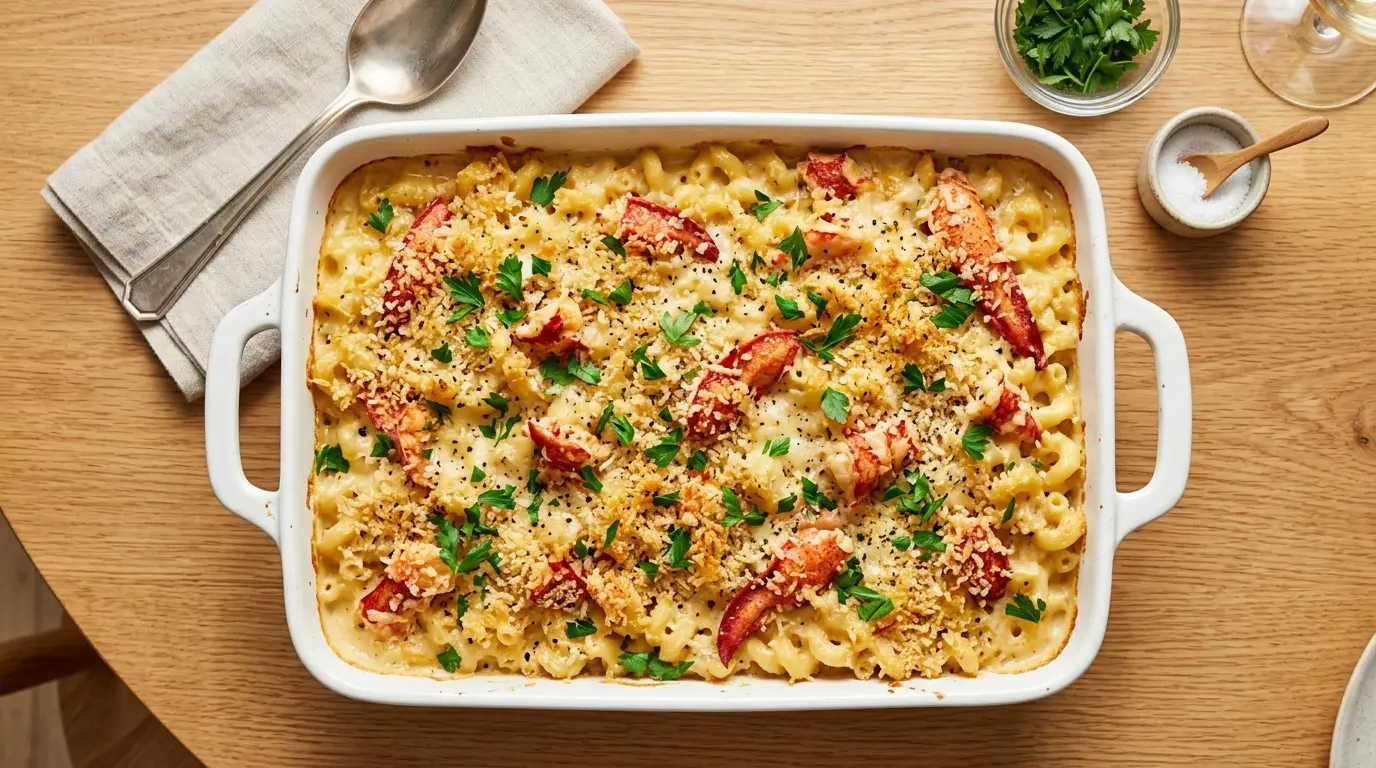
This version uses a four-cheese blend for maximum creaminess, tender cavatappi pasta to hold the sauce in every nook and cranny, and a buttery panko breadcrumb topping that bakes to a gorgeous golden brown.
If you love cheesy pasta dishes, you’ll also want to check out this Baked Mac and Cheese for another crowd-pleasing comfort food classic.

Why You’ll Love This Lobster Mac and Cheese Recipe
This isn’t just mac and cheese with a fancy price tag. It’s a complete flavor experience.
The combination of sharp cheddar, nutty Gruyère, creamy fontina, and salty Parmesan creates a sauce that is deeply flavorful, perfectly smooth, and incredibly indulgent.
The sweet, buttery lobster contrasts beautifully with the rich cheese sauce. Every bite feels like a treat.
The panko breadcrumb topping adds a satisfying crunch that keeps the dish from feeling too heavy. It’s the textural contrast that makes each forkful so craveable.
This recipe is make-ahead friendly. You can assemble it a day in advance and bake it when you’re ready to serve.
It’s a true crowd-pleaser for holidays, dinner parties, and special family occasions. Nobody walks away from the table unimpressed.
Here’s why readers keep coming back to this recipe:
- Uses a four-cheese blend for unbeatable creaminess
- Sweet lobster meat in every single bite, not just hidden at the top
- Cavatappi pasta holds the sauce far better than elbow macaroni
- Crunchy buttery panko topping for the perfect texture contrast
- Easy enough for beginners with clear, step-by-step instructions
- Make-ahead and freezer-friendly for stress-free entertaining
Another favorite: Classic Baked Mac and Cheese
Ingredients
For this lobster mac and cheese recipe, you’ll need fresh, high-quality ingredients to get the best results. Always shred your cheese from the block rather than using pre-shredded bags, as those contain anti-caking agents that can cause the sauce to turn grainy.
For the Lobster:
- 1.5 lbs (680 g) lobster tails (about 3-4 medium tails), shells on
- 2 tablespoons (28 g) unsalted butter, melted
- 1 teaspoon Old Bay seasoning
- 1/2 teaspoon garlic powder
- Salt and black pepper to taste
For the Pasta:
- 1 lb (450 g) cavatappi pasta (or elbow macaroni, penne, or shells)
- Salted water for boiling
For the Cheese Sauce:
- 4 tablespoons (56 g) unsalted butter
- 1 small yellow onion, finely diced
- 3 cloves garlic, minced
- 1/4 cup (30 g) all-purpose flour
- 2 cups (480 ml) whole milk, warmed
- 1 cup (240 ml) heavy cream, warmed
- 1.5 cups (170 g) sharp cheddar cheese, freshly shredded
- 1 cup (115 g) Gruyère cheese, freshly shredded
- 1/2 cup (55 g) fontina cheese, freshly shredded
- 1/2 cup (50 g) Parmesan cheese, freshly grated
- 1 teaspoon Dijon mustard
- 1/2 teaspoon smoked paprika
- 1/4 teaspoon ground nutmeg
- 1 teaspoon Old Bay seasoning
- Salt and black pepper to taste
For the Breadcrumb Topping:
- 1 cup (60 g) panko breadcrumbs
- 3 tablespoons (42 g) unsalted butter, melted
- 2 tablespoons Parmesan cheese, freshly grated
- 1/2 teaspoon garlic powder
- 2 tablespoons fresh parsley, finely chopped (for garnish)
For another creamy pasta bake that the whole family will love, try this Baked Ziti.
Kitchen Equipment Needed
Having the right tools makes this recipe much smoother and easier to execute. A heavy-bottomed pan is especially important here because it distributes heat evenly and prevents your cheese sauce from scorching.
- Large baking dish (9×13 inch) (or similar capacity)
- Large heavy-bottomed saucepan or Dutch oven (for the cheese sauce)
- Large pot (for boiling pasta)
- Baking sheet (for the lobster tails)
- Box grater or cheese grater
- Whisk
- Wooden spoon or silicone spatula
- Sharp kitchen knife and cutting board
- Colander (for draining pasta)
- Aluminum foil
- Measuring cups and spoons
- Kitchen tongs
Read Also: Easy Crockpot Mac and Cheese Recipe
Recommended Products for This Recipe
These are products I genuinely recommend based on quality and the difference they make in this dish. Using the right equipment and quality specialty ingredients can take your lobster mac and cheese from good to absolutely restaurant-worthy.
1. Wild-Caught Lobster Tails
Fresh, wild-caught lobster tails are the star of this dish, and quality matters enormously. Cold-water Maine lobster tails are consistently sweeter and more tender than warm-water varieties. Sourcing a good product makes a noticeable difference in the final dish.
2. Le Creuset Enameled Cast Iron Baking Dish
Even heat distribution is critical for getting that perfect golden breadcrumb crust without burning the edges or leaving a cold center. Le Creuset’s enameled cast iron retains heat beautifully and goes from oven to table with style. It’s also easy to clean, even with baked-on cheese.
3. Gruyère Cheese Block
Freshly shredded Gruyère is one of the key ingredients that separates a good mac and cheese from a truly exceptional one. Pre-shredded bagged versions often have anti-caking agents that prevent smooth melting. A quality block of Gruyère shreds easily and creates an ultra-silky, nutty sauce.
4. Panko Breadcrumbs
Regular breadcrumbs will work in a pinch, but panko creates a noticeably crispier, lighter topping that stays crunchy even after baking. The larger, airy flakes toast beautifully in butter and hold up well without becoming soggy.
5. Heavy-Bottom Stainless Steel Saucepan
Making a smooth béchamel-based cheese sauce requires consistent, even heat. A heavy-bottom stainless steel saucepan prevents hot spots that can cause the sauce to separate or scorch. It’s a kitchen investment that will serve you for years across dozens of recipes.
You might also enjoy: Creamy Mac and Cheese

Step-by-Step Instructions
1. Preheat the Oven and Prepare the Baking Dish
- Preheat your oven to 375°F (190°C). This temperature is ideal for baking the assembled dish to bubbly, golden perfection without overcooking the lobster.
- Lightly grease your 9×13 inch baking dish with butter or non-stick cooking spray and set it aside.
- While the oven preheats, line a separate baking sheet with aluminum foil for the lobster tails.
2. Cook the Lobster Tails
- Using kitchen scissors or a sharp knife, cut the lobster tails in half lengthwise from the top of the shell straight down through the flesh.
- Place the halved lobster tails cut-side up on the prepared foil-lined baking sheet.
- Brush each lobster tail generously with 2 tablespoons of melted butter, making sure to coat the exposed flesh entirely.
- Sprinkle evenly with 1 teaspoon of Old Bay seasoning, 1/2 teaspoon of garlic powder, and a pinch of salt and black pepper.
- Slide the baking sheet into the preheated oven and broil on the middle rack at 450°F (232°C) for 8 to 10 minutes, or until the flesh is opaque, lightly golden, and just cooked through. Do not overcook at this stage, as the lobster will continue to cook in the oven later.
- Remove from the oven and allow to cool for 5 minutes. Once cool enough to handle, use a spoon or your fingers to remove the lobster meat from the shells.
- Chop the lobster meat into large, bite-sized chunks and place in a bowl. Set aside. Reduce oven temperature back to 375°F (190°C).
3. Boil the Pasta
- Bring a large pot of well-salted water to a rolling boil over high heat. The water should taste like the sea, which helps season the pasta from the inside out.
- Add the cavatappi pasta to the boiling water and cook according to package directions, but stop 2 minutes before fully cooked. The pasta should still be quite firm (al dente or slightly firmer), as it will continue cooking in the oven.
- Drain the pasta in a colander and do not rinse. Rinsing removes the starch that helps the cheese sauce cling to the pasta. Set the drained pasta aside.
4. Shred the Cheeses
- Using a box grater, freshly shred the sharp cheddar, Gruyère, fontina, and Parmesan cheeses from the block.
- Combine all four cheeses in a large mixing bowl and toss gently to combine. Pre-mixing them ensures you get an even blend of flavors throughout the sauce.
- Set about 1/2 cup of the mixed shredded cheeses aside to use as a topping layer before the breadcrumbs go on.
5. Make the Béchamel (White Sauce) Base
- In your large heavy-bottomed saucepan or Dutch oven, melt 4 tablespoons of butter over medium heat.
- Once the butter is melted and beginning to foam, add the finely diced onion. Cook for 3 to 4 minutes, stirring frequently, until the onion is softened and translucent.
- Add the minced garlic and cook for 1 more minute, stirring constantly, until fragrant. Be careful not to let the garlic brown.
- Sprinkle the flour over the butter, onion, and garlic mixture. Whisk constantly and vigorously for about 2 minutes. This cooks out the raw flour taste and creates your roux, which will thicken the sauce.
- The roux will look like a paste and may turn very slightly golden at the edges, which is exactly what you want.
6. Build the Cheese Sauce
- Reduce the heat to medium-low. Slowly pour in the warmed whole milk, a little at a time, whisking constantly and vigorously after each addition. Adding the milk gradually prevents lumps from forming.
- Once all the milk is incorporated, slowly pour in the warmed heavy cream while continuing to whisk.
- Increase the heat back to medium and continue whisking until the sauce thickens enough to coat the back of a spoon, about 4 to 5 minutes. It should be smooth, glossy, and creamy.
- Remove the saucepan from the heat entirely. This is a critical step: adding cheese to an actively boiling sauce causes it to separate and become grainy.
- Add the Dijon mustard, smoked paprika, ground nutmeg, Old Bay seasoning, salt, and black pepper. Stir to incorporate.
- Add the shredded cheese mixture (reserving the 1/2 cup set aside for topping) in three additions, stirring well after each addition until fully melted and smooth.
- Taste the cheese sauce and adjust seasoning with additional salt, pepper, or Old Bay as needed.
7. Combine the Pasta and Cheese Sauce
- Add the drained pasta to the cheese sauce and stir gently but thoroughly to coat every piece of pasta in the sauce.
- Add about two-thirds of the chopped lobster meat to the pasta mixture and fold it in gently using a silicone spatula or wooden spoon. Be careful not to break up the lobster chunks too much.
- Pour and spread the pasta mixture evenly into the prepared baking dish.
8. Add the Lobster Topping and Cheese Layer
- Scatter the remaining one-third of the chopped lobster pieces evenly over the top of the pasta. This ensures lobster is visible on top and gives diners those beautiful large pieces in every serving.
- Sprinkle the reserved 1/2 cup of shredded cheese blend evenly over the top of the pasta and lobster. This creates a cheesy layer under the breadcrumbs that holds everything together beautifully.
9. Make and Add the Breadcrumb Topping
- In a small bowl, combine the 1 cup panko breadcrumbs, 3 tablespoons melted butter, 2 tablespoons Parmesan, and 1/2 teaspoon garlic powder. Toss well until the breadcrumbs are fully coated in the butter and no dry spots remain.
- Sprinkle the breadcrumb mixture evenly over the top of the dish, leaving the lobster pieces mostly visible so they peek through the topping after baking.
10. Bake to Golden Perfection
- Place the baking dish in the preheated 375°F (190°C) oven.
- Bake uncovered for 25 to 30 minutes, or until the sauce is bubbling around the edges, the breadcrumb topping is deep golden brown, and the cheese layer beneath is melted and bubbly.
- If the topping browns too quickly before the inside is fully heated, tent the dish loosely with aluminum foil for the remaining bake time.
- For extra browning on the breadcrumb topping, switch the oven to broil for the final 1 to 2 minutes. Watch it very closely as it can go from golden to burnt in seconds.
- Remove from the oven and allow the dish to rest for 10 minutes before serving. Resting allows the sauce to settle and thicken slightly, making it much easier to portion and serve.
- Garnish generously with fresh chopped parsley and serve immediately.
This dish pairs wonderfully with Creamed Spinach for a steakhouse-style dinner at home.
Tips for Success
Getting lobster mac and cheese right is all about a few key techniques. Follow these tips and your dish will come out perfect every single time.
- Always shred cheese from the block. Pre-shredded bagged cheeses contain anti-caking agents like cellulose that prevent smooth melting and can make your sauce grainy. Block cheese melts into the sauce silkily and evenly.
- Remove the sauce from heat before adding cheese. Adding shredded cheese to a sauce that is still boiling causes the proteins to seize and the fats to separate, resulting in a greasy, clumpy, or grainy sauce. Always take the pan off the heat first.
- Undercook the pasta by 2 minutes. Since the pasta continues to cook in the oven, starting it slightly underdone prevents it from becoming mushy or absorbing all the sauce before it’s served.
- Warm the milk and cream before adding them. Adding cold dairy to a hot roux can cause lumping. Warm milk and cream incorporate smoothly and quickly into the roux.
- Don’t overdo the lobster during the initial broiling. The lobster only needs to be just cooked through (opaque) before going into the dish, since it will cook again in the oven. Overcooked lobster turns rubbery and dry.
- Taste the cheese sauce before combining. This is your only opportunity to season the sauce properly. It should taste well-seasoned and a touch more assertive than you expect, because the pasta will dilute the flavor slightly.
- Rest the dish before serving. A 10-minute rest allows the sauce to thicken slightly and settle, resulting in cleaner, more satisfying portions.
Read Also: Southern Mac and Cheese Recipe
Serving Suggestions
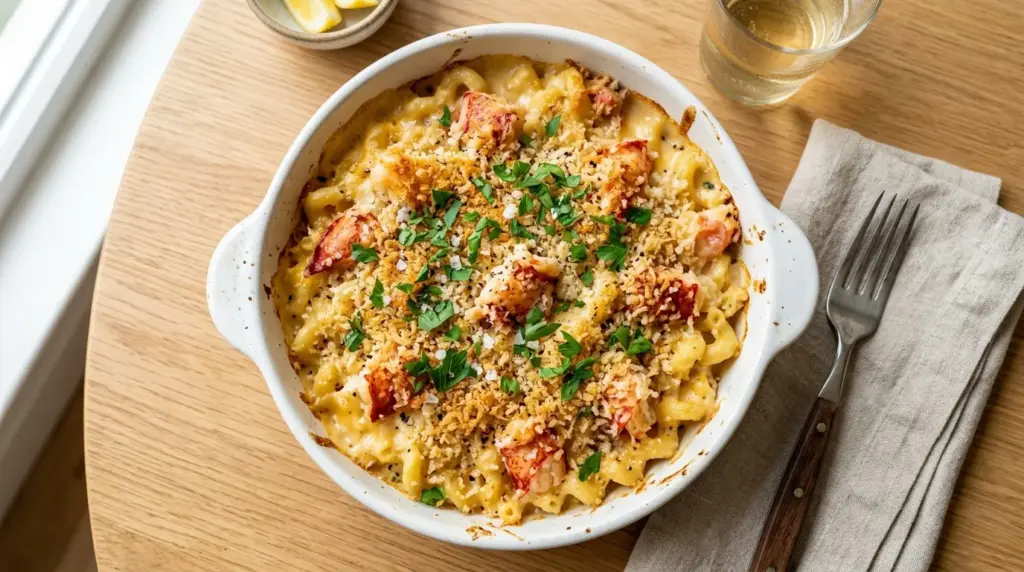
Lobster mac and cheese is rich and filling, so it pairs beautifully with lighter, fresh, or acidic sides that balance out the decadence. Think of it as a steakhouse-style entrée that deserves equally thoughtful accompaniments.
A simple green salad with a bright vinaigrette is the classic pairing, cutting through the richness of the cheese sauce with acidity and crunch. A classic Caesar salad also works beautifully.
Steamed or roasted asparagus is one of the most popular sides for lobster mac and cheese. The slight bitterness of asparagus plays off the sweetness of the lobster and the richness of the cheese.
Crusty garlic bread or warm dinner rolls are a must for scooping up the extra cheese sauce from the bowl. Go with Cheesy Garlic Bread for double the indulgence.
Here are more serving ideas to complete your meal:
- Roasted Broccoli tossed with lemon and Parmesan
- Broccoli Salad with a creamy, slightly tangy dressing
- Corn on the Cob with herb butter for a New England-style pairing
- Classic Deviled Eggs as a starter or appetizer
- A sparkling white wine like Champagne, Chablis, or a buttery California Chardonnay
Variations to Try
Once you’ve mastered the base recipe, there are so many ways to customize this dish to your taste or the occasion.
- Truffle Lobster Mac and Cheese: Drizzle 1 to 2 teaspoons of truffle oil over the assembled dish just before baking, or add 1 to 2 teaspoons of truffle oil directly into the warm cheese sauce. Use a Gruyère-forward cheese blend for a more sophisticated flavor profile.
- Spicy Cajun Lobster Mac and Cheese: Add 1/2 to 1 teaspoon of cayenne pepper and increase the Old Bay seasoning to 2 teaspoons in the cheese sauce. Top with a sprinkle of Cajun seasoning before baking.
- Seafood Mac and Cheese: Replace half the lobster with an equal weight of jumbo shrimp or lump crab meat for a mixed seafood version that stretches the dish further while keeping it equally luxurious.
- Stovetop-Only Version: Skip the baking step entirely. Make the toasted panko separately in a dry skillet with a little butter, toast until golden, then sprinkle directly over the plated pasta for a quick weeknight version.
- Individual Gratin Dishes: Divide the assembled mac and cheese into 6 to 8 individual oven-safe ramekins or gratin dishes before baking for an elegant dinner party presentation, much like Ina Garten’s famous version.
- Extra Cheesy Version: Add 1/2 cup of cream cheese to the béchamel before adding the shredded cheeses for an even richer, tangier sauce.
Another favorite: Tini’s Mac and Cheese Recipe
Storage and Reheating
Lobster mac and cheese keeps well and reheats beautifully with just a little care. The key is avoiding high, direct heat that can dry out the pasta or turn the lobster rubbery.
- Refrigerator: Store leftover lobster mac and cheese in an airtight container in the refrigerator for up to 3 days. Cover the baking dish tightly with plastic wrap or aluminum foil if storing directly in the dish.
- Freezer: You can freeze this dish for up to 2 months. Assemble the dish through the breadcrumb step, cool completely, then cover tightly with a layer of plastic wrap followed by two layers of aluminum foil. Label with the date.
- Reheating from Refrigerator: Preheat the oven to 350°F (175°C). Cover the dish with foil to prevent the breadcrumb topping from over-browning. Bake for 20 to 25 minutes, or until heated through. Remove the foil for the final 5 minutes to crisp up the topping again.
- Reheating from Frozen: Thaw overnight in the refrigerator. Then bake covered at 375°F (190°C) for 30 to 35 minutes, uncovering for the final 10 minutes to restore the golden topping.
- Microwave Reheating (Single Portions): Add a splash of milk or cream to the portion before microwaving to keep the sauce from drying out. Heat in 60-second intervals, stirring between each interval, until heated through.
Read Also: Instant Pot Mac and Cheese Recipe
Nutritional Facts
The following nutrition information is approximate and based on one serving (recipe divided into 8 servings). Actual values will vary depending on specific brands and the exact size of lobster tails used.
| Nutrient | Per Serving |
|---|---|
| Calories | ~610 kcal |
| Total Fat | ~35 g |
| Saturated Fat | ~21 g |
| Cholesterol | ~165 mg |
| Sodium | ~680 mg |
| Total Carbohydrates | ~45 g |
| Dietary Fiber | ~2 g |
| Sugars | ~5 g |
| Protein | ~28 g |
| Calcium | ~480 mg |
| Iron | ~1.5 mg |
This dish is high in protein thanks to the lobster and cheese content, making it a satisfying and filling meal. The rich fat content comes primarily from the cheese and cream in the sauce, so smaller portions go a long way.
This dish pairs nicely with a light, protein-rich side like the Baked Salmon Recipe for a complete and balanced seafood dinner.
Health Benefits of Key Ingredients
While lobster mac and cheese is certainly an indulgent dish, several of its core ingredients carry genuine nutritional benefits that make it more than just a treat.
Lobster is one of the best sources of lean protein available, with a 3.5-ounce (100 g) serving delivering around 19 grams of protein with very little fat. It is also rich in zinc, selenium, and copper, which support immune function, thyroid health, and antioxidant activity in the body.
Gruyère and sharp cheddar are excellent sources of calcium, essential for bone density and muscle function. Hard aged cheeses like Gruyère are also lower in lactose than softer dairy products, making them easier to digest for many people.
Parmesan cheese is particularly high in protein for a dairy product and also contributes B vitamins including B12, which supports neurological function and energy metabolism.
Here’s a quick breakdown of the health benefits of key ingredients in this recipe:
- Lobster: High-quality lean protein, rich in omega-3 fatty acids, zinc, and selenium
- Gruyère cheese: Excellent source of calcium, phosphorus, and fat-soluble vitamins A and K2
- Sharp cheddar: Provides calcium, protein, and conjugated linoleic acid (CLA), which may support healthy body composition
- Parmesan: High in calcium and protein with notable B12 content for neurological support
- Garlic: Contains allicin, a compound associated with immune support and anti-inflammatory properties
- Panko breadcrumbs (in moderation): Lighter than traditional breadcrumbs, providing less oil absorption while still delivering satisfying crunch
- Whole milk and cream: Supply fat-soluble vitamins A, D, E, and K alongside calcium and protein
For another seafood dish with great nutritional value, try this Air Fryer Bacon Wrapped Shrimp for a lighter but equally indulgent option.
Frequently Asked Questions
1. Can I use pre-cooked lobster meat instead of cooking the tails myself?
Yes, absolutely. Pre-cooked lobster meat is available at many grocery stores and seafood counters, and it works very well in this recipe. Look for wild-caught options for the best flavor. Since it’s already cooked, simply chop it into chunks and add it directly to the pasta mixture and as a topping without any additional cooking before baking.
2. What pasta works best for lobster mac and cheese?
Cavatappi (corkscrew-shaped pasta) is the top choice for this recipe because its hollow, ridged shape traps cheese sauce inside and along the outside for maximum flavor in every bite. Elbow macaroni is the classic choice and works perfectly well. Penne, rigatoni, or shells are also excellent alternatives that hold up to baking without becoming mushy.
3. Can I make this recipe ahead of time?
Yes, this dish is extremely well-suited for making ahead. Assemble the entire dish through the breadcrumb topping step, then cover tightly and refrigerate for up to 5 days before baking. Remove from the refrigerator while the oven preheats, then bake covered for 20 to 25 minutes and uncovered for an additional 10 to 15 minutes until golden and bubbly.
4. Why did my cheese sauce turn out grainy or lumpy?
The most common cause is adding cheese to sauce that is still boiling, or adding cold cheese to the sauce. Always remove the pan from the heat completely before stirring in the cheese, and add it gradually in small batches. Using pre-shredded bagged cheese can also cause graininess due to anti-caking additives. Always shred your cheese fresh from the block for the smoothest possible sauce.
5. Can I substitute other seafood for the lobster?
Absolutely. Jumbo lump crab meat is the most popular substitute and delivers a similarly sweet, rich flavor. Large shrimp (peeled, deveined, and roughly chopped) work beautifully and are more budget-friendly. Scallops, langostino tails, or a combination of seafood all make for a spectacular seafood mac and cheese. Use the same weight called for in the original recipe.
Read Also: One Pot Mac and Cheese Recipe

Lobster Mac and Cheese

Equipment
- Large baking dish (9×13 inch) - or similar capacity
- Large heavy-bottomed saucepan or Dutch oven - for the cheese sauce
- Large pot - for boiling pasta
- Baking sheet - for the lobster tails
- Box Grater or Cheese Grater
- Whisk
- Wooden spoon or silicone spatula
- Sharp kitchen knife
- Cutting board
- Colander - for draining pasta
- Aluminum foil
- Measuring cups and spoons
- Kitchen tongs
Ingredients
- 1.5 lbs lobster tails - 680g, about 3-4 medium tails, shells on
- 2 tablespoons unsalted butter - 28g, melted
- 1 teaspoon Old Bay seasoning
- 0.5 teaspoon garlic powder
- salt and black pepper - to taste
- 1 lb cavatappi pasta - 450g, or elbow macaroni, penne, or shells
- salted water - for boiling
- 4 tablespoons unsalted butter - 56g
- 1 small yellow onion - finely diced
- 3 cloves garlic - minced
- 0.25 cup all-purpose flour - 30g
- 2 cups whole milk - 480ml, warmed
- 1 cup heavy cream - 240ml, warmed
- 1.5 cups sharp cheddar cheese - 170g, freshly shredded
- 1 cup Gruyère cheese - 115g, freshly shredded
- 0.5 cup fontina cheese - 55g, freshly shredded
- 0.5 cup Parmesan cheese - 50g, freshly grated
- 1 teaspoon Dijon mustard
- 0.5 teaspoon smoked paprika
- 0.25 teaspoon ground nutmeg
- 1 teaspoon Old Bay seasoning
- salt and black pepper - to taste
- 1 cup panko breadcrumbs - 60g
- 3 tablespoons unsalted butter - 42g, melted
- 2 tablespoons Parmesan cheese - freshly grated
- 0.5 teaspoon garlic powder
- 2 tablespoons fresh parsley - finely chopped, for garnish
Instructions
- Preheat oven to 375°F (190°C). Lightly grease a 9×13 inch baking dish and line a baking sheet with foil.
- Cut lobster tails in half lengthwise. Place cut-side up on the baking sheet, brush with melted butter, and season with Old Bay, garlic powder, salt, and pepper.
- Broil at 450°F (232°C) for 8-10 minutes until opaque. Cool, remove meat from shells, chop into chunks, and set aside. Reduce oven to 375°F.
- Bring salted water to a boil. Cook cavatappi 2 minutes less than package directions. Drain and set aside without rinsing.
- Shred all cheeses and combine in a bowl. Reserve 1/2 cup for topping.
- In a heavy-bottomed pan, melt 4 tablespoons butter over medium heat. Sauté onion until translucent, about 3-4 minutes. Add garlic and cook 1 minute more.
- Sprinkle in flour and whisk constantly for 2 minutes to make a roux.
- Reduce heat to medium-low. Slowly whisk in warmed milk, then heavy cream. Increase heat to medium and whisk until sauce thickens, about 4-5 minutes.
- Remove from heat. Stir in Dijon, smoked paprika, nutmeg, Old Bay, salt, and pepper. Add shredded cheeses in three batches, stirring until smooth.
- Add drained pasta and two-thirds of the lobster to the cheese sauce. Fold gently to combine.
- Pour into prepared baking dish. Scatter remaining lobster over the top, then sprinkle with reserved 1/2 cup shredded cheese.
- Mix panko, melted butter, Parmesan, and garlic powder. Sprinkle evenly over the top.
- Bake uncovered at 375°F for 25-30 minutes until bubbly and golden. Broil for 1-2 minutes for extra browning if desired.
- Rest for 10 minutes before serving. Garnish with fresh parsley.
Notes
- Always shred cheese from the block — pre-shredded cheeses contain anti-caking agents that can make your sauce grainy.
- Remove sauce from heat before adding cheese to prevent the sauce from separating and becoming greasy or clumpy.
- Undercook the pasta by 2 minutes — it will continue cooking in the oven and absorb some sauce.
- Warm the milk and cream before adding to the roux for a smooth, lump-free sauce.
- Don’t overcook the lobster during the initial broiling. It only needs to be just opaque since it bakes again in the dish.
- Make-ahead: Assemble through the breadcrumb step, cover, and refrigerate for up to 5 days. Bake as directed, adding 10-15 minutes to the bake time.
- Storage: Store leftovers in an airtight container in the refrigerator for up to 3 days.
- Reheating: Reheat covered at 350°F until warmed through, or microwave individual portions with a splash of milk to keep the sauce creamy.
- Freezer-friendly: Assemble completely, cool, wrap tightly, and freeze for up to 2 months. Thaw overnight before baking.
- Substitution: Jumbo lump crab meat or large shrimp work beautifully in place of lobster.
Final Thoughts
Lobster mac and cheese is one of those recipes that genuinely delivers on every expectation. It’s rich without being overwhelming, elegant without being difficult, and comforting in the most luxurious way possible.
With this recipe, you get creamy, deeply flavored cheese sauce, sweet tender lobster in every bite, a crunchy golden topping, and the kind of dish that makes people stop mid-conversation just to appreciate what they’re eating.
If you try this recipe, I’d love to hear how it turned out for you. Leave a comment below with any questions or share your results, and don’t forget to tag us if you post a photo on social media.
This is a dish worth making for the people you love and a recipe you’ll come back to every time a special occasion calls for something truly memorable.
Recommended:
- Southern Mac and Cheese
- Lobster Bisque
- Seafood Chowder
- Classic Shrimp Scampi
- Shrimp and Grits
- Crab Cake
- Homemade Alfredo Sauce
- Stuffed Shells
- Chicken Chesapeake
- New England Clam Chowder