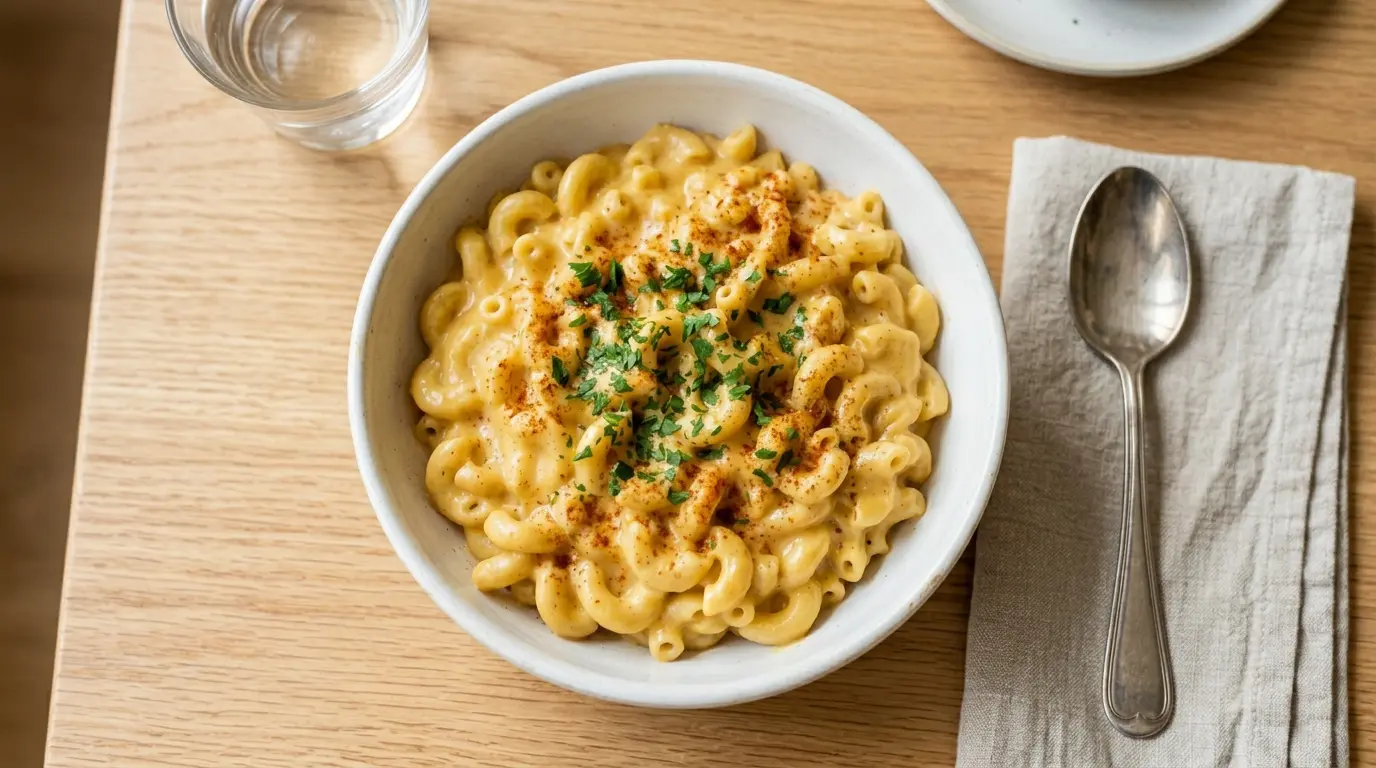
If you’ve been on the hunt for a vegan mac and cheese recipe that actually satisfies that deep, creamy, comforting craving, this is the one.
This version uses raw cashews blended into a silky, rich sauce along with nutritional yeast, lemon juice, and a handful of pantry spices to create a “cheese” sauce that is genuinely hard to distinguish from the dairy-based original.
The key is soaking the cashews first, which turns them buttery soft and allows them to blend into a completely smooth, velvety liquid.
Nutritional yeast brings that unmistakable cheesy depth, while a little turmeric gives the sauce its golden, mac-and-cheese color. A squeeze of fresh lemon juice and a touch of Dijon mustard add the tang that makes it taste like the real deal.
This recipe works on the stovetop and comes together in about 30 minutes, making it just as practical as the boxed version but infinitely more satisfying.
You might also enjoy this One Pot Mac and Cheese for another weeknight-friendly comfort food option.

Why You’ll Love This Vegan Mac and Cheese Recipe
This dish is the ultimate plant-based comfort food, and it’s one of those recipes that wins over vegans and non-vegans alike.
The cashew-based sauce gets blended completely smooth, so there are absolutely no grainy or chunky textures, just pure creamy richness coating every noodle.
It comes together in under 30 minutes, which means it fits easily into a busy weeknight dinner rotation.
You do not need any specialty vegan products from the health food store. Everything in this recipe is easy to find at a regular grocery store.
The sauce reheats beautifully with a splash of plant-based milk, which means leftovers are just as good the next day.
Here is what makes this recipe stand out:
- Completely dairy-free and egg-free without sacrificing flavor or texture
- Naturally gluten-free option when made with gluten-free pasta
- Budget-friendly using simple whole food ingredients
- Nut-based sauce that blends into a thick, creamy consistency without any starchy thickener
- Family-approved even for picky eaters who are skeptical of vegan food
- No unusual prep other than soaking cashews, which takes just 30 minutes in hot water
Read Also: Creamy Mac and Cheese Recipe
Ingredients
This recipe uses a short list of whole food ingredients to build big, satisfying flavor. Each one plays a specific role in making the sauce taste rich, cheesy, and deeply savory.
- 1 lb (450g) elbow macaroni pasta
- 1 cup (140g) raw unsalted cashews, soaked in hot water for 30 minutes and drained
- 1 cup (240ml) unsweetened plain plant-based milk (oat milk or almond milk work best)
- 1/2 cup (120ml) pasta cooking water (reserved before draining)
- 1/4 cup (15g) nutritional yeast
- 2 tbsp fresh lemon juice (about 1 large lemon)
- 1 tsp Dijon mustard
- 1 tsp garlic powder
- 1/2 tsp onion powder
- 1/2 tsp turmeric
- 1/2 tsp smoked paprika
- 1 tsp salt, plus more to taste
- 1/4 tsp black pepper
- 1 tbsp vegan butter (optional, adds richness)
- Fresh parsley or chives, for garnish (optional)
This is the core stovetop version. For a baked variation, you will need an additional 1/2 cup (30g) of panko breadcrumbs and 1 tbsp of melted vegan butter for the topping.
Read Also: Baked Mac and Cheese Recipe
Kitchen Equipment Needed
You do not need any specialized equipment for this recipe, but a high-powered blender makes the biggest difference in getting that ultra-smooth, creamy sauce.
- Large pot for boiling pasta
- High-speed blender (a Vitamix or Blendtec works best; a regular blender can work but may need longer blending time)
- Large saucepan or deep skillet for finishing the dish
- Colander for draining the pasta
- Measuring cups and spoons
- Wooden spoon or silicone spatula for stirring
- Liquid measuring cup for reserving pasta water
- 9×13 inch baking dish (only needed if making the baked version)
- Small bowl for soaking cashews
This is one of those recipes where everything comes together simultaneously, so having your blender ready to go before the pasta finishes cooking makes the process seamless.
Another favorite: Instant Pot Mac and Cheese
Recommended Products for This Recipe
These are products I genuinely recommend based on quality and performance for making the best vegan mac and cheese.
1. Vitamix Blender
A high-powered blender is the single most important tool for this recipe. Cashew-based sauces only become truly silky smooth when blended at high speed for long enough, and a standard blender often leaves small bits behind. The Vitamix produces a sauce with the consistency of heavy cream and makes all the difference in the final dish.
2. Anthony’s Premium Nutritional Yeast
Not all nutritional yeast tastes the same, and the brand you use makes a real difference in how “cheesy” the final sauce tastes. Anthony’s is consistently praised for its bold, nutty, savory flavor and is one of the most widely recommended options in the plant-based cooking community.
3. Bob’s Red Mill Raw Cashews
Starting with high-quality raw, unsalted cashews is essential. Roasted or salted cashews will completely change the flavor of the sauce and make it taste off. Bob’s Red Mill cashews are consistently fresh and uniformly sized, which means they soak evenly and blend to a perfectly smooth sauce every time.
4. Enameled Cast Iron 9×13 Baking Dish
If you plan to make the baked version of this recipe, an enameled cast iron baking dish distributes heat evenly and helps develop that gorgeous golden breadcrumb crust on top. It also goes beautifully from oven to table for serving.
Read Also: Southern Mac and Cheese Recipe

Step-by-Step Instructions
Step 1: Soak the Cashews
- Place 1 cup (140g) of raw unsalted cashews in a small bowl.
- Pour boiling water over the cashews until they are fully submerged.
- Let them soak for at least 30 minutes. If you have more time, soaking for 1-2 hours produces an even creamier result.
- Drain and rinse the cashews thoroughly before using. The soaking water should be discarded, as it contains some of the compounds released during soaking.
- Properly soaked cashews will look plumper and feel noticeably softer than when you started. They should feel easily squishable between your fingers with no firm center.
Step 2: Cook the Pasta
- Fill a large pot with water and bring it to a rolling boil over high heat. Use at least 4-5 quarts (4-5 liters) of water to give the pasta room to move and cook evenly.
- Once boiling, add 1 tablespoon of salt to the water. Properly salted pasta water seasons the noodles from the inside, which makes a big difference in overall flavor.
- Add 1 lb (450g) of elbow macaroni pasta to the boiling water.
- Cook the pasta according to the package directions until it reaches al dente, which is usually 7-8 minutes. The pasta should have a slight bite to it, not be completely soft. It will continue cooking slightly when combined with the hot sauce.
- Before draining, use a liquid measuring cup to scoop out and reserve at least 1 cup (240ml) of the starchy pasta cooking water. This water is liquid gold for loosening the sauce to the perfect consistency.
- Drain the pasta through a colander and set aside. Do not rinse the pasta, as the light starch coating helps the sauce cling to each noodle.
Step 3: Blend the Cheese Sauce
- Add the drained, soaked cashews to your high-speed blender.
- Pour in 1 cup (240ml) of unsweetened plain plant-based milk. Oat milk produces the richest, creamiest result. Almond milk also works well. Avoid vanilla-flavored or sweetened versions, as these will make the sauce taste sweet rather than savory.
- Add 1/4 cup (15g) of nutritional yeast, which is the key ingredient that creates that deep, savory, cheesy flavor.
- Add 2 tablespoons of fresh lemon juice. Fresh-squeezed is strongly preferred over bottled, as it adds a bright, clean tang rather than a processed flavor.
- Add 1 teaspoon of Dijon mustard, which enhances the tangy cheesiness and helps emulsify the sauce.
- Add 1 teaspoon of garlic powder, 1/2 teaspoon of onion powder, 1/2 teaspoon of turmeric (for color), 1/2 teaspoon of smoked paprika, 1 teaspoon of salt, and 1/4 teaspoon of black pepper.
- Secure the blender lid firmly and blend on high speed for 2-3 full minutes. Stop and scrape down the sides halfway through.
- The sauce should be completely silky smooth with absolutely no visible cashew pieces. If it still feels gritty, keep blending. The finished sauce should pour smoothly from the blender without any lumps or chunks.
- Taste the sauce before adding it to the pasta. It will taste very bold and salty right now, but remember it is going to be diluted across a whole pound of pasta. Trust the process.
Step 4: Combine the Pasta and Sauce
- Add the drained pasta back into the large pot you used for cooking it, or transfer it to a large saucepan or deep skillet over medium-low heat.
- Pour the blended cashew cheese sauce over the pasta all at once.
- Using a wooden spoon or silicone spatula, stir the pasta and sauce together until every noodle is evenly coated. Work quickly so the sauce does not cool down before it coats the pasta.
- If the sauce feels too thick or the pasta seems dry, add reserved pasta water a few tablespoons at a time, stirring after each addition. The starchy pasta water loosens the sauce without thinning the flavor.
- If you are using vegan butter, add 1 tablespoon now and stir it in. This adds an extra layer of richness and a slight sheen to the sauce.
- Taste the finished mac and cheese and adjust seasoning. You may want a little more salt, a squeeze of lemon, or an extra pinch of smoked paprika.
- Heat over medium-low for 2-3 minutes, stirring occasionally, until everything is piping hot throughout.
Step 5: Serve (or Bake for a Crispy Topping)
For the stovetop version:
- Remove from heat and serve immediately, as the sauce will thicken as it cools.
- Spoon into bowls and top with fresh chopped parsley or chives if desired.
- An optional finishing sprinkle of smoked paprika and extra nutritional yeast adds visual appeal and extra cheesy flavor.
For the baked version:
- Preheat your oven to 375°F (190°C).
- Transfer the sauced pasta to a lightly greased 9×13 inch (23×33 cm) baking dish.
- In a small bowl, combine 1/2 cup (30g) of panko breadcrumbs with 1 tablespoon of melted vegan butter and a pinch of salt. Stir to coat the breadcrumbs evenly.
- Spread the breadcrumb mixture evenly over the top of the mac and cheese.
- Bake uncovered for 20-25 minutes, until the breadcrumbs are golden brown and the edges are bubbling.
- Allow to cool for 5 minutes before serving.
This Lobster Mac and Cheese Recipe is a fantastic celebratory variation for anyone who loves the classic but wants to elevate it to something truly special.
Tips for Success
A few strategic techniques take this recipe from good to exceptional, and most of them require no extra effort.
- Soak cashews properly: Cutting corners on soaking time is the most common mistake. Under-soaked cashews will not blend fully smooth, leaving tiny grainy bits in the sauce. If you are short on time, simmer them in water on the stovetop for 15 minutes as a quicker alternative.
- Use a high-powered blender: A regular blender can work, but blend for at least 4-5 minutes and strain the sauce if needed. The smoother the sauce, the better the final dish.
- Reserve more pasta water than you think you need: Always scoop out at least 1 full cup before draining. You may only need a few tablespoons, but having extra on hand gives you full control over the sauce consistency.
- Cook pasta to al dente, not beyond: Overcooked pasta becomes mushy when coated in sauce. Pull it from the water while it still has a slight bite, and it will finish cooking perfectly in the sauce.
- Season in layers: Taste the sauce before adding it to the pasta, but also taste the finished dish again after combining. Pasta absorbs a significant amount of seasoning, so you may need to add more salt than expected.
- Do not skip the lemon juice and mustard: These two ingredients might seem small, but they create the tangy, complex flavor that makes cashew-based cheese sauce taste genuinely cheesy rather than just nutty.
- Serve immediately for stovetop version: Cashew-based sauce thickens significantly as it cools. Serve it right away or reheat with a splash of plant-based milk to loosen it back up.
For a shortcut version, this Easy Crockpot Mac and Cheese is a wonderful hands-off alternative.
Serving Suggestions
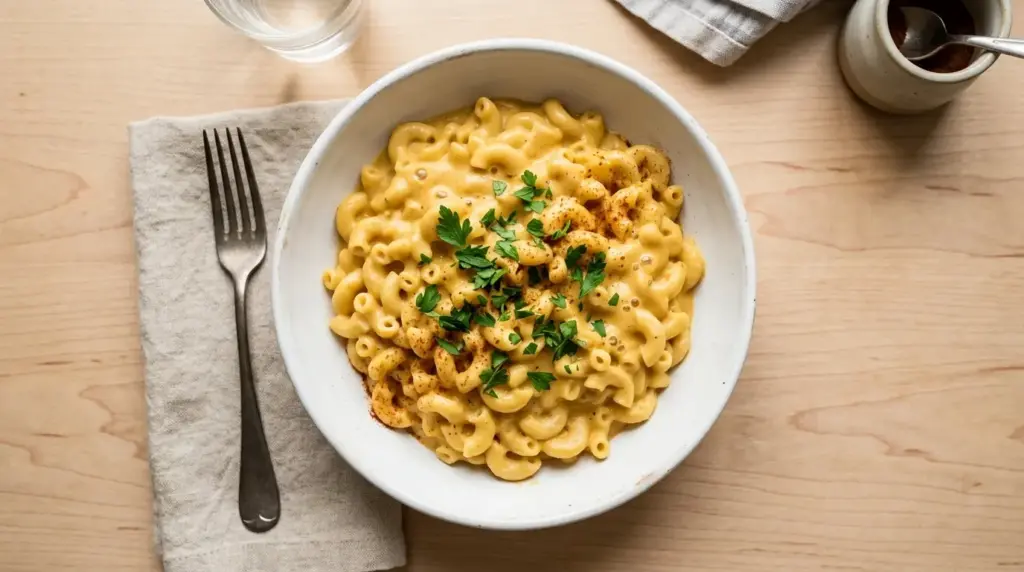
This vegan mac and cheese is a satisfying main dish on its own, but pairing it with simple sides turns it into a complete, well-rounded meal.
Roasted vegetables are the natural pairing here, since their caramelized edges and slight char provide a beautiful contrast to the rich, creamy pasta.
Here are some serving ideas to inspire you:
- Roasted Broccoli tossed with garlic and olive oil is a classic side that brings great texture and color to the plate
- Green Beans simply sauteed with garlic and a squeeze of lemon make a bright, crisp contrast
- Corn on the Cob is a crowd-pleasing summer side that pairs perfectly with the creamy pasta
- Baked Beans make this a hearty, filling comfort food spread
- A simple Broccoli Salad adds freshness and crunch to balance the richness of the pasta
- Crusty toasted bread or Cheesy Garlic Bread for scooping up every last bit of sauce
You might also enjoy: Cilantro Lime Rice
Variations to Try
Once you have mastered the base recipe, there are so many delicious directions you can take this dish.
The cashew cheese sauce is incredibly versatile and takes on additional flavors beautifully without losing its creamy, satisfying character.
- Spicy Vegan Mac: Add 1-2 teaspoons of hot sauce, a chipotle pepper in adobo, or 1/4 teaspoon of cayenne to the blender when making the sauce. This version is boldly flavored and deeply satisfying.
- Smoky Vegan Mac: Double the smoked paprika and add 1/4 teaspoon of liquid smoke to the sauce. Topping with vegan bacon bits after baking takes this version over the top.
- Buffalo Vegan Mac: Stir 2-3 tablespoons of buffalo sauce into the finished pasta along with a drizzle of vegan ranch dressing before serving.
- Veggie-Loaded Mac: Stir in roasted broccoli florets, wilted spinach, sauteed mushrooms, or thawed frozen peas directly into the finished mac and cheese. This is a great way to add nutrition and bulk.
- Butternut Squash Mac: Replace the cashews with 1 cup of roasted butternut squash blended with the other sauce ingredients. This makes a naturally sweeter, lower-fat version of the sauce.
- Baked Mac with Breadcrumb Crust: Follow the baked version instructions in the step-by-step section. Add fresh thyme, garlic powder, and vegan parmesan to the breadcrumb topping for extra flavor.
- White Bean Mac: For a nut-free version, blend 1 can of drained, rinsed cannellini beans in place of the cashews. The result is a slightly lighter but still very creamy sauce.
Read Also: Velveeta Mac and Cheese Recipe
Storage and Reheating
This vegan mac and cheese stores and reheats well, making it a great recipe to make in larger batches for meal prep.
The key to reheating it successfully is adding liquid, since the cashew sauce thickens considerably when cold.
- Refrigerator: Store leftover mac and cheese in an airtight container in the fridge for up to 4-5 days. Allow it to cool completely before sealing the container.
- Freezer: This recipe is freezer-friendly. Portion into individual freezer-safe containers and freeze for up to 2 months. Slightly undercook the pasta if you know you plan to freeze it.
- Stovetop reheating (best method): Transfer to a small saucepan over low heat. Add 2-3 tablespoons of plant-based milk per serving and stir constantly as it warms. The sauce will loosen back to its original creamy consistency.
- Microwave reheating: Transfer a single portion to a microwave-safe bowl. Add a splash of plant-based milk, cover loosely, and microwave in 60-second intervals, stirring between each, until heated through.
- Do not reheat without liquid: Reheating without adding plant-based milk will result in dry, clumped pasta. A little liquid goes a long way in restoring the creamy texture.
Tini’s Mac and Cheese Recipe is another excellent variation worth trying if you love trying different takes on this classic dish.
Nutritional Facts
The following is an approximate nutritional breakdown per serving, based on 6 servings from one batch of this recipe. Individual results may vary based on specific brands used.
| Nutrient | Per Serving |
|---|---|
| Calories | 490 kcal |
| Total Fat | 14g |
| Saturated Fat | 2g |
| Cholesterol | 0mg |
| Sodium | 520mg |
| Total Carbohydrates | 75g |
| Dietary Fiber | 4g |
| Sugars | 3g |
| Protein | 16g |
| Vitamin C | 4% DV |
| Calcium | 8% DV |
| Iron | 20% DV |
This recipe is notably high in plant-based protein from the cashews and nutritional yeast, and it is naturally free from cholesterol since it contains no animal products.
Read Also: Classic Baked Mac and Cheese Recipe
Health Benefits of Key Ingredients
This vegan mac and cheese is not just delicious, it is also packed with genuinely beneficial whole food ingredients that contribute to your overall health.
Each ingredient in the sauce was chosen both for flavor and for the real nutritional value it brings to the dish.
- Raw Cashews are rich in heart-healthy monounsaturated fats and provide a good source of magnesium, copper, and zinc. They also contain plant-based protein, making the sauce more filling and nutritious than a traditional roux-based cheese sauce.
- Nutritional Yeast is one of the best plant-based sources of B vitamins, including B12 in fortified versions, which is especially important for those following a vegan diet. It also adds protein and a range of trace minerals.
- Lemon Juice is an excellent source of vitamin C and antioxidants. The acidity also plays a functional role in the recipe by brightening flavors and helping balance the richness of the cashew base.
- Turmeric contains curcumin, a potent anti-inflammatory compound that has been widely studied for its potential role in supporting joint health and reducing oxidative stress.
- Garlic Powder retains many of the allicin compounds found in fresh garlic, which are associated with immune support and cardiovascular health.
- Oat Milk provides a gentle source of soluble fiber and is often fortified with calcium and vitamins D and B12, making it a nutritionally valuable dairy alternative.
For another nutrient-dense, plant-based meal option, try this Vegan Pho Recipe.
Frequently Asked Questions
1. Can I make this recipe without a high-speed blender?
Yes, you can use a regular blender, but you will need to blend the sauce for longer, typically 4-5 minutes, stopping to scrape down the sides frequently.
Soaking the cashews for the full 1-2 hours rather than just 30 minutes also helps compensate for a less powerful blender, as softer cashews break down more easily.
2. Can I make this nut-free?
Absolutely. The most effective substitution for cashews in this recipe is 1 can (15 oz/425g) of drained and rinsed cannellini beans or butter beans.
Blend them in the same way as the cashews with all the same sauce ingredients. The result is a slightly lighter sauce but still very creamy and satisfying.
3. Does this recipe work with gluten-free pasta?
Yes, this recipe works perfectly with gluten-free elbow pasta or any gluten-free short pasta shape.
The one tip to keep in mind is to undercook gluten-free pasta by about 1-2 minutes compared to the package directions, as it tends to become mushy more quickly when coated in hot sauce.
4. Why does my sauce taste too bland after mixing with the pasta?
This is the most common issue people encounter, and it happens because the pasta absorbs a lot of salt and seasoning.
The solution is simple: taste the finished dish after combining and add more salt, a squeeze of lemon, or an extra tablespoon of nutritional yeast until the flavor pops. Do not be afraid to season generously.
5. Can I prepare the cheese sauce in advance?
Yes! The cashew cheese sauce can be blended up to 3 days ahead and stored in an airtight container in the refrigerator.
When you are ready to use it, it may have thickened in the fridge. Simply whisk in a few tablespoons of plant-based milk to loosen it back to a pourable consistency before combining with the pasta.
This Cheese Sauce Recipe is also a helpful reference for understanding how to build and adjust a great sauce base.

Vegan Mac and Cheese

Equipment
- Large pot - for boiling pasta
- High-speed blender - Vitamix or Blendtec recommended for smoothest sauce
- Large saucepan or deep skillet - for finishing the dish
- Colander - for draining the pasta
- Measuring cups and spoons
- Wooden spoon or silicone spatula - for stirring
- Liquid measuring cup - for reserving pasta water
- 9×13-inch baking dish - only needed for baked version (optional)
- Small bowl - for soaking cashews
Ingredients
- 1 lb elbow macaroni pasta - 450g
- 1 cup raw unsalted cashews - 140g, soaked in hot water for 30 minutes and drained
- 1 cup unsweetened plain plant-based milk - 240ml, oat or almond milk work best
- 1/2 cup pasta cooking water - 120ml, reserved before draining
- 1/4 cup nutritional yeast - 15g
- 2 tbsp fresh lemon juice - about 1 large lemon
- 1 tsp Dijon mustard
- 1 tsp garlic powder
- 1/2 tsp onion powder
- 1/2 tsp turmeric
- 1/2 tsp smoked paprika
- 1 tsp salt - plus more to taste
- 1/4 tsp black pepper
- 1 tbsp vegan butter - optional, adds richness
- fresh parsley - for garnish, optional
- chives - for garnish, optional
For the Baked Version (optional)
- 1/2 cup panko breadcrumbs - 30g
- 1 tbsp vegan butter - melted, for the topping
Instructions
- Soak raw cashews in boiling water for 30 minutes (or up to 2 hours for extra creaminess), then drain and rinse.
- Bring a large pot of salted water to a boil and cook elbow macaroni to al dente according to package directions. Reserve 1 cup of starchy pasta water before draining.
- In a high-speed blender, combine soaked cashews, plant-based milk, nutritional yeast, lemon juice, Dijon mustard, garlic powder, onion powder, turmeric, smoked paprika, salt, and pepper. Blend on high for 2-3 minutes until completely smooth.
- Return drained pasta to the pot and pour the blended sauce over it. Stir until every noodle is coated, adding reserved pasta water a few tablespoons at a time to reach desired consistency. Stir in vegan butter if using.
- For stovetop version: serve immediately, garnished with fresh parsley or chives. For baked version: transfer to a 9×13 baking dish, top with panko mixed with melted vegan butter, and bake at 375°F for 20-25 minutes until golden and bubbling.
Notes
- Soak cashews properly: Under-soaked cashews won’t blend smooth. If short on time, simmer them in water on the stovetop for 15 minutes as a quicker alternative.
- Use a high-powered blender: A regular blender can work, but blend for 4-5 minutes and strain the sauce if needed for maximum smoothness.
- Reserve extra pasta water: Always scoop out at least 1 full cup before draining—you may only need a few tablespoons, but having extra gives you full control over sauce consistency.
- Cook pasta to al dente: Pull it while it still has a slight bite—it will finish cooking perfectly in the hot sauce and won’t become mushy.
- Season in layers: Taste the sauce before adding to pasta, then taste again after combining—pasta absorbs seasoning, so you may need to add more salt.
- Don’t skip the lemon juice and mustard: These create the tangy complexity that makes the sauce taste genuinely cheesy, not just nutty.
- Serve immediately: Cashew-based sauce thickens as it cools. Serve right away or reheat with a splash of plant-based milk to loosen it.
- Storage: Store leftovers in an airtight container in the fridge for up to 4-5 days. Reheat with a splash of plant-based milk to restore creaminess.
- Freezer-friendly: Portion into freezer-safe containers and freeze for up to 2 months. Slightly undercook pasta if planning to freeze.
- Nut-free variation: Replace cashews with 1 can (15 oz) of drained and rinsed cannellini beans for a nut-free creamy sauce.
Final Thoughts
This vegan mac and cheese recipe proves that plant-based cooking does not require any compromise on comfort, richness, or flavor.
Whether you serve it straight from the stovetop on a busy weeknight or go the extra mile with the baked, golden-topped version, this dish delivers every time.
The cashew-based sauce is creamy, bold, and satisfying in a way that makes even devoted cheese lovers do a double take.
Give it a try this week, and let me know how it goes in the comments below! I love hearing whether you went with the stovetop or baked version, and what sides you served alongside it.
If you share it on social media, tag me so I can see your beautiful bowls of vegan comfort food. Happy cooking!
Recommended:
- One Pot Mac and Cheese
- Baked Ziti
- Stuffed Shells
- Easy Lasagna
- Pasta Fagioli
- Creamy Tomato Soup
- Vegetable Soup
- Palak Paneer
- Black Bean Quesadilla
- Roasted Broccoli