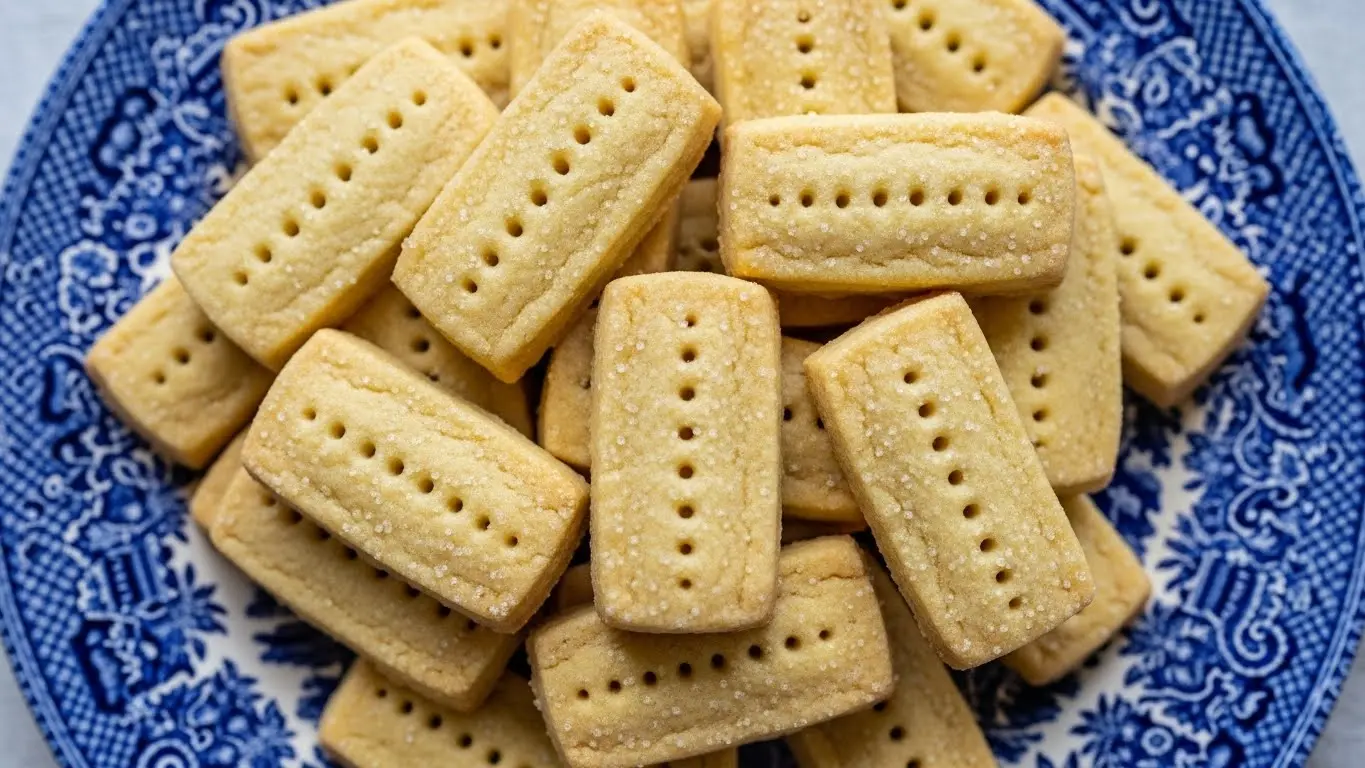
When I think about pure, simple indulgence, my mind always wanders back to the first time I tasted authentic Scottish shortbread. I was visiting a tiny tea shop in Edinburgh, and the owner handed me a thick wedge of buttery heaven still warm from the oven.
That crumbly, melt-in-your-mouth texture changed everything I thought I knew about cookies. This Scottish shortbread cookie recipe captures that same magic with just three basic ingredients and minimal effort.
Traditional shortbread isn’t fussy or complicated. It relies on quality butter, a touch of sugar, and good flour to create something truly memorable.
The beauty of this recipe is in its simplicity. You won’t need any special equipment or hard-to-find ingredients.
Just your hands, a bowl, and about 45 minutes from start to finish. The result is a buttery, crumbly cookie with crisp edges and a tender center that pairs perfectly with afternoon tea, coffee, or a glass of cold milk.
I’ve been making this recipe for years, and it never fails to impress. Friends always ask for the recipe, convinced there must be some secret ingredient.
The secret is actually in the technique and the quality of your butter. Use the best butter you can find, and you’ll taste the difference in every bite.
Read Also: Lemon Shortbread Cookies Recipe
Why You’ll Love This Scottish Shortbread Cookie Recipe
This recipe produces cookies that are worlds apart from store-bought versions. The texture is perfectly crumbly yet sturdy enough to hold together, with that characteristic sandy quality that defines authentic shortbread.
Making these cookies feels almost therapeutic. There’s something wonderfully calming about working the dough with your hands, shaping it, and watching it transform in the oven into golden perfection.
Here’s what makes this recipe special:
- Minimal ingredients – Just butter, sugar, and flour create incredible flavor
- No mixer required – Your hands are the best tools for this dough
- Versatile base – Perfect for adding flavors or keeping traditional
- Impressive results – Looks and tastes like you spent hours in the kitchen
- Great for gifting – These cookies travel well and look beautiful packaged up
- Beginner-friendly – Simple enough for first-time bakers to master
Ingredients
The ingredient list is refreshingly short, but quality matters here more than in most recipes. Since there are so few components, each one plays a starring role in the final flavor and texture.
I always emphasize using European-style butter with higher fat content for the richest taste. Room temperature is crucial for proper incorporation.
- 1 cup (2 sticks) unsalted butter, softened to room temperature
- ½ cup powdered sugar (also called confectioners’ sugar or icing sugar)
- 2 cups all-purpose flour, plus extra for dusting
- ¼ teaspoon salt
- 1 teaspoon vanilla extract (optional but recommended)
For extra flavor and a professional finish, try my pecan shortbread cookies variation.
Kitchen Equipment Needed
You won’t need fancy gadgets for this recipe. In fact, traditional Scottish bakers would argue that simple tools produce better results because you can feel the dough’s texture as you work with it.
That tactile connection helps you know exactly when to stop mixing. A quality rolling pin and a good baking sheet will serve you well for years.
- Large mixing bowl
- Wooden spoon or spatula
- Rolling pin
- Sharp knife or cookie cutter
- Baking sheet
- Parchment paper or silicone baking mat
- Fork (for traditional pricked pattern)
- Wire cooling rack
Recommended Products for This Recipe
After years of making shortbread, I’ve found a few products that genuinely make a difference in the final result. These aren’t necessary, but they do elevate the experience and outcome.
1. Kerrygold Pure Irish Butter
Traditional Scottish shortbread demands high-quality butter, and this Irish butter delivers exceptional flavor with its higher fat content. The rich, creamy taste comes through in every bite, and the golden color it gives the cookies is gorgeous.
2. Nordic Ware Natural Aluminum Baking Sheet
This commercial-grade baking sheet distributes heat evenly, preventing those annoying burnt bottoms while keeping the edges crisp. It’s warp-resistant and has served me faithfully for countless batches of shortbread.
3. French Rolling Pin
This tapered rolling pin gives you better control over dough thickness, which is crucial for even baking. The smooth wood surface releases dough easily and develops a natural patina over time that actually improves performance.
4. Shortbread Mold
For special occasions, a traditional shortbread mold creates beautiful designs and gives an authentic Scottish appearance. The intricate patterns aren’t just decorative—they also help the cookies bake evenly.
Step-by-Step Instructions
Take your time with these steps, especially if you’re new to shortbread. The dough should never feel warm or greasy—if it does, pop it in the refrigerator for 15 minutes before continuing.
1. Prepare Your Workspace and Preheat the Oven
- Clear a clean, dry work surface for rolling out the dough later
- Preheat your oven to 325°F (165°C)—this moderate temperature ensures even baking without browning too quickly
- Line your baking sheet with parchment paper or a silicone mat to prevent sticking
- Make sure your butter has been at room temperature for at least 30 minutes—it should be soft enough to leave an indent when pressed but not melting or greasy
2. Cream the Butter and Sugar
- Place the softened butter in your large mixing bowl
- Add the powdered sugar directly on top of the butter
- Using a wooden spoon or spatula, beat the butter and sugar together with vigorous stirring motions for about 3-4 minutes
- The mixture should become light, fluffy, and pale in color—this incorporates air and creates that characteristic crumbly texture
- Scrape down the sides of the bowl periodically to ensure everything is evenly mixed
- If using vanilla extract, add it now and stir until fully incorporated
3. Add the Dry Ingredients
- In a separate small bowl, whisk together the flour and salt
- Add the flour mixture to the butter mixture in three additions, stirring after each addition
- Mix gently but thoroughly—you want to incorporate all the flour without overworking the dough
- The mixture will initially look crumbly and dry, but keep mixing
- As you continue, it will start to come together into a cohesive dough
- Stop mixing as soon as the dough forms a ball—overmixing develops gluten and creates tough cookies
Another favorite: Christmas Shortbread Cookies Recipe
4. Shape the Dough
- Turn the dough out onto a lightly floured surface
- Knead it very gently 3-4 times just to bring it together smoothly
- Pat or roll the dough into a rectangle or circle about ½ inch thick—consistent thickness is key for even baking
- If rolling, dust your rolling pin lightly with flour to prevent sticking
- Work quickly so the butter in the dough doesn’t start to melt from the warmth of your hands
- If the dough becomes too soft or sticky, refrigerate it for 10-15 minutes before continuing
5. Cut and Shape the Cookies
- For traditional wedges: shape the dough into an 8-inch circle, then cut into 8-12 triangular wedges using a sharp knife
- For rectangles: cut the dough into fingers about 1 inch wide and 3 inches long
- For rounds: use a 2-inch cookie cutter to stamp out circles, re-rolling scraps as needed
- Transfer the shaped cookies to your prepared baking sheet, leaving about 1 inch between them
- Using a fork, prick each cookie several times in a decorative pattern—this isn’t just traditional, it also prevents puffing during baking
- For an authentic touch, crimp the edges with your fingers or a fork
6. Bake the Shortbread
- Place the baking sheet in the preheated oven on the center rack
- Bake for 18-22 minutes—timing depends on thickness and size of your cookies
- Watch carefully during the last few minutes of baking
- The cookies are done when the edges are very lightly golden and the centers are set but still pale
- They should not brown significantly—shortbread is meant to be pale
- The cookies will feel soft when you first remove them from the oven but will firm up as they cool
7. Cool and Finish
- Remove the baking sheet from the oven and place it on a wire cooling rack
- Let the cookies cool on the baking sheet for 5 minutes—they’re very delicate when hot
- After 5 minutes, carefully transfer the cookies to the wire rack using a spatula
- Allow them to cool completely, about 30 minutes
- If desired, dust with a light sprinkle of granulated sugar while still slightly warm
- Store in an airtight container once completely cooled
Tips for Success
These tips come from years of trial and error, plus lessons learned from Scottish bakers who’ve been making shortbread for generations. Pay attention especially to the butter temperature—it’s the most common pitfall for beginners.
- Use quality butter – The flavor of your shortbread is only as good as your butter, so splurge on good quality unsalted butter
- Don’t overmix – Once the flour is incorporated, stop mixing; overworking develops gluten and creates tough, hard cookies instead of tender ones
- Keep everything cool – If your kitchen is warm, chill the dough for 20-30 minutes before baking to prevent spreading
- Uniform thickness – Use rolling pin rings or guides to ensure all cookies are the same thickness for even baking
- Low and slow – Shortbread should bake at a moderate temperature to dry out slightly without browning too much
- Cool completely – Resist the temptation to eat them hot; shortbread develops its signature texture as it cools
You might also enjoy: Shortbread Cookie Recipe
Serving Suggestions
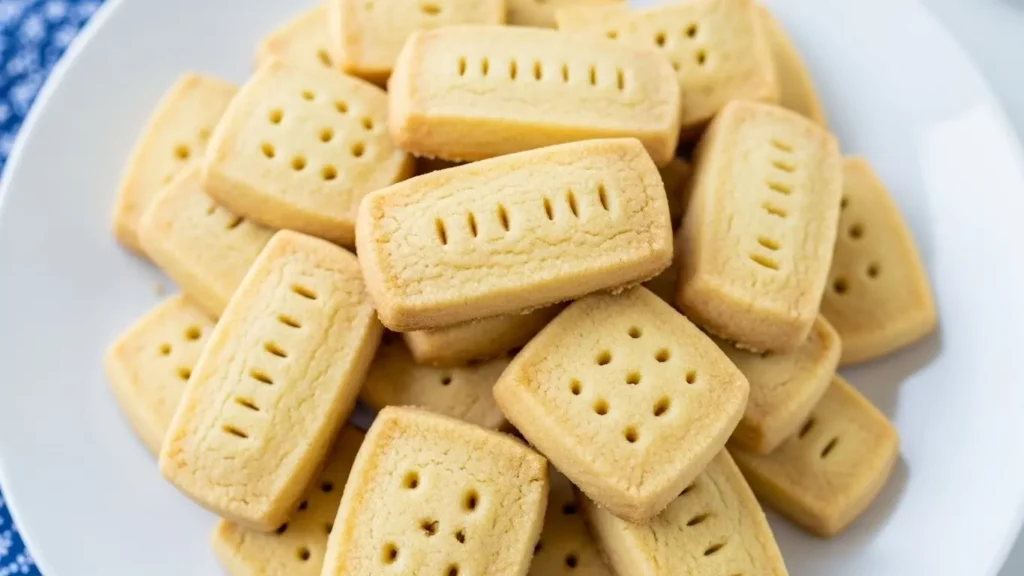
Scottish shortbread shines in so many settings, from casual coffee breaks to elegant afternoon tea service. The cookies’ subtle sweetness and buttery richness make them incredibly versatile for pairing with both beverages and other desserts.
Traditional Scottish tea time calls for shortbread alongside a pot of strong black tea. The cookies are sturdy enough to dip without falling apart, and the butter content complements the tea’s tannins beautifully.
Here are some delicious serving ideas:
- Classic tea pairing – Serve with Earl Grey, English Breakfast, or Scottish Breakfast tea
- Coffee companion – The buttery richness cuts through the bitterness of espresso or dark roast coffee
- Ice cream base – Crumble over vanilla ice cream or use as a base for hot fudge sundae
- Dessert platter – Arrange with fruit tart and chocolate truffles for variety
- Cheese board addition – Surprisingly good with sharp cheddar or blue cheese
- Berry accompaniment – Serve alongside fresh strawberries and whipped cream
- Gift packaging – Layer in decorative tins with parchment paper between rows
Variations to Try
Once you’ve mastered the basic recipe, shortbread becomes an excellent canvas for creative variations. The simple base welcomes additions beautifully without losing its essential character.
I love experimenting with different flavors throughout the year. Just remember to keep any additions modest so they don’t overwhelm the buttery base.
- Chocolate chip – Fold in ½ cup mini chocolate chips before shaping
- Lavender – Add 1 tablespoon dried culinary lavender to the dough
- Orange zest – Mix in zest of 1 orange for bright citrus notes
- Almond – Replace vanilla with almond extract and add ¼ cup finely chopped almonds
- Maple – Swap 2 tablespoons of sugar for pure maple syrup
- Espresso – Add 1 tablespoon finely ground espresso powder to the dry ingredients
- Cardamom – Include ½ teaspoon ground cardamom for Nordic flair
Storage and Reheating
Proper storage keeps your shortbread fresh and maintains that perfect texture for weeks. The low moisture content means these cookies actually improve slightly over the first few days as flavors meld.
I always make extra batches to keep on hand. They’re wonderful for unexpected guests or when you need a quick dessert.
- Room temperature – Store in an airtight container with parchment between layers for up to 2 weeks
- Refrigeration – Not recommended as it can make the cookies absorb moisture and become soft
- Freezing – Wrap cookies individually in plastic wrap, then place in a freezer bag; freeze for up to 3 months
- Thawing – Remove from freezer and let stand at room temperature for 30 minutes
- Refreshing – If cookies soften, place in a 300°F oven for 5 minutes to crisp them up again
For a different twist, try these No Bake Cookie Recipe.
Nutritional Facts
Per cookie (based on 12 cookies):
- Calories: 185
- Total Fat: 11g
- Saturated Fat: 7g
- Cholesterol: 30mg
- Sodium: 50mg
- Total Carbohydrates: 20g
- Dietary Fiber: 0g
- Sugars: 8g
- Protein: 2g
Health Benefits of Key Ingredients
While shortbread is certainly an indulgence, its simple ingredients do offer some nutritional value. Enjoying treats in moderation as part of a balanced diet is perfectly healthy.
Butter contains fat-soluble vitamins A, D, E, and K, which support various bodily functions from bone health to immune response. Quality butter also provides conjugated linoleic acid, which has been studied for potential health benefits.
- Butter – Provides vitamin A for eye health, vitamin K2 for bone health, and contains beneficial fatty acids that support hormone production
- Flour – Offers B vitamins, iron, and provides energy through complex carbohydrates
- Minimal processing – Simple, recognizable ingredients mean fewer additives and preservatives compared to commercial cookies
Frequently Asked Questions
1. Why is my shortbread spreading too much during baking?
The most common cause is butter that’s too warm when you start mixing. Make sure your butter is softened but still cool to the touch.
If your kitchen is particularly warm, refrigerate the shaped dough for 20-30 minutes before baking. Using bread flour instead of all-purpose can also help if spreading is a persistent problem.
2. Can I use salted butter instead of unsalted?
You can, but you’ll need to omit the added salt in the recipe. Keep in mind that different brands of salted butter contain varying amounts of salt, so the final flavor may be less predictable.
For the most consistent results, unsalted butter gives you better control over the final taste.
3. How do I know when the shortbread is done baking?
Shortbread should be pale golden on the edges and still quite pale in the center. The surface should look dry and set rather than shiny or wet.
The cookies will feel slightly soft when you first remove them from the oven but will firm up significantly as they cool. Overbaked shortbread becomes hard and loses its tender, crumbly texture.
4. Why did my shortbread turn out tough instead of crumbly?
This usually happens from overmixing the dough after adding the flour. When you mix flour with liquid ingredients, gluten develops, and too much gluten creates a tough texture.
Mix just until the dough comes together, then stop. Also ensure you’re measuring flour correctly by spooning it into the measuring cup and leveling off, rather than scooping directly from the bag.
5. Can I make shortbread dough ahead of time?
Absolutely! The dough keeps beautifully in the refrigerator for up to 3 days wrapped tightly in plastic wrap. You can also freeze the shaped but unbaked cookies for up to 3 months.
Frozen cookies can go straight from freezer to oven, though you may need to add 2-3 minutes to the baking time.
Read Also: Sugar Cookies Recipe
Final Thoughts
There’s a reason Scottish shortbread has remained virtually unchanged for centuries. When something is this simple and this perfect, why mess with it?
I hope this recipe becomes a staple in your kitchen the way it has in mine. The beauty of shortbread is that it feels special enough for guests but easy enough for a random Tuesday afternoon when you need something sweet with your tea.
Give this Scottish shortbread cookie recipe a try and taste what authentic, buttery perfection is all about. I’d love to hear how yours turns out—drop a comment below and let me know if you tried any variations or what you served them with!
Recommended:
- Pecan Shortbread Cookies Recipe
- Christmas Shortbread Cookies Recipe
- Lemon Shortbread Cookies Recipe
- Shortbread Cookie Recipe
- Peanut Butter Blossom Cookies Recipe
- Gingerbread Cookie Recipe
- Snickerdoodle Cookie Recipe
- Oatmeal Raisin Cookie Recipe
- Oatmeal Cookie Recipe
- Peanut Butter Cookie Recipe