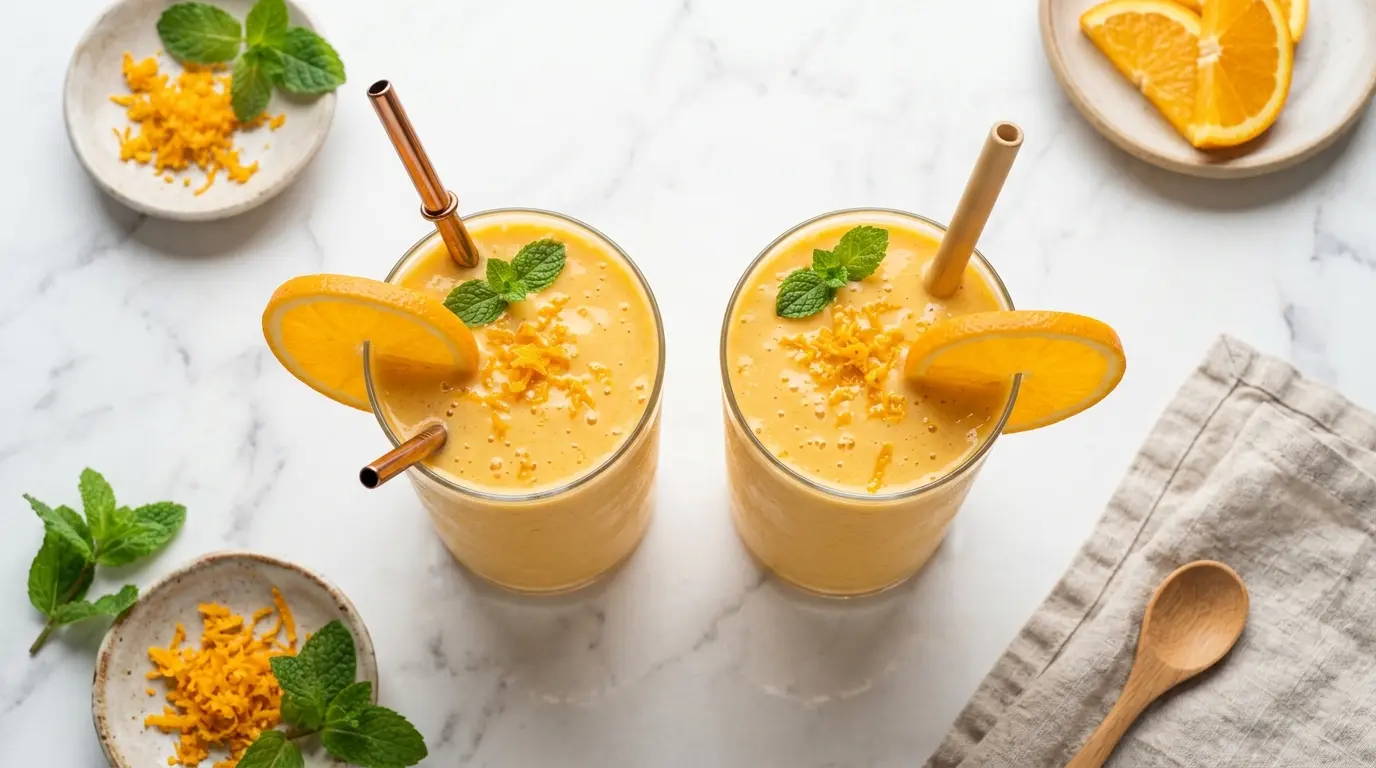
Bright, citrusy, and ready in under five minutes, this orange smoothie recipe is exactly what mornings were made for. Made with fresh navel oranges, frozen banana, Greek yogurt, a hint of vanilla, and a touch of honey, it blends up thick, creamy, and downright refreshing. If you’ve ever had an Orange Julius at the mall, this homemade version captures that same nostalgic creamsicle vibe, but with real, wholesome ingredients and zero mystery additives.
The key to a great orange smoothie is balancing the natural tartness of fresh oranges with a creamy base that keeps everything from turning watery. That’s why this recipe uses frozen banana and Greek yogurt. The frozen banana thickens the blend while adding natural sweetness, and the yogurt contributes a rich, smooth texture that ties everything together beautifully.
This is the kind of drink you’ll want to make every single morning once you try it. It’s nourishing, energizing, and honestly tastes more like a treat than a health drink.
You might also enjoy this Pineapple Smoothie for another tropical citrus option that pairs beautifully with breakfast.
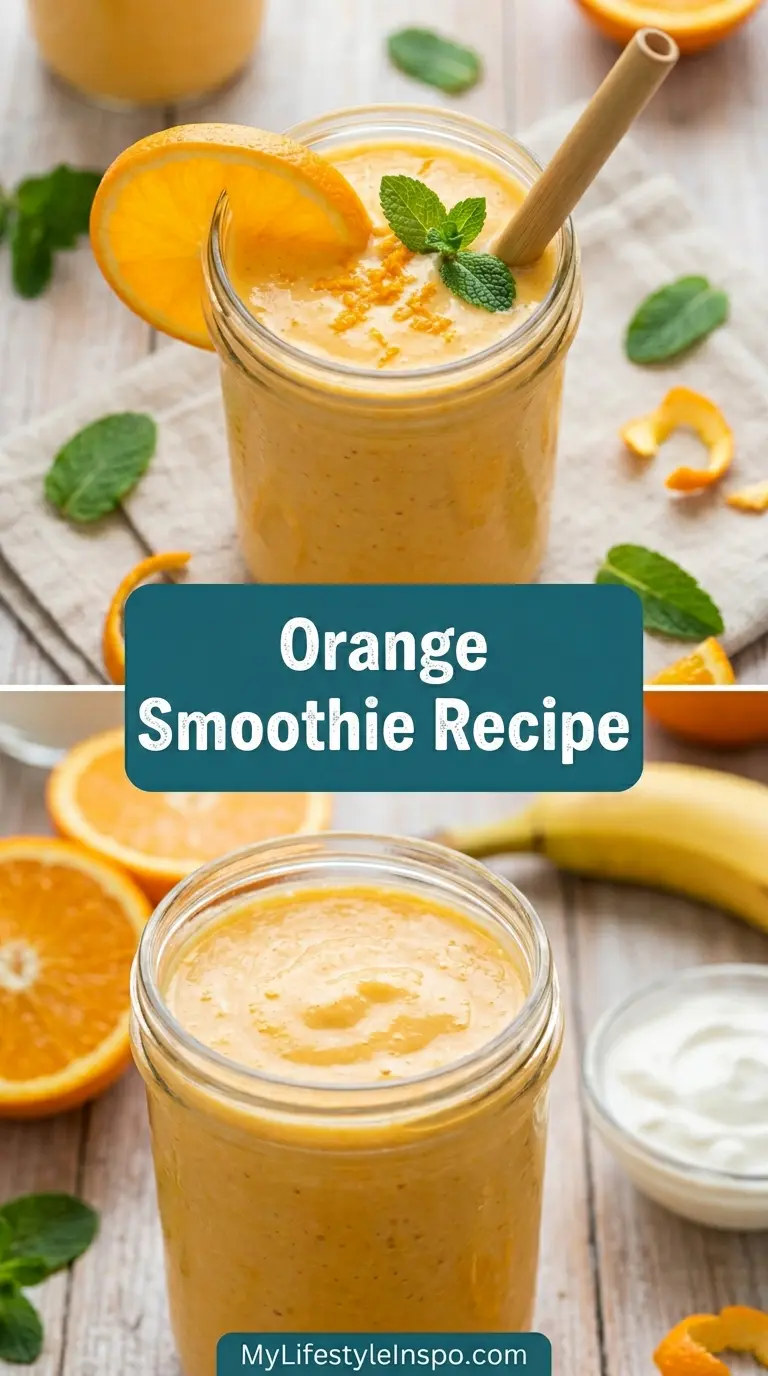
Why You’ll Love This Orange Smoothie Recipe
This orange smoothie recipe checks every box for a quick, nutritious, and satisfying drink.
It comes together in five minutes flat with just a blender and a handful of simple ingredients you probably already have on hand.
The combination of fresh orange, frozen banana, and Greek yogurt creates a creamy, thick texture without needing any ice cream or added dairy fat. It’s naturally sweet, tangy, and satisfying enough to stand in as breakfast or a mid-afternoon snack.
- No cooking required: just peel, measure, and blend
- Naturally sweetened with fruit and a drizzle of honey
- Packed with vitamin C, potassium, and gut-friendly probiotics
- Easily customizable for different dietary needs
- Kid-friendly flavor that even picky eaters will love
- Ready in 5 minutes with minimal cleanup
If you love fruit-forward drinks, this Mango Smoothie Recipe Without Yogurt is another reader favorite worth bookmarking.
Ingredients
These simple ingredients work together to create a smoothie that’s perfectly creamy, sweet, and bursting with citrus flavor. Using whole fresh oranges instead of orange juice keeps more fiber in your drink and delivers a brighter, more complex citrus taste.
- 2 large navel oranges, peeled and segmented (about 1 cup / 240g of orange flesh)
- 1 medium frozen banana, sliced (about 1 cup / 150g)
- ½ cup (120g) plain Greek yogurt
- ½ cup (120ml) almond milk (or whole milk)
- 1 tablespoon (21g) honey or maple syrup, or to taste
- ½ teaspoon pure vanilla extract
- ½ teaspoon freshly grated orange zest (optional, for extra citrus punch)
- 4–5 ice cubes (optional, for a colder smoothie)
Read Also: Peach Smoothie Recipe With Yogurt
Kitchen Equipment Needed
You don’t need anything fancy to make this smoothie, but the right equipment makes the process smoother and faster. A powerful blender is the most important tool here because fresh orange has a lot of fiber, and you want everything to blend into a completely smooth, lump-free consistency.
- High-speed blender (a Vitamix or Ninja works great)
- Cutting board
- Sharp knife
- Citrus zester or microplane (for the optional orange zest)
- Measuring cups and spoons
- Tall serving glasses (16 oz / 475ml capacity recommended)
- Reusable straw
Another favorite: Greek Yogurt Smoothie Recipe
Recommended Products for This Recipe
These are products I genuinely recommend based on quality, performance, and how much they improve the final smoothie.
1. Vitamix 5200 Blender
This blender pulverizes whole oranges, frozen banana, and ice into a silky smooth blend without leaving any fibrous bits. It’s the single biggest upgrade you can make for smoothie-making at home. The variable speed control gives you full command over texture.
2. Organic Navel Oranges
Fresh, high-quality navel oranges are the star of this recipe. Organic oranges tend to have a sweeter, more aromatic flavor profile, and since you’re using the zest in this recipe, choosing organic reduces your exposure to pesticide residues on the peel.
3. Raw Unfiltered Honey
A good quality honey adds floral sweetness that complements the citrus without overpowering it. Raw unfiltered honey also retains more of its natural enzymes and antioxidants compared to heavily processed varieties.
4. Pure Vanilla Extract
Vanilla is the not-so-secret ingredient that transforms this from a basic citrus drink into something that tastes like a creamy orange creamsicle. Using pure vanilla extract rather than imitation vanilla makes a noticeable difference in flavor depth.
5. Wide-Mouth Glass Smoothie Cups
Thick, sturdy glass cups with wide mouths are ideal for smoothies. They keep the drink cold longer, don’t absorb flavors, and look stunning on any breakfast table or countertop.
This pairs wonderfully with a Breakfast Smoothie Recipe if you want to build a complete morning routine.
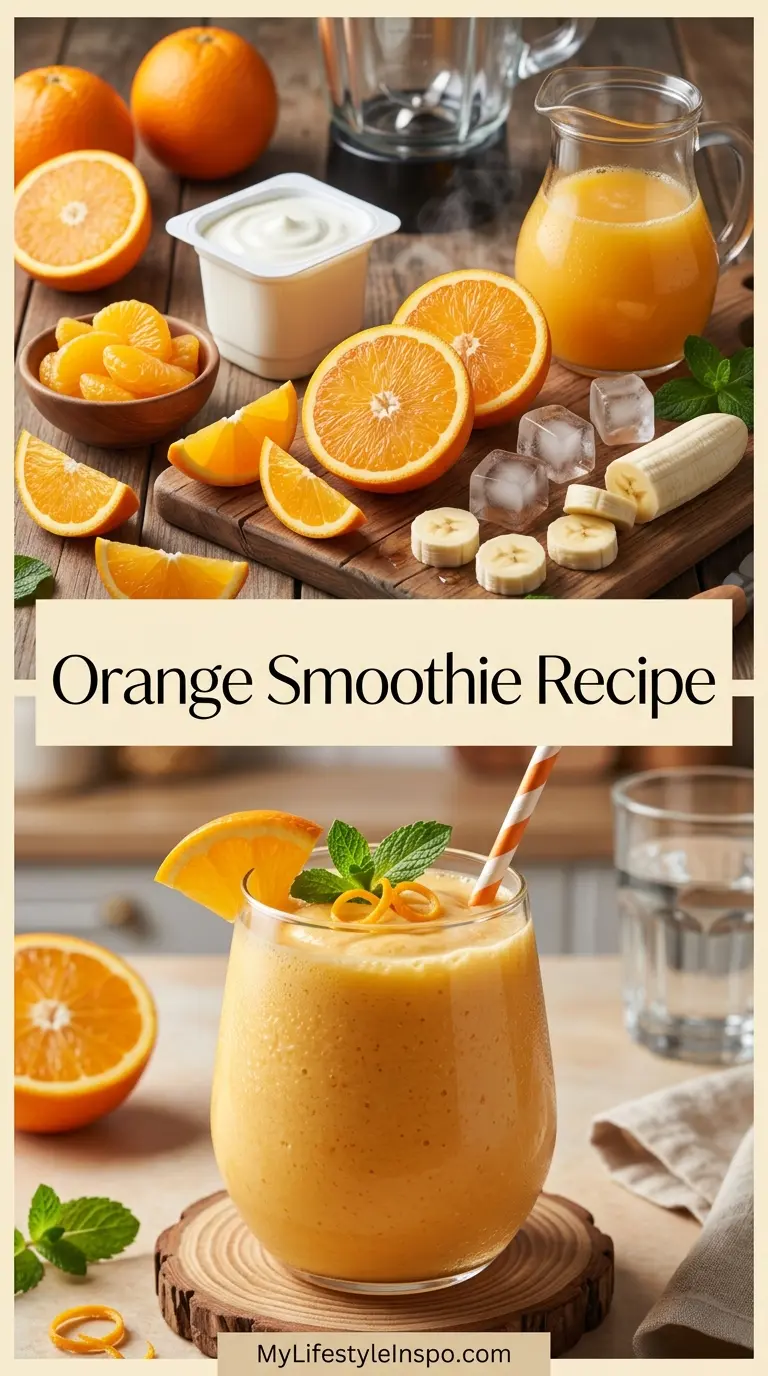
Step-by-Step Instructions
Step 1: Prepare the Oranges
- Peel both navel oranges by hand or use a knife to slice off the top and bottom, then cut down the sides to remove the peel and white pith.
- The white pith (the spongy layer between the skin and the flesh) can add bitterness to your smoothie, so try to remove as much of it as possible while keeping all the juicy flesh intact.
- Break the oranges into segments by pulling them apart by hand.
- If using orange zest, do this before peeling: use a microplane or citrus zester to grate about ½ teaspoon of zest from the outer surface of one orange. Set the zest aside for now.
- Aim for about 1 cup (240g) of orange segments in total.
Step 2: Prep the Frozen Banana
- If your banana isn’t already frozen, peel a ripe banana, slice it into 1-inch rounds, and place it in a zip-lock bag in the freezer for at least 2 hours before making the smoothie. Overnight is even better.
- A frozen banana (rather than fresh) is important because it chills the smoothie naturally, makes the texture noticeably thicker and creamier, and adds sweetness without needing extra sweetener.
- Measure out approximately 1 cup (150g) of frozen banana slices.
Step 3: Add Ingredients to the Blender
- Always add your liquid and softer ingredients to the blender first, then layer the frozen items on top. This order helps the blender motor engage smoothly without straining.
- Start by pouring ½ cup (120ml) of almond milk into the blender jar.
- Add the Greek yogurt next, spooning it directly on top of the milk.
- Pour in the vanilla extract and honey (or maple syrup).
- Add the orange segments and orange zest (if using) on top of the yogurt.
- Finally, add the frozen banana slices as the top layer.
- If you’re using ice cubes for an extra cold smoothie, add them last.
Step 4: Blend Until Smooth
- Secure the blender lid tightly. If your blender has a tamper (like a Vitamix), keep it nearby in case you need to push ingredients down toward the blade.
- Start blending on low speed for 10–15 seconds to begin breaking down the frozen banana and orange segments.
- Gradually increase to high speed and blend for 45–60 seconds, or until the smoothie is completely smooth and creamy with no chunks remaining.
- If the blender is struggling, stop it, remove the lid, and use a spatula to push the contents down toward the blade. Add an extra tablespoon of almond milk if needed, then re-blend.
- The final consistency should be thick enough to coat the back of a spoon, but still pourable.
Step 5: Taste and Adjust
- Stop the blender and remove the lid carefully. Using a spoon, taste the smoothie.
- If it needs more sweetness, drizzle in a little more honey and blend briefly for 5–10 seconds.
- If it tastes a little flat, add a small squeeze of fresh orange juice (about 1 teaspoon) or an extra pinch of orange zest and blend again.
- If it’s thicker than you’d like, add another tablespoon of almond milk and blend for 10 seconds.
- If it’s thinner than you’d like, add a few more frozen banana slices or ice cubes and blend again.
Step 6: Pour and Serve
- Pour the smoothie into two tall 16 oz (475ml) glasses, dividing it evenly.
- For a beautiful presentation, garnish with a thin orange slice on the rim of each glass or a small curl of orange zest on top.
- Insert a reusable straw and serve immediately for the best flavor and texture. Smoothies are always best enjoyed right after blending, while everything is cold and fresh.
Read Also: Avocado Banana Smoothie Recipe
Tips for Success
A few practical tips can make the difference between a good smoothie and a truly exceptional one. Getting these small details right is what makes this recipe consistently great every single time.
- Use ripe bananas: The riper your banana before freezing it, the sweeter and more flavorful your smoothie will be. Look for bananas with lots of brown speckles on the skin before freezing them.
- Freeze your banana ahead of time: This is the biggest tip. A properly frozen banana gives the smoothie its thick, creamy texture. A fresh banana will make it thinner.
- Remove as much white pith as possible: The bitter white layer of the orange can throw off the flavor balance. Take an extra 30 seconds to pull it off before blending.
- Zest before you peel: Always zest your orange before peeling and segmenting it. Once peeled, zesting becomes nearly impossible.
- Blend liquid and soft ingredients first: Adding liquid first protects your blender’s motor and ensures a smooth blend every time.
- Taste before serving: Natural sweetness varies by orange and banana ripeness. Always taste and adjust with honey before pouring.
For more creamy blended inspiration, check out the Blueberry Banana Smoothie Recipe.
Serving Suggestions
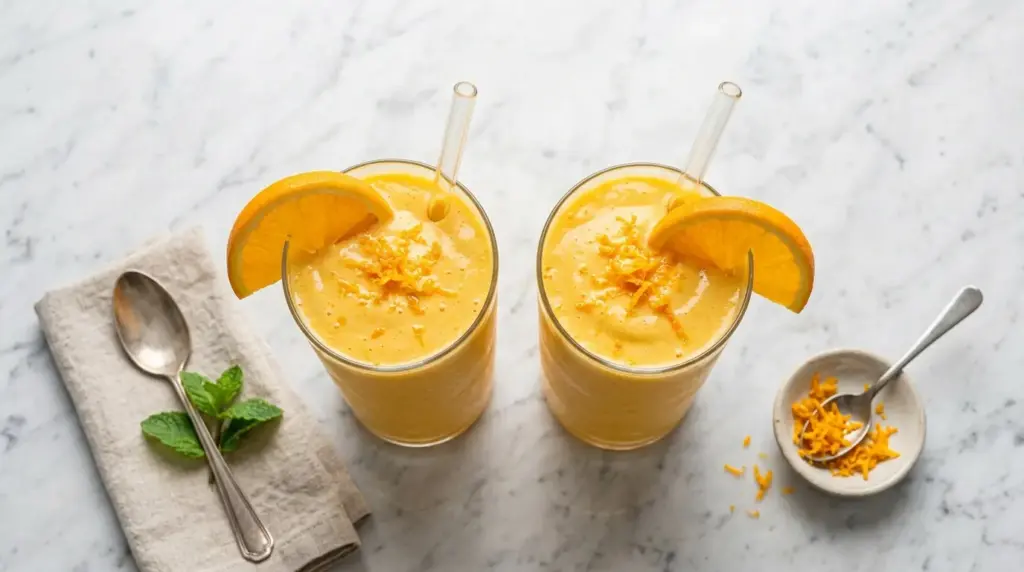
This orange smoothie is versatile enough to serve for breakfast, post-workout recovery, or as a refreshing midday snack. Its bright citrus flavor pairs well with both light and hearty foods.
A tall glass of this smoothie alongside a plate of Scrambled Eggs or a slice of warm toast makes for a complete, balanced morning meal.
- Pair with Avocado Toast for a nourishing breakfast
- Serve alongside a bowl of Easy Granola and fresh berries
- Enjoy as a mid-morning snack with a handful of mixed nuts
- Pair with Baked Oatmeal for a filling weekend brunch
- Serve in small glasses as a party mocktail garnished with orange zest and a fancy straw
- Pour over ice for a thinner, juice-like consistency on particularly warm days
Variations to Try
Once you’ve mastered the base recipe, this orange smoothie is incredibly easy to customize. The citrus base plays well with all kinds of add-ins and swaps.
- Orange Mango Smoothie: Replace the frozen banana with 1 cup (150g) of frozen mango for a tropical twist with slightly less sweetness. Mango and orange are a classic pairing.
- Orange Carrot Smoothie: Add ½ cup (60g) of raw baby carrots to the blender. The carrot deepens the orange color and adds a natural earthy sweetness along with a boost of beta-carotene.
- Dairy-Free Version: Swap the Greek yogurt for a full-fat coconut yogurt and use oat milk instead of almond milk for a rich, completely plant-based smoothie.
- High-Protein Orange Smoothie: Add one scoop of vanilla or unflavored whey protein powder to the blender for a post-workout recovery smoothie with extra staying power.
- Orange Creamsicle Smoothie: Add 2 tablespoons of cashew butter and an extra ½ teaspoon of vanilla extract to amplify the creamsicle flavor.
- Spiced Orange Smoothie: Stir in ¼ teaspoon of ground cinnamon and a pinch of ground ginger for a warming, spiced version that’s especially comforting in cooler months.
You might also love this Watermelon Smoothie Recipe as another fruit-forward option for warm days.
Storage and Reheating
Smoothies are always best when consumed immediately after blending, but they can be stored short-term if needed. The key is minimizing air contact and keeping it very cold.
- Refrigerator: Pour leftover smoothie into a sealed jar or airtight container and refrigerate for up to 24 hours. Shake or stir well before drinking, as natural separation will occur.
- Freezer: Pour the smoothie into an ice cube tray or individual popsicle molds and freeze. Smoothie cubes can be blended directly from frozen for a quick future serving, or the popsicle molds will give you a healthy frozen treat.
- Re-blending: After refrigeration, the smoothie will separate and thicken. Re-blend it in a blender or shake vigorously in a sealed jar to restore a uniform consistency.
- Do not reheat: This smoothie is meant to be served cold. Heating it will break down the fresh flavors and alter the texture completely.
Read Also: Frozen Fruit Smoothie Recipe
Nutritional Facts
The following values are approximate per serving (this recipe makes 2 servings).
| Nutrient | Per Serving |
|---|---|
| Calories | 175 kcal |
| Carbohydrates | 38g |
| Protein | 6g |
| Total Fat | 2g |
| Saturated Fat | 0.5g |
| Fiber | 4g |
| Sugar | 27g (natural) |
| Sodium | 40mg |
| Vitamin C | 70mg (78% DV) |
| Potassium | 520mg |
| Calcium | 120mg |
Nutritional values will vary based on the size of oranges used, the ripeness of the banana, and any optional add-ins.
This smoothie is a great fit for a Breakfast Smoothie routine, especially when you need something nourishing but quick on busy mornings.
Health Benefits of Key Ingredients
Every ingredient in this orange smoothie was chosen not just for flavor, but for genuine nutritional value. This isn’t just a tasty drink, it’s one that actually supports your health.
Oranges are one of the best dietary sources of vitamin C, providing nearly 80% of the recommended daily value in a single large fruit. Vitamin C supports immune function, helps the body absorb iron, promotes collagen production, and acts as a powerful antioxidant that protects cells from damage.
- Navel Oranges: Rich in vitamin C, folate, and flavonoids like hesperidin, which support cardiovascular health and reduce inflammation.
- Banana: An excellent source of potassium, which supports healthy blood pressure and muscle function. Also provides vitamin B6, which plays a key role in mood regulation and brain health.
- Greek Yogurt: A high-protein dairy food that also provides probiotics for gut health, calcium for bone strength, and phosphorus for energy metabolism.
- Honey: Contains trace antioxidants and has antimicrobial properties. Raw honey, in particular, retains natural enzymes and beneficial plant compounds not found in refined sugar.
- Vanilla Extract: While used in small amounts, pure vanilla contains small amounts of vanillin, a compound with antioxidant and anti-inflammatory properties.
- Almond Milk: A low-calorie, dairy-free liquid base that adds a subtle nutty sweetness and contributes vitamin E, a fat-soluble antioxidant that supports skin health.
For even more nutrient-dense smoothie ideas, the Kale and Fruit Smoothie Recipe is a beautiful complement to this one.
Frequently Asked Questions
1. Can I use orange juice instead of whole oranges?
You can, but whole oranges are strongly recommended for this recipe. Using the whole fruit gives you significantly more fiber, which keeps you fuller for longer and slows the absorption of the natural sugars. Orange juice, even freshly squeezed, is essentially the liquid with most of the fiber removed. If you do substitute orange juice, use ¾ cup (180ml) of freshly squeezed juice and reduce the almond milk to ¼ cup (60ml).
2. Why does my smoothie taste bitter?
Bitterness in an orange smoothie almost always comes from two sources: the white pith on the orange, or unripe banana. Make sure you remove as much of the white spongy layer between the peel and the orange flesh as possible before blending. Also ensure your banana was ripe (yellow with brown spots) before you froze it. Unripe bananas have a starchy, slightly bitter taste that doesn’t sweeten during freezing.
3. Can I make this smoothie without a high-speed blender?
Yes, with a few adjustments. A standard blender can handle this recipe if you break the orange into very small segments, slice the frozen banana into thin pieces, and add everything in stages rather than all at once. Blend for longer, pausing to stir and push ingredients down as needed. The texture may not be quite as perfectly smooth as with a high-powered blender, but it will still taste great.
4. Is this orange smoothie good for weight loss?
This smoothie is naturally low in fat and rich in fiber, which makes it quite filling for its calorie count. At around 175 calories per serving, it can be a smart choice as part of a balanced diet. The fiber from the whole orange and banana helps regulate appetite. To make it even more weight-loss friendly, skip the honey if the fruit is ripe enough to be naturally sweet, and use water or a low-calorie plant milk instead of almond milk.
5. Can I add spinach or kale to this smoothie without changing the flavor?
Absolutely. Spinach is the most neutral leafy green for smoothies. A large handful (about 1 cup / 30g) of fresh baby spinach blends in without significantly altering the flavor, though it will turn the smoothie a light green-orange color. Kale has a slightly stronger flavor, so start with a smaller amount (about ½ cup / 15g of torn kale leaves with stems removed) if you’re new to green smoothies. Both options add a meaningful boost of iron, folate, and vitamin K.
Read Also: Spinach Smoothie Recipe
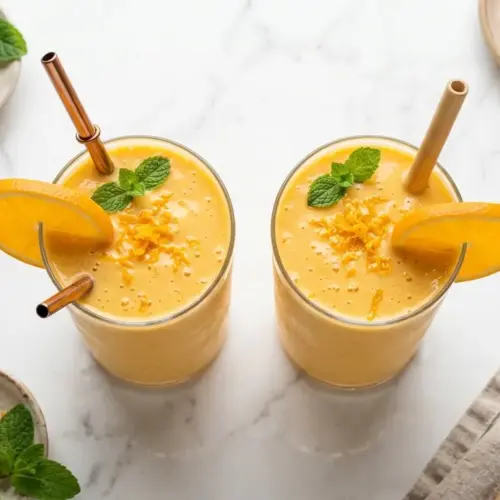
Orange Smoothie

Equipment
- High-speed blender - A Vitamix or Ninja works great to pulverize the orange fiber
- Cutting board
- Sharp knife
- Citrus zester or microplane - For the optional orange zest
- Measuring cups
- Measuring spoons
- Tall serving glasses - 16 oz / 475ml capacity recommended
- Reusable straw - Optional, for serving
Ingredients
- 2 large navel oranges - about 1 cup or 240g of orange flesh, peeled and segmented, pith removed
- 1 medium frozen banana - about 1 cup or 150g, sliced, ripe and speckled before freezing
- ½ cup plain Greek yogurt - 120g
- ½ cup almond milk - 120ml, or whole milk
- 1 tablespoon honey - 21g, or maple syrup, or to taste
- ½ teaspoon pure vanilla extract
- ½ teaspoon orange zest - optional, freshly grated
- 4-5 ice cubes - optional, for a colder smoothie
Optional Garnishes
- Thin orange slices - for rim garnish
- Orange zest curls - sprinkled on top
Instructions
- Peel the oranges, removing as much white pith as possible. If using zest, grate ½ teaspoon before peeling. Segment the oranges and measure about 1 cup (240g) of flesh.
- If not already frozen, peel a ripe banana, slice into 1-inch rounds, and freeze for at least 2 hours or overnight. Measure 1 cup (150g) of frozen banana slices.
- Add almond milk, Greek yogurt, vanilla, honey, orange segments and zest, frozen banana, and ice cubes to the blender in that order, with liquids first.
- Blend on low for 10-15 seconds, then increase to high and blend for 45-60 seconds until completely smooth and creamy. Scrape down and add a splash more milk if needed.
- Taste and adjust sweetness with extra honey or tang with a squeeze of fresh orange juice. Blend briefly to combine.
- Pour into two tall glasses, garnish with an orange slice or zest curl, and serve immediately with a straw.
Notes
- Ripe bananas are key: Use bananas with brown speckles for maximum sweetness before freezing. Unripe bananas can taste starchy and slightly bitter.
- Remove the pith: The white spongy layer between the peel and flesh adds bitterness. Take an extra 30 seconds to peel it off completely.
- Zest before peeling: Always grate the orange zest before you peel and segment the orange—it’s nearly impossible to zest a peeled orange.
- Liquids first: Adding milk and yogurt to the blender first protects the motor and helps everything blend more smoothly.
- Make it vegan: Swap Greek yogurt for full-fat coconut yogurt and use maple syrup instead of honey. Almond milk is already plant-based.
- High-protein boost: Add a scoop of vanilla or unflavored whey protein powder for a post-workout recovery smoothie.
- Add greens: Toss in a handful of fresh baby spinach—you won’t taste it, but you’ll get an iron and folate boost.
- Storage: Store leftovers in an airtight jar in the fridge for up to 24 hours. Shake or re-blend before drinking, as separation is natural.
- Freeze for later: Pour into ice cube trays or popsicle molds for a frozen treat. Blend the cubes directly from frozen for a quick smoothie.
- Not too sweet? The sweetness depends on your oranges and banana. Taste before adding honey and add only what you need.
Final Thoughts
This orange smoothie recipe is one of those simple pleasures that never gets old. Fresh oranges, creamy frozen banana, tangy Greek yogurt, and a whisper of vanilla come together in minutes to create something that genuinely feels like a treat, even though it’s packed with goodness.
Once you have the base down, the variations are endless. Try adding mango, swap in coconut yogurt, toss in a handful of spinach, or boost it with protein powder. This recipe adapts to whatever you need it to be.
If you make this recipe, I’d love to hear how it turned out. Drop a comment below, share your twist on the classic, or snap a photo and tag me. Your feedback genuinely helps, and it’s always a joy to see this smoothie showing up in kitchens everywhere.
Recommended:
- Lemon Smoothie Recipe
- Guava Smoothie Recipe
- Acai Smoothie Recipe
- Passion Fruit Smoothie Recipe
- Dragon Fruit Smoothie Recipe
- Papaya Smoothie Recipe
- Coconut Smoothie Recipe
- Protein Smoothie Recipe
- Smoothie Recipe With Protein Powder
- Green Smoothie Recipe