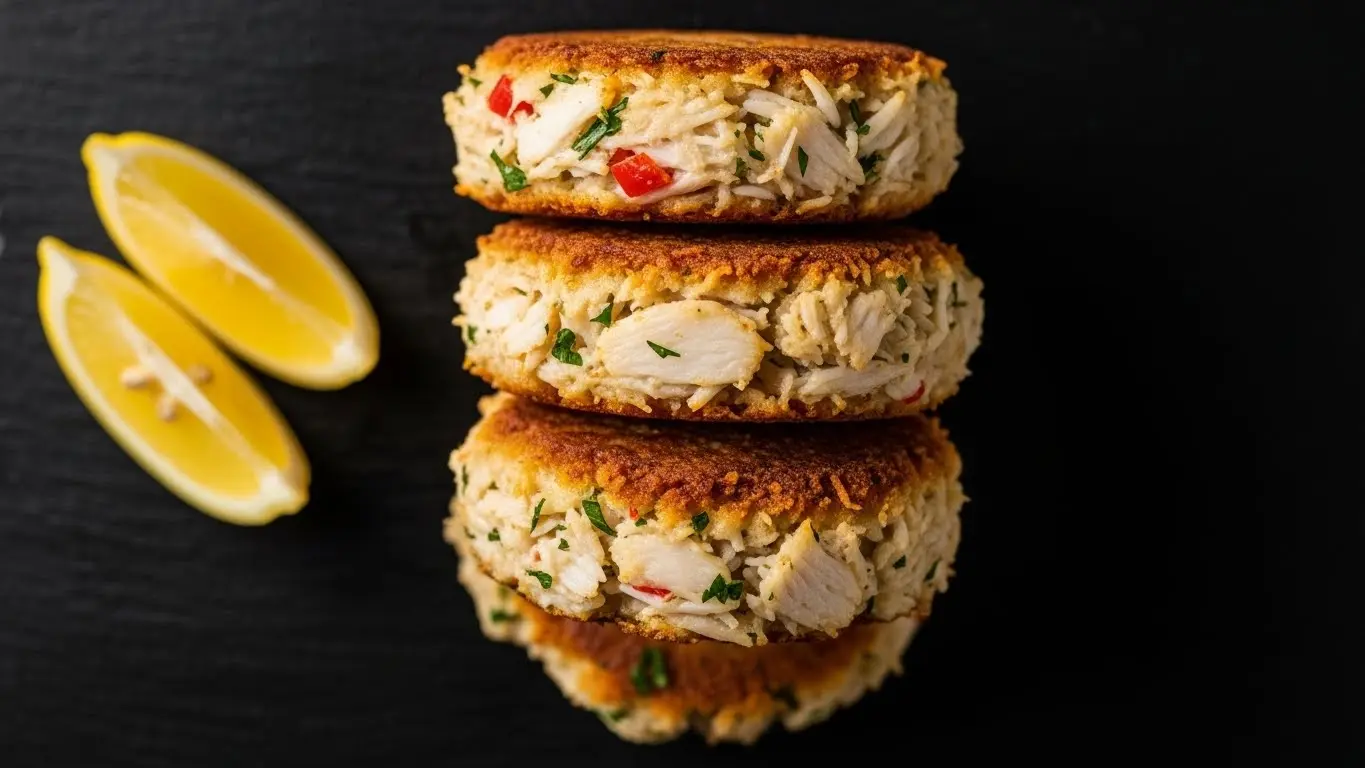
I can still taste my first bite of perfectly crispy crab cake at a little seafood shack on the Maryland coast. The golden-brown exterior shattered under my fork, revealing tender lumps of sweet crab meat held together with just enough binder to keep things cohesive.
That moment changed everything I thought I knew about seafood. Since then, I’ve been on a mission to recreate that magic at home, and after years of testing and tweaking, I’ve finally nailed this crab cake recipe.
The secret isn’t in fancy techniques or hard-to-find ingredients. It’s all about respecting the crab meat and not drowning it in filler. These crab cakes are packed with succulent crab, lightly seasoned, and pan-fried until they develop that irresistible golden crust we all crave.
Why You’ll Love This Crab Cake Recipe
These aren’t your typical breadcrumb-heavy crab cakes that taste more like seasoned stuffing than seafood. Mine are built around the star ingredient with minimal interference.
You’ll get maximum crab flavor in every single bite. The texture is absolutely perfect with a crispy exterior that gives way to a moist, flaky interior studded with generous chunks of crab meat.
Here’s what makes this recipe stand out:
- Crab-forward flavor – More crab meat, less filler means you actually taste the seafood you paid good money for
- Restaurant-quality results – That professional golden crust and tender center are totally achievable at home
- Simple ingredients – No obscure items or complicated techniques required
- Quick preparation – From mixing bowl to dinner plate in under 30 minutes
- Versatile serving options – Perfect as an appetizer, main course, or tucked into a sandwich
If you’re a fan of seafood done right, you might also enjoy my baked salmon recipe.
Ingredients
The beauty of great crab cakes lies in their simplicity. Use the freshest crab meat you can find, and let it shine through with minimal interference.
- 1 pound lump crab meat, picked over for shells
- 1/3 cup mayonnaise
- 1 large egg, lightly beaten
- 1 tablespoon Dijon mustard
- 1 tablespoon Worcestershire sauce
- 1 teaspoon Old Bay seasoning
- 1/4 teaspoon salt
- 1/4 teaspoon black pepper
- 1/4 teaspoon cayenne pepper (optional, for heat)
- 2 tablespoons fresh parsley, finely chopped
- 1 tablespoon fresh lemon juice
- 1/2 cup panko breadcrumbs, plus more for coating
- 2 tablespoons unsalted butter
- 2 tablespoons olive oil
- Lemon wedges, for serving
Kitchen Equipment Needed
You won’t need any specialized tools for this recipe. Just a few basic kitchen essentials will get the job done perfectly.
- Large mixing bowl
- Small bowl for the wet mixture
- Fork for mixing
- Digital kitchen scale (optional, but helpful for portioning)
- Large skillet or cast iron pan
- Spatula
- Shallow dish for coating
- Parchment paper or plate for resting
Recommended Products for This Recipe
After making countless batches of crab cakes over the years, I’ve found that a few quality products really do make a difference in the final result.
1. Phillips Jumbo Lump Crab Meat
This is hands-down the best premium crab meat you can buy without going to a fish market. The lumps are huge and sweet, with minimal shell fragments. It’s pricey, but when crab is the star of your dish, quality matters.
2. Lodge Cast Iron Skillet
A well-seasoned cast iron skillet gives you the most beautiful, evenly golden crust on your crab cakes. The heat retention is unbeatable, and it’ll last you a lifetime with proper care.
3. Kewpie Japanese Mayonnaise
I know it sounds strange, but this Japanese mayo has a richer, slightly tangy flavor that elevates the crab cakes. It’s creamier than American mayo and adds an extra layer of umami that pairs beautifully with seafood.
4. McCormick Old Bay Seasoning
This is non-negotiable for authentic crab cakes. The blend of celery salt, paprika, and spices is what gives them that classic Chesapeake Bay flavor we all know and love.
You might also enjoy: Baked Cod Recipe
Step-by-Step Instructions
1. Prepare the Crab Meat
- Remove the crab meat from the container and gently spread it out on a clean surface or large plate
- Pick through the meat carefully with your fingers, feeling for any remaining shell fragments or cartilage
- Be gentle during this process to keep the lumps intact as much as possible
- Once cleaned, place the crab meat in your large mixing bowl and keep it refrigerated until ready to use
2. Mix the Wet Ingredients
- In a small bowl, combine the mayonnaise, beaten egg, Dijon mustard, Worcestershire sauce, lemon juice, and fresh parsley
- Whisk these ingredients together until they’re completely smooth and well incorporated
- The mixture should look creamy and uniform in color with no streaks of egg visible
- Add the Old Bay seasoning, salt, black pepper, and cayenne pepper (if using) to this wet mixture
- Stir again until all the seasonings are evenly distributed throughout
3. Combine and Fold
- Pour the wet mixture over the crab meat in your large bowl
- Add the 1/2 cup of panko breadcrumbs on top
- Using a rubber spatula or your hands, very gently fold everything together
- Use a folding motion rather than stirring to keep the crab lumps from breaking apart
- Mix only until the ingredients are just combined and the crab is evenly coated
- The mixture should be moist but hold together when pressed, if it seems too wet, add another tablespoon of panko
4. Shape the Crab Cakes
- Line a baking sheet or large plate with parchment paper
- Divide the mixture into 6 to 8 equal portions depending on your preferred size
- Gently form each portion into a patty about 3/4 inch thick and 3 inches in diameter
- Press the patties firmly enough to hold together but not so hard that you crush the crab lumps
- Place each formed crab cake on the prepared baking sheet
- Refrigerate the formed cakes for at least 15 minutes, or up to 2 hours if you have time, this helps them hold together during cooking
5. Coat the Crab Cakes
- Place additional panko breadcrumbs in a shallow dish
- Remove the chilled crab cakes from the refrigerator
- Gently press both sides of each crab cake into the panko to create a light coating
- The coating should be thin and even, not too heavy
- Shake off any excess breadcrumbs
- Return the coated cakes to the baking sheet until ready to cook
6. Pan-Fry to Perfection
- Heat the butter and olive oil in your large skillet or cast iron pan over medium-high heat
- Wait until the butter is completely melted and the mixture is shimmering but not smoking
- Carefully place the crab cakes in the pan, leaving space between each one
- Cook for 4 to 5 minutes on the first side without moving them, they should develop a deep golden-brown crust
- Gently flip each crab cake using a spatula, being careful not to break them
- Cook for another 4 to 5 minutes on the second side until equally golden and crispy
- The internal temperature should reach 145°F when checked with a meat thermometer
- Remove from the pan and let rest on a paper towel-lined plate for a minute to absorb excess oil
Read Also: Seafood Chowder Recipe
Tips for Success
Getting perfect crab cakes every time comes down to a few critical techniques. Master these, and you’ll be turning out restaurant-quality results consistently.
- Don’t overmix – Treat the crab meat gently when combining ingredients, overmixing breaks up those beautiful lumps that make your crab cakes special
- Chill before cooking – That 15-minute rest in the fridge isn’t optional, it helps the cakes hold together and prevents them from falling apart in the pan
- Use the right heat – Medium-high heat is perfect for getting a golden crust without burning, if the pan is too hot, the outside will burn before the inside is cooked
- Don’t crowd the pan – Give each crab cake plenty of space so they fry properly instead of steaming, cook in batches if needed
- Resist the urge to flip early – Let that first side develop a proper crust before flipping, if you try to move them too soon, they’ll stick and break
- Use quality crab meat – Jumbo lump or lump crab meat makes all the difference, claw meat or imitation crab won’t give you the same results
- Keep breadcrumbs minimal – These should taste like crab, not bread, use just enough binder to hold things together
Serving Suggestions
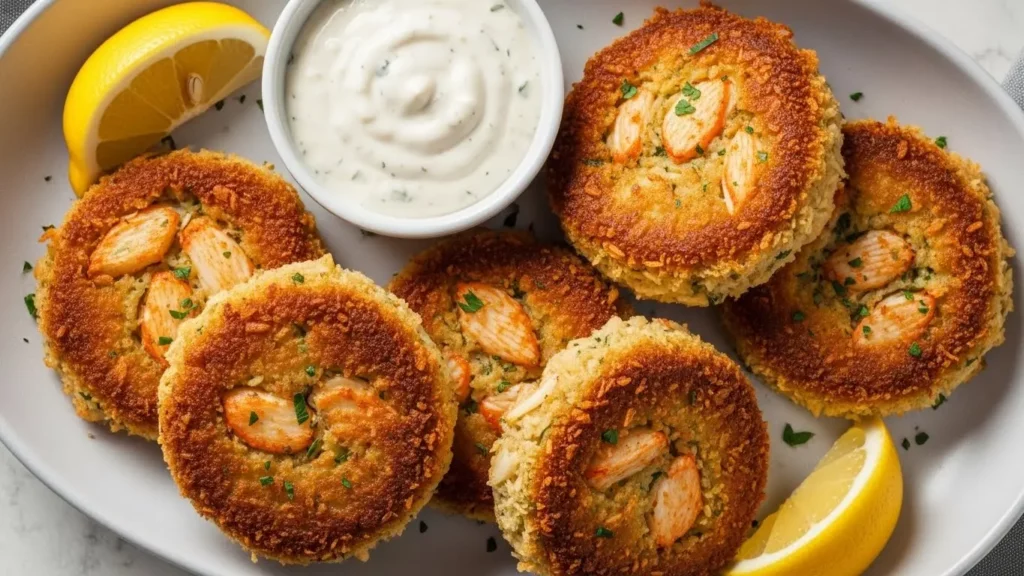
These golden beauties are incredibly versatile and shine in so many different contexts. The key is balancing their richness with bright, fresh accompaniments.
Crab cakes deserve sides that complement without competing. I love serving them with a simple arugula salad dressed in lemon vinaigrette, the peppery greens cut through the richness beautifully. Classic remoulade or tartar sauce is always a winner, or try a squeeze of fresh lemon and a dollop of aioli.
For a more substantial meal, here are some fantastic pairings:
- Roasted Potatoes with herbs and garlic
- Roasted Broccoli with lemon zest
- Creamy coleslaw for textural contrast
- Buttered corn on the cob for a summer cookout vibe
- Potato Salad with fresh dill
- Sautéed green beans with almonds
- Simple mixed greens with vinaigrette
For a real treat, make crab cake sandwiches on toasted brioche buns with lettuce, tomato, and spicy mayo. Or serve them as an elegant appetizer with cocktail sauce and lemon wedges at your next dinner party.
Variations to Try
Once you’ve mastered the basic recipe, there’s plenty of room for creativity. These variations keep things interesting while maintaining that classic crab cake magic.
- Spicy Cajun crab cakes – Add 1 teaspoon of Cajun seasoning and a dash of hot sauce to the mixture for a Louisiana twist
- Asian-inspired version – Swap the Old Bay for fresh ginger and add a tablespoon of sesame oil, serve with a soy-ginger dipping sauce
- Mediterranean style – Mix in sun-dried tomatoes, fresh basil, and a bit of feta cheese, serve with tzatziki sauce
- Mini crab cakes – Form smaller patties for perfect appetizer-sized bites
- Baked version – For a lighter option, brush with melted butter and bake at 400°F for 12 to 15 minutes, flipping once
- Corn and crab cakes – Fold in 1/4 cup of fresh or frozen corn kernels for added sweetness and texture
- Crab cake sliders – Make smaller patties and serve on dinner rolls with pickles and remoulade
Storage and Reheating
Proper storage keeps your crab cakes tasting fresh, and the right reheating method preserves that crispy exterior we all love.
- Refrigerator – Store cooked crab cakes in an airtight container for up to 3 days, place parchment paper between layers to prevent sticking
- Freezing uncooked – Form the patties, coat them, and freeze on a baking sheet, once solid, transfer to a freezer bag for up to 3 months
- Freezing cooked – Cool completely, wrap individually in plastic wrap, then store in a freezer bag for up to 2 months
- Reheating from frozen – Thaw overnight in the refrigerator before reheating for best results
- Oven reheating – Place on a baking sheet at 350°F for 10 to 12 minutes until heated through and crispy
- Skillet reheating – The best method for maintaining crispiness, heat a tablespoon of butter in a skillet over medium heat and warm for 3 to 4 minutes per side
- Avoid the microwave – It makes them soggy and ruins that beautiful crust you worked so hard to achieve
Another favorite: Shrimp Chowder Recipe
Nutritional Facts
Per serving (1 crab cake, based on 6 servings):
- Calories: 245
- Total Fat: 16g
- Saturated Fat: 4g
- Cholesterol: 98mg
- Sodium: 485mg
- Total Carbohydrates: 8g
- Dietary Fiber: 0.5g
- Sugars: 1g
- Protein: 18g
- Vitamin A: 6% DV
- Vitamin C: 8% DV
- Calcium: 7% DV
- Iron: 5% DV
Health Benefits of Key Ingredients
Beyond being absolutely delicious, these crab cakes pack some impressive nutritional benefits. The star ingredients contribute more than just flavor to your plate.
Crab meat is an exceptional source of lean protein that supports muscle health and keeps you feeling satisfied. It’s loaded with vitamin B12, which is crucial for nerve function and DNA synthesis, plus it provides selenium, a powerful antioxidant that protects your cells from damage.
Here’s what else you’re getting:
- High-quality protein – Supports muscle maintenance and repair while keeping you full longer
- Omega-3 fatty acids – Promotes heart health and reduces inflammation throughout the body
- Low in mercury – Crab is one of the safer seafood choices with relatively low mercury levels
- Rich in zinc – Boosts immune function and aids in wound healing
- Contains copper – Essential for iron absorption and maintaining healthy bones
- Vitamin B12 powerhouse – One serving provides over 100% of your daily needs
- Selenium content – Acts as an antioxidant and supports thyroid function
- Low in saturated fat – Especially when compared to other protein sources
Read Also: Seafood Stew Recipe
Frequently Asked Questions
1. Can I use imitation crab meat instead of real crab?
Technically yes, but I really don’t recommend it. Imitation crab is made from processed fish and won’t give you the same sweet, delicate flavor or chunky texture that makes crab cakes special.
If budget is a concern, look for canned lump crab meat, which is much more affordable than fresh but still delivers authentic crab taste.
2. Why do my crab cakes fall apart when cooking?
This usually happens for one of three reasons. Either you didn’t refrigerate them long enough before cooking, you used too little binder, or you tried to flip them too early.
Make sure to chill your formed patties for at least 15 minutes, use enough breadcrumbs and egg to hold things together, and wait until a proper crust forms before flipping.
3. Can I make these ahead of time for a party?
Absolutely, and it actually makes entertaining much easier. Form the crab cakes up to 24 hours in advance and keep them refrigerated on a parchment-lined baking sheet covered with plastic wrap.
Coat them with panko right before cooking for the crispiest results. You can also fully cook them, refrigerate, and reheat in a 350°F oven for about 10 minutes.
4. What’s the best type of crab meat to use?
Jumbo lump crab meat is the gold standard for crab cakes because it has the biggest, most impressive chunks. Lump crab meat is the next best option and more affordable.
Avoid claw meat or backfin for crab cakes as the pieces are too small and stringy. Save those for dips or soups where texture matters less.
5. How do I know when the crab cakes are fully cooked?
Your crab cakes are done when both sides are deep golden brown and the internal temperature reaches 145°F. Since most of the ingredients are already cooked or safe to eat raw, you’re really just heating everything through and creating that crispy crust.
Each side should take about 4 to 5 minutes over medium-high heat, so total cooking time is around 8 to 10 minutes.
I learned the hard way that patience pays off with this chicken fajita recipe.
Final Thoughts
There’s something magical about cracking into a perfectly fried crab cake and finding generous chunks of sweet crab meat inside. These aren’t some bread-heavy impostors, they’re the real deal with a crispy golden exterior and tender, flavorful center.
The best part is how simple they are to make at home. No complicated techniques or hard-to-find ingredients, just quality crab meat treated with respect and a few pantry staples to bring everything together.
Give this crab cake recipe a try for your next special dinner or weekend treat. I’d love to hear how they turn out for you, so drop a comment below with your results or any creative variations you tried!
Recommended:
- Clam Chowder Recipe
- Manhattan Clam Chowder Recipe
- New England Clam Chowder Recipe
- Corn Chowder Recipe
- Chicken Corn Chowder Recipe
- Chicken Chowder Recipe
- Salmon Chowder Recipe
- Fish Chowder Recipe
- Buttermilk Biscuit Recipe
- Beef Stroganoff Recipe