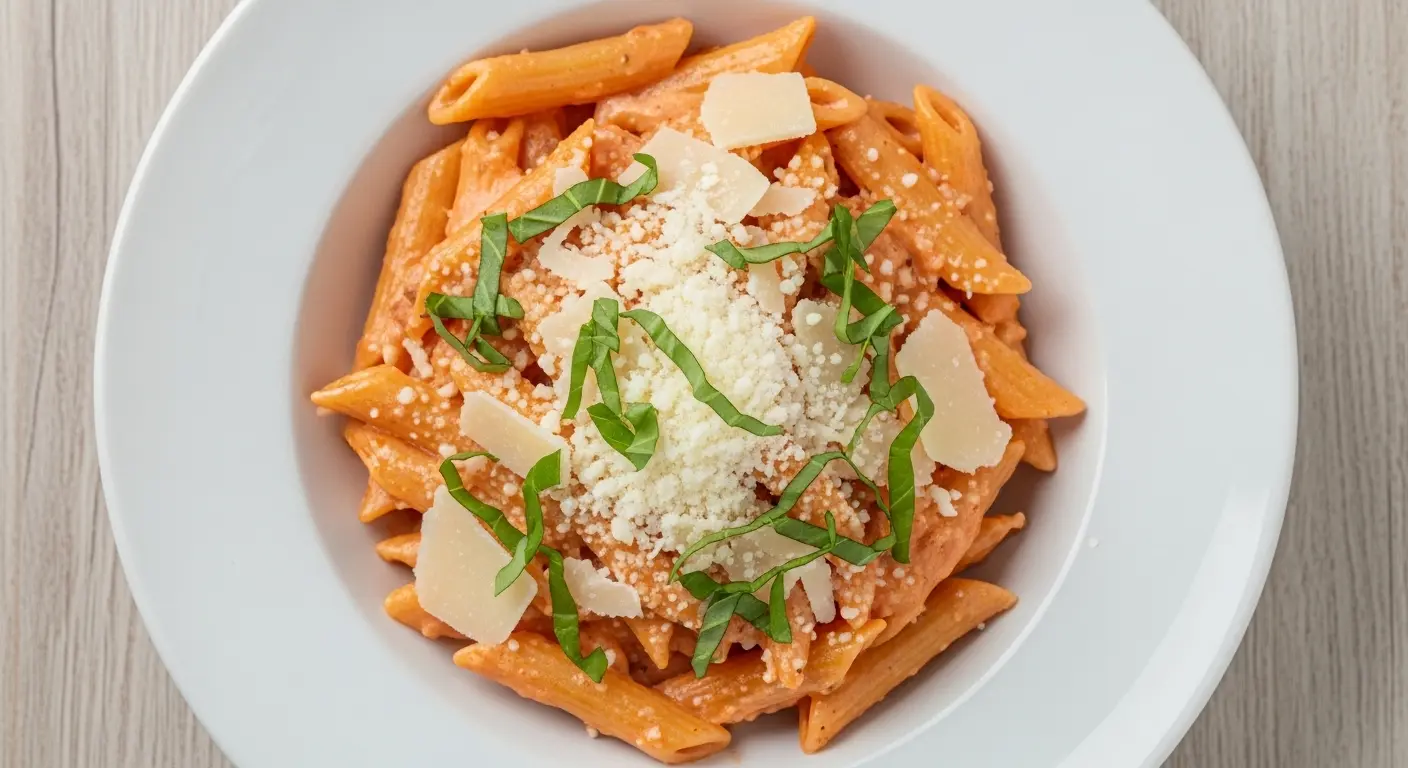
If you’ve ever had a bowl of penne smothered in a silky, blush-colored sauce at your favorite Italian-American restaurant and thought, I need to make this at home, this vodka sauce recipe is exactly what you’ve been looking for.
This iconic sauce is essentially the love child of a bright, tangy tomato sauce and a luscious, velvety cream sauce — and the splash of vodka in the middle is what makes it completely unforgettable.
The vodka isn’t there to make the dish boozy. It acts as a flavor amplifier, unlocking aromatic compounds in the tomatoes that fat and water alone can’t reach, creating a depth of flavor that’s genuinely hard to achieve any other way.
This recipe uses a combination of tomato paste and crushed San Marzano tomatoes for the best of both worlds: the concentrated richness of caramelized tomato paste and the bright, fruity notes of whole tomatoes.
The result is a sauce that’s restaurant-quality, made in about 30 minutes, and honestly better than anything that comes out of a jar.
You might also enjoy: Tomato Sauce Recipe

Why You’ll Love This Vodka Sauce Recipe
This vodka sauce recipe hits every note you want in a pasta sauce: rich, creamy, deeply savory, and just a little bit spicy from the red pepper flakes.
It comes together in one pan in about 30 minutes, making it just as doable on a weeknight as it is impressive for a dinner party.
The ingredient list is simple and mostly pantry-friendly, but the technique of caramelizing the tomato paste first transforms the flavor entirely.
Here’s exactly why this recipe keeps people coming back:
- It’s deeply flavorful thanks to caramelized tomato paste, San Marzano tomatoes, and a generous amount of freshly grated Parmesan.
- It’s velvety and smooth because the heavy cream is added gradually and the sauce is blended to a silky finish.
- It’s quick — you can have it on the table in about 30 minutes, start to finish.
- It works with many proteins — toss in cooked Italian sausage, shrimp, or chicken for a heartier meal.
- It’s make-ahead friendly — the sauce stores beautifully and actually tastes even better the next day.
- It feeds a crowd with ease — simply double the recipe and serve over a big pot of pasta.
Read Also: Marinara Sauce Recipe
Ingredients
This vodka sauce comes together with a handful of high-quality, mostly pantry-staple ingredients. Using San Marzano tomatoes and freshly grated Parmesan really does make a noticeable difference here, so don’t skimp on those two if you can help it.
- 2 tablespoons (30 ml) extra-virgin olive oil
- 1 tablespoon (14 g) unsalted butter
- 1 medium yellow onion, finely diced
- 5 cloves garlic, minced
- ¼ teaspoon crushed red pepper flakes (or more to taste)
- 3 tablespoons (45 g) tomato paste
- ½ cup (120 ml) vodka
- 1 can (28 oz / 794 g) crushed San Marzano tomatoes
- ¾ cup (180 ml) heavy cream
- ½ cup (50 g) freshly grated Parmesan cheese, plus more for serving
- Kosher salt and freshly cracked black pepper, to taste
- A small handful of fresh basil leaves, torn, for serving
- Cooked penne pasta, for serving (about 1 lb / 450 g)
This recipe pairs beautifully with homemade Italian meatballs if you want to turn it into a more substantial meal.
Kitchen Equipment Needed
You don’t need any fancy equipment to make this sauce, but having a wide skillet or sauté pan makes a real difference — more surface area means faster evaporation and better caramelization of the tomato paste.
- Large, deep skillet or sauté pan (12 inches / 30 cm)
- Immersion blender (or countertop blender)
- Large pot for boiling pasta
- Wooden spoon or silicone spatula
- Chef’s knife and cutting board
- Measuring cups and spoons
- Box grater or Microplane for Parmesan
- Colander for draining pasta
- Ladle or serving spoon
Read Also: Spaghetti Sauce Recipe
Recommended Products for This Recipe
These are a few products that genuinely make a difference when preparing this vodka sauce. Each one is recommended based on quality and performance.
1. Canned San Marzano DOP Tomatoes
San Marzano tomatoes are sweeter, less acidic, and have a deeper tomato flavor than standard canned tomatoes. Using them in this sauce means you get a brighter, more balanced finished product with less bitterness to fight. They’re worth every penny.
2. Double Concentrate Tomato Paste in a Tube
Tubed tomato paste is far more convenient than canned because you can use exactly the amount you need and refrigerate the rest. The double concentrate version adds an even richer tomato base to the sauce without adding liquid. It caramelizes beautifully in the pan.
3. Immersion Blender
An immersion blender lets you blend the sauce right in the pan without any messy transfers to a countertop blender. It creates a perfectly silky, velvety texture in seconds and is one of the most useful tools you can own for sauce-making.
4. Large Enameled Cast Iron Skillet
A wide, heavy-bottomed pan ensures even heat distribution and prevents the tomato paste from burning as it caramelizes. The depth also gives you plenty of room to toss the pasta directly in the sauce before serving.
5. Microplane Zester/Grater
Freshly grated Parmesan melts into the sauce far more smoothly than pre-grated. A Microplane creates ultra-fine shreds that incorporate seamlessly, giving the sauce a creamier finish and more intense cheese flavor throughout.
You might also enjoy: Stuffed Shells Recipe

Step-by-Step Instructions
Step 1: Cook Your Pasta
- Fill a large pot with water and bring it to a rolling boil over high heat.
- Add a generous amount of kosher salt — the water should taste almost like seawater. This is the only opportunity you have to season the pasta itself, so don’t skip this step.
- Add 1 lb (450 g) of penne pasta and cook according to package directions until al dente (usually 9 to 11 minutes). You want the pasta to have a slight chew to it since it will finish cooking in the sauce.
- Before draining, scoop out and reserve about 1 cup (240 ml) of the starchy pasta cooking water. This liquid is liquid gold — it helps bring the sauce and pasta together later.
- Drain the pasta and set it aside.
Step 2: Sauté the Aromatics
- Place your large, deep skillet over medium heat and let it warm up for about 1 minute.
- Add 2 tablespoons (30 ml) of olive oil and 1 tablespoon (14 g) of butter. Let the butter melt fully into the oil — this combination gives you flavor from the butter while the oil helps prevent it from burning.
- Once the butter is melted and the pan is shimmering, add the finely diced onion and a pinch of salt.
- Cook the onion over medium heat, stirring occasionally, for about 6 to 8 minutes until it is very soft, translucent, and just starting to turn golden at the edges. Don’t rush this step — well-cooked onions create a sweet, mellow base for the sauce.
- Add the minced garlic and crushed red pepper flakes. Stir and cook for another 1 to 2 minutes until the garlic is fragrant and lightly golden. Be careful not to let it burn; burnt garlic turns the sauce bitter.
Step 3: Caramelize the Tomato Paste
- Push the onion and garlic mixture to the edges of the pan and add the 3 tablespoons (45 g) of tomato paste directly to the center of the pan.
- Let the tomato paste sit undisturbed for about 30 seconds, then stir it around the pan, spreading it out to maximize contact with the hot surface.
- Cook the tomato paste, stirring frequently, for 2 to 3 minutes. You’re looking for it to deepen in color — going from a bright orange-red to a rich, dark brick-red. This caramelization process concentrates the sugars and removes some of the raw, tinny taste, adding incredible depth of flavor to the finished sauce.
Step 4: Add the Vodka
- Pour the ½ cup (120 ml) of vodka into the pan and stir to deglaze, scraping up any browned bits stuck to the bottom of the pan — those bits are packed with flavor.
- Let the vodka cook and bubble over medium heat for about 2 to 3 minutes, stirring occasionally. You’ll notice the strong alcohol smell dissipate as the alcohol cooks off. You want the mixture to reduce by about half before moving on.
- At this stage, the sauce base should be thick and jammy, smelling deeply savory and fragrant.
Step 5: Add the Crushed Tomatoes and Simmer
- Pour in the entire 28 oz (794 g) can of crushed San Marzano tomatoes. Stir everything together well, making sure the tomato paste mixture is fully incorporated.
- Season with a pinch of kosher salt and a few cracks of black pepper.
- Bring the sauce to a gentle simmer over medium heat, then reduce the heat to medium-low. Cook the sauce uncovered for about 15 minutes, stirring occasionally, until it thickens slightly and the flavors meld together. The sauce should reduce a bit and coat the back of a spoon.
Step 6: Blend the Sauce (Optional but Recommended)
- Remove the pan from the heat briefly or reduce the flame to the lowest setting.
- Using an immersion blender, blend the sauce directly in the pan until it is completely smooth and velvety. If using a countertop blender, carefully transfer the sauce in batches (never fill more than halfway with hot liquid), blend until smooth, then return to the pan.
- Blending gives you that signature silky restaurant-style vodka sauce texture. If you prefer a chunkier, more rustic sauce, you can skip this step entirely.
Step 7: Add the Cream and Parmesan
- Return the blended sauce to medium-low heat.
- Pour in the ¾ cup (180 ml) of heavy cream while stirring constantly. The cream will turn the sauce from a deep red to a soft blush-pink. This is the beautiful “pink sauce” color that makes vodka sauce so iconic.
- Let the sauce simmer gently for another 3 to 5 minutes, stirring frequently. Do not let the sauce boil vigorously once the cream is added — a gentle simmer keeps the cream stable and prevents it from breaking.
- Remove from heat and stir in the ½ cup (50 g) of freshly grated Parmesan cheese. Stir until fully melted and incorporated. Taste the sauce and adjust seasoning with salt and black pepper as needed.
Step 8: Toss Pasta and Serve
- Add the drained cooked penne directly to the pan with the vodka sauce.
- Toss the pasta and sauce together over low heat for 1 to 2 minutes. If the sauce feels too thick, add a splash of the reserved pasta cooking water, a tablespoon or two at a time, until you reach your desired consistency.
- Serve immediately in warm bowls, topped with more freshly grated Parmesan and a few torn fresh basil leaves for color and brightness.
For another comforting pasta night option, the baked ziti recipe uses a similar creamy tomato flavor profile that you’ll absolutely love.
Tips for Success
A few key techniques can take your vodka sauce from good to genuinely great. Follow these and you’ll nail it every single time.
- Don’t skip caramelizing the tomato paste. This step deepens the flavor of the entire sauce and is what separates homemade vodka sauce from the jarred stuff.
- Use freshly grated Parmesan. Pre-grated cheese contains anti-caking agents that prevent it from melting smoothly. A Microplane or box grater takes 60 seconds and makes a huge difference.
- Save your pasta water. The starchy liquid is the secret tool for bringing the sauce to the perfect coating consistency. Never drain the pasta without saving at least 1 cup first.
- Don’t rush the onions. Properly softened, slightly golden onions are the sweet backbone of the sauce. Rushing this step results in a sharper, less balanced flavor.
- Add vodka before the tomatoes. This allows the vodka to cook off and deglaze the pan before the liquid from the tomatoes dilutes it.
- Blend for a silky texture. Using an immersion blender creates that signature smooth, luxurious restaurant-quality texture that’s hard to achieve without it.
- Simmer low and slow once the cream is added. A hard boil will cause the cream to separate. Keep it to a gentle simmer for a cohesive, velvety sauce.
Read Also: Homemade Alfredo Sauce Recipe
Serving Suggestions
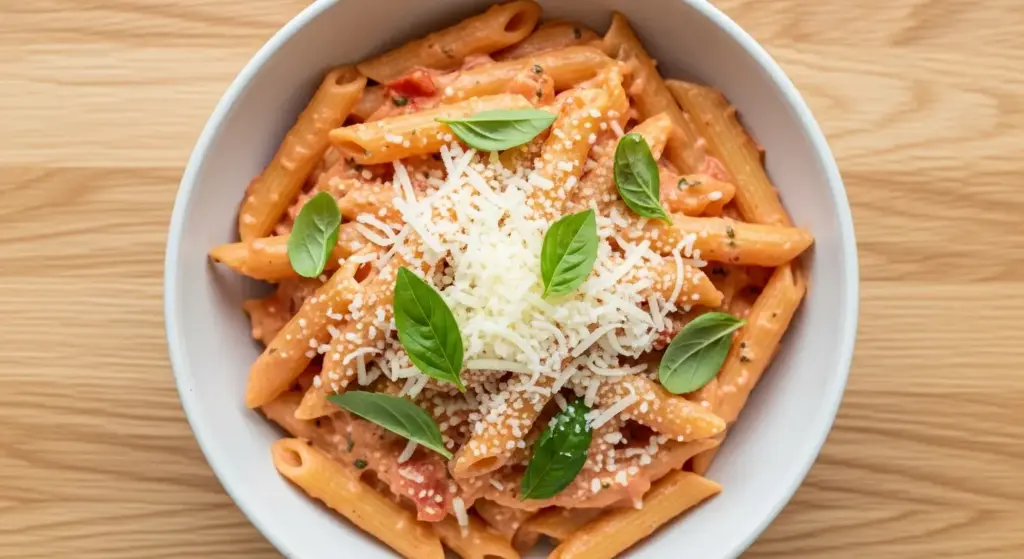
Vodka sauce is incredibly versatile and works beautifully with so many different pairings and presentations.
Traditionally it is served as penne alla vodka, but here are some of the best ways to enjoy it:
- Penne pasta — The classic choice. The ridges and hollow tubes trap every drop of sauce perfectly.
- Rigatoni — A slightly thicker, ridged pasta that holds up beautifully to this hearty sauce.
- Stuffed shells — Spoon the sauce over ricotta-stuffed shells and bake for a crowd-pleasing dinner.
- Chicken — Sear chicken breasts or thighs and ladle the vodka sauce over the top for a restaurant-worthy main.
- Italian sausage — Slice and brown Italian sausage and toss it into the finished sauce before adding the pasta.
- Cheesy garlic bread — Serve alongside a thick slice for dipping and scooping up every last bit of sauce. You can find a great recipe for Cheesy Garlic Bread to pair with this dish.
- A simple green salad — A lightly dressed arugula or mixed greens salad cuts through the richness perfectly.
- Shrimp — Sauté shrimp in butter and garlic, then toss them into the sauce right before serving.
Variations to Try
Once you’ve made the classic version, it’s fun to put your own spin on this versatile sauce. Here are some tried-and-true variations worth exploring.
- Spicy vodka sauce: Double the red pepper flakes and add a pinch of cayenne for a fiery kick.
- Sausage vodka sauce: Brown ½ lb (225 g) of crumbled Italian sausage in the pan before adding the onions. This is a hearty, protein-packed version of the classic.
- Vodka sauce with pancetta: Render diced pancetta in the pan first for a salty, porky depth that complements the tomatoes beautifully.
- Creamy basil vodka sauce: Blend a large handful of fresh basil directly into the sauce along with the heavy cream for a fresh, herbaceous twist.
- Lighter version: Substitute the heavy cream with half-and-half or full-fat coconut cream for a slightly lighter take on the sauce.
- Vegan vodka sauce: Use olive oil instead of butter, swap the heavy cream for full-fat coconut milk or cashew cream, and use nutritional yeast in place of Parmesan.
- Baked penne alla vodka: Transfer the tossed pasta to a baking dish, top with mozzarella, and broil for 3 to 4 minutes until bubbly and golden.
You might also enjoy: Pizza Sauce Recipe
Storage and Reheating
Vodka sauce stores beautifully and is a great recipe to make ahead. Here’s everything you need to know to keep it fresh.
- Refrigerator: Store the sauce separately from the pasta in an airtight container for up to 4 to 5 days. It actually tastes even better the next day as the flavors continue to develop.
- Freezer: Freeze the sauce (without pasta) in a freezer-safe container or zip-lock bag for up to 3 months. Thaw overnight in the refrigerator before reheating.
- Reheating on the stove: Warm gently over low to medium-low heat, stirring frequently. If the sauce has thickened, add a splash of water, broth, or reserved pasta water to loosen it.
- Reheating in the microwave: Transfer to a microwave-safe bowl, cover loosely, and heat in 45-second intervals, stirring between each, until warmed through.
- Note on freezing: If you’ve already tossed the pasta with the sauce, it will still freeze, though the pasta texture may soften slightly upon reheating.
Read Also: Creole Sauce Recipe
Nutritional Facts
The following values are approximate and based on one serving of sauce (without pasta), assuming 4 servings total.
| Nutrient | Amount Per Serving |
|---|---|
| Calories | ~310 kcal |
| Total Fat | 24 g |
| Saturated Fat | 12 g |
| Cholesterol | 60 mg |
| Sodium | 520 mg |
| Total Carbohydrates | 14 g |
| Dietary Fiber | 2 g |
| Total Sugars | 7 g |
| Protein | 6 g |
| Vitamin C | 18% DV |
| Calcium | 12% DV |
| Iron | 10% DV |
Nutritional values will vary based on specific brands used and any modifications made to the recipe. Adding pasta will significantly increase carbohydrate and calorie content.
This pairs wonderfully with a light soup as a starter — the zuppa toscana recipe makes an especially satisfying Italian-inspired combination.
Health Benefits of Key Ingredients
While vodka sauce is undeniably an indulgent dish, several of its key ingredients offer real nutritional benefits worth knowing about.
This sauce is more nutritious than it might first appear:
- Tomatoes are rich in lycopene, a powerful antioxidant that has been linked to reduced risk of heart disease and certain cancers. Cooking tomatoes actually increases the bioavailability of lycopene compared to eating them raw.
- Garlic contains allicin, a sulfur compound with well-documented antimicrobial, anti-inflammatory, and immune-supporting properties. It may also help support healthy cholesterol and blood pressure levels.
- Olive oil is a cornerstone of the Mediterranean diet and is rich in heart-healthy monounsaturated fats and polyphenols that reduce inflammation.
- Heavy cream provides a source of fat-soluble vitamins, including A, D, E, and K2, which support bone health, immune function, and vision.
- Parmesan cheese is a good source of calcium, protein, and phosphorus. It’s also naturally low in lactose, making it more tolerable for those with mild lactose sensitivity.
- Red pepper flakes contain capsaicin, a compound known to boost metabolism, support circulation, and have anti-inflammatory effects.
For another recipe rich in lycopene and antioxidants from tomatoes, the easy tomato soup recipe is a great addition to your weeknight rotation.
Frequently Asked Questions
1. Can I make vodka sauce without alcohol?
You can absolutely make this sauce without vodka. A good substitute is a splash of white grape juice combined with a small squeeze of lemon juice to mimic the slight acidity and brightness that vodka adds. You can also use chicken broth or water with a teaspoon of lemon juice. The flavor won’t be identical, but it will still produce a very tasty creamy tomato sauce.
2. Does vodka sauce taste like alcohol?
No — and this is one of the most common questions about this sauce. The vodka cooks off completely during the simmering process, leaving behind no alcoholic flavor. What it does do is enhance the overall taste by unlocking fat- and water-soluble flavor compounds in the tomatoes that would otherwise go unnoticed. The finished sauce simply tastes richer and more complex.
3. Is vodka sauce safe for children?
Yes, vodka sauce is generally considered safe for children when the sauce is fully simmered and cooked through. The small quantity of vodka used in this recipe should evaporate almost entirely during the cooking process, leaving only trace amounts, if any, of alcohol. That said, always use your own judgment based on your family’s preferences and comfort level.
4. What is the best pasta shape for vodka sauce?
Penne is the classic, traditional choice and the one most associated with the dish “penne alla vodka.” Its tube shape and ridged surface trap the sauce beautifully inside and out, ensuring every bite is well-coated. Rigatoni is an excellent alternative for the same reasons. Other short, ridged, or hollow pasta shapes like ziti, cavatappi, or fusilli all work great. You can also serve vodka sauce over long pasta like rigatoni or bucatini if you prefer.
5. Can I make vodka sauce ahead of time?
Absolutely — in fact, this sauce is even better the next day. Make the sauce fully (including the cream and cheese), let it cool to room temperature, and store in an airtight container in the refrigerator for up to 5 days. Reheat gently on the stove over low heat, adding a splash of pasta water or broth if needed. Cook fresh pasta the day of serving for best results.
Read Also: Bechamel Sauce Recipe

Vodka Sauce

Equipment
- Large Deep Skillet or Sauté Pan - 12 inch / 30 cm, wide surface helps with caramelization and evaporation
- Immersion Blender - or countertop blender (optional but recommended for silky texture)
- Large pot - for boiling pasta
- Wooden spoon or silicone spatula
- Chef’s Knife and Cutting Board
- Measuring cups and spoons
- Box grater or microplane - for Parmesan
- Colander - for draining pasta
- Ladle or serving spoon
Ingredients
- 2 tbsp extra-virgin olive oil - 30 ml
- 1 tbsp unsalted butter - 14 g
- 1 medium yellow onion - finely diced
- 5 garlic cloves - minced
- ¼ tsp crushed red pepper flakes - or more to taste
- 3 tbsp tomato paste - 45 g
- ½ cup vodka - 120 ml
- 28 oz crushed San Marzano tomatoes - 794 g, 1 can
- ¾ cup heavy cream - 180 ml
- ½ cup freshly grated Parmesan cheese - 50 g, plus more for serving
- Kosher salt - to taste
- freshly cracked black pepper - to taste
- fresh basil leaves - small handful, torn, for serving
For Serving
- 1 lb penne pasta - 450 g, cooked
- Parmesan cheese - for topping
- fresh basil - for garnish
Instructions
- Bring a large pot of generously salted water to a rolling boil. Cook 1 lb of penne according to package directions until al dente. Reserve 1 cup of starchy pasta water before draining.
- In a large deep skillet over medium heat, warm olive oil and melt butter. Add finely diced onion with a pinch of salt and cook 6-8 minutes until soft and just golden at the edges.
- Add minced garlic and crushed red pepper flakes. Cook 1-2 minutes until fragrant and lightly golden, being careful not to burn.
- Push aromatics to the sides and add tomato paste to the center of the pan. Cook 2-3 minutes, stirring frequently, until it darkens to a rich brick-red color.
- Pour in vodka and deglaze the pan, scraping up browned bits. Simmer 2-3 minutes until reduced by half and the alcohol smell dissipates.
- Stir in the crushed San Marzano tomatoes and season with salt and pepper. Bring to a gentle simmer and cook uncovered 15 minutes, stirring occasionally, until slightly thickened.
- Using an immersion blender, blend the sauce directly in the pan until completely smooth and velvety. Skip this step for a chunkier sauce.
- Return sauce to medium-low heat. Stir in heavy cream until it turns a soft blush-pink. Simmer gently 3-5 minutes, stirring frequently, without boiling.
- Remove from heat and stir in grated Parmesan until fully melted and incorporated. Adjust seasoning with salt and pepper to taste.
- Add drained penne to the sauce and toss over low heat 1-2 minutes. Add reserved pasta water a splash at a time if needed to reach desired consistency.
- Serve immediately in warm bowls topped with additional Parmesan and torn fresh basil leaves.
Notes
- Don’t skip caramelizing the tomato paste — this deepens the flavor of the entire sauce and is what separates homemade vodka sauce from jarred versions.
- Always use freshly grated Parmesan cheese. Pre-grated cheese contains anti-caking agents that prevent it from melting smoothly.
- Save your pasta water before draining! The starchy liquid is the secret to bringing the sauce to the perfect coating consistency.
- Add vodka before the tomatoes so the alcohol can cook off and deglaze the pan while the flavors concentrate.
- Once the cream is added, keep the sauce to a gentle simmer — a hard boil will cause the cream to separate and break the sauce.
- This sauce stores beautifully in the refrigerator for up to 5 days and actually tastes even better the next day.
- For a spicy version, double the red pepper flakes and add a pinch of cayenne for extra heat.
- This recipe is easily doubled and freezes well without the pasta for up to 3 months.
- Substitute heavy cream with half-and-half or full-fat coconut milk for a lighter version of the sauce.
- Add cooked Italian sausage, shrimp, or chicken to transform this into a hearty, protein-packed meal.
Final Thoughts
This vodka sauce recipe is one of those dishes that earns a permanent spot in your dinner rotation — not because it’s complicated, but because it’s so reliably, effortlessly delicious.
The magic of this sauce really does lie in the details: caramelizing the tomato paste, letting the vodka fully cook off, and finishing with a generous shower of freshly grated Parmesan over velvety, blush-pink sauce.
Once you make this at home, it’s hard to go back to anything from a jar.
Give this recipe a try this week and let the results speak for themselves — your pasta nights will never be quite the same.
If you make it, leave a comment below and let me know how it turned out. Did you add sausage? Keep it vegetarian? Try a spicy version? I’d love to hear your spin on it!
Recommended:
- Tomato Sauce Recipe
- Easy Lasagna Recipe
- Baked Chicken with Alfredo Sauce
- Classic Chicken Parmesan
- Lasagna Soup
- Italian Wedding Soup
- Pasta Fagioli
- Easy Pad Thai
- Chicken Cacciatore
- Basil Pesto