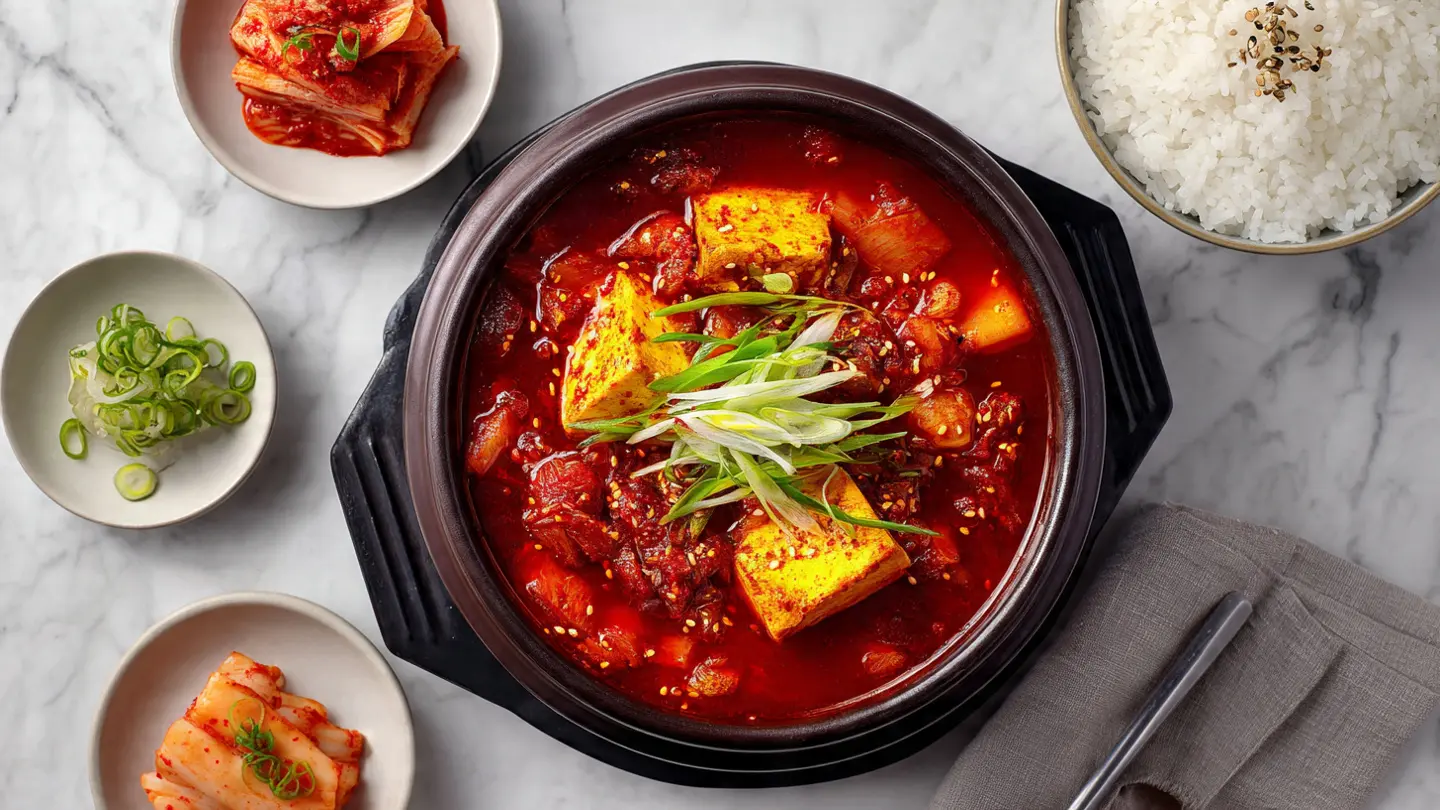
If you’ve ever craved something spicy, deeply savory, and soul-warming all at once, this kimchi stew recipe is exactly what you need. Known in Korean as kimchi jjigae (김치찌개), this iconic dish is one of the most beloved stews in all of Korean cuisine.
It’s the kind of food that shows up on tables across Korea multiple times a week. That says everything.
The magic of this stew lies in its simplicity. Aged, sour kimchi, fatty pork belly, silky tofu, and a bold broth seasoned with gochugaru and fish sauce come together in one pot to create something far greater than the sum of its parts.
The older your kimchi, the better your stew. Fresh kimchi just doesn’t have that deep, tangy complexity you need here. Look for kimchi that’s been fermenting for at least a few weeks, ideally more.
One technique that makes a real difference is cooking the kimchi and pork together before adding liquid. This step builds a richer, more layered flavor in the base that you simply can’t skip.
Serve it bubbling hot alongside a bowl of steamed rice, and you’ve got a meal that’s as comforting as it is bold.
For another warming stew from a different culinary tradition, Crockpot Beef Stew is a fantastic option to keep in your rotation.
Why You’ll Love This Kimchi Stew Recipe
This kimchi stew recipe has everything going for it, and once you try it, you’ll understand why it’s a staple in Korean homes.
It’s incredibly fast for how deeply flavored it turns out. From start to finish, you’re looking at about 35 to 40 minutes, most of which is hands-off simmering time.
It’s a one-pot meal, which means minimal cleanup. Everything cooks in a single pot, and the result is a rich, cohesive stew where every ingredient absorbs the others’ flavors.
The combination of pork belly and fermented kimchi creates a broth that’s tangy, spicy, and intensely savory all at once. The tofu soaks up all of those bold flavors beautifully.
It’s also incredibly versatile. You can adjust the heat level, swap proteins, or add noodles to turn it into a completely different experience.
Here’s a quick summary of why you’ll love it:
- Deeply flavorful with minimal ingredients
- Ready in under 45 minutes from start to finish
- One-pot cooking means easy cleanup
- Customizable with different proteins and heat levels
- Perfect for meal prep since it tastes even better the next day
- Pairs beautifully with plain steamed rice or noodles
- Budget-friendly using pantry staples and affordable cuts of meat
You might also enjoy: Bibimbap Recipe
Ingredients
For the best results, source your kimchi from a Korean grocery store or make your own. The quality and age of the kimchi makes the single biggest difference in how this stew tastes. Store-bought kimchi that’s been sitting in the fridge for a few weeks is perfectly fine.
Here’s what you’ll need:
For the Anchovy Broth (optional but recommended):
- 5 to 6 dried anchovies (heads and guts removed), or 2 cups (480 ml) store-bought anchovy stock
- 2 cups (480 ml) water
- 1 small piece dried kelp (dashima/kombu), about 2 inches
For the Stew:
- 1 lb (450 g) well-fermented napa cabbage kimchi, roughly chopped into 2-inch pieces
- ½ cup (120 ml) kimchi juice (from the kimchi jar)
- ½ lb (225 g) pork belly, cut into 1-inch pieces
- 1 tablespoon gochugaru (Korean red pepper flakes)
- 1 tablespoon gochujang (Korean red chili paste)
- 1 tablespoon fish sauce
- 4 garlic cloves, minced
- ½ medium onion, roughly chopped
- 1 teaspoon sesame oil
- 1 tablespoon neutral cooking oil (such as vegetable or avocado oil)
- 7 oz (200 g) firm tofu, sliced into ½-inch thick pieces
- 2 green onions, sliced diagonally, plus more for garnish
- 1 teaspoon sugar (optional, to balance acidity)
- Salt to taste
Read Also: Tom Yum Soup Recipe
Kitchen Equipment Needed
You don’t need anything fancy to make a great kimchi jjigae. The key is using a pot that holds heat well so the stew can simmer gently and evenly.
Here’s what to have ready:
- Medium heavy-bottomed pot or Korean earthenware pot (ttukbaegi) (3 to 4 quart capacity)
- Sharp chef’s knife for cutting pork belly and tofu
- Cutting board
- Wooden spoon or heat-resistant spatula for stirring
- Small saucepan (for making anchovy broth)
- Ladle for serving
- Measuring cups and spoons
Read Also: Miso Soup Recipe
Recommended Products for This Recipe
These are hand-picked recommendations based on quality and performance that will genuinely improve your kimchi jjigae experience.
1. Jongga Kimchi (Well-Fermented Napa Cabbage Kimchi)
The quality of your kimchi is the single most important factor in this recipe. Jongga is one of the most trusted kimchi brands, made with traditional fermentation methods that result in that deep, complex sour flavor you need for jjigae. Using a well-fermented commercial kimchi like this ensures consistent results every time.
2. Chung Jung One Gochujang (Korean Red Chili Paste)
Gochujang is the backbone of heat and depth in this stew. Chung Jung One is a widely recommended brand that delivers the right balance of sweetness, spice, and fermented soybean richness. A small spoonful transforms the entire broth.
3. Korean Earthenware Stone Pot (Ttukbaegi)
If you want to serve your kimchi jjigae the traditional way, a ttukbaegi is the way to go. These stone pots retain heat beautifully and keep the stew bubbling hot at the table throughout the meal. They’re versatile enough to go from stovetop to table and even into the oven.
4. Dried Korean Anchovies (Myulchi)
Making anchovy broth from scratch takes the flavor of your kimchi jjigae to a completely different level. Authentic dried Korean anchovies (myulchi) create an umami-rich stock that serves as an unbeatable base for the stew. They’re widely available and store well in the freezer.
5. Premium Sesame Oil (Kadoya Roasted)
A finishing drizzle of roasted sesame oil adds a nutty depth that rounds out the stew’s bold flavors. Kadoya is one of the most widely praised brands for its genuine roasted sesame flavor. A little goes a long way.
For another bold, warming Asian-inspired bowl, try this Udon Noodle Soup Recipe.
Step-by-Step Instructions
Step 1: Make the Anchovy Broth
- Place the dried anchovies (heads and guts removed) and the piece of dried kelp in a small saucepan.
- Pour in 2 cups (480 ml) of cold water.
- Bring to a boil over medium-high heat, then reduce to a gentle simmer.
- Simmer for 15 to 20 minutes to extract the savory, umami-rich flavors from the anchovies and kelp.
- Remove from heat and strain through a fine mesh strainer, discarding the solids. Set the broth aside.
- If using store-bought anchovy stock, simply measure out 2 cups (480 ml) and set aside. Plain water works too, though the broth adds considerably more depth.
Step 2: Prep All the Ingredients
- Remove the kimchi from the jar and roughly chop it into 2-inch (5 cm) pieces. Reserve ½ cup (120 ml) of the kimchi juice from the jar and set it aside. The juice is packed with flavor and will deepen the broth significantly.
- Cut the pork belly into 1-inch (2.5 cm) pieces. Pork belly is ideal because the fat renders down as it cooks, enriching the broth with a luxurious, silky quality that leaner cuts can’t replicate.
- Slice the firm tofu into pieces approximately ½ inch (1.3 cm) thick. You can cut them into rectangles or triangles, whichever shape you prefer.
- Mince the garlic cloves finely.
- Roughly chop the onion into medium-sized pieces.
- Slice the green onions diagonally into 1-inch segments. Set some aside for garnish at the end.
Step 3: Cook the Pork and Kimchi Together
- Heat 1 tablespoon of neutral cooking oil in a medium heavy-bottomed pot over medium-high heat.
- Once the oil shimmers, add the pork belly pieces in a single layer.
- Cook the pork for 2 to 3 minutes, turning occasionally, until the pieces are lightly browned on the outside. You don’t need to cook them all the way through at this stage.
- Add the chopped kimchi, minced garlic, and chopped onion directly to the pot with the pork.
- Stir everything together and cook for 3 to 5 minutes over medium-high heat, stirring occasionally, until the kimchi softens and starts to become fragrant. This step is critical. Cooking the kimchi with the pork allows the flavors to meld and the kimchi’s sharpness to mellow into something deeper and more complex. Don’t skip it.
Step 4: Season the Base
- Add the gochugaru and gochujang directly to the pot.
- Stir well to coat the pork and kimchi evenly with the chili paste and flakes. The gochugaru brings vibrant heat and color, while the gochujang contributes fermented depth and a slight sweetness that balances the kimchi’s tang.
- Add the fish sauce and stir to combine. If you prefer to make this dish without fish sauce for dietary reasons, you can substitute 1 to 2 teaspoons of soy sauce, though the flavor profile will be slightly different.
- Stir and cook for 1 more minute to bloom the seasonings and let them start integrating with the fat and kimchi juices.
Step 5: Add the Broth and Kimchi Juice
- Pour in the anchovy broth (or water/store-bought stock) you prepared in Step 1.
- Add the reserved kimchi juice to the pot. This is one of the most important flavor-boosting moves in the recipe. The kimchi juice is intensely tangy and spicy, and it brings the broth to life instantly.
- Stir everything together to combine.
- Increase the heat to bring the stew to a boil.
Step 6: Simmer and Add Tofu
- Once the stew comes to a boil, reduce the heat to medium-low to maintain a steady, gentle simmer.
- Let the stew simmer uncovered for 10 to 15 minutes. During this time, the kimchi will continue to soften and the pork will become tender. The broth will deepen in color and develop a richer, more complex flavor.
- Taste the broth and adjust seasoning. If it’s too acidic, add ½ to 1 teaspoon of sugar. If it needs more salt, add a small pinch at a time. If you want more heat, add another teaspoon of gochugaru.
- Carefully add the sliced tofu pieces to the stew, placing them gently so they don’t break apart.
- Add the sliced green onions.
- Simmer for another 5 minutes so the tofu heats through and absorbs some of the broth’s flavor. Avoid stirring vigorously at this point to keep the tofu intact.
Step 7: Finish and Serve
- Drizzle 1 teaspoon of sesame oil over the top of the stew just before serving. This finishing touch adds a fragrant, nutty warmth that rounds out the dish beautifully.
- Taste one final time and adjust seasoning if needed.
- Serve the kimchi jjigae immediately while it’s piping hot, straight from the pot. Traditional Korean serving style is to bring the pot directly to the table and let everyone ladle from it.
- Garnish with additional sliced green onions for a fresh, sharp contrast.
- Serve with a large bowl of hot steamed rice on the side. The rice is essential. You’ll want to mix spoonfuls of stew with your rice to temper the heat and enjoy every element together.
Another wonderfully comforting and warming bowl worth trying is this Chicken Stew Recipe.
Tips for Success
The gap between a good kimchi jjigae and a truly incredible one usually comes down to a few key details that are easy to miss if you’re making it for the first time.
Keep these in mind:
- Use old, sour kimchi. This is the single most important tip. Freshly made kimchi is crunchy and mild, which is great for eating fresh, but it produces a flat, underdeveloped broth when cooked. You want kimchi that has been fermenting for at least 2 to 4 weeks, ideally longer. The tangier and more pungent it is, the better your stew will be.
- Don’t skip the kimchi juice. The liquid in your kimchi jar is incredibly flavorful. It contributes sourness, spice, and depth to the broth that you genuinely can’t replicate with any other ingredient.
- Cook the kimchi and pork together first. This step builds the flavor base of the stew. If you skip straight to adding liquid, the broth will taste thinner and less developed.
- Use pork belly for richness. The fat in pork belly melts as the stew simmers, turning the broth silky and full-bodied. Leaner cuts like pork shoulder work, but the result won’t be as luxurious.
- Add tofu last. Firm tofu can still break apart if it’s stirred too aggressively or added too early. Slide it in gently during the last 5 minutes of simmering.
- Adjust heat to your tolerance. Gochugaru and gochujang can vary in intensity depending on the brand. Start with the amounts listed and taste as you go, adding more if you want a bolder kick.
- Rice water for the broth is a bonus. If you’re making rice to serve alongside, save the milky water from the second or third rinse cycle. Using it in place of plain water gives the broth a slightly richer, rounder texture.
Read Also: Hot and Sour Soup Recipe
Serving Suggestions
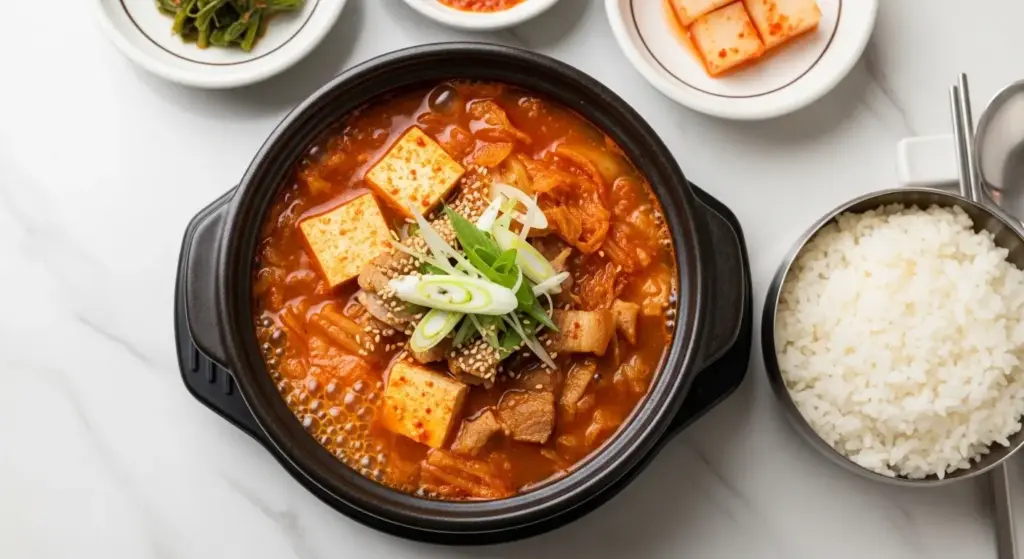
Kimchi jjigae is traditionally served as a main dish alongside a bowl of hot steamed rice and a selection of small Korean side dishes called banchan.
The rice is not just a side. It’s a functional part of the meal. The plain, starchy rice balances the stew’s intensity and lets you scoop up the rich broth with every bite.
Here are some great ways to serve and accompany your kimchi stew:
- Steamed white rice is the classic pairing and an absolute must. Short-grain Korean rice is the most authentic choice.
- Seaweed salad adds a cool, fresh contrast to the hot, spicy stew.
- Pair it with Bok Choy sautéed in garlic and sesame oil for a light, green side that balances the richness.
- Add Chicken Fried Rice on the table for a heartier spread when feeding a crowd.
- Pickled vegetables such as radish or cucumber provide a refreshing, palate-cleansing bite between spoonfuls of stew.
- Steamed eggs (gyeran jjim) are a classic Korean accompaniment that add a soft, savory contrast.
- Crusty bread is an unconventional but surprisingly satisfying way to soak up every last drop of the broth.
Variations to Try
Kimchi jjigae is one of those dishes that welcomes adaptation. The base formula of kimchi, broth, and seasoning stays the same, but the protein and add-ins can change completely.
Try one of these popular variations:
- Tuna kimchi stew: Replace the pork belly with one or two cans of drained tuna. Add the tuna near the end of cooking, just a few minutes before serving. It’s lighter, incredibly quick, and just as satisfying.
- Beef kimchi stew: Use thinly sliced beef brisket or beef sirloin in place of pork. Beef gives the broth a different kind of richness, slightly meatier and less fatty.
- Spam kimchi stew: This is a beloved variation in Korea and Korean-American households. Cut a block of Spam into cubes and add it about 5 minutes before the stew is done. The salty, savory flavor of Spam pairs exceptionally well with sour kimchi.
- Tofu-only (vegetarian) version: Skip the pork entirely and increase the tofu to about 14 oz (400 g). Use vegetable broth instead of anchovy broth, and check that your kimchi and fish sauce are vegan-friendly alternatives.
- Kimchi ramen jjigae: Add an extra ½ cup of broth and drop in a block of instant ramen noodles (without the seasoning packet) during the last 3 minutes of cooking. The noodles soak up the stew beautifully.
- With mushrooms: Add a handful of sliced shiitake mushrooms or enoki mushrooms along with the tofu for an earthy, meaty texture and added umami.
- Extra spicy: Double the gochugaru and add a fresh sliced chili on top before serving for those who really love the heat.
For more comforting stew inspiration, try this Lamb Stew Recipe.
Storage and Reheating
Kimchi jjigae is one of those rare dishes that genuinely improves overnight. The flavors deepen and meld as it rests, making leftovers arguably better than the original.
Here’s how to store and reheat it properly:
- Refrigerator: Transfer the cooled stew to an airtight container and refrigerate for up to 3 to 4 days. Store the stew and rice separately to prevent the rice from absorbing all the broth.
- Freezer: You can freeze kimchi jjigae for up to 1 month. However, it’s best to remove the tofu before freezing, as the texture becomes spongy and unpleasant after thawing. Add fresh tofu when reheating.
- Reheating on the stovetop: Pour the stew into a pot and heat over medium heat until it comes to a simmer. Add a splash of water if the broth has thickened too much during storage. Simmer for 2 to 3 minutes until heated through.
- Reheating in the microwave: Transfer a portion to a microwave-safe bowl, cover loosely, and heat in 90-second intervals, stirring between each, until fully hot.
- Do not reheat repeatedly. Bring out only as much stew as you plan to eat in one sitting rather than heating the entire batch multiple times, as this affects the texture of the tofu and the balance of flavors.
Another stew that reheats beautifully and makes great leftovers is this Brunswick Stew Recipe.
Nutritional Facts
The following nutritional information is an estimate based on one serving (approximately one-quarter of the full recipe), not including rice.
| Nutrient | Per Serving |
|---|---|
| Calories | 380 kcal |
| Total Fat | 28 g |
| Saturated Fat | 9 g |
| Protein | 18 g |
| Total Carbohydrates | 12 g |
| Dietary Fiber | 3 g |
| Sugars | 4 g |
| Sodium | 920 mg |
| Potassium | 430 mg |
| Vitamin C | 12 mg |
| Calcium | 180 mg |
| Iron | 3 mg |
Values are estimates and can vary based on specific ingredients and brands used.
This Seafood Stew Recipe is a great lower-fat alternative if you’re looking for a lighter stew option.
Health Benefits of Key Ingredients
This dish isn’t just delicious. Several of its core ingredients come with meaningful nutritional value that makes it a genuinely wholesome meal.
Here’s a closer look:
- Kimchi is a probiotic powerhouse. Fermented napa cabbage is rich in beneficial lactobacillus bacteria that support gut health and digestive function. It also provides vitamins A, B, and C along with dietary fiber.
- Tofu is an excellent source of plant-based protein and contains all essential amino acids. It’s also a good source of calcium, iron, and magnesium, making it a particularly valuable ingredient for those reducing their meat intake.
- Garlic contains allicin, a compound with well-documented antimicrobial and anti-inflammatory properties. It has been studied for its potential to support cardiovascular health and immune function.
- Gochugaru contains capsaicin, the compound responsible for its heat, which is associated with increased metabolism and anti-inflammatory effects. It also contributes vitamins A and C.
- Sesame oil provides a dose of healthy unsaturated fats and antioxidants like sesamol and sesamin, which have been studied for their potential to reduce oxidative stress.
- Pork belly is rich in protein and provides B vitamins, particularly B12, niacin, and thiamine, which are important for energy metabolism and nervous system health.
- Anchovy broth delivers a concentrated source of omega-3 fatty acids and minerals such as calcium and phosphorus from the bones of the anchovies.
For another nutritious and comforting Asian soup, this Congee Recipe is a wonderful option.
Frequently Asked Questions
1. Can I use fresh kimchi instead of aged kimchi?
Technically yes, but the results will be noticeably different. Fresh kimchi is mild, crunchy, and lacks the sour, fermented depth that gives kimchi jjigae its signature flavor. If you only have fresh kimchi, you can try adding a teaspoon of white vinegar or rice vinegar to mimic some of the acidity, but it won’t be quite the same. For the most authentic and satisfying stew, wait until your kimchi has fermented for at least 2 to 4 weeks in the fridge.
2. What can I substitute for pork belly?
Pork shoulder is the closest substitute and works quite well, though the broth will be slightly less rich since it has less fat. Thinly sliced beef, canned tuna, or Spam are all popular and traditional alternatives. For a fully plant-based version, simply omit the pork and use extra tofu or mushrooms, and swap the anchovy broth for vegetable broth. Each option creates a distinctly different but still delicious version of the stew.
3. Is kimchi jjigae very spicy?
It has a moderate to high level of heat, depending on how much gochugaru and gochujang you use and how spicy your kimchi is. You can absolutely reduce the gochugaru to 1 teaspoon and omit the gochujang entirely for a milder version. On the other end, adding extra gochugaru or a sliced fresh chili will give you a seriously fiery bowl. The heat is entirely adjustable to your personal preference.
4. What is the difference between kimchi jjigae and kimchi soup?
Kimchi jjigae is a thicker, more concentrated stew with less liquid than kimchi soup (kimchi guk). The flavors in jjigae are more intense and the texture is heartier because there’s less broth diluting the ingredients. Kimchi soup is lighter, brothier, and typically a bit less salty. Both are delicious, but jjigae is the dish most people think of when they hear “kimchi stew.”
5. Can I make kimchi jjigae in a slow cooker or Instant Pot?
You can adapt this recipe for both appliances, though a few adjustments are needed. For a slow cooker, sauté the pork and kimchi in a skillet first, then transfer everything to the slow cooker and cook on low for 4 to 6 hours. Add the tofu in the last 30 minutes. For an Instant Pot, use the sauté function for Steps 3 and 4, then add the broth, seal the lid, and pressure cook on high for 10 minutes followed by a quick release. Add the tofu after pressure cooking and let it sit on the warm setting for a few minutes before serving.
For another easy weeknight noodle and soup dish to add to your Asian-inspired cooking repertoire, try this Easy Pad Thai Recipe.
Final Thoughts
Kimchi jjigae is one of those recipes you make once and immediately understand why it’s been a staple for generations.
It’s deeply warming, bold without being overwhelming, and deeply satisfying in a way that only truly well-developed, fermented flavors can deliver.
The beauty of this recipe is that it rewards you for being patient with your ingredients. Good aged kimchi, a proper simmer, and that finishing drizzle of sesame oil turn a simple pot of stew into something genuinely memorable.
If you’ve been holding onto a jar of old, funky kimchi in the back of the fridge, this is exactly what it was waiting for.
Give this kimchi stew recipe a try, and let me know how it turned out in the comments below! Did you try any of the variations? Did you go full heat or keep it mild? I’d love to hear from you, and if you share it on social media, tag me so I can see your beautiful pot of jjigae.
Recommended:
- Tom Yum Soup Recipe
- Bibimbap Recipe
- Miso Soup Recipe
- Instant Pot Pho Recipe
- Chicken Tinola Recipe
- Irish Stew Recipe
- Cowboy Stew Recipe
- Oyster Stew Recipe
- Venison Stew Recipe
- Beef Stroganoff Recipe