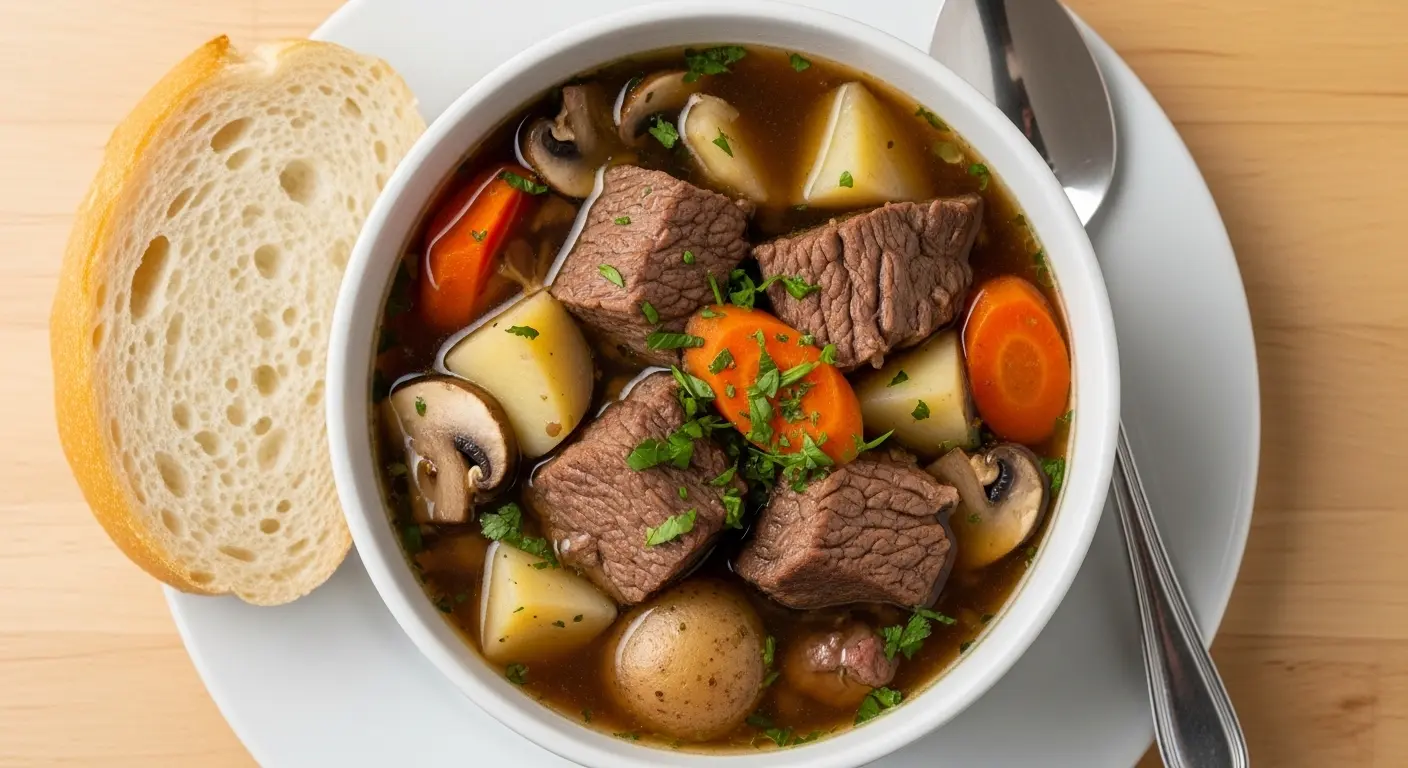
If you’ve ever made a stunning prime rib roast and found yourself staring at a pile of leftover bones and meat the next day, this prime rib soup recipe is exactly what you’ve been looking for.
This is the kind of soup that transforms humble leftovers into something that honestly tastes better than the original meal. The bones simmer low and slow to create a rich, deeply flavored beef broth, and the tender leftover meat adds that luxurious, melt-in-your-mouth quality you can only get from prime rib.
What makes this soup stand out from your average beef vegetable soup is the depth of the broth. When you simmer prime rib bones for a couple of hours, they release collagen, marrow, and all that incredible beefy flavor directly into the liquid. It’s essentially free bone broth, and it makes an extraordinary base.
The vegetables add color, nutrition, and heartiness. Potatoes bulk it up, carrots bring a natural sweetness, celery and onion build the savory backbone, and mushrooms add that umami richness that takes the whole thing to the next level.
A splash of dry red wine deepens the broth even further, and classic herbs like thyme and bay leaf round everything out beautifully. The result is a hearty, cozy, restaurant-worthy soup that comes together with very little effort.
This soup pairs perfectly alongside a thick slice of crusty bread or with a side of Garlic Mashed Potatoes for a complete comfort meal.
Why You’ll Love This Prime Rib Soup Recipe
This soup is truly one of those rare recipes that delivers maximum flavor for minimal effort, especially if you already have leftover prime rib on hand.
The broth is deeply beefy and rich without being heavy. It has that slow-cooked taste that normally takes hours of work, but the leftover prime rib bones do all the heavy lifting for you.
It’s also incredibly flexible. You can swap in different vegetables, add barley or pasta for more substance, or dial up the herbs depending on your preference.
It’s a one-pot meal, which means less cleanup and more time enjoying your bowl. On a cold evening, few things are more satisfying than a pot of this simmering on the stove.
It’s also a fantastic way to get multiple meals out of a single expensive roast. Prime rib is an investment, and this soup ensures you use every last bit of it.
- Zero waste cooking: The bones and scraps from your roast become the star of an entirely new meal.
- Deep, layered flavor: Slow-simmered beef bones, red wine, and aromatics create a broth that tastes like you spent all day on it.
- Hearty and filling: Between the tender beef, potatoes, and vegetables, this soup is a full meal in a bowl.
- Easily customizable: Add barley, swap the potatoes for parsnips, or stir in some egg noodles at the end.
- Great for meal prep: The flavors deepen overnight, making leftovers even better the next day.
You might also enjoy: Beef and Barley Soup
Ingredients
This recipe uses simple, wholesome ingredients that let the quality of your leftover prime rib shine. The key is building the broth properly so every component contributes to that rich, layered flavor.
- 2–3 lbs (900g–1.35kg) leftover prime rib bones (with some meat still attached)
- 1 lb (450g) leftover prime rib meat, roughly chopped or shredded
- 8 cups (1.9 liters) beef broth, divided
- 2 cups (480ml) water
- ½ cup (120ml) dry red wine (such as Cabernet Sauvignon or Merlot)
- 2 tablespoons (30ml) olive oil or unsalted butter
- 1 large yellow onion, diced
- 4 cloves garlic, minced
- 3 stalks celery, sliced
- 3 large carrots, peeled and sliced into rounds
- 2 large Yukon Gold potatoes, peeled and cut into ¾-inch (2cm) cubes
- 8 oz (225g) cremini mushrooms, sliced
- 2 sprigs fresh thyme (or ½ teaspoon dried thyme)
- 2 bay leaves
- 1 teaspoon Worcestershire sauce
- 1 teaspoon beef bouillon paste (such as Better Than Bouillon)
- 1 teaspoon kosher salt, plus more to taste
- ½ teaspoon black pepper, plus more to taste
- ½ teaspoon smoked paprika
- Fresh parsley, chopped, for garnish
Read Also: Beef Bone Broth Soup Recipe
Kitchen Equipment Needed
Having the right equipment makes this recipe much smoother. Nothing fancy is required, but a few key pieces of cookware will make a real difference.
- Large Dutch oven or heavy-bottomed pot (at least 7–8 quart capacity)
- Sharp chef’s knife
- Cutting board
- Large slotted spoon or spider strainer (for removing bones)
- Ladle
- Wooden spoon or silicone spatula
- Measuring cups and spoons
- Fine mesh strainer (optional, for skimming broth)
- Airtight storage containers for leftovers
This soup pairs beautifully with a Crockpot Beef Stew mindset. Use a Dutch oven that can go from stovetop to the fridge easily.
Recommended Products for This Recipe
These are products I genuinely recommend based on quality and performance. They’ll help you get the best results from this prime rib soup recipe.
1. Le Creuset Enameled Cast Iron Dutch Oven
A high-quality Dutch oven is the single best investment for this recipe. The thick, even walls of enameled cast iron distribute heat gently and consistently, which is exactly what you need for a long-simmered bone broth. The tight-fitting lid locks in moisture and flavor for a richer, more developed soup base.
2. Better Than Bouillon Roasted Beef Base
This concentrated beef base is a secret weapon for deepening the broth of your soup without adding too much liquid. Even when your bones are doing most of the flavor work, a spoonful of this bouillon paste takes the broth from good to extraordinary. It adds a rich, roasted depth that store-bought broth alone simply can’t replicate.
3. OXO Good Grips Fat Separator
After simmering your prime rib bones, the broth will have a layer of fat on top. A fat separator makes it incredibly easy to pour off the rich, clear broth while leaving the fat behind, resulting in a soup that’s flavorful but not greasy. It’s a simple tool that makes a big difference in the final result.
4. Premium Dry Red Wine for Cooking
A good dry red wine adds a complexity to your soup broth that can’t be replicated with any other ingredient. It balances the richness of the beef and adds a slight acidity that brightens the whole dish. Look for a Cabernet Sauvignon or a Merlot, and use a bottle you’d actually enjoy drinking.
The same rich beef-and-vegetable flavor profile in this soup also shines through in this French Onion Beef Short Rib Soup, which is another one worth bookmarking.
Step-by-Step Instructions
Step 1: Simmer the Bones to Build the Broth
- Place your leftover prime rib bones in your large Dutch oven or heavy-bottomed pot.
- Pour in 6 cups (1.42 liters) of the beef broth and 2 cups (480ml) of water. The liquid should mostly cover the bones. Add a little more water if needed.
- Add the dry red wine, 2 sprigs of fresh thyme (or ½ tsp dried thyme), and 2 bay leaves to the pot.
- Add 2 peeled garlic cloves (you can leave them whole for the bone broth stage) to the pot.
- Bring the liquid to a boil over medium-high heat, then immediately reduce the heat to low.
- Simmer with the lid on for 1.5 to 2 hours. The longer it simmers, the deeper and more developed the broth will be. You’ll notice the broth darkening and becoming richer smelling as it cooks.
- While simmering, occasionally skim off any foam or gray residue that rises to the surface using a spoon. This keeps your broth clean and clear.
Step 2: Remove the Bones and Rest the Broth
- After 1.5 to 2 hours, use a slotted spoon or tongs to carefully remove all of the bones from the pot. Place them on a cutting board to cool slightly.
- Remove and discard the bay leaves and thyme sprigs from the broth.
- Once the bones are cool enough to handle, use a fork or your fingers to pull any remaining meat from the bones. Add this pulled meat to the bowl of your pre-chopped leftover prime rib. Discard the bare bones.
- For best results, allow the broth to cool and refrigerate it for a few hours or overnight. Once cold, a layer of solidified fat will form on top, making it very easy to lift off and discard. This step is optional but results in a cleaner, less greasy soup.
- If you’re continuing immediately without refrigerating, use a spoon or a fat separator to skim as much fat as possible from the surface of the warm broth.
Step 3: Sauté the Aromatics
- Reheat your Dutch oven (or use a separate large pot) over medium heat and add 2 tablespoons of olive oil or butter.
- Once the oil is shimmering or the butter has melted, add the diced yellow onion. Cook for 3 to 4 minutes, stirring occasionally, until the onion becomes soft and translucent. You want to cook it gently here, not brown it.
- Add the minced garlic and cook for another 60 seconds, stirring constantly. You’ll notice the garlic becoming very fragrant. Do not let it burn.
- Add the sliced celery to the pot and stir everything together. Cook for 2 more minutes until the celery begins to soften.
Step 4: Add the Vegetables
- Add the sliced carrots to the pot and stir to combine with the onion, garlic, and celery.
- Add the cubed Yukon Gold potatoes. Yukon Gold potatoes are ideal here because they hold their shape well during long cooking without turning mushy, while still becoming perfectly tender.
- Add the sliced cremini mushrooms. These will release some moisture as they cook, which adds extra umami flavor to the base of your soup.
- Season the vegetables with ½ teaspoon of kosher salt, ¼ teaspoon of black pepper, and ½ teaspoon of smoked paprika. Stir everything to coat the vegetables evenly in the seasoning.
- Cook the vegetable mixture for 4 to 5 minutes over medium heat, stirring occasionally, until the mushrooms have softened and released their liquid.
Step 5: Build and Simmer the Full Soup
- Pour the reserved bone broth back into the pot over the sautéed vegetables. If you refrigerated the broth, reheat it slightly first to make it easier to pour.
- Add the remaining 2 cups (480ml) of beef broth to the pot.
- Stir in 1 teaspoon of beef bouillon paste (Better Than Bouillon or similar). This amplifies the beefiness of the broth significantly and is the key to a truly rich, restaurant-quality soup.
- Add 1 teaspoon of Worcestershire sauce. This adds a subtle savory depth and a hint of sweetness that rounds out the broth beautifully.
- Add your chopped or shredded leftover prime rib meat to the pot along with any pulled meat from the bones.
- Stir everything together and bring the soup to a gentle boil over medium-high heat.
- Once boiling, reduce the heat to low and simmer uncovered for 20 to 25 minutes, or until the potatoes and carrots are completely fork-tender. Test by pressing a potato cube with a spoon. It should yield easily without any resistance.
Step 6: Taste, Adjust, and Serve
- Once the vegetables are tender, taste the broth carefully. Now is the time to adjust the seasoning.
- Add more kosher salt if the soup tastes flat or muted. Add more black pepper if you want a bit more warmth and bite.
- If the broth tastes thin, you can simmer it for another 5 to 10 minutes uncovered to concentrate the flavors slightly.
- If you prefer a slightly thicker, stew-like consistency, mix 1 teaspoon of cornstarch with 2 teaspoons of cold water to form a slurry, then stir it into the simmering soup. Let it cook for 2 to 3 minutes until thickened.
- Remove the pot from the heat and ladle the soup into bowls.
- Garnish each bowl with a generous pinch of freshly chopped parsley for color and a bright, fresh finish.
- Serve immediately with crusty bread, dinner rolls, or crackers on the side.
Read Also: Hamburger Soup Recipe
Tips for Success
These practical tips will ensure your prime rib soup turns out perfectly every single time, especially if it’s your first time making it.
- Don’t skip the overnight chill: Refrigerating the bone broth overnight makes it effortless to remove the solidified fat. This prevents a greasy soup and results in a much cleaner, more refined broth.
- Use Yukon Gold or red potatoes: Waxy potatoes hold their shape better during long simmering compared to Russets, which can break down and turn the broth starchy and cloudy.
- Brown the mushrooms separately if possible: If you want deeper mushroom flavor, sauté them in a separate skillet with a bit of butter until they are golden before adding them to the soup. Browned mushrooms have significantly more flavor than simply simmered ones.
- Don’t oversalt early: The broth will reduce slightly as it simmers, concentrating the salt. Wait until the very end to adjust seasoning.
- Wine matters: Use a dry red wine you’d actually drink. Cooking wine from a bottle labeled “cooking wine” often contains added salt and preservatives that can make your soup taste off.
- Save the bones in the freezer: If you’re not making soup right after your roast, wrap the bones tightly in plastic wrap and freeze them. They’ll keep for up to 3 months and will work just as well when you’re ready to make soup.
This soup’s hearty, beefy broth works with the same logic as a great Mushroom Soup. The better your base, the better your bowl.
Serving Suggestions
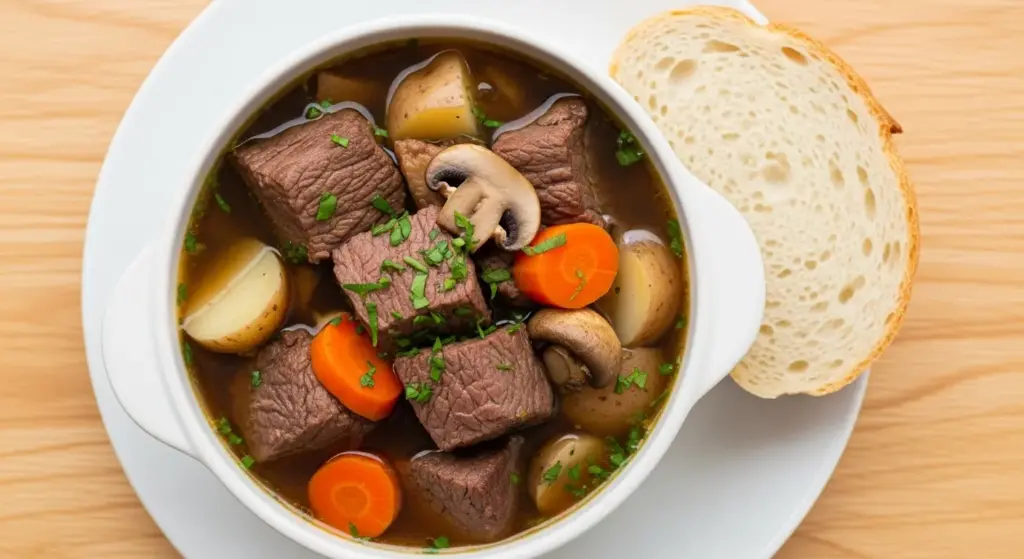
This prime rib soup is a complete meal all on its own, but a few carefully chosen sides and accompaniments can make it even more satisfying.
A thick slice of crusty artisan bread or warm Dinner Rolls is almost mandatory. You need something to soak up that incredible broth. A simple green salad with a light vinaigrette balances out the richness of the soup nicely. For holiday-style serving, a small plate of Classic Deviled Eggs on the side is a lovely touch that rounds out the meal elegantly.
- Crusty sourdough or French bread: Perfect for dipping and scooping up every last drop of broth.
- Simple green salad: A light, crispy salad with lemon vinaigrette contrasts the richness of the soup.
- Creamy Mashed Potatoes: For an extra-indulgent meal, serve a small scoop alongside the soup instead of within it.
- Shaved Parmesan: A light dusting over each bowl adds a salty, nutty finish.
- Sour cream dollop: A small spoonful stirred into the bowl just before eating adds creaminess and a slight tang that plays well against the beefy broth.
- Crackers or oyster crackers: Classic and comforting, especially for kids.
Variations to Try
One of the best things about prime rib soup is how adaptable the base recipe is. Once you’ve got the bone broth and sautéed aromatics down, you can take it in many different directions.
- Prime Rib Barley Soup: Add ½ cup (100g) of pearl barley to the pot along with the vegetables. Barley soaks up the broth and becomes chewy and nutty, adding a very satisfying texture. You may need an extra cup of broth to compensate.
- Creamy Prime Rib Soup: Stir in ½ cup (120ml) of heavy cream during the last 5 minutes of cooking. This creates a silkier, richer broth that feels more like a bisque.
- Prime Rib Noodle Soup: Add 2 cups of egg noodles or wide pappardelle pasta to the soup during the last 10 to 12 minutes of simmering. The pasta soaks up the broth flavor and makes the soup even more filling.
- Slow Cooker Version: After making the bone broth on the stovetop and sautéing your vegetables, transfer everything to a slow cooker and cook on LOW for 6 to 8 hours or HIGH for 3 to 4 hours.
- Prime Rib Vegetable Soup: Load up on extra vegetables like green beans, corn, parsnips, or turnips to make a chunkier, more produce-forward version of the soup.
- Spicy Kick: Add ½ teaspoon of crushed red pepper flakes or a splash of hot sauce to the broth for a soup with more heat and complexity.
For even more hearty beef and vegetable bowl inspiration, check out this Vegetable Soup Recipe.
Storage and Reheating
Prime rib soup is one of those recipes that improves dramatically after a night in the refrigerator, making it ideal for meal prep and batch cooking.
- Refrigerator storage: Allow the soup to cool completely at room temperature before transferring to airtight containers. It will keep well in the refrigerator for up to 4 days.
- Freezer storage: This soup freezes beautifully. Portion it into individual freezer-safe containers or zip-lock bags and freeze for up to 3 months.
- Thawing: Transfer frozen soup to the refrigerator the night before you plan to eat it. Avoid thawing at room temperature.
- Reheating on the stovetop: Pour the desired portion into a small saucepan over medium-low heat and warm gently, stirring occasionally, until heated through. This is the best method for maintaining the texture of the vegetables and meat.
- Reheating in the microwave: Transfer to a microwave-safe bowl, cover loosely, and heat in 60-second increments, stirring between each, until fully hot.
- Note on pasta or noodles: If you made the pasta variation, the noodles will absorb liquid as the soup sits. When reheating, add a splash of extra beef broth to loosen the soup back to your preferred consistency.
Another cozy soup you can batch-cook and store the same way is this Loaded Potato Soup.
Nutritional Facts
The following nutritional values are estimated per serving, based on a recipe that yields 6 servings. These values will vary depending on the size and fat content of your leftover prime rib, the specific broth used, and any variations added.
| Nutrient | Per Serving (Approx.) |
|---|---|
| Calories | 340 kcal |
| Total Fat | 14g |
| Saturated Fat | 5g |
| Cholesterol | 65mg |
| Sodium | 820mg |
| Total Carbohydrates | 22g |
| Dietary Fiber | 4g |
| Total Sugars | 5g |
| Protein | 28g |
| Vitamin A | 90% DV |
| Vitamin C | 25% DV |
| Iron | 20% DV |
| Potassium | 780mg |
Note: These are estimates calculated using standard nutritional data. Exact values will vary based on ingredients and portion sizes.
For another satisfying and nutrient-packed bowl of soup, try this hearty Cheeseburger Soup.
Health Benefits of Key Ingredients
This soup isn’t just deeply delicious. It’s also packed with nutritious ingredients that contribute to your overall wellbeing.
The combination of protein-rich prime rib, fiber-filled vegetables, and mineral-dense bone broth makes this a genuinely nourishing meal, not just a comfort food indulgence.
- Prime rib (beef): An excellent source of complete protein, zinc, iron, and B vitamins including B12, which supports nerve function and red blood cell production. The high protein content supports muscle maintenance and helps keep you feeling full longer.
- Bone broth: Homemade prime rib bone broth is rich in collagen, gelatin, and minerals like calcium and phosphorus. Regular consumption of bone broth has been associated with supporting joint health and gut lining integrity.
- Carrots: Loaded with beta-carotene, which the body converts to Vitamin A. Vitamin A is essential for eye health, immune function, and skin health. Carrots also provide a good dose of dietary fiber.
- Yukon Gold potatoes: A solid source of potassium, Vitamin C, and complex carbohydrates. Potatoes with their skin on also provide a meaningful amount of dietary fiber.
- Cremini mushrooms: Rich in B vitamins, selenium, and potassium. Mushrooms also contain beta-glucans, a type of soluble fiber that may support immune health and healthy cholesterol levels.
- Celery: A low-calorie source of Vitamin K, potassium, and folate. Celery also contains antioxidants and anti-inflammatory compounds that support overall health.
- Garlic: One of the most studied functional foods for its health benefits. Garlic contains allicin, a compound with antimicrobial properties that may support immune health and cardiovascular function.
Read Also: Chicken Soup Recipe
Frequently Asked Questions
1. Can I make prime rib soup without the bones?
Yes, you absolutely can. The bones create a richer, more gelatinous broth, but if you only have leftover prime rib meat and no bones, simply use a high-quality beef broth as your liquid base. Stirring in a tablespoon of beef bouillon paste will help compensate for the depth of flavor that the bones would have added.
2. How long should I simmer the prime rib bones?
For the best results, simmer the bones for a minimum of 1.5 hours and up to 2 hours. A longer simmer extracts more collagen, flavor, and minerals from the bones, resulting in a richer, more satisfying broth. If you’re short on time, even 45 minutes will produce a noticeably flavorful result compared to plain broth.
3. Can I use raw prime rib bones instead of cooked leftovers?
The recipe is specifically designed for already-cooked leftover bones because they release flavor more quickly during simmering. Raw beef bones will work, but they should be roasted first in a 425°F (220°C) oven for 30 to 40 minutes until well browned to develop flavor before adding them to the soup pot.
4. What kind of potatoes work best in this soup?
Yukon Gold or red potatoes are the best choices for this soup because they are waxy potatoes that hold their shape well during long simmering. Russet potatoes are starchy and will break down too quickly, potentially making your broth thick and cloudy. If you only have Russets, add them in the last 15 minutes of cooking to prevent them from falling apart.
5. Can I make this soup in a slow cooker?
Yes, a slow cooker works well for this recipe, but the bone broth step is still best done on the stovetop first. After simmering the bones and creating your broth, sauté the aromatics and vegetables on the stovetop, then transfer everything to your slow cooker. Cook on LOW for 6 to 8 hours or on HIGH for 3 to 4 hours for a deeply flavored, hands-off soup.
Read Also: Baked Potato Soup Recipe
Final Thoughts
This prime rib soup recipe is proof that the best meals don’t always start from scratch. Sometimes, the leftovers from a great dinner are the foundation of something even more memorable.
The rich, slow-simmered broth, the tender chunks of prime rib, and the hearty vegetables come together in a way that feels both comforting and elevated. It’s the kind of soup that makes the whole house smell incredible and brings everyone to the table.
Give this recipe a try the next time you find yourself with leftover prime rib bones, and I promise it will become a post-holiday tradition you look forward to every year.
If you make this soup, I’d love to hear from you in the comments below. Let me know what vegetables or variations you tried, and don’t forget to share this recipe with anyone who loves a great bowl of beef soup!
Recommended:
- Prime Rib Recipe
- Beef and Barley Soup
- French Onion Beef Short Rib Soup
- Crock Pot Beef Short Ribs
- Turkey Soup
- Lobster Bisque
- Minestrone Soup
- Pasta Fagioli
- Beef Stroganoff
- Ham and Bean Soup