
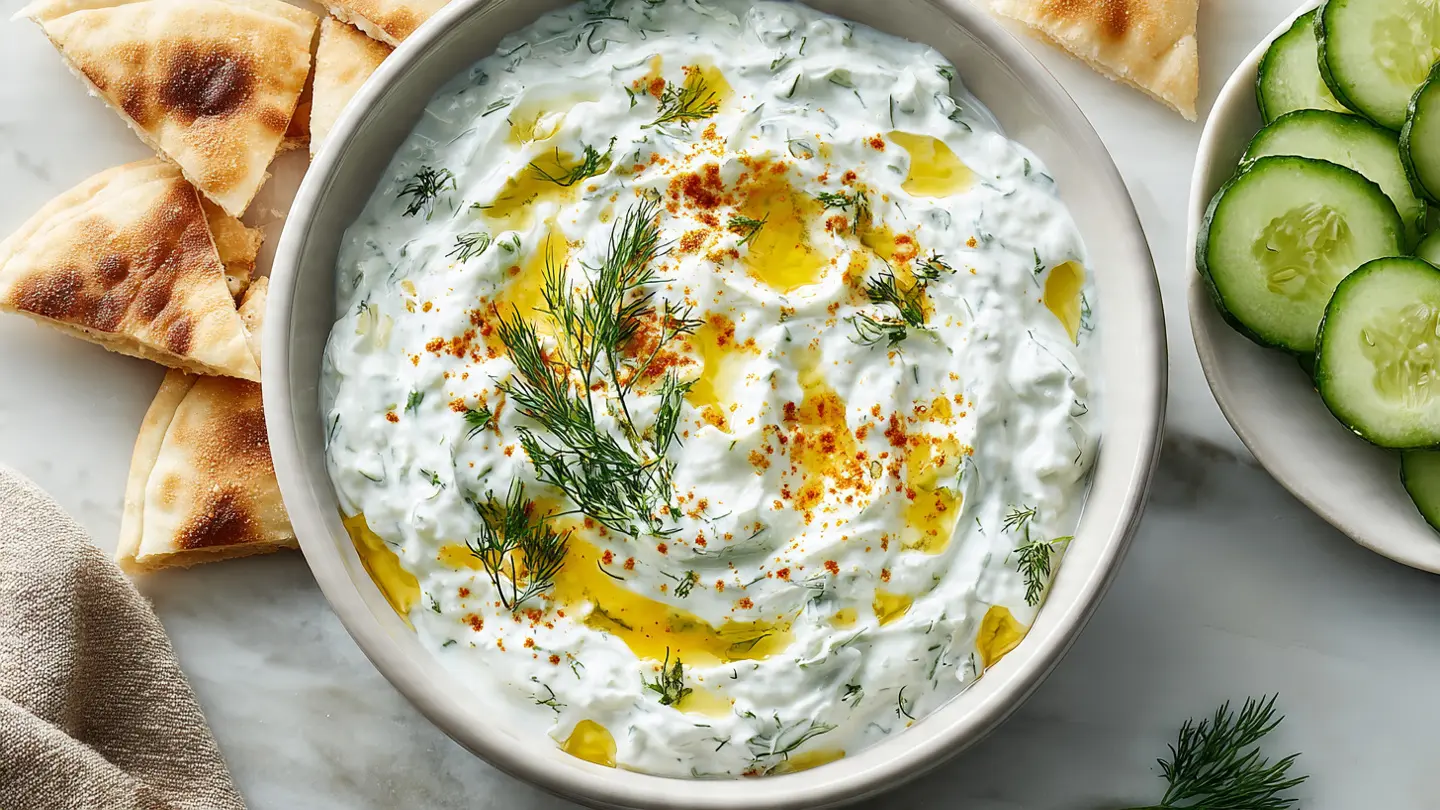
If you’ve ever wanted to make a truly authentic tzatziki sauce recipe at home, you’re in the right place. This cool, creamy Greek cucumber dip comes together in about 15 minutes using just a handful of simple ingredients, and the result is so much better than anything you’ll find in a store-bought container.
Tzatziki is one of those recipes that looks simple on the surface but has a few key techniques that make all the difference between a watery dip and a thick, luscious sauce that clings to everything you serve it with.
The secret starts with properly draining the cucumber. Skip this step and you’ll end up with a runny, watered-down sauce. Do it right, and you get that signature creamy texture that makes tzatziki so irresistible.
This recipe uses full-fat Greek yogurt, fresh dill, plenty of garlic, a splash of lemon juice, and good-quality extra virgin olive oil. Together, those ingredients create a sauce that’s tangy, herby, garlicky, and refreshing all at once.
This is the version you’ll find served at Greek tavernas, spooned generously alongside grilled meats and warm pita. Once you make it from scratch, you’ll never go back to the store-bought stuff.
This recipe pairs beautifully alongside the Easy Hummus Recipe for the ultimate Mediterranean mezze spread.
Why You’ll Love This Tzatziki Sauce Recipe
Homemade tzatziki is genuinely one of the most versatile condiments you can keep in your refrigerator.
It works as a dip, a sauce, a spread, and even a salad dressing, making it incredibly useful throughout the week.
The ingredients are simple and inexpensive, and most of them are things you likely already have at home.
It takes less than 20 minutes to make from start to finish, with no cooking involved at all.
The flavor actually improves as it sits, so it’s a perfect make-ahead recipe for parties or meal prep.
It’s naturally gluten-free, high in protein from the Greek yogurt, and far lighter than most creamy dips.
Kids and adults alike love it, making it a crowd-pleaser no matter the occasion.
Here’s a quick summary of why this recipe stands out:
- Ready in 15 minutes with no cooking required
- Uses just 7 core ingredients that are easy to find at any grocery store
- Naturally gluten-free and protein-rich thanks to Greek yogurt
- Incredibly versatile as a dip, sauce, spread, or dressing
- Tastes better the next day as the garlic and herbs meld into the yogurt
- Easily customizable with mint, dill, or a combination of both
You might also enjoy: Basil Pesto Recipe
Ingredients
To make the best homemade tzatziki, quality really matters here. Full-fat Greek yogurt is non-negotiable for achieving that thick, creamy texture. An English cucumber works beautifully because it has fewer seeds and a thinner skin, but a regular garden cucumber works fine as long as you peel and seed it. Fresh dill is preferred over dried since it delivers that bright, herbaceous flavor that defines a great tzatziki.
Here’s everything you’ll need:
- 2 cups (475g) full-fat Greek yogurt (plain, strained)
- 1 medium English cucumber (about 10 oz / 280g), grated
- 3 to 4 garlic cloves, finely minced or grated
- 2 tablespoons (30ml) extra virgin olive oil, plus more for drizzling
- 1 tablespoon (15ml) fresh lemon juice
- 1 teaspoon (5ml) red wine vinegar or white wine vinegar
- 2 tablespoons fresh dill, finely chopped (or 1 teaspoon dried dill)
- 1/2 teaspoon salt, plus more to taste
- 1/4 teaspoon black pepper
Read Also: Easy Pesto Recipe
Kitchen Equipment Needed
You don’t need any special equipment to make tzatziki. A box grater is the most important tool here because it gives you the right texture on the cucumber. A fine mesh strainer or a clean cheesecloth helps speed up the draining process significantly, though a sturdy paper towel works in a pinch.
Here’s what you’ll need:
- Box grater (use the large holes)
- Fine mesh strainer or cheesecloth for draining cucumber
- Large mixing bowl
- Small bowl (for mixing garlic and olive oil)
- Cutting board and knife
- Rubber spatula or wooden spoon
- Airtight storage container for refrigerating
Read Also: Comeback Sauce Recipe
Recommended Products for This Recipe
These are products I recommend based on quality and performance. They genuinely make this recipe easier and the result noticeably better.
1. Full-Fat Greek Yogurt (Strained)
Using a premium full-fat Greek yogurt is the single most important factor in getting thick, restaurant-quality tzatziki. Brands like FAGE Total 5% or Chobani Whole Milk Greek Yogurt deliver that ultra-thick, creamy consistency that holds up well even after the cucumber is stirred in. Thin or low-fat yogurts will leave you with a runny dip no matter how well you drain the cucumber.
2. Premium Extra Virgin Olive Oil
A good-quality extra virgin olive oil makes a noticeable difference in the richness and flavor of tzatziki. Brands like California Olive Ranch or Kirkland Organic EVOO bring a fruity, peppery depth that elevates the entire dip. This is also the olive oil you’ll drizzle on top just before serving, so it pays to use one you love.
3. Microplane or Box Grater
Grating the cucumber finely is the key to getting that smooth, creamy texture in tzatziki. A quality box grater with large holes, like the Cuisipro 4-Sided Box Grater, makes this step quick and easy. It also works beautifully for grating garlic directly into the bowl, which integrates the flavor more evenly than chopping.
4. Fine Mesh Strainer
Getting moisture out of the grated cucumber is the most important step in this recipe. A quality fine mesh strainer, like the OXO Good Grips 3-Piece Strainer Set, makes this step hassle-free and ensures you remove as much water as possible. Less water means a thicker, more flavorful sauce that doesn’t separate in the fridge.
5. Airtight Glass Storage Container
Tzatziki stores beautifully in the fridge for up to four days, and a quality airtight glass container keeps it fresh without absorbing odors. Glass is ideal because it won’t hold onto garlic or herb smells the way plastic containers sometimes do. The Pyrex Simply Store line is a reliable, affordable choice.
Another sauce you’ll want to have in your repertoire is this Yum Yum Sauce Recipe for a totally different but equally addictive condiment.
Step-by-Step Instructions
Step 1: Grate the Cucumber
- Begin by washing your cucumber thoroughly under cold running water.
- If you’re using an English cucumber, you can leave the skin on since it’s thin and tender. If you’re using a regular garden cucumber, peel it first, then cut it in half lengthwise and use a spoon to scoop out the seeds.
- Using the large holes of your box grater, grate the entire cucumber into a bowl. You should end up with about 1 1/2 to 2 cups of grated cucumber.
- Try to grate in long, even strokes to get consistent shreds that will blend smoothly into the yogurt.
Step 2: Salt and Drain the Cucumber
- Transfer the grated cucumber into a fine mesh strainer set over a bowl, or onto a double layer of cheesecloth.
- Sprinkle 1/4 teaspoon of salt over the grated cucumber and toss gently to coat.
- Let the cucumber sit in the strainer for at least 10 to 15 minutes. The salt draws out the moisture from the cucumber cells through osmosis, which is what gives tzatziki its thick, non-watery texture.
- After 15 minutes, use your hands to firmly squeeze handfuls of the cucumber over the sink, pressing out as much liquid as possible.
- If you want to speed things up, you can wrap the grated cucumber in a clean kitchen towel and twist and wring it tightly over the sink.
- You’ll be surprised how much liquid comes out. This step is critical for a thick, creamy sauce.
Step 3: Prepare the Garlic and Olive Oil
- Peel 3 to 4 garlic cloves and mince them as finely as possible using a sharp knife.
- For an even smoother result, you can use the fine holes of your box grater to grate the garlic directly, which creates a paste-like consistency that blends seamlessly into the yogurt.
- In a small bowl, combine the minced or grated garlic with the 2 tablespoons of extra virgin olive oil.
- Stir them together and let the mixture sit for 2 to 3 minutes. Mixing the garlic with olive oil first softens the raw sharpness of the garlic slightly and creates a more rounded, mellow garlic flavor in the finished sauce.
Step 4: Combine All Ingredients
- Add the 2 cups of full-fat Greek yogurt to a large mixing bowl.
- Add the drained and squeezed cucumber to the yogurt bowl.
- Pour in the garlic and olive oil mixture.
- Add the 1 tablespoon of fresh lemon juice.
- Add 1 teaspoon of red wine vinegar or white wine vinegar.
- Add the 2 tablespoons of freshly chopped dill.
- Season with the remaining 1/4 teaspoon of salt and 1/4 teaspoon of black pepper.
- Using a rubber spatula or wooden spoon, stir all the ingredients together until fully combined and the texture looks smooth and uniform.
Step 5: Taste and Adjust the Seasoning
- Taste the tzatziki and evaluate the balance of flavors.
- If it needs more brightness, add a little more lemon juice, half a teaspoon at a time.
- If it tastes flat or mild, add a pinch more salt.
- If you want a more pronounced herby flavor, stir in a bit more dill.
- If the garlic flavor seems too sharp, no need to worry since it will mellow significantly after chilling in the refrigerator for 30 minutes.
- Stir again after any adjustments and taste once more.
Step 6: Chill and Rest the Tzatziki
- Cover the bowl tightly with plastic wrap or transfer the tzatziki to an airtight container with a lid.
- Refrigerate for at least 30 minutes before serving. This rest period is important because it allows all the flavors to meld together beautifully.
- If you have time, refrigerating for 1 to 2 hours (or even overnight) results in a noticeably deeper, more developed flavor.
- The tzatziki will thicken slightly as it chills, which is exactly what you want.
Step 7: Serve
- Remove the tzatziki from the refrigerator and give it a good stir to reincorporate any liquid that may have separated.
- Transfer to a serving bowl.
- Drizzle a little extra virgin olive oil over the top.
- Garnish with a small sprig of fresh dill and a sprinkle of paprika or a few sliced olives if you like.
- Serve immediately with warm pita bread, fresh vegetables, or alongside your favorite grilled meats.
This Peanut Sauce Recipe is another fantastic sauce to keep in your rotation for a totally different flavor profile.
Tips for Success
Getting tzatziki right is all about a few small but impactful details. The biggest mistake people make is skipping the cucumber draining step, which leads to a watery dip that separates quickly in the fridge.
Here are the most important tips for making the best tzatziki every single time:
- Don’t skip draining the cucumber. This is the single most important step. Squeeze out as much moisture as possible for the thickest, creamiest result.
- Use full-fat Greek yogurt only. Low-fat or regular yogurt will produce a runny sauce that lacks richness and body.
- Let it rest in the fridge. Even 30 minutes makes a huge difference in flavor. Overnight is even better.
- Mix garlic with olive oil first. This technique softens the raw bite of the garlic and creates a smoother, more integrated flavor.
- Use fresh dill when possible. Dried dill works in a pinch but lacks the brightness that fresh dill provides.
- Taste as you go. Garlic intensity, lemon brightness, and saltiness all vary by personal preference. Adjust before serving.
- Add a final drizzle of olive oil. That last drizzle right before serving makes the presentation look polished and adds a richness to the top layer.
You might also enjoy: Bang Bang Sauce Recipe
Serving Suggestions

Tzatziki is endlessly versatile and honestly shines no matter what you pair it with. It was born to go alongside grilled meats and warm pita, but its fresh, creamy flavor makes it just as at home as a veggie dip, a sandwich spread, or a bright finishing sauce for roasted vegetables.
Here are some of the best ways to serve it:
- With warm pita bread for classic Greek mezze dipping
- Alongside grilled chicken, lamb, or beef as a cooling sauce
- As a spread on wraps and sandwiches instead of mayo or mustard
- With fresh cut vegetables like carrots, celery, bell pepper strips, and cucumber spears
- Served over Classic Deviled Eggs as part of a party appetizer spread
- Drizzled over roasted or air-fried vegetables for a fresh finish
- As a dipping sauce for Chicken Tenders instead of ranch or honey mustard
- Spooned into Classic Stuffed Bell Peppers for a Mediterranean-inspired meal
- As a topping for baked potatoes in place of sour cream
The flavor works beautifully with so many different cuisines, not just Greek food, so feel free to get creative with how you use it throughout the week.
For another crowd-pleasing dip, check out this Classic Hummus Recipe
Variations to Try
The classic version of this recipe is pretty hard to beat, but tzatziki is also wonderfully adaptable. Small tweaks to the herbs, acid, or add-ins can give you a completely different flavor profile that suits different dishes and occasions.
Here are some great variations worth exploring:
- Mint tzatziki: Swap the dill for fresh mint leaves for a cooler, more refreshing version. This is a popular variation in some Greek households and pairs beautifully with lamb.
- Mint and dill combination: Use half dill and half mint for the best of both worlds. The flavors complement each other surprisingly well.
- Extra garlicky: Double the garlic for a punchier, more assertive sauce. This is closest to how tzatziki is traditionally made in Greece.
- Lemon-forward version: Add an extra tablespoon of lemon juice and a little lemon zest for a brighter, more citrusy flavor.
- Spicy tzatziki: Stir in a pinch of red pepper flakes or a small amount of finely diced hot pepper for a version with a gentle kick.
- Vegan tzatziki: Use a thick, unsweetened coconut yogurt or cashew-based yogurt in place of Greek yogurt. Drain and strain it the same way for best results.
- Herb-packed tzatziki: Add finely chopped flat-leaf parsley or chives alongside the dill for a more complex herbal flavor.
Read Also: Burger Sauce Recipe
Storage and Reheating
Tzatziki stores well in the refrigerator and is actually at its best flavor on day two, once the garlic and herbs have had more time to infuse the yogurt. Just keep a few things in mind to maintain the best texture and freshness.
Here are the key storage and serving guidelines:
- Refrigerator: Store in an airtight container for up to 3 to 4 days. Stir before each use since some liquid may separate.
- Before serving from the fridge: Give the tzatziki a good stir to reincorporate any water that has pooled on top. If it seems too thick after chilling, stir in a small drizzle of olive oil to loosen it.
- Freezing: Tzatziki does not freeze well. The yogurt and cucumber both become watery and grainy when thawed, significantly affecting the texture.
- Do not heat: This sauce is always served cold or at room temperature. Heat will cause the yogurt to break and the texture will become thin and curdled.
- Meal prep tip: You can prep the drained cucumber and the garlic-oil mixture up to a day ahead, then combine them with the yogurt and herbs when you’re ready to serve.
Another sauce you might want to make ahead is this Hollandaise Sauce Recipe
Nutritional Facts
The following nutritional information is approximate, based on a 2-tablespoon serving size. This recipe yields approximately 10 to 12 servings.
| Nutrient | Amount Per Serving (2 tbsp) |
|---|---|
| Calories | 45 kcal |
| Total Fat | 3g |
| Saturated Fat | 0.5g |
| Cholesterol | 2mg |
| Sodium | 75mg |
| Total Carbohydrates | 2g |
| Dietary Fiber | 0.1g |
| Sugars | 1g |
| Protein | 4g |
| Calcium | 50mg |
| Potassium | 80mg |
Nutritional values will vary based on the specific brand of Greek yogurt used and the exact amount of olive oil added.
This Yogurt Smoothie Recipe is another great way to use up your Greek yogurt if you have some left over.
Health Benefits of Key Ingredients
Tzatziki isn’t just delicious. It’s actually a surprisingly nutritious condiment when you look at what goes into it. Each ingredient brings its own set of health benefits to the table, making this one of the healthiest dips and sauces you can make.
Here’s a closer look at what makes tzatziki good for you:
- Greek yogurt is packed with protein (roughly 17g per 6-ounce serving), probiotics for gut health, calcium for bone strength, and B vitamins that support energy metabolism. Full-fat Greek yogurt also contains conjugated linoleic acid (CLA), which has been studied for its potential benefits in heart health and weight management.
- Cucumber is over 95% water, making it highly hydrating. It also provides vitamin K for bone health, small amounts of vitamin C, and silica, a trace mineral that supports joint and skin health.
- Garlic contains allicin, a compound with well-documented antimicrobial and anti-inflammatory properties. Regular garlic consumption has been linked to improved heart health and immune function.
- Extra virgin olive oil is a cornerstone of the Mediterranean diet and is rich in oleocanthal, a natural anti-inflammatory compound, as well as heart-healthy monounsaturated fats and antioxidants.
- Dill provides flavonoids and antioxidants and has been used traditionally to aid digestion and reduce bloating.
- Lemon juice adds a small but meaningful dose of vitamin C while also improving the absorption of iron from the yogurt and herbs.
For more Greek-inspired comfort, this Greek Lentil Soup Recipe makes a perfect companion dish.
Frequently Asked Questions
1. Why is my tzatziki watery?
The most common cause of watery tzatziki is not draining the cucumber thoroughly enough before mixing it into the yogurt.
After grating, you need to salt the cucumber and let it sit for at least 10 to 15 minutes, then squeeze out as much moisture as possible by hand or through a cheesecloth. Another potential cause is using a low-fat or regular yogurt instead of full-fat Greek yogurt, which has a much higher water content.
2. Can I make tzatziki ahead of time?
Absolutely, and in fact it’s encouraged.
The flavors deepen and become more cohesive after the sauce has had time to rest in the fridge. You can make it up to 24 hours in advance and it will taste even better than when freshly made. Just stir it well before serving and add a fresh drizzle of olive oil on top.
3. Can I use dried dill instead of fresh dill?
Yes, dried dill works in a pinch, but the flavor will be less bright and herbaceous than fresh dill.
If substituting dried for fresh, use about one-third of the amount called for in the recipe. So if the recipe calls for 2 tablespoons of fresh dill, use approximately 2 teaspoons of dried dill. Fresh is always preferred when available.
4. What is the difference between tzatziki and Greek yogurt dip?
Tzatziki is technically a specific type of Greek yogurt dip with defined key ingredients: strained yogurt, cucumber, garlic, olive oil, and herbs (usually dill or mint).
A generic “Greek yogurt dip” is a broader category that can include many different flavor combinations without cucumbers or garlic. Tzatziki has a very particular flavor profile, which is why it’s considered its own distinct sauce rather than just a seasoned yogurt.
5. Is tzatziki the same as raita?
They are similar in concept but not the same.
Both are yogurt-based sauces with cucumber, but raita is an Indian condiment typically made with regular yogurt (not strained), and often includes spices like cumin, coriander, and sometimes mustard seeds. Tzatziki is Greek, uses thick strained yogurt, and relies on garlic, olive oil, lemon juice, and dill or mint for its flavor. The textures and flavor profiles are noticeably different.
Read Also: Creole Sauce Recipe
Final Thoughts
Making your own tzatziki sauce recipe at home is one of those small kitchen wins that pays off every single time.
It takes less than 20 minutes, costs a fraction of what you’d pay for the store-bought version, and tastes so much fresher and more vibrant.
Once you have a batch in your fridge, you’ll find yourself reaching for it constantly, whether you’re dipping vegetables, spreading it on a wrap, or spooning it over grilled chicken for dinner.
The key is to not rush the cucumber draining step and to let the finished sauce rest in the refrigerator so the flavors have time to come together.
Give this recipe a try and you’ll quickly see why tzatziki has been a beloved part of Greek cuisine for centuries.
If you make this recipe, leave a comment below and let me know how it turned out. I’d love to hear your favorite ways to serve it!
Recommended:
- Classic Hummus Recipe
- Easy Guacamole Recipe
- Fresh Salsa Recipe
- BBQ Sauce Recipe
- Teriyaki Sauce Recipe
- Sunshine Sauce Recipe
- Baklava Recipe
- Mediterranean Lentil Soup Recipe
- Cucumber Gazpacho Recipe
- Classic Bruschetta Recipe