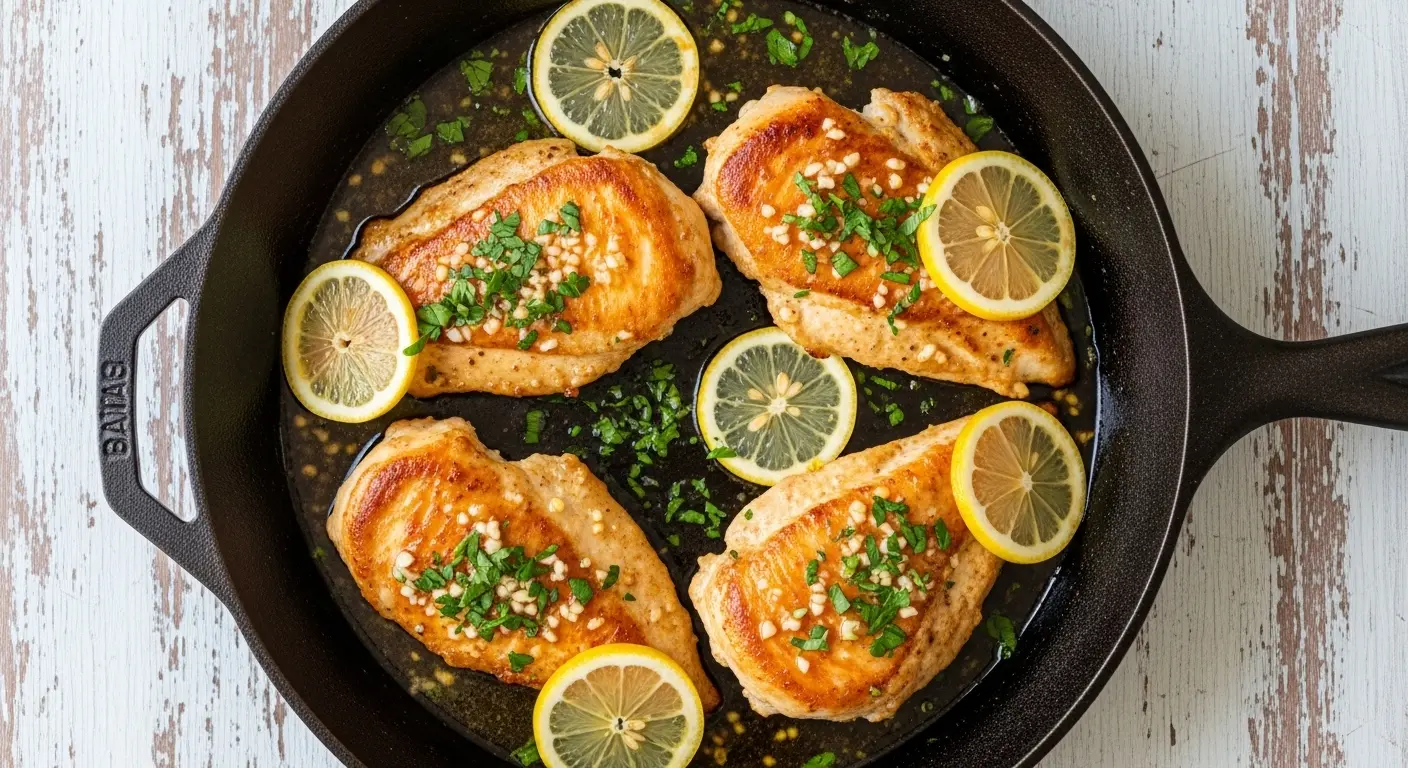
Few dinners hit the table and get everyone moving toward the kitchen faster than a classic lemon chicken recipe. That bright, citrusy aroma hitting the air as the chicken sears in a hot pan is honestly one of the best things about this dish.
This version is the pan-seared, pan-sauce style that you’ll find in countless home kitchens and classic cookbooks. It uses boneless, skinless chicken breasts cooked until golden in a skillet, then finished in a glossy, garlicky lemon butter sauce that clings to every bite.
It’s not overly complicated, but the flavor is absolutely impressive. The lemon does the heavy lifting here, cutting through the richness of the butter while the garlic adds depth and the fresh herbs tie everything together.
What makes this recipe stand out is the technique. You’re building a real pan sauce from the fond left behind by the chicken, which gives the sauce incredible body and a savory backbone that no bottled sauce could replicate.
This recipe comes together in under 30 minutes with one pan, making it just as appropriate for a Tuesday night as it is for serving guests.
For a warming soup variation that showcases the same bright flavors, check out this Lemon Chicken Orzo Soup if you love lemon and chicken together.
Why You’ll Love This Lemon Chicken Recipe
This lemon chicken recipe is the kind of dish that earns a permanent spot in your regular rotation.
It comes together in under 30 minutes using just one skillet, which means fewer dishes and more time to enjoy dinner.
The sauce is buttery, tangy, and rich without feeling heavy. It hits that perfect balance that makes you want to drag crusty bread through the pan.
Boneless chicken breasts are pounded to an even thickness before cooking, which ensures they stay juicy and cook through without drying out.
Fresh lemon juice is non-negotiable here. Bottled juice simply doesn’t have the same bright, clean flavor that makes this dish sing.
The recipe is also naturally adaptable, with an easy gluten-free swap noted in the variations section below.
You might also enjoy: Chicken Marsala Recipe
Ingredients
This recipe uses pantry staples paired with a few fresh items you can find at any grocery store. Boneless, skinless chicken breasts are the star, thinly pounded for quick, even cooking, while the sauce comes together with butter, fresh garlic, chicken broth, and plenty of bright lemon juice.
- 4 boneless, skinless chicken breasts (about 6 oz / 170g each)
- 1 teaspoon salt
- ½ teaspoon black pepper
- ½ teaspoon garlic powder
- ¼ cup (30g) all-purpose flour, for dredging
- 2 tablespoons (30ml) olive oil
- 3 tablespoons (45g) unsalted butter, divided
- 5 cloves garlic, minced
- ½ cup (120ml) low-sodium chicken broth
- ⅓ cup (80ml) fresh lemon juice (about 2 large lemons)
- 1 teaspoon lemon zest
- 1 tablespoon honey (optional, for a touch of sweetness)
- 2 tablespoons fresh parsley, chopped
- Lemon slices, for garnish
Read Also: Chicken Piccata Recipe with Pasta
Kitchen Equipment Needed
You don’t need a fully stocked professional kitchen for this recipe. A heavy-bottomed skillet is the most important piece of equipment here, as it distributes heat evenly and creates a proper golden sear without burning the exterior before the inside is fully cooked.
- Large heavy-bottomed cast iron skillet or stainless steel skillet (12-inch / 30cm recommended)
- Meat mallet or rolling pin for pounding chicken
- Plastic wrap or zip-top bag (for pounding)
- Cutting board
- Chef’s knife
- Measuring cups and spoons
- Microplane or fine grater for lemon zest
- Citrus juicer
- Tongs
- Wooden spoon or silicone spatula
- Instant-read meat thermometer
Read Also: Easy Chicken Pot Pie Recipe
Recommended Products for This Recipe
These are products I genuinely recommend based on quality and performance. Having the right tools makes a noticeable difference in how this dish turns out, from the sear to the sauce.
1. Lodge Cast Iron Skillet (12-Inch)
A 12-inch cast iron skillet is the single best tool for this recipe. It retains heat exceptionally well, giving the chicken that deep golden sear that’s difficult to achieve in a lighter pan, and the heat distribution across the surface is even enough that every piece cooks consistently.
2. OXO Good Grips Citrus Juicer
Fresh lemon juice is essential here, and a quality citrus juicer makes extracting every drop effortless and seed-free. The OXO design accommodates lemons, limes, and small oranges, making it one of the most versatile handheld tools you can keep in the kitchen.
3. Microplane Classic Zester/Grater
Lemon zest provides the most concentrated citrus punch in this sauce, and a Microplane produces fine, fluffy zest in seconds. It’s far more effective than a box grater for this purpose and works equally well for Parmesan, ginger, and nutmeg.
4. Kerrygold Pure Irish Butter
The butter you use in the pan sauce matters more than you’d expect. Kerrygold is a grass-fed European-style butter with a higher fat content than standard American butter, producing a silkier, richer sauce with noticeably better depth of flavor.
5. Cuisinart Airtight Food Storage Containers
Good airtight containers make storing leftovers convenient and keep the chicken and sauce fresh in the refrigerator for up to three days. The tight seal also prevents the lemon sauce from transferring its aroma to other foods in the fridge.
Another quick and satisfying dinner: Bourbon Chicken Recipe
Step-by-Step Instructions
1. Prepare the Chicken
- Place the chicken breasts on a cutting board, one at a time, and lay a sheet of plastic wrap over each one to prevent splatter.
- Using a meat mallet or rolling pin, pound each breast firmly and evenly until it reaches a uniform thickness of about ½ inch (1.25cm). This is the single most important step in the recipe. Uneven chicken cooks unevenly, leaving the thinnest parts dry and overcooked before the thickest parts are done.
- Once pounded, season both sides of each chicken breast generously with salt, black pepper, and garlic powder. Press the seasoning gently into the surface.
- Spread the flour in a shallow dish. Dredge each seasoned chicken breast lightly in the flour, coating both sides, then shake off the excess. This thin coating encourages browning and creates a surface that helps the pan sauce adhere beautifully to the chicken.
2. Sear the Chicken
- Heat 2 tablespoons of olive oil and 1 tablespoon of the butter in a large heavy-bottomed skillet over medium-high heat.
- Wait until the butter has melted and the fat is shimmering but not yet smoking. This tells you the pan is hot enough for a proper sear. Placing chicken in a pan that isn’t hot enough leads to pale, steamed chicken rather than a golden crust.
- Add the chicken breasts to the pan in a single layer. If your skillet is smaller than 12 inches, work in two batches to avoid crowding. Crowded chicken steams instead of sears, which prevents the golden crust from developing.
- Sear the chicken for 4 to 5 minutes on the first side without touching or moving it. It will release naturally from the pan when it’s ready to flip. If it feels stuck, give it another 30 seconds and try again.
- Flip each breast and cook the second side for 3 to 4 minutes, or until the internal temperature reads 165°F (74°C) on an instant-read thermometer.
- Transfer the cooked chicken to a clean plate and cover loosely with a sheet of foil to keep warm. Do not wash or wipe the pan. The browned bits stuck to the bottom are packed with flavor and will become the foundation of the sauce.
3. Build the Pan Sauce
- Reduce the heat to medium. Add the remaining 2 tablespoons of butter to the same skillet you used for the chicken.
- Once the butter has melted and is just beginning to foam, add the minced garlic. Cook for 30 to 45 seconds, stirring constantly, until the garlic is fragrant and just turning golden. Watch it carefully because garlic goes from golden to burnt very quickly, and burnt garlic makes the entire sauce bitter.
- Pour in the chicken broth and immediately use your wooden spoon or spatula to scrape up all the browned bits (the fond) stuck to the bottom of the pan. This deglazing step dissolves all that concentrated flavor into the sauce.
- Add the fresh lemon juice, lemon zest, and honey if you’re using it. Stir everything together to combine.
- Bring the sauce to a gentle simmer and let it cook uncovered for 3 to 4 minutes, stirring occasionally, until it has reduced slightly and is just thick enough to coat the back of a spoon.
4. Finish and Serve
- Return the cooked chicken breasts to the skillet and nestle them into the sauce.
- Spoon the sauce generously over the top of each piece.
- Let the chicken simmer in the sauce for 1 to 2 minutes so it warms back through completely and absorbs the bright, garlicky flavors.
- Taste the sauce and adjust seasoning with additional salt, black pepper, or a squeeze of lemon if needed.
- Garnish with freshly chopped parsley and lemon slices.
- Serve immediately, spooning extra sauce over each portion plated.
This pairs beautifully with Garlic Mashed Potatoes for a complete, comforting dinner.
Tips for Success
Getting this recipe exactly right comes down to a handful of techniques. The single most important tip is to pound the chicken to an even thickness before cooking, as everything else builds from that foundation.
- Pound the chicken evenly. Uneven chicken is the most common culprit behind dry, overcooked results. A consistent ½ inch (1.25cm) thickness ensures it cooks at the same rate throughout.
- Use a hot pan. The oil and butter should shimmer before the chicken goes in. A pan that isn’t hot enough prevents a proper sear and leads to pale, soft chicken.
- Don’t move the chicken while it sears. Once the chicken hits the pan, leave it completely alone. Attempting to flip it before a crust forms tears the coating and causes sticking.
- Fresh lemon juice only. Bottled lemon juice lacks the brightness and complexity that makes this sauce work. Two large lemons will give you approximately ⅓ cup of fresh juice.
- Deglaze properly. The fond is where the flavor lives. Take your time scraping up every browned bit from the bottom of the pan before it dissolves into the sauce.
- Taste before you serve. Every lemon varies in tartness. Add a touch more honey if the sauce is too sharp, or an extra pinch of zest if you want more citrus forward flavor.
- Rest briefly. Even one minute of resting on the plate helps the juices redistribute slightly and keeps each bite moist and tender.
Read Also: Chicken and Broccoli Recipe
Serving Suggestions
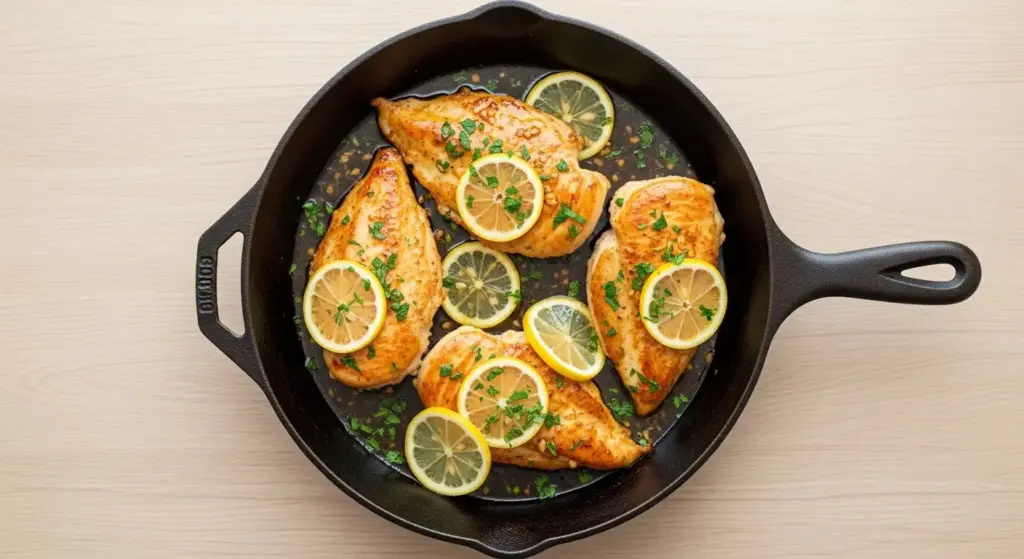
Lemon chicken is a versatile main course that pairs well with a wide range of sides. The bright, buttery sauce is best matched with something that can absorb it.
A few of our favorite ways to serve this dish:
- Spoon it over a generous bed of Creamy Mashed Potatoes for the ultimate comfort plate
- Serve alongside Roasted Broccoli for a simple, well-balanced dinner
- Plate over fluffy white rice or orzo to catch every drop of the pan sauce
- Pair with Cheesy Garlic Bread for soaking up the sauce
- Serve with a crisp green salad dressed with olive oil and lemon for a light, fresh contrast
- Tuck sliced chicken into warm flatbread with fresh greens and tzatziki for a quick wrap-style meal
- Add Roasted Potatoes on the side for a hearty, classic dinner combination
Variations to Try
The classic version of this lemon chicken is hard to top, but there are some genuinely wonderful ways to put a fresh spin on the dish. These variations all use the same core technique with a few ingredient adjustments.
- Creamy Lemon Chicken: After deglazing the pan, stir in ¼ cup (60ml) of heavy cream before adding the lemon juice. The result is a rich, velvety sauce that feels especially indulgent.
- Lemon Herb Chicken: Add 1 teaspoon of fresh rosemary or dried thyme along with the garlic. The herby notes pair beautifully with the brightness of the lemon.
- Lemon Caper Chicken: Stir 2 tablespoons of drained capers into the sauce after deglazing. This variation is very similar to a classic piccata and adds a wonderful briny, tangy element.
- Gluten-Free Lemon Chicken: Swap the all-purpose flour for rice flour or a certified gluten-free all-purpose blend. The golden sear comes out just as beautiful.
- Honey Lemon Chicken: Double the honey to 2 tablespoons for a mildly sweet sauce that works especially well over rice.
- Sheet Pan Version: Skip the dredging in flour and arrange the seasoned chicken on a lined sheet pan. Mix the sauce ingredients together and pour over the top before roasting at 400°F (200°C) for 20 to 25 minutes.
You might also enjoy: Chipotle Chicken Recipe
Storage and Reheating
Leftovers keep well and make an excellent next-day lunch. The sauce thickens as it cools, so plan to add a small splash of broth or water when reheating to bring it back to the right consistency.
- Refrigerator: Store cooled leftovers in an airtight container in the refrigerator for up to 3 days.
- Freezer: The chicken freezes well, but the butter-based sauce can separate upon thawing. For best results, store the chicken separately from the sauce and freeze for up to 2 months.
- Stovetop reheating: Place chicken and sauce in a skillet over medium-low heat, add 2 to 3 tablespoons of chicken broth, and heat gently for about 5 minutes until warmed through.
- Microwave reheating: Cover with a damp paper towel and microwave on 70% power in 60-second intervals until just heated through. Full power tends to dry out the chicken quickly.
- Leftover idea: Slice the leftover chicken and toss with cooked pasta and reheated sauce for a quick, satisfying second-day dinner.
Read Also: Easy Orange Chicken Recipe
Nutritional Facts
The following values are approximate, based on one serving (one chicken breast with sauce). This recipe as written serves four people.
| Nutrient | Per Serving |
|---|---|
| Calories | ~320 kcal |
| Protein | ~38g |
| Total Fat | ~14g |
| Saturated Fat | ~6g |
| Carbohydrates | ~8g |
| Sugar | ~2g |
| Fiber | ~0.5g |
| Sodium | ~420mg |
| Cholesterol | ~115mg |
Note: Nutritional values will vary depending on the exact size of the chicken breasts and whether optional honey is included. Serving with rice, pasta, or bread will increase the total calorie and carbohydrate count.
For a lighter, broth-based meal using similar flavors, try this Chicken Rice Soup.
Health Benefits of Key Ingredients
This lemon chicken recipe isn’t just delicious. It’s built on a foundation of genuinely nutritious ingredients that support a balanced diet.
Here’s a closer look at what makes this dish a smart choice:
- Chicken breast is one of the leanest protein sources available, providing roughly 35 to 38 grams of protein per serving. It supports muscle repair, keeps you full, and is low in saturated fat compared to red meat.
- Fresh lemon juice is an excellent source of vitamin C, which supports immune function and helps the body absorb non-heme iron from plant sources. Lemon also contains antioxidants that may help reduce inflammation.
- Garlic has been studied extensively for its cardiovascular benefits. It contains allicin, a compound linked to improved cholesterol levels, reduced blood pressure, and enhanced immune function.
- Olive oil is a cornerstone of the Mediterranean diet, rich in monounsaturated fats and polyphenols. Regular consumption has been associated with reduced cardiovascular risk and lower levels of systemic inflammation.
- Butter in moderate amounts contributes fat-soluble vitamins A, D, E, and K. Used in small amounts as part of a balanced sauce, it adds richness without dominating the nutritional profile.
- Fresh parsley is surprisingly nutrient-dense for a garnish. It’s high in vitamins K and C and contains flavonoids with antioxidant properties that complement the lemon’s anti-inflammatory benefits.
For another wholesome chicken dinner that your whole family will enjoy, check out this Chicken Stew Recipe.
Frequently Asked Questions
1. Can I use chicken thighs instead of chicken breasts?
Yes, boneless, skinless chicken thighs work beautifully in this recipe. They’re naturally higher in fat than breasts, which makes them more forgiving if slightly overcooked, and they have a noticeably richer flavor.
Cooking time will increase slightly, usually 5 to 6 minutes per side depending on thickness. Use a meat thermometer and cook until the internal temperature reaches 165°F (74°C).
2. Can I make this recipe ahead of time?
The chicken is best served fresh, but you can absolutely prepare components in advance. Mince the garlic, zest and juice the lemons, and measure the remaining sauce ingredients up to a day ahead, storing them covered in the refrigerator.
The assembled dish can also be refrigerated and reheated gently on the stovetop as described in the storage section. A splash of broth helps bring the sauce back to the right consistency.
3. My sauce is too tart. How do I fix it?
The most effective way to balance an overly tart lemon sauce is to add a little more honey, one teaspoon at a time, stirring and tasting after each addition. You can also stir in an extra half tablespoon of cold butter off the heat, which adds richness and rounds out the sharpness without adding sweetness.
A pinch of extra salt can also help, as it amplifies the other flavors and makes the tartness feel less prominent.
4. Can I make this dairy-free?
Yes. Simply substitute the butter with a high-quality vegan butter or use additional olive oil in its place. The sauce will still come together and taste bright and garlicky, though it will be slightly less rich than the original.
For the best result, use a refined (neutral-flavored) olive oil if you prefer a cleaner sauce that doesn’t compete with the lemon.
5. Why did my chicken turn out dry?
Dry chicken almost always comes down to one of three things: the breasts weren’t pounded to an even thickness, the pan wasn’t hot enough before the chicken went in, or the chicken was cooked past 165°F (74°C).
An instant-read thermometer is the single most reliable solution. Pull the chicken off the heat as soon as it hits 165°F (74°C), and it will stay juicy and tender every time.
Read Also: Classic Chicken Parmesan Recipe
Final Thoughts
This lemon chicken recipe delivers restaurant-quality flavor using simple, everyday ingredients and a technique that any home cook can master.
The combination of golden-seared chicken and that bright, buttery pan sauce is genuinely hard to beat for a weeknight dinner that still feels a little special.
Give it a try and see for yourself why this has become such a beloved go-to in so many kitchens. If you make it, I’d love to hear how it turned out in the comments below, and feel free to share it with anyone who loves a quick, impressive chicken dinner!
Recommended:
- Chicken Cacciatore Recipe
- Chicken Tortilla Soup
- Chicken Fajita Recipe
- Easy Butter Chicken Recipe
- Tandoori Chicken Recipe
- Lemon Cheesecake Recipe
- Lemon Shortbread Cookies
- Copycat CPK Chicken Piccata
- Chicken Adobo Recipe
- Easy Lemonade