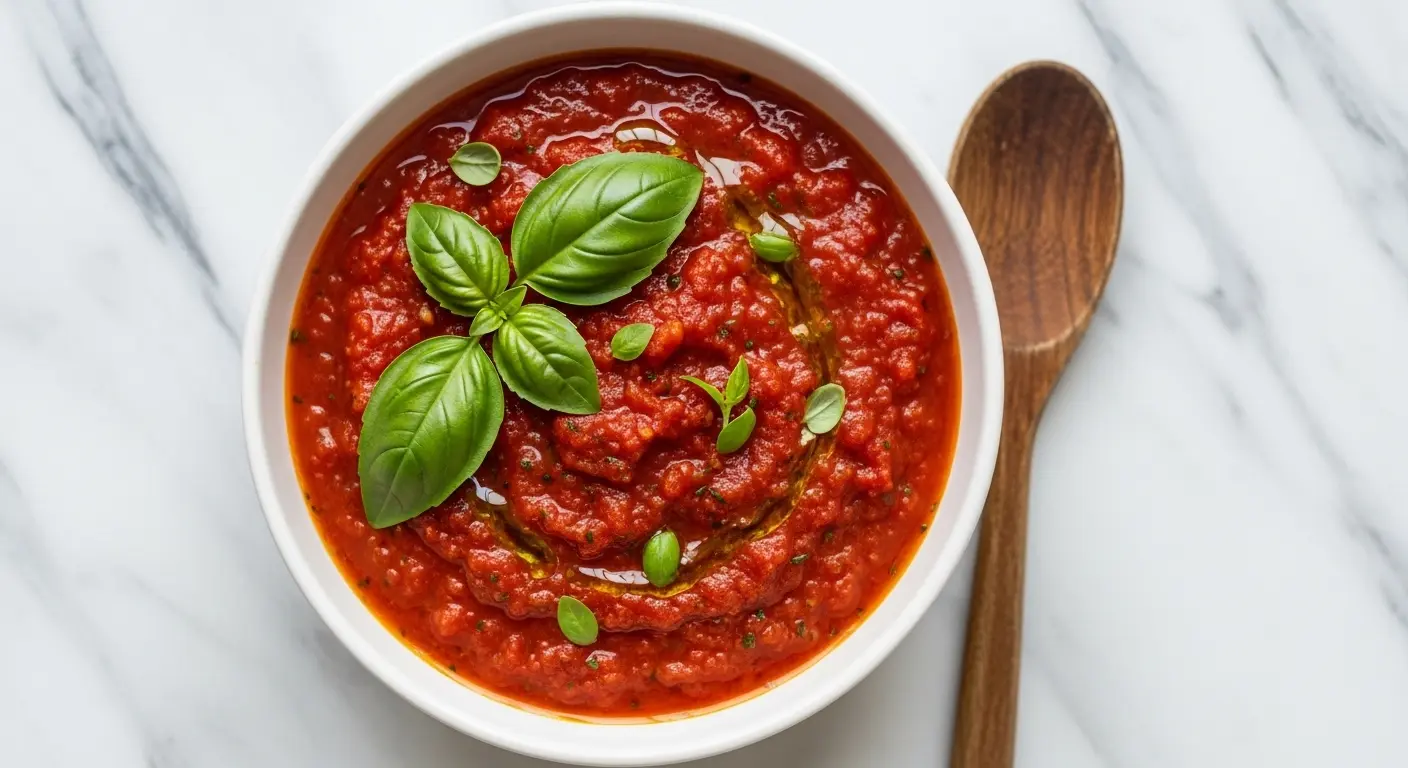
If you’ve ever stood in the pasta sauce aisle wondering whether any of those jars could possibly taste as good as the homemade version, this marinara sauce recipe is your answer.
It takes about 30 to 45 minutes, uses just a handful of pantry staples, and produces a bright, deeply flavored sauce that beats anything from a bottle.
The secret isn’t a long list of fancy ingredients. It’s quality tomatoes, fragrant garlic, good olive oil, and a little patience while everything simmers together into something truly special.
This is the classic, traditional version you’d find in an Italian household, and once you make it from scratch, it’s very hard to go back.
Looking for more classic Italian flavors? This sauce pairs perfectly with Italian Meatballs for the ultimate comfort meal.
Why You’ll Love This Marinara Sauce Recipe
This marinara sauce recipe is the kind of thing you’ll find yourself making on repeat, and for good reason.
It’s genuinely simple. You don’t need any special cooking skills, and the ingredient list is short enough to memorize after making it once.
The flavor is leagues ahead of anything from a jar. San Marzano tomatoes bring natural sweetness and depth, and the slow simmer concentrates everything beautifully.
It’s incredibly versatile. This sauce works on pasta, pizza, as a dipping sauce, in baked pasta dishes, on chicken or eggplant parmesan, and more.
It also happens to be naturally vegan and gluten-free, making it a great option for all kinds of dietary needs.
Here’s a quick summary of why this recipe stands out:
- Ready in about 30 to 45 minutes with minimal active prep time
- Uses just a handful of real, wholesome ingredients
- Works with both canned and fresh tomatoes
- Easily doubled or tripled for meal prep
- Freezer-friendly and stays fresh in the fridge for several days
- No added sugar needed when you use quality tomatoes
For another rich and comforting tomato-based dish, try this Tomato Sauce Recipe as well.
Ingredients
The beauty of marinara sauce is that its quality depends almost entirely on the quality of its ingredients. There aren’t many, so every single one counts.
Using a high-quality canned San Marzano tomatoes makes a noticeable difference. These Italian plum tomatoes are sweeter, less acidic, and have a thicker flesh than regular canned tomatoes, which gives the sauce a naturally balanced, rich flavor without any added sugar. Look for the DOP seal on the label, which guarantees authenticity.
Here’s everything you need:
- 1 can (28 oz / 794g) whole peeled San Marzano tomatoes
- 3 tablespoons (45ml) extra virgin olive oil
- 4 cloves garlic, thinly sliced or minced
- 1 small yellow onion, finely diced (about ½ cup / 75g)
- 1 tablespoon (15g) tomato paste
- 4–5 fresh basil leaves, plus extra for garnish
- 1 teaspoon (5g) dried oregano (optional, but adds nice depth)
- ¼ teaspoon (1.25g) crushed red pepper flakes (optional, for a mild heat)
- 1 teaspoon (5g) sea salt, plus more to taste
- ¼ teaspoon (1.25g) freshly ground black pepper
Read Also: Spaghetti Sauce Recipe
Kitchen Equipment Needed
You don’t need any specialty equipment to make this sauce. A few basic kitchen tools are all it takes, though investing in good cookware makes the process even smoother.
A heavy-bottomed saucepan is especially important here. It distributes heat evenly and prevents the tomatoes from scorching during the simmer, which can happen easily in lighter pans. A stainless steel saucepan or enameled cast iron Dutch oven works beautifully for this recipe.
Here’s the full list:
- Large heavy-bottomed saucepan or Dutch oven (3–4 quart / 2.8–3.8L)
- Wooden spoon or heat-resistant silicone spatula
- Chef’s knife and cutting board
- Measuring spoons
- Can opener
- Immersion blender or potato masher (optional, for smoother sauce)
- Ladle for serving
You might also enjoy: Baked Ziti
Recommended Products for This Recipe
These are a few products I genuinely recommend based on quality and performance. They make a real difference in the final result.
1. San Marzano DOP Certified Whole Peeled Tomatoes
The single most impactful ingredient in any marinara is the tomato. Certified DOP San Marzano tomatoes are grown in the volcanic soil near Mount Vesuvius and are sweeter, less acidic, and far more flavorful than generic canned tomatoes. This one ingredient alone will elevate your sauce dramatically.
2. Cento Tomato Paste in a Tube
Canned tomato paste tends to have a sharper, more acidic edge. Tube tomato paste is preserved with salt rather than citric acid, which gives it a noticeably sweeter, richer flavor. It also lets you use just a tablespoon without wasting the rest of a can.
3. Le Creuset Enameled Cast Iron Dutch Oven
A heavy Dutch oven distributes heat evenly, prevents hot spots, and maintains a gentle, consistent simmer, which is exactly what marinara needs. The enameled interior is non-reactive and makes cleanup incredibly easy.
4. KitchenAid Immersion Blender
If you love a silky-smooth marinara, an immersion blender is the easiest tool for the job. You can blend directly in the pot without transferring to a countertop blender, which means fewer dishes and less mess.
5. California Olive Ranch Extra Virgin Olive Oil
Good olive oil isn’t just for drizzling. It forms the flavor base of this sauce, so quality matters here. California Olive Ranch produces a consistently fresh, fruity, high-quality extra virgin olive oil at a price point that makes it an easy everyday staple.
The same technique for building a deep tomato base works wonderfully in this Vodka Sauce Recipe too.
Step-by-Step Instructions
Step 1: Crush the Tomatoes
- Open the can of whole peeled San Marzano tomatoes and pour them into a large bowl.
- Use clean hands to gently crush the tomatoes, squeezing them to break them into rough chunks. Aim for a mix of larger and smaller pieces rather than completely smooth puree. This gives the sauce a rustic, hearty texture.
- If you prefer a fully smooth sauce, you can use an immersion blender at the end of cooking instead. For now, just rough-crush by hand.
- Save all the liquid from the can. That tomato juice is full of flavor and will be added to the pot.
Step 2: Sauté the Onion
- Add the olive oil to your heavy-bottomed saucepan and heat it over medium-low heat.
- Once the oil is warm and shimmering (but not smoking), add the finely diced onion along with a small pinch of sea salt.
- Cook the onion, stirring occasionally, for about 8 to 10 minutes until it becomes soft and completely translucent. The goal here is gently softened onion, not caramelized or browned. Keeping the heat low prevents any bitterness.
- The salt draws out moisture from the onion and helps it cook evenly, so don’t skip it.
Step 3: Add the Garlic
- Add the sliced or minced garlic to the softened onion.
- If using crushed red pepper flakes, add them now alongside the garlic.
- Stir everything together and cook for about 1 to 2 minutes, stirring constantly, until the garlic becomes fragrant and very lightly golden.
- Watch this step carefully. Garlic that turns too dark will make the sauce taste bitter. If it starts browning too quickly, reduce the heat immediately.
Step 4: Add the Tomato Paste
- Add the tablespoon of tomato paste to the pan with the garlic and onion.
- Stir it in and cook for about 1 to 2 minutes, stirring frequently, until the paste deepens in color from bright red to a slightly darker, brick-red tone.
- This step, called “blooming” the tomato paste, caramelizes the natural sugars in it and adds a much richer, rounder flavor to the finished sauce. Don’t skip it.
Step 5: Add the Tomatoes and Herbs
- Pour the hand-crushed tomatoes and all their reserved liquid into the pan.
- Add the dried oregano (if using), sea salt, and black pepper.
- Stir everything together to combine well.
- Nestle the fresh basil leaves into the sauce, either tucking them in whole (to be removed later, like a bay leaf) or tearing them roughly by hand if you want basil throughout the finished sauce.
- Increase the heat to medium-high and bring the sauce to a gentle boil, stirring occasionally.
Step 6: Simmer the Sauce
- Once the sauce reaches a boil, reduce the heat to medium-low.
- Partially cover the pan with a lid, leaving a small gap for steam to escape. This prevents splattering while still allowing the sauce to reduce.
- Simmer for 20 to 30 minutes, stirring every 5 to 7 minutes to prevent sticking, until the sauce has thickened to your liking and the flavors have melded together.
- For a slightly richer, more complex flavor, you can simmer for up to 45 minutes to 1 hour. The longer it cooks, the deeper and sweeter the tomato flavor becomes as water evaporates and sugars concentrate.
Step 7: Adjust and Finish
- After simmering, taste the sauce carefully and adjust the seasoning with additional salt and black pepper as needed.
- If the sauce tastes too acidic, a small pinch of sugar can help balance it, though this is usually not necessary when using good San Marzano tomatoes.
- If you tucked in whole basil leaves, remove and discard them now.
- For a smoother texture, use an immersion blender to blend the sauce directly in the pot to your desired consistency. A few quick pulses will smooth it out while keeping some texture. For a completely silky sauce, blend fully.
- Add a few fresh basil leaves as a final garnish before serving.
Read Also: Pizza Sauce Recipe
Tips for Success
Even with a recipe this simple, a few key details make the difference between a good sauce and a truly great one.
The most common mistake home cooks make is rushing the sauté step. Taking the full 8 to 10 minutes to soften the onion gently before adding the garlic builds a savory, sweet base that makes the whole sauce taste more complex and balanced.
Here are a few more tips to keep in mind:
- Use whole canned tomatoes and crush them yourself. Pre-crushed or diced canned tomatoes often contain added calcium chloride to keep their shape, which can make the sauce grainy. Whole tomatoes crush more naturally and have a cleaner flavor.
- Don’t let the garlic burn. This is the most important tip in the whole recipe. Burned garlic turns bitter and will ruin the sauce. Keep the heat at medium-low and stir constantly while the garlic cooks.
- Add plenty of olive oil. It might seem like a lot, but olive oil is what gives this sauce its signature silky richness. Don’t reduce it.
- Taste as you go. Every can of tomatoes is a little different in acidity and salt. Always adjust seasoning at the end rather than assuming the measurements are perfect as written.
- Let it rest before serving if you can. Marinara sauce improves significantly as it sits. Even 20 to 30 minutes off the heat before serving allows the flavors to settle and deepen.
- Make a big batch. This sauce freezes perfectly for up to 3 months, so doubling or tripling the recipe is always worth it.
Another great recipe to have in your rotation: Easy Pesto Recipe
Serving Suggestions
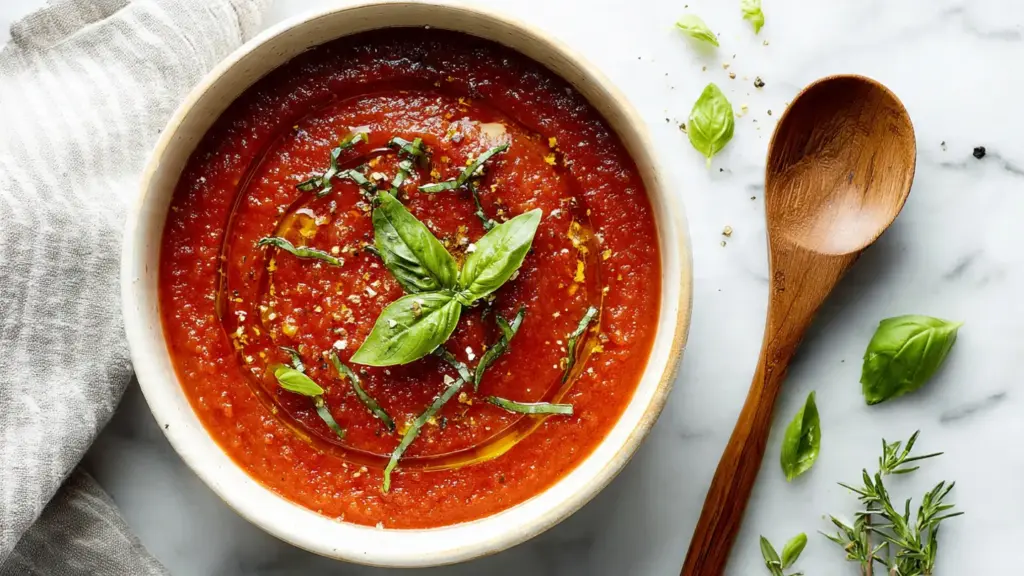
This classic marinara sauce is one of the most versatile things you can make. It works beautifully across dozens of dishes, from casual weeknight dinners to more impressive entertaining spreads.
Toss it generously over spaghetti or rigatoni with a showering of freshly grated Parmesan, or use it as the sauce base for a cozy lasagna night.
Here are some of the best ways to use it:
- Over pasta: spaghetti, rigatoni, penne, bucatini, or pappardelle all work wonderfully
- As the sauce in Baked Ziti for a crowd-pleasing baked pasta
- Spooned over Italian Meatballs and served as a sub sandwich or over pasta
- As the base sauce for Classic Chicken Parmesan
- As a pizza sauce on homemade pizza dough
- As a warm dipping sauce for mozzarella sticks, breadsticks, or Cheesy Garlic Bread
- Stirred into soups like Minestrone Soup for a rich tomato base
- Spooned over Stuffed Shells before baking
For a hearty pasta night, pair this sauce with Easy Lasagna
Variations to Try
Once you’ve nailed the classic version, there are so many delicious directions to take this sauce.
Each variation below starts with the base marinara and adds just one or two ingredients to shift the flavor profile without overcomplicating things.
Here are some fun ways to change it up:
- Spicy Arrabbiata: Double or triple the crushed red pepper flakes for a fiery, restaurant-style arrabbiata sauce
- Meat Sauce: Brown ground beef, Italian sausage, or a combination in the pan before adding the onion, then proceed with the recipe as written
- Vodka Sauce: Stir in a splash of vodka and a generous pour of heavy cream at the end for a rich, luxurious pink sauce
- Roasted Garlic Marinara: Roast a full head of garlic until caramelized and squeeze the cloves directly into the sauce instead of using fresh garlic
- Olive and Caper Marinara: Stir in a handful of sliced Kalamata olives and a tablespoon of capers after simmering for a Puttanesca-inspired flavor
- Fresh Tomato Marinara (summer): Replace the canned tomatoes with 2 pounds (900g) of ripe Roma tomatoes that have been blanched, peeled, and hand-crushed for a brighter, lighter summertime version
- Herb-Forward Marinara: Finish the sauce with a mix of fresh basil, fresh parsley, and a few fresh thyme leaves for a garden-fresh herby depth
You might also love this Creole Sauce Recipe for another bold, deeply flavored sauce to keep in your collection.
Storage and Reheating
This marinara sauce stores exceptionally well, which makes it perfect for meal prepping ahead of the week.
Because it contains no dairy or meat, it keeps cleanly without any of the texture issues you sometimes get with cream-based sauces after freezing.
Here’s everything you need to know about storing and reheating:
- Refrigerator: Transfer completely cooled sauce to an airtight container. It will keep well in the fridge for up to 5 days.
- Freezer: Pour cooled sauce into freezer-safe bags or airtight containers. Lay the bags flat to freeze for easy stacking. The sauce keeps for up to 3 months in the freezer.
- Freeze in portions: Freezing the sauce in 1 to 2 cup (240–480ml) portions is incredibly practical. That way you can thaw exactly what you need without defrosting the whole batch.
- To reheat from refrigerator: Pour the sauce into a small saucepan and warm over medium-low heat, stirring occasionally, until heated through. Add a splash of water if the sauce has thickened too much in the fridge.
- To reheat from frozen: Transfer the frozen sauce to the refrigerator the night before to thaw slowly, then rewarm on the stove as above. Alternatively, place the sealed bag under warm running water until partially thawed, then finish heating in a saucepan.
- Microwave option: Reheat in a microwave-safe bowl in 60-second intervals, stirring between each round, until hot.
Read Also: Bechamel Sauce Recipe
Nutritional Facts
The following nutritional values are approximate, calculated per ½ cup (120ml) serving of the finished marinara sauce. Exact values may vary depending on the specific brands and quantities used.
| Nutrient | Per Serving (½ cup / 120ml) |
|---|---|
| Calories | ~95 kcal |
| Total Fat | 7g |
| Saturated Fat | 1g |
| Carbohydrates | 8g |
| Fiber | 2g |
| Sugars | 5g |
| Protein | 1.5g |
| Sodium | 390mg |
| Vitamin C | 18% DV |
| Vitamin A | 12% DV |
| Iron | 8% DV |
This recipe makes approximately 3 cups (720ml) of finished sauce, which serves 4 to 6 people depending on how generously you portion it.
For another light, vegetable-forward dish, try this Easy Ratatouille Recipe
Health Benefits of Key Ingredients
Marinara sauce isn’t just delicious. Its core ingredients pack a genuinely impressive nutritional punch, making it one of the healthiest sauces you can serve.
Tomatoes are the star, and cooking them actually boosts their antioxidant power. Heat breaks down cell walls, making the lycopene in tomatoes significantly more bioavailable than it is in raw tomatoes.
Here’s a closer look at what each key ingredient brings to the table:
- San Marzano Tomatoes: Rich in lycopene, a powerful antioxidant linked to reduced risk of heart disease and certain cancers. Also a good source of vitamin C, vitamin A, and potassium.
- Extra Virgin Olive Oil: Packed with heart-healthy monounsaturated fats and anti-inflammatory polyphenols. The oleocanthal in quality olive oil has properties similar to anti-inflammatory medications.
- Garlic: Contains allicin, a compound with well-documented antimicrobial and cardiovascular benefits. Regular garlic consumption is associated with lower blood pressure and improved cholesterol levels.
- Fresh Basil: An underrated source of vitamin K, which supports bone health and blood clotting. Basil also contains anti-inflammatory essential oils including eugenol.
- Onion: High in quercetin, a flavonoid antioxidant with anti-inflammatory properties. Onions also provide prebiotic fiber that supports gut health.
Another nourishing recipe to add to your rotation: Easy Tomato Soup
Frequently Asked Questions
1. What is the difference between marinara sauce and spaghetti sauce?
Marinara sauce is cooked for a shorter amount of time, which keeps its color bright red and its flavor fresh and vibrant. Spaghetti sauce, on the other hand, is often simmered much longer and may include ground meat, additional vegetables, or wine. The result is a darker, richer, and more complex sauce. Marinara is also intentionally simple with very few ingredients, while spaghetti sauce is more of a catch-all term for Italian tomato sauce that can vary widely from recipe to recipe.
2. Can I use fresh tomatoes instead of canned?
Absolutely. Fresh ripe Roma or San Marzano tomatoes work wonderfully, especially in peak summer when garden tomatoes are at their best. You’ll need to blanch them in boiling water for 30 to 60 seconds, transfer them immediately to an ice bath, then peel off the skins before crushing them by hand. Plan to use about 2 pounds (900g) of fresh tomatoes to replace one standard 28-oz (794g) can. Note that fresh tomatoes can vary in sweetness and acidity, so you may need to adjust seasoning more than usual.
3. Why does my marinara sauce taste bitter?
Bitterness in marinara almost always comes from one of two things: burned garlic, or olive oil that’s been heated too aggressively. Garlic turns bitter very quickly once it starts to brown, so keep the heat at medium-low and watch it carefully. If it does burn, it’s best to start the sauté step over rather than continue. A slightly bitter sauce can sometimes be balanced with a small pinch of sugar, but prevention is always better.
4. Can I make marinara sauce ahead of time?
Yes, and it actually tastes better the next day. As the sauce rests, the flavors meld and deepen in a way that just doesn’t happen right off the stove. You can make it up to 3 to 4 days in advance and store it covered in the refrigerator. Reheat gently on the stovetop over medium-low heat, adding a splash of water if it has thickened too much. This makes it a great recipe to batch cook on a weekend for easy weeknight meals.
5. Do I need to add sugar to marinara sauce?
In most cases, no. When you use high-quality San Marzano tomatoes, the natural sweetness of the tomatoes is enough to balance the acidity without any added sugar. However, if you find your sauce tastes too sharp or acidic after simmering, a small pinch of sugar (about ¼ teaspoon) can help round it out. This is more commonly needed when using generic canned tomatoes, which tend to be more acidic than premium varieties.
For more pasta night inspiration, check out this Lasagna Recipe with Ricotta
Final Thoughts
A great marinara sauce recipe is one of the most valuable things you can have in your cooking repertoire.
It takes less time than most people think, uses ingredients you probably already have, and produces something so much better than anything you could pull off a grocery store shelf.
Once you taste the difference between homemade and jarred, there’s really no going back.
Give this recipe a try the next time pasta night rolls around, and don’t be surprised if it quickly becomes your go-to. If you make it, leave a comment below and let me know how it turned out. Did you add any twists? What did you serve it with? Share this recipe with anyone who could use a little more homemade goodness in their kitchen.
Recommended:
- Tomato Sauce Recipe
- Vodka Sauce Recipe
- Creole Sauce Recipe
- Classic Bruschetta Recipe
- Chicken Bruschetta Recipe
- Pasta Fagioli Recipe
- Chicken Cacciatore Recipe
- Homemade Ravioli Recipe
- Lasagna Soup Recipe
- Easy Meatballs Recipe