If you’ve been searching for a mango smoothie recipe without yogurt that still delivers that thick, creamy texture you crave, you’ve landed in exactly the right place.
Most smoothie recipes lean on yogurt for body and richness, but this version skips it entirely without sacrificing a single drop of creaminess. The secret? Frozen mango chunks and a splash of full-fat coconut milk.
Together, they create a velvety, tropical drink that tastes like something you’d sip on a beach somewhere warm.
This recipe works beautifully as a quick breakfast, a post-workout refresher, or an afternoon snack when you need something cold and satisfying fast.
It comes together in under five minutes, needs just a handful of ingredients, and is naturally dairy-free, making it a great option for anyone avoiding lactose or simply out of yogurt.
You might also enjoy: Banana Mango Smoothie Recipe

Why You’ll Love This Mango Smoothie Recipe Without Yogurt
This smoothie is one of those recipes that earns a permanent spot in your rotation.
It’s thick and creamy without any dairy at all, which makes it completely vegan and lactose-free by default.
The natural sweetness of ripe mango means you rarely need any added sugar, keeping things wholesome and clean.
It blends up in literally five minutes, making it one of the fastest breakfasts or snacks you can put together.
Frozen mango gives it that ice-cold, almost sorbet-like texture that feels indulgent without being heavy.
Here’s what makes it so easy to love:
- Naturally dairy-free and vegan
- Ready in under 5 minutes with minimal cleanup
- Kid-friendly and crowd-pleasing
- No added sugar needed when mangoes are ripe and sweet
- Easily customizable with your favorite tropical fruits or boosters
- Thick enough to eat with a spoon as a smoothie bowl
You might also want to try: Blueberry Smoothie Recipe Without Yogurt
Ingredients
For a truly great mango smoothie without yogurt, every ingredient plays a specific role. Frozen mango is the foundation and keeps things thick and cold without needing ice. Coconut milk adds fat and richness that mimics the creaminess yogurt would normally provide. A ripe banana helps with natural sweetness and even more body. The liquid base brings everything together and controls the thickness.
- 2 cups (300g) frozen mango chunks
- 1 ripe banana, peeled and sliced (fresh or frozen)
- 1/2 cup (120ml) full-fat coconut milk
- 1/2 cup (120ml) orange juice (freshly squeezed or store-bought)
- 1 tablespoon honey or maple syrup (optional, adjust to taste)
- 1/2 teaspoon fresh lime juice
- Pinch of ground ginger (optional, for a warm kick)
Read Also: Strawberry Banana Smoothie Recipe Without Yogurt
Kitchen Equipment Needed
You don’t need much to make this smoothie, but having the right tools ensures a smooth, lump-free result every time. A high-powered blender is the most important piece of equipment here since frozen mango can be quite dense. If your blender struggles with frozen fruit, let the mango sit at room temperature for about 5 minutes before blending to make things easier.
- High-powered blender (such as a Vitamix or Ninja)
- Measuring cups and spoons
- Cutting board and knife (for slicing the banana)
- Tall serving glasses
- Reusable smoothie straws
- Citrus juicer (if using fresh orange juice)
For a thicker smoothie bowl presentation, also have a wide, shallow bowl ready.
This recipe pairs beautifully with a refreshing Easy Acai Bowl if you want to make a full tropical breakfast spread.
Recommended Products for This Recipe
These are products I genuinely recommend based on quality, performance, and how much they improve the final result.
1. Vitamix E310 Explorian Blender
This blender handles frozen mango and dense fruit with zero struggle, producing a silky-smooth result in under 60 seconds. Its variable speed control lets you dial in the exact consistency you want, from drinkable to thick and spoonable. It’s a long-term investment that genuinely transforms your smoothie game.
2. Thai Kitchen Full Fat Coconut Milk
Full-fat coconut milk is what gives this smoothie its luscious, creamy texture without any dairy. Thai Kitchen is a consistently reliable brand with a high fat content, which means a richer, thicker result. It’s also free from unnecessary additives, so the flavor stays clean and tropical.
3. Truvía Organic Honey
If you like a touch of added sweetness in your smoothie, a good-quality organic honey blends in smoothly without any grainy texture. It enhances the mango flavor rather than overpowering it. Just a small drizzle is usually all you need.
4. OXO Good Grips 3-Piece Angled Measuring Cup Set
Accurate measurements make a real difference in smoothie ratios, especially when you’re adjusting coconut milk and juice for thickness. OXO’s angled cups let you read measurements from above without bending down, making the whole process faster and more precise.
Another great tropical option: Pineapple Smoothie Recipe
Step-by-Step Instructions
Step 1: Prepare Your Ingredients
- Peel the ripe banana and slice it into rough chunks. If you’re using a frozen banana, just break it into a few pieces.
- Measure out 2 cups (300g) of frozen mango chunks. There’s no need to thaw them unless your blender is underpowered.
- Measure out 1/2 cup (120ml) of full-fat coconut milk. If your can of coconut milk has separated, give it a good stir or shake before measuring.
- Squeeze your orange juice if using fresh, aiming for about 1/2 cup (120ml).
- Have your honey or maple syrup, lime juice, and ground ginger ready on the counter.
Step 2: Add Liquid Ingredients to the Blender First
- Pour the orange juice into the blender first. Adding liquid before frozen fruit helps the blender catch and blend everything more efficiently, preventing the motor from straining.
- Add the coconut milk directly on top of the orange juice.
- Add the fresh lime juice now as well.
Step 3: Add the Frozen and Fresh Fruit
- Add the frozen mango chunks on top of the liquid. If you drop them in after the liquid, they tend to blend more smoothly.
- Add the sliced or frozen banana pieces.
- If you’re using ground ginger, sprinkle it in now for even distribution.
Step 4: Sweeten to Taste (Optional)
- If your mango is very ripe and sweet, taste the mixture before blending and decide if you need sweetener at all.
- Drizzle in 1 tablespoon of honey or maple syrup if you’d like a sweeter smoothie. You can always add more at the end after tasting.
Step 5: Blend Until Completely Smooth
- Secure the blender lid firmly. With frozen fruit inside, you need a tight seal to avoid any splatter.
- Start blending on low speed for about 10 seconds to break down the larger pieces of frozen mango.
- Increase to high speed and blend for 45 to 60 seconds until the mixture is completely smooth and creamy with no chunks remaining.
- If the blender stalls or struggles, stop and use a spatula to push the fruit down toward the blades. Adding a tablespoon or two of extra orange juice can also help loosen things up.
Step 6: Taste and Adjust
- Remove the lid carefully and taste your smoothie with a clean spoon.
- If you’d like it sweeter, add another teaspoon of honey and blend for 10 more seconds.
- If it tastes too thick, add a splash more orange juice or coconut milk and blend briefly.
- If it’s a little thin, add a few more frozen mango chunks and blend again until thick.
Step 7: Pour and Serve
- Pour the smoothie immediately into tall glasses.
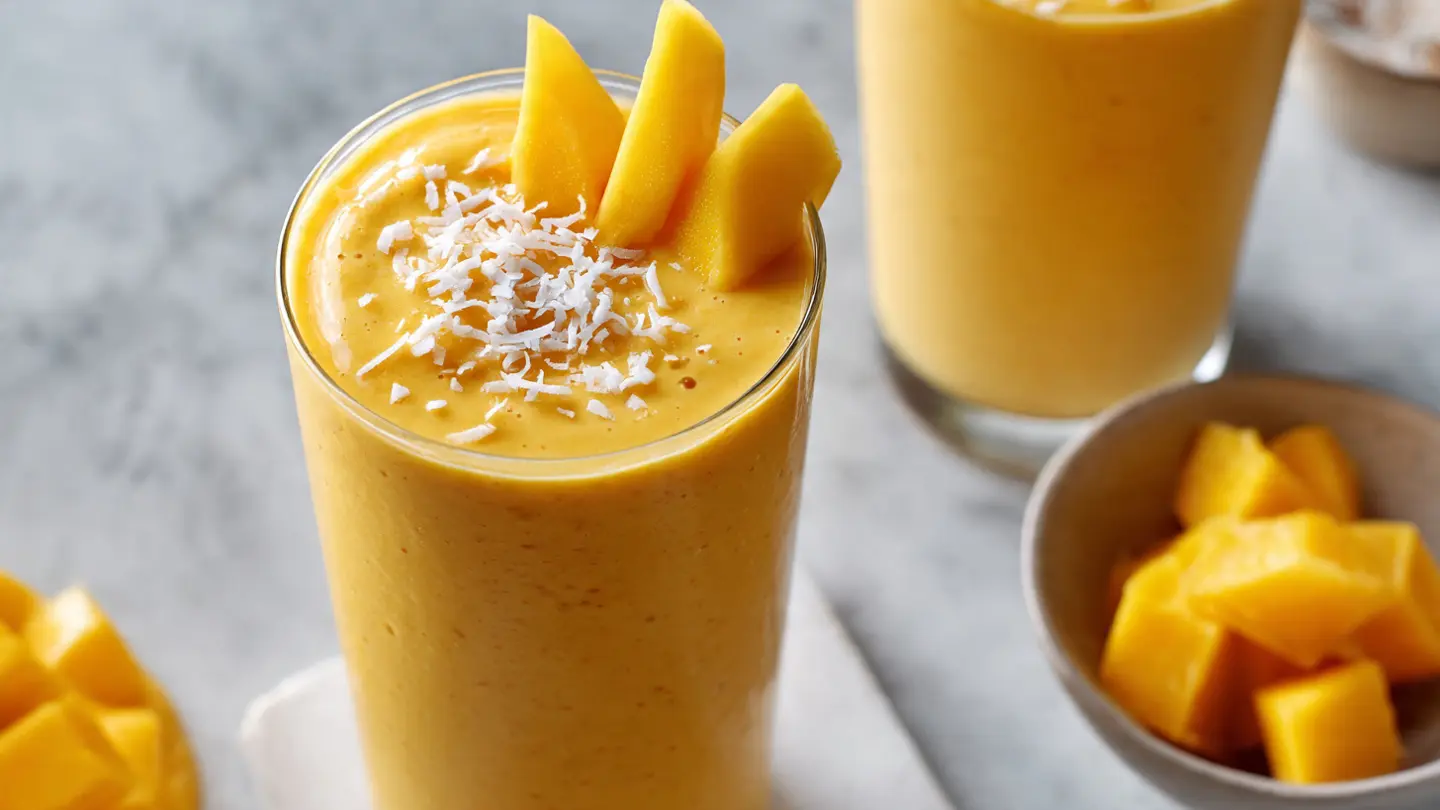
- For a beautiful presentation, garnish with a fresh mango slice on the rim, a pinch of shredded coconut, or a thin slice of lime.
- Insert reusable straws and serve right away for the best texture and flavor.
- If serving as a smoothie bowl, pour into a wide bowl and top with granola, sliced fresh mango, banana coins, chia seeds, or shredded coconut.
You might also enjoy this Banana Smoothie Recipe Without Yogurt for another dairy-free option.
Tips for Success
Even a simple recipe benefits from a few key tricks. These tips will help you get the best possible result every single time you make this smoothie.
- Use frozen mango, not fresh. Frozen mango creates that thick, cold, sorbet-like texture. Fresh mango blended with ice can turn watery and diluted.
- Full-fat coconut milk is non-negotiable for creaminess. Light coconut milk works in a pinch but produces a noticeably thinner result.
- Add liquid first, fruit second. This simple order makes a huge difference in how smoothly your blender runs.
- Don’t over-blend. Blending too long can warm up the smoothie and thin out its texture. Aim for 60 seconds max on high.
- Taste before sweetening. Ripe mango is naturally very sweet, and you may not need any added sweetener at all.
- Freeze your banana in advance. A frozen banana makes the smoothie even thicker and colder, and it also intensifies the natural banana sweetness.
- Chill your glasses beforehand. Pop your serving glasses in the freezer for 5 minutes before pouring for an extra-cold experience.
Read Also: Green Smoothie Recipe
Serving Suggestions
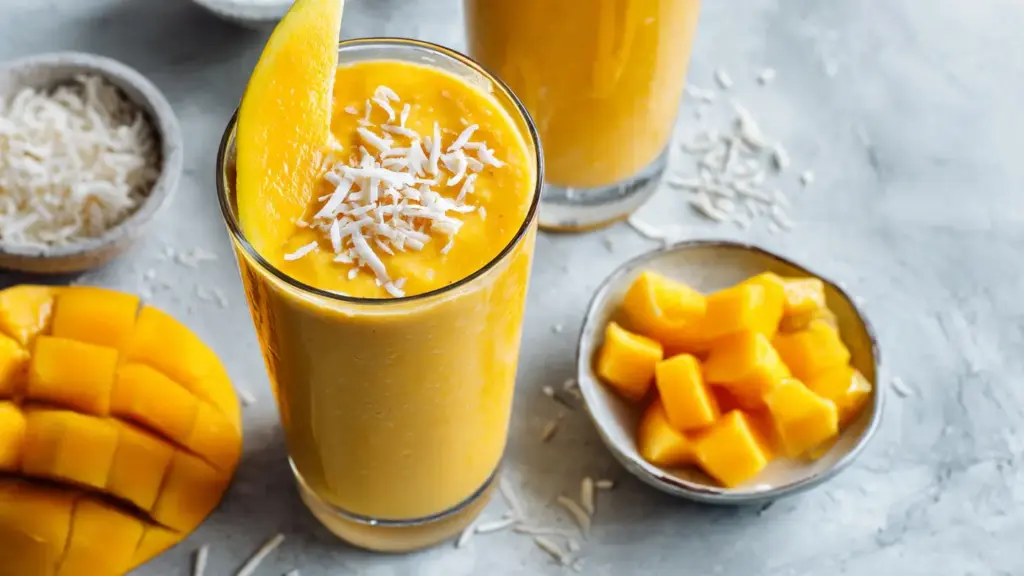
This mango smoothie is refreshing on its own, but it’s also a fantastic part of a bigger breakfast or snack spread. The tropical flavor pairs beautifully with light, fresh foods that complement rather than compete with the mango.
Try it alongside a slice of warm toast spread with avocado or a bowl of fresh tropical fruit to round out a quick morning meal.
Here are some great pairing ideas:
- Avocado Toast for a filling and nutritious breakfast combination
- Easy Overnight Oats as a prep-ahead companion to your morning smoothie
- Fruit Salad for a full tropical spread
- Easy Granola sprinkled on top as a smoothie bowl topping
- Easy Acai Bowl for a full tropical breakfast duo
- Scrambled Eggs alongside for a protein-balanced breakfast
Another great tropical drink to pair it with: Classic Pina Colada
Variations to Try
Once you’ve mastered the basic recipe, this smoothie is a great canvas for experimentation. Small swaps and additions can take it in completely different directions without much extra effort.
Try these crowd-pleasing variations:
- Mango Pineapple Smoothie: Replace the orange juice with pineapple juice and add 1/2 cup (75g) of frozen pineapple chunks for a more intensely tropical flavor.
- Mango Peach Smoothie: Swap half the mango for frozen peaches. The peach adds a slightly floral, softer sweetness that works beautifully with mango.
- Mango Turmeric Smoothie: Add 1/4 teaspoon of ground turmeric and a tiny pinch of black pepper for an anti-inflammatory boost. The earthy warmth pairs surprisingly well with the sweet mango.
- Mango Coconut Smoothie Bowl: Increase the frozen mango to 2.5 cups (375g) and reduce the liquid to create a thicker, spoonable bowl. Top with granola, chia seeds, fresh mango, and toasted coconut flakes.
- Mango Spinach Smoothie: Add a large handful of baby spinach before blending. The spinach is virtually undetectable in flavor but adds a boost of iron and nutrients.
- Mango Protein Smoothie: Add a scoop of unflavored or vanilla protein powder to turn this into a post-workout meal.
- Mango Chia Smoothie: Stir in a tablespoon of chia seeds after blending for extra fiber and staying power.
Read Also: Passion Fruit Smoothie Recipe
Storage and Reheating
Mango smoothies are best enjoyed immediately after blending, but there are smart ways to prep or store them if needed.
Here’s how to store and handle leftovers:
- Refrigerator: Pour any leftover smoothie into an airtight mason jar or sealed container and refrigerate for up to 24 hours. The smoothie will separate as it sits, so give it a good shake or stir before drinking.
- Freezer: Pour the smoothie into ice cube trays and freeze until solid, then transfer the cubes to a zip-lock bag. When you’re ready, blend the cubes with a splash of orange juice to reconstitute it. Smoothie cubes keep for up to 3 months.
- Meal prep: You can pre-portion your frozen mango, banana, and any add-ins into individual freezer bags. When ready to blend, just dump the bag contents into the blender, add the coconut milk and juice, and blend. It’s the fastest possible morning routine.
- Do not leave out: Never leave this smoothie at room temperature for more than 2 hours. The banana in particular will oxidize and the flavor will turn.
For more tropical drink inspiration: Watermelon Smoothie Recipe
Nutritional Facts
These values are approximate and based on one serving (half the full recipe), made without added sweetener.
| Nutrient | Per Serving |
|---|---|
| Calories | ~240 kcal |
| Total Fat | 9g |
| Saturated Fat | 7g |
| Carbohydrates | 40g |
| Fiber | 4g |
| Natural Sugars | 31g |
| Protein | 2g |
| Vitamin C | ~70% DV |
| Potassium | ~550mg |
| Vitamin A | ~25% DV |
Values will vary based on exact brand of coconut milk used, size of banana, and whether any sweetener is added.
Read Also: Dragon Fruit Smoothie Recipe
Health Benefits of Key Ingredients
This smoothie isn’t just delicious. Every major ingredient brings something meaningful to the table from a nutritional standpoint.
Mangoes are one of the most nutrient-dense fruits you can eat, and blending them into a smoothie is one of the easiest ways to enjoy them daily.
Here’s a breakdown of what each key ingredient contributes:
- Mango: Rich in vitamin C and vitamin A, both of which support immune function and skin health. Mango also contains mangiferin, an antioxidant compound linked to anti-inflammatory benefits.
- Banana: Provides potassium, magnesium, and vitamin B6. The natural sugars in banana give you quick energy, while the fiber helps sustain that energy longer without a crash.
- Coconut milk: Contains medium-chain triglycerides (MCTs), a type of fat that is metabolized quickly and may support energy levels and cognitive function. It also adds lauric acid, which has antimicrobial properties.
- Orange juice: An excellent source of vitamin C, folate, and flavonoids that support cardiovascular health.
- Lime juice: Adds a small hit of vitamin C and citric acid, which aids digestion and enhances the absorption of iron from other foods.
- Ginger (optional): A well-known anti-nausea and anti-inflammatory ingredient that also supports digestion and adds a pleasant warmth to the overall flavor.
For another nutrient-packed option: Papaya Smoothie Recipe
Frequently Asked Questions
1. Can I use fresh mango instead of frozen?
Yes, you can use fresh mango, but the texture will be noticeably different. Fresh mango blended without frozen fruit produces a thinner, more juice-like result rather than a thick, creamy smoothie. If you only have fresh mango, freeze it for at least 4 hours in advance, or add 1 cup (240ml) of ice to the blender to compensate. Just know that ice tends to dilute the flavor slightly, so you may want to reduce the juice a little.
2. What can I use instead of coconut milk?
Coconut milk is ideal for creaminess, but oat milk, cashew milk, or almond milk all work as substitutes. Oat milk gives the closest creamy result of the alternatives. Cashew milk is also naturally quite rich. Keep in mind that none of these will add quite as much body as full-fat coconut milk, so your smoothie may be slightly thinner. You can compensate by using an extra 1/4 cup (38g) of frozen mango or half a frozen banana.
3. How do I make this smoothie thicker?
The best way to thicken this smoothie is to use more frozen mango, add a frozen banana instead of a fresh one, or reduce the amount of liquid slightly. Start with 1/4 cup (60ml) of liquid less than the recipe calls for, then add more a tablespoon at a time until you reach your preferred consistency. For a truly thick, spoonable smoothie bowl texture, use 2.5 cups (375g) of frozen mango and just 1/3 cup (80ml) of coconut milk.
4. Is this smoothie safe for kids?
Absolutely. This smoothie is made with whole fruit and coconut milk with no refined sugar needed, making it a nutritious option for children of all ages. You may want to skip the ginger for very young children or for those who are sensitive to spicy flavors. If you’re serving it to toddlers, consider thinning it slightly with extra orange juice so it’s easier to drink through a straw.
5. Can I make this smoothie ahead of time?
You can prep it in advance with a few caveats. Pre-portion the frozen mango, banana, and any add-ins into individual freezer bags so blending is fast in the morning. You can also blend the full smoothie and store it in a sealed jar in the fridge for up to 24 hours, but the texture will be thinner after sitting as the frozen ingredients thaw. Give it a vigorous shake or a quick 10-second re-blend before serving. For the very best flavor and texture, blending fresh right before serving is always the ideal approach.
For another refreshing no-yogurt option: Strawberry Smoothie Recipe Without Milk

Creamy Mango Smoothie (No Yogurt)

Equipment
- High-powered blender - such as a Vitamix or Ninja
- Measuring cups and spoons
- Cutting board and knife - for slicing the banana
- Tall serving glasses
- Reusable smoothie straws
- Citrus juicer - if using fresh orange juice (optional)
- Wide shallow bowl - for smoothie bowl presentation (optional)
Ingredients
- 2 cups frozen mango chunks - 300g
- 1 ripe banana - peeled and sliced (fresh or frozen)
- 0.5 cup full-fat coconut milk - 120ml
- 0.5 cup orange juice - 120ml (freshly squeezed or store-bought)
- 1 tablespoon honey or maple syrup - optional, adjust to taste
- 0.5 teaspoon fresh lime juice
- ground ginger - pinch, optional for a warm kick
- shredded coconut - for garnish (optional)
- fresh mango slices - for garnish (optional)
- sliced lime - for garnish (optional)
- granola - for smoothie bowl topping (optional)
- chia seeds - for smoothie bowl topping (optional)
Instructions
- Peel and slice the ripe banana. Measure out frozen mango, coconut milk, and orange juice.
- Pour the orange juice, coconut milk, and lime juice into the blender first. Adding liquid before frozen fruit helps the blender process more efficiently.
- Add the frozen mango chunks, sliced banana, and ground ginger (if using) on top of the liquids.
- Drizzle in honey or maple syrup if you prefer a sweeter smoothie, starting with 1 tablespoon.
- Secure the lid and blend on low for 10 seconds to break up frozen fruit, then increase to high and blend for 45-60 seconds until completely smooth and creamy.
- Taste the smoothie and adjust sweetness or thickness. Add more honey, orange juice, or frozen mango as needed and blend briefly.
- Pour immediately into tall glasses. Garnish with fresh mango, shredded coconut, or lime slices. Serve right away for the best texture.
Notes
- Make it thicker: Use extra frozen mango (2.5 cups/375g), a frozen banana, or reduce liquid by 1/4 cup. For a spoonable smoothie bowl, use just 1/3 cup coconut milk.
- Make it thinner: Add an extra splash of orange juice or coconut milk and blend again.
- Fresh mango substitution: Freeze fresh mango for at least 4 hours in advance, or add 1 cup of ice and reduce juice slightly (expect a thinner texture).
- Coconut milk alternatives: Oat milk, cashew milk, or almond milk work. For best creaminess, use oat milk and add an extra 1/4 cup frozen mango.
- No orange juice? Use pineapple juice or a splash of water with extra lime juice.
- Storage: Refrigerate in an airtight jar for up to 24 hours. Shake or re-blend before serving (texture will thin as it sits).
- Freezer prep: Freeze leftover smoothie in ice cube trays for up to 3 months. Blend cubes with orange juice to reconstitute.
- Meal prep: Pre-portion frozen mango, banana, and add-ins into freezer bags. When ready, just add liquids and blend.
- Kid-friendly: Omit ginger for young children. For toddlers, thin with extra orange juice for easier drinking.
- Protein boost: Add a scoop of vanilla or unflavored protein powder before blending.
Final Thoughts
A great mango smoothie recipe without yogurt is proof that you don’t need dairy to create something rich, creamy, and deeply satisfying.
This recipe has become a go-to for so many reasons: it’s fast, it’s nourishing, and it tastes like a tropical getaway in a glass.
The combination of frozen mango, banana, and coconut milk is genuinely one of the best non-dairy smoothie formulas out there, and once you try it, you’ll understand why.
Give this recipe a try the next morning you’re in a rush or craving something refreshing, and let me know how it goes in the comments below.
Did you try any of the variations? Add a fun topping? I’d love to hear about it, and if you share it on social media, tag me so I can see your beautiful tropical creation!
Recommended:
- Banana Mango Smoothie Recipe
- Avocado Smoothie Recipe
- Yogurt Smoothie Recipe
- Peach Smoothie Recipe With Yogurt
- Strawberry Banana Blueberry Smoothie Recipe
- Strawberry and Blackberry Smoothie Recipe
- Chia Banana Boost Tropical Smoothie Recipe
- Banana Protein Smoothie Recipe
- Peanut Butter Jelly Smoothie Recipe
- Easy Lemonade Recipe