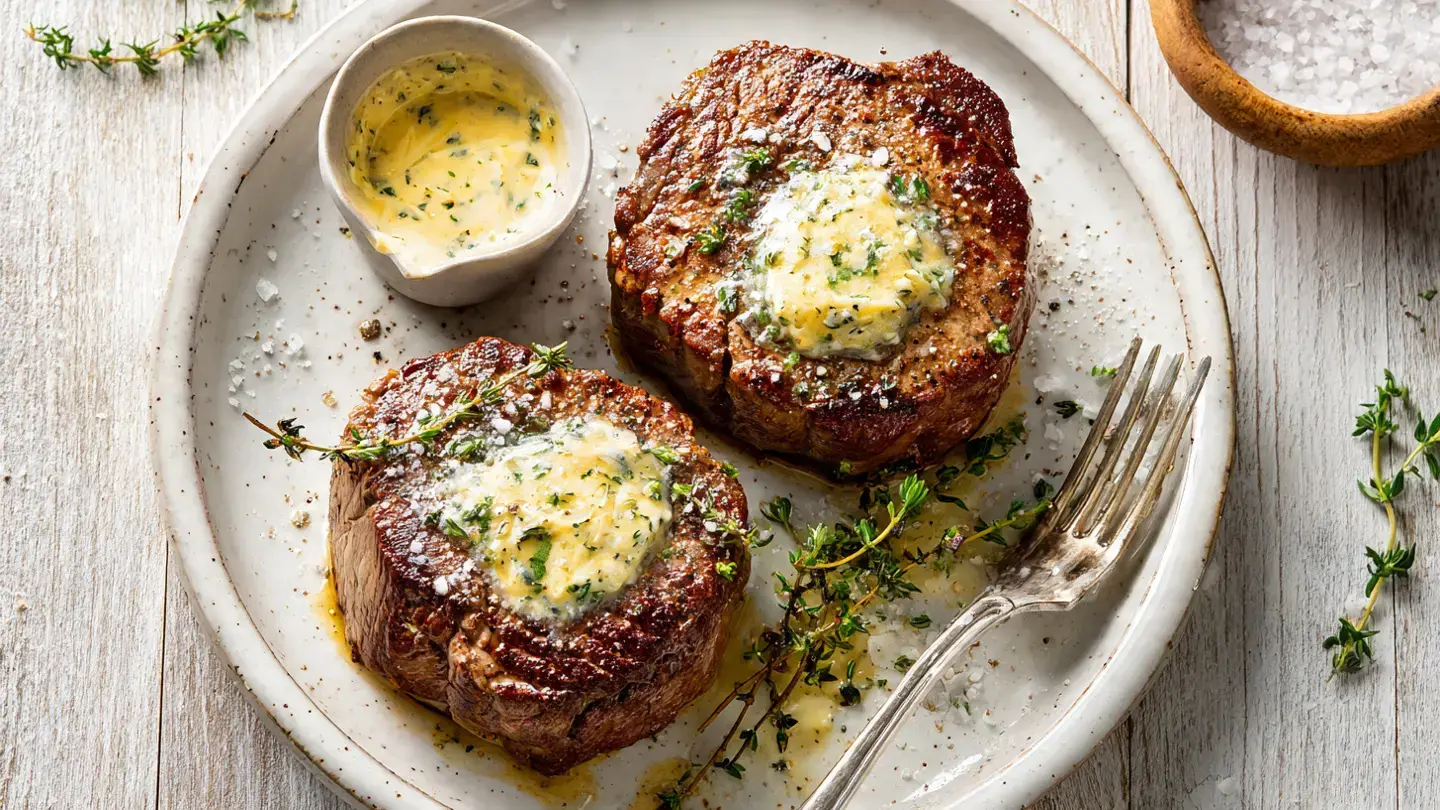
A perfect filet mignon recipe is one of those things that feels impossibly fancy but is actually completely achievable at home with the right technique.
This is the classic method you’ll find at upscale steakhouses: a hard sear in a scorching-hot cast iron skillet to build a deep, caramelized crust, followed by a brief finish in the oven to bring the steak to your ideal internal temperature.
The result is a tender, buttery center with a gloriously browned exterior that rivals anything you’d get at a restaurant.
What makes this method so reliable is the combination of dry-brining the steak ahead of time (which draws out moisture, then reabsorbs it for deeper flavor) and basting with herb butter at the end.
These two steps alone elevate a great steak into an unforgettable one.
This guide walks you through every detail, from picking the right cut to achieving the perfect crust, so you can nail it on the first try.
You might also enjoy this Air Fryer Beef Tenderloin for a slightly quicker weeknight version of a tenderloin dinner.
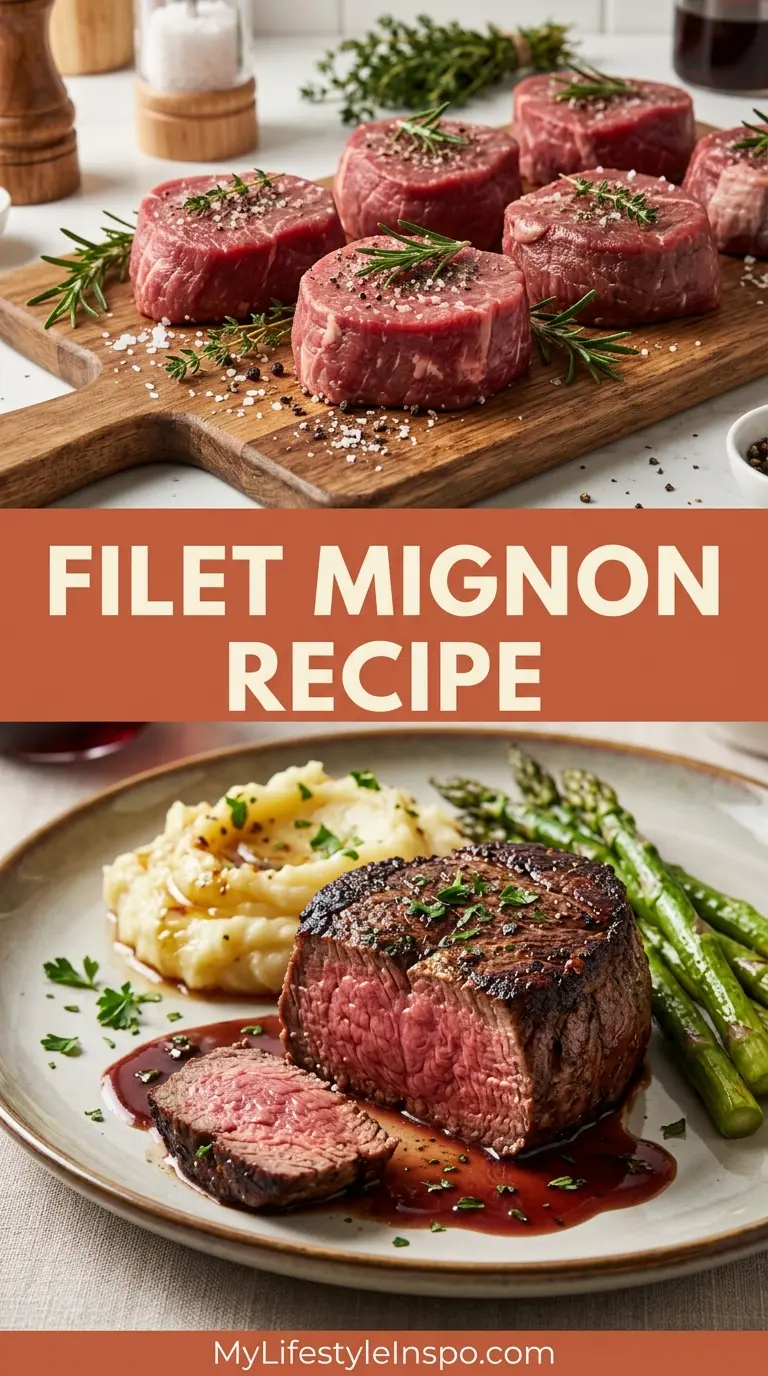
Why You’ll Love This Filet Mignon Recipe
This recipe has earned its place as one of the most requested dinners for special occasions, and it’s easy to see why.
The technique is straightforward, the ingredient list is short, and the payoff is enormous.
- Restaurant-quality results at home. The pan-sear plus oven method is exactly what professional chefs use, and it works brilliantly in a home kitchen.
- Incredibly tender texture. Filet mignon comes from the tenderloin, the least-worked muscle on the cow, which means every bite is like cutting through softened butter.
- Deep, complex flavor. The herb butter baste at the end infuses the steak with garlic, thyme, and rosemary flavor that soaks right into the crust.
- Customizable doneness. Using a meat thermometer means you can hit rare, medium-rare, or medium with precision, every single time.
- Minimal ingredients, maximum impact. You only need a handful of pantry staples to make this dinner feel extraordinarily special.
- Impressive for guests. Filet mignon has a reputation that precedes itself, making it the ideal choice for Valentine’s Day, anniversaries, or any celebration dinner.
Read Also: Beef Wellington Recipe
Ingredients
You don’t need a long grocery list to make an outstanding filet mignon. The quality of the beef is everything here, so prioritize the best steak you can find.
- 2 filet mignon steaks (6–8 oz / 170–225g each), at least 1.5 inches thick
- 1 tsp kosher salt (for dry-brining, plus more to taste)
- 1/2 tsp freshly ground black pepper
- 2 tbsp neutral high-smoke-point oil (avocado oil or canola oil)
- 3 tbsp unsalted butter
- 3 garlic cloves, smashed
- 3 fresh thyme sprigs
- 2 fresh rosemary sprigs
- Flaky sea salt, for finishing
For a similarly impressive beef dinner, try this Beef Bourguignon Recipe for a rich, braised option.
Kitchen Equipment Needed
Having the right equipment makes a real difference with this recipe. A proper cast iron skillet and a reliable thermometer are non-negotiable here.
- 10–12 inch cast iron skillet
- Instant-read meat thermometer
- Oven-safe tongs
- Wire rack and baking sheet (for resting)
- Small saucepan or skillet (for the butter baste, though the same pan works)
- Oven preheated to 400°F (200°C)
Read Also: Air Fryer Beef Tips Recipe
Recommended Products for This Recipe
These are products that have been tested and genuinely improve the quality and ease of this filet mignon recipe.
1. Lodge Cast Iron Skillet
A heavy cast iron skillet holds heat better than any other pan, which is essential for creating that dark, even crust on a filet mignon. It moves seamlessly from stovetop to oven and will last a lifetime with basic care.
2. ThermoPro Instant-Read Meat Thermometer
The single most important tool for cooking a perfect steak is an accurate instant-read thermometer. This one reads in under two seconds and takes the guesswork completely out of doneness.
3. Fleur de Sel Finishing Salt
A pinch of high-quality flaky sea salt right before serving wakes up every flavor in the dish and adds a satisfying textural contrast to the butter-basted crust.
4. Avocado Oil Spray
Avocado oil has one of the highest smoke points of any cooking oil, making it ideal for the extremely high heat needed to sear a steak properly without burning.
Another great steak-adjacent dish: Beef Stroganoff Recipe

Step-by-Step Instructions
Step 1: Dry-Brine the Steaks
- Remove the filet mignon steaks from their packaging and pat them completely dry with paper towels. Moisture is the enemy of a good sear, and any surface water will cause the steak to steam rather than brown.
- Season all sides of each steak generously with kosher salt, including the sides and bottom.
- Place the salted steaks on a wire rack set over a baking sheet.
- Leave uncovered in the refrigerator for at least 1 hour, or ideally overnight (up to 24 hours). This draws out a tiny amount of surface moisture, which then dissolves the salt and gets reabsorbed back into the meat, seasoning it from within.
- About 45 minutes to 1 hour before cooking, remove the steaks from the refrigerator and allow them to come closer to room temperature. This helps the steak cook more evenly from edge to center.
Step 2: Preheat the Oven and Pan
- Preheat your oven to 400°F (200°C).
- Place your cast iron skillet on the stovetop over high heat. Allow it to heat for 4 to 5 minutes until it is extremely hot. You should see a faint wisp of smoke coming from the pan.
- A properly preheated pan is the key to a deep, even crust. If the pan is not hot enough, the steak will stick and the sear will be pale and uneven.
Step 3: Season and Add Oil
- Just before cooking, pat the steaks dry one more time with a fresh paper towel. This removes any residual moisture drawn out during the dry-brine.
- Season each steak with a pinch of freshly ground black pepper. Do not add more salt at this stage, as the dry-brine will have already seasoned the steak well.
- Carefully add 2 tablespoons of avocado oil or canola oil to the hot skillet and swirl to coat the surface. The oil should shimmer and begin to ripple immediately.
Step 4: Sear the First Side
- Using tongs, place each filet mignon steak gently into the hot skillet, laying them away from you to avoid oil splatter.
- Press the steaks down lightly to ensure full contact with the pan surface.
- Sear without moving for 2 to 3 minutes, until a deep brown crust forms on the bottom. Resist the urge to move the steaks during this time. If the steak resists when you try to lift it, it is not ready to be flipped.
Step 5: Sear the Second Side and Edges
- Flip each steak with tongs and sear the second side for another 2 minutes.
- Using the tongs, stand each steak on its side and sear the edge for 30 to 45 seconds. Rotate and repeat until all edges have been briefly seared. This builds a crust around the entire steak, not just the top and bottom.
Step 6: Transfer to the Oven
- Transfer the skillet directly into the preheated 400°F (200°C) oven.
- For medium-rare, roast for 4 to 5 minutes. For medium, roast for 6 to 7 minutes.
- Use the following temperature guide with your instant-read thermometer:
- Rare: 120–125°F (49–52°C)
- Medium-Rare: 130–135°F (54–57°C)
- Medium: 140–145°F (60–63°C)
- Medium-Well: 150°F (66°C)
- Pull the steaks out of the oven when they are 5°F below your target temperature, as they will continue cooking during the rest period.
Step 7: Butter Baste
- Remove the skillet from the oven and return it to the stovetop over medium heat.
- Add 3 tablespoons of unsalted butter, the smashed garlic cloves, the thyme sprigs, and the rosemary sprigs to the pan.
- As the butter melts and begins to foam, tilt the pan slightly so the butter pools on one side.
- Using a large spoon, continuously spoon the foaming butter over the top of each steak for 1 to 2 minutes. This basting step adds richness and infuses the crust with herby, garlicky flavor.
- Do not let the butter turn dark brown or black. If it gets too dark, reduce the heat immediately.
Step 8: Rest and Serve
- Transfer the steaks to a clean wire rack or plate and tent loosely with foil.
- Allow the steaks to rest for at least 5 minutes. This is not optional. Resting allows the muscle fibers to relax and the juices to redistribute throughout the meat, so they stay in the steak when you cut into it rather than running out onto the plate.
- Before serving, finish with a small pinch of flaky sea salt on top of each steak.
- Serve immediately.
This pairs beautifully with Creamed Spinach for a classic steakhouse-style side.
Tips for Success
A few key details separate a good filet mignon from a truly exceptional one. Keep these in mind before you start cooking.
- Dry-brine whenever possible. Even 1 hour in the fridge makes a noticeable difference in crust formation and internal flavor. Overnight is even better.
- Use a cast iron or stainless steel skillet. Non-stick pans cannot handle the high heat required for a proper sear. If you don’t have cast iron, a heavy stainless steel skillet works well.
- Do not crowd the pan. If cooking more than two steaks, use two separate pans or cook in batches. Crowding drops the pan temperature and causes steaming instead of searing.
- Use an instant-read thermometer, always. Color and touch methods are unreliable compared to an accurate temperature reading.
- Let the steak come up in temperature before cooking. Cold steak goes into the pan cold, which means the outside overcooks before the center reaches the right temperature.
- Rest the steak before cutting. Cutting too early causes all the juices to run out and the steak to taste dry.
- Don’t skip the butter baste. It takes less than two minutes and makes an enormous difference in flavor and richness.
For another impressive beef preparation, check out this Prime Rib Recipe.
Serving Suggestions
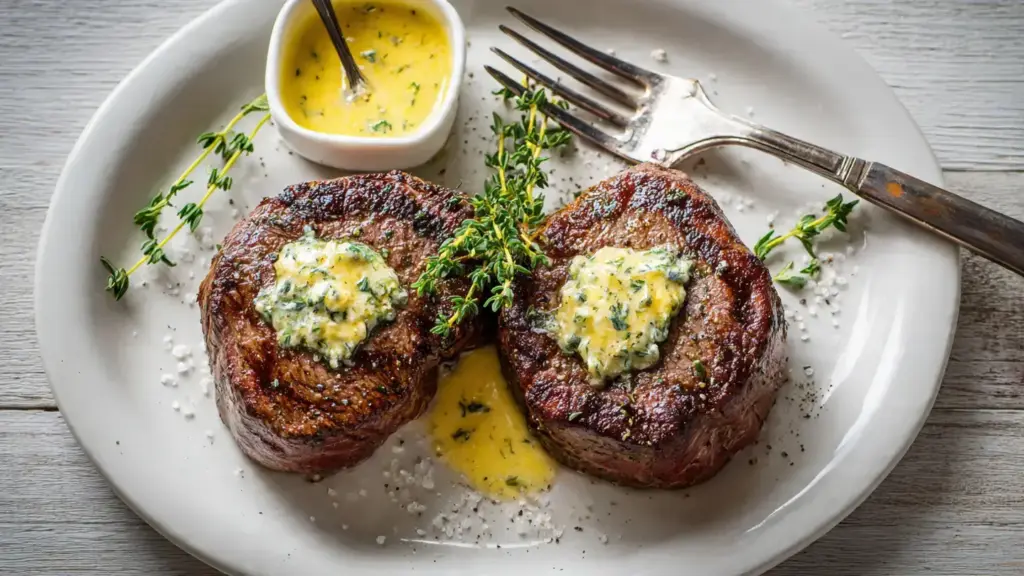
Filet mignon is elegant enough to stand on its own, but the right accompaniments elevate the entire plate into a full steakhouse experience.
- Pair it with Garlic Mashed Potatoes for a rich, classic steakhouse combination.
- Serve alongside Roasted Asparagus for a fresh, slightly smoky green on the plate.
- A wedge of Classic Deviled Eggs makes a great appetizer to start the meal.
- Drizzle a homemade Creole Sauce over the steak for a bold, spiced alternative to the butter baste.
- Roasted potatoes and a simple Broccoli Salad round out the plate with minimal extra effort.
You might also enjoy: Scalloped Potatoes as a rich and elegant side dish.
Variations to Try
Once you have the base technique mastered, there are several delicious directions you can take this recipe.
- Blue Cheese Crust: After the oven step, top each steak with a spoonful of crumbled blue cheese and return to the broiler for 1 to 2 minutes until bubbly and golden.
- Bacon-Wrapped Filet Mignon: Wrap a strip of thick-cut bacon around the perimeter of each steak and secure with a toothpick before searing. This is the classic presentation and adds a smoky, savory edge.
- Mushroom Cream Sauce: Deglaze the pan with a splash of red wine or beef broth after removing the steaks, then add sliced cremini mushrooms, heavy cream, and a knob of butter for a rich sauce.
- Peppercorn Crust: Coat the top and bottom of each steak in coarsely cracked black peppercorns before searing for a bold, spiced crust.
- Béarnaise Sauce: Serve with a classic béarnaise, which is a tarragon-forward French butter sauce that is the traditional accompaniment to tenderloin steak.
- Air Fryer Method: For a hands-off alternative, see this Air Fryer Beef Ribs Recipe for another impressive air fryer beef preparation with great results.
Read Also: Crock Pot Beef Short Ribs Recipe
Storage and Reheating
Leftover filet mignon can be stored and reheated without losing too much of its quality, as long as you are careful with the reheating method.
- Store leftover steaks in an airtight container in the refrigerator for up to 3 days.
- For longer storage, wrap tightly in plastic wrap and then in foil, and freeze for up to 2 months.
- To reheat, the best method is to place the steak on a wire rack set over a baking sheet and warm in a 250°F (120°C) oven for 20 to 25 minutes, until it reaches your desired internal temperature.
- Avoid the microwave if possible, as it heats unevenly and can quickly overcook the center and toughen the meat.
- Once warmed through, a quick 30-second sear in a hot buttered pan will refresh the crust beautifully.
This Mississippi Pot Roast Recipe is a great option when you want another impressive beef dinner with minimal active cooking.
Nutritional Facts
The following is an approximate nutritional breakdown per serving (one 6 oz / 170g filet mignon steak with butter baste), based on standard nutrition data. Actual values may vary depending on exact portion size, level of marbling, and the amount of butter used.
| Nutrient | Amount Per Serving |
|---|---|
| Calories | 450 kcal |
| Protein | 38g |
| Total Fat | 32g |
| Saturated Fat | 13g |
| Carbohydrates | 1g |
| Sodium | 420mg |
| Cholesterol | 130mg |
| Iron | 3.5mg |
Filet mignon is naturally low in carbohydrates and very high in protein, making it an excellent choice for low-carb and ketogenic eating patterns.
For a lighter beef option, try this Easy Pepper Steak Recipe.
Health Benefits of Key Ingredients
Filet mignon isn’t just indulgent. The key ingredients in this recipe each bring genuine nutritional value to the table.
Beyond being a luxurious treat, this meal is a nutrient-dense source of complete protein, essential vitamins, and important minerals.
- Beef Tenderloin: One of the leanest cuts of beef available, the tenderloin is rich in high-quality complete protein, providing all essential amino acids. It is also an excellent source of zinc, iron, B12, and niacin. Zinc supports immune function, while B12 is essential for neurological health and red blood cell production.
- Garlic: Fresh garlic is rich in allicin, a sulfur compound with well-documented antimicrobial and anti-inflammatory properties. It also contributes small amounts of vitamin C, vitamin B6, and manganese.
- Fresh Thyme: Thyme contains thymol, a powerful antioxidant with antimicrobial properties. It is also a source of vitamin K, which is important for blood clotting and bone health.
- Rosemary: Rosemary contains rosmarinic acid and carnosic acid, antioxidants linked to reducing oxidative stress in the body. It has also been studied for its potential to support cognitive function and reduce inflammation.
- Unsalted Butter: While butter should be consumed in moderation, it provides fat-soluble vitamins A, D, E, and K2. The grass-fed variety contains higher levels of conjugated linoleic acid (CLA), which has been associated with various health benefits.
You might also enjoy: Honey Roasted Carrots Recipe as a naturally sweet and nutritious side.
Frequently Asked Questions
1. What is the best internal temperature for filet mignon?
Most people prefer filet mignon at medium-rare, which is 130–135°F (54–57°C). At this temperature, the center is warm, pink, and tender, with maximum juiciness. Going beyond medium (145°F / 63°C) will cause this lean cut to become noticeably drier and tougher.
2. Can I cook filet mignon without a cast iron skillet?
A heavy stainless steel skillet is a good alternative, but avoid non-stick pans. Non-stick coatings can break down at the high heat required for a proper sear and will not produce the same depth of crust.
3. Should I marinate filet mignon?
No. Filet mignon does not benefit from marinating the way tougher cuts do. The tenderloin muscle is naturally tender and mild in flavor. A simple dry-brine with kosher salt is all you need to season it deeply. Acidic marinades can actually change the texture of the surface of the meat in a negative way.
4. How do I know when the steak is done without a thermometer?
While a thermometer is always recommended, the touch test can give a rough guide. Rare steak feels very soft, like pressing the flesh below your thumb when your hand is open. Medium-rare feels like that same spot when you lightly pinch your index finger and thumb together. Medium feels firmer, like pressing the base of your thumb when your hand is in a gentle fist. That said, investing in an instant-read thermometer is well worth it for the accuracy.
5. Can I cook filet mignon ahead of time for a dinner party?
You can partially cook the steaks and finish them just before serving. Sear them as directed, then transfer to the oven for just 2 to 3 minutes (undercooking by a few minutes intentionally). Let them rest, refrigerate, and then when ready to serve, finish with a quick 3 to 4 minutes in a 400°F oven. The baste should always happen fresh for the best flavor.
Read Also: Slow Cooker Pot Roast Recipe
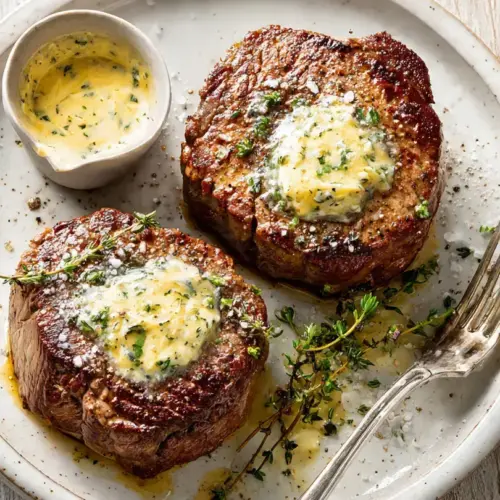
Perfect Filet Mignon

Equipment
- Cast iron skillet (10-12 inch)
- Instant-read meat thermometer
- Oven-safe tongs
- Wire rack
- Baking sheet
- Small saucepan or skillet (for butter baste) - optional, can use the same cast iron skillet
Ingredients
- 2 filet mignon steaks - 6-8 oz (170-225g) each, at least 1.5 inches thick
- 1 tsp kosher salt - for dry-brining, plus more to taste
- 1/2 tsp black pepper - freshly ground
- 2 tbsp avocado oil or canola oil - neutral oil with high smoke point
- 3 tbsp unsalted butter
- 3 garlic cloves - smashed
- 3 sprigs fresh thyme
- 2 sprigs fresh rosemary
- flaky sea salt - for finishing
Instructions
- Pat steaks dry with paper towels. Season all sides generously with kosher salt and place on a wire rack over a baking sheet. Refrigerate uncovered for at least 1 hour, or up to 24 hours.
- Remove steaks from the fridge 45-60 minutes before cooking to bring to room temperature. Preheat oven to 400°F (200°C). Heat cast iron skillet on high for 4-5 minutes until smoking hot.
- Pat steaks dry again with paper towels. Season with freshly ground black pepper. Add oil to the hot skillet and swirl to coat. Place steaks in the pan away from you to avoid splatter.
- Sear without moving for 2-3 minutes until a deep brown crust forms. Flip and sear the second side for 2 minutes. Stand steaks on their sides to sear the edges for 30-45 seconds each.
- Transfer the skillet directly to the preheated oven. Roast for 4-5 minutes for medium-rare, or 6-7 minutes for medium. Use a meat thermometer to check doneness.
- Remove skillet from oven and return to medium heat. Add butter, smashed garlic, thyme, and rosemary. As butter foams, continuously spoon it over the steaks for 1-2 minutes.
- Transfer steaks to a wire rack, tent loosely with foil, and rest for at least 5 minutes. Finish with flaky sea salt and serve immediately.
Notes
- Dry-brine the steaks whenever possible. Even 1 hour makes a noticeable difference in crust formation and internal flavor. Overnight is even better.
- Use a cast iron or stainless steel skillet. Non-stick pans cannot handle the high heat required for a proper sear.
- Do not crowd the pan. If cooking more than two steaks, use two separate pans or cook in batches.
- Always use an instant-read thermometer. Color and touch methods are unreliable compared to an accurate temperature reading.
- Pull the steaks out of the oven when they are 5°F below your target temperature, as they will continue cooking during the rest period.
- Don’t skip the butter baste. It takes less than two minutes and makes an enormous difference in flavor and richness.
- Store leftover steaks in an airtight container in the refrigerator for up to 3 days. Reheat in a 250°F oven for 20-25 minutes.
- For a blue cheese crust: top with crumbled blue cheese after the oven step and broil for 1-2 minutes until bubbly.
- For bacon-wrapped filet: wrap a strip of thick-cut bacon around each steak and secure with a toothpick before searing.
- Always rest the steak before cutting. Cutting too early causes all the juices to run out and the steak to taste dry.
Final Thoughts
A great filet mignon recipe is all about respecting the ingredient: using high heat for a killer crust, keeping the center perfectly tender, and finishing with butter and herbs that honor the natural flavor of the beef.
This technique works reliably every single time, and once you try it at home, it’s hard to justify spending steakhouse prices again.
Give this recipe a try for your next special occasion, date night, or dinner party, and you’ll be rewarded with one of the best steaks you’ve ever made.
If you make it, leave a comment below to share how it turned out! Tag your photos on social media so others can see what a gorgeous steak looks like coming out of a home kitchen.
Recommended:
- Braised Short Ribs Recipe
- Easy Mongolian Beef Recipe
- Classic Smash Burger Recipe
- Chicken Marsala Recipe
- Lobster Bisque Recipe
- Classic Shrimp Scampi Recipe
- Air Fryer Beef Roast Recipe
- Smoked Beef Short Ribs Recipe
- Turkey Gravy Recipe
- Beef and Barley Soup Recipe