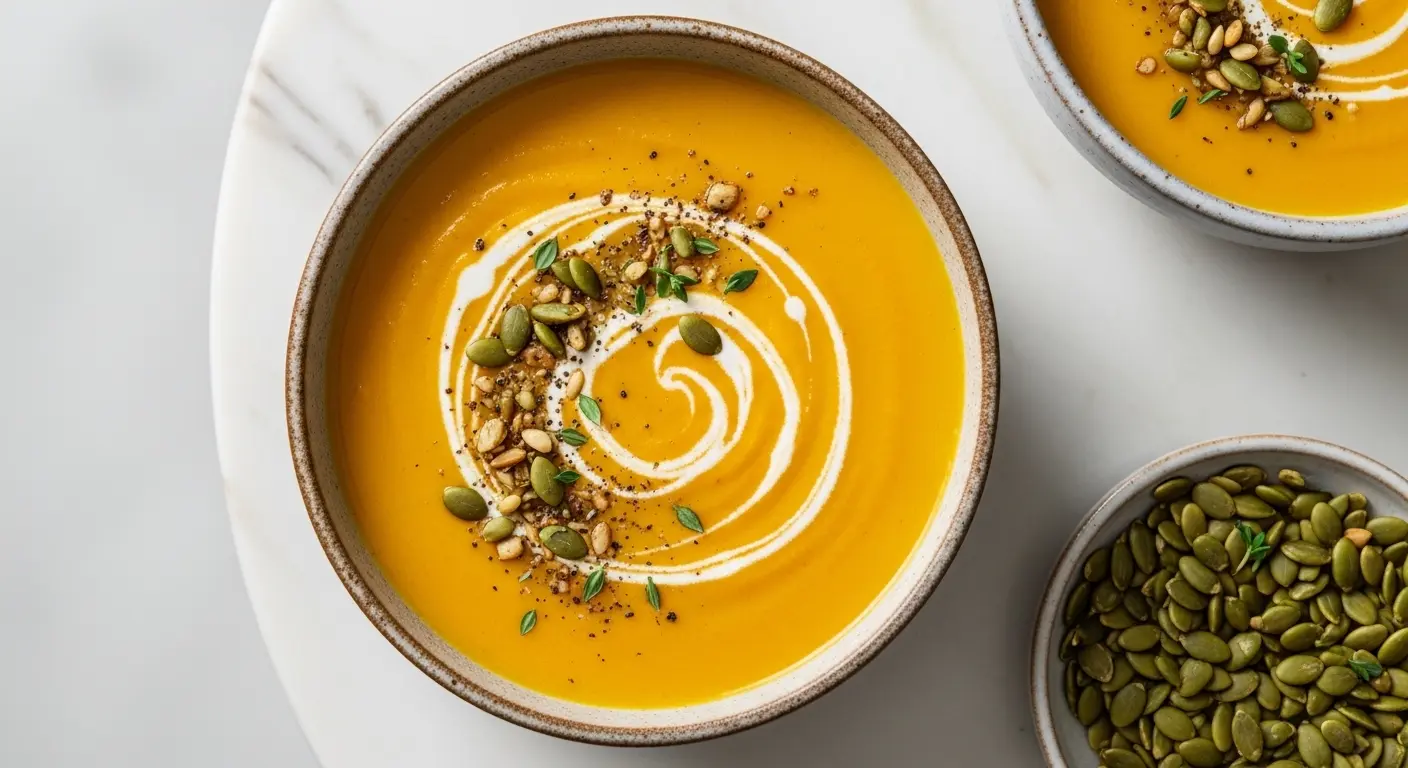
This Roasted Butternut Squash Soup Recipe is the kind of cozy, deeply flavored soup that makes you want to curl up on the couch with a warm bowl and a crusty piece of bread.
It starts with oven-roasted butternut squash, which is the real secret to why this soup tastes so much better than versions where the squash is just boiled or steamed.
Roasting the squash at high heat caramelizes its natural sugars, concentrating that sweet, nutty flavor in a way that simmering simply cannot replicate.
Add in aromatics like onion, garlic, and a touch of warm spices, and you end up with a velvety, restaurant-quality soup that comes together with minimal effort.
It’s rich without being heavy, naturally sweet without being cloying, and absolutely stunning in both flavor and color.
This is the recipe you’ll make every fall and winter when butternut squash is at its peak, and it never fails to impress.
If you love cozy, roasted vegetable soups, you’ll also want to try this Roasted Carrot Soup for another warming bowl with that same beautiful depth of flavor.
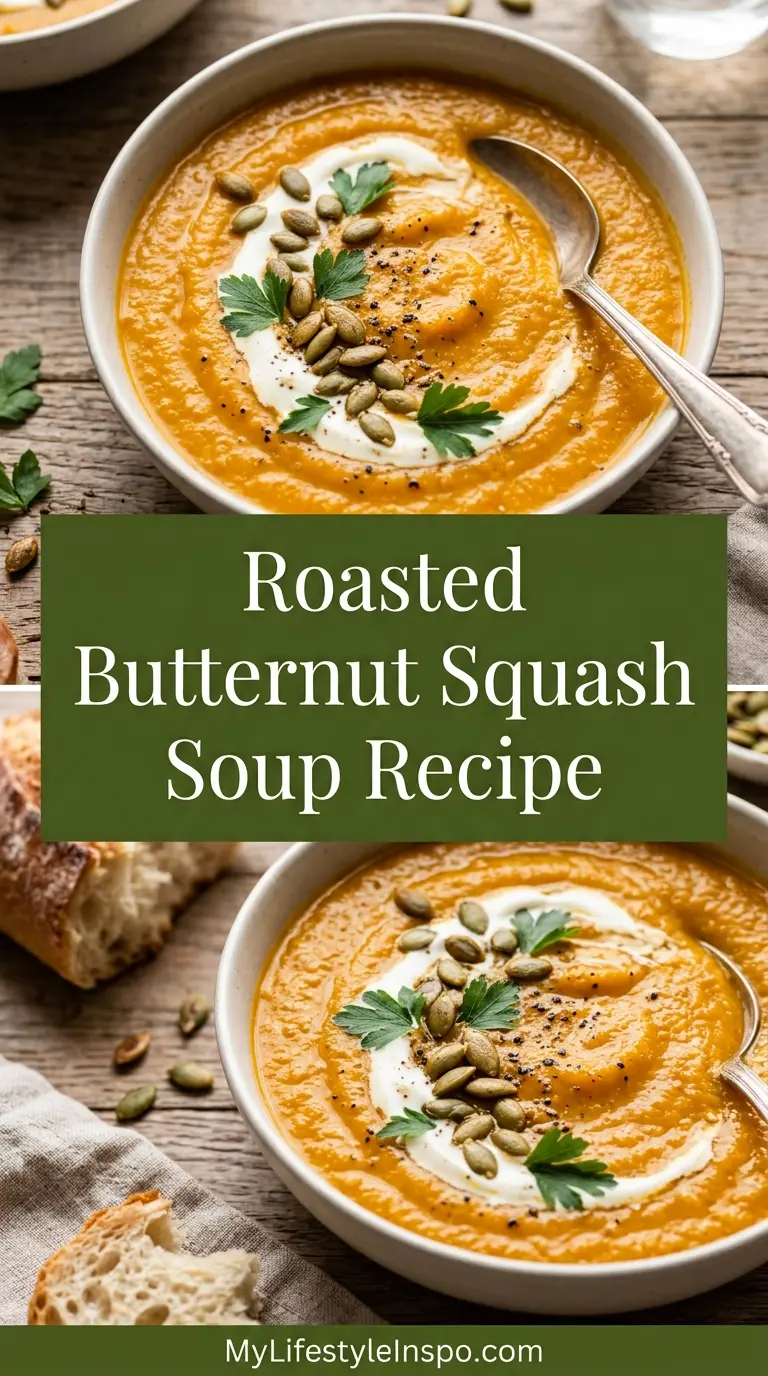
Why You’ll Love This Roasted Butternut Squash Soup Recipe
This soup has so much going for it that it’s hard to know where to start.
It uses simple, affordable ingredients that are easy to find at any grocery store, yet delivers a result that tastes like something you’d order at a nice bistro.
The roasting step is what sets this version apart from the rest. It takes maybe 5 minutes of hands-on prep, and the oven does all the work from there.
The blended texture is completely silky and smooth, making it feel indulgent even though it’s naturally nutritious.
It’s also incredibly versatile. Make it dairy-free by using coconut milk, or keep it classic with a swirl of heavy cream on top.
Here’s a quick summary of why this recipe works so well:
- The roasted squash develops a caramelized, deep sweetness that makes the soup taste complex and layered
- A blend of warm spices like cumin and cinnamon adds subtle warmth without overpowering the squash
- Using an immersion blender makes cleanup easy and the texture perfectly smooth
- The recipe is naturally gluten-free and easily made vegan
- It reheats beautifully, so it’s perfect for meal prep and weeknight dinners
- The vibrant orange color makes it a stunning starter for holiday dinners
- It’s ready in about an hour from start to finish, including the roasting time
You might also enjoy: Pumpkin Soup
Ingredients
This recipe calls for straightforward, whole-food ingredients. Using quality produce and good broth makes a noticeable difference in the final flavor, so it’s worth choosing fresh squash and a broth you enjoy drinking on its own.
- 1 large butternut squash (about 3 lbs / 1.4 kg), peeled, seeded, and cut into 1-inch cubes
- 2 tablespoons olive oil, divided
- 1 medium yellow onion, roughly chopped
- 4 cloves garlic, peeled
- 1 teaspoon ground cumin
- ½ teaspoon ground cinnamon
- ¼ teaspoon ground nutmeg
- ¼ teaspoon cayenne pepper (optional, for a little heat)
- 4 cups (960 ml) vegetable broth or chicken broth, plus more as needed
- ½ cup (120 ml) heavy cream or full-fat coconut milk
- 1½ teaspoons kosher salt, plus more to taste
- ½ teaspoon black pepper
- Optional garnishes: a drizzle of heavy cream or coconut milk, toasted pumpkin seeds, fresh thyme leaves, a pinch of smoked paprika
Read Also: Roasted Cauliflower Soup Recipe
Kitchen Equipment Needed
You don’t need anything fancy to make this soup, but having the right tools makes the process smoother and the result more consistent.
- Large rimmed baking sheet (for roasting the squash and aromatics)
- Parchment paper or aluminum foil (for easy cleanup)
- Large stock pot or Dutch oven
- Immersion blender (or countertop blender)
- Sharp chef’s knife and cutting board
- Vegetable peeler
- Wooden spoon or silicone spatula
- Ladle
- Soup bowls for serving
Read Also: Potato Leek Soup Recipe
Recommended Products for This Recipe
These are products I genuinely recommend based on quality and performance, and they make a real difference when making this soup.
1. Immersion Blender
An immersion blender lets you blend the soup directly in the pot, which means fewer dishes, less mess, and no hot liquid transfers. It gives you complete control over the texture. A high-powered model will produce a noticeably smoother, creamier result than a low-powered one.
2. Enameled Cast Iron Dutch Oven
Once the squash is roasted, finishing the soup in a good Dutch oven ensures even heat distribution and steady simmering. The heavy base prevents scorching, and the wide opening makes it easy to blend directly in the pot with an immersion blender.
3. Large Rimmed Baking Sheet
A sturdy, large baking sheet with raised edges is essential here. You want the squash pieces to have enough room to roast without steaming, and a flimsy pan can warp at high temperatures. A heavy-gauge aluminum sheet pan is ideal.
4. Toasted Pumpkin Seeds (Pepitas)
Sprinkling toasted pepitas on top adds a wonderful crunch and a nutty, slightly earthy contrast to the smooth, creamy soup. Look for roasted, salted pepitas, which are the most convenient option.
5. High-Quality Vegetable Broth
The broth makes up a significant portion of this soup’s liquid base, so using a high-quality one matters. Look for a broth that’s low in sodium and made with real vegetable ingredients, which gives you better control over seasoning.
This recipe also pairs beautifully with a bowl of Roasted Acorn Squash on the side for a full autumn spread.
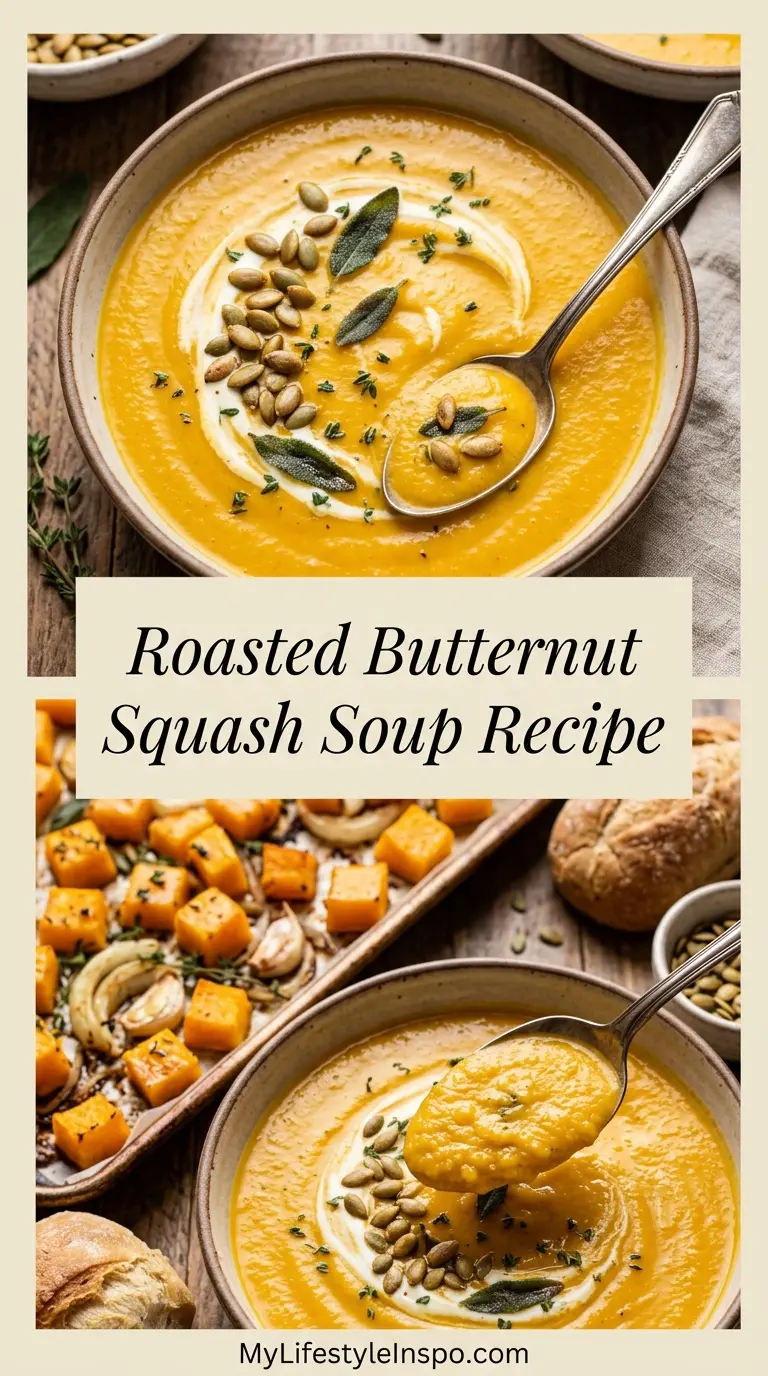
Step-by-Step Instructions
1. Preheat the Oven and Prepare the Squash
- Preheat your oven to 425°F (220°C). This high heat is essential for achieving caramelization on the squash, which is what gives the soup its depth of flavor.
- Line a large rimmed baking sheet with parchment paper or foil for easy cleanup.
- Using a sharp vegetable peeler, peel the butternut squash. Cut it in half lengthwise and scoop out the seeds with a spoon.
- Cut the squash into roughly 1-inch (2.5 cm) cubes. Try to keep the pieces relatively uniform in size so they roast evenly.
- Place the squash cubes in a large bowl and drizzle with 1 tablespoon of olive oil.
- Season with ½ teaspoon of the kosher salt and ¼ teaspoon of black pepper. Toss well to coat every piece evenly.
- Spread the squash out in a single layer on the prepared baking sheet, leaving space between the pieces. Overcrowding causes steaming rather than roasting, which prevents caramelization.
2. Prepare and Roast the Aromatics
- Peel and roughly chop the yellow onion into large chunks. They don’t need to be perfect since everything gets blended later.
- Peel the 4 garlic cloves but leave them whole.
- Add the onion and garlic to a small corner of the baking sheet, or use a second baking sheet if you need more room. The onion and garlic will cook faster than the squash, so keep an eye on them.
- Drizzle the onion and garlic with the remaining 1 tablespoon of olive oil. Toss to coat.
- Place the baking sheet(s) in the preheated oven on the middle rack.
- Roast for 25 to 30 minutes, tossing the squash halfway through at the 15-minute mark. The squash is done when it’s tender enough to pierce easily with a fork and the edges have turned golden and caramelized. The onion and garlic may finish a few minutes earlier; remove them if they are getting very dark.
3. Toast the Spices
- While the squash is roasting, place your large stock pot or Dutch oven over medium heat.
- Once the pot is warm, add the ground cumin (1 teaspoon), ground cinnamon (½ teaspoon), ground nutmeg (¼ teaspoon), and cayenne pepper (¼ teaspoon, if using) to the dry pot.
- Toast the spices for about 60 to 90 seconds, stirring constantly, until they become very fragrant. This step wakes up the spices and deepens their flavor significantly. Watch carefully so they don’t burn.
- Remove the pot from heat until the squash is ready.
4. Build the Soup Base
- Once the squash, onion, and garlic have finished roasting, transfer them all into the pot with the toasted spices.
- Pour in 4 cups (960 ml) of vegetable or chicken broth.
- Return the pot to medium heat and bring the mixture to a gentle simmer.
- Let everything simmer together for about 5 minutes, stirring occasionally. This gives the flavors a chance to meld and softens any remaining bits of squash that might still be firm.
- Add the remaining 1 teaspoon of kosher salt and ¼ teaspoon of black pepper. Stir to combine.
5. Blend Until Smooth
- Remove the pot from heat. If using an immersion blender, insert it directly into the pot and blend the soup until it is completely smooth. Start at low speed and work your way up to avoid splashing.
- If using a countertop blender, carefully ladle the hot soup into the blender in batches, filling it no more than halfway each time. Hold the lid down firmly with a folded kitchen towel (never a bare hand) to prevent pressure from the steam from popping the lid open. Blend until smooth, then pour into a clean pot.
- The blended soup should have a beautiful, velvety consistency. If it seems thicker than you’d like, add additional broth a few tablespoons at a time until you reach your preferred texture.
6. Finish with Cream and Adjust Seasoning
- Return the pot to low heat. Pour in the ½ cup (120 ml) of heavy cream or coconut milk, stirring gently to combine.
- Taste the soup and adjust seasoning as needed. Add more salt if the flavors seem flat, a little more cayenne for heat, or a tiny pinch of cinnamon for more warmth.
- Let the soup warm through over low heat for 2 to 3 minutes. Do not let it boil after adding the cream.
7. Serve and Garnish
- Ladle the soup into bowls.
- Add your desired garnishes: a swirl of heavy cream or coconut milk, a small handful of toasted pumpkin seeds (pepitas), a few fresh thyme leaves, and a light pinch of smoked paprika for color and a hint of smokiness.
- Serve immediately with crusty bread, cheesy garlic bread, or a simple green salad on the side.
Tips for Success
Small adjustments during the cooking process can make a meaningful difference in the final result. Keep these pointers in mind as you cook.
- Don’t crowd the baking sheet. If the squash pieces are touching or piled up, they will steam rather than roast. Use two baking sheets if needed.
- Roast at high heat. 425°F (220°C) is the sweet spot for caramelization without burning.
- Toast your spices. This single step takes 60 seconds and dramatically deepens the flavor of the soup.
- Blend in batches if using a countertop blender. Hot liquid expands when blended, so fill the jar only halfway and hold the lid firmly with a towel.
- Adjust consistency freely. Add more broth to thin the soup or let it simmer uncovered for a few minutes to thicken it.
- Season at the end. Broth sodium levels vary widely, so taste and adjust the salt after blending rather than adding too much at the start.
- Use full-fat coconut milk for a dairy-free version. Light coconut milk will work, but the soup won’t be quite as rich and creamy.
Another great recipe for cozy evenings: Vegetable Soup
Serving Suggestions
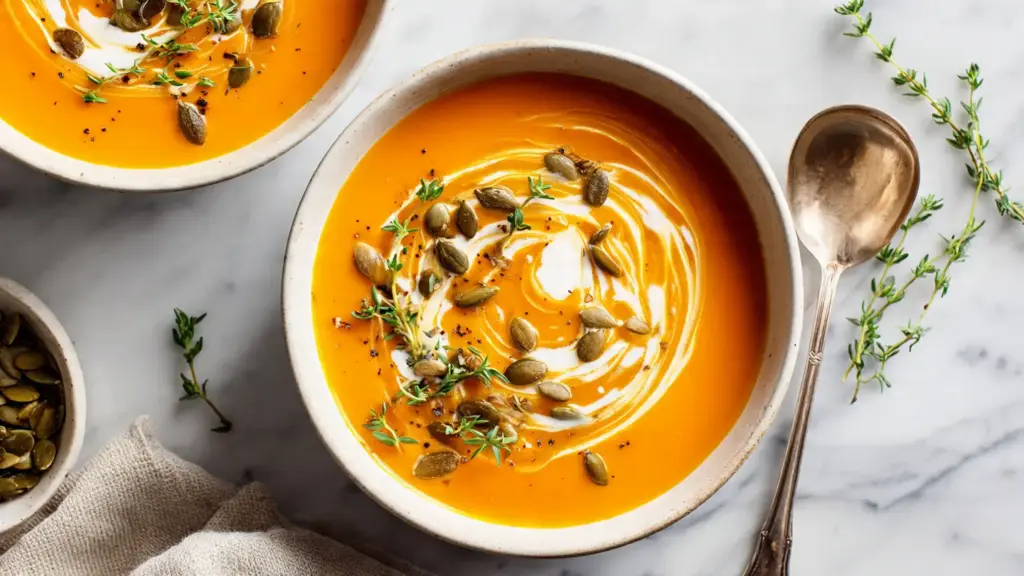
This soup is hearty enough to stand alone as a light meal, but it also shines as a starter or alongside heartier dishes.
It pairs especially well with breads that can soak up the creamy broth, and a simple salad on the side rounds out the meal beautifully.
Here are some serving ideas to get you started:
- Serve with Easy Garlic Bread for dunking into the creamy soup
- A big green salad with a lemony vinaigrette cuts through the richness perfectly
- Try it as a first course before a main of roasted chicken or pork tenderloin
- Ladle into smaller cups as an elegant appetizer for holiday dinners
- Pair with a grilled cheese sandwich for the ultimate comfort meal combination
- Top with a fried egg and toasted pumpkin seeds for a more filling bowl
- Serve alongside a bowl of Chicken Tortilla Soup for a soup duo that works beautifully at gatherings
Read Also: Carrot Soup Recipe
Variations to Try
This soup is a wonderful base for experimentation. Once you’ve made the classic version, these twists are worth trying.
- Thai-inspired: Swap the warm spices for 1 tablespoon of red curry paste and use coconut milk as the cream. Finish with a squeeze of lime juice and fresh cilantro.
- Apple and butternut squash: Add 1 peeled, cored apple to the baking sheet with the squash. The apple adds a gentle sweetness and slight tartness.
- Spicy chipotle: Blend in 1 to 2 chipotle peppers in adobo sauce for a smoky, spicy kick.
- Ginger and turmeric: Add 1 tablespoon of fresh grated ginger and ½ teaspoon of ground turmeric for a warming, anti-inflammatory version.
- Vegan: Use vegetable broth and full-fat coconut milk in place of cream. The result is rich, dairy-free, and just as delicious.
- Slow cooker version: Skip the roasting step and combine everything in a slow cooker on low for 6 to 8 hours, then blend.
For another beautiful autumn squash dish, check out Stuffed Acorn Squash.
Storage and Reheating
This soup stores exceptionally well, making it one of the best recipes to add to your meal prep rotation.
Follow these tips to keep it tasting fresh and creamy:
- Refrigerator: Store cooled soup in an airtight container for up to 4 to 5 days. The flavors actually deepen overnight.
- Freezer: Freeze in individual portions (without cream or coconut milk added) for up to 3 months. Add the cream when reheating.
- Reheating on stovetop: Warm over medium-low heat, stirring frequently. Add a splash of broth if the soup has thickened in the fridge.
- Reheating in microwave: Transfer to a microwave-safe bowl, cover loosely, and heat in 60-second intervals, stirring in between.
- Avoid boiling after cream is added: Once heavy cream or coconut milk is in the soup, reheat gently to prevent separation.
- Freeze-friendly tip: If you plan to freeze leftovers, hold off on adding the cream until you reheat the soup. This keeps the texture smooth after thawing.
Read Also: Squash Casserole Recipe
Nutritional Facts
The following nutritional information is an estimate based on one serving, assuming the recipe makes 6 servings and is prepared with heavy cream. Values will vary depending on specific brands and substitutions used.
| Nutrient | Per Serving (approx.) |
|---|---|
| Calories | ~210 kcal |
| Total Fat | 11 g |
| Saturated Fat | 5 g |
| Cholesterol | 27 mg |
| Sodium | 560 mg |
| Total Carbohydrates | 28 g |
| Dietary Fiber | 4 g |
| Total Sugars | 7 g |
| Protein | 3 g |
| Vitamin A | 350% DV |
| Vitamin C | 40% DV |
| Potassium | 600 mg |
Nutritional information is approximate. Values are calculated using vegetable broth and heavy cream.
This soup is low in calories relative to how filling and satisfying it is, making it a smart choice for a light lunch or first course.
For another nourishing bowl, try this comforting Cauliflower Soup.
Health Benefits of Key Ingredients
Beyond its incredible flavor, this soup is packed with nutrients from its whole-food ingredients.
Butternut squash is genuinely one of the most nutritious vegetables you can work with in the kitchen, and the supporting ingredients add their own benefits.
Here’s a closer look at why this soup is as good for your body as it is for your taste buds:
- Butternut squash is exceptionally rich in beta-carotene, which the body converts to vitamin A. One serving can provide well over 100% of your daily vitamin A requirement, supporting eye health, immune function, and skin health.
- Garlic contains allicin, a compound with well-documented antimicrobial and anti-inflammatory properties. Roasting mellows the flavor while preserving many of its beneficial compounds.
- Olive oil is rich in heart-healthy monounsaturated fats and antioxidants, particularly oleocanthal, which has anti-inflammatory effects.
- Cumin provides iron and has been shown in some studies to support healthy digestion and blood sugar regulation.
- Cinnamon contains cinnamaldehyde and has been associated with blood sugar stabilization and anti-inflammatory effects.
- Coconut milk (if used) contains medium-chain triglycerides (MCTs), a type of fat that is metabolized differently from long-chain fats and may support energy and satiety.
- Vegetable broth adds hydration and depth of flavor with minimal calories, while contributing trace minerals and electrolytes.
Another nutrient-packed option to add to your rotation: Spinach Soup
Frequently Asked Questions
1. Can I use pre-cut butternut squash from the store?
Yes, absolutely. Pre-cut butternut squash saves a significant amount of prep time and works just as well in this recipe. Just make sure the pieces are roughly similar in size (about 1 inch / 2.5 cm) so they roast evenly. If the pieces are much larger, cut them down a bit before roasting.
2. Can I make this soup without cream?
You can. The soup is delicious and still creamy from the blended squash even without any dairy or coconut milk. If you want a slightly richer texture without cream, try blending in 1 to 2 tablespoons of cashew butter, which adds creaminess and a mild nutty flavor. Alternatively, a swirl of good olive oil on top when serving adds richness without cream.
3. Do I have to roast the squash, or can I cook it another way?
Roasting is strongly recommended because it adds caramelized depth that is central to the flavor of this soup. That said, if you’re short on time, you can steam or microwave the squash until tender, then sauté the onion and garlic in a pot and proceed with the recipe. The flavor will be noticeably milder and less complex, but still good.
4. Why does my blended soup look stringy or grainy instead of smooth?
This is usually caused by under-roasting the squash. If the squash isn’t fully tender before blending, it won’t break down completely. Make sure you can pierce the squash easily with a fork and that the edges have some color before removing from the oven. Blending longer and at a higher speed can also help. If using a countertop blender, blend each batch for at least 60 seconds.
5. Can I make this soup ahead of time?
This soup is an excellent make-ahead recipe. It actually tastes better the next day once the flavors have had time to meld. Make it up to 2 days in advance, store it in the refrigerator, and reheat gently on the stovetop. If you plan to freeze it, do so before adding the cream, and stir in fresh cream when reheating.
For another excellent make-ahead option, check out this warming Lobster Bisque.

Roasted Butternut Squash Soup

Equipment
- Large rimmed baking sheet - Heavy-gauge aluminum preferred
- Parchment paper - Or aluminum foil
- Large stock pot or Dutch oven - Enameled cast iron recommended
- Immersion Blender - For blending directly in the pot (or countertop blender)
- Sharp chef's knife
- Cutting board
- Vegetable peeler
- Wooden spoon or silicone spatula
- Ladle
- Soup bowls - For serving
Ingredients
- 1 large butternut squash - about 3 lbs or 1.4 kg, peeled, seeded, and cut into 1-inch cubes
- 2 tablespoons olive oil - divided
- 1 medium yellow onion - roughly chopped
- 4 cloves garlic - peeled
- 1 teaspoon ground cumin
- ½ teaspoon ground cinnamon
- ¼ teaspoon ground nutmeg
- ¼ teaspoon cayenne pepper - optional, for a little heat
- 4 cups vegetable or chicken broth - 960 ml, plus more as needed
- ½ cup heavy cream - 120 ml, or full-fat coconut milk for dairy-free
- 1½ teaspoons kosher salt - plus more to taste
- ½ teaspoon black pepper
Optional Garnishes
- heavy cream or coconut milk - for drizzling
- toasted pumpkin seeds (pepitas)
- fresh thyme leaves
- smoked paprika - a pinch, for garnish
Instructions
- Preheat oven to 425°F. Line a large baking sheet with parchment. Peel squash, halve, scoop seeds, and cut into 1-inch cubes. Toss with 1 tablespoon olive oil, ½ teaspoon salt, and ¼ teaspoon pepper. Spread in a single layer on baking sheet.
- Chop onion into large chunks and peel garlic. Place on baking sheet with squash, drizzle with remaining 1 tablespoon oil, and toss to coat.
- Roast for 25-30 minutes, tossing the squash halfway at 15 minutes, until tender and caramelized. Remove onion and garlic if they finish earlier.
- While squash roasts, warm a large pot over medium heat. Add cumin, cinnamon, nutmeg, and cayenne; toast for 60-90 seconds until fragrant. Remove from heat.
- Transfer roasted squash, onion, and garlic to the pot. Add broth and bring to a gentle simmer. Cook for 5 minutes, then add 1 teaspoon salt and ¼ teaspoon pepper.
- Remove from heat and blend with an immersion blender until completely smooth. If using a countertop blender, work in batches and hold the lid firmly.
- Return to low heat, stir in cream, and warm through for 2-3 minutes. Do not boil. Adjust seasoning to taste.
- Ladle into bowls and garnish with a swirl of cream, toasted pumpkin seeds, fresh thyme, and a pinch of smoked paprika. Serve hot.
Notes
- Don’t crowd the baking sheet: Give squash pieces space to roast—overcrowding causes steaming, not caramelization. Use two sheets if needed.
- Roast at high heat: 425°F is the sweet spot for browning without burning the squash.
- Toast spices: A quick 60-second toast in a dry pot wakes up their essential oils and deepens the flavor significantly.
- Adjust consistency freely: Add more broth to thin or simmer uncovered to thicken the soup to your preference.
- Season at the end: Broth sodium levels vary; always taste and adjust salt after blending.
- Make it dairy-free: Use full-fat coconut milk instead of heavy cream for a rich, vegan version.
- Storage: Refrigerate for up to 5 days in an airtight container. The flavors deepen overnight.
- Freezing: Freeze without the cream for up to 3 months; stir in fresh cream when reheating for the best texture.
- Reheat gently: Warm over medium-low heat, stirring frequently, to prevent separation after cream is added.
- Add-ins: Try roasted apple, chipotle peppers, ginger, or turmeric for easy flavor variations.
Final Thoughts
This Roasted Butternut Squash Soup Recipe is proof that simple, seasonal ingredients prepared thoughtfully can result in something truly special.
The roasting step might add a few extra minutes to the process, but it’s the thing that transforms an ordinary soup into an unforgettable one.
It’s cozy, deeply flavorful, naturally nourishing, and flexible enough to adapt to whatever you have on hand.
Give it a try on the next cool evening when you need something warm and satisfying, and don’t be surprised when it immediately becomes a household favorite.
If you make this recipe, leave a comment below and let me know how it turned out! I’d love to hear your variations and what garnishes you tried.
Recommended:
- Pumpkin Soup
- Curried Cauliflower Soup
- Roasted Cauliflower Soup
- Celery Soup
- Baked Acorn Squash
- Creamy Tomato Soup
- Zucchini Soup
- Honey Roasted Carrots
- Chicken Vegetable Soup
- Beer Cheese Soup