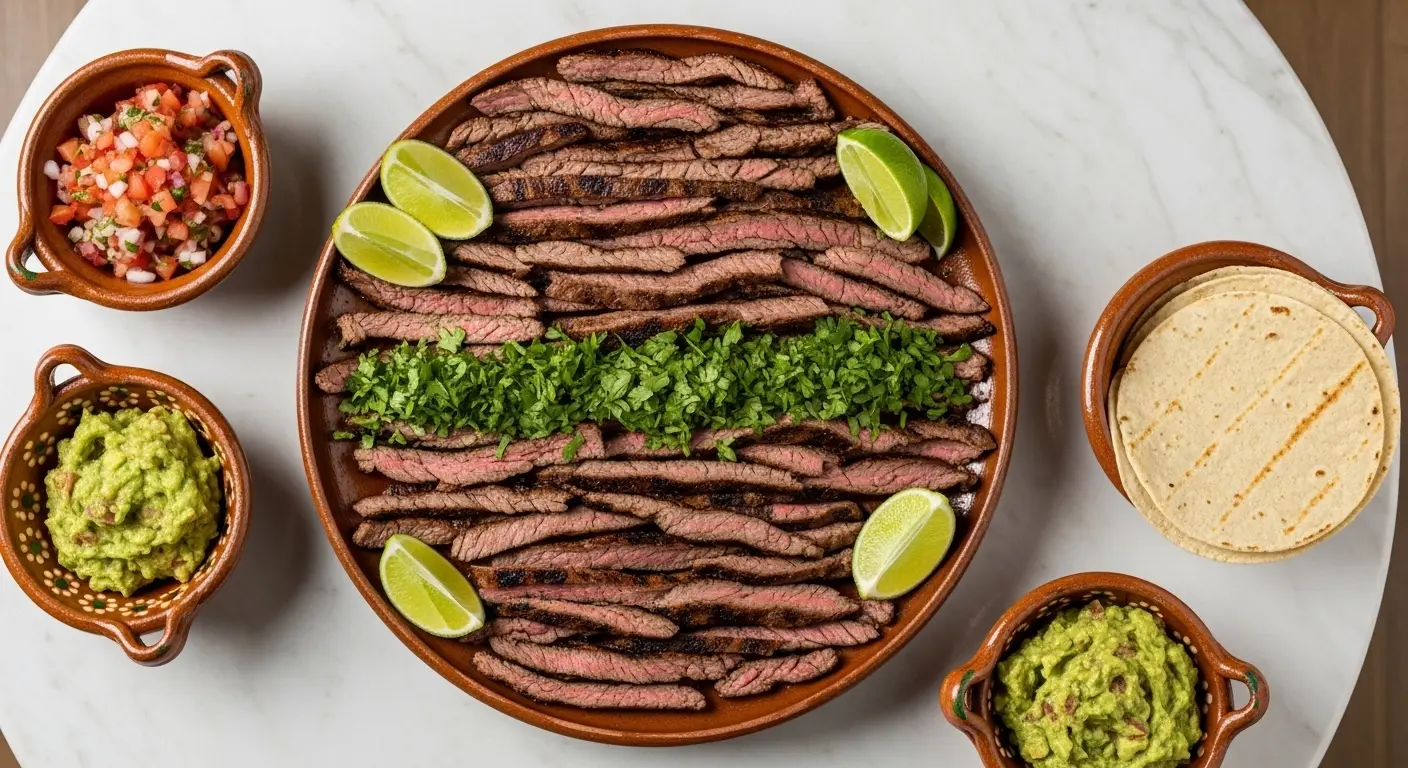
If you’ve been searching for the ultimate Mexican carne asada recipe, you’ve landed in the right place. This is the real deal, the kind of grilled beef that makes your backyard smell absolutely incredible and has everyone hovering around the grill before it’s even done.
Carne asada is a classic Mexican dish made from thin slices of marinated beef that are grilled over high heat until they develop a deeply charred, smoky crust while staying tender and juicy inside. The magic is all in the marinade, which typically combines citrus juice, garlic, cilantro, and warm spices like cumin and chili powder to tenderize the meat and layer on bold, complex flavors.
What sets this version apart is the balance of acidity, heat, and fresh herbal notes that make the beef sing. It’s not just a recipe, it’s a technique you’ll keep coming back to all grilling season long.
This Mexican carne asada recipe is weeknight-friendly enough to pull off on a Tuesday but impressive enough to anchor a full-on weekend cookout. And once you try it homemade, you’ll understand why this dish is a cornerstone of Mexican street food culture.
You might also enjoy: Authentic Carne Asada Recipe
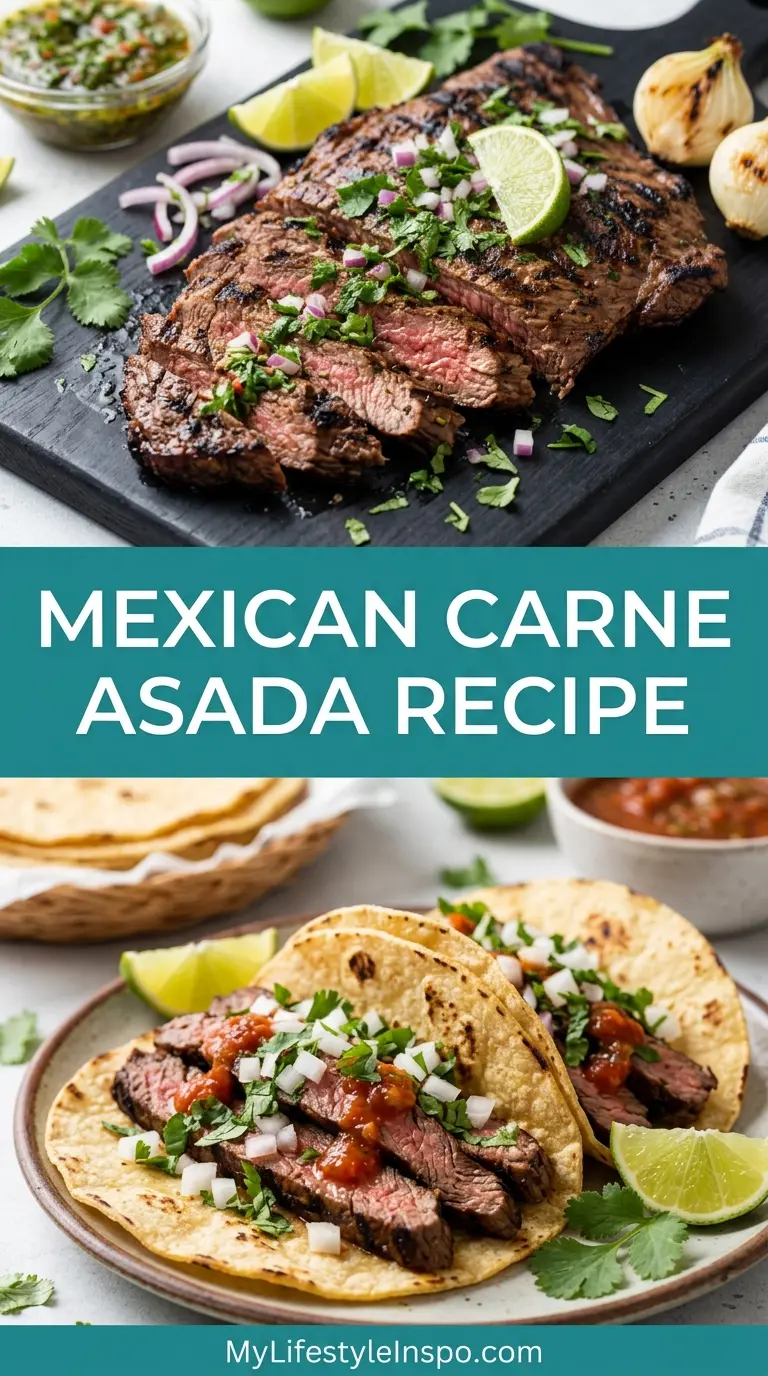
Why You’ll Love This Mexican Carne Asada Recipe
This recipe checks every box for a great grilled beef dish.
The marinade does the heavy lifting, so even if you’re newer to grilling, the results will be bold and delicious. It only takes about 10 minutes of hands-on prep before the beef goes into the fridge to soak up all that flavor.
The ingredients are easy to find at any grocery store. Nothing exotic, just pantry staples and fresh produce that come together into something genuinely special.
High-heat grilling creates that signature charred crust that gives carne asada its distinctive smoky depth. That caramelization is not just about looks, it adds an entirely different dimension of flavor you simply cannot replicate in a pan.
This recipe is endlessly versatile. Serve it in tacos, over rice, on a platter with sides, or even sliced thin over a salad. The options are as wide as your appetite.
- Bold, citrus-forward marinade that tenderizes the beef and builds deep flavor
- Achieves that iconic charred crust with a juicy, tender interior
- Ready to grill after just 30 minutes of marinating (overnight is even better)
- Feeds a crowd easily, perfect for tacos, burritos, or serving as a main dish
- Uses flank steak or skirt steak, which are budget-friendly and packed with beefy flavor
- 100% customizable heat level, from mild to spicy
Read Also: Easy Carne Asada Recipe
Ingredients
For the best Mexican carne asada, you want a marinade that balances acidic citrus for tenderizing, oil for carrying fat-soluble flavors, aromatics for depth, and spices for warmth. Flank steak or skirt steak are the traditional cuts because their open grain structure absorbs marinade beautifully and cooks quickly at high heat.
- 2 lbs (900g) flank steak or skirt steak
- 1/3 cup (80ml) fresh orange juice (about 1 large orange)
- 1/4 cup (60ml) fresh lime juice (about 2-3 limes)
- 3 tablespoons olive oil
- 4 cloves garlic, minced
- 1/3 cup (15g) fresh cilantro, roughly chopped
- 1 jalapeño, finely minced (remove seeds for less heat)
- 1 teaspoon ground cumin
- 1 teaspoon chili powder
- 1 teaspoon smoked paprika
- 1/2 teaspoon dried oregano (Mexican oregano preferred)
- 1/2 teaspoon black pepper
- 1 teaspoon kosher salt, plus more to taste
- 1/2 teaspoon onion powder
- Optional: 1 tablespoon soy sauce (adds deep umami)
This pairs wonderfully with homemade Pico de Gallo for a classic finishing touch.
Kitchen Equipment Needed
Having the right setup makes a real difference here, especially when it comes to achieving that restaurant-quality sear. A very hot cooking surface is non-negotiable for authentic carne asada.
- Cast iron grill pan or outdoor gas/charcoal grill
- Large zip-top bag or glass marinating dish
- Sharp chef’s knife
- Cutting board
- Instant-read meat thermometer
- Tongs
- Small mixing bowl or measuring cup
- Aluminum foil (for resting the meat)
- Citrus juicer or reamer
Read Also: Carne Asada Marinade Recipe
Recommended Products for This Recipe
These are products that genuinely make a difference when preparing carne asada at home, selected for quality and performance.
1. Lodge Pre-Seasoned Cast Iron Grill Pan
A high-quality cast iron grill pan holds extreme heat evenly and creates those beautiful grill marks indoors or out. It gets screaming hot and stays that way throughout cooking, which is key to achieving the iconic charred crust on carne asada. Cast iron also develops better seasoning over time, making every batch better than the last.
2. OXO Good Grips Citrus Juicer
Fresh citrus is the backbone of a great carne asada marinade, and a dedicated juicer makes extracting maximum juice effortless. This model handles both oranges and limes with ease, ensuring you get every last drop of the bright, acidic juice that tenderizes the beef. Fresh juice makes a noticeably bigger impact than bottled.
3. ThermoPro Instant-Read Meat Thermometer
Skirt and flank steak go from perfect to overcooked very quickly at high heat, so an accurate instant-read thermometer is worth its weight in gold. Aim for 130-135°F (54-57°C) for medium-rare, which is the sweet spot for these cuts. This tool takes the guesswork completely out of the equation.
4. Glass Marinating Dish with Lid
Unlike plastic bags, a glass marinating dish with a lid lets you see the meat as it marinates, keeps the refrigerator clean, and is completely non-reactive with acidic citrus marinades. The lid makes it easy to flip the steak halfway through without any mess. It’s a simple upgrade that makes the prep process cleaner and easier.
Another classic you might love: Birria Tacos Recipe
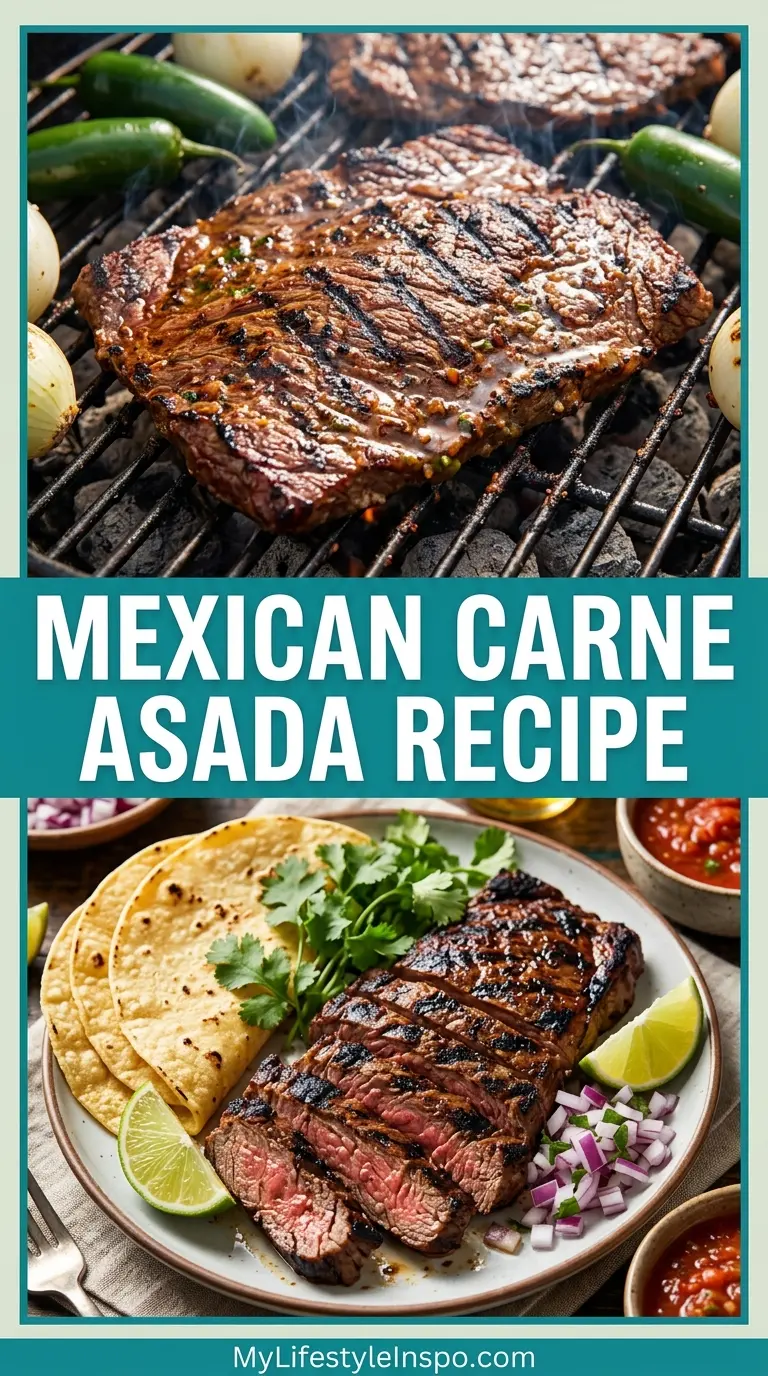
Step-by-Step Instructions
1. Prepare the Steak
- Remove the steak from the refrigerator about 30 minutes before you plan to marinate it so it comes closer to room temperature.
- Place the steak flat on a cutting board and use paper towels to pat it completely dry. Removing surface moisture ensures the marinade adheres properly rather than just sitting on the surface.
- If using flank steak, use a sharp knife to lightly score the surface in a crosshatch pattern, about 1/4 inch (6mm) deep. This helps the marinade penetrate deeper into the meat and also helps prevent the steak from curling on the grill.
- If using skirt steak, check for any thick sections and butterfly them or pound lightly with a meat mallet to an even thickness of about 1/2 inch (1.2cm). Even thickness means even cooking.
2. Make the Marinade
- In a small mixing bowl, combine the fresh orange juice, fresh lime juice, and olive oil. Whisk them together until emulsified.
- Add the minced garlic, chopped cilantro, minced jalapeño, ground cumin, chili powder, smoked paprika, dried oregano, black pepper, kosher salt, and onion powder. If using soy sauce, add it now as well.
- Whisk everything together until the spices are fully incorporated and the marinade looks uniform. Taste it, it should be bright, garlicky, and well-seasoned. Adjust salt if needed.
- The citrus acids in the marinade will begin tenderizing the beef on contact, while the cumin and chili powder add that signature Mexican warmth that makes carne asada so distinctive.
3. Marinate the Steak
- Place the scored or pounded steak into a large zip-top bag or glass marinating dish.
- Pour the marinade over the steak, making sure every surface of the meat is thoroughly coated. Use your hands (outside the bag) or tongs to massage the marinade into the scored cuts.
- Seal the bag, pressing out as much air as possible, or cover the dish tightly with its lid.
- Refrigerate for a minimum of 30 minutes, though 2 to 4 hours is ideal for developing deeper flavor. You can marinate up to 8 hours overnight, but avoid going beyond 12 hours, as the citrus acids can start to break down the meat fibers too aggressively and make the texture mushy.
- Flip the bag or turn the steak in the dish at least once halfway through marinating to ensure even coverage.
4. Preheat the Grill
- If using an outdoor grill, heat it to high heat, around 450-500°F (232-260°C). For charcoal grills, build a two-zone fire by piling coals on one side.
- If using a cast iron grill pan on the stovetop, place it over high heat and let it preheat for at least 5 minutes until it is extremely hot. You should see faint wisps of smoke. Test by hovering your hand a few inches above the surface.
- Lightly brush the grill grates or pan with a small amount of high-smoke-point oil, such as avocado oil or vegetable oil. Use tongs and a folded paper towel dipped in oil to do this safely.
- High heat is absolutely critical for carne asada. It creates the Maillard reaction that gives the crust its charred, smoky flavor. A pan that is not hot enough will simply steam the meat rather than sear it.
5. Grill the Steak
- Remove the steak from the marinade and let excess marinade drip off. Do not rinse the steak, but shake off any large clumps of garlic or cilantro that could burn on the grill.
- Season both sides lightly with an additional pinch of kosher salt just before grilling.
- Place the steak on the hot grill or pan and do not move it for the first 2 to 3 minutes. Letting it sit undisturbed allows the crust to form. If you try to move it too early, it will stick and tear.
- For flank steak (about 3/4 to 1 inch thick), grill for 3 to 4 minutes per side for medium-rare. For skirt steak (thinner), grill for 2 to 3 minutes per side.
- Use tongs to flip the steak once. You should see a deep brown to slightly charred crust on the cooked side.
- Cook the second side for the same time, checking internal temperature with your instant-read thermometer. Target 130-135°F (54-57°C) for medium-rare, which is ideal for these cuts. Going to 145°F (63°C) for medium is fine but avoid beyond that or the steak becomes tough and chewy.
- If the edges of the steak are curling up, press them down gently with tongs so all surfaces make contact with the heat.
6. Rest, Slice, and Serve
- Remove the steak from the grill and place it on a clean cutting board. Tent loosely with aluminum foil.
- Let the steak rest for at least 5 minutes, ideally 8 to 10 minutes. Resting allows the juices, which have been forced toward the center by the heat, to redistribute throughout the meat. Cutting too early results in a flood of juice on the cutting board and dry meat on the plate.
- After resting, identify the direction of the muscle fibers (the grain) running through the steak. You will see parallel lines in the meat.
- Using a sharp knife, slice the steak thinly at a 45-degree angle, cutting across the grain. This means your knife should be perpendicular to those fiber lines, not parallel to them. Cutting across the grain shortens the muscle fibers, which is what makes each bite tender and easy to chew.
- Aim for slices about 1/4 inch (6mm) thick or thinner.
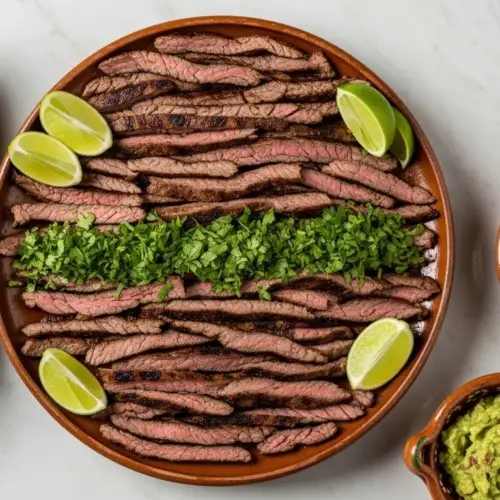
- Arrange on a serving platter and optionally squeeze additional fresh lime juice over the top and scatter a few fresh cilantro leaves.
For a crowd-pleasing way to use this beef, check out this Carne Asada Tacos Recipe.
Tips for Success
Small adjustments in technique make a big difference between good and great carne asada. Keep these pointers in mind every time you make this recipe.
- Always marinate for at least 30 minutes, but no more than 12 hours. The citrus in the marinade begins to chemically “cook” the exterior of the beef if left too long, resulting in a mealy, mushy texture. The sweet spot is 2 to 8 hours.
- Pat the steak dry before placing it on the grill. Surface moisture creates steam, which inhibits browning. Dry = crust.
- Your grill or pan must be screaming hot. This is the single most important factor. If you hear a loud sizzle the moment the steak hits the surface, you’re in good shape.
- Only flip once. Constant flipping prevents the crust from forming. Be patient and let the steak develop its char before turning.
- Cut across the grain, every single time. Flank and skirt steak have very prominent muscle fibers. Slicing with the grain produces tough, chewy results. Slicing against it makes the same steak feel incredibly tender.
- Use fresh citrus juice, not bottled. The bright, volatile aromatics in fresh orange and lime juice contribute significantly more flavor and tenderizing power than shelf-stable bottled juice.
- Don’t skip the resting step. Five to ten minutes under foil is all it takes to keep those juices locked in.
For more Mexican-inspired ideas, try this Taco Seasoning Recipe to keep on hand for quick weeknight meals.
Serving Suggestions
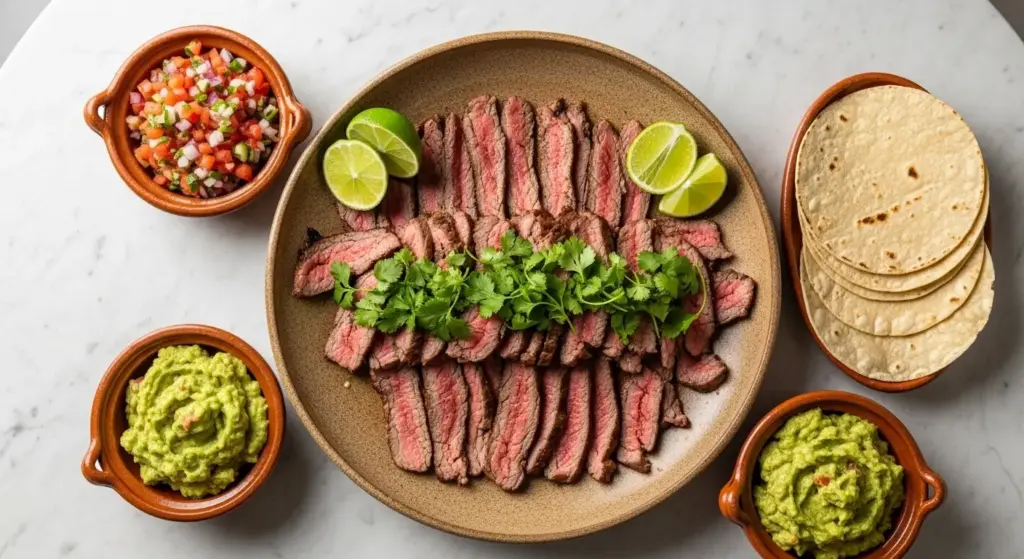
Carne asada is one of those dishes that shines in almost any format. The thinly sliced, charred beef makes a stunning presentation on its own and works beautifully as the centerpiece of a larger spread.
For a traditional taco night, pile slices of carne asada onto warm corn tortillas with a scoop of fresh pico de gallo, diced white onion, chopped cilantro, and a squeeze of lime. Simple, perfect, and authentic to Mexican street food tradition.
- Carne asada tacos with Corn Tortillas or Flour Tortillas and fresh pico de gallo
- Over Mexican rice and black beans for a hearty plate
- In a burrito with rice, beans, cheese, and sour cream
- On a carne asada fries platter with seasoned fries, guacamole, and crema
- Alongside Mexican Street Corn for a classic cookout spread
- Over a fresh salad with avocado, tomato, and lime vinaigrette
- In quesadillas with Oaxacan cheese
Variations to Try
The base recipe here is the most traditional and widely loved version of Mexican carne asada. Once you have it down, there is plenty of room to explore different flavor directions and cooking methods.
- King Taco style: Inspired by the famous LA chain, try the King Taco Carne Asada Recipe which leans into a slightly different seasoning profile with deeper red chile flavors.
- Slow cooker version: If you want fall-apart tender carne asada without the grill, the Slow Cooker Carne Asada Recipe is a fantastic cold-weather alternative.
- Pork carne asada: Swap the beef for thin-cut pork shoulder for a different but equally delicious spin. Find ideas in the Pork Carne Asada Recipe.
- Chipotle-inspired: Add 1 to 2 canned chipotle peppers in adobo sauce to the marinade for deep, smoky heat that takes the flavor to another level.
- Spicier version: Double the jalapeño and add 1/2 teaspoon of cayenne pepper to the marinade for serious heat lovers.
- Beer-marinated: Replace half the orange juice with a light Mexican lager like Corona or Modelo for a malty, slightly bitter background note that pairs beautifully with the cumin.
You might also enjoy: Classic Carne Asada Recipe
Storage and Reheating
Properly storing your carne asada ensures you can enjoy it days later without sacrificing too much quality. The sliced beef reheats well and is brilliant in leftover tacos, burritos, or eggs.
- Refrigerator: Store sliced or whole cooked carne asada in an airtight container for up to 3 to 4 days.
- Freezer: For longer storage, lay slices flat in a freezer-safe zip-top bag, removing as much air as possible. Freeze for up to 3 months.
- Thawing: Move frozen carne asada to the refrigerator the night before you plan to use it. Avoid defrosting at room temperature.
- Reheating on the stovetop: Heat a cast iron or stainless-steel skillet over medium-high heat with a tiny bit of oil. Add the sliced beef in a single layer and heat for 1 to 2 minutes per side, just until warmed through and slightly re-crisped at the edges. This is the best method to revive some of that char.
- Reheating in the microwave: Place slices in a single layer on a microwave-safe plate, add a tablespoon of water or broth, and cover loosely with a damp paper towel. Microwave in 30-second bursts until heated through. This method is convenient but will not restore any crunch.
- Do not overheat: Reheating beyond 165°F (74°C) will dry out the already cooked beef. Heat just until warmed.
For a fun way to repurpose leftovers, try throwing the beef into a Mexican Skillet Recipe.
Nutritional Facts
The following values are approximate and based on a serving of about 5 oz (140g) of cooked carne asada (approximately 1/4 of the total recipe), without tortillas or additional toppings.
| Nutrient | Per Serving |
|---|---|
| Calories | ~310 kcal |
| Protein | 38g |
| Total Fat | 15g |
| Saturated Fat | 4g |
| Carbohydrates | 3g |
| Fiber | 0g |
| Sugar | 2g |
| Sodium | 490mg |
| Iron | 15% DV |
| Vitamin C | 8% DV |
Carne asada is naturally low in carbohydrates and high in protein, making it a strong fit for many dietary approaches including keto, paleo, and gluten-free eating. Values will vary based on the specific cut of beef used and exact marinade amounts absorbed.
Read Also: Best Carne Asada Recipe
Health Benefits of Key Ingredients
The ingredients in this Mexican carne asada recipe offer more than just great flavor. Several of them bring meaningful nutritional value to every bite.
Flank or skirt steak is an excellent source of complete protein, providing all essential amino acids needed for muscle repair and growth. It is also rich in zinc (important for immune function), iron (critical for oxygen transport in the blood), and B vitamins, particularly B12 and niacin, which support energy metabolism and neurological health.
- Garlic: Contains allicin, a compound with well-documented antimicrobial and anti-inflammatory properties. Regular consumption is associated with improved cardiovascular markers and immune support.
- Fresh lime and orange juice: Packed with vitamin C, which supports collagen synthesis, immune function, and enhances the absorption of plant-based and heme iron from the beef itself.
- Cilantro: A good source of vitamins A, C, and K. Also contains antioxidant compounds and has been studied for its potential role in heavy metal detoxification.
- Jalapeño: Contains capsaicin, which is linked to boosting metabolism, reducing inflammation, and promoting satiety.
- Olive oil: Provides heart-healthy monounsaturated fats and polyphenols with antioxidant activity, which become carriers for fat-soluble flavor compounds in the marinade.
- Cumin: Contains iron and antioxidants, and has been studied for potential blood sugar-regulating effects.
Another recipe that highlights these wholesome Mexican flavors: Chicken Fajita Recipe
Frequently Asked Questions
1. What cut of beef is best for Mexican carne asada?
Flank steak and skirt steak are the two most traditional and widely used cuts for carne asada. Both have an open grain structure that absorbs marinade deeply and cooks quickly at high heat.
Skirt steak is slightly thinner and a bit richer in fat and flavor, while flank steak is leaner and has a slightly firmer bite. Either cut works beautifully in this recipe, so choose based on what is available and your budget.
2. How long should I marinate carne asada?
A minimum of 30 minutes will give you noticeable flavor, but 2 to 8 hours is the ideal window for this recipe. The citrus-based marinade works quickly because the acids begin tenderizing the meat on contact.
Do not marinate for longer than 12 hours, as prolonged exposure to citrus acids can make the surface of the meat mealy and unpleasant in texture.
3. Can I cook carne asada without a grill?
Yes, absolutely. A cast iron grill pan on the stovetop set to high heat works extremely well and produces a very similar result. The key is preheating the pan for at least 5 minutes before the steak goes in so the surface is hot enough to sear.
A regular heavy-bottomed stainless-steel skillet will also work, though you will not get the grill marks. The flavor and crust will still be excellent.
4. Why is it important to cut carne asada against the grain?
Flank steak and skirt steak have long, visible muscle fibers running in one direction. Cutting with the grain means each bite contains long, uncut fibers, which are tough and chewy.
Cutting perpendicular to the grain (across it) shortens those fibers dramatically, making each bite feel noticeably more tender. This single step is what separates a professional-quality result from a tough, disappointing one.
5. Can I freeze the marinated raw steak?
Yes, this is actually a great meal prep strategy. Place the raw steak in the marinade in a freezer-safe zip-top bag and freeze for up to 2 months.
When you’re ready to cook, transfer the bag to the refrigerator the night before. As the steak thaws slowly overnight, it is simultaneously marinating, so you end up with deeply flavored, tender beef with almost no extra effort.
For more Mexican-inspired cooking inspiration, check out this Red Pozole Recipe.
Mexican Carne Asada

Equipment
- Cast iron grill pan or outdoor gas/charcoal grill - For achieving restaurant-quality sear
- Large zip-top bag or glass marinating dish - For marinating the steak
- Sharp chef's knife
- Cutting board
- Instant-read meat thermometer - For checking internal temperature
- Tongs
- Small mixing bowl or measuring cup - For making marinade
- Aluminum foil - For resting the meat
- Citrus juicer or reamer - Fresh citrus is essential
Ingredients
- 2 lbs flank steak or skirt steak - 900g
- 1/3 cup fresh orange juice - 80ml, about 1 large orange
- 1/4 cup fresh lime juice - 60ml, about 2-3 limes
- 3 tablespoons olive oil
- 4 cloves garlic - minced
- 1/3 cup fresh cilantro - 15g, roughly chopped
- 1 jalapeño - finely minced, remove seeds for less heat
- 1 teaspoon ground cumin
- 1 teaspoon chili powder
- 1 teaspoon smoked paprika
- 1/2 teaspoon dried oregano - Mexican oregano preferred
- 1/2 teaspoon black pepper
- 1 teaspoon kosher salt - plus more to taste
- 1/2 teaspoon onion powder
- 1 tablespoon soy sauce - optional, adds deep umami
- additional lime wedges - for serving
- additional fresh cilantro - for garnish
Instructions
- Remove the steak from the refrigerator 30 minutes before marinating. Pat completely dry with paper towels.
- Score flank steak in a crosshatch pattern (1/4 inch deep) or pound skirt steak to an even 1/2 inch thickness.
- Combine orange juice, lime juice, olive oil, garlic, cilantro, jalapeño, cumin, chili powder, smoked paprika, oregano, pepper, salt, onion powder, and soy sauce in a bowl. Whisk until emulsified.
- Place steak in a zip-top bag or glass dish and pour marinade over it. Massage to coat thoroughly.
- Refrigerate for at least 30 minutes (2-8 hours is ideal). Flip the bag halfway through.
- Preheat grill or cast iron pan to high heat (450-500°F). Brush grates with high-smoke-point oil.
- Remove steak from marinade, let excess drip off. Season both sides with additional salt.
- Place steak on hot grill and cook undisturbed for 2-3 minutes to form a crust. Flip once and cook second side.
- Cook to 130-135°F internal for medium-rare (3-4 minutes per side for flank steak, 2-3 minutes for skirt steak).
- Remove steak to a cutting board and tent loosely with foil. Rest for 5-10 minutes.
- Slice the steak thinly at a 45-degree angle against the grain (perpendicular to the muscle fibers).
- Arrange on a platter and garnish with fresh lime wedges and cilantro. Serve immediately.
Notes
- Marinating time: Minimum 30 minutes for flavor, but 2-8 hours is ideal. Do not exceed 12 hours, or the citrus will break down the meat fibers and create a mushy texture.
- Pat the steak dry before grilling to ensure a great sear. Surface moisture creates steam that inhibits browning.
- High heat is non-negotiable for authentic carne asada. A screaming hot grill or cast iron pan is the single most important factor for achieving that signature charred crust.
- Only flip the steak once to allow the crust to develop. Constant flipping prevents proper browning.
- Cut against the grain every single time. Flank and skirt steak have prominent muscle fibers. Slicing against them dramatically improves tenderness.
- Resting is essential for juicy results. Let the steak rest for 5-10 minutes under foil so the juices redistribute throughout the meat.
- Use fresh citrus juice, not bottled. The bright, volatile aromatics in fresh oranges and limes make a noticeable difference in flavor.
- Spice variations: Add 1-2 canned chipotle peppers in adobo for smoky heat, or double the jalapeño and add 1/2 teaspoon cayenne for extra spice.
- Storage: Store sliced leftover carne asada in an airtight container in the refrigerator for up to 3-4 days. Reheat in a hot skillet for best results.
- Freezing raw marinated steak: This is a great meal prep strategy. Freeze in the marinade for up to 2 months, then thaw overnight in the refrigerator.
Final Thoughts
This Mexican carne asada recipe is one of those dishes that rewards every effort you put into it. The marinade comes together in minutes, the grilling is quick, and the result is deeply flavorful, tender, charred beef that can anchor dozens of different meals.
Once you try this at home, you will see exactly why carne asada holds such a beloved place in Mexican cuisine. Whether it ends up in tacos, burritos, over rice, or simply on a platter with guacamole and tortillas, it delivers every single time.
Give it a try this weekend and make it your own. Drop a comment below to let me know how it turned out, what you served it with, or any tweaks you made to the marinade. I’d love to hear from you!
Recommended:
- Carne Asada Marinade Recipe
- Chipotle Carne Asada Recipe
- Trader Joe’s Carne Asada Recipe
- Easy Guacamole Recipe
- Classic Guacamole Recipe
- Easy Salsa Recipe
- Fresh Salsa Recipe
- Chicken Tortilla Soup Recipe
- Enchilada Sauce Recipe
- Caldo de Res Recipe