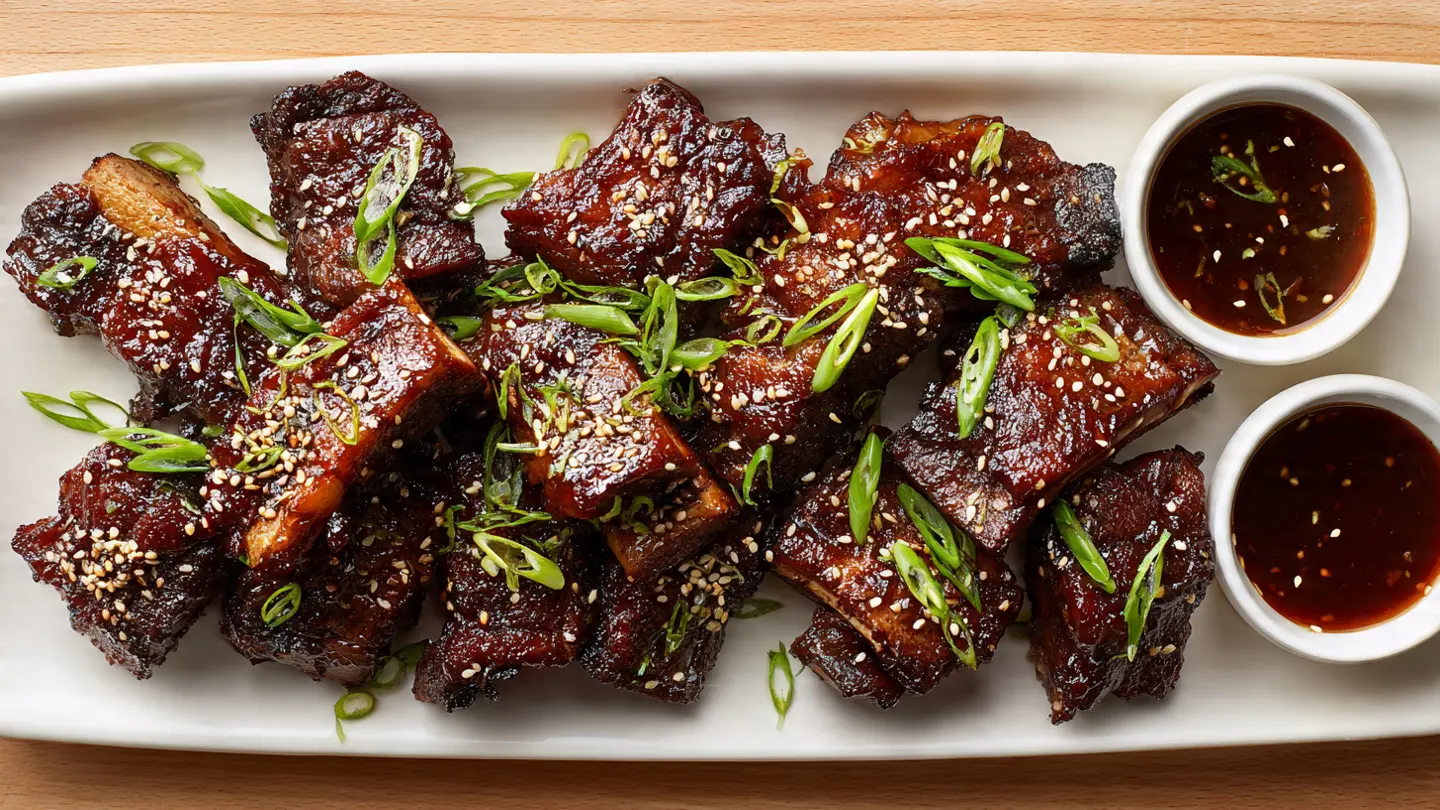
Flanken style beef short ribs are a game changer for anyone who loves bold, savory flavors with minimal effort. These thinly sliced ribs, cut across the bone rather than between them, soak up marinade like a dream and cook in a fraction of the time compared to traditional short ribs.
I stumbled upon this Korean-inspired preparation years ago at a family barbecue, and it’s been my go-to ever since. The combination of soy sauce, garlic, and sesame oil creates a marinade that’s both sweet and umami-rich, caramelizing beautifully on the grill or stovetop. The best part is how quickly these cook. We’re talking 10-15 minutes from start to finish, making this beef short ribs flanken style recipe perfect for busy weeknights or last-minute gatherings.
The thin cut means every bite is tender and packed with flavor. You’ll find yourself gnawing on the bones to get every last morsel of that perfectly charred, juicy meat.
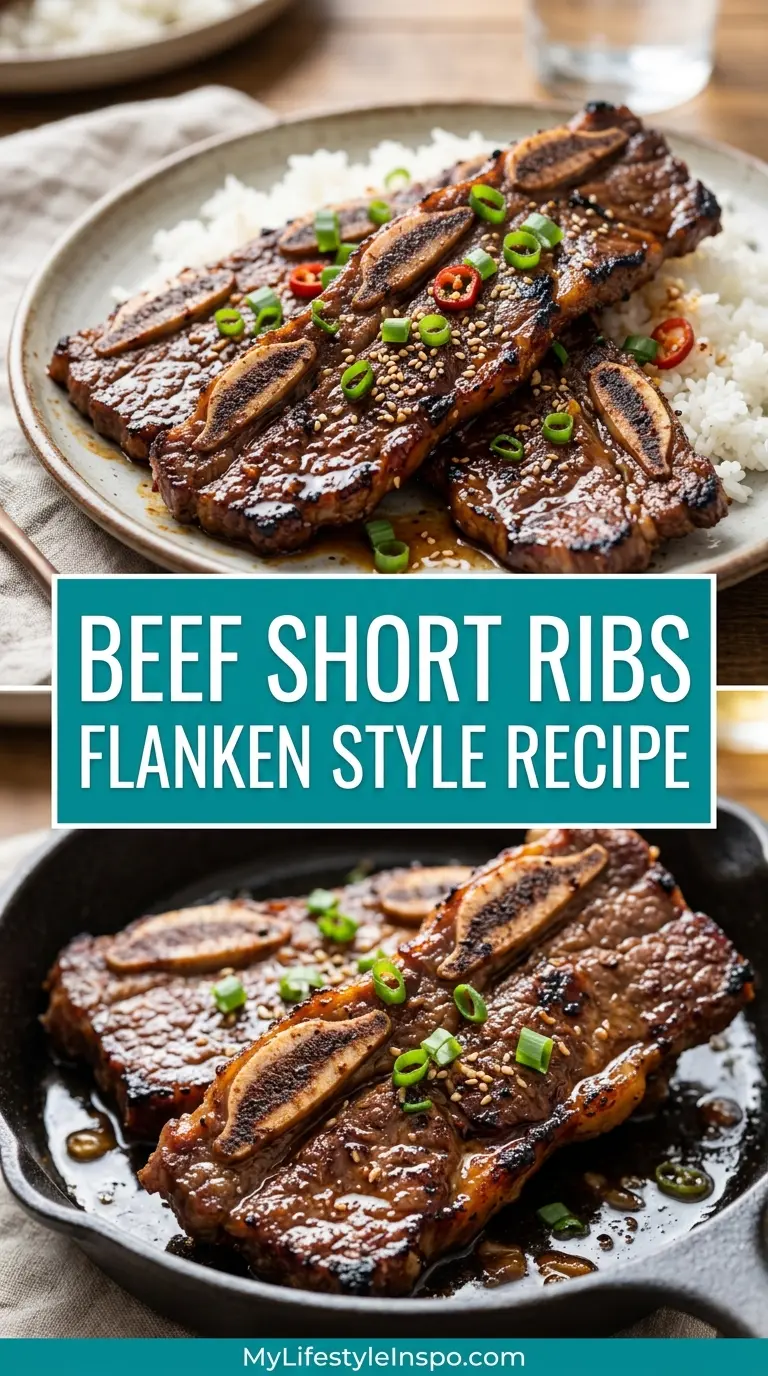
Why You’ll Love This Beef Short Ribs Flanken Style Recipe
This recipe brings restaurant-quality results to your home kitchen with ingredients you likely already have in your pantry. The marinade does all the heavy lifting, tenderizing the meat while infusing it with layers of flavor.
Unlike traditional braised short ribs that require hours of cooking, flanken ribs are ready in minutes. The cross-cut style exposes more surface area to the heat, resulting in a gorgeous caramelized crust while keeping the interior juicy and tender. Plus, the bones add incredible flavor and make these ribs fun to eat.
- Quick cooking time: Ready in 10-15 minutes once marinated
- Tender and flavorful: The thin cut ensures every bite is succulent
- Versatile preparation: Grill, pan-sear, broil, or air fry with equally delicious results
- Budget-friendly: Often less expensive than other premium beef cuts
- Perfect for entertaining: Impressive presentation with minimal effort
- Make-ahead friendly: Marinate overnight for even deeper flavor
You might also enjoy: Air Fryer Beef Ribs Recipe
Ingredients
This beef short ribs flanken style recipe uses simple, accessible ingredients that come together to create complex, addictive flavors. The marinade balances sweet, salty, and aromatic elements perfectly.
- 2.5 lbs (1.1 kg) flanken style beef short ribs (cut about ½ inch thick across the bone)
- ½ cup (120 ml) soy sauce
- ¼ cup (60 ml) honey or brown sugar
- 3 tablespoons (45 ml) sesame oil
- 6 cloves garlic, minced
- 2 tablespoons (30 ml) rice wine or mirin
- 1 tablespoon (15 g) fresh ginger, grated
- 1 medium Asian pear or regular pear, grated (about ½ cup)
- 2 green onions, chopped
- 1 tablespoon (15 ml) sesame seeds (for garnish)
- ½ teaspoon black pepper
- 1 small onion, thinly sliced
Kitchen Equipment Needed
Having the right tools makes this recipe even easier to execute. You don’t need anything fancy, just a few kitchen essentials.
- Large mixing bowl or shallow dish for marinating
- Whisk
- Grater (for pear and ginger)
- Gallon-sized resealable plastic bag (optional, for marinating)
- Grill, cast iron skillet, or grill pan
- Tongs
- Meat thermometer (optional)
- Sharp knife and cutting board
Recommended Products for This Recipe
These carefully selected products will help you achieve the best results and make the cooking process smoother.
1. Lodge Cast Iron Grill Pan
A cast iron grill pan gives you those beautiful char marks and even heat distribution that makes flanken ribs truly exceptional. The ridges help drain excess fat while the heavy bottom prevents hot spots. This pan will last generations and only gets better with use.
2. Premium Sesame Oil
High-quality toasted sesame oil makes a noticeable difference in the marinade’s depth of flavor. Japanese or Korean brands offer the richest, most aromatic profiles. A little goes a long way, and one bottle lasts for many batches of ribs.
3. Microplane Grater
For perfectly grated ginger and pear that blend seamlessly into the marinade, a microplane grater is essential. It creates a fine texture that distributes flavor evenly and helps tenderize the meat naturally.
Read Also: Air Fryer Beef Tenderloin Recipe
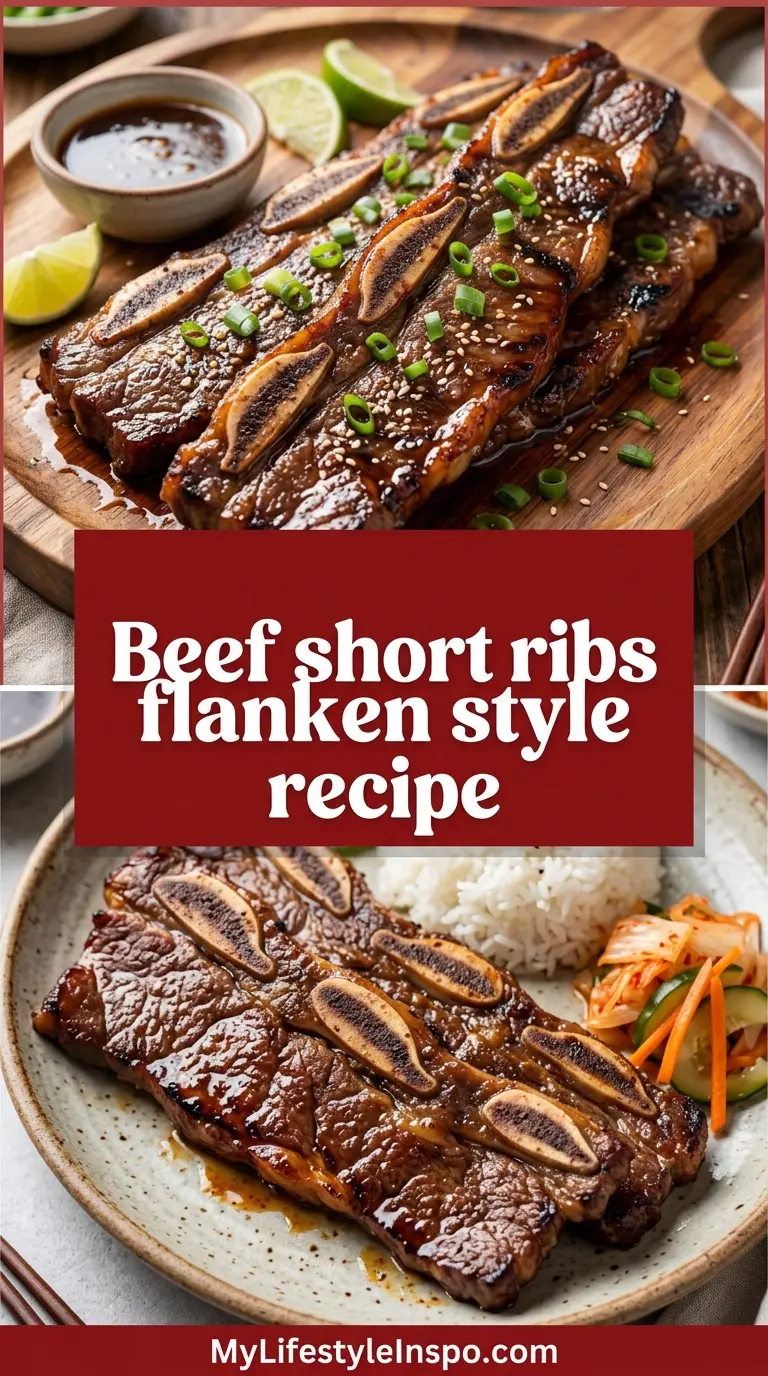
Step-by-Step Instructions
Follow these detailed steps to create perfectly marinated and cooked flanken short ribs that rival any Korean barbecue restaurant.
1. Prepare the Short Ribs
- Rinse the flanken short ribs under cold water to remove any small bone fragments from the cutting process
- Pat the ribs completely dry with paper towels (this helps the marinade adhere better and promotes better browning later)
- If the ribs are longer than 5-6 inches, use a sharp knife to cut between the bone sections to create smaller, more manageable pieces
- Place the ribs in a large bowl or gallon-sized resealable bag
- Set aside while you prepare the marinade
2. Make the Marinade
- In a medium mixing bowl, combine the soy sauce, honey (or brown sugar), and sesame oil
- Add the minced garlic and grated ginger to the bowl
- Grate the Asian pear directly into the marinade (the pear acts as a natural meat tenderizer and adds subtle sweetness)
- Pour in the rice wine or mirin
- Add the black pepper and chopped green onions
- Whisk everything together until the honey or sugar is fully dissolved and the mixture is well combined
- The marinade should be smooth with small bits of pear and garlic throughout
3. Marinate the Ribs
- Pour the marinade over the short ribs, making sure every piece is well coated
- Add the sliced onion to the bowl or bag, distributing it among the ribs
- If using a bowl, toss the ribs with your hands to ensure even coverage
- If using a resealable bag, seal it and massage the marinade into the meat
- Refrigerate for at least 2 hours, though overnight marinating (8-12 hours) yields the best flavor penetration
- Turn the ribs or flip the bag halfway through marinating to ensure all sides get equal exposure
- Remove from the refrigerator 20-30 minutes before cooking to bring to room temperature
4. Prepare for Cooking
- Remove the ribs from the marinade, shaking off excess liquid but leaving some coating on the meat
- Reserve about ½ cup of the marinade in a small saucepan for making a glaze (do not use marinade that touched raw meat without cooking it first)
- Bring the reserved marinade to a boil over medium-high heat and simmer for 5-7 minutes until it reduces by half and thickens slightly
- This cooked marinade can be brushed on the ribs during cooking or served as a dipping sauce
5. Cook the Flanken Ribs (Grill Method)
- Preheat your grill to medium-high heat (about 400°F/200°C)
- Clean the grill grates thoroughly and oil them lightly to prevent sticking
- Place the ribs directly on the grill grates in a single layer, meat side down first
- Let them cook undisturbed for 3-4 minutes to develop a good char
- Flip the ribs and cook for another 3-4 minutes on the other side
- Brush with the reduced marinade during the last minute of cooking if desired
- The ribs are done when they’re caramelized on the outside and just cooked through (internal temperature should reach 145°F/63°C for medium)
- Remove from the grill and let rest for 2-3 minutes
6. Cook the Flanken Ribs (Stovetop Method)
- Heat a large cast iron skillet or grill pan over medium-high heat until very hot
- Add a small amount of neutral oil (vegetable or avocado) if your pan isn’t well-seasoned
- Working in batches to avoid overcrowding, place the ribs in the hot pan
- Cook for 2-3 minutes per side without moving them so they develop a deep brown crust
- The edges should be crispy and caramelized
- Transfer cooked ribs to a plate and tent with foil to keep warm while you finish the remaining batches
- Deglaze the pan with the reduced marinade if desired for extra sauce
7. Serve
- Arrange the cooked ribs on a serving platter
- Sprinkle with sesame seeds and additional chopped green onions for garnish
- Drizzle with the reduced marinade if you made extra
- Serve immediately while hot for the best texture and flavor
- Provide small plates and napkins, as these are best enjoyed eating with your hands
This pairs beautifully with Chicken Fried Rice Recipe for a complete Asian-inspired meal.
Tips for Success
These tips will help you achieve restaurant-quality results and avoid common pitfalls when making flanken short ribs.
- Don’t skip the pear: Asian pear contains enzymes that naturally tenderize meat while adding subtle sweetness without making it taste fruity. Regular pear works too, though Asian pear is more traditional
- Marinate long enough: While 2 hours is the minimum, overnight marinating allows the flavors to penetrate deeply and the meat to become incredibly tender
- Pat ribs dry before cooking: Excess moisture prevents proper caramelization, so remove ribs from marinade and let excess drip off before cooking
- Don’t overcrowd your cooking surface: Whether grilling or pan-searing, give each piece space for proper browning and crisping
- Control the heat: Medium-high heat is ideal; too hot and the sugars in the marinade will burn before the meat cooks through
- Rest the meat: A brief 2-3 minute rest allows juices to redistribute throughout the meat
- Cut against the grain: If your ribs need additional trimming, always cut perpendicular to the meat fibers for maximum tenderness
- Save some marinade: Reserve a portion before adding raw meat if you want sauce for serving
Read Also: Air Fryer Beef and Broccoli Recipe
Serving Suggestions
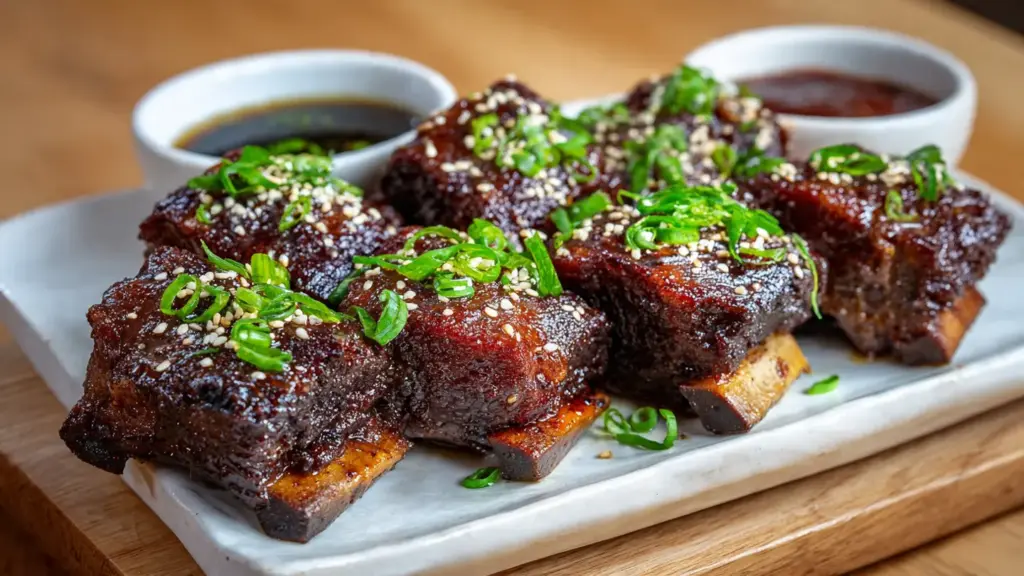
Flanken short ribs are incredibly versatile and pair wonderfully with a variety of side dishes and accompaniments.
Serve these ribs over steamed white or brown rice to soak up all those delicious juices. The combination is classic and satisfying.
For a traditional Korean meal presentation, serve with lettuce leaves (butter lettuce or red leaf lettuce) so guests can make their own wraps. Add kimchi, pickled radish, and ssamjang (Korean dipping sauce) for authentic flavors.
- Steamed jasmine or sticky rice
- Easy Fried Rice
- Grilled or roasted vegetables like asparagus, zucchini, or bell peppers
- Asian cucumber salad
- Kimchi or other fermented vegetables
- Sautéed bok choy or garlic spinach
- Corn on the cob
- Simple green salad with ginger dressing
- Roasted Carrot Soup Recipe as a starter
- Cauliflower rice for a low-carb option
Another favorite: Udon Noodle Soup Recipe
Variations to Try
Once you’ve mastered the classic version, these variations offer exciting new flavor profiles while maintaining the essential technique.
- Spicy Korean style: Add 2-3 tablespoons of gochugaru (Korean red pepper flakes) or gochujang (Korean chili paste) to the marinade for heat
- Citrus-glazed ribs: Replace half the soy sauce with fresh orange juice and add orange zest for a bright, citrusy flavor
- Sweet teriyaki: Increase the honey to ½ cup and add a splash of pineapple juice for a sweeter profile
- Smoky chipotle: Swap the Asian flavors for a southwestern marinade using chipotle peppers in adobo, brown sugar, and smoked paprika
- Vietnamese-style: Use fish sauce instead of half the soy sauce, add lemongrass, and finish with fresh herbs like cilantro and mint
- Garlic butter finish: After cooking, brush the ribs with melted garlic butter mixed with fresh parsley
- Air fryer method: Cook marinated ribs at 400°F (200°C) for 10-12 minutes, flipping halfway through
- Slow-cooked option: For fall-apart tender ribs, braise in the oven at 325°F (163°C) for 2 hours with the marinade
For a lighter option, try: Air Fryer Salmon Recipe
Storage and Reheating
Proper storage keeps your flanken ribs delicious for several days, making them perfect for meal prep or enjoying leftovers.
- Refrigerator storage: Store cooked ribs in an airtight container for up to 4 days. Keep any extra sauce separate to prevent the meat from becoming soggy
- Freezer storage: Freeze cooked ribs in a freezer-safe container or bag for up to 3 months. For best results, freeze without sauce and add fresh sauce when reheating
- Marinated raw ribs: Can be frozen in the marinade for up to 2 months. Thaw in the refrigerator overnight before cooking
- Reheating in oven: Place ribs on a baking sheet and reheat at 350°F (175°C) for 10-12 minutes until warmed through. Cover with foil to prevent drying
- Reheating in skillet: Heat a skillet over medium heat, add a splash of water or broth, and warm the ribs for 3-4 minutes per side
- Microwave reheating: While not ideal, you can microwave on 50% power in 30-second intervals, covered with a damp paper towel to maintain moisture
- Serving leftovers: Chop leftover ribs and use them in fried rice, noodle dishes, tacos, or grain bowls
Read Also: Air Fryer Beef Tips Recipe
Nutritional Facts
Per serving (approximately 6 oz/170g of cooked meat, serves 4):
- Calories: 485
- Total Fat: 32g
- Saturated Fat: 12g
- Cholesterol: 115mg
- Sodium: 1,240mg
- Total Carbohydrates: 15g
- Dietary Fiber: 0.5g
- Sugars: 13g
- Protein: 35g
- Iron: 15% DV
- Calcium: 4% DV
Note: Nutritional values are estimates and will vary based on specific ingredients used and portion sizes. Flanken ribs are naturally higher in fat due to marbling and connective tissue, which contributes to their rich flavor and tenderness.
You might also enjoy: Mexican Beef and Rice Skillet Recipe
Health Benefits of Key Ingredients
While flanken short ribs are an indulgent dish, several ingredients provide nutritional value alongside incredible flavor.
Beef is an excellent source of complete protein, providing all essential amino acids your body needs for muscle maintenance and repair. It’s particularly rich in iron, zinc, and B vitamins, especially B12, which supports energy production and nervous system health.
Garlic offers powerful antioxidants and has been linked to cardiovascular health benefits. It contains compounds that may help lower blood pressure and cholesterol levels. Ginger provides anti-inflammatory properties and aids in digestion, making it a perfect companion to rich, fatty meats.
- Sesame oil: Rich in antioxidants and vitamin E, supports heart health
- Ginger: Natural anti-inflammatory, aids digestion and reduces nausea
- Garlic: Boosts immune function, contains beneficial sulfur compounds
- Asian pear: Good source of fiber, vitamin C, and copper
- Green onions: Provide vitamins K and C, along with beneficial plant compounds
- Soy sauce: Contains small amounts of protein and beneficial probiotics if traditionally fermented
- Beef: Excellent source of iron, zinc, selenium, and B vitamins
For a lighter beef option, try: Air Fryer Beef Patties Recipe
Frequently Asked Questions
1. What’s the difference between flanken ribs and English-cut short ribs?
Flanken ribs are cut across the bone in thin strips, usually about ½ inch thick, with 3-4 small bone pieces running through each slice. English-cut short ribs are cut between the bones, resulting in thick chunks of meat attached to a single large bone. Flanken ribs cook much faster and are ideal for grilling or quick cooking, while English-cut ribs are better suited for braising or slow cooking.
2. Can I make this recipe without a grill?
Absolutely! A cast iron skillet or grill pan on the stovetop works wonderfully for flanken ribs. You can also use your oven’s broiler, placing the ribs on a baking sheet 4-6 inches from the heat source and broiling for 4-5 minutes per side. An air fryer is another excellent option at 400°F for 10-12 minutes, flipping halfway through.
3. Do I need to use Asian pear, or can I substitute something else?
While Asian pear is traditional and provides both sweetness and natural tenderizing enzymes, you can use regular pear, kiwi, or even pineapple as substitutes. Each adds slightly different flavors but all contain enzymes that help break down proteins. In a pinch, you can omit the fruit entirely and add an extra tablespoon of honey, though the marinade won’t be quite as effective at tenderizing.
4. How do I know when the ribs are done?
Flanken ribs cook quickly due to their thin cut. They’re done when they develop a deep brown, caramelized exterior and the meat is just cooked through. If using a thermometer, aim for an internal temperature of 145°F (63°C) for medium or 160°F (71°C) for well-done. The meat should still have some pink near the bone for optimal tenderness and juiciness.
5. Can I use this marinade for other cuts of beef?
This marinade works beautifully on many other cuts of beef, including skirt steak, flank steak, ribeye, or even thinly sliced sirloin for stir-fries. The sweet and savory profile complements most beef cuts. Adjust marinating times based on thickness: thinner cuts need 2-4 hours, while thicker steaks benefit from 4-8 hours.
This technique works wonderfully in Air Fryer Beef Roast Recipe as well.
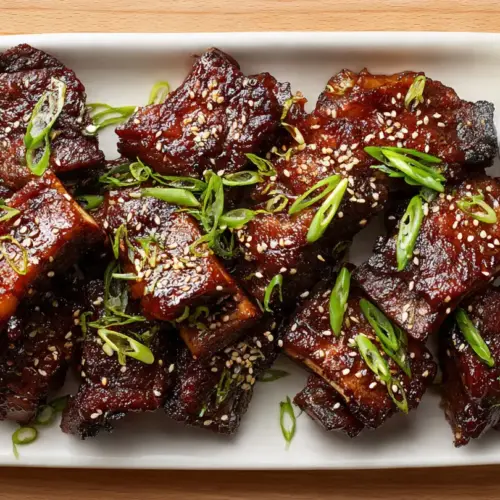
Flanken Style Beef Short Ribs

Equipment
- Large mixing bowl - or shallow dish for marinating
- Whisk
- Grater - for pear and ginger
- Gallon-sized resealable plastic bag - optional, for marinating
- Grill - or cast iron skillet, or grill pan
- Tongs
- Meat thermometer - optional
- Sharp knife
- Cutting board
Ingredients
- 2.5 lb flanken style beef short ribs - 1.1 kg, cut about ½ inch thick across the bone
- 0.5 cup soy sauce - 120 ml
- 0.25 cup honey - 60 ml, or brown sugar
- 3 tablespoon sesame oil - 45 ml
- 6 cloves garlic - minced
- 2 tablespoon rice wine - 30 ml, or mirin
- 1 tablespoon fresh ginger - 15 g, grated
- 1 medium Asian pear - or regular pear, grated (about ½ cup)
- green onions - 2, chopped (plus more for garnish)
- 0.5 teaspoon black pepper
- 1 small onion - thinly sliced
- sesame seeds - for garnish
For Serving (Optional)
- steamed rice - white or brown
- lettuce leaves - butter or red leaf, for wraps
- kimchi
- pickled radish
- ssamjang - Korean dipping sauce
Instructions
- Rinse flanken short ribs under cold water to remove bone fragments, pat completely dry with paper towels, and cut between bone sections if longer than 5-6 inches.
- In a medium bowl, combine soy sauce, honey, sesame oil, minced garlic, grated ginger, grated Asian pear, rice wine, black pepper, and chopped green onions. Whisk until honey dissolves completely.
- Pour marinade over ribs, add sliced onion, and toss to coat evenly. Refrigerate for at least 2 hours, preferably overnight for best flavor. Flip bag halfway through marinating.
- Remove ribs from marinade, reserving ½ cup for glaze. Bring reserved marinade to a boil and simmer 5-7 minutes until reduced by half and thickened.
- Preheat grill to medium-high (400°F). Place ribs meat-side down in a single layer and cook undisturbed for 3-4 minutes. Flip and cook another 3-4 minutes until caramelized and internal temperature reaches 145°F.
- Heat a cast iron skillet over medium-high heat. Cook ribs in batches, 2-3 minutes per side until deeply browned and crispy at the edges.
- Arrange cooked ribs on a serving platter, sprinkle with sesame seeds and extra green onions, and drizzle with reduced marinade. Serve immediately while hot.
Notes
- Don’t skip the pear: Asian pear contains enzymes that naturally tenderize meat while adding subtle sweetness without making it taste fruity. Regular pear works too.
- Marinate long enough: While 2 hours is the minimum, overnight marinating allows the flavors to penetrate deeply and the meat to become incredibly tender.
- Pat ribs dry before cooking: Excess moisture prevents proper caramelization, so remove ribs from marinade and let excess drip off before cooking.
- Don’t overcrowd: Whether grilling or pan-searing, give each piece space for proper browning and crisping.
- Control the heat: Medium-high heat is ideal; too hot and the sugars in the marinade will burn before the meat cooks through.
- Rest the meat: A brief 2-3 minute rest allows juices to redistribute throughout the meat for maximum tenderness.
- Save some marinade: Reserve a portion before adding raw meat if you want sauce for serving, and always cook it to a boil first.
- Storage: Store cooked ribs in an airtight container in the refrigerator for up to 4 days, or freeze for up to 3 months.
- Make it spicy: Add 2-3 tablespoons of gochugaru (Korean red pepper flakes) or gochujang to the marinade for heat.
- Air fryer option: Cook marinated ribs at 400°F for 10-12 minutes, flipping halfway through.
Final Thoughts
This beef short ribs flanken style recipe has become one of my most-requested dishes, and for good reason. The combination of quick preparation, bold flavors, and impressive presentation makes it perfect for any occasion, from casual weeknight dinners to special celebrations.
The beauty of flanken ribs lies in their versatility. Once you master the basic marinade and cooking technique, you can experiment with different flavor profiles and cooking methods to suit your preferences. I hope you’ll give this recipe a try and discover why these Korean-style ribs have become such a beloved staple in my kitchen.
I’d love to hear how your ribs turn out! Share your results in the comments below or tag me on social media with your creation.
Recommended:
- Air Fryer Beef Jerky Recipe
- Caldo de Res Recipe
- Beef Pozole Recipe
- Hamburger Soup Recipe
- Taco Skillet Recipe
- Cheeseburger Skillet Recipe
- Cowboy Skillet Recipe
- Cowboy Casserole Recipe
- Beef Bone Broth Soup Recipe
- Meatloaf Recipe Without Breadcrumbs