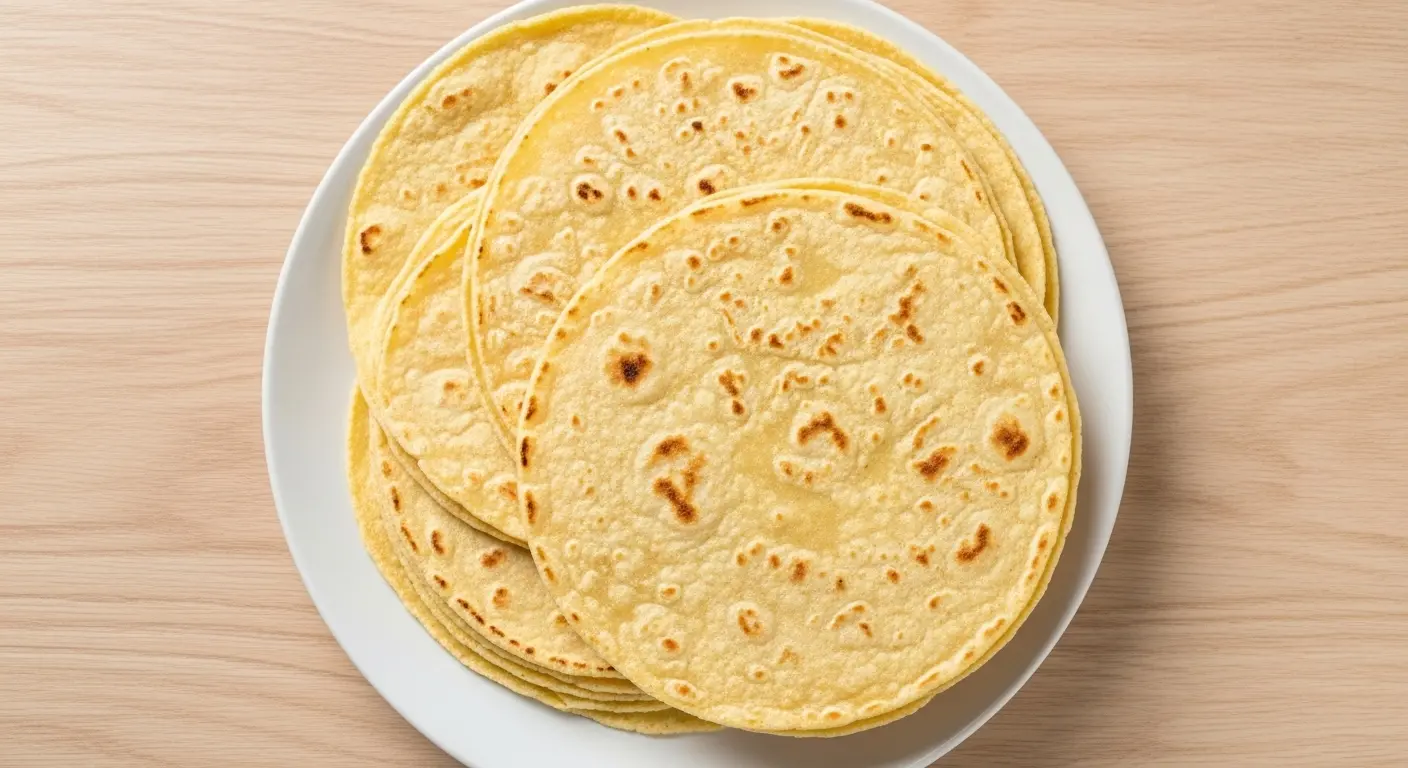
Making fresh corn tortilla recipe at home transforms your meals with soft, foldable tortillas bursting with authentic toasted corn flavor. Unlike store-bought versions that often crack and tear, homemade corn tortillas stay pliable and delicious.
These traditional Mexican staples require just three simple ingredients: masa harina, warm water, and a pinch of salt. The result is naturally gluten-free tortillas that fold perfectly around your favorite fillings without breaking.
Fresh tortillas elevate every taco, enchilada, and quesadilla. The warm, slightly sweet corn aroma fills your kitchen as they cook, creating an irresistible experience that store-bought versions simply cannot match.
The process might seem intimidating at first, but it’s surprisingly straightforward. With proper technique and a few key tips, you’ll master the art of tortilla-making in no time.
Once you taste the difference, you’ll understand why millions of home cooks across Mexico prepare fresh tortillas daily. The superior texture, authentic flavor, and satisfying experience make the effort absolutely worthwhile.
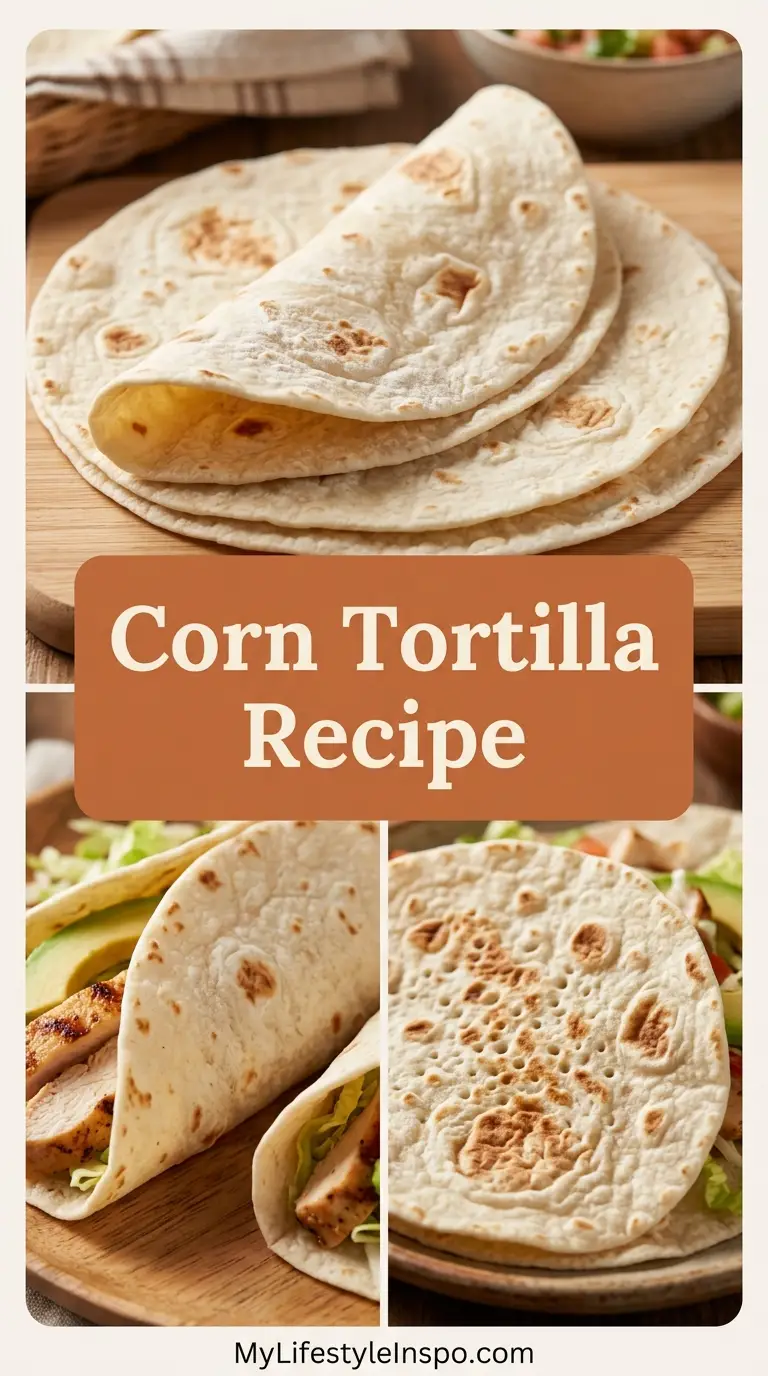
Why You’ll Love This Corn Tortilla Recipe
These homemade tortillas deliver restaurant-quality results right in your kitchen. The tender texture and rich corn flavor surpass anything you can buy at the store.
Making them from scratch lets you control every ingredient. You know exactly what goes into each tortilla, with no preservatives or artificial additives.
- Naturally gluten-free and perfect for those with dietary restrictions
- Budget-friendly with just three affordable ingredients
- Quick preparation taking only 30-40 minutes from start to finish
- Authentic Mexican flavor that transforms ordinary meals into extraordinary experiences
- Freezer-friendly so you can make large batches and store them for later
- Versatile for tacos, enchiladas, tostadas, quesadillas, and tortilla chips
The satisfaction of creating something traditional and authentic cannot be overstated. Your family will notice the difference immediately, requesting these homemade versions over store-bought every single time.
If you enjoy making classic guacamole, these fresh tortillas make the perfect pairing.
Ingredients
The simplicity of this recipe showcases how traditional Mexican cooking relies on quality ingredients rather than complicated techniques. Each component plays a crucial role in creating the perfect texture and flavor.
- 2 cups (240g) masa harina: This is nixtamalized corn flour, different from regular cornmeal or corn flour. Look for brands like Maseca, Masienda, or Bob’s Red Mill
- 1/2 teaspoon fine sea salt: Enhances the natural corn flavor
- 1 1/2 cups (355ml) warm water: Adjust as needed for proper dough consistency
Kitchen Equipment Needed
Having the right tools makes the tortilla-making process smoother and more enjoyable. While you can improvise with basic kitchen items, certain equipment produces superior results.
- Tortilla press: A cast iron or aluminum press ensures uniform thickness
- Plastic zip-top bag or parchment paper: Cut into squares for pressing
- Cast iron skillet, griddle, or comal: For cooking the tortillas
- Tortilla warmer or clean kitchen towel: Keeps tortillas warm and pliable
- Mixing bowl: For combining ingredients
- Measuring cups and spoons: For accurate measurements
Recommended Products for This Recipe
These handpicked products will elevate your tortilla-making experience and deliver professional results every time.
1. Victoria Cast Iron Tortilla Press
This heavy-duty press creates perfectly uniform tortillas with minimal effort. The cast iron construction ensures even pressure distribution, and the 8-inch size is ideal for standard tortillas. It’s built to last for decades of regular use.
2. Masienda Heirloom Masa Harina
This premium masa harina made from heirloom corn varieties delivers exceptional flavor and aroma. The nixtamalization process is carefully controlled for optimal texture and nutrition. Your tortillas will taste noticeably better with this high-quality flour.
3. Lodge Cast Iron Griddle
This double-burner griddle lets you cook multiple tortillas simultaneously, speeding up the process significantly. The pre-seasoned surface provides excellent heat retention and distribution. It’s perfect for large batches and family gatherings.
4. Imusa Tortilla Warmer
This insulated fabric warmer keeps tortillas hot and soft for up to an hour. The traditional design is both functional and attractive for table service. It’s machine washable and maintains the perfect serving temperature.
You might also enjoy: Easy Guacamole Recipe
Step-by-Step Instructions
Follow these detailed instructions for perfect corn tortillas every single time. Each step builds on the previous one, so read through completely before starting.
1. Prepare the Dough
- Combine 2 cups (240g) masa harina and 1/2 teaspoon salt in a large mixing bowl
- Whisk the dry ingredients together until evenly blended
- Add 1 cup (237ml) of warm water to the bowl
- Stir with your hand or a wooden spoon until the water is fully absorbed
- Gradually add remaining water, 2 tablespoons at a time, mixing after each addition
- Stop adding water when the dough pulls together into a cohesive ball
2. Knead and Test the Dough
- Use your hands to knead the dough in the bowl for 2-3 minutes
- Press the dough firmly and fold it over repeatedly to develop proper texture
- The finished dough should feel like soft playdough, moist but not sticky
- Perform the crack test: press a small piece of dough between your fingers
- If the edges crack significantly, add 1-2 tablespoons more water and knead again
- If the dough sticks to your hands, sprinkle with small amounts of masa harina
3. Rest and Portion the Dough
- Cover the dough bowl with a damp kitchen towel or plastic wrap
- Let it rest for 10-15 minutes to allow the masa to fully hydrate
- Divide the dough into 12-16 equal portions (about golf ball size, 35-40g each)
- Roll each portion between your palms to form smooth balls
- Keep the dough balls covered with a damp towel while you work to prevent drying
4. Prepare Your Pressing Station
- Cut a plastic zip-top bag open along both side seams to create one large sheet
- Alternatively, cut two squares of parchment paper, each about 8 inches square
- Place the plastic sheet or one piece of parchment on the bottom plate of your tortilla press
- If you don’t have a press, you can use a large flat-bottomed skillet or casserole dish
- Set up your workstation near the stove for efficient workflow
5. Press the Tortillas
- Place a dough ball in the center of the bottom plastic sheet or parchment
- Flatten it slightly with your hand to help it spread evenly
- Place the second plastic sheet or parchment piece on top
- Close the tortilla press lid and apply firm, even pressure
- Open the press and check the tortilla, it should be about 6 inches in diameter and 1/8 inch thick
- If using a skillet method, press down firmly and evenly with the flat bottom
- The edges should be smooth, not cracked or rough
6. Heat Your Cooking Surface
- Place your cast iron skillet, griddle, or comal over medium-high heat
- Let it preheat for 5 minutes until very hot but not smoking
- Test the heat by sprinkling a few drops of water on the surface
- The water should sizzle and evaporate within 2-3 seconds
- Adjust heat if needed to maintain consistent temperature throughout cooking
- A properly heated surface ensures even cooking without burning
7. Cook the First Side
- Carefully peel the top plastic sheet or parchment from the pressed tortilla
- Flip the tortilla onto your open hand, with the edge aligned at your index finger
- In one smooth motion, lay the tortilla flat on the hot cooking surface
- Peel away the remaining plastic or parchment
- Cook for 30-45 seconds until the edges begin to dry and lift slightly
- Small brown spots should appear on the underside
- Do not overcook this first side or the tortilla will not puff properly
8. Complete the Cooking Process
- Use a metal spatula to flip the tortilla to the second side
- Cook for 45-60 seconds until more brown spots appear
- Flip back to the first side one final time
- Cook for another 15-30 seconds, watching for the tortilla to puff up
- The puffing indicates steam building inside, creating the signature texture
- Remove immediately once puffed and transfer to your tortilla warmer or towel
- Wrap the cooked tortilla immediately to retain moisture and heat
9. Continue and Keep Warm
- Repeat the pressing and cooking process with remaining dough balls
- Stack cooked tortillas in the warmer or wrapped in the towel
- The steam from the hot tortillas helps keep them all soft and pliable
- You can press several tortillas ahead while others cook
- Work efficiently by having the next tortilla ready when one finishes cooking
- Serve the tortillas warm for the best texture and flavor
This pairs beautifully with chicken pozole for an authentic Mexican feast.
Tips for Success
These proven techniques will help you avoid common pitfalls and create consistently excellent tortillas. Small adjustments make a significant difference in the final result.
- Get the dough consistency right: The dough should be soft and pliable, not dry or crumbly. If it cracks when pressed, add more water one tablespoon at a time.
- Don’t skip the rest time: Letting the dough rest allows the masa to fully absorb the water, resulting in more flexible tortillas.
- Perfect your heat level: Too hot and tortillas burn before cooking through; too cool and they become tough. Medium-high heat works best for most stoves.
- Use fresh masa harina: Old masa can taste stale and produce tough tortillas. Store masa harina in an airtight container in the freezer for maximum freshness.
- Press evenly: Uneven thickness leads to inconsistent cooking. Apply steady, even pressure when using the tortilla press.
- Work quickly but carefully: The dough can dry out if left exposed. Keep unused dough covered while you work.
- Watch for the puff: When a tortilla puffs up during the final flip, it creates the perfect texture. This happens when the tortilla is cooked at the right temperature for the right amount of time.
- Keep them warm: Stack cooked tortillas in a warmer or towel immediately. The residual steam keeps them soft and prevents drying.
Read Also: Chicken Tinola Recipe
Serving Suggestions
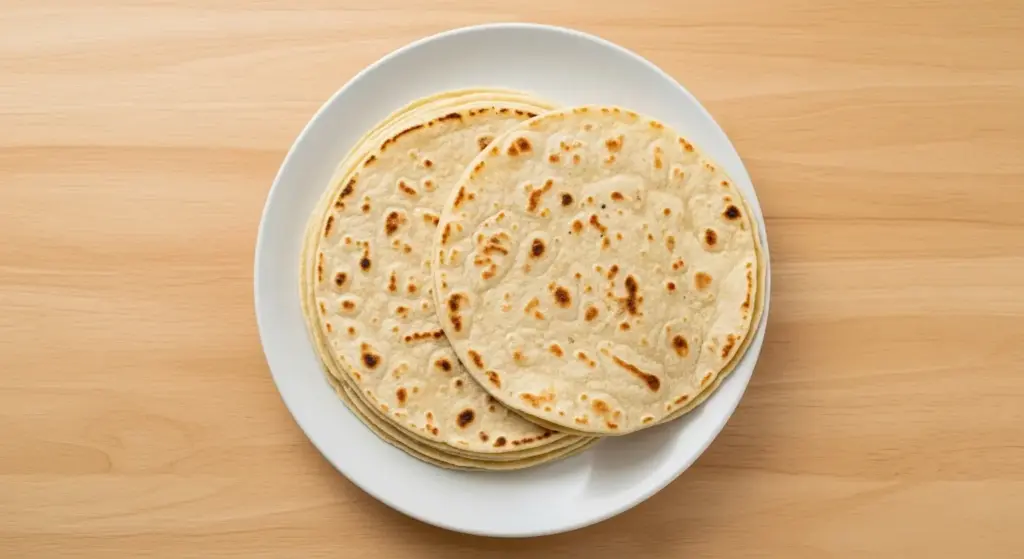
Fresh corn tortillas shine in countless Mexican dishes, from simple street tacos to elaborate family meals. Their authentic flavor and texture elevate every preparation.
- Fill with seasoned air fryer chicken breast and fresh salsa for quick weeknight tacos
- Create authentic chicken pozole topped with fresh vegetables and served with warm tortillas on the side
- Roll them around baked chicken filling and cheese sauce for classic enchiladas
- Crisp them in oil and top with refried beans, lettuce, and cheese for tostadas
- Layer with cheese and your favorite fillings for melty quesadillas
- Cut into triangles and bake or fry for homemade tortilla chips
- Serve alongside corn soup for a comforting meal
- Use as scoops for classic guacamole and fresh salsa
- Make chilaquiles by tearing tortillas, frying them, and simmering in salsa
- Wrap around scrambled eggs and beans for hearty breakfast burritos
Another favorite: Red Pozole Recipe
Variations to Try
Once you master the basic technique, experiment with these creative variations to add exciting new flavors to your tortilla repertoire.
- Blue corn tortillas: Replace regular masa harina with blue corn masa for a striking color and slightly earthier flavor
- Herb-infused: Knead 2 tablespoons minced fresh cilantro or epazote into the dough for aromatic tortillas
- Spicy tortillas: Add 1 teaspoon chili powder or 1/4 teaspoon cayenne to the dry ingredients for a subtle kick
- Garlic tortillas: Mix 1/2 teaspoon garlic powder into the masa for savory depth
- Lime-cilantro: Add 1 tablespoon lime juice and 2 tablespoons chopped cilantro to the dough
- Yellow corn: Use yellow masa harina for a sweeter flavor and golden color
- Oil-enriched: Add 1 tablespoon vegetable oil or melted lard to the dough for extra pliability and longer shelf life
- Smaller or larger: Adjust dough ball size for slider-sized street tacos or burrito-sized tortillas
For a lighter option, try: Healthy Broccoli Soup Recipe
Storage and Reheating
Proper storage techniques preserve the quality and texture of your homemade tortillas for several days. Follow these guidelines to maintain freshness.
- Room temperature: Stack cooled tortillas and wrap tightly in plastic wrap or store in a zip-top bag for up to 24 hours
- Refrigeration: Place in an airtight container or sealed bag and refrigerate for up to 5 days
- Freezing: Separate tortillas with parchment paper, place in a freezer bag, and freeze for up to 3 months
- Reheating on stovetop: Warm tortillas directly on a dry skillet over medium heat for 15-20 seconds per side
- Microwave method: Wrap 5-6 tortillas in a damp paper towel and microwave for 30-45 seconds
- Oven warming: Wrap a stack in aluminum foil and heat at 350°F (175°C) for 10-15 minutes
- Steaming: Place in a steamer basket over boiling water for 1-2 minutes for maximum softness
Read Also: Vegan Pozole Recipe
Nutritional Facts
Per tortilla (makes 15 tortillas, based on 40g dough balls):
- Calories: 52
- Total Fat: 0.5g
- Saturated Fat: 0.1g
- Cholesterol: 0mg
- Sodium: 78mg
- Total Carbohydrates: 11g
- Dietary Fiber: 1.5g
- Sugars: 0g
- Protein: 1.5g
- Calcium: 25mg
- Iron: 0.5mg
These tortillas provide complex carbohydrates for sustained energy while remaining low in fat and naturally sodium-free if you omit the salt. The nixtamalization process increases the bioavailability of nutrients, particularly calcium and niacin.
You might also enjoy: Beef Pozole Recipe
Health Benefits of Key Ingredients
The simple ingredients in corn tortillas offer surprising nutritional advantages compared to many processed alternatives.
Masa Harina: The nixtamalization process that creates masa harina increases calcium content significantly, with a single tortilla providing about 2% of your daily calcium needs. This ancient technique also improves the bioavailability of niacin (vitamin B3), making it easier for your body to absorb. The fiber content supports digestive health and promotes feelings of fullness. Unlike refined wheat flour, masa harina retains more of the corn’s natural nutrients and antioxidants.
- Naturally gluten-free for those with celiac disease or gluten sensitivity
- Contains resistant starch that feeds beneficial gut bacteria
- Provides essential minerals including magnesium, phosphorus, and iron
- Rich in antioxidants like ferulic acid that may reduce inflammation
- Lower glycemic index compared to white flour products
- Contains lutein and zeaxanthin for eye health support
For more delicious options, try: Green Pozole Recipe
Frequently Asked Questions
1. Can I make corn tortillas without a tortilla press?
Absolutely. While a press makes the process easier and more consistent, you can achieve great results without one. Place a dough ball between two sheets of plastic wrap or parchment paper. Use a heavy flat-bottomed skillet, pie plate, or casserole dish to press down firmly and evenly. Rotate the dough 90 degrees and press again to create a round shape. You can also use a rolling pin, though this requires more skill to achieve uniform thickness.
2. Why do my tortillas crack when I try to fold them?
Cracking usually indicates insufficient moisture in the dough or overcooking. Make sure your initial dough feels soft and pliable, not dry or crumbly. During cooking, don’t leave tortillas on the heat too long, especially during the first side. Keep cooked tortillas wrapped in a towel or warmer immediately after cooking, the steam helps maintain flexibility. If store-bought tortillas crack, warm them briefly to restore pliability.
3. What’s the difference between masa harina and regular cornmeal?
Masa harina is made from corn that has undergone nixtamalization, a process where dried corn is soaked and cooked in an alkaline solution (usually lime water). This changes the corn’s structure, making it grindable into smooth flour and increasing nutrient availability. Regular cornmeal is simply dried corn ground to varying degrees of fineness without this treatment. You cannot substitute cornmeal for masa harina in tortilla recipes, the results will be gritty and won’t hold together properly.
4. How can I tell when my cooking surface is the right temperature?
Sprinkle a few drops of water on the preheated surface. They should sizzle and evaporate within 2-3 seconds. If the water just sits there, the surface needs more time to heat. If it evaporates instantly with violent sizzling, reduce the heat slightly. Another test: place a tortilla on the surface, it should start developing light brown spots on the underside within 30-45 seconds of cooking.
5. Can I make the dough ahead of time?
Yes, you can prepare the dough up to 2 hours ahead. Wrap it tightly in plastic wrap and refrigerate. Let it come to room temperature for 15-20 minutes before portioning and pressing. For best results though, use the dough the same day you make it. Masa dough doesn’t benefit from long resting periods like wheat-based doughs, and it can develop off flavors if stored too long.
This pairs perfectly with caldo de res for an authentic Mexican meal.
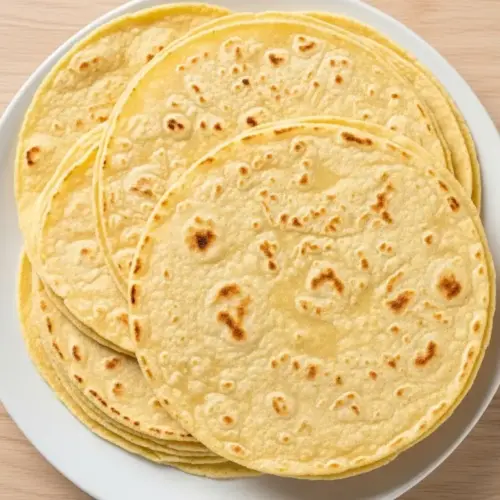
Fresh Corn Tortillas

Equipment
- Tortilla press - Cast iron or aluminum press ensures uniform thickness
- Plastic zip-top bag or parchment paper - Cut into squares for pressing
- Cast iron skillet, griddle, or comal - For cooking the tortillas
- Tortilla warmer or clean kitchen towel - Keeps tortillas warm and pliable
- Mixing bowl
- Measuring cups and spoons
- Metal spatula
Ingredients
- 2 cups masa harina - 240g, nixtamalized corn flour like Maseca, Masienda, or Bob’s Red Mill
- 0.5 teaspoons fine sea salt
- 1.5 cups warm water - 355ml, adjust as needed for proper dough consistency
Instructions
- Combine masa harina and salt in a large mixing bowl and whisk to blend.
- Add 1 cup of warm water and stir with your hand or a wooden spoon until fully absorbed. Gradually add remaining water 2 tablespoons at a time until the dough pulls together into a cohesive ball.
- Knead the dough in the bowl for 2-3 minutes until it feels like soft playdough, moist but not sticky. Perform the crack test by pressing a small piece between your fingers; if edges crack significantly, add 1-2 tablespoons more water.
- Cover the dough bowl with a damp kitchen towel and let it rest for 10-15 minutes.
- Divide the dough into 12-16 equal portions (golf ball size, 35-40g each) and roll into smooth balls. Keep covered with a damp towel while you work.
- Cut a plastic zip-top bag along the side seams to create one large sheet or cut two squares of parchment paper. Place the plastic sheet on the bottom plate of your tortilla press.
- Place a dough ball in the center, flatten slightly with your hand, place the second plastic sheet on top, and close the press with firm, even pressure until the tortilla is about 6 inches in diameter and 1/8 inch thick.
- Preheat your cast iron skillet, griddle, or comal over medium-high heat for 5 minutes until very hot. Test by sprinkling water drops; they should sizzle and evaporate within 2-3 seconds.
- Peel the top plastic sheet, flip the tortilla onto your open hand, and lay it flat on the hot cooking surface. Peel away the remaining plastic. Cook for 30-45 seconds until edges begin to dry and small brown spots appear.
- Flip the tortilla with a metal spatula and cook for 45-60 seconds until more brown spots appear. Flip back to the first side and cook for another 15-30 seconds until the tortilla puffs up.
- Transfer the cooked tortilla immediately to your tortilla warmer or wrap in a clean kitchen towel. Repeat with remaining dough balls, stacking cooked tortillas to keep them soft and pliable.
Notes
- Dough consistency: The dough should feel like soft playdough. If it cracks when pressed, add more water one tablespoon at a time. If it sticks to your hands, sprinkle with small amounts of masa harina.
- Don’t skip the rest time: Letting the dough rest for 10-15 minutes allows the masa to fully absorb the water, resulting in more flexible tortillas.
- Perfect heat level: Medium-high heat works best. Too hot and tortillas burn before cooking through; too cool and they become tough.
- Use fresh masa harina: Old masa can taste stale and produce tough tortillas. Store masa harina in an airtight container in the freezer for maximum freshness.
- Watch for the puff: When a tortilla puffs up during the final flip, it creates the perfect texture. This indicates proper temperature and cooking time.
- No tortilla press? Place a dough ball between two sheets of plastic wrap and press down firmly with a heavy flat-bottomed skillet, pie plate, or casserole dish. Rotate 90 degrees and press again.
- Make-ahead option: Prepare the dough up to 2 hours ahead, wrap tightly in plastic wrap, and refrigerate. Let come to room temperature for 15-20 minutes before portioning and pressing.
- Storage: Stack cooled tortillas and wrap tightly in plastic wrap for up to 24 hours at room temperature. Refrigerate in an airtight container for up to 5 days, or freeze separated by parchment paper for up to 3 months.
- Reheating: Warm on a dry skillet over medium heat for 15-20 seconds per side, or wrap 5-6 tortillas in a damp paper towel and microwave for 30-45 seconds.
- Variations: Try blue corn masa for earthier flavor, add 2 tablespoons minced fresh cilantro to the dough, or mix in 1 tablespoon vegetable oil for extra pliability.
Final Thoughts
Making your own corn tortilla recipe at home connects you to centuries of Mexican culinary tradition. The simple act of mixing masa harina with water and transforming it into soft, warm tortillas brings immense satisfaction.
These homemade versions surpass store-bought alternatives in every way. The tender texture, authentic corn flavor, and fresh aroma create an eating experience that elevates any meal.
Start with this basic recipe and soon you’ll be experimenting with variations and incorporating fresh tortillas into your regular cooking rotation. Your tacos, enchiladas, and quesadillas will never be the same.
Give this corn tortilla recipe a try and discover why homemade is always better. Share your results in the comments below, and let us know which fillings you love most.
Recommended:
- Classic Bruschetta Recipe
- Strawberry Bruschetta Recipe
- Chicken Bruschetta Recipe
- Easy Nachos Recipe
- Loaded Nachos Recipe
- Baked Ziti Recipe
- Enchiladas Suizas Recipe
- Taco Skillet Recipe
- Mexican Beef and Rice Skillet Recipe
- Gazpacho Recipe