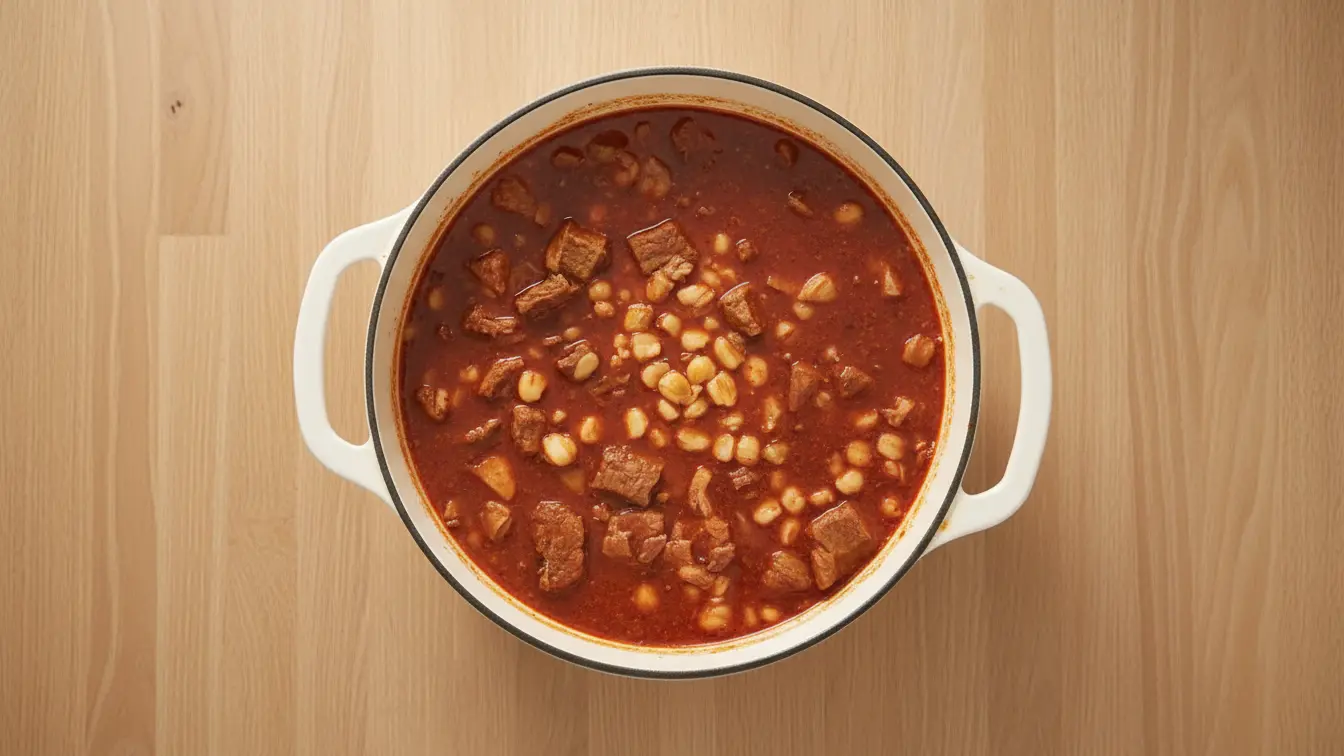
I have a confession to make. The first time I tried pozole, I was at a friend’s grandmother’s house in Guadalajara, and I practically licked the bowl clean. She laughed at my enthusiasm but also beamed with pride, knowing she’d converted another soul to this iconic Mexican stew.
This Red Pozole Recipe brings that same magic into your kitchen. The rich, chile-infused broth, tender pork, and perfectly cooked hominy create a symphony of flavors that’s both comforting and exciting. Making pozole from scratch might seem intimidating, but I promise you, it’s more about patience than skill.
What makes pozole so special is how it transforms simple ingredients into something extraordinary. The dried chiles bloom into a deep, complex sauce. The pork becomes melt-in-your-mouth tender. And those plump hominy kernels soak up all those beautiful flavors.
I’ve made this recipe countless times since that first bowl in Guadalajara. I’ve served it at birthday parties, holiday gatherings, and lazy Sunday dinners. Every single time, it disappears faster than I expect.
Why You’ll Love This Red Pozole Recipe
This soup has become my go-to for feeding a crowd because it checks every single box. It’s deeply flavorful without being complicated, impressive without being fussy, and it actually gets better as it sits.
The beauty of pozole is in its versatility. You can prep most of it ahead of time, which makes entertaining so much easier. Plus, everyone gets to customize their bowl with toppings, which turns dinner into an interactive experience that guests absolutely love.
Here’s what makes this recipe stand out:
- Authentic flavor without hard-to-find ingredients: I’ve tested this with readily available chiles that you can find at most grocery stores
- Freezer-friendly perfection: Make a double batch and freeze half for those nights when cooking feels impossible
- Naturally gluten-free: Great for guests with dietary restrictions
- Scales beautifully: The recipe works just as well for an intimate dinner as it does for feeding twenty people
- Budget-friendly comfort: Pork shoulder is economical, and a little goes a long way
This chicken corn chowder is another soup that my family requests on repeat.
Ingredients
The ingredient list might look long, but most of these are pantry staples you probably already have. The key is using the right combination of dried chiles to build that signature red pozole flavor.
For the Broth:
- 3 pounds pork shoulder, cut into 2-inch chunks
- 1 large white onion, quartered
- 8 cloves garlic, peeled
- 2 bay leaves
- 1 tablespoon dried oregano, preferably Mexican
- 1 tablespoon salt
- 10 cups water
For the Red Chile Sauce:
- 6 dried guajillo chiles
- 3 dried ancho chiles
- 2 dried California chiles
- 3 cups hot water
- 4 cloves garlic
- 1 teaspoon cumin
- 1 teaspoon salt
- ½ teaspoon black pepper
For the Pozole:
- 2 (25-ounce) cans white hominy, drained and rinsed
- Salt to taste
For Serving:
- Shredded cabbage
- Sliced radishes
- Dried oregano
- Lime wedges
- Diced white onion
- Sliced jalapeños
- Tostadas
- Fresh cilantro
Kitchen Equipment Needed
You don’t need fancy equipment to make excellent pozole, just a few sturdy basics that can handle long, slow cooking. Having the right tools makes the process so much smoother.
- Large heavy-bottomed pot or Dutch oven (at least 8-quart capacity)
- Blender or immersion blender
- Fine-mesh strainer
- Sharp knife
- Cutting board
- Wooden spoon
- Tongs
- Large bowl for chile soaking
- Kitchen shears
- Ladle
Recommended Products for This Recipe
I’ve made pozole dozens of times, and these are the products that genuinely make a difference in how the recipe turns out. They’re investments that’ll serve you well beyond this single dish.
1. Le Creuset Enameled Cast Iron Dutch Oven
This pot distributes heat so evenly that your pork cooks to perfect tenderness without any hot spots or scorching. The heavy lid traps moisture beautifully, creating that melt-in-your-mouth texture you want. Mine has lasted over a decade and still looks nearly new.
2. Vitamix High-Performance Blender
A powerful blender is crucial for getting that smooth, velvety chile sauce without any gritty bits. My Vitamix pulverizes the rehydrated chiles and garlic into the silkiest sauce in under a minute. The difference between this and a regular blender is night and day.
3. Premium Dried Chile Variety Pack
Quality chiles make quality pozole, period. This variety pack includes guajillo, ancho, and California chiles in perfect proportions. Fresh dried chiles (yes, that’s a thing) are pliable and fragrant, unlike those dusty ones that have been sitting on grocery store shelves for months.
4. OXO Good Grips Fine-Mesh Strainer
You’ll use this to strain the chile sauce, removing seeds and tough skins that would otherwise make your pozole gritty. The fine mesh catches everything while letting the flavorful sauce flow through smoothly. It’s also perfect for rinsing the hominy thoroughly.
My turkey wild rice soup is another hearty recipe that benefits from quality cookware.
Step-by-Step Instructions
Making pozole is a labor of love, but the actual hands-on time is minimal. Most of the process involves patient simmering while you go about your day.
1. Prepare the Pork and Broth
- Pat the pork shoulder chunks dry with paper towels (this helps them brown slightly during cooking)
- Place the pork in your large pot along with the quartered onion, 8 whole garlic cloves, bay leaves, oregano, and salt
- Pour in 10 cups of water, making sure the pork is fully submerged
- Bring to a boil over high heat, then reduce to a gentle simmer
- Skim off any foam or impurities that rise to the surface during the first 15 minutes
- Cover and simmer for 2 to 2.5 hours, until the pork is fork-tender and shreds easily
- Check occasionally and add more water if the level drops too much
2. Prepare the Dried Chiles
- While the pork simmers, remove the stems from all the dried chiles using kitchen shears
- Slice each chile open lengthwise and shake out the seeds (some seeds are fine, but too many make it bitter)
- Heat a dry skillet over medium heat and toast the chiles for 30 seconds per side, just until fragrant (don’t let them smoke or burn)
- Place the toasted chiles in a large bowl and cover with 3 cups of hot water
- Let them soak for 20 to 30 minutes until they’re soft and pliable
- The water will turn a deep red color as the chiles rehydrate
3. Make the Red Chile Sauce
- Transfer the soaked chiles to your blender, reserving 1 cup of the soaking liquid
- Add 4 fresh garlic cloves, cumin, salt, pepper, and the reserved soaking liquid to the blender
- Blend on high speed for 1 to 2 minutes until completely smooth and no chunks remain
- Pour the sauce through a fine-mesh strainer into a bowl, pressing with a spoon to extract all the liquid
- Discard the solids left in the strainer (these are just tough skins and any remaining seeds)
- The sauce should be thick, smooth, and deeply red
4. Combine Everything
- Once the pork is tender, remove it from the pot and shred it using two forks
- Strain the broth through a fine-mesh strainer to remove the onion, garlic, and bay leaves
- Return the strained broth to the pot and bring it back to a simmer
- Pour in the red chile sauce and stir well to combine
- Add the drained and rinsed hominy to the pot
- Return the shredded pork to the pot
- Simmer everything together for 30 minutes to let the flavors marry
5. Season and Finish
- Taste the pozole and adjust the salt as needed (it usually needs at least another teaspoon)
- The pozole should have a rich, slightly spicy flavor with noticeable depth from the chiles
- If it’s too thick, add a bit more water or broth
- If the flavor seems flat, add a squeeze of lime juice and more salt
- Let it simmer for another 10 minutes after adjusting seasonings
6. Serve with Toppings
- Ladle the hot pozole into large bowls, making sure each gets plenty of pork and hominy
- Set out all your toppings in small bowls so everyone can customize their bowl
- The traditional way is to pile on shredded cabbage, radishes, onion, cilantro, and oregano, then squeeze lime over everything
- Serve with tostadas on the side for scooping and crunching
Another favorite soup for gatherings is my loaded potato soup.
Tips for Success
I’ve learned these tricks through trial and error, and they make all the difference between good pozole and amazing pozole.
These tips will help you nail the recipe on your first try:
- Don’t skip toasting the chiles: This 60-second step awakens the oils and deepens the flavor dramatically
- Strain the chile sauce thoroughly: Any bits of skin or seeds will create an unpleasant texture
- Use pork shoulder, not loin: The fat and connective tissue in shoulder create that silky, rich broth
- Rinse the hominy well: Canned hominy sits in a starchy liquid that can make your pozole gummy
- Make it a day ahead: Pozole tastes significantly better the next day after all the flavors blend
- Keep toppings fresh and crunchy: Cut them right before serving for the best texture contrast
- Simmer, don’t boil: Aggressive boiling makes the pork tough and the broth cloudy
- Adjust the heat level: Add a dried chile de árbol or two to the sauce if you want more kick
Serving Suggestions
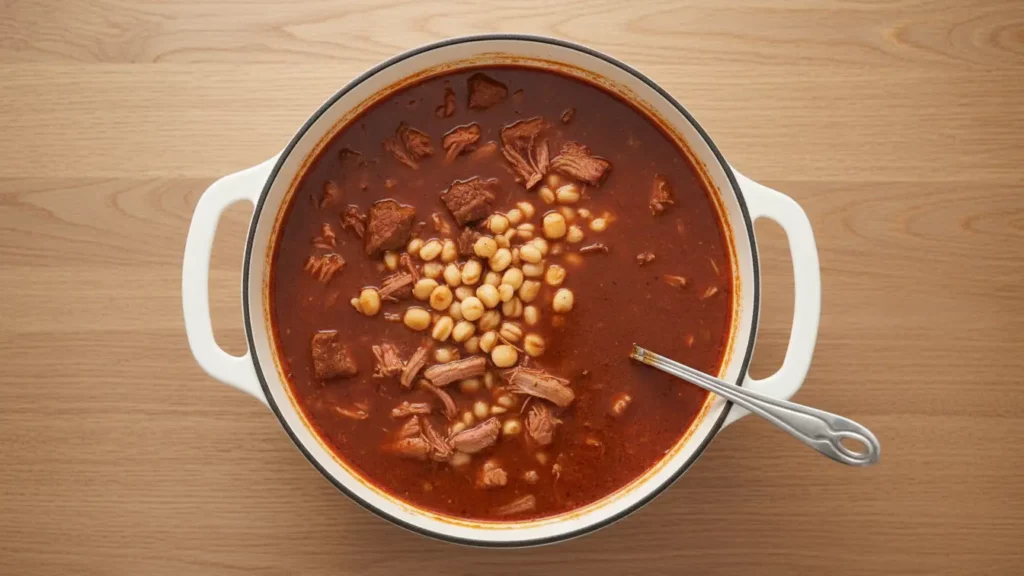
Pozole is traditionally a complete meal in a bowl, but I love rounding out the table with a few complementary dishes. The key is keeping things fresh and light to balance the richness of the stew.
The toppings are non-negotiable in my book. They add brightness, crunch, and freshness that transform each spoonful. I set everything out buffet-style and let people build their perfect bowl.
Here are my favorite things to serve alongside:
- Fresh corn tortillas warmed on the stove
- Elote for a fun street food vibe
- Simple shredded lettuce salad with lime vinaigrette
- Sliced avocado or guacamole
- Mexican beer or agua fresca
- Crema mexicana for drizzling
- Extra lime wedges (you can never have too many)
Read Also: Chicken Fajita Recipe
Variations to Try
Once you’ve mastered the basic recipe, these variations keep things interesting. I rotate through them depending on what I’m craving or what’s in my fridge.
Try these delicious twists:
- Pozole Verde: Replace the red chiles with tomatillos, poblanos, jalapeños, and cilantro for a bright green version
- Chicken Pozole: Use bone-in chicken thighs instead of pork and reduce cooking time to 45 minutes
- Vegetarian Pozole: Skip the meat and add cubed potatoes, zucchini, and mushrooms; use vegetable broth
- White Pozole (Pozole Blanco): Omit the chile sauce entirely for a simpler, lighter version
- Spicy Pozole: Add chipotle peppers in adobo sauce to the chile mixture for smoky heat
- Seafood Pozole: A coastal variation using shrimp and fish, added in the last 10 minutes of cooking
- Instant Pot Version: Pressure cook the pork with aromatics for 45 minutes, then add hominy and sauce
Storage and Reheating
Pozole might be even better as leftovers. The flavors continue developing in the fridge, and having it ready to go makes weeknight dinners effortless.
Here’s how to store it properly:
- Refrigerator: Store in an airtight container for up to 5 days; keep toppings separate
- Freezer: Freeze in portion-sized containers for up to 3 months; thaw overnight in the fridge
- Reheating on stovetop: Warm over medium heat, stirring occasionally, adding a splash of water if needed
- Reheating in microwave: Heat in 2-minute intervals, stirring between, until steaming hot
- Toppings: Always store fresh toppings separately; they get soggy if mixed with the soup
- Extending life: Add fresh lime juice after reheating to brighten the flavors
You might also enjoy my beef stroganoff for another make-ahead comfort meal.
Nutritional Facts
Per serving (approximately 2 cups with toppings):
- Calories: 380
- Protein: 28g
- Carbohydrates: 32g
- Fat: 16g
- Fiber: 7g
- Sodium: 890mg
- Cholesterol: 75mg
- Vitamin C: 15% DV
- Iron: 20% DV
- Calcium: 8% DV
Note: Nutritional values are estimates and will vary based on specific ingredients used and portion sizes. Toppings add minimal calories but boost vitamin and mineral content significantly.
Health Benefits of Key Ingredients
Beyond tasting incredible, pozole packs some serious nutritional benefits. I love that this comfort food actually nourishes your body while satisfying your soul.
The combination of protein-rich pork, fiber-filled hominy, and nutrient-dense chiles creates a surprisingly balanced meal. Plus, the traditional toppings add vitamins and antioxidants without many calories.
Here’s what makes pozole nutritious:
- Pork shoulder: Provides complete protein, B vitamins, zinc, and selenium for immune function
- Hominy: Treated corn that’s easier to digest and higher in calcium than regular corn
- Dried chiles: Packed with vitamin A, vitamin C, and capsaicin which may boost metabolism
- Garlic: Contains allicin, known for its anti-inflammatory and immune-boosting properties
- Cabbage and radishes: Low-calorie toppings loaded with vitamin C, fiber, and antioxidants
- Oregano: Contains antimicrobial compounds and is rich in antioxidants
- Lime juice: Adds vitamin C and helps your body absorb iron from the pork
Another nutritious comfort dish is this lentil soup.
Frequently Asked Questions
1. Can I use fresh hominy instead of canned?
Absolutely, though it requires significantly more prep time. Dried hominy needs to be soaked overnight and then simmered for 2 to 3 hours until tender. If you have access to prepared fresh hominy from a Mexican market, that’s your best option for superior texture and flavor.
2. Why is my pozole broth not red enough?
The color depends entirely on your chiles and how well you blend the sauce. Make sure your dried chiles are fresh and pliable, not dusty and brittle. Toast them properly to release their oils, and blend the sauce for a full 2 minutes to extract maximum color.
3. Can I make pozole in a slow cooker?
Yes, and it works beautifully. Brown the pork first in a skillet if you have time, then add everything except the chile sauce to the slow cooker. Cook on low for 6 to 8 hours, blend and strain your chile sauce, add it during the last hour along with the hominy.
4. What’s the difference between pozole and posole?
They’re the same dish, just different spellings. “Pozole” is the more traditional Mexican Spanish spelling, while “posole” is sometimes used in New Mexico and other parts of the American Southwest. Both refer to this wonderful hominy stew.
5. My pozole is too spicy, how can I fix it?
Add more broth or water to dilute the heat, along with an extra can of hominy to absorb some of the spiciness. A spoonful of sugar or honey can also help balance aggressive heat. For next time, remove all the seeds from your chiles and use fewer guajillos.
Read Also: Stuffed Pepper Soup Recipe
Final Thoughts
Making Red Pozole Recipe from scratch is one of those cooking experiences that reminds you why you love food. The slow simmer filling your house with incredible aromas, the satisfaction of creating something so deeply flavorful, the joy of watching people customize their bowls exactly how they like them.
This isn’t just a recipe; it’s a tradition you’re bringing into your own kitchen. Every family has their own way of making pozole, and now you can start developing yours.
I’d love to hear how your pozole turns out! Drop a comment below with your experience, any variations you tried, or which toppings turned out to be your favorites. And if you make it for a gathering, snap a photo and share it so we can all celebrate your cooking success together.
Recommended:
- Lasagna Soup Recipe
- Borscht Recipe
- Salmon Skillet Recipe
- French Toast Casserole Recipe
- Chicken Casserole Recipe
- Tuna Noodle Casserole Recipe
- Enchiladas Suizas Recipe
- Baked Ziti Recipe
- Minestrone Soup Recipe
- Turkey Soup Recipe