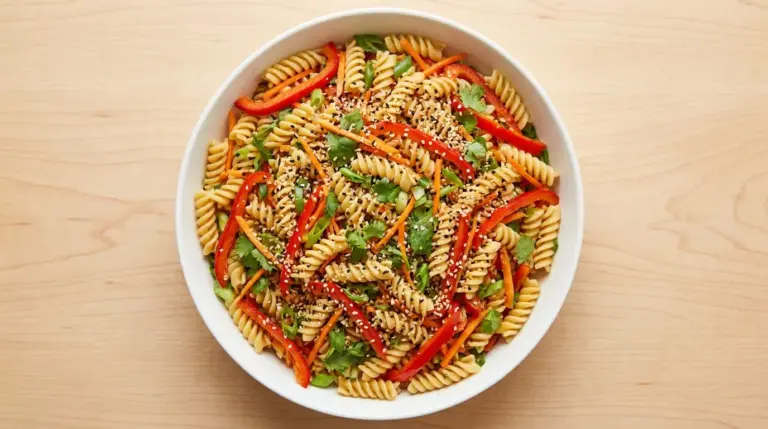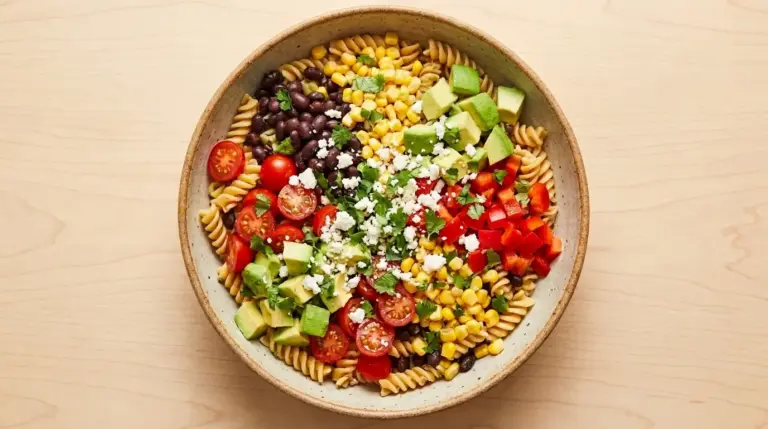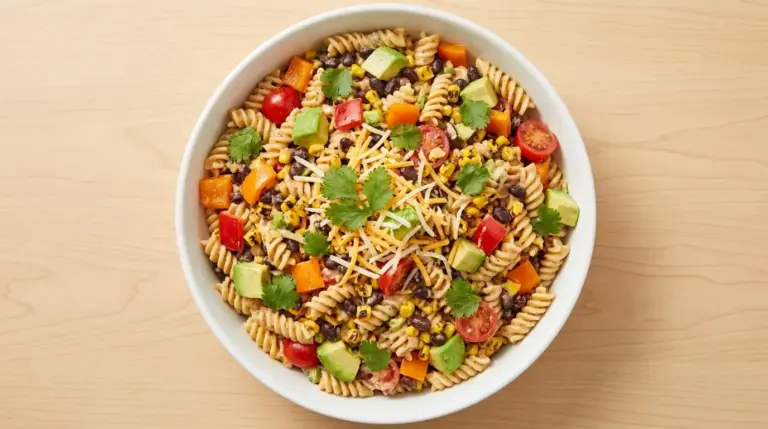

If you’re looking for the perfect make-ahead dish for warm weather gatherings, this salmon pasta salad recipe delivers every single time. It combines tender flaked salmon, al dente pasta, crisp vegetables, and a creamy dill dressing into one vibrant, satisfying bowl.
This isn’t your average pasta salad. The salmon adds a rich, savory depth that sets it apart from the crowd.
It’s the kind of dish that works equally well as a hearty lunch, a no-fuss weeknight dinner, or a standout addition to any potluck spread.
What makes this version special is the balance of textures and flavors. Creamy dressing, flaky protein, and crunchy fresh vegetables make every bite interesting.
You can use canned salmon to keep things quick and budget-friendly, or go with freshly cooked salmon when you want something a little more elevated.
Either way, this salad comes together in about 30 minutes and tastes even better after a short rest in the fridge.
For another easy seafood pasta salad variation, check out this crowd-pleasing Shrimp Pasta Salad that uses a similar approach with equally delicious results.

Why You’ll Love This Salmon Pasta Salad Recipe
This recipe checks so many boxes at once: it’s filling, fresh, and genuinely simple to put together.
Once the pasta is cooked and cooled, the rest is just chopping and stirring.
The dill-forward dressing is bright and creamy without being heavy, which means the salad stays refreshing even on a warm day.
Salmon is one of the most forgiving proteins to work with in a cold salad because it doesn’t turn rubbery or dry out the way chicken sometimes can.
It also keeps beautifully in the fridge, which means you can make it ahead on Sunday and have easy lunches sorted for the week.
Here’s why this recipe works so well:
- Big on flavor: The combination of lemon juice, fresh dill, Dijon mustard, and mayonnaise creates a dressing that’s tangy, herby, and well-rounded.
- Versatile protein options: Use canned salmon for a quick weeknight version, or bake a fresh fillet for something more special.
- Meal prep-friendly: This salad actually improves after chilling, making it ideal for preparing a day in advance.
- Easy to customize: Swap vegetables in and out based on what you have on hand without affecting the overall outcome.
- No reheating needed: Serve it straight from the fridge, which makes it perfect for summer entertaining.
- Crowd-pleaser: Both seafood lovers and casual salad fans tend to enjoy the approachable flavors here.
You might also enjoy: Tuna Pasta Salad
Ingredients
This recipe uses simple, widely available ingredients that come together in a balanced and satisfying way. The dill and lemon do the heavy lifting in the dressing, so make sure they’re fresh if possible.
- 12 oz (340g) rotini pasta (or fusilli; the spiral shape catches the dressing beautifully)
- 2 cans (14.75 oz / 418g each) wild-caught canned salmon, drained and flaked (or 1.5 lbs / 680g fresh baked salmon, flaked)
- 1/2 cup (120g) mayonnaise
- 1/2 cup (120g) plain Greek yogurt
- 2 tablespoons Dijon mustard
- 3 tablespoons fresh lemon juice (about 1.5 lemons)
- 1 teaspoon lemon zest
- 3 tablespoons fresh dill, chopped (or 1 tablespoon dried dill weed)
- 1 cup (150g) English cucumber, diced (about half a cucumber)
- 1 cup (150g) cherry tomatoes, halved
- 1/2 cup (75g) red onion, finely diced
- 1/2 cup (75g) celery, thinly sliced (2 stalks)
- 1/4 cup (35g) capers, drained
- Salt and black pepper to taste
- Optional: 2 tablespoons fresh parsley, chopped, for garnish
Read Also: Pasta Salad Dressing Recipe
Kitchen Equipment Needed
You don’t need any specialized equipment here. A large pot, a colander, and a couple of mixing bowls are the real workhorses.
- Large pot (at least 6-quart / 5.7L capacity for boiling pasta)
- Colander for draining and rinsing the pasta
- Large mixing bowl (at least 4-quart / 3.8L) for tossing everything together
- Medium mixing bowl for whisking the dressing
- Chef’s knife and cutting board
- Whisk for blending the dressing smoothly
- Microplane zester for lemon zest (a box grater works too)
- Airtight storage container for storing leftovers in the fridge
- Citrus juicer (optional, but helpful for getting every drop of lemon juice)
Read Also: Mediterranean Pasta Salad
Recommended Products for This Recipe
These are products selected based on quality and performance that genuinely make a difference when preparing this dish.
1. Wild Planet Wild Sockeye Salmon (Canned)
Wild-caught sockeye salmon has a richer flavor and deeper color than Atlantic-farmed varieties, and it flakes beautifully into a cold pasta salad. This brand uses no added water or salt, so you get pure salmon flavor without diluting the dressing. It’s a significant upgrade over standard grocery store cans.
2. OXO Good Grips Large Salad Spinner
After rinsing your cooked pasta under cold water, excess moisture can water down the dressing significantly. A salad spinner lets you remove that water quickly and efficiently, keeping the dressing concentrated and flavorful. The OXO model is sturdy, easy to operate, and large enough to handle a full batch of pasta.
3. Stonewall Kitchen Lemon Herb Aioli
If you want to add a gourmet shortcut, this lemon herb aioli can replace the mayonnaise and reduce your prep time while delivering a bright, herby flavor that complements salmon perfectly. It’s thick enough to coat the pasta without making the salad heavy.
4. Nordic Ware Large Salad Bowl with Lid
A wide, shallow bowl with a fitted lid is the best vessel for this salad. It lets you toss ingredients without spilling, and the lid eliminates the need for plastic wrap when chilling or storing. Nordic Ware’s version is BPA-free and durable enough for regular use.
5. Microplane Premium Classic Zester
Lemon zest is a small ingredient that punches way above its weight in this recipe. A proper zester removes only the fragrant yellow outer layer without any of the bitter white pith. The Microplane Classic is a kitchen essential that costs very little and makes a noticeable difference in flavor.
This recipe also pairs naturally with a classic Pasta Salad Recipe base if you want to experiment with a more traditional starting point.

Step-by-Step Instructions
1. Cook the Pasta to Al Dente
- Fill your large pot with water, using roughly 4 quarts (3.8L) of water per 12 oz (340g) of pasta.
- Bring the water to a full rolling boil over high heat before adding the pasta.
- Add 1 tablespoon of salt to the water once it boils. Salted pasta water is one of the most important steps for a flavorful salad because you can’t properly season cooked, drained pasta the same way.
- Add the rotini or fusilli and cook according to the package directions, but aim for the lower end of the suggested time range. For most rotini, this is around 8 to 9 minutes. You want the pasta just past firm, not mushy.
- Taste a piece about 1 minute before the suggested cook time ends. It should be tender with just a slight chew at the center.
- Reserve about 1/4 cup (60ml) of pasta water before draining in case you need to loosen the dressing later.
- Drain the pasta through your colander and rinse immediately under cold running water for 1 to 2 minutes, tossing with your hand or a spoon to cool it quickly and stop the cooking process.
- Shake the colander well to remove as much water as possible, then spread the pasta on a baking sheet or transfer to your large bowl. Let it air-dry for 5 minutes before dressing.
2. Prepare the Salmon
- If using canned salmon: Open both cans and drain them thoroughly over a sink. Remove any large bones (they’re edible and very soft, but some people prefer them removed). Use a fork to flake the salmon into medium-sized pieces. Avoid over-mashing; you want visible flakes in the final salad.
- If using fresh baked salmon: Preheat your oven to 400°F (200°C). Season a 1.5 lb (680g) salmon fillet with a drizzle of olive oil, salt, black pepper, and a squeeze of lemon juice. Bake on a parchment-lined baking sheet for 12 to 15 minutes, until the flesh flakes easily with a fork and the thickest part reaches 145°F (63°C) internally. Let the fillet cool completely at room temperature, then refrigerate it for at least 20 minutes before flaking. Cold salmon holds its shape better in the salad and prevents the dressing from warming up and becoming thin.
- Set the flaked salmon aside in a bowl while you prepare the vegetables and dressing.
3. Chop and Prep the Vegetables
- Cucumber: Dice the English cucumber into small, even cubes, about 1/4 inch (6mm). English cucumbers are preferred here because their skin is thin and their seeds are small, so there’s no need to peel or seed them. Uniform cuts help every forkful contain a balanced bite.
- Cherry tomatoes: Slice each cherry tomato in half lengthwise. If they’re on the larger side, quarter them. Halving the tomatoes creates a flat surface that helps the dressing cling to them instead of sliding off.
- Red onion: Dice the red onion as finely as possible. If raw onion tends to be too sharp or pungent for your taste, place the diced onion in a small bowl with cold water and a splash of white vinegar for 5 to 10 minutes. Drain and pat dry before adding to the salad. This quick soak mellows the sharpness while keeping the crunch.
- Celery: Trim the tops and base of each stalk, then slice thinly on a slight diagonal for a nicer presentation.
- Capers: Drain them from the brine and set aside. Capers add a briny, salty punch that pairs perfectly with salmon and reduces the need for extra salt in the dressing.
4. Make the Dill Dressing
- In your medium bowl, combine the mayonnaise and plain Greek yogurt. Using Greek yogurt alongside mayonnaise gives the dressing a lighter, slightly tangy quality while keeping it creamy and thick enough to coat the pasta.
- Add the Dijon mustard, fresh lemon juice, and lemon zest. Whisk everything together until completely smooth and uniform. The Dijon acts as an emulsifier that helps the dressing bind and also adds a mild heat that lifts all the other flavors.
- Add the chopped fresh dill (or dried dill if using), and stir to incorporate. Fresh dill is noticeably brighter and more aromatic than dried, and it’s the defining flavor of this dressing. If you’re using dried, start with 1 tablespoon and taste before adding more.
- Season the dressing with a few pinches of salt and several grinds of black pepper. Taste it and adjust: if it needs more brightness, add a small squeeze of extra lemon juice; if it feels too sharp, add a tiny drizzle of honey to balance.
- The dressing will seem fairly thick at this stage, which is intentional. It will loosen slightly once it combines with the pasta and vegetables.
5. Assemble the Salad
- Transfer the cooled, drained pasta to your large mixing bowl.
- Pour about two-thirds of the dressing over the pasta and toss gently until every piece is lightly coated. Starting with less dressing is smart because you can always add more, but you can’t take it away.
- Add the diced cucumber, halved cherry tomatoes, red onion, celery, and drained capers to the bowl.
- Gently fold in the flaked salmon last, using a wide spatula or large spoon. Fold rather than stir vigorously to preserve the flake size and avoid breaking it into small crumbles.
- Taste the assembled salad and assess the seasoning. Add more dressing if needed, a pinch more salt or pepper, or an extra squeeze of lemon if the flavor needs brightening.
- If the salad seems a little thick or dry, add a splash of the reserved pasta water, one tablespoon at a time, and toss again. Pasta water contains starch that helps the dressing coat more evenly.
6. Chill and Serve
- Cover the bowl tightly with plastic wrap or transfer the salad to your airtight storage container.
- Refrigerate for at least 30 minutes before serving. This resting period allows the pasta to absorb the dressing and the flavors to meld together. An hour is even better if you have the time.
- Just before serving, give the salad a good stir and taste once more. The pasta will have absorbed some dressing during chilling, so you may want to add the remaining third of the dressing at this point to refresh it.
- Garnish with a few sprigs of fresh dill or a sprinkle of chopped parsley for a pop of color.
- Serve cold, straight from the fridge.
Another great salmon preparation to try alongside this salad is this simple Baked Salmon Recipe that works perfectly as the protein base.
Tips for Success
These are the small details that separate a good salmon pasta salad from a truly great one. Following them will save you from common mistakes and take the result to another level.
- Always cool the pasta completely before dressing it. Warm pasta absorbs dressing like a sponge, which can make the salad dry and dull by serving time. Rinse it under cold water and let it rest for a few minutes after draining.
- Reserve a portion of the dressing. Add only two-thirds at assembly, then use the rest right before serving to refresh the salad after it’s been chilled.
- Taste as you go. The dressing should be slightly bolder than you think you need because the pasta will dilute it once combined. Don’t be shy with the seasoning at the mixing stage.
- Use the best salmon you can access. Wild-caught salmon has a firmer texture and richer flavor than farmed varieties, and it holds up better in a cold salad without becoming mushy.
- Don’t skip the capers. They’re small, but they add a crucial briny quality that makes the dressing pop and reduces the need for extra salt throughout.
- Cut vegetables into similar-sized pieces. Uniform cuts ensure a balanced bite every time and make the salad look more polished.
For a pasta salad with a bold herb-forward dressing, this Pesto Pasta Salad is a fantastic alternative to keep in your rotation.
Serving Suggestions

This salmon pasta salad is substantial enough to serve as a standalone main dish, but it pairs beautifully with a variety of sides and accompaniments.
It works equally well at casual backyard gatherings and more composed weekday lunches.
Consider these serving ideas to round out the meal:
- Serve alongside a warm crusty baguette or slices of French bread to scoop up every bit of dressing.
- Pair it with a simple green salad dressed lightly with lemon and olive oil for a fresh, well-balanced plate.
- Add a side of Broccoli Salad for extra crunch and color at a potluck or family gathering.
- Serve it stuffed inside halved avocado shells for an elegant presentation at a luncheon or brunch.
- Pile it into lettuce cups for a low-carb option that still delivers all the same flavors.
- Offer it as part of a larger spread alongside Deviled Eggs and other make-ahead cold sides.
Variations to Try
This recipe is a wonderful jumping-off point, and a few simple swaps can take it in completely different directions without requiring extra skills or equipment.
- Smoked salmon version: Replace the canned or baked salmon with 8 oz (225g) of flaked smoked salmon. Reduce or omit the capers since smoked salmon is already quite salty, and consider adding a tablespoon of cream cheese to the dressing for extra richness.
- Mediterranean style: Add 1/2 cup (75g) each of diced roasted red peppers and Kalamata olives, and swap the dill for fresh oregano and basil. Crumble a small amount of feta cheese on top before serving.
- Lighter dressing: Replace the mayonnaise entirely with an equal amount of Greek yogurt for a lower-fat version that’s still creamy. Add an extra teaspoon of Dijon to compensate for the reduced richness.
- Orzo base: Swap the rotini for orzo to create a silkier, more delicate salad that absorbs the dressing slightly differently. It’s particularly good when served alongside grilled fish.
- Herb upgrade: Add a handful of fresh tarragon or chives in addition to or instead of the dill for a more complex herbal profile.
- Spicy kick: Stir 1 to 2 teaspoons of sriracha hot sauce or a pinch of red pepper flakes into the dressing for a gentle heat that contrasts nicely with the creamy base.
Read Also: Caesar Pasta Salad
Storage and Reheating
This salad is designed to be made ahead and enjoyed cold, so storage is simple and the salad holds up very well.
Follow these guidelines to keep it fresh and flavorful:
- Refrigerator storage: Transfer any leftovers to an airtight container and refrigerate for up to 3 days. The pasta will continue to absorb the dressing over time, so the salad may seem a little dry after the first day. Stir in a spoonful of mayonnaise or Greek yogurt and a small squeeze of lemon to revive it.
- Do not freeze: Cold pasta salads with creamy dressings do not freeze and thaw well. The mayonnaise separates and the pasta turns mushy. This one is best enjoyed fresh within the 3-day window.
- Reheating: This salad is served cold and is not intended to be reheated. If you prefer it at room temperature, simply remove it from the fridge 15 minutes before serving and give it a good stir.
- Make-ahead tip: You can prepare the dressing, cook and cool the pasta, and chop the vegetables up to 24 hours in advance. Store them separately and combine everything just before your event or meal for the freshest result.
- If adding fresh garnishes: Add any fresh herbs or extra halved tomatoes as a garnish right before serving rather than mixing them in ahead of time, so they stay vibrant and crisp.
For another protein-packed seafood salad option, this Shrimp Pasta Salad follows a similar storage-friendly approach.
Nutritional Facts
The values below are approximate and based on one serving, assuming the recipe is divided into 6 equal portions.
| Nutrient | Per Serving (approx.) |
|---|---|
| Calories | 480 kcal |
| Protein | 32g |
| Carbohydrates | 44g |
| Fat | 18g |
| Saturated Fat | 3g |
| Fiber | 3g |
| Sodium | 620mg |
| Omega-3 Fatty Acids | 1,800mg |
These figures will vary depending on the specific brands of mayonnaise, yogurt, and salmon used, as well as whether you use canned or fresh salmon.
You might also enjoy: Orzo Pasta Salad
Health Benefits of Key Ingredients
This salmon pasta salad isn’t just delicious. It also brings a genuinely impressive nutritional profile to the table, largely thanks to a few key ingredients.
Salmon is one of the most nutrient-dense foods available, and including it in a pasta salad is a simple way to get a high-protein meal with important fats that are hard to find elsewhere in the diet.
Here’s a breakdown of what this dish offers nutritionally:
- Salmon: One of the best dietary sources of omega-3 fatty acids (EPA and DHA), which support cardiovascular health, brain function, and inflammation management. Salmon is also rich in vitamin D, vitamin B12, selenium, and high-quality complete protein.
- Greek yogurt (in the dressing): Adds a significant protein boost compared to using all mayonnaise, while also contributing beneficial probiotics that support gut health.
- Capers: These small pickled buds are rich in quercetin, a natural antioxidant with anti-inflammatory properties. They also provide a mineral dose of iron and copper.
- Cucumber: Hydrating and low in calories, cucumber provides vitamin K, potassium, and a satisfying crunch without adding significant fat or sugar.
- Cherry tomatoes: High in lycopene, a carotenoid antioxidant that has been linked to reduced risk of certain chronic conditions. They also provide vitamin C and folate.
- Lemon juice: Provides vitamin C, supports iron absorption from plant-based foods in the dish, and adds brightness without any calories.
- Red onion: Contains quercetin and sulfur compounds that have been studied for their cardiovascular and immune-supporting properties.
- Celery: A good source of vitamin K and vitamin C, with a high water content that contributes to hydration.
Read Also: Greek Pasta Salad
Frequently Asked Questions
1. Can I use fresh salmon instead of canned?
Absolutely. Fresh baked or grilled salmon creates a superior texture and flavor, though it requires more prep time.
Season your fresh fillet with olive oil, salt, pepper, and a squeeze of lemon, then bake at 400°F (200°C) for 12 to 15 minutes until flaked with a fork. Cool it completely before adding it to the salad, as warm salmon will melt the dressing and make the salad greasy.
2. How far in advance can I make this salmon pasta salad?
You can make the complete salad up to 24 hours in advance without any noticeable quality loss.
After the first day, the pasta absorbs most of the dressing. If you’re planning ahead, store the dressing separately and combine everything an hour before serving for the best texture.
3. What type of pasta works best for this recipe?
Rotini and fusilli are the top choices because their spiral shapes trap dressing in every groove, ensuring maximum flavor in each bite.
Penne, farfalle (bow ties), and elbow macaroni also work well. Avoid long pasta like spaghetti or fettuccine, which doesn’t toss evenly and is awkward to serve cold.
4. Can I make this dairy-free?
Yes. Simply replace the Greek yogurt with an equal amount of additional mayonnaise, or use a plant-based yogurt such as coconut-based or almond-based yogurt.
Make sure the mayonnaise is also dairy-free (most standard mayonnaise is), and the rest of the ingredients are naturally free from dairy.
5. Is salmon pasta salad served warm or cold?
This recipe is designed to be served cold, straight from the fridge.
Cold serving allows the flavors to meld and keeps the dressing creamy and stable. If you prefer it at room temperature, remove it from the fridge 10 to 15 minutes before serving and stir before plating.
For another wonderfully chilled seafood salad option, this Tuna Pasta Salad follows the same serve-cold approach with similar crowd-pleasing results.

Salmon Pasta Salad

Equipment
- Large pot - At least 6-quart (5.7L) capacity for boiling pasta
- Colander - For draining and rinsing the pasta
- Large mixing bowl - At least 4-quart (3.8L) for tossing everything together
- Medium mixing bowl - For whisking the dressing
- Chef’s Knife and Cutting Board
- Whisk - For blending the dressing smoothly
- Microplane zester - A box grater works too
- Airtight storage container - For storing leftovers in the fridge
- Citrus juicer - (optional) Helpful for getting every drop of lemon juice
Ingredients
- 12 oz rotini pasta - 340g; or fusilli; the spiral shape catches the dressing beautifully
- 2 cans wild-caught canned salmon - 14.75 oz / 418g each, drained and flaked; or 1.5 lbs / 680g fresh baked salmon, flaked
- 1/2 cup mayonnaise - 120g
- 1/2 cup plain Greek yogurt - 120g
- 2 tablespoons Dijon mustard
- 3 tablespoons fresh lemon juice - About 1.5 lemons
- 1 teaspoon lemon zest
- 3 tablespoons fresh dill - Chopped; or 1 tablespoon dried dill weed
- 1 cup English cucumber - 150g; diced, about half a cucumber
- 1 cup cherry tomatoes - 150g; halved
- 1/2 cup red onion - 75g; finely diced
- 1/2 cup celery - 75g; thinly sliced, 2 stalks
- 1/4 cup capers - 35g; drained
- salt and black pepper - To taste
- 2 tablespoons fresh parsley - (optional) Chopped, for garnish
Instructions
- Bring a large pot of salted water to a rolling boil, add the rotini, and cook to al dente according to package directions, about 8 to 9 minutes. Reserve 1/4 cup pasta water, then drain and rinse the pasta under cold running water until completely cooled.
- If using canned salmon, drain well, remove any large bones, and flake with a fork into medium pieces. If using fresh salmon, bake a 1.5 lb fillet at 400°F (200°C) for 12 to 15 minutes, cool completely, refrigerate for 20 minutes, then flake.
- Dice the cucumber into 1/4-inch cubes, halve the cherry tomatoes, finely dice the red onion (soak in cold water with a splash of vinegar for 5 to 10 minutes if you want it milder), thinly slice the celery on a slight diagonal, and drain the capers.
- In a medium bowl, whisk together the mayonnaise, Greek yogurt, Dijon mustard, lemon juice, and lemon zest until smooth. Stir in the fresh dill, then season with salt and black pepper to taste.
- Transfer the cooled pasta to a large bowl and toss with about two-thirds of the dressing. Add the cucumber, tomatoes, red onion, celery, and capers, then gently fold in the flaked salmon, adding more dressing, salt, pepper, lemon juice, or reserved pasta water as needed.
- Cover and refrigerate for at least 30 minutes, or up to an hour, to let the flavors meld. Just before serving, stir well, add the remaining dressing to refresh, and garnish with fresh dill or parsley.
Notes
- Always cool the pasta completely before dressing it; warm pasta absorbs dressing like a sponge and can make the salad dry and dull by serving time.
- Reserve a portion of the dressing and add it right before serving to refresh the salad after chilling, since the pasta absorbs dressing over time.
- Taste the dressing as you go; it should be slightly bolder than you think you need because the pasta will dilute it once combined.
- Use the best salmon you can access; wild-caught salmon has a firmer texture and richer flavor than farmed varieties and holds up better in a cold salad.
- Don’t skip the capers; they add a crucial briny quality that makes the dressing pop and reduces the need for extra salt.
- Cut vegetables into similar-sized pieces to ensure a balanced bite every time and a more polished-looking salad.
- For a smoked salmon version, replace the salmon with 8 oz flaked smoked salmon, reduce or omit the capers, and consider adding a tablespoon of cream cheese to the dressing.
- For a Mediterranean style, add diced roasted red peppers and Kalamata olives, swap the dill for oregano and basil, and crumble feta on top before serving.
- Store leftovers in an airtight container in the refrigerator for up to 3 days; stir in a spoonful of mayonnaise or Greek yogurt and a squeeze of lemon to revive if it seems dry.
- Do not freeze this salad; creamy dressings separate and the pasta turns mushy when thawed.
- Make-ahead tip: prepare the dressing, cook and cool the pasta, and chop the vegetables up to 24 hours in advance, storing them separately and combining just before your event.
Final Thoughts
This salmon pasta salad is one of those recipes that quickly becomes a repeat in any home cook’s rotation because it rewards very little effort with impressive results.
The combination of flaky salmon, creamy dill dressing, and crisp vegetables creates something that feels both fresh and satisfying at the same time.
It travels well, keeps for days, and works across so many occasions, from a quick solo lunch to a big outdoor gathering.
If you give this recipe a try, I’d love to hear how it turned out for you. Leave a comment below with any tweaks or tips you discovered along the way, and feel free to share a photo if you’re feeling proud of your bowl.
Recommended:
- Chicken Pasta Salad
- Ham Pasta Salad
- BLT Pasta Salad
- Caprese Pasta Salad
- Italian Pasta Salad
- Dill Pickle Pasta Salad
- Hawaiian Macaroni Salad
- Air Fryer Salmon
- Salmon Skillet
- Potato Salad