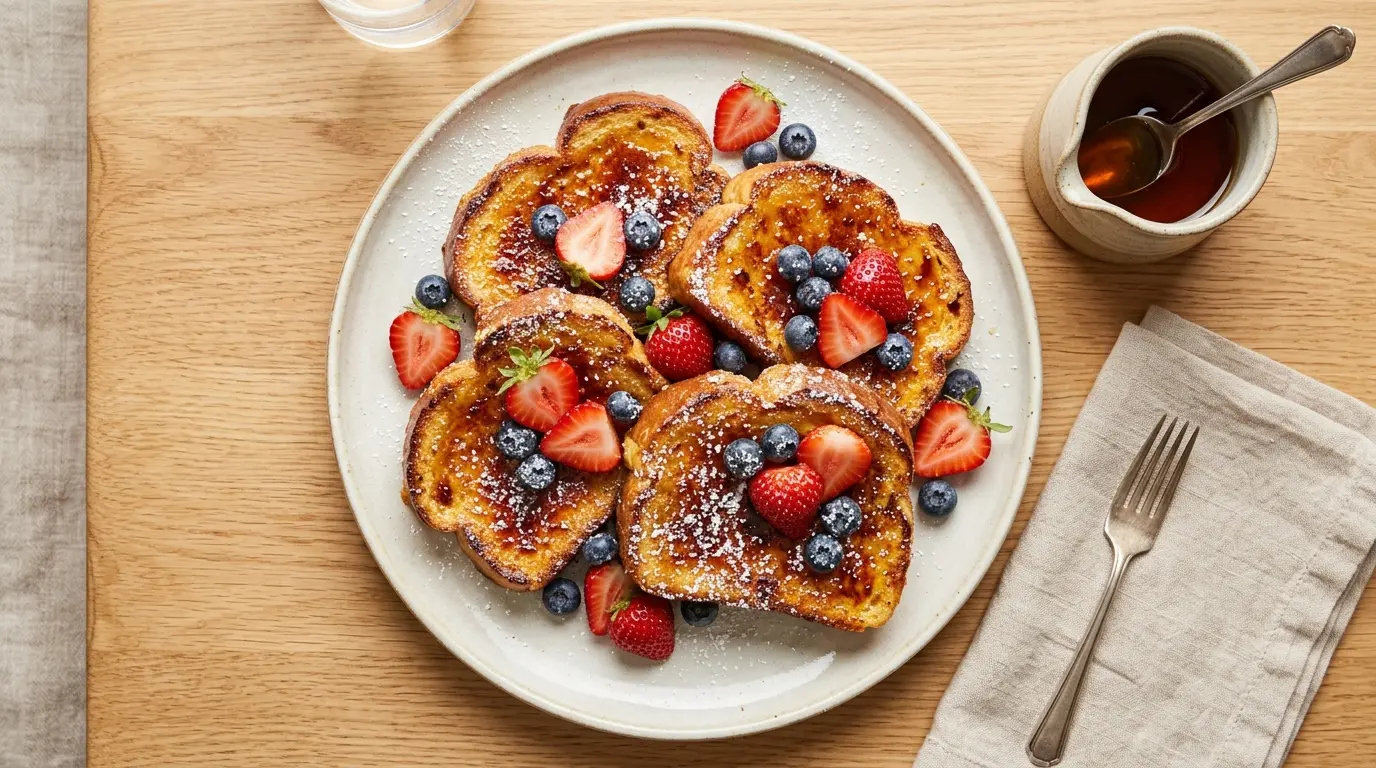
If you have ever wanted a breakfast that feels indulgent, special, and almost impossibly easy to pull off, this Crème Brûlée French Toast Recipe is exactly what you need. The concept is brilliant in its simplicity: thick slices of brioche or challah bread are soaked overnight in a rich vanilla custard, then baked over a bubbling layer of butter, brown sugar, and maple syrup. The result is a caramelized, crackly bottom crust that mirrors the signature burnt sugar top of a classic crème brûlée, paired with pillowy, custardy bread on top.
This is the kind of recipe that turns a lazy weekend morning into something memorable.
It works for holiday brunches, casual Sunday mornings, and everything in between. And because most of the work happens the night before, all you have to do on the day is pop it in the oven.
Love the flavors of crème brûlée in baked form? You will also adore the Crème Brûlée French Toast Casserole, which takes the same idea in a crowd-feeding direction.

Why You’ll Love This Crème Brûlée French Toast Recipe
This recipe is the rare combination of make-ahead convenience and show-stopping results.
You do the heavy lifting the night before, which means no frantic morning prep when guests are arriving or the kids are already hungry.
The caramel layer at the bottom is what makes this recipe truly special. Butter, brown sugar, and maple syrup melt together into a glossy, deep-flavored coating that soaks into the bread and caramelizes during baking.
Brioche is the gold-standard bread choice here because its high butter and egg content creates an unbelievably tender, rich crumb that holds up to overnight soaking without falling apart.
The custard itself is simple but deeply flavored. Eggs, half-and-half, vanilla, and a splash of orange liqueur combine for a soak that is fragrant, creamy, and perfectly spiced.
- Make-ahead friendly: Prep everything the night before and bake in the morning with zero stress.
- Crowd-pleasing: Serves up to 8 people from a single baking dish, making it perfect for brunch gatherings.
- Incredible texture contrast: Crispy, caramelized bottom with a soft, custardy interior.
- Versatile bread options: Works with brioche, challah, or French bread depending on what you have available.
- Minimal equipment: Just a mixing bowl, a saucepan, and a 9×13 inch baking dish.
You might also enjoy: Easy Crème Brûlée
Ingredients
For this Crème Brûlée French Toast Recipe, you will want to use thick-cut bread, full-fat dairy, and good-quality maple syrup. These are not places to cut corners, since each ingredient contributes to the final texture and flavor. The orange liqueur is optional but highly recommended since it adds a subtle brightness that complements the caramel beautifully.
For the caramel base:
- 1/2 cup (115g) unsalted butter
- 1 cup (200g) packed brown sugar
- 2 tablespoons (30ml) corn syrup
- 3 tablespoons (45ml) pure maple syrup
For the bread:
- 1 loaf brioche bread (about 12-14 thick slices, 3/4 to 1 inch / 2cm thick)
For the custard:
- 5 large eggs
- 1 1/2 cups (360ml) half-and-half (or heavy cream for a richer result)
- 1 teaspoon (5ml) pure vanilla extract
- 1 tablespoon (15ml) Grand Marnier or Cointreau (optional but recommended)
- 1/4 teaspoon (1g) salt
- 1/2 teaspoon (1g) ground cinnamon
For serving (optional):
- Powdered sugar, fresh berries, or additional maple syrup
Read Also: French Toast Casserole Recipe
Kitchen Equipment Needed
A few key pieces of equipment make this recipe seamless. The most important is a good-quality 9×13 inch baking dish, since this is where the magic happens. If yours has a lid or tight-fitting cover, you can go straight from refrigerator to oven in the same dish.
- 9×13 inch baking dish (glass or ceramic for even heat distribution)
- Small saucepan (for melting the caramel base)
- Large mixing bowl (for the custard)
- Whisk
- Measuring cups and spoons
- Sharp bread knife (for slicing the loaf)
- Plastic wrap or aluminum foil (for overnight refrigeration)
- Rubber spatula
- Serving spatula or flat turner
This recipe pairs beautifully with a classic French toast approach for your everyday mornings when you want something simpler.
Recommended Products for This Recipe
These are products I genuinely recommend based on quality and performance. They will make a real difference in how this recipe turns out.
1. Emile Henry Ceramic Baking Dish
Ceramic dishes distribute heat more evenly than metal pans, which means your caramel base melts and caramelizes uniformly without any scorching. The smooth, non-porous surface also makes cleanup far easier after that sticky caramel layer sets. It is a beautiful dish you will reach for again and again.
2. Nielsen-Massey Pure Vanilla Extract
The custard in this recipe relies on vanilla as a primary flavor note, and a high-quality extract like Nielsen-Massey makes a noticeable difference. It is richer, more aromatic, and less sharp than grocery-store brands. A small bottle goes a long way and elevates every baked dish you make.
3. Grand Marnier Orange Liqueur
The orange liqueur in the custard is technically optional, but once you try it you will never skip it again. Grand Marnier brings a floral, citrus warmth to the soak that pairs beautifully with the caramel and vanilla. A small splash transforms the flavor profile from good to extraordinary.
4. OXO Good Grips Flat Whisk
A flat whisk is ideal for blending custard ingredients directly in a shallow bowl or jug, allowing you to reach every corner without splashing. It ensures the eggs, cream, and vanilla are fully combined and emulsified before you pour the mixture over the bread. A good whisk is one of those tools that earns its place in every kitchen.
5. King Arthur Brioche Bread Mix
If you prefer to bake your own brioche rather than buying a pre-made loaf, this mix produces a beautifully golden, buttery bread with exactly the texture this recipe calls for. Homemade brioche also allows you to slice it to your preferred thickness, giving you full control over the final result.
Another favorite for indulgent brunches: Air Fryer French Toast

Step-by-Step Instructions
Step 1: Prepare the Caramel Base
- In a small saucepan over medium heat, combine the 1/2 cup (115g) of unsalted butter, 1 cup (200g) of packed brown sugar, and 2 tablespoons (30ml) of corn syrup.
- Stir constantly with a rubber spatula or wooden spoon as the butter melts and the sugar begins to dissolve.
- Continue stirring and cooking until the mixture is completely smooth, bubbling gently, and has a glossy appearance. This should take about 3 to 4 minutes. Do not let it boil vigorously.
- Remove the saucepan from the heat and stir in the 3 tablespoons (45ml) of maple syrup. The mixture will bubble slightly when the maple syrup is added, which is normal.
- Pour the caramel mixture immediately into the bottom of your 9×13 inch (23x33cm) baking dish.
- Use a spatula to spread it into an even layer, covering the entire bottom of the dish. Work quickly since the caramel starts to set as it cools.
- Set the dish aside to cool slightly while you prepare the bread.
Step 2: Arrange the Bread
- Using a sharp bread knife, slice your brioche loaf into pieces that are 3/4 to 1 inch (2 to 2.5cm) thick. Thicker slices are better here since they absorb the custard without becoming soggy or falling apart.
- Arrange the bread slices in a single layer over the caramel base in the baking dish. Place them tightly together, fitting them snugly so there are as few gaps as possible.
- If you have any remaining bread pieces, you can cut them to fill in gaps or layer a partial second layer on top.
- Gently press each slice down so the bottom makes contact with the caramel layer. This helps the bread absorb flavor from below.
Step 3: Make the Custard
- In a large mixing bowl, crack the 5 large eggs and whisk them together briefly until the yolks and whites are combined.
- Add the 1 1/2 cups (360ml) of half-and-half to the eggs and whisk until fully blended. Half-and-half gives you the ideal balance of richness and lightness. If you want a denser, creamier result, you can substitute heavy cream for part or all of the half-and-half.
- Add the 1 teaspoon (5ml) of pure vanilla extract, 1 tablespoon (15ml) of Grand Marnier (if using), 1/4 teaspoon (1g) of salt, and 1/2 teaspoon (1g) of cinnamon.
- Whisk everything together vigorously until the mixture is smooth and fragrant. Taste the custard, it should smell wonderful at this stage with vanilla and a hint of orange.
Step 4: Soak the Bread Overnight
- Pour the custard mixture evenly over the arranged bread slices in the baking dish. Pour slowly and in a sweeping motion to distribute it across all the slices.
- Use a spatula or the back of a spoon to gently press the top of each bread slice so it begins to absorb the custard.
- Cover the baking dish tightly with plastic wrap or aluminum foil. Press it down so it is snug against the bread.
- Transfer the dish to the refrigerator and let it rest for a minimum of 4 hours. For the best results, refrigerate overnight for 8 to 10 hours. The extended soak allows the bread to absorb the custard fully and the flavors to develop deeply.
- If you are short on time, you can let the bread soak for just 30 minutes at room temperature, but the overnight method is strongly recommended.
Step 5: Bake the French Toast
- When you are ready to bake, remove the dish from the refrigerator and let it sit at room temperature for about 15 to 20 minutes. This takes the chill off and allows for more even cooking.
- Preheat your oven to 350 degrees Fahrenheit (175 degrees Celsius).
- Remove the plastic wrap or foil from the baking dish and discard it.
- Place the baking dish uncovered in the preheated oven.
- Bake for 35 to 40 minutes, until the top of the bread is golden brown and puffed, and the custard is set. You can test doneness by gently pressing the center of the bread. It should feel firm rather than wobbly.
- If the tops of the bread slices are browning too quickly before the custard is set, loosely tent the dish with foil during the final 10 minutes of baking.
Step 6: Flip and Serve
- Remove the baking dish from the oven and let it cool for about 5 minutes. This brief rest allows the caramel to settle slightly.
- To serve, run a spatula around the edges of the baking dish to loosen any bread that has stuck.
- Use a flat spatula to scoop individual portions out of the dish, flipping each piece so the caramelized bottom faces upward. This caramel side is the star, and it should be facing up on the plate.
- The caramel will be hot and sticky when it first comes out of the oven, so handle carefully.
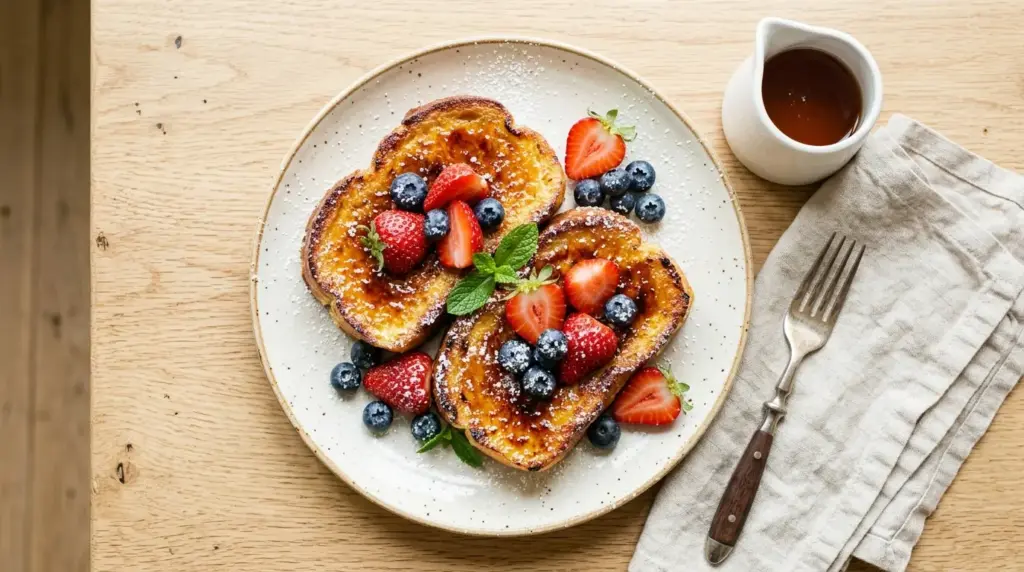
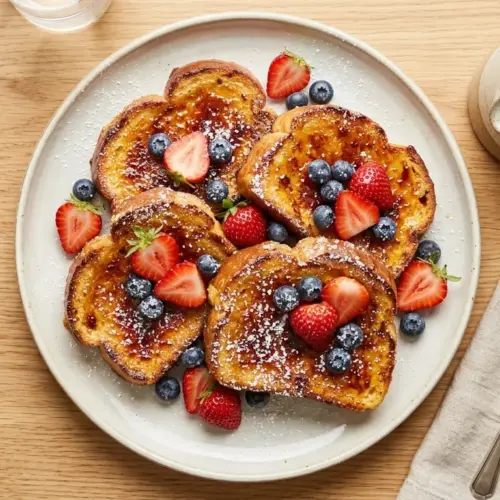
- Dust lightly with powdered sugar if desired, and serve with fresh berries, a drizzle of warm maple syrup, or a dollop of lightly whipped cream.
The dish is best enjoyed immediately while the caramel is still warm and slightly crisp.
For a lighter take on the same flavors, try this Easy French Toast Recipe on weekday mornings.
Tips for Success
The difference between a good crème brûlée French toast and a great one comes down to a few key details. Getting these right makes the whole dish come together beautifully.
- Use stale or day-old bread: Fresh bread can be too soft and may fall apart during soaking. If your brioche is fresh, leave it uncovered on the counter for a few hours or slice it and toast it lightly to dry it out slightly before assembling.
- Do not skip the overnight soak: The extended refrigeration is what allows the custard to fully penetrate the bread. Slices soaked for only a short time will have a dry interior.
- Cut bread at least 3/4 inch thick: Thin slices will become soggy and may fall apart when you try to serve them. Thicker slices hold their structure beautifully.
- Spread the caramel quickly: The butter-sugar mixture begins to set within minutes of leaving the heat. Have your baking dish ready before you start melting.
- Let it rest before serving: Five minutes out of the oven allows the caramel to slightly firm up, making it easier to scoop and flip portions without everything sliding apart.
- Flip portions when serving: The caramel side should face upward on the plate. This is where all the crème brûlée magic happens, so do not hide it.
- Room temperature before baking: Pulling the cold dish straight from the fridge into a hot oven can cause uneven cooking. Give it 15 to 20 minutes on the counter first.
Read Also: Dutch Baby Recipe
Serving Suggestions
This dish is rich, sweet, and deeply satisfying, so simple accompaniments work best. Fresh, bright flavors complement the caramel and custard notes without overwhelming them.
The classic combination is warm maple syrup drizzled over the top, a handful of fresh berries (strawberries, raspberries, or blueberries all work beautifully), and a light dusting of powdered sugar. A spoonful of lightly whipped cream or creme fraiche on the side cuts through the richness and adds a lovely cool contrast.
- Fresh berry compote or a drizzle of fresh strawberry sauce
- A scoop of vanilla bean ice cream for a decadent dessert-for-breakfast moment
- Crispy bacon or breakfast sausage on the side for a savory contrast
- A simple fruit salad with citrus dressing to balance the sweetness
- Strong coffee, a cappuccino, or freshly squeezed orange juice to round out the brunch spread
Variations to Try
Once you have mastered the base recipe, there are so many directions to take it. The overnight baked format is very forgiving and adapts well to different breads, flavors, and add-ins.
- Use challah instead of brioche: Challah produces a slightly less rich but equally delicious result. It soaks up custard beautifully and holds its shape during baking.
- Add fresh fruit: Scatter sliced bananas, peaches, or blueberries over the bread before pouring the custard for a fruit-studded version.
- Spike with bourbon: Replace the Grand Marnier with a tablespoon of good-quality bourbon for a deeper, warming flavor profile.
- Add a streusel topping: Before baking, sprinkle a simple mixture of rolled oats, brown sugar, butter, and cinnamon over the top for added crunch.
- Make it chocolate: Add 2 tablespoons of good-quality cocoa powder to the custard and use chocolate brioche if you can find it.
- Pumpkin spice variation: Add 2 tablespoons of pumpkin puree and 1 teaspoon of pumpkin pie spice to the custard for a fall-flavored version.
This same custard-soak method is the base for a wonderful bread pudding, if you want to explore that direction.
Storage and Reheating
This recipe actually keeps very well, making it a great option for meal prep or for feeding a crowd over two mornings. The caramel layer firms up in the refrigerator but softens beautifully when reheated.
- Refrigerator: Store leftover baked portions in an airtight container for up to 3 days. Place pieces caramel-side up or separate layers with parchment paper to prevent sticking.
- Freezer: Allow portions to cool completely, then wrap individually in plastic wrap and store in a zip-lock freezer bag for up to 2 months.
- Reheating from the refrigerator: Place portions in a 325 degrees Fahrenheit (160 degrees Celsius) oven for 10 to 12 minutes until warmed through. You can also microwave on medium power for 60 to 90 seconds, though the oven method preserves texture better.
- Reheating from frozen: Thaw overnight in the refrigerator, then reheat in the oven as above.
- Note: The caramel layer will be slightly less crisp after storage and reheating, but the flavor remains excellent.
You might also enjoy: Breakfast Casserole Recipe
Nutritional Facts
The following is an approximate estimate per serving (based on 8 servings). Actual values will vary depending on the specific bread, dairy, and ingredients used.
| Nutrient | Per Serving (approx.) |
|---|---|
| Calories | 420 kcal |
| Total Fat | 20g |
| Saturated Fat | 11g |
| Cholesterol | 175mg |
| Sodium | 290mg |
| Total Carbohydrates | 50g |
| Dietary Fiber | 1g |
| Sugars | 28g |
| Protein | 10g |
Note: These values are estimates only. For precise nutritional data, use an online nutrition calculator with your exact ingredient brands and quantities.
Read Also: Baked Oatmeal Recipe
Health Benefits of Key Ingredients
While this is certainly an indulgent dish, some of its core ingredients do carry genuine nutritional value worth knowing about.
This recipe is a good reminder that wholesome, real-food ingredients can coexist beautifully with a treat-style dish.
- Eggs are a complete protein source, supplying all nine essential amino acids. They are also rich in choline, which supports brain function, and contain fat-soluble vitamins including A, D, E, and K.
- Real maple syrup contains trace minerals including zinc and manganese, along with a modest amount of antioxidants. It has a lower glycemic index than refined white sugar, though it should still be enjoyed in moderation.
- Half-and-half and dairy provide calcium, phosphorus, and vitamin D, all of which support bone health. Full-fat dairy also contributes fat-soluble vitamins that are important for nutrient absorption.
- Brioche bread made with eggs and real butter is more nutrient-dense than plain white sandwich bread, offering some protein and healthy fat alongside the carbohydrates.
- Cinnamon is a warming spice with well-documented antioxidant and anti-inflammatory properties. Even in small amounts, it adds flavor while contributing beneficial plant compounds.
- Orange liqueur (Grand Marnier) is used in a small quantity and contributes primarily flavor rather than significant nutrition.
Another great morning option to consider is this Pumpkin Pancake Recipe for a seasonal twist on sweet breakfasts.
Frequently Asked Questions
1. Can I make this Crème Brûlée French Toast Recipe without refrigerating it overnight?
Yes, you can. While the overnight soak produces the most deeply flavored, fully saturated result, the recipe works if you soak the bread for at least 30 minutes at room temperature. If you have 2 to 3 hours, that is even better.
For best results, though, plan ahead and let it soak overnight. The difference in texture and flavor is noticeable.
2. What is the best bread to use?
Brioche is the top choice because of its high butter and egg content, which creates a rich, tender crumb that soaks up custard beautifully without falling apart. Challah is an excellent alternative and is often more widely available.
French bread works well too, especially for the overnight method, but produces a slightly chewier texture. Avoid thin sandwich bread, which will become too soft and fall apart.
3. Can I make this recipe without alcohol?
Absolutely. The Grand Marnier is optional. Simply omit it and add an extra 1/2 teaspoon of vanilla extract and a small pinch of orange zest if you want to preserve some of that citrus note.
The recipe works perfectly well without the liqueur, and many people prefer to skip it when making this for children or for those who avoid alcohol.
4. Why did my caramel not caramelize properly?
A few things can prevent proper caramelization. First, make sure your oven is fully preheated before the dish goes in. Cold baking dishes placed directly into a not-quite-hot oven can lead to uneven cooking.
Second, ensure you spread the caramel base all the way to the edges of the dish so every portion has caramel beneath it. If the layer is too thin or uneven, some areas may not caramelize properly.
5. Can I prepare this in individual ramekins instead of a large baking dish?
Yes, this works well. Divide the caramel base among individual 6-ounce ramekins, place one piece of bread in each, and pour custard over the top. Reduce the baking time to approximately 25 to 30 minutes.
Individual portions are especially elegant for a formal brunch where you want each guest to have their own perfectly presented serving.
Read Also: Crème Brûlée Cheesecake Recipe
Crème Brûlée French Toast

Equipment
- 9×13-inch baking dish - glass or ceramic for even heat distribution
- Small saucepan
- Large mixing bowl
- Whisk
- Measuring cups and spoons
- Sharp Bread Knife
- Plastic wrap or aluminum foil - for overnight refrigeration
- Rubber spatula
- Serving spatula or flat turner
Ingredients
- 1/2 cup unsalted butter - 115g
- 1 cup packed brown sugar - 200g
- 2 tablespoons corn syrup - 30ml
- 3 tablespoons pure maple syrup - 45ml
- brioche bread - 1 loaf, about 12-14 thick slices, 3/4 to 1 inch (2-2.5cm) thick
- 5 large eggs
- 1 1/2 cups half-and-half - 360ml; or heavy cream for a richer result
- 1 teaspoon pure vanilla extract - 5ml
- 1 tablespoon Grand Marnier or Cointreau - 15ml, optional but recommended
- 1/4 teaspoon salt - 1g
- 1/2 teaspoon ground cinnamon - 1g
For Serving (Optional)
- powdered sugar - for dusting
- fresh berries - strawberries, raspberries, blueberries, or a combination
- additional maple syrup - for drizzling
- lightly whipped cream or crème fraîche - optional, for serving
Instructions
- In a small saucepan over medium heat, combine the butter, brown sugar, and corn syrup. Stir constantly for 3-4 minutes until smooth, bubbling gently, and glossy. Remove from heat, stir in the maple syrup, then pour immediately into the bottom of a 9×13 inch baking dish. Spread evenly with a spatula.
- Slice the brioche loaf into 3/4 to 1 inch (2-2.5cm) thick slices. Arrange them in a single layer over the caramel base in the baking dish, fitting them snugly together. Gently press each slice down so it makes contact with the caramel.
- In a large mixing bowl, whisk the eggs until combined. Add the half-and-half, vanilla extract, Grand Marnier (if using), salt, and cinnamon. Whisk vigorously until the mixture is smooth and fragrant.
- Pour the custard evenly over the bread in the baking dish, using a spatula to gently press the tops so the bread absorbs the liquid. Cover tightly with plastic wrap or foil and refrigerate for a minimum of 4 hours, or overnight (8-10 hours) for best results.
- When ready to bake, remove the dish from the refrigerator and let it sit at room temperature for 15-20 minutes. Preheat the oven to 350°F (175°C). Remove the cover and bake uncovered for 35-40 minutes, until the top is golden brown and puffed and the custard is set. Tent with foil if browning too quickly.
- Remove from the oven and let cool for 5 minutes. Run a spatula around the edges to loosen, then scoop individual portions out of the dish, flipping each piece so the caramelized bottom faces upward. Dust with powdered sugar and serve with fresh berries, extra maple syrup, or whipped cream.
Notes
- Use stale or day-old bread: Fresh bread can be too soft and may fall apart during soaking. If your brioche is fresh, leave it uncovered on the counter for a few hours or slice it and toast it lightly to dry it out slightly before assembling.
- Do not skip the overnight soak: The extended refrigeration is what allows the custard to fully penetrate the bread. Slices soaked for only a short time will have a dry interior.
- Cut bread at least 3/4 inch thick: Thin slices will become soggy and may fall apart when you try to serve them. Thicker slices hold their structure beautifully.
- Spread the caramel quickly: The butter-sugar mixture begins to set within minutes of leaving the heat. Have your baking dish ready before you start melting.
- Let it rest before serving: Five minutes out of the oven allows the caramel to slightly firm up, making it easier to scoop and flip portions without everything sliding apart.
- Flip portions when serving: The caramel side should face upward on the plate. This is where all the crème brûlée magic happens, so do not hide it.
- Room temperature before baking: Pulling the cold dish straight from the fridge into a hot oven can cause uneven cooking. Give it 15-20 minutes on the counter first.
- Make it ahead: This recipe is perfect for meal prep. Store leftovers in an airtight container in the refrigerator for up to 3 days or freeze for up to 2 months.
- Bread substitutions: Challah is an excellent alternative to brioche. French bread works well too, especially for the overnight method, but produces a slightly chewier texture. Avoid thin sandwich bread.
- No alcohol? Simply omit the Grand Marnier and add an extra 1/2 teaspoon of vanilla extract and a small pinch of orange zest if you want to preserve that citrus note.
Final Thoughts
This Crème Brûlée French Toast Recipe is one of those recipes that earns its place in your permanent rotation almost instantly.
The first time you flip a piece over and reveal that glossy, amber caramel crust, you will understand exactly why it has been a brunch favorite for decades.
It is rich without being overwhelming, elegant without being fussy, and make-ahead friendly in a way that genuinely takes the stress out of hosting.
Whether you serve it on a quiet Sunday morning or as the centerpiece of a holiday brunch table, it is the kind of dish that sparks conversation and prompts requests for the recipe.
Give this one a go this weekend, and once you try it, come back and leave a comment below to share how it turned out. I would love to hear which bread you used, whether you added any variations, and what your family thought. And if you share a photo on social media, be sure to tag us so we can see your beautiful work!
Recommended:
- Easy French Toast Recipe
- Crème Brûlée Cookies Recipe
- Easy Crème Brûlée Recipe
- Caramel Sauce Recipe
- Pastry Cream Recipe
- Easy Crepe Recipe
- Scrambled Eggs Recipe
- Avocado Toast Recipe
- Banana Pudding Recipe
- Hollandaise Sauce Recipe