A good ginger smoothie recipe is one of those drinks you make once and immediately want to add to your weekly rotation. The sharp, warming kick of fresh ginger pairs so beautifully with sweet, creamy fruit that the whole thing just works from the very first sip.
This version is built around a classic combination that shows up across the most popular smoothie blogs and cookbooks: fresh ginger root, frozen banana, pineapple, spinach, and almond milk. It blends up in under five minutes, clocks in at a single serving, and genuinely tastes like something you’d pay a premium for at a juice bar.
What makes this particular recipe sing is the balance. Fresh ginger delivers that signature spicy warmth, but the banana and pineapple round out the edges so it never tastes harsh. Adding a handful of baby spinach bumps up the nutrition without affecting the flavor at all, since the fruit completely masks it.
Whether you need a quick morning boost, a post-workout drink, or just something vibrant to get your afternoon back on track, this smoothie delivers every single time.
If you’re a fan of wellness-focused blends, you might also enjoy this Turmeric Smoothie Recipe, another anti-inflammatory powerhouse that pairs wonderfully with ginger.
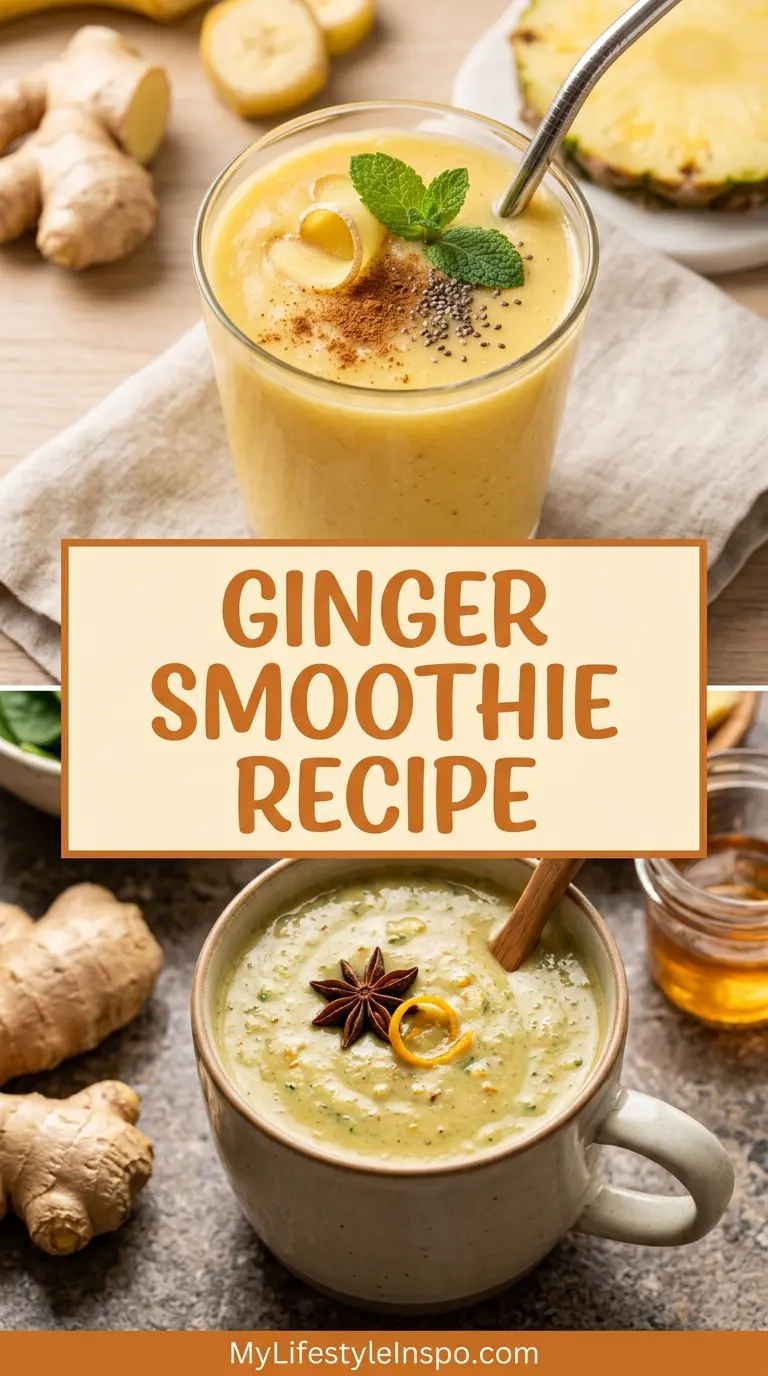
Why You’ll Love This Ginger Smoothie Recipe
This smoothie checks so many boxes, it almost feels unfair.
For starters, it takes about five minutes from start to finish. No cooking, no special prep, just a quick peel of the ginger and you’re on your way.
The flavor is genuinely exciting. Most fruit smoothies taste sweet but flat. The ginger adds a real dimension of warmth and spice that keeps every sip interesting.
It’s also incredibly versatile. You can swap out the milk, change up the fruit, add protein powder, or dial the ginger up or down depending on your preference.
Here’s a quick summary of what makes this recipe a keeper:
- Five-minute prep: No cooking or complicated steps involved.
- Anti-inflammatory ingredients: Fresh ginger and spinach are both known for their health-supporting properties.
- Naturally sweet: The banana and pineapple provide all the sweetness you need without any added sugar.
- Completely dairy-free: Made with almond milk by default, but easy to swap for any milk you prefer.
- Beginner-friendly: If you own a blender, you can make this smoothie.
- Filling and satisfying: Frozen banana creates a thick, creamy texture that actually keeps you full.
Another great option in a similar wellness lane is this Cinnamon Smoothie Recipe, which pairs a warming spice with sweet fruit in much the same way.
Ingredients
The ingredient list here is intentionally simple. Every item does a specific job, and none of them are optional without a good reason.
- 1 cup (240 ml) unsweetened almond milk (or oat milk, coconut milk, or regular milk)
- 1 medium frozen banana, peeled and sliced before freezing
- 1 cup (150 g) frozen pineapple chunks
- 1 large handful (about 1 oz / 30 g) baby spinach, fresh
- 1 inch (2.5 cm) piece of fresh ginger root, peeled (roughly 1 teaspoon grated)
- 1 tablespoon fresh lemon juice (about half a lemon)
- 1 teaspoon raw honey or pure maple syrup (optional, adjust to taste)
- 3-4 ice cubes (optional, only if you’re using fresh rather than frozen fruit)
Read Also: Spinach Smoothie Recipe
Kitchen Equipment Needed
You don’t need much for this recipe. A good blender is the only real essential, but a few supporting tools make the process smoother.
- High-powered blender (a Vitamix or similar works best for fibrous ginger; a standard blender will work if you dice the ginger finely first)
- Cutting board
- Sharp knife
- Peeler or spoon (for removing the ginger skin)
- Measuring cups and spoons
- Tall drinking glass or a reusable smoothie cup with straw
You might also enjoy blending up this Green Smoothie Recipe using essentially the same equipment.
Recommended Products for This Recipe
These are products I genuinely recommend based on quality and how much of a difference they make when you’re making smoothies regularly.
1. Vitamix E310 Explorian Blender
Standard blenders often struggle with fresh ginger, leaving stringy bits in your smoothie that are unpleasant to drink. A high-powered blender like the Vitamix completely obliterates fibrous ginger root, giving you a perfectly smooth result every time. It also blends frozen fruit in seconds without straining the motor.
2. OXO Good Grips Ginger Peeler
Peeling ginger with a standard vegetable peeler is frustrating because the skin clings tightly to all the little knobs and contours. A dedicated ginger peeler or a good stainless teaspoon makes this task effortless, scraping away the thin skin cleanly without wasting any of the flesh.
3. Organic Ginger Powder (Backup Option)
Fresh ginger is always the first choice for flavor and health benefits, but having a high-quality organic ground ginger on hand is a lifesaver when your fresh supply runs out. Use about a quarter teaspoon in place of the fresh piece.
4. Glass Smoothie Jars with Lids
If you like to meal prep your smoothies or take them on the go, a set of wide-mouth glass jars is far better than plastic. They don’t absorb smells, they’re easy to clean, and they keep your smoothie fresher for longer in the fridge.
For more blender-friendly inspiration, check out this Pineapple Smoothie Recipe that uses many of the same tools and techniques.
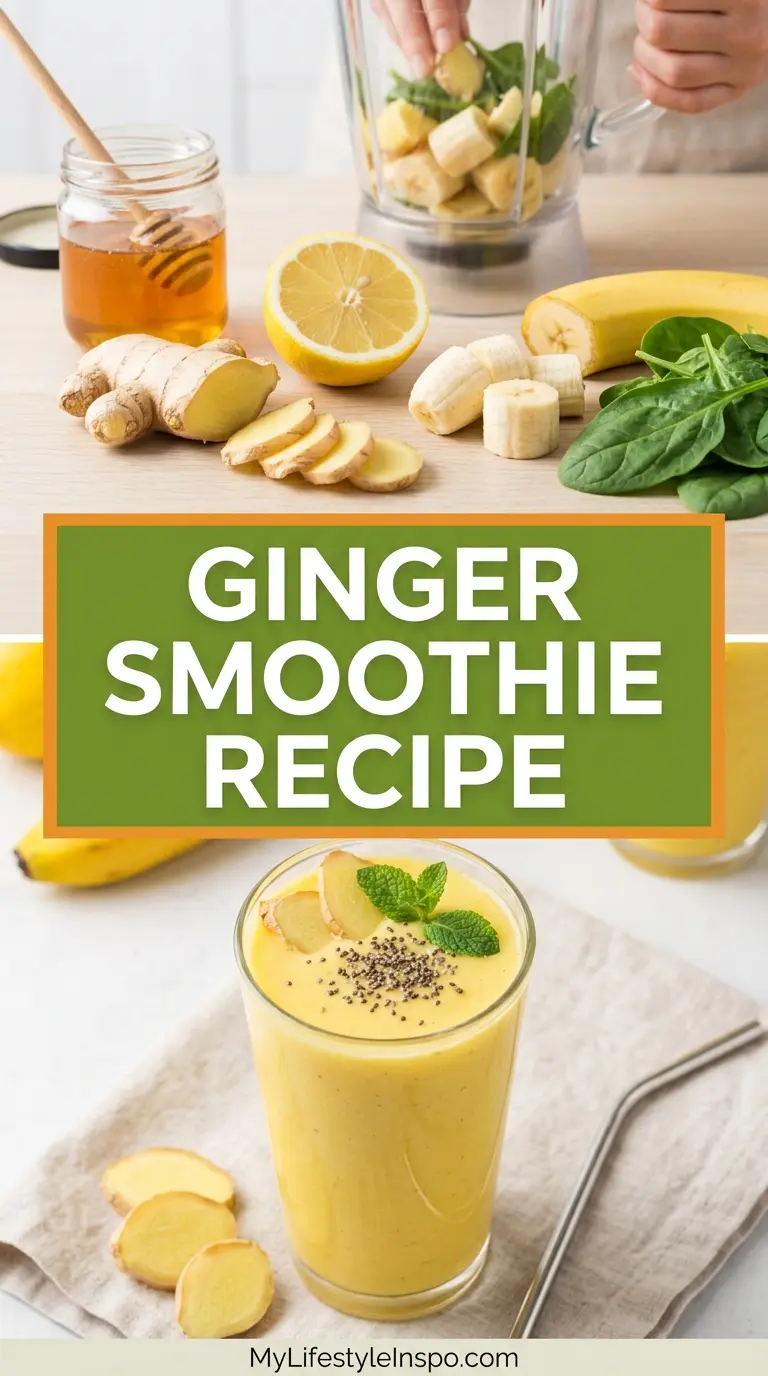
Step-by-Step Instructions
Step 1: Prep the Ginger
- Hold the ginger root firmly in one hand. Use the edge of a metal spoon (or a peeler) to scrape away the thin, papery skin. Work around the bumps and knobs rather than cutting through them, so you lose as little flesh as possible.
- Once peeled, use a sharp knife to cut a roughly 1-inch (2.5 cm) piece from the root. If you’re using a standard blender rather than a high-powered one, dice the ginger into small pieces (about 0.5 cm or smaller) so it blends fully without leaving stringy bits.
- If you grate the ginger instead of using chunks, measure out approximately 1 teaspoon of freshly grated ginger. This is the gentler option for smaller or older blenders.
Step 2: Prep the Remaining Ingredients
- If your banana is fresh rather than pre-frozen, peel it, slice it into rounds, and place it in the freezer for at least 2 hours (or overnight) before making this smoothie. A frozen banana is what gives the smoothie its thick, creamy, almost ice-cream-like texture. A fresh banana will produce a much thinner drink.
- Rinse the baby spinach under cold water and shake off the excess. There is no need to dry it.
- Squeeze about half a lemon to get your tablespoon of fresh lemon juice. Remove any seeds.
- Measure out your almond milk and set it alongside your other ingredients.
Step 3: Add Ingredients to the Blender in the Right Order
- Pour the almond milk into the blender first. Adding liquid at the bottom helps the blender blades start spinning immediately and creates a vortex that pulls the other ingredients down into the blades.
- Add the baby spinach directly on top of the liquid. This ensures the greens blend fully, especially in standard blenders, before the heavier frozen fruit gets in the way.
- Add the ginger piece (or grated ginger) on top of the spinach.
- Add the frozen pineapple chunks next.
- Finally, add the frozen banana slices on top. The frozen fruit goes in last so it sits closest to the top and doesn’t block the liquid from circulating at the start of blending.
- Add the fresh lemon juice.
- If you are using honey or maple syrup for extra sweetness, add it now.
- If your fruit is fresh rather than frozen, add 3-4 ice cubes at this stage for a chilled, slightly thicker result.
Step 4: Blend Until Completely Smooth
- Secure the lid firmly on your blender.
- Start blending on the lowest speed setting for the first 5-10 seconds to break down the larger pieces. This prevents the motor from straining when it encounters solid frozen fruit.
- Gradually increase the blender speed to the highest setting.
- Blend on high for 45-60 seconds, or until the mixture is completely smooth. You should hear the motor running freely with no chunking sounds.
- If the smoothie is too thick and the blender is struggling, add one extra tablespoon of almond milk at a time and blend again until the consistency loosens up.
- If there are still visible green spinach flecks or ginger fibers after the first round of blending, blend for an additional 20-30 seconds on high.
Step 5: Taste and Adjust
- Remove the blender lid (carefully, as there may be pressure from blending cold ingredients) and taste the smoothie with a small spoon before pouring.
- If it tastes too spicy, add a little extra banana or a splash more pineapple juice to mellow the ginger.
- If it needs more brightness, squeeze in a little extra lemon juice and blend for 5 more seconds.
- If it tastes flat or not sweet enough, add the honey or maple syrup now (or a little more if you already added some) and blend briefly.
- Adjust the thickness by adding more almond milk to thin it out, or more frozen fruit/ice to thicken it up.
Step 6: Pour and Serve
- Pour the finished smoothie into a tall glass immediately for the best texture and temperature.
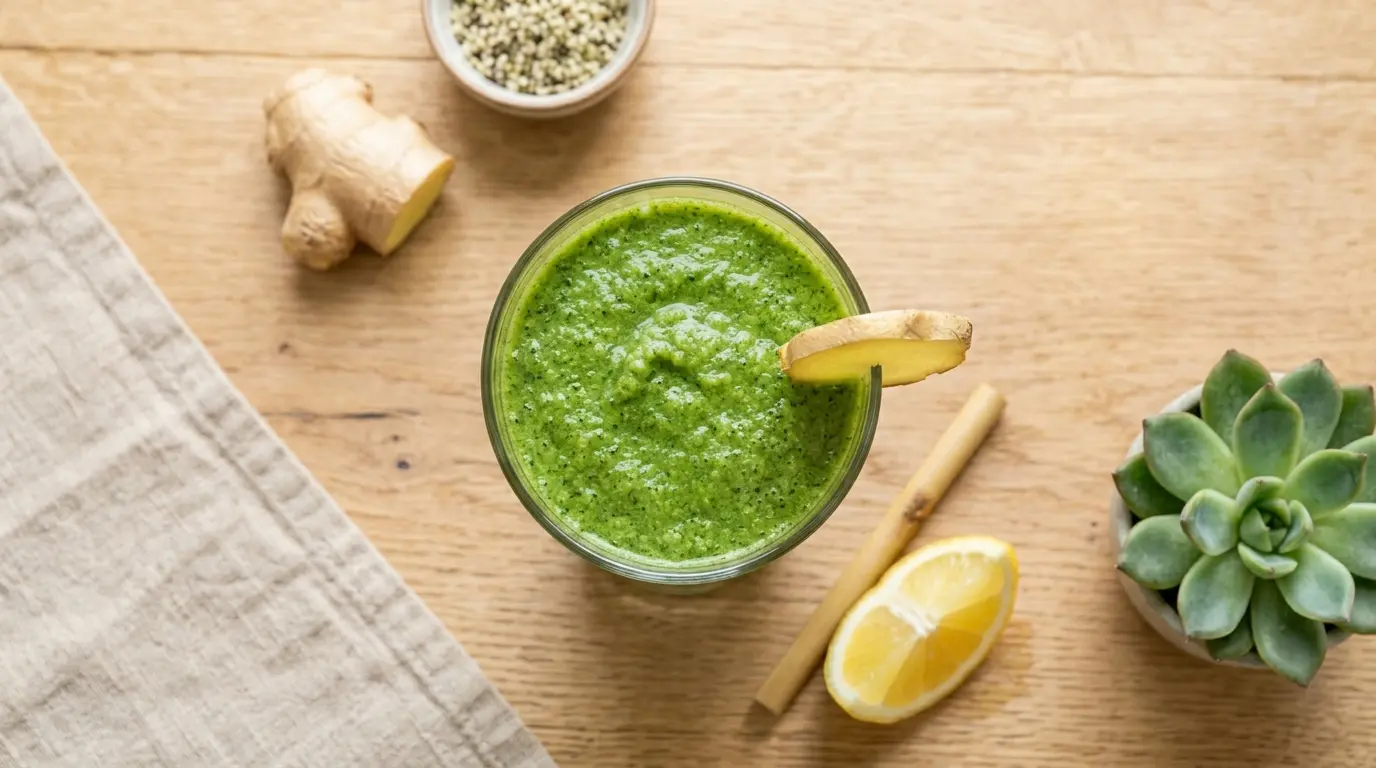
- If you want a little visual flair, garnish with a thin slice of fresh ginger on the rim of the glass or a small wedge of lemon.
- Drink right away for peak flavor and that thick, frosty texture. Smoothies begin to separate and lose their best quality within 20-30 minutes of blending.
This technique also works beautifully for the Carrot Smoothie Recipe, another vibrantly colored blend that benefits from fresh root ingredients.
Tips for Success
Getting a smoothie right is mostly about technique and ingredient quality. These tips make a real difference.
- Always use frozen fruit. Fresh banana and pineapple will produce a thin, watery smoothie. Freezing the fruit is what creates that thick, frosty, almost milkshake-like consistency.
- Layer ingredients thoughtfully. Liquid at the bottom, greens next, then ginger, then frozen fruit on top. This order ensures smooth blending every single time.
- Don’t over-blend. Blending too long generates heat, which can slightly cook the spinach and dull the brightness of your smoothie. Sixty seconds on high is typically all you need.
- Freeze your bananas in pre-sliced pieces. Whole frozen bananas are incredibly hard to break up in a blender. Slice them into rounds before freezing and store them in a zip-lock bag for easy use.
- Taste before adding sweetener. Pineapple varies dramatically in sweetness depending on the batch. Some pineapple is plenty sweet on its own, and adding honey on top of already-sweet fruit can make the smoothie cloying.
Another great tip: try this same frozen-fruit technique when making the Breakfast Smoothie Recipe for consistently creamy morning blends.
Serving Suggestions
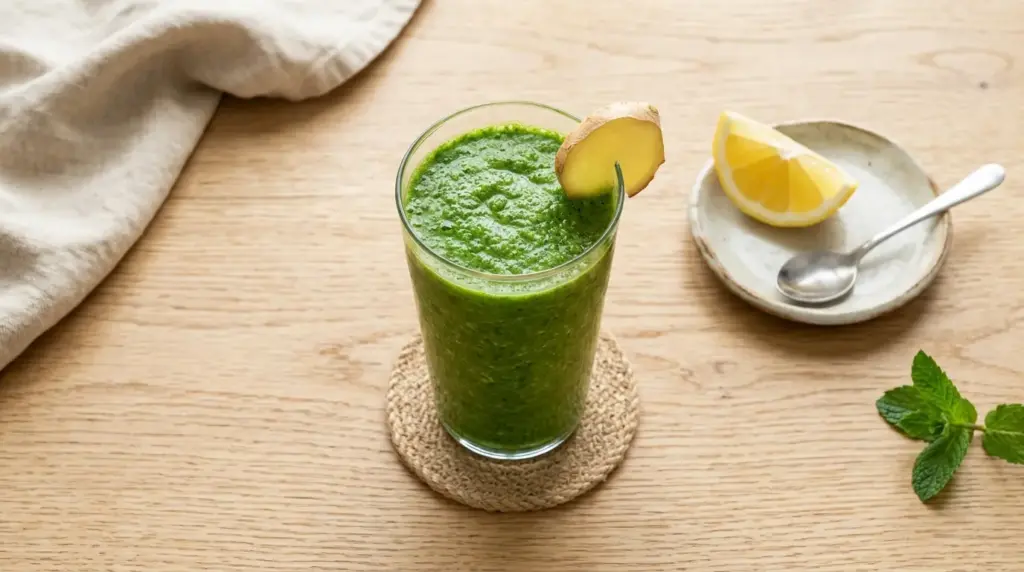
This ginger smoothie works on its own as a quick breakfast or a light snack, but it’s even better when paired with something simple alongside it.
A couple of whole grain toast slices with almond butter are a great balance to this smoothie’s fruity brightness. The protein and fat in the nut butter slow down the digestion of the natural sugars, keeping you fuller for longer.
For a complete breakfast spread, consider serving it alongside:
- Avocado Toast for a filling, nutrient-dense pairing
- Baked Oatmeal for a heartier, warming option on colder mornings
- Easy Granola sprinkled on top for a little crunch and texture contrast
- A simple soft-boiled egg if you want to add protein to the meal
- Scrambled Eggs on the side for a protein-rich breakfast pairing
Variations to Try
Once you’ve made the base recipe a few times, it’s fun to experiment. Ginger plays well with a huge range of ingredients, and these swaps all work beautifully.
- Swap the liquid: Try coconut milk instead of almond milk for a richer, tropical flavor that complements the pineapple perfectly.
- Add protein: A scoop of vanilla protein powder or a half-cup of plain Greek yogurt turns this into a genuinely filling post-workout meal.
- Go green: Add a second handful of spinach or swap the spinach for kale to lean into the green smoothie direction, similar to this Kale and Fruit Smoothie.
- Make it citrusy: Add the zest of one lemon along with the juice, or blend in a small peeled orange for extra brightness.
- Add beets: A small handful of frozen beet chunks takes this in a beautiful magenta direction with an earthier flavor. Check out this Beet Smoothie Recipe for more inspiration.
- Mango instead of pineapple: Ripe mango is slightly softer in flavor than pineapple, making the smoothie a bit sweeter and less tangy overall.
You might also enjoy: Matcha Green Tea Smoothie Recipe
Storage and Reheating
Smoothies are best consumed immediately after blending, but there are a few practical storage options if you’re meal prepping.
Here are the key things to know:
- Fridge: Store in a sealed jar or airtight container for up to 24 hours. The smoothie will separate as it sits, so give it a vigorous shake or a quick re-blend (10-15 seconds) before drinking. Expect some flavor loss and slight texture change compared to fresh.
- Freezer: Pour leftover smoothie into ice cube trays and freeze solid. Once frozen, transfer the cubes to a zip-lock bag. When you’re ready for another smoothie, blend 8-10 cubes with a splash of almond milk to bring it back to life. Stays good for up to 2 months.
- Smoothie packs: Measure out your frozen banana, pineapple, and spinach into individual zip-lock bags and freeze them. When you want a smoothie, dump a pack into the blender, add ginger, liquid, and lemon juice, and blend. These packs stay good in the freezer for up to 3 months.
- Do not refrigerate a smoothie that already has protein powder mixed in for more than 12 hours, as the texture becomes unpleasant.
Read Also: Lemon Smoothie Recipe
Nutritional Facts
The following is an estimate for one full serving (approximately 14-16 oz / 400-475 ml) made with unsweetened almond milk and no added sweetener.
| Nutrient | Amount |
|---|---|
| Calories | 195 kcal |
| Carbohydrates | 45 g |
| Natural Sugars | 28 g |
| Fiber | 5 g |
| Protein | 3 g |
| Fat | 2.5 g |
| Vitamin C | 90% DV |
| Vitamin A | 35% DV |
| Potassium | 620 mg |
| Calcium | 300 mg |
| Iron | 10% DV |
These values are based on standard ingredient sizes and will vary based on the exact brands and quantities used. Adding honey or protein powder will change the calories and macronutrients accordingly.
Another nutritionally rich blend worth exploring is this Orange Smoothie Recipe, which is similarly high in vitamin C.
Health Benefits of Key Ingredients
Every ingredient in this smoothie was chosen for both flavor and function.
It’s a pretty impressive lineup when you look at each one individually.
- Fresh ginger root: Ginger contains bioactive compounds called gingerols and shogaols that have well-documented anti-inflammatory and antioxidant properties. It’s also traditionally used to ease nausea and support digestion, making it a great ingredient to reach for when your stomach is unsettled.
- Banana: Provides natural sweetness and a creamy texture, while also delivering potassium for heart health and muscle function, plus vitamin B6 for brain health. The prebiotic fiber in bananas feeds beneficial gut bacteria.
- Pineapple: Rich in vitamin C for immune support and skin health. It also contains bromelain, an enzyme that aids protein digestion and has anti-inflammatory properties of its own.
- Baby spinach: A mild-flavored leafy green packed with iron, folate, vitamin K, and vitamin A. Because it’s mild, it adds a significant nutritional boost without changing the flavor profile of the smoothie at all.
- Lemon juice: High in vitamin C and helps prevent oxidation, which is part of what keeps the smoothie looking vibrant and green rather than turning brown quickly. The acidity also brightens all the other flavors.
- Almond milk: A low-calorie, dairy-free base that adds creaminess without the saturated fat of whole milk. Most commercial almond milks are also fortified with calcium and vitamin D.
For an even deeper dive into functional smoothie ingredients, this Avocado Smoothie Recipe is loaded with healthy fats and makes for an excellent complement to this ginger blend.
Frequently Asked Questions
1. Can I use ground ginger instead of fresh ginger?
Yes, you can. Ground ginger has a slightly different flavor profile from fresh, tending to be earthier and less bright, but it works in a pinch. Use about a quarter teaspoon of ground ginger in place of the 1-inch piece of fresh root. Start conservative and add more to taste, since ground ginger can become overpowering quickly in a smoothie.
2. How do I make the smoothie less spicy?
The spice level in this smoothie is primarily driven by how much ginger you use and how fresh it is. To tone it down, simply reduce the ginger to a smaller piece (try half an inch to start) or replace some of the fresh ginger with a smaller amount of ground ginger. Adding an extra quarter banana or a little more pineapple also helps balance out the heat.
3. Can I make this smoothie without a high-powered blender?
Absolutely. The key adjustment is to dice the fresh ginger very finely (as small as you can manage) before adding it to the blender, since standard blenders can leave fibrous ginger strings if you add it in a whole chunk. Blending at high speed for a full 60-90 seconds, stopping to scrape down the sides halfway through, usually results in a smooth enough texture. Some minor texture variation is normal with a standard blender.
4. Is this smoothie good for weight loss?
This smoothie can absolutely fit into a balanced, calorie-conscious diet. At roughly 195 calories per serving with 5 grams of fiber, it’s filling and nutrient-dense. The fiber and natural fruit sugars help prevent energy crashes. That said, portion size matters, and adding calorie-dense extras like full-fat coconut milk, honey, or protein powder will increase the calorie count. As part of a well-rounded diet, this makes an excellent nutrient-packed meal or snack.
5. Can I prep this smoothie ahead of time?
The best approach for advance prep is to make smoothie freezer packs. Measure out the frozen banana, pineapple, and spinach into individual zip-lock bags and freeze them. When you’re ready to blend, dump the contents of the bag into the blender, add fresh ginger, almond milk, and lemon juice, and blend immediately. This takes about 90 seconds total in the morning and produces a perfectly fresh smoothie every time. Pre-blended smoothies stored overnight lose some flavor and texture, so freezer packs are a much better strategy.
Read Also: Greek yogurt Smoothie Recipe
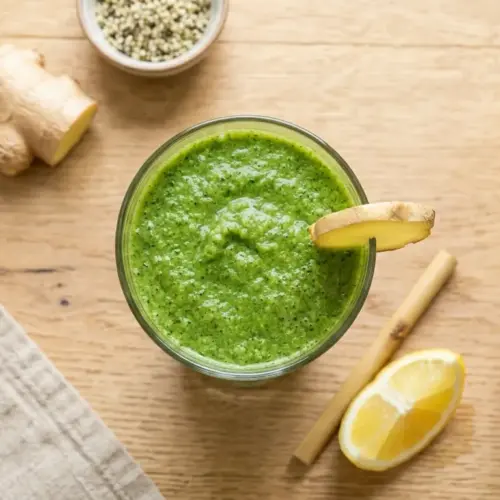
Ginger Smoothie

Equipment
- High-powered blender - Vitamix or similar recommended for fibrous ginger; standard blender works if ginger is diced finely
- Cutting board
- Sharp knife
- Peeler or spoon - for removing ginger skin
- Measuring cups and spoons
- Tall drinking glass or reusable smoothie cup with straw
Ingredients
- 1 cup unsweetened almond milk - 240 ml, or oat milk, coconut milk, or regular milk
- 1 frozen banana - medium, peeled and sliced before freezing
- 1 cup frozen pineapple chunks - 150 g
- 1 handful baby spinach - about 1 oz or 30 g, fresh
- 1 inch fresh ginger root - 2.5 cm piece, peeled, roughly 1 teaspoon grated
- 1 tablespoon fresh lemon juice - about half a lemon
- 1 teaspoon raw honey or pure maple syrup - optional, adjust to taste
- ice cubes - 3-4, optional, only if using fresh rather than frozen fruit
Instructions
- Prep the ginger: Peel using the edge of a metal spoon, then cut a 1-inch (2.5 cm) piece. Dice finely if using a standard blender.
- Prep remaining ingredients: Ensure banana is frozen, rinse spinach, and squeeze lemon juice.
- Add almond milk to the blender first, then spinach, ginger, pineapple, banana, lemon juice, and honey or maple syrup if using. Add ice cubes if using fresh fruit.
- Blend starting on low speed for 5-10 seconds, then increase to high and blend for 45-60 seconds until completely smooth. Add extra almond milk if too thick.
- Taste and adjust sweetness, spice, or thickness with more sweetener, lemon juice, or almond milk as needed.
- Pour into a tall glass immediately, garnish with a thin slice of ginger or lemon wedge if desired, and drink right away for best texture and flavor.
Notes
- Always use frozen fruit for that thick, frosty, milkshake-like consistency. Fresh fruit will make the smoothie thin and watery.
- Layer ingredients correctly: liquid first, then greens, ginger, and frozen fruit on top. This ensures smooth blending without straining the motor.
- Don’t over-blend — 60 seconds on high is usually enough. Over-blending can generate heat and dull the bright flavor and color.
- Freeze bananas in slices rather than whole. Sliced bananas blend much more easily and quickly.
- Taste before adding sweetener — pineapple varies in sweetness, and you may not need the honey or maple syrup at all.
- For a standard blender: dice the ginger very finely (about 0.5 cm) and blend for a full 60-90 seconds, stopping to scrape down the sides if needed.
- To reduce the ginger spice: use a smaller piece (half an inch) or replace some fresh ginger with a small amount of ground ginger. Adding extra banana or pineapple also helps balance the heat.
- Storage: Best consumed immediately. Can be refrigerated for up to 24 hours in a sealed jar (shake or re-blend before drinking). For meal prep, freeze smoothie packs with banana, pineapple, and spinach for up to 3 months.
- Variations: Swap almond milk for coconut milk for a tropical twist, add a scoop of protein powder or Greek yogurt, replace pineapple with mango, or add a handful of kale for an extra green boost.
Final Thoughts
This ginger smoothie recipe is exactly the kind of thing that sneaks its way into your permanent routine. It’s quick, it’s vibrant, it tastes genuinely good, and it gives you a noticeable boost from genuinely nourishing ingredients.
What really sets it apart from most fruit smoothies is that warming ginger kick. It makes the whole drink feel more intentional and alive, which is a surprisingly satisfying thing to start your day with.
Give this recipe a try the next time you need a quick breakfast or a midday pick-me-up. Once you find your perfect ginger level, you’ll know exactly how to make it your own.
If you try this recipe, leave a comment below and tell me how it turned out! I’d also love to hear if you tried any of the variations, especially the coconut milk swap or the mango version.
Recommended:
- Turmeric Smoothie Recipe
- Watermelon Smoothie Recipe
- Fruit Smoothie Recipe
- Keto Smoothie Recipe
- Protein Smoothie Recipe
- Blueberry Banana Smoothie Recipe
- Dragon Fruit Smoothie Recipe
- Papaya Smoothie Recipe
- Passion Fruit Smoothie Recipe
- Banana Mango Smoothie Recipe