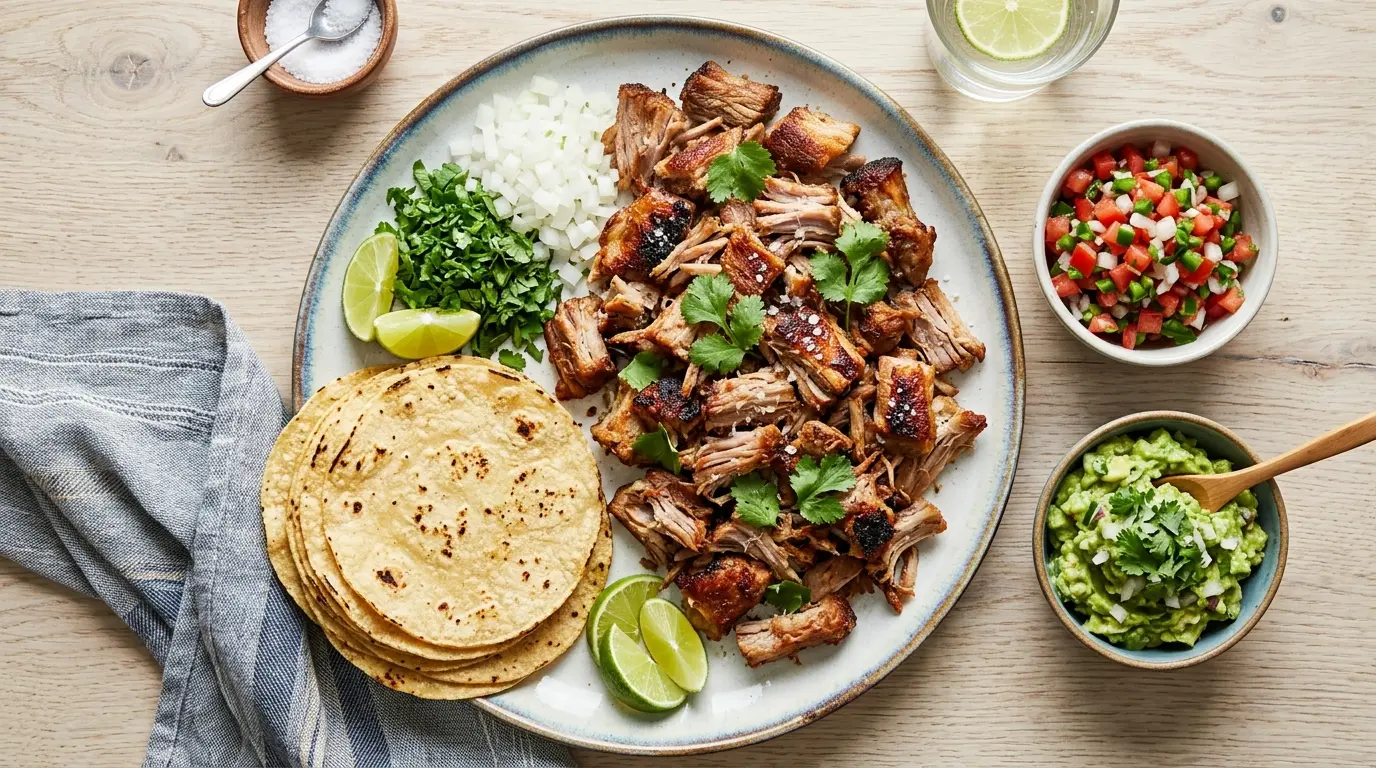
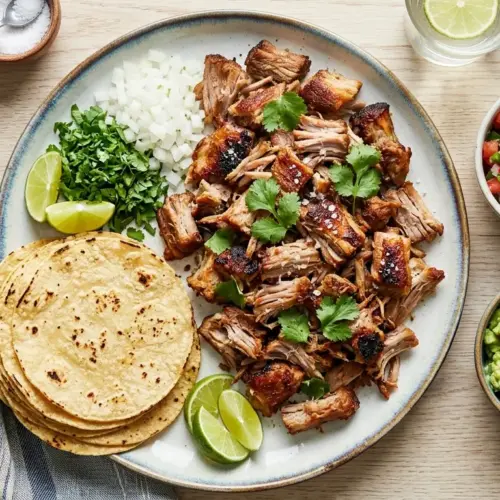
If you have ever bitten into a taco loaded with perfectly shredded, golden-edged meat that is crispy on the outside and meltingly tender inside, you already know the magic of carnitas. This classic dish, known in full as Carnitas (Mexican Slow-Cooked Pulled Pork), is one of the most iconic recipes in Mexican cuisine. Originating from the state of Michoacán, carnitas are made by slowly braising pork shoulder until it falls apart, then crisping the meat in its own fat for that irresistible combination of textures.
What makes this recipe so special is the balance of flavors. The citrus from fresh orange juice brightens the rich pork, the cumin and oregano add earthy depth, and the final sear in a hot pan transforms the shredded meat into something extraordinary. You do not need a copper pot or a taqueria setup to nail it at home.
This version uses a Dutch oven for the braise and a quick broil or skillet finish to achieve that signature crispiness. It feeds a crowd, stores beautifully, and works for tacos, burritos, rice bowls, and so much more.
For another slow-cooked pork recipe with bold flavor, check out this Slow Cooker Pulled Pork.
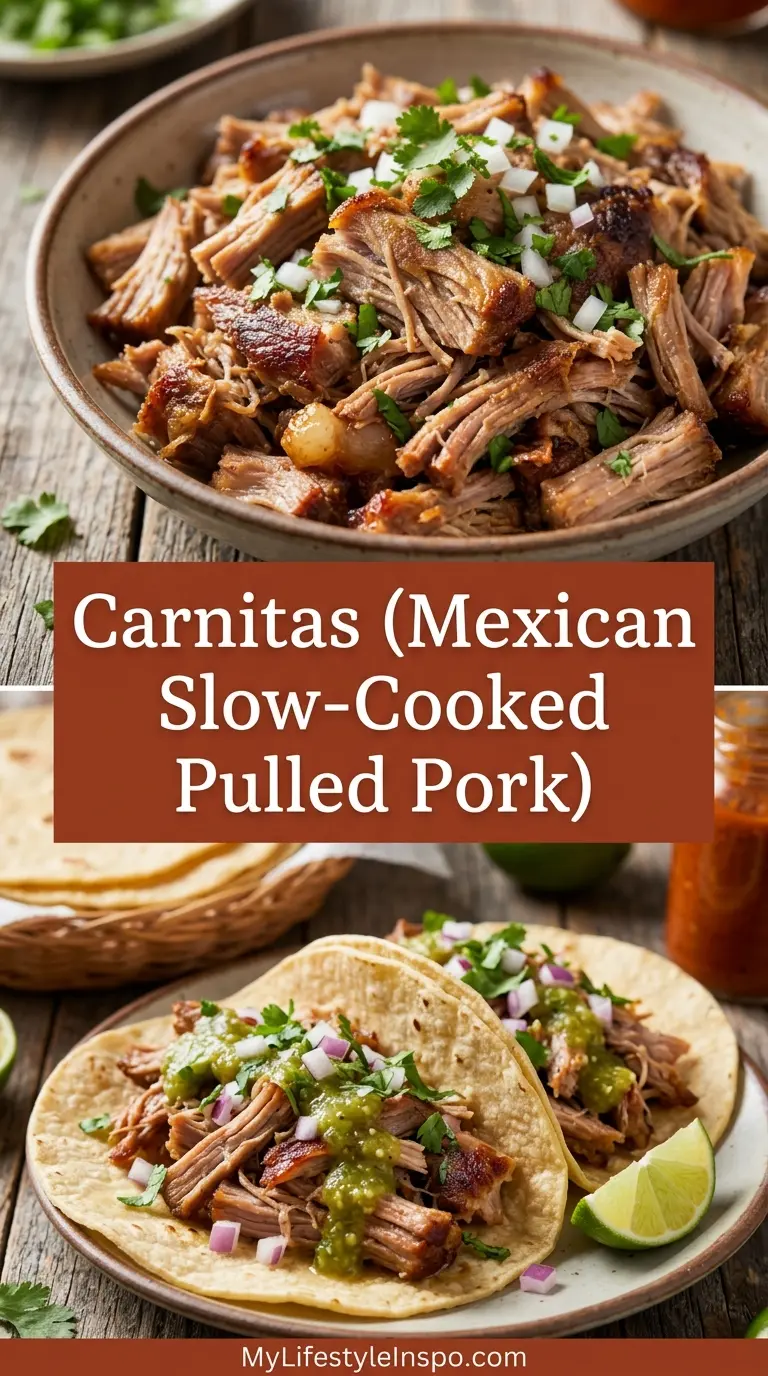
Why You’ll Love This Carnitas (Mexican Slow-Cooked Pulled Pork)
Carnitas check every box for a great home-cooked meal. They are deeply flavorful, surprisingly simple, and impressively versatile.
The technique here does all the heavy lifting. You spend a few minutes seasoning and searing the pork, then the oven takes over for a few hours while your kitchen fills with an incredible aroma.
The crispy finish is what separates homemade carnitas from basic shredded pork. Spreading the braised meat on a baking sheet and broiling it creates caramelized edges that give every bite that taqueria-style crunch.
This recipe makes a generous batch, which means leftovers you will actually look forward to. The meat reheats perfectly and tastes even better the next day.
It is also endlessly customizable. Pile it into warm corn tortillas, spoon it over rice, stuff it into quesadillas, or use it as a base for nachos.
Here is a quick summary of what makes this recipe a keeper:
- Tender, juicy pork that falls apart after a slow braise
- Crispy, golden edges from a quick broil or pan finish
- Bright citrus and warm spice flavors in every bite
- Perfect for feeding a crowd or meal prepping for the week
- Works beautifully in tacos, burritos, bowls, and more
- Made with simple pantry and grocery store ingredients
You might also enjoy these Carne Asada Tacos for another bold Mexican meat option.
Ingredients
The ingredient list for carnitas is refreshingly short. The key is high-quality pork shoulder and fresh citrus, which together create a deeply savory, slightly sweet braising liquid that infuses the meat with flavor throughout the long cook.
Here is everything you will need to make this recipe:
- 4 lbs (1.8 kg) boneless pork shoulder (also called pork butt), cut into 3-inch chunks
- 2 teaspoons kosher salt
- 1 teaspoon black pepper
- 1 teaspoon ground cumin
- 1 teaspoon dried Mexican oregano (or regular dried oregano)
- 1 teaspoon chili powder
- 1/2 teaspoon smoked paprika
- 1 large white onion, roughly chopped
- 6 cloves garlic, smashed
- 2 bay leaves
- Juice of 2 large oranges (about 3/4 cup / 180 ml)
- Juice of 1 lime
- 1/2 cup (120 ml) chicken broth or water
- 2 tablespoons lard or neutral oil (for searing)
- Optional: 1/2 cup (120 ml) Mexican Coca-Cola or regular cola (adds subtle sweetness and depth)
Read Also: Taco Seasoning Recipe
Kitchen Equipment Needed
Good carnitas do not require any specialty tools, but having the right equipment makes the process much smoother. A heavy, oven-safe pot is the most important item here because it allows you to sear and braise all in one vessel.
Here is what you will need:
- Large Dutch oven (5-7 quart / 4.7-6.6 liter), oven-safe
- Sharp chef’s knife and cutting board
- Measuring cups and spoons
- Citrus juicer (for squeezing the oranges and lime)
- Two forks (for shredding the pork)
- Rimmed baking sheet (for the broiling step)
- Tongs
- Paper towels (for patting the pork dry before searing)
- Instant-read thermometer (optional but helpful)
Read Also: Oven Braised Pulled Pork Recipe
Recommended Products for This Recipe
These are products I recommend based on quality and performance for making the best possible carnitas at home.
1. Lodge Enameled Cast Iron Dutch Oven
A heavy Dutch oven is the single most important tool for this recipe. The thick walls distribute heat evenly during searing and maintain a steady temperature during the long braise, which is essential for tender, fully cooked pork. The enamel interior makes cleanup easy and prevents any metallic flavor.
2. Mexican Oregano (Dried)
Mexican oregano has a slightly citrusy, more robust flavor than Mediterranean oregano. Using it instead of the standard supermarket variety makes a real difference in the authenticity of the spice blend. It pairs beautifully with cumin and chili powder.
3. Heavy-Duty Rimmed Baking Sheet
A sturdy rimmed baking sheet is essential for the broiling step that gives carnitas their signature crispy edges. Thin baking sheets can warp under high broiler heat, causing uneven crisping. A heavy-gauge pan stays flat and gives the meat even contact with the heat.
4. Lard (Rendered Pork Lard)
While neutral oil works fine for searing, authentic carnitas are traditionally cooked in lard. Using a small amount for the initial sear adds a subtle, savory depth that oil simply cannot replicate. A jar of high-quality rendered lard goes a long way.
5. Instant-Read Meat Thermometer
Carnitas are done when the pork reaches an internal temperature of about 200 to 205°F (93 to 96°C), which is the point at which the connective tissue fully breaks down and the meat shreds easily. A reliable instant-read thermometer takes out all the guesswork.
For another incredibly flavorful Mexican pork dish, try this Instant Pot Pulled Pork.
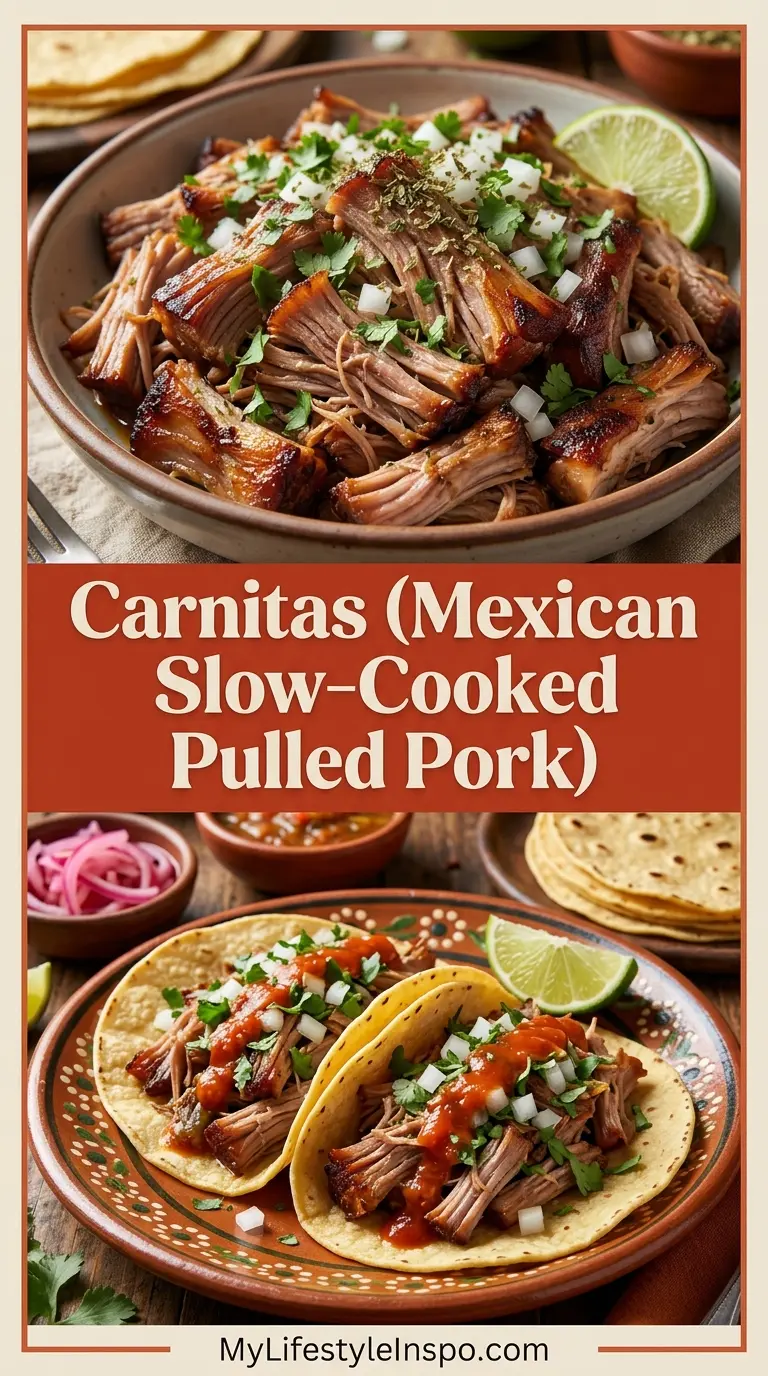
Step-by-Step Instructions
1. Prep and Season the Pork
- Remove the pork shoulder from the refrigerator and let it sit at room temperature for about 30 minutes. This helps it cook more evenly.
- Pat the pork pieces completely dry with paper towels. Removing surface moisture is critical because wet pork will steam instead of sear, and you want a deep golden crust.
- In a small bowl, combine the kosher salt, black pepper, ground cumin, dried Mexican oregano, chili powder, and smoked paprika. Stir well to combine.
- Sprinkle the spice mixture generously over all sides of the pork chunks. Use your hands to press the spices into the meat so they adhere well.
- Set the seasoned pork aside while you preheat your pan.
2. Preheat the Oven and Sear the Pork
- Preheat your oven to 325°F (163°C).
- Place your Dutch oven on the stovetop over medium-high heat. Add the lard or neutral oil and let it heat until shimmering and just starting to smoke slightly, about 2 to 3 minutes.
- Working in batches, add the pork pieces to the pot in a single layer. Do not crowd the pan or the pork will steam rather than sear.
- Sear each piece for about 3 to 4 minutes per side without moving it, until a deep brown crust forms. You want rich, dark caramelization on at least two sides of each piece. This is the flavor foundation of the dish.
- Use tongs to transfer each seared batch to a plate, then continue with the remaining pieces.
- Once all the pork has been seared, reduce the heat to medium. Add the roughly chopped white onion to the remaining fat in the pot.
- Cook the onion, stirring occasionally, for about 3 minutes until softened and lightly golden.
- Add the smashed garlic cloves and cook for another 1 minute, stirring, until fragrant. Be careful not to burn the garlic.
3. Build the Braising Liquid
- Return all the seared pork pieces to the Dutch oven, nestling them in among the onion and garlic.
- Pour the fresh orange juice and lime juice over the pork. The citrus acid will begin tenderizing the meat right away, and the natural sugars in the orange juice will caramelize beautifully during the braise.
- Add the chicken broth (or water) to the pot. The liquid should come about one-third of the way up the sides of the pork. You are not making a soup here, just enough liquid to create steam and prevent burning.
- If you are using Mexican Coca-Cola or regular cola, pour it in now. The sugars and acidity in the soda deepen the flavor and contribute to that slight stickiness that makes great carnitas.
- Tuck the two bay leaves in among the pork pieces. They contribute a gentle herbal note that complements the citrus and spices.
- Stir gently to distribute everything evenly.
4. Braise Low and Slow in the Oven
- Place the lid on the Dutch oven and transfer it carefully to the preheated 325°F (163°C) oven.
- Braise the pork for 2.5 to 3 hours, until the meat is extremely tender and falls apart easily when pressed with a fork. The pork should reach an internal temperature of at least 200°F (93°C) for the connective tissue to fully break down.
- At the 2-hour mark, check the liquid level. If the pot looks dry, add a splash of water or broth to prevent sticking.
- The meat is ready when a fork slides in with zero resistance and the chunks pull apart without effort. If there is still resistance, return the pot to the oven for another 20 to 30 minutes and check again.
- Once the pork is fully tender, remove the Dutch oven from the oven and set it on the stovetop. Let the meat cool slightly for about 10 to 15 minutes so it is safe to handle.
5. Shred the Pork
- Using two forks or your fingers (with heat-resistant gloves if the meat is still very hot), shred the pork into bite-sized pieces. Aim for a mix of larger shreds and some smaller pulled pieces for texture variety.
- Discard the bay leaves as you come across them.
- The cooked onion and garlic will have mostly melted into the braising liquid at this point. You can leave them in the shredded meat for added flavor, or strain them out if you prefer a cleaner presentation.
- Pour some of the reserved braising liquid over the shredded pork and toss gently to coat. This keeps the meat moist and flavorful. Save the remaining braising liquid, as you will use some of it in the final crisping step.
6. Crisp the Carnitas Under the Broiler
- Preheat your oven’s broiler on high (about 500°F / 260°C). Position an oven rack about 6 inches (15 cm) from the broiler element.
- Spread the shredded pork in an even layer on a large rimmed baking sheet. Make sure the pork is spread out without overlapping so each piece can crisp properly.
- Spoon 2 to 3 tablespoons of the reserved braising liquid over the pork. The sugars in the liquid will caramelize under the broiler, creating those irresistible crispy, sticky edges.
- Broil the carnitas for 4 to 6 minutes, watching closely the entire time. Broilers vary significantly in heat, so do not walk away.
- When the edges are deeply golden and crispy with some char on the tips, remove the baking sheet from the oven immediately.
- Taste and adjust seasoning with a pinch of salt if needed. Serve right away for the best texture.
This technique pairs really well with homemade Street Tacos for a complete Mexican feast.
Tips for Success
Getting carnitas right comes down to a few key techniques. Follow these tips and you will end up with restaurant-quality results every single time.
Here are the most important things to keep in mind:
- Choose the right cut: Pork shoulder (also called pork butt) is non-negotiable for the best carnitas. Its high fat content and connective tissue break down over the long braise into meltingly tender, flavorful meat. Leaner cuts like loin will dry out and become tough.
- Dry the meat before searing: Patting the pork completely dry with paper towels is one of the most important steps. Moisture on the surface of the meat creates steam, which prevents the Maillard reaction (browning) from happening properly.
- Do not rush the braise: The pork needs a full 2.5 to 3 hours at 325°F (163°C) to break down the collagen. Trying to speed it up at a higher temperature will make the meat tough and dry on the outside before it is tender inside.
- Use fresh orange juice: Bottled orange juice contains preservatives and has a flatter flavor. Squeezing 2 large fresh oranges takes about two minutes and makes a noticeably better braising liquid.
- Watch the broiler closely: The crisping step happens fast. The sugar in the braising liquid can go from perfectly caramelized to burnt in under a minute. Stay at the oven the entire time.
- Save the braising liquid: Do not pour it down the drain. Spoon it over the meat during shredding and broiling, and use any leftovers to reheat stored carnitas. It is pure flavor.
- Season in layers: The initial spice rub seasons the meat, and the final taste after broiling is your chance to add a last pinch of salt if needed. Tasting before serving always results in a better dish.
Read Also: Smoked BBQ Pulled Pork Recipe
Serving Suggestions
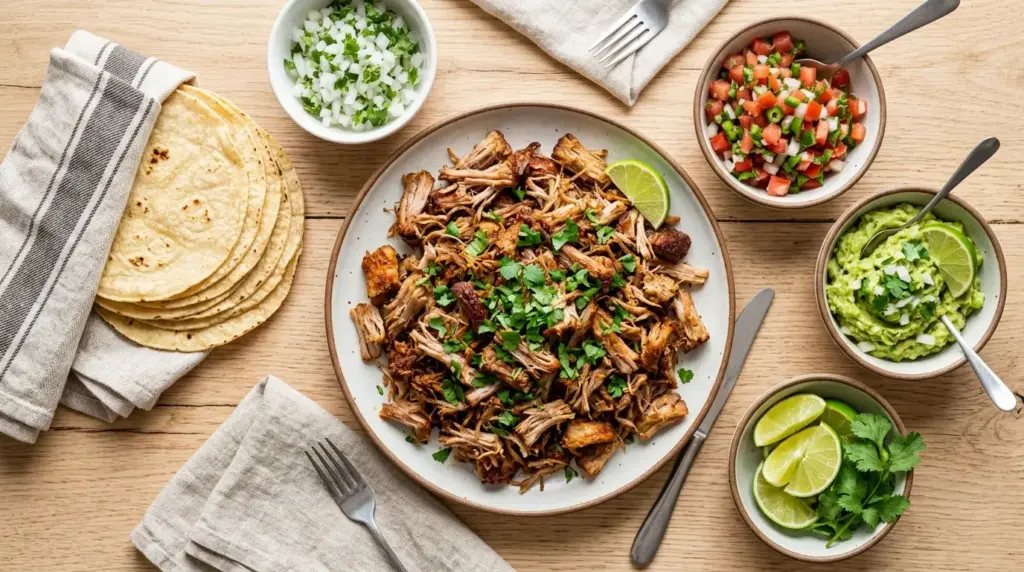
Carnitas are endlessly versatile, making them one of the most useful proteins you can have in your refrigerator. The combination of tender shredded pork and crispy edges works in so many different meal formats.
Here are the best ways to serve your carnitas:
- Classic tacos: Warm Corn Tortillas are the traditional choice. Top with diced white onion, fresh cilantro, a squeeze of lime, and your favorite salsa for an authentic taqueria experience.
- Burritos: Pile the carnitas into large Flour Tortillas with Mexican Rice, Refried Beans, and shredded cheese.
- Rice bowls: Serve over Cilantro Lime Rice with black beans, corn salsa, guacamole, and a drizzle of hot sauce for a filling, balanced meal.
- Nachos: Spread tortilla chips on a baking sheet, top with carnitas and shredded cheese, and bake until melted. Finish with Pico de Gallo, sour cream, and Guacamole.
- Quesadillas: Layer carnitas and cheese between two flour tortillas and cook in a dry skillet for a crispy, cheesy snack or light meal.
- Salads: Use carnitas as a protein topping on a simple green salad with lime vinaigrette, black beans, and corn.
Variations to Try
The classic recipe is outstanding on its own, but carnitas are also a great canvas for experimentation. Adjusting a few ingredients can take the flavor in a completely different direction without changing the core technique.
Here are some popular variations worth trying:
- Slow cooker carnitas: Skip the Dutch oven and use a slow cooker instead. After the spice rub and searing step, transfer everything to the slow cooker and cook on low for 8 to 10 hours or on high for 5 to 6 hours. Still finish under the broiler for crispy edges.
- Instant Pot carnitas: Use the sauté function to sear the pork, then pressure cook on high for 60 to 75 minutes with a natural pressure release. Finish with the broil step for crunch.
- Coca-Cola carnitas: Replace the chicken broth with Mexican Coca-Cola for a subtly sweeter, more caramelized result. The cola’s acidity also helps tenderize the meat.
- Spicy carnitas: Add 1 to 2 chipotle peppers in adobo sauce to the braising liquid along with a teaspoon of the adobo sauce itself. This adds a smoky, moderately spicy depth.
- Verde carnitas: Swap the orange-lime braising liquid for a base of salsa verde (tomatillos, jalapeño, garlic). The tangy green sauce creates a completely different but equally delicious flavor profile.
- Carnitas with cinnamon: Add a whole cinnamon stick to the braise for a warm, slightly sweet, Michoacán-style depth. Remove it before shredding.
For more taco inspiration, check out this Birria Tacos Recipe.
Storage and Reheating
Carnitas store and reheat exceptionally well, making them ideal for meal prep. The flavor actually deepens overnight, so leftovers are genuinely something to look forward to.
Here is how to store and reheat your carnitas:
- Refrigerator: Store cooled carnitas in an airtight container with a few spoonfuls of braising liquid to keep the meat moist. They will keep well in the fridge for up to 4 days.
- Freezer: Spread carnitas in a single layer on a baking sheet and freeze until solid, then transfer to a freezer bag or container. They keep well for up to 3 months. The flat-freeze method prevents the meat from clumping into a solid block.
- Reheating on the stovetop: Heat a skillet over medium-high heat with a splash of oil or reserved braising liquid. Add the carnitas and cook, stirring occasionally, for 3 to 5 minutes until warmed through and the edges re-crisp.
- Reheating under the broiler: Spread leftover carnitas on a rimmed baking sheet, drizzle with a bit of braising liquid or water, and broil for 3 to 4 minutes until hot and crispy again.
- Avoid the microwave if possible: While microwaving works in a pinch, it steams the meat and eliminates the crispy texture entirely. If you must use it, cover loosely and heat in 30-second bursts, then finish in a hot skillet for 1 to 2 minutes.
This recipe pairs brilliantly with homemade Corn Salsa as a topping or side.
Nutritional Facts
The following values are approximate and based on a serving size of roughly 4 oz (113 g) of cooked carnitas without tortillas or toppings. This recipe yields approximately 10 to 12 servings.
| Nutrient | Per Serving (approx.) |
|---|---|
| Calories | 290 |
| Protein | 28 g |
| Total Fat | 18 g |
| Saturated Fat | 6 g |
| Carbohydrates | 4 g |
| Sugars | 3 g |
| Sodium | 430 mg |
| Fiber | 0.3 g |
| Cholesterol | 95 mg |
Note: Nutritional values will vary depending on the exact cut of pork, the amount of fat trimmed, and any optional ingredients like cola used in the braise. Values calculated without tortillas, rice, or additional toppings.
Another hearty Mexican-inspired favorite: Chicken Pozole.
Health Benefits of Key Ingredients
Carnitas are a rich, protein-forward dish, and several of the key ingredients offer real nutritional benefits beyond just flavor.
Pork shoulder is an excellent source of complete protein, providing all essential amino acids needed for muscle repair and maintenance. It is also rich in B vitamins, especially B12, B6, and niacin, which support energy metabolism and nervous system function.
Here is a closer look at the health contributions of key ingredients:
- Pork shoulder: High in protein (about 25 to 28 g per 4 oz serving), a good source of zinc for immune support, and contains creatine which supports muscle function.
- Garlic: Contains allicin, a sulfur compound with well-documented anti-inflammatory and antibacterial properties. Studies suggest regular garlic consumption may support cardiovascular health.
- Orange juice: Provides vitamin C, which supports immune function and enhances iron absorption. The acidity also helps tenderize the meat naturally without any added chemicals.
- Cumin: Rich in antioxidants and has been studied for its potential to support digestion and reduce inflammation. It also contributes to the distinctive earthy, warming flavor of the spice blend.
- Lime juice: Another source of vitamin C and natural citric acid. The acidity brightens the finished dish and balances the richness of the pork fat.
- Oregano: Contains polyphenols including carvacrol and thymol, which have antimicrobial properties. It also adds antioxidants to the dish with zero calories.
Read Also: Mexican Rice Recipe
Frequently Asked Questions
1. What cut of pork is best for carnitas?
Pork shoulder, also called pork butt, is the best cut for carnitas by a wide margin. It has a generous amount of intramuscular fat and connective tissue that breaks down over the long, slow braise into collagen-rich gelatin. This is what makes carnitas so tender and juicy.
Leaner cuts like pork loin or tenderloin will dry out during the long cooking time and will not shred properly.
2. Do I have to crisp the carnitas after braising?
Technically, no. The braised pork is fully cooked and delicious straight from the pot. However, the crisping step is what sets carnitas apart from plain shredded pork.
The quick broil caramelizes the braising liquid on the meat and creates those golden, slightly crunchy edges that make every bite so satisfying. Skipping it is like skipping the crust on a pizza. It is optional but strongly recommended.
3. Can I make carnitas in a slow cooker instead of a Dutch oven?
Absolutely. You can still sear the pork in a skillet on the stovetop first, then transfer everything to a slow cooker. Cook on low for 8 to 10 hours or on high for 5 to 6 hours.
The result will be slightly less caramelized in the braising liquid compared to the oven method, but the meat will be equally tender. Finish under the broiler for the crispy edges regardless of cooking method.
4. What is the difference between carnitas and pulled pork?
Both dishes use slow-cooked, shredded pork, but they differ significantly in flavor and technique. Pulled pork is typically American-style, seasoned with a dry rub containing sugar and spices, and often finished with a sweet and tangy BBQ sauce.
Carnitas are Mexican in origin, seasoned with citrus, cumin, and oregano, braised in their own juices, and finished with a dry crisp rather than a sauce. The flavor of carnitas is brighter, citrusy, and more savory, without the sweetness of BBQ sauce.
5. Why do my carnitas taste bland?
The most common causes of bland carnitas are insufficient seasoning and not searing the meat properly. The spice rub needs to coat all surfaces generously, and the sear needs to develop a deep, dark brown crust.
Another factor is the orange juice quantity and freshness. Bottled OJ lacks the bright acidity of fresh-squeezed juice. Finally, tasting and adjusting salt at the end, especially after broiling, makes a significant difference in the final result.
For more Mexican favorites, check out the Chicken Tacos Recipe.
Carnitas (Mexican Slow-Cooked Pulled Pork)

Equipment
- Large Dutch oven (5-7 quart / 4.7-6.6 liter) - oven-safe
- Sharp chef's knife
- Cutting board
- Measuring cups and spoons
- Citrus juicer - for squeezing the oranges and lime
- Two Forks - for shredding the pork
- Rimmed Baking Sheet - for the broiling step
- Tongs
- Paper towels - for patting the pork dry before searing
- Instant-read thermometer - optional but helpful
Ingredients
- 4 lbs boneless pork shoulder - 1.8 kg, also called pork butt, cut into 3-inch chunks
- 2 teaspoons kosher salt
- 1 teaspoon black pepper
- 1 teaspoon ground cumin
- 1 teaspoon dried Mexican oregano - or regular dried oregano
- 1 teaspoon chili powder
- 1/2 teaspoon smoked paprika
- 1 large white onion - roughly chopped
- 6 cloves garlic - smashed
- 2 bay leaves
- 2 large oranges - juiced, about 3/4 cup or 180 ml
- 1 lime - juiced
- 1/2 cup chicken broth - 120 ml, or water
- 2 tablespoons lard - or neutral oil, for searing
- 1/2 cup Mexican Coca-Cola - 120 ml, or regular cola, optional, adds subtle sweetness and depth
For Serving (Optional)
- corn tortillas - warmed
- white onion - diced, for garnish
- cilantro - fresh, for garnish
- lime wedges - for serving
- salsa - your favorite variety
Instructions
- Let pork sit at room temperature for 30 minutes. Pat dry with paper towels. Combine salt, pepper, cumin, oregano, chili powder, and paprika. Season pork generously on all sides.
- Preheat oven to 325°F (163°C). Heat lard or oil in Dutch oven over medium-high heat until shimmering. Sear pork in batches for 3-4 minutes per side until deep brown. Transfer to plate.
- Reduce heat to medium. Cook onion in remaining fat for 3 minutes until softened. Add garlic and cook 1 minute until fragrant.
- Return pork to pot. Add orange juice, lime juice, chicken broth, and cola (if using). Liquid should come one-third up the sides of the pork. Tuck in bay leaves.
- Cover and braise in oven for 2.5 to 3 hours until pork reaches 200°F (93°C) and falls apart easily with a fork. Check liquid at 2-hour mark, add splash of water if dry.
- Remove from oven and cool 10-15 minutes. Shred pork with two forks, discarding bay leaves. Pour some braising liquid over shredded meat to keep moist.
- Preheat broiler on high. Spread shredded pork in even layer on rimmed baking sheet. Spoon 2-3 tablespoons braising liquid over meat. Broil 4-6 minutes until edges are crispy and golden, watching closely.
- Remove from oven immediately. Taste and adjust seasoning. Serve hot with warm tortillas, diced onion, cilantro, lime wedges, and salsa.
Notes
- Choose the right cut: Pork shoulder (also called pork butt) is essential for tender carnitas. Leaner cuts like loin will dry out and become tough.
- Dry the meat thoroughly: Patting the pork completely dry with paper towels before searing is crucial for achieving a deep brown crust.
- Don’t rush the braise: The pork needs 2.5 to 3 hours at 325°F (163°C) to break down collagen. Higher temperatures will make it tough.
- Use fresh citrus: Fresh-squeezed orange and lime juice provide much brighter flavor than bottled alternatives.
- Watch the broiler closely: The sugar in the braising liquid can burn quickly. Stay at the oven during the entire crisping step.
- Save the braising liquid: Reserve it to spoon over shredded meat and reheating leftovers. It’s pure concentrated flavor.
- Storage: Store carnitas in an airtight container with braising liquid for up to 4 days in the refrigerator or 3 months in the freezer.
- Reheating: Reheat in a skillet with a splash of braising liquid or under the broiler to restore crispy edges. Avoid the microwave which steams the meat.
- Make it spicy: Add 1-2 chipotle peppers in adobo sauce to the braising liquid for smoky heat.
- Slow cooker option: After searing, transfer everything to a slow cooker and cook on low for 8-10 hours or high for 5-6 hours, then finish under the broiler.
Final Thoughts
Carnitas are one of those recipes that reward patience. The slow braise, the careful sear, and the final broil all work together to create something genuinely spectacular from a humble cut of pork.
Once you make this at home, it is hard to go back to anything else. The layers of flavor from the citrus braise and the crispy, caramelized finish make it a standout dish for weeknight dinners and weekend entertaining alike.
Give this Carnitas (Mexican Slow-Cooked Pulled Pork) recipe a try and see for yourself. If you make it, leave a comment below to share how it turned out, and feel free to tag a friend who would love this on their taco night lineup.
Recommended:
- Slow Cooker Pulled Pork
- Refried Beans
- Homemade Tortilla Chips
- Fish Tacos
- Seven Layer Dip
- Black Bean Quesadilla
- Enchilada Sauce
- Creamy Coleslaw
- Chicken Fajita
- Flour Tortilla


