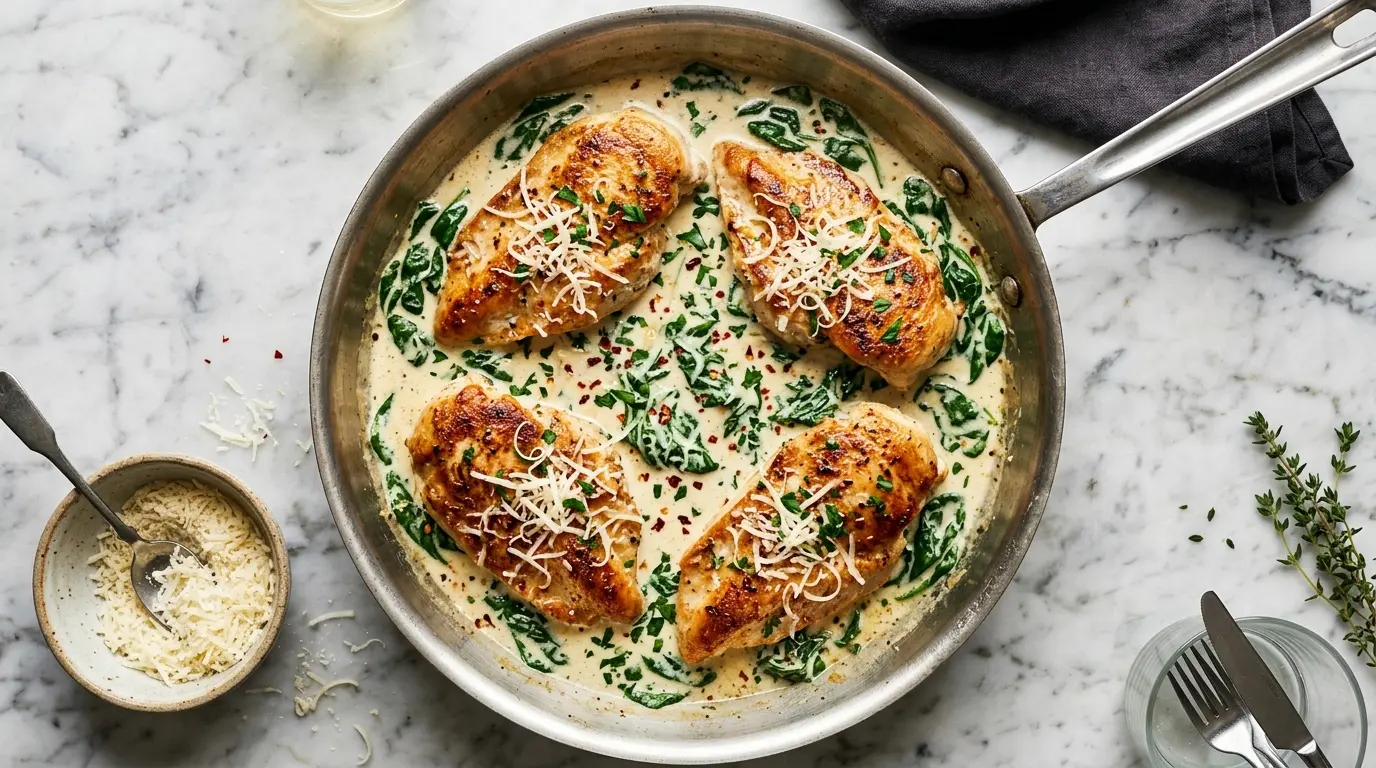
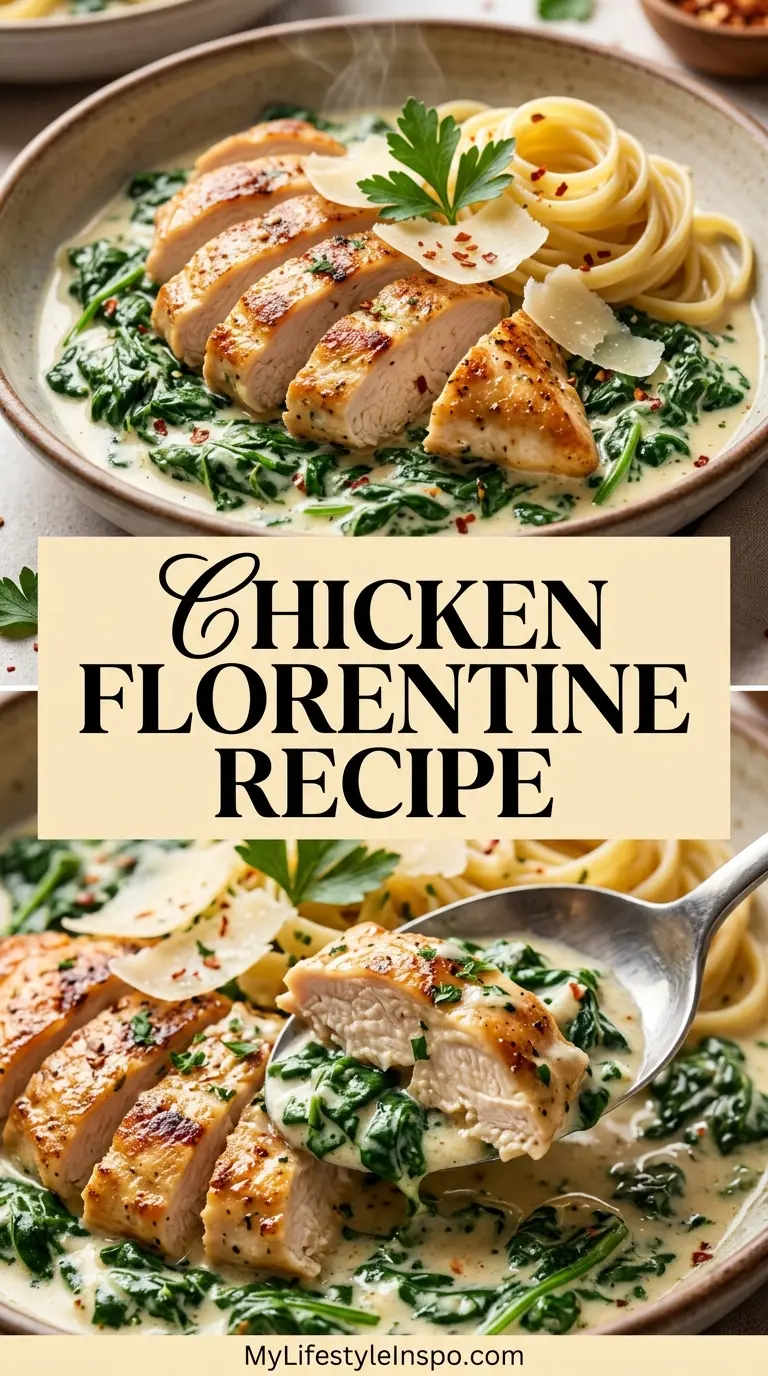
If you’ve been searching for the perfect Chicken Florentine recipe, you’re about to find your new go-to weeknight dinner. This classic dish features golden-seared chicken breasts smothered in a rich, garlicky cream sauce loaded with fresh spinach and finished with Parmesan cheese.
The name “Florentine” comes from Florence, Italy, and in cooking, it traditionally refers to dishes that include spinach as a key ingredient. This version is the most widely loved interpretation: pan-seared chicken cutlets built into a one-skillet white wine cream sauce that feels restaurant-worthy without requiring any special skills.
What makes this recipe special is how each component works together. The chicken gets a light flour dredge before hitting the hot pan, which creates a thin, golden crust that holds up beautifully in the sauce. The white wine deglazes the pan and picks up all those caramelized brown bits, while the heavy cream brings everything into one silky, luscious sauce.
It’s a dish that looks like it took hours but comes together in about 30 minutes. Elegant enough for a dinner party, easy enough for a Tuesday.
For another creamy, spinach-forward chicken dish, check out this Spinach Stuffed Chicken Breast for a different but equally satisfying preparation.

Why You’ll Love This Chicken Florentine Recipe
This Chicken Florentine recipe hits all the right notes for a satisfying, impressive dinner.
It comes together in a single skillet, which means less cleanup and more time at the table. The cream sauce is deeply flavored thanks to the white wine, shallots, garlic, and Parmesan, all built into the same pan as the chicken.
The dish is also incredibly versatile. Serve it over pasta, rice, or mashed potatoes and you have a complete, crowd-pleasing meal with minimal effort.
- One-pan convenience: Everything is made in a single skillet, from the seared chicken to the finished cream sauce.
- Quick 30-minute cook time: Even with the sauce reduction, this recipe stays manageable on a weeknight schedule.
- Elegant presentation: The golden chicken topped with bright green spinach and cream sauce looks stunning on the plate.
- Family-friendly flavors: The creamy, savory sauce appeals to both adults and picky eaters alike.
- Adaptable to dietary needs: Easy to swap white wine for extra broth, or use a dairy-free cream alternative.
- Protein-packed meal: Each serving delivers a generous amount of lean chicken paired with iron-rich spinach.
For another family-friendly skillet chicken idea, the Italian Chicken Skillet is worth bookmarking too.
Ingredients
You’ll need simple, quality ingredients here. Fresh baby spinach (rather than frozen) gives the sauce the best color and texture, and freshly grated Parmesan melts far more smoothly than the pre-shredded variety.
- 2 large boneless, skinless chicken breasts (about 1.5 lbs / 680g total), halved lengthwise to create 4 thinner cutlets
- 1/3 cup (40g) all-purpose flour, for dredging
- 1 teaspoon garlic powder
- 1 teaspoon salt
- 1/2 teaspoon black pepper
- 2 tablespoons (30ml) olive oil
- 3 tablespoons (45g) unsalted butter, divided
- 1 shallot, finely minced
- 4 cloves garlic, minced
- 1/2 cup (120ml) dry white wine (such as Sauvignon Blanc or Pinot Grigio)
- 1/2 cup (120ml) chicken broth
- 1 teaspoon Italian seasoning
- 1 cup (240ml) heavy cream
- 3 cups (90g) fresh baby spinach
- 1/2 cup (50g) freshly grated Parmesan cheese, plus more for serving
- Red pepper flakes, optional, for garnish
You might also love this Baked Chicken with Alfredo Sauce if you enjoy creamy chicken dinners like this one.
Kitchen Equipment Needed
Using the right tools makes the process smoother and more consistent. A large, wide skillet is essential here so the chicken has enough room to sear properly without steaming.
- Large 12-inch stainless steel or cast iron skillet
- Meat mallet or rolling pin (for even thickness if needed)
- Shallow bowl or plate for dredging
- Tongs
- Instant-read meat thermometer
- Cutting board and sharp knife
- Wooden spoon or silicone spatula
- Measuring cups and spoons
- Box grater or Microplane for Parmesan
Read Also: Chicken Marsala Recipe
Recommended Products for This Recipe
These are products I genuinely recommend based on quality and how much they can improve your results with this recipe.
1. All-Clad D3 Stainless Steel Skillet
A high-quality stainless steel skillet makes all the difference when it comes to getting a proper golden sear on your chicken. The even heat distribution means no hot spots, and the stainless surface builds a beautiful fond (those sticky brown bits) that enriches the sauce when you deglaze with white wine. It’s a kitchen investment you’ll use for years.
2. Microplane Premium Zester/Grater
Freshly grated Parmesan is a must in this recipe, and a good Microplane makes it effortless. Pre-shredded cheese contains anti-caking agents that prevent it from melting smoothly into the sauce, leading to a grainy texture. This tool creates ultra-fine, feathery Parmesan that dissolves perfectly.
3. Parmigiano Reggiano DOP Parmesan Wheel Wedge
Using authentic Parmigiano Reggiano rather than generic Parmesan takes this sauce from good to outstanding. The complex, nutty, slightly sharp flavor is unmatched, and it melts into the cream beautifully. Look for the DOP stamp to ensure it’s the real thing.
4. Instant-Read Digital Meat Thermometer
Perfectly cooked chicken is critical to this recipe. An instant-read thermometer takes the guesswork out completely and ensures you hit 165°F (74°C) without overcooking the chicken dry. It pays for itself in saved meals.
The creamy, savory profile of this dish is very close to the flavors in Chicken Piccata with Pasta, if you want another elegant Italian-inspired option.
Step-by-Step Instructions
1. Prepare the Chicken Cutlets
- Place your chicken breasts on a cutting board and slice each one in half lengthwise through the thickness. This gives you 4 thinner, more even cutlets that cook faster and more uniformly.
- If any cutlets are thicker than 1/2 inch (1.25 cm), place them between two sheets of plastic wrap and pound them lightly with a meat mallet until even. This ensures consistent cooking and prevents the outside from drying out before the inside is done.
- Pat the chicken cutlets completely dry with paper towels on both sides. This is a critical step: moisture on the surface creates steam in the pan, which prevents browning. Dry chicken = a proper golden crust.
2. Season and Dredge the Chicken
- In a shallow bowl or on a flat plate, mix together the flour, garlic powder, salt, and black pepper until well combined.
- Press each chicken cutlet into the flour mixture, coating both sides thoroughly. Shake off any excess flour so you have a thin, even coating rather than a thick crust.
- Set the dredged cutlets aside on a clean plate while you heat the pan. Do not stack them, or the flour coating will stick and clump together.
3. Sear the Chicken Until Golden Brown
- Place your large 12-inch skillet over medium-high heat and add the 2 tablespoons of olive oil and 1 tablespoon of the butter. Allow them to heat together until the butter melts and the mixture is shimmering but not smoking, about 1-2 minutes.
- Add the chicken cutlets to the pan in a single layer. Do not crowd the pan. If your skillet is smaller, cook in two batches, adding a little more oil between batches if needed. Crowding causes steaming rather than searing.
- Cook the chicken for 4-5 minutes on the first side without moving it. Resist the urge to check underneath early; the chicken will naturally release from the pan when it’s properly seared.
- Flip each cutlet and cook for another 3-4 minutes on the second side, until the chicken reaches an internal temperature of 165°F (74°C) on an instant-read thermometer. The outside should be a deep, even golden brown.
- Transfer the cooked chicken to a clean plate and set it aside. Tent loosely with foil to keep warm. Leave all the drippings and browned bits in the pan.
4. Sauté the Aromatics
- Reduce the heat to medium and add 1 tablespoon of the remaining butter to the same skillet. Let it melt, then add the minced shallot.
- Cook the shallot, stirring occasionally, for about 2 minutes until it becomes soft and translucent. Shallots are milder and sweeter than onions, and they provide a subtle depth without overpowering the delicate cream sauce.
- Add the minced garlic to the pan and stir constantly for 30-60 seconds until fragrant. Garlic can go from golden to burnt very quickly, so keep it moving and don’t walk away from the stove at this point.
5. Deglaze the Pan and Build the Sauce Base
- Pour the white wine into the skillet and use a wooden spoon or spatula to scrape up all the browned bits (fond) stuck to the bottom of the pan. These bits are packed with flavor and will dissolve into the sauce, adding incredible depth.
- Add the chicken broth and Italian seasoning, then increase the heat to medium-high. Bring the liquid to a simmer and let it cook, uncovered, for about 5-7 minutes until the liquid reduces by approximately half to two-thirds. This concentrating step is what gives the sauce its rich flavor, so don’t rush it.
6. Finish the Cream Sauce
- Pour the heavy cream into the reduced wine and broth mixture. Stir to combine, then let the cream come to a gentle simmer over medium heat. Do not boil aggressively, as this can cause the cream to break or curdle.
- Let the cream sauce simmer for 2-3 minutes, stirring occasionally, until it thickens slightly and coats the back of a spoon.
- Add the remaining 1 tablespoon of butter and stir it in until fully melted and incorporated. This final butter addition (called “mounting” the sauce) adds a glossy sheen and silky texture.
7. Add the Spinach and Parmesan
- Add the fresh baby spinach to the skillet all at once. It will look like a lot, but it wilts down dramatically within 1-2 minutes. Stir it gently into the cream sauce and cook until just wilted but still bright green. Overcooking the spinach will turn it dark and slightly bitter.
- Sprinkle the freshly grated Parmesan cheese into the sauce, stirring as you go. The cheese will melt into the cream and thicken the sauce further while adding a salty, nutty richness. Taste the sauce and adjust seasoning with salt and pepper as needed.
8. Return the Chicken and Serve
- Nestle the seared chicken cutlets back into the cream sauce, spooning some sauce over the top of each piece. Let everything simmer together gently over medium-low heat for 2-3 minutes, just long enough to heat the chicken through and allow it to absorb the flavors of the sauce.
- Serve immediately, spooned over pasta, rice, or mashed potatoes. Garnish with additional freshly grated Parmesan and a pinch of red pepper flakes if desired.
For another impressive one-pan chicken dinner with Italian flavors, the Stuffed Chicken Marsala is a great next recipe to try.
Tips for Success
Getting this recipe right comes down to a few key techniques that professional cooks rely on every time.
- Dry the chicken thoroughly: Moisture on the surface is the number one enemy of a good sear. Use paper towels and press firmly to remove all surface moisture before dredging.
- Don’t skip the flour dredge: The thin coating of seasoned flour creates a delicate crust that holds up in the sauce and also gently thickens it during simmering.
- Use freshly grated Parmesan: Pre-grated Parmesan from a can contains cellulose that prevents smooth melting and leads to a grainy sauce. Buy a wedge and grate it yourself.
- Don’t rush the wine reduction: Allowing the wine and broth to reduce properly before adding the cream is what concentrates the sauce’s flavor. A rushed sauce will taste thin and bland.
- Control your heat during the cream stage: Keep the cream at a gentle simmer, not a rolling boil. Boiling cream can cause it to separate and become greasy.
- Add spinach at the very end: Baby spinach wilts fast. Adding it too early results in a dark, overcooked mess. Stir it in when the sauce is already finished for the brightest color and freshest flavor.
Read Also: Chicken Francese Recipe
Serving Suggestions
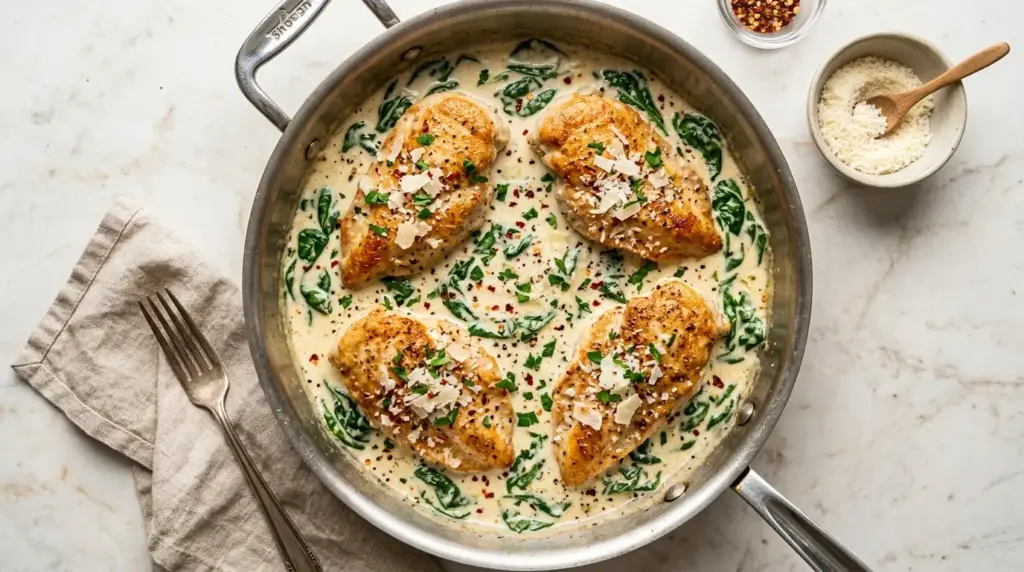
Chicken Florentine is rich and saucy, so it pairs best with something that can soak up all that incredible cream sauce.
Consider it a blank canvas that works with whatever you have on hand.
- Pasta: Serve it over angel hair, fettuccine, or pappardelle for a classic Italian-inspired pairing. The sauce clings beautifully to long pasta shapes.
- Rice: A simple bowl of Cilantro Lime Rice or fluffy basmati balances the richness of the cream sauce.
- Mashed Potatoes: Creamy Mashed Potatoes are an indulgent and satisfying base that soaks up every drop of sauce.
- Crusty Bread: A slice of warm Cheesy Garlic Bread is perfect for mopping up the sauce.
- Roasted Vegetables: Roasted Broccoli or roasted asparagus adds a healthy, colorful side that cuts through the richness.
- Simple Green Salad: A lightly dressed arugula or romaine salad provides a fresh, peppery contrast to the creamy main.
Variations to Try
Once you’ve mastered the classic version, this recipe is easy to adapt with different ingredients and flavor profiles.
- Add mushrooms: Slice 8 oz (225g) of cremini or baby bella mushrooms and sauté them with the shallots for an earthy, meaty addition that pairs beautifully with the cream sauce.
- Swap white wine for extra broth: If you prefer not to cook with alcohol, simply replace the wine with an equal amount of chicken broth and add 1/2 teaspoon of Dijon mustard for a touch of acidity.
- Sun-dried tomato variation: Stir in 1/4 cup of chopped sun-dried tomatoes along with the spinach for a sweet, tangy depth and a beautiful color contrast.
- Add artichoke hearts: Drain and roughly chop canned artichoke hearts and add them with the spinach for a heartier, more complex sauce.
- Spicy version: Add 1/2 teaspoon of red pepper flakes to the oil before cooking the shallots for a subtle heat that plays nicely with the creamy sauce.
- Baked Chicken Florentine: Transfer everything to a baking dish after step 6, top with mozzarella and Parmesan, and bake at 400°F (200°C) for 20 minutes for a bubbling, cheesy casserole version.
You might also enjoy: Chicken Cacciatore Recipe
Storage and Reheating
Chicken Florentine stores well and tastes just as good the next day once the chicken has had time to soak up more of that incredible sauce.
- Refrigerator: Transfer cooled leftovers to an airtight container and refrigerate for up to 3-4 days. Keep the chicken and sauce stored together so the chicken stays moist.
- Freezer: While possible, freezing cream-based sauces can lead to separation upon thawing. If you do freeze it, store in a freezer-safe container for up to 2 months and stir vigorously while reheating to bring the sauce back together.
- Stovetop reheating (recommended): Place leftovers in a skillet over medium-low heat with a splash of chicken broth or cream to loosen the sauce. Warm gently, stirring occasionally, until heated through. Avoid high heat, which can cause the cream to separate.
- Microwave reheating: Transfer a portion to a microwave-safe container, cover loosely, and heat in 30-second intervals, stirring between each, until hot.
- Do not re-boil: Aggressive reheating will cause the cream sauce to become greasy and the chicken to turn rubbery. Low and slow is the key.
Read Also: Chicken Stew Recipe
Nutritional Facts
The following nutritional information is an estimate per serving based on 4 servings, without any additional side dishes.
| Nutrient | Per Serving |
|---|---|
| Calories | ~490 kcal |
| Protein | 38g |
| Total Fat | 30g |
| Saturated Fat | 15g |
| Carbohydrates | 10g |
| Fiber | 1g |
| Sugar | 2g |
| Sodium | 620mg |
| Calcium | 210mg |
| Iron | 2mg |
| Vitamin A | 2800 IU |
Note: Nutritional values are estimates and will vary based on exact ingredient brands and serving sizes. For a lighter version, substitute half-and-half for the heavy cream, though the sauce will be thinner.
Another great option for a lighter chicken dinner is Baked Honey Mustard Chicken, which skips the cream entirely.
Health Benefits of Key Ingredients
Chicken Florentine isn’t just delicious. The main ingredients also bring some genuinely impressive nutritional benefits to the table.
Each component plays a role in making this more than just a rich, indulgent meal.
- Chicken breast: One of the leanest, most protein-dense cuts of meat available. A single chicken breast provides around 30-35g of protein, supporting muscle repair, immune function, and satiety.
- Fresh spinach: A nutritional powerhouse loaded with iron, folate, vitamins K, A, and C, and antioxidants. Spinach is one of the most nutrient-dense leafy greens you can eat.
- Garlic: Contains allicin, a compound with documented anti-inflammatory and antimicrobial properties. Regular garlic consumption has been linked to cardiovascular benefits and immune support.
- Olive oil: Rich in monounsaturated fats and polyphenols, olive oil is a cornerstone of the Mediterranean diet and is associated with heart health and reduced inflammation.
- Parmesan cheese: A concentrated source of calcium and protein. Parmesan is also naturally lower in lactose than many other cheeses, making it easier to digest for some people.
- Heavy cream: Provides fat-soluble vitamins A, D, E, and K. While high in calories, a moderate amount in this sauce goes a long way in creating satiety and flavor.
For a chicken dinner that leans even more nutritious, the Healthy Chicken Salad is a great lighter alternative to bookmark.
Frequently Asked Questions
1. What does “Florentine” mean in cooking?
In culinary terms, “Florentine” refers to dishes prepared in the style of Florence, Italy. It almost always indicates that spinach is a key ingredient in the dish. This tradition is said to trace back to Catherine de Medici, who reportedly brought spinach preparations from Florence to France in the 16th century.
2. Can I use chicken thighs instead of chicken breasts?
Yes, boneless, skinless chicken thighs work wonderfully in this recipe. They are naturally juicier and more forgiving than chicken breasts. Cook thighs for 5-6 minutes per side until they reach an internal temperature of 165°F (74°C). The sauce works equally well with either cut.
3. What white wine should I use for Chicken Florentine?
A dry, unoaked white wine is ideal. Sauvignon Blanc and Pinot Grigio are the most commonly recommended options because their crisp acidity brightens the sauce without adding sweetness. Avoid sweet wines like Riesling or Moscato, as the sugar will make the sauce taste off-balance. If you prefer not to use wine, substitute with an equal amount of chicken broth and a half teaspoon of Dijon mustard for a similar acidity.
4. Why did my cream sauce turn out thin or watery?
This usually happens for one of two reasons: the wine and broth were not reduced enough before adding the cream, or the heat was too low during the cream simmering stage. Make sure to cook the wine and broth down until reduced by at least half before adding the cream, and keep the heat at a consistent medium so the cream actively simmers and thickens. Also verify that you used heavy cream, as lighter dairy options will not thicken the same way.
5. Can I make this recipe ahead of time?
The cream sauce can be made up to a day in advance and stored in the refrigerator. Reheat it gently over medium-low heat before adding freshly cooked chicken. However, for the best results, the chicken is best seared fresh rather than reheated from a previous day. If you’re meal prepping, store the chicken and sauce separately and combine them when reheating to prevent the chicken from becoming tough.
For more quick weeknight chicken inspiration, try Lemon Chicken next.
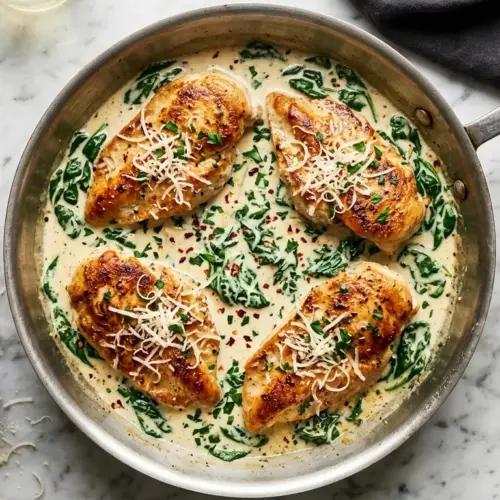
Chicken Florentine

Equipment
- Large 12-inch stainless steel or cast iron skillet
- Meat mallet or rolling pin - for even thickness if needed
- Shallow bowl or plate - for dredging
- Tongs
- Instant-read meat thermometer
- Cutting board
- Sharp knife
- Wooden spoon or silicone spatula
- Measuring cups and spoons
- Box grater or microplane - for Parmesan
Ingredients
- 2 large boneless, skinless chicken breasts - about 1.5 lbs or 680g total, halved lengthwise to create 4 thinner cutlets
- 1/3 cup all-purpose flour - 40g, for dredging
- 1 teaspoon garlic powder
- 1 teaspoon salt
- 1/2 teaspoon black pepper
- 2 tablespoons olive oil - 30ml
- 3 tablespoons unsalted butter - 45g, divided
- 1 shallot - finely minced
- 4 garlic cloves - minced
- 1/2 cup dry white wine - 120ml, such as Sauvignon Blanc or Pinot Grigio
- 1/2 cup chicken broth - 120ml
- 1 teaspoon Italian seasoning
- 1 cup heavy cream - 240ml
- 3 cups fresh baby spinach - 90g
- 1/2 cup freshly grated Parmesan cheese - 50g, plus more for serving
- red pepper flakes - optional, for garnish
Instructions
- Slice chicken breasts in half lengthwise to create 4 thinner cutlets, then pound to 1/2-inch thickness if needed. Pat completely dry with paper towels.
- In a shallow bowl, mix flour, garlic powder, salt, and pepper. Press each cutlet into the flour mixture, coating both sides, and shake off excess.
- Heat olive oil and 1 tablespoon butter in a large skillet over medium-high heat. Add chicken in a single layer and cook 4-5 minutes per side until golden brown and 165°F internally. Transfer to a plate.
- Reduce heat to medium, add 1 tablespoon butter and minced shallot. Cook 2 minutes until softened, then add garlic and cook 30-60 seconds until fragrant.
- Pour in white wine and scrape up browned bits from the pan. Add chicken broth and Italian seasoning, bring to a simmer, and cook 5-7 minutes until reduced by half.
- Pour in heavy cream and bring to a gentle simmer over medium heat. Cook 2-3 minutes until slightly thickened, then stir in remaining 1 tablespoon butter until melted and incorporated.
- Add fresh spinach and stir until wilted, about 1-2 minutes. Sprinkle in Parmesan cheese and stir until melted. Taste and adjust seasoning with salt and pepper.
- Return chicken to the skillet, spooning sauce over the top. Simmer gently for 2-3 minutes to heat through. Serve immediately over pasta, rice, or mashed potatoes with extra Parmesan and red pepper flakes if desired.
Notes
- Dry the chicken thoroughly: Moisture on the surface prevents browning. Pat chicken dry with paper towels before dredging for a proper golden crust.
- Use freshly grated Parmesan: Pre-grated cheese contains anti-caking agents that prevent smooth melting. Buy a wedge and grate it yourself for the best sauce texture.
- Don’t rush the wine reduction: Allow the wine and broth to reduce properly before adding cream. This concentrates the sauce’s flavor and prevents a thin, watery result.
- Control heat during cream stage: Keep cream at a gentle simmer, not a rolling boil. Boiling can cause the cream to break and become greasy.
- White wine substitute: Replace wine with an equal amount of chicken broth and add 1/2 teaspoon of Dijon mustard for a similar bright acidity if you prefer not to cook with alcohol.
- Chicken thighs work too: Boneless, skinless chicken thighs are naturally juicier. Cook 5-6 minutes per side until reaching 165°F internal temperature.
- Storage: Store leftovers in an airtight container in the refrigerator for up to 3-4 days. Reheat gently over medium-low heat with a splash of broth or cream to loosen the sauce.
- Variations: Add sliced mushrooms with the shallots, stir in sun-dried tomatoes with the spinach, or add artichoke hearts for a heartier sauce.
Final Thoughts
This Chicken Florentine recipe is one of those dishes that earns a permanent spot in your dinner rotation after the very first time you make it.
It’s the perfect intersection of easy and impressive: a single pan, 30 minutes, and a handful of pantry staples come together into something that genuinely tastes like it came from a restaurant kitchen.
The golden-seared chicken, the garlicky white wine cream sauce, the wilted spinach, and the salty hit of Parmesan are a combination that’s hard to beat on any night of the week.
Give this recipe a try this week and see how quickly it disappears at your table. If you make it, leave a comment below to share how it turned out or any creative variations you tried. I’d love to hear from you!
Recommended:
- Creamed Spinach Recipe
- Chicken Scampi Recipe
- Chicken Piccata Recipe (Authentic Italian)
- Classic Chicken Parmesan Recipe
- Chicken Cordon Bleu Recipe
- Olive Garden Chicken Marsala Recipe
- Creamy Tuscan White Bean Skillet Recipe
- Homemade Alfredo Sauce Recipe
- Chicken Francese Recipe
- Baked Chicken Breast Recipe