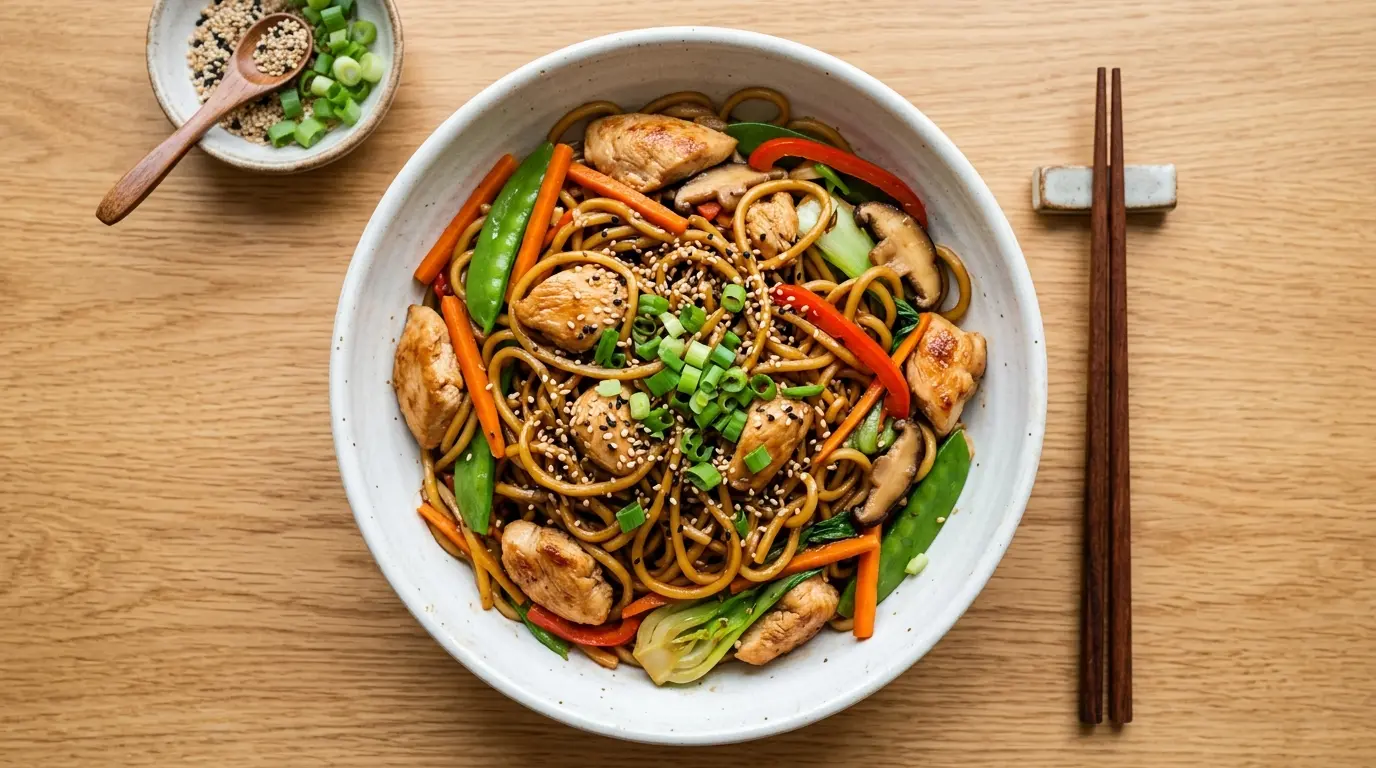
If you have been craving that saucy, savory noodle fix from your favorite Chinese restaurant, this Chicken Lo Mein Recipe is exactly what you need.
It comes together in about 30 minutes, uses simple ingredients you can find at most grocery stores, and honestly tastes better than anything that arrives in a paper takeout bag.
The secret is in the sauce. A combination of light soy sauce, dark soy sauce, oyster sauce, and a touch of sesame oil gives these noodles that deep, glossy, umami-packed coating that makes lo mein so irresistible.
You also get tender, velveted chicken pieces, crisp-tender vegetables, and springy egg noodles all tossed together over high heat for that coveted wok-kissed flavor.
Once you make it at home, you will understand why so many people stop ordering takeout altogether.
This Chicken Fried Rice is another Chinese-American classic worth adding to your weeknight dinner rotation.

Why You’ll Love This Chicken Lo Mein Recipe
This is the kind of dish that works any night of the week.
It is fast enough for a busy Tuesday and impressive enough to serve to guests on a Friday.
The flavor is deeply savory with a subtle sweetness and nuttiness that comes from sesame oil, and every bite coats the noodles beautifully.
It is incredibly customizable. You can swap the vegetables, adjust the sauce to taste, or use whatever protein you have on hand.
Here is why this recipe keeps getting made again and again:
- Ready in 30 minutes from start to finish, including prep
- Better than takeout because you control the ingredients, salt level, and freshness
- Family-friendly with mild, crowd-pleasing flavors everyone loves
- Easily customizable with different vegetables, proteins, or spice levels
- Great for meal prep as leftovers store well and reheat beautifully
- Uses pantry staples you likely already have or can grab in one grocery run
- No special equipment needed beyond a large wok or skillet
You might also enjoy: Easy Pad Thai Recipe
Ingredients
The ingredients for this chicken lo mein come together in three main components: the noodles, the chicken marinade, and the sauce. Getting all of this prepped before you start cooking makes the whole process smooth and stress-free, since stir frying moves fast once the heat goes on.
For the Lo Mein Noodles:
- 12 oz (340g) fresh or dried lo mein noodles (egg noodles)
- 1 tablespoon sesame oil (for tossing after cooking)
For the Chicken and Marinade:
- 1 lb (450g) boneless, skinless chicken thighs or chicken breast, sliced thin
- 1 tablespoon light soy sauce
- 1 teaspoon cornstarch
- 1 teaspoon neutral oil (such as canola or avocado oil)
- 1/4 teaspoon white pepper
For the Lo Mein Sauce:
- 3 tablespoons light soy sauce
- 1 tablespoon dark soy sauce
- 2 tablespoons oyster sauce
- 1 teaspoon sesame oil
- 1 teaspoon sugar
- 1/4 teaspoon white pepper
- 2 tablespoons water
For the Stir Fry:
- 2 tablespoons neutral oil, divided
- 4 cloves garlic, minced
- 1 teaspoon fresh ginger, grated
- 1 cup (75g) napa cabbage or regular cabbage, thinly sliced
- 1 medium carrot, julienned
- 1 red bell pepper, thinly sliced
- 3 stalks green onions, whites and greens separated
For Garnish (Optional):
- Sesame seeds
- Extra green onion greens
This recipe pairs really well with a bowl of Homemade Egg Drop Soup for a complete Chinese-inspired meal.
Kitchen Equipment Needed
You do not need a restaurant kitchen to make excellent lo mein at home. A few basic tools make all the difference, and having them ready before you start cooking keeps everything moving at the right pace.
- Carbon steel wok or large heavy-bottomed skillet (at least 12 inches)
- Large pot for boiling noodles
- Colander or strainer
- Cutting board and sharp knife
- Small mixing bowls for the marinade and sauce
- Tongs or wooden chopsticks for tossing
- Ladle or large wooden spoon
- Microplane or box grater for ginger
- Measuring spoons
Read Also: Easy Fried Rice Recipe
Recommended Products for This Recipe
These are products recommended based on quality and performance to help you get the most out of this recipe.
1. Lodge Carbon Steel Wok
A seasoned carbon steel wok is the single best tool for making authentic lo mein at home. It heats up fast, holds high heat well, and gives your noodles that slightly charred, restaurant-style flavor that a non-stick pan simply cannot achieve. Lightweight and durable, it is a long-term kitchen investment.
2. Lee Kum Kee Dark Soy Sauce
Dark soy sauce is the ingredient that gives lo mein its deep, rich color and rounds out the savory sauce. Lee Kum Kee is one of the most trusted brands for authentic Chinese cooking. A small amount goes a long way and makes a noticeable difference in both flavor and appearance.
3. Lee Kum Kee Oyster Sauce
Oyster sauce adds that signature depth and slight sweetness that makes lo mein taste like it came straight from a Chinese restaurant kitchen. Lee Kum Kee’s premium oyster sauce is thick, rich, and full of umami. It is an essential ingredient in this dish and many other Asian stir fry recipes.
4. Kadoya Pure Sesame Oil
A good-quality sesame oil makes a huge difference in the aroma and finish of lo mein. Kadoya is a widely trusted brand that delivers a clean, nutty sesame flavor without being overpowering. Just a small drizzle at the end of cooking (or tossed with the noodles) elevates the entire dish.
5. Twin Marquis Fresh Lo Mein Noodles
Fresh lo mein noodles cook faster, have a better texture, and absorb the sauce more evenly than dried noodles. Twin Marquis is one of the most popular brands and can be found at Asian grocery stores or ordered online. Using fresh noodles is one of the easiest ways to upgrade your homemade lo mein.
This recipe makes a great companion dish alongside Chinese Chicken Salad for a well-rounded spread.

Step-by-Step Instructions
Step 1: Prepare the Noodles
- Bring a large pot of water to a rolling boil over high heat.
- Add the lo mein noodles and cook according to the package instructions, but reduce the cooking time by 1 to 2 minutes since they will continue cooking in the wok.
- If using fresh noodles, they typically cook in 2 to 3 minutes. If using dried noodles, follow the package but check early.
- Once cooked, drain the noodles immediately using a colander and rinse them thoroughly under cold running water to stop the cooking and remove excess starch.
- Shake the colander to remove as much water as possible, then transfer the noodles to a bowl.
- Toss the noodles with 1 tablespoon of sesame oil to coat them evenly and prevent them from sticking together while you prepare the remaining ingredients.
- Set aside at room temperature.
Step 2: Marinate the Chicken
- Place the sliced chicken on a cutting board. If using chicken breast, slice it thinly against the grain, about 1/4 inch (6mm) thick. If using chicken thighs, cut them into similar-sized strips or bite-sized pieces.
- Transfer the sliced chicken to a medium bowl.
- Add 1 tablespoon light soy sauce, 1 teaspoon cornstarch, 1 teaspoon neutral oil, and 1/4 teaspoon white pepper.
- Use your hands or tongs to toss and coat every piece of chicken thoroughly. This technique is known as “velveting” and is a classic Chinese cooking method that keeps the chicken moist and tender when stir-fried over high heat.
- Let the chicken marinate for at least 10 to 15 minutes at room temperature while you prepare the sauce and vegetables.
Step 3: Make the Lo Mein Sauce
- In a small bowl, combine the following sauce ingredients: 3 tablespoons light soy sauce, 1 tablespoon dark soy sauce, 2 tablespoons oyster sauce, 1 teaspoon sesame oil, 1 teaspoon sugar, 1/4 teaspoon white pepper, and 2 tablespoons water.
- Stir well until the sugar is fully dissolved and all ingredients are evenly combined.
- Taste the sauce before adding it to the dish. It should be savory, slightly sweet, and have a deep umami flavor. Adjust with a touch more sugar or soy sauce if needed.
- Set the sauce bowl aside where it is easy to grab quickly during cooking.
Step 4: Prep the Vegetables
- Peel and julienne the carrot into thin matchstick-sized strips, about 2 inches (5cm) long.
- Slice the red bell pepper thinly, removing the seeds and ribs.
- Thinly slice the napa cabbage or regular cabbage into strips.
- Separate the green onions into white parts and green parts. Cut the white parts into 1-inch sections and slice the green parts thinly for garnish.
- Mince 4 cloves of garlic finely and grate or mince 1 teaspoon of fresh ginger.
- Arrange everything on a tray or plate so it is ready to add to the wok quickly. Stir frying moves fast, so having all ingredients prepped in advance is essential.
Step 5: Sear the Chicken
- Heat your wok or large skillet over high heat until it is very hot. You should see a faint wisp of smoke when the pan is ready.
- Add 1 tablespoon of neutral oil and swirl it around to coat the surface.
- Add the marinated chicken in a single layer. Do not stir immediately. Allow the chicken to sear for about 1 to 2 minutes without moving it so it develops a golden-brown color.
- Flip the pieces and cook for another 1 to 2 minutes, or until the chicken is cooked through and no longer pink. The internal temperature should reach 165°F (74°C).
- Remove the cooked chicken from the wok and transfer it to a clean plate. Set aside and do not clean the wok.
Step 6: Stir Fry the Aromatics and Vegetables
- Return the wok to high heat. Add the remaining 1 tablespoon of neutral oil.
- Add the minced garlic, grated ginger, and the white parts of the green onions to the hot oil.
- Stir and toss quickly for about 30 seconds until the aromatics are fragrant but not browned. Constant movement is key here to prevent burning.
- Add the julienned carrots first since they are the firmer vegetable and need a bit more time to cook. Stir fry for 1 to 2 minutes, tossing constantly.
- Add the sliced red bell pepper and thinly sliced cabbage. Continue stir frying for another 2 to 3 minutes until the vegetables are just tender but still have a slight crunch. Avoid overcooking as you want texture in the finished dish.
Step 7: Add the Noodles, Chicken, and Sauce
- Add the reserved cooked noodles directly into the wok with the vegetables.
- Add the seared chicken back into the wok on top of the noodles.
- Pour the entire lo mein sauce evenly over everything in the wok.
- Using tongs or long chopsticks, toss everything together vigorously over high heat for about 1 to 2 minutes. Make sure the sauce coats every strand of noodles and all the vegetables and chicken are evenly distributed.
- If the noodles seem to be sticking, add a splash of water (1 to 2 tablespoons) and continue tossing.
- The sauce should look glossy and slightly reduced when the dish is ready.
Step 8: Finish and Serve
- Remove the wok from heat.
- Scatter the green parts of the sliced green onions over the top and give everything a final quick toss. The residual heat will wilt them gently.
- Transfer the chicken lo mein to a large serving bowl or individual plates.
- Garnish with sesame seeds and extra green onion greens if desired.
- Serve immediately while hot for the best texture and flavor.
Read Also: Chicken and Broccoli Recipe
Tips for Success
Making great lo mein at home really comes down to a few key techniques. Once you understand these, you will be able to make this dish confidently every single time.
- Use high heat throughout. Lo mein is a stir fry, and high heat is what gives it that signature slightly smoky, caramelized flavor. Do not be afraid of a hot wok.
- Do not overcrowd the wok. If you are cooking for more than 4 people, cook in batches, especially for the chicken. Too much food at once causes steaming instead of searing.
- Undercook the noodles slightly. Pulling them a minute early ensures they do not turn mushy when tossed in the sauce over heat.
- Rinse noodles with cold water. This stops the cooking immediately and removes extra starch that would make them gummy.
- Velvet the chicken. The cornstarch-and-soy marinade creates a protective coating that keeps the chicken tender and juicy even at high heat.
- Prep everything before you start cooking. Once the wok is hot, the whole dish comes together in under 10 minutes. Have every ingredient measured and ready.
- Use both light and dark soy sauce. Light soy sauce adds salt and umami while dark soy sauce provides color and a deeper flavor. They are not interchangeable.
The same velveting technique works great in this Bourbon Chicken Recipe for equally tender results.
Serving Suggestions
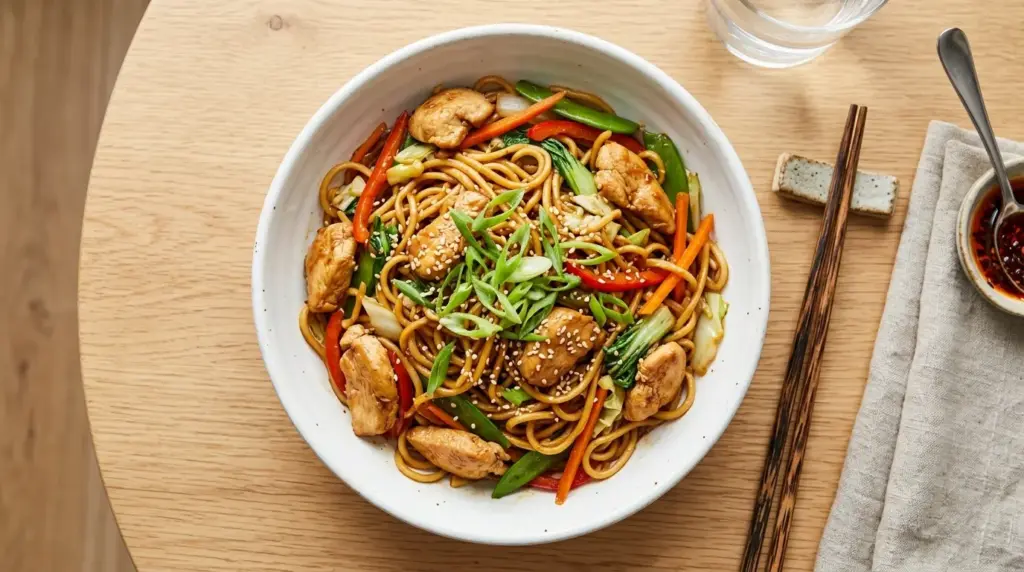
Chicken lo mein is a complete, satisfying meal on its own, but it also pairs beautifully as part of a larger spread.
Serve it as a main dish with a few complementary sides for a restaurant-style dinner at home.
Here are some ideas for serving:
- Egg Roll in a Bowl makes a fantastic low-carb side alongside the noodles
- Chicken Lettuce Wraps as a light, refreshing starter before the lo mein
- Chinese Egg Drop Soup served in small bowls alongside the noodles is a classic pairing
- Air Fryer Egg Rolls for a crispy appetizer to kick things off
- Steamed jasmine rice if you want to stretch the dish further for a crowd
- Sliced cucumber with a drizzle of rice wine vinegar and sesame seeds as a quick, cooling side
For a lighter option, try: Asian Chicken Salad
Variations to Try
One of the best things about lo mein is how easy it is to make your own. Once you have the base recipe down, you can customize it endlessly based on what you have in the fridge or what sounds good that night.
- Shrimp Lo Mein: Swap the chicken for medium shrimp. Shrimp cooks in about 2 minutes per side, so keep a close eye on it to avoid overcooking.
- Beef Lo Mein: Use thinly sliced flank steak or sirloin in place of the chicken. Marinate it the same way and sear quickly over very high heat.
- Vegetable Lo Mein: Skip the meat entirely and load up on mushrooms, bok choy, snap peas, and baby corn for a fully vegetarian version.
- Spicy Lo Mein: Add 1 to 2 teaspoons of chili garlic sauce or a drizzle of chili oil to the sauce mixture for a satisfying kick.
- Peanut Lo Mein: Stir a tablespoon of natural peanut butter into the sauce for a nutty, slightly richer flavor profile.
- Mushroom Lo Mein: Add shiitake mushrooms or cremini mushrooms to the vegetable stir fry for an earthy depth that complements the sauce beautifully.
- Broccoli Lo Mein: Add blanched broccoli florets along with the other vegetables for extra nutrition and a pop of green color.
Read Also: Easy Mongolian Beef Recipe
Storage and Reheating
Lo mein stores really well, which makes it a smart choice for batch cooking and weekly meal prep. The key is to store it properly so the noodles do not dry out or clump together.
- Refrigerate leftovers in an airtight container for up to 3 days.
- Freeze in a sealed freezer-safe container for up to 2 months. Allow to thaw overnight in the refrigerator before reheating.
- Stovetop reheating (best method): Add the lo mein to a wok or skillet over medium heat with a splash of water or chicken broth (about 1 to 2 tablespoons). Toss gently until heated through.
- Microwave reheating: Place in a microwave-safe bowl, add a small splash of water, and cover loosely. Heat in 60-second intervals, stirring in between, until hot throughout.
- Do not reheat multiple times. Repeated reheating makes the noodles mushy and can dry out the chicken. Reheat only the portion you plan to eat.
This Bok Choy Recipe makes a fresh, quick side dish to serve alongside leftover lo mein.
Nutritional Facts
Approximate values per serving (based on 4 servings):
| Nutrient | Amount per Serving |
|---|---|
| Calories | ~430 kcal |
| Total Fat | 10g |
| Saturated Fat | 2g |
| Cholesterol | 75mg |
| Sodium | 980mg |
| Total Carbohydrates | 55g |
| Dietary Fiber | 3g |
| Total Sugars | 5g |
| Protein | 28g |
Nutritional values are estimates and will vary based on specific ingredients, portions, and any substitutions made.
You might also enjoy: Easy Orange Chicken Recipe
Health Benefits of Key Ingredients
This chicken lo mein is not just delicious, it also brings some genuinely nutritious ingredients to the table.
Here is a look at what the key components contribute:
- Chicken thighs or breast are an excellent source of lean protein, supporting muscle repair, satiety, and energy levels throughout the day.
- Garlic contains allicin, a sulfur compound with well-studied anti-inflammatory and immune-supporting properties.
- Ginger is known for its digestive benefits and contains gingerols that have antioxidant and anti-nausea effects.
- Carrots provide beta-carotene, which the body converts into vitamin A and supports eye health and immune function.
- Red bell pepper is one of the most vitamin C-rich vegetables available, with a single pepper delivering more than 100% of the daily recommended intake.
- Napa cabbage is low in calories, high in fiber, and provides vitamin K and folate.
- Sesame oil contains healthy unsaturated fats and antioxidants, adding both flavor and nutritional value to the dish.
- Green onions contribute vitamins A, C, and K along with a mild prebiotic fiber that supports gut health.
Another great recipe featuring many of these same nutritious ingredients is this Stir Fry Sauce Recipe.
Frequently Asked Questions
1. What kind of noodles should I use for chicken lo mein?
The best noodles for lo mein are fresh or dried Chinese egg noodles, labeled “lo mein noodles,” “Hokkien noodles,” or sometimes “oil noodles.” These are made with wheat flour and eggs, giving them a yellow color and springy texture.
If you cannot find lo mein noodles, spaghetti or linguine can work as a substitute in a pinch, though the texture will be slightly different.
2. What is the difference between lo mein and chow mein?
The main difference is in how the noodles are cooked. In lo mein, the cooked noodles are tossed gently with the sauce and ingredients at the end, resulting in a softer, saucier noodle.
In chow mein, the noodles are stir-fried more aggressively until they develop a slightly crispy or chewy texture. Both dishes use similar ingredients but deliver a different eating experience.
3. Can I make chicken lo mein ahead of time?
Yes, this dish is excellent for meal prep. Cook the full recipe, allow it to cool completely, and store it in an airtight container in the refrigerator for up to 3 days.
For best results when reheating, add a small splash of water to the pan and toss over medium heat until warmed through, which brings back the saucy consistency.
4. Can I use chicken breast instead of chicken thighs?
Absolutely. Both work well in this recipe. Chicken thighs have more fat content, which keeps them slightly more moist and tender, especially over high heat.
Chicken breast is leaner and works perfectly as long as you slice it thin and do not overcook it during the searing step.
5. Is dark soy sauce necessary, or can I skip it?
Dark soy sauce plays a specific role in this dish. It gives the lo mein its characteristic deep, rich color and adds a slightly thicker, more concentrated savory note compared to light soy sauce.
If you cannot find dark soy sauce, you can use an equal amount of regular soy sauce, but the color of the finished dish will be lighter and the flavor slightly different. It is worth seeking out at an Asian grocery store if possible.
Read Also: Hoisin Sauce Recipe

Chicken Lo Mein

Equipment
- Carbon steel wok or large heavy-bottomed skillet - at least 12 inches
- Large pot - for boiling noodles
- Colander or strainer
- Cutting board and sharp knife
- Small mixing bowls - for marinade and sauce
- Tongs or wooden chopsticks - for tossing
- Ladle or large wooden spoon
- Microplane or box grater - for ginger
- Measuring spoons
Ingredients
- 12 oz lo mein noodles - 340g, fresh or dried egg noodles
- 1 tablespoon sesame oil - for tossing after cooking
For the Chicken and Marinade
- 1 lb boneless skinless chicken thighs or chicken breast - 450g, sliced thin
- 1 tablespoon light soy sauce
- 1 teaspoon cornstarch
- 1 teaspoon neutral oil - such as canola or avocado oil
- 0.25 teaspoon white pepper
For the Lo Mein Sauce
- 3 tablespoons light soy sauce
- 1 tablespoon dark soy sauce
- 2 tablespoons oyster sauce
- 1 teaspoon sesame oil
- 1 teaspoon sugar
- 0.25 teaspoon white pepper
- 2 tablespoons water
For the Stir Fry
- 2 tablespoons neutral oil - divided
- 4 cloves garlic - minced
- 1 teaspoon fresh ginger - grated
- 1 cup napa cabbage or regular cabbage - 75g, thinly sliced
- 1 medium carrot - julienned
- 1 red bell pepper - thinly sliced
- 3 stalks green onions - whites and greens separated
For Garnish (Optional)
- sesame seeds
- extra green onion greens
Instructions
- Bring a large pot of water to a rolling boil and cook noodles according to package instructions, reducing time by 1-2 minutes. Drain, rinse with cold water, shake well, and toss with 1 tablespoon sesame oil to prevent sticking.
- In a medium bowl, combine sliced chicken with 1 tablespoon light soy sauce, 1 teaspoon cornstarch, 1 teaspoon neutral oil, and 1/4 teaspoon white pepper. Toss to coat thoroughly and let marinate for 10-15 minutes at room temperature.
- In a small bowl, whisk together 3 tablespoons light soy sauce, 1 tablespoon dark soy sauce, 2 tablespoons oyster sauce, 1 teaspoon sesame oil, 1 teaspoon sugar, 1/4 teaspoon white pepper, and 2 tablespoons water. Set aside.
- Julienne the carrot, thinly slice the bell pepper and cabbage, separate green onion whites from greens, and mince the garlic and ginger. Arrange all ingredients on a tray ready for quick addition to the wok.
- Heat wok over high heat until smoking. Add 1 tablespoon oil, then add chicken in a single layer. Sear for 1-2 minutes without moving, flip, and cook another 1-2 minutes until golden and cooked through. Remove to a plate.
- Return wok to high heat and add remaining 1 tablespoon oil. Add garlic, ginger, and white parts of green onions, stir-frying 30 seconds until fragrant. Add carrots and stir-fry 1-2 minutes, then add bell pepper and cabbage and cook 2-3 minutes until crisp-tender.
- Add cooked noodles and seared chicken to the wok. Pour sauce evenly over everything and toss vigorously with tongs over high heat for 1-2 minutes until sauce coats all noodles evenly and appears glossy.
- Remove from heat, scatter green onion greens over top, and toss once more. Transfer to serving bowls, garnish with sesame seeds and extra green onions if desired, and serve immediately.
Notes
- High heat is essential: Use high heat throughout for that signature smoky, caramelized flavor that makes lo mein taste like takeout.
- Don’t overcrowd: If cooking for more than 4 people, cook in batches – overcrowding causes steaming instead of searing.
- Undercook noodles slightly: Pull them 1 minute early to prevent mushiness when tossed in the sauce over heat.
- Rinse with cold water: This stops cooking immediately and removes excess starch that would make noodles gummy.
- Velveting is key: The cornstarch-and-soy marinade creates a protective coating that keeps chicken tender and juicy at high heat.
- Prep everything first: Once the wok is hot, the whole dish comes together in under 10 minutes – have every ingredient measured and ready.
- Both soy sauces matter: Light soy sauce adds salt and umami while dark soy sauce provides color and deeper flavor – they are not interchangeable.
- Storage: Refrigerate leftovers in an airtight container for up to 3 days. Reheat in a wok with a splash of water or broth for best results.
- Make it your own: Swap chicken for shrimp, beef, or extra vegetables. Add chili garlic sauce for heat or peanut butter for a nutty twist.
Final Thoughts
This Chicken Lo Mein Recipe has everything you want from a Chinese-American takeout classic: deeply savory noodles, tender velveted chicken, crisp vegetables, and a glossy, umami-packed sauce that pulls the whole dish together.
It comes together in 30 minutes, and once you try it homemade, it is hard to go back to the takeout version.
Pull out your wok, grab those noodles, and give this recipe a try tonight. If you make it, leave a comment below and let us know how it turned out. We love hearing from readers, and your tips and adaptations might just inspire someone else!
Recommended:
- Chicken Fried Rice Recipe
- Easy Pad Thai Recipe
- Panda Express Orange Chicken Recipe
- Chinese Dumplings Recipe
- Chicken Lettuce Wraps Recipe
- Teriyaki Sauce Recipe
- Udon Noodle Soup Recipe
- Best Egg Drop Soup Recipe
- Asian Chicken Salad Recipe
- Air Fryer Egg Rolls Recipe