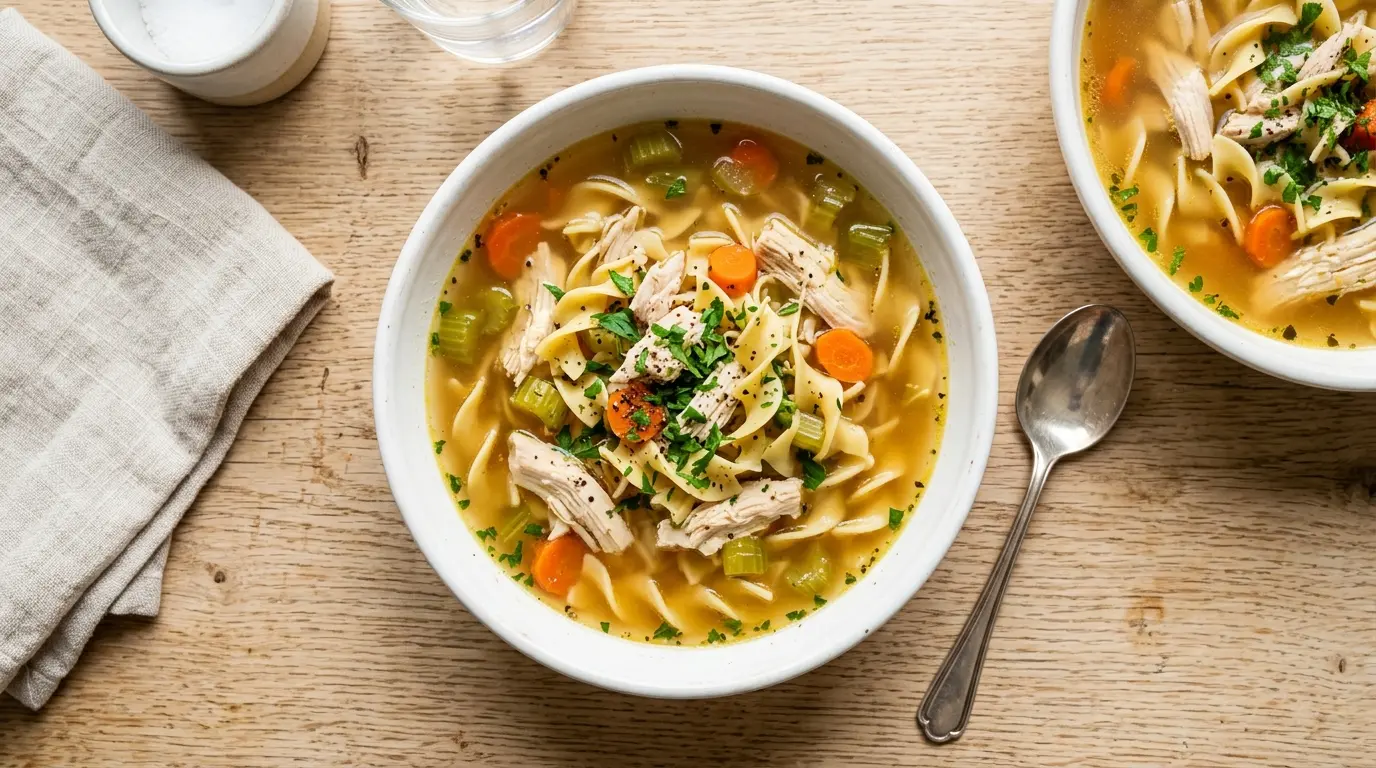
A good chicken noodle soup recipe is one of those things that just feels like home. It’s the bowl you crave when the weather turns cold, when a scratchy throat sets in, or when you simply need something warm and nourishing to get through the day.
This version is built the way most cooks have made it for generations: a rich, golden broth simmered with whole chicken pieces, tender egg noodles, sweet carrots, celery, and onion. No shortcuts, no mystery ingredients.
What makes this recipe stand out is the attention to the broth. Simmering the chicken bones low and slow is what gives you that silky, deeply flavored base. That’s the foundation everything else is built on.
Every ingredient has a job here. The carrots add a mild sweetness, the celery brings an earthy depth, and fresh herbs like thyme and parsley keep the whole pot feeling light and fragrant rather than heavy.
You can have this on the table in about 90 minutes, and most of that is hands-off simmering time. It makes a generous pot that feeds a crowd and reheats beautifully all week.
If you love hearty chicken soups, you might also enjoy this Carrabbas Chicken Noodle Soup for a restaurant-style twist.

Why You’ll Love This Chicken Noodle Soup Recipe
This is the kind of soup that earns a permanent spot in your rotation after the first time you make it.
It’s made entirely from scratch, which sounds intimidating, but it’s actually one of the most forgiving recipes in a home cook’s repertoire.
The technique is simple: simmer, shred, and assemble. No special skills needed.
The broth is what sets a homemade version apart from anything that comes from a can. It’s golden, clear, and full of real chicken flavor.
You get to control the salt, the noodles, and the thickness. That flexibility means you can dial it exactly to your taste.
It freezes well, too. A batch made on Sunday can become weeknight meals for weeks.
- Truly comforting – the kind of soup that immediately makes you feel better
- One pot – less cleanup, more enjoyment
- Full of nutrients – protein, vegetables, and nourishing broth in every bowl
- Kid-friendly – mild, familiar flavors that the whole family will love
- Easily customizable – add more vegetables, switch up the noodles, or go low-sodium
Another cozy chicken soup worth bookmarking: Chicken Rice Soup.
Ingredients
The ingredients for classic chicken noodle soup are simple and straightforward. Using a combination of bone-in chicken pieces (like thighs and a drumstick or two) rather than boneless chicken breast is the key move, since the bones release collagen into the broth as they simmer, giving you that velvety, restaurant-quality texture.
- 2.5 lbs (1.1 kg) bone-in, skin-on chicken thighs and drumsticks
- 10 cups (2.4 liters) cold water
- 2 medium carrots, peeled and sliced into 1/4-inch (6 mm) rounds
- 3 stalks celery, sliced into 1/4-inch (6 mm) pieces
- 1 medium yellow onion, diced
- 4 cloves garlic, minced
- 2 cups (200 g) wide egg noodles, uncooked
- 2 teaspoons (10 ml) olive oil
- 1 teaspoon (2 g) dried thyme
- 1 bay leaf
- 1/4 cup (15 g) fresh flat-leaf parsley, chopped
- 1.5 teaspoons (9 g) kosher salt, plus more to taste
- 1/2 teaspoon (1 g) black pepper, plus more to taste
- 1 tablespoon (15 ml) lemon juice (optional, brightens the broth)
For an equally warming bowl, check out this Lemon Chicken Orzo Soup.
Kitchen Equipment Needed
You don’t need any specialized tools to make this soup. A heavy-bottomed pot is the most important piece of equipment because it distributes heat evenly and prevents the bottom of the broth from scorching during the long simmer.
- Large Dutch oven or heavy-bottomed stockpot (6-8 quart / 5.7-7.6 liter capacity)
- Sharp chef’s knife and cutting board
- Ladle
- Slotted spoon or tongs
- Two forks (for shredding the chicken)
- Fine-mesh strainer (optional, for straining the broth)
- Measuring cups and spoons
Read Also: Chicken Gnocchi Soup Recipe
Recommended Products for This Recipe
These are products chosen based on quality and performance to genuinely improve this recipe.
1. Wide Egg Noodles
Wide egg noodles are the classic choice for chicken noodle soup, and a quality brand makes a real difference in texture. They should hold their shape in the broth without turning mushy or gummy. A good egg noodle has a slightly chewy bite that stands up to the rich broth.
2. Le Creuset Dutch Oven
A quality enameled Dutch oven distributes heat evenly during the long simmer and retains warmth beautifully when you bring the pot to the table. The wide base gives you plenty of room to brown aromatics first, which adds an extra layer of flavor to your broth. It’s an investment that will last decades.
3. Fine-Mesh Strainer
Straining your broth through a fine-mesh strainer before adding the noodles gives you a cleaner, clearer soup with a more polished appearance. It removes any small bone fragments and excess fat. A sturdy stainless steel strainer with a wide bowl is the most practical option.
4. Kitchen Shears
Poultry shears make breaking down bone-in chicken pieces quick and effortless. They’re also useful for snipping fresh herbs directly over the pot. A sharp, spring-loaded pair reduces hand fatigue significantly compared to a knife.
You might also enjoy: Chicken and Dumplings Recipe

Step-by-Step Instructions
1. Prep Your Vegetables and Aromatics
- Peel the carrots and slice them into 1/4-inch (6 mm) rounds. Aim for uniform pieces so they cook at the same rate.
- Slice the celery stalks the same way, removing any tough or fibrous strings from the outer ribs if present.
- Dice the yellow onion into roughly 1/2-inch (12 mm) pieces. A finer dice will melt into the broth; a coarser one will retain some texture.
- Peel and mince the 4 cloves of garlic. Fresh garlic makes a meaningful difference in the aroma and depth of the broth compared to garlic powder.
- Roughly chop the fresh parsley and set it aside. You’ll add this at the very end, just before serving.
2. Brown the Aromatics
- Place your Dutch oven or stockpot over medium heat and add the 2 teaspoons (10 ml) of olive oil.
- Once the oil shimmers, add the diced onion and celery. Stir to coat everything in the oil.
- Cook for 4 to 5 minutes, stirring occasionally, until the onion softens and becomes translucent. You’re not trying to get any color here, just gently sweating them to release their flavor.
- Add the minced garlic and stir continuously for about 60 seconds until fragrant. Watch carefully because garlic can go from golden to burnt very quickly.
3. Add the Chicken and Cold Water
- Add the bone-in, skin-on chicken pieces directly to the pot with the aromatics.
- Pour in the 10 cups (2.4 liters) of cold water. Starting with cold water is intentional: it draws impurities out of the chicken slowly, which results in a clearer broth.
- Add the dried thyme and the bay leaf to the pot.
- Increase the heat to medium-high and bring the pot to a full boil. This will take about 10 to 12 minutes.
- As the broth heats up, you’ll notice foam and gray scum rising to the surface. Skim this off with a ladle or slotted spoon and discard it. Removing the foam is what keeps your broth clear and clean-tasting instead of cloudy and bitter.
4. Simmer the Broth Low and Slow
- Once you’ve skimmed the surface and the broth is boiling, reduce the heat to low or medium-low. The broth should be at a very gentle simmer, meaning small bubbles are breaking the surface occasionally but it is not at a rolling boil.
- A rolling boil will actually make your broth cloudy and can toughen the chicken, so resist the urge to rush this step.
- Place the lid slightly askew to allow some steam to escape. This prevents the pot from boiling over.
- Simmer for 45 to 50 minutes, or until the chicken is cooked through and very tender. The meat should be beginning to pull away from the bones.
5. Remove and Shred the Chicken
- Using tongs or a slotted spoon, carefully lift the cooked chicken pieces out of the broth and transfer them to a large plate or cutting board. The chicken will be very hot, so allow it to cool for 5 to 10 minutes before handling.
- Remove and discard the bay leaf from the broth.
- Once cool enough to handle, pull the chicken meat away from the bones using two forks or your fingers. Discard the skin and bones.
- Shred the meat into bite-sized pieces. You should get about 2.5 to 3 cups (350 to 420 g) of shredded chicken.
6. Add the Carrots and Season the Broth
- Return the pot of broth to medium heat and bring it back up to a gentle simmer.
- Add the sliced carrots to the broth. They go in before the noodles because they take longer to become tender.
- Add 1.5 teaspoons (9 g) of kosher salt and 1/2 teaspoon (1 g) of black pepper. Stir to combine.
- Simmer the carrots for 8 to 10 minutes, or until they are just barely tender when pierced with a fork. You want a little bite left because they’ll continue cooking with the noodles.
7. Cook the Noodles in the Broth
- Add the 2 cups (200 g) of wide egg noodles directly to the simmering broth. Stir to prevent them from sticking together.
- Cook for 6 to 8 minutes, or according to your package instructions, stirring occasionally. The noodles will absorb some of the broth as they cook and again as the soup sits, so don’t overcook them at this stage.
- Taste the broth and adjust seasoning with additional salt and pepper as needed. If the soup tastes flat, a small squeeze of lemon juice (about 1 tablespoon / 15 ml) can brighten everything immediately.
8. Finish with Chicken and Parsley
- Return the shredded chicken to the pot and stir everything together.
- Simmer for 2 to 3 more minutes so the chicken warms through fully and mingles with the noodles and broth.
- Turn off the heat, stir in the freshly chopped parsley, and taste one final time for seasoning.
- Ladle into bowls immediately and serve hot.
This soup pairs wonderfully with Chicken Vegetable Soup techniques if you want to add even more vegetables to your next batch.
Tips for Success
Making excellent chicken noodle soup is less about precision and more about understanding a few key principles. Once you know why you’re doing each step, the whole process clicks.
- Always start with cold water. Adding cold water to raw chicken draws out proteins and impurities slowly, producing a much clearer broth than adding the chicken to boiling water.
- Skim diligently. The foam that rises during the first 10 minutes of heating contains coagulated proteins that make broth cloudy and slightly bitter. Take the time to skim it off properly.
- Use bone-in, skin-on chicken. The bones and connective tissue release collagen during the long simmer, giving the broth its golden color and silky body. Boneless chicken breast will produce a thinner, paler broth.
- Don’t boil the broth aggressively. A rolling boil emulsifies fat and creates a cloudy, greasy-tasting soup. Keep it at a gentle simmer throughout.
- Cook noodles separately if meal prepping. Egg noodles continue to absorb liquid and swell over time. If you’re making this soup ahead, cook the noodles separately and add them to individual bowls when serving to prevent a mushy texture.
- Season at the end, not just the beginning. As the broth concentrates during simmering, salt levels change. Always do a final seasoning check before serving.
- Fresh parsley is non-negotiable. Dried parsley simply doesn’t provide the same bright, fresh flavor. Add it at the very last minute so it stays vibrant.
Read Also: Italian Wedding Soup Recipe
Serving Suggestions
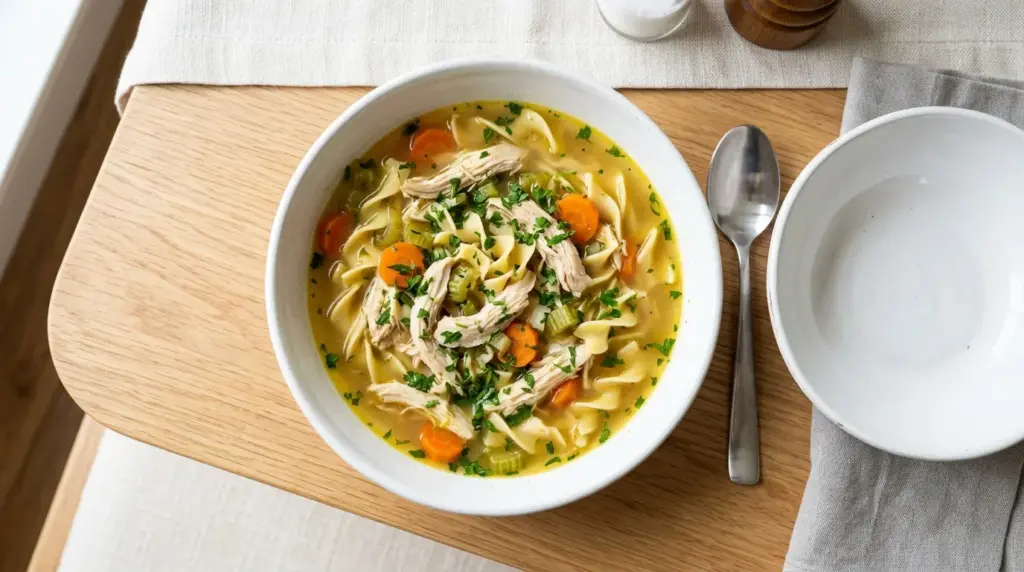
Chicken noodle soup is hearty enough to stand alone as a complete meal, but it truly shines when paired with the right accompaniments.
A thick slice of crusty bread on the side turns it into a full and satisfying dinner. The bread is ideal for mopping up every last drop of that rich broth.
- Serve alongside Cheesy Garlic Bread for a crowd-pleasing combination
- Pair with Classic Deviled Eggs for a classic potluck-style spread
- Add a simple Broccoli Salad on the side for extra vegetables and crunch
- Serve with warm Homemade Biscuits for a Southern-style comfort meal
- Finish the meal with a slice of Sour Cream Coffee Cake for a cozy, satisfying dessert
Variations to Try
Once you’ve mastered the classic version, the recipe becomes an excellent jumping-off point for countless variations. The base technique stays the same, but you can easily customize the soup to match what’s in your pantry or what your family enjoys most.
- Rotisserie Chicken Shortcut: Skip the simmering step entirely by starting with 3 to 4 cups (420 to 560 g) of shredded rotisserie chicken and adding it to pre-made or store-bought low-sodium chicken broth. It won’t be quite as rich, but it comes together in about 25 minutes.
- Lemon Herb Version: Double the lemon juice and add fresh dill along with the parsley. This gives the soup a brighter, more Mediterranean character.
- Creamy Chicken Noodle Soup: Stir in 1/2 cup (120 ml) of heavy cream or a spoonful of cream cheese at the end for a richer, creamier broth.
- Gluten-Free Option: Swap the egg noodles for your favorite gluten-free pasta or rice. Add it in the last 10 minutes of cooking and check package directions for timing.
- Slow Cooker Version: Add all ingredients except the noodles and parsley to a slow cooker. Cook on low for 6 to 8 hours. Shred the chicken, return it to the pot, then cook the noodles separately and add them just before serving.
- Vegetable-Loaded Version: Add diced zucchini, frozen peas, or a handful of baby spinach in the last 3 minutes of cooking for an extra nutrient boost.
Also worth trying: Matzo Ball Soup
Storage and Reheating
This soup stores and reheats exceptionally well, which makes it one of the best recipes to batch-cook for the week ahead. The flavor actually deepens overnight as everything melds together in the fridge.
- Refrigerator: Store the soup in an airtight container for up to 4 days. The noodles will absorb more broth as it sits, so you may need to add a splash of water or chicken broth when reheating.
- Freezer: For best results, freeze the soup without the noodles. The broth and shredded chicken freeze beautifully for up to 3 months. Cook fresh noodles when you reheat.
- Reheating on the stovetop: Warm over medium-low heat, stirring occasionally, until heated through. Add extra liquid as needed.
- Reheating in the microwave: Transfer to a microwave-safe bowl, cover loosely, and heat in 90-second intervals, stirring between each, until steaming hot.
- Freezing portions: Freeze in individual serving-size containers for easy grab-and-go meals on busy days.
Read Also: Chicken Stew Recipe
Nutritional Facts
The following nutritional information is an estimate based on one serving of this recipe. It assumes the recipe yields 6 servings and is prepared as written.
| Nutrient | Per Serving |
|---|---|
| Calories | ~320 kcal |
| Protein | 28 g |
| Total Fat | 9 g |
| Saturated Fat | 2.5 g |
| Carbohydrates | 28 g |
| Fiber | 2 g |
| Sugar | 3 g |
| Sodium | 580 mg |
| Potassium | 480 mg |
| Vitamin A | 85% DV |
| Vitamin C | 12% DV |
| Iron | 10% DV |
Nutritional values will vary depending on specific brands and portions used. Using a lower-sodium broth or reducing the salt will drop the sodium considerably.
This soup is a great option if you’re looking for a lighter meal that still feels filling and satisfying. For another low-calorie comfort option, try: Chicken Tortilla Soup
Health Benefits of Key Ingredients
Chicken noodle soup has been called a natural remedy for generations, and modern nutrition research backs up much of what grandmothers have long known.
The combination of protein-rich chicken, mineral-dense broth, and fiber-packed vegetables makes this a genuinely nourishing meal, not just a comforting one.
- Chicken (protein and selenium): Lean chicken is an excellent source of high-quality protein, which supports muscle repair and immune function. It’s also rich in selenium, a mineral with antioxidant properties.
- Bone broth base: The long-simmered broth releases glycine, proline, and collagen from the bones. These compounds support gut lining health, joint flexibility, and skin elasticity.
- Carrots (beta-carotene): Carrots are one of the richest food sources of beta-carotene, which the body converts to vitamin A. Vitamin A is essential for immune defense, vision health, and skin integrity.
- Celery (anti-inflammatory compounds): Celery contains apigenin and luteolin, two plant compounds studied for their anti-inflammatory effects. It also provides a good dose of vitamin K.
- Garlic (allicin): Fresh garlic releases allicin when crushed or chopped. Allicin is the compound responsible for garlic’s immune-boosting reputation and has demonstrated antibacterial properties in research.
- Parsley (vitamin C and iron): Fresh parsley is surprisingly nutrient-dense for a garnish. A small handful provides a meaningful boost of vitamin C and non-heme iron.
- Onion (quercetin): Onions are rich in quercetin, a flavonoid antioxidant linked to reduced inflammation and improved immune response.
For another nourishing soup packed with vegetables, explore this Minestrone Soup.
Frequently Asked Questions
1. Can I use chicken breast instead of bone-in chicken thighs?
Yes, you can use boneless, skinless chicken breasts, but the broth will be noticeably thinner and lighter in color. Bone-in pieces produce a richer, more collagen-rich broth because the bones and cartilage break down during the long simmer. If you do use chicken breast, consider adding a splash of store-bought chicken stock to compensate for the reduced depth of flavor. Reduce the simmering time to about 25 to 30 minutes, as boneless chicken cooks faster and can become dry if overcooked.
2. Why is my broth cloudy?
The most common cause of cloudy broth is boiling the soup too aggressively. A rolling boil breaks fat molecules apart and disperses them through the broth, which creates a murky appearance. Always keep the pot at a very gentle simmer once the initial boil has passed. Another contributing factor is not skimming the foam that rises during the first few minutes of heating. Skipping that step allows proteins to incorporate into the broth rather than being removed.
3. Can I make this soup in a slow cooker?
Absolutely. Add the chicken, vegetables, water, garlic, thyme, and bay leaf to the slow cooker. Cook on low for 6 to 8 hours or high for 3 to 4 hours. Remove the chicken, shred it, and return it to the pot. Add the noodles in the last 20 minutes of cooking if on low, or cook them separately and add just before serving to prevent them from turning mushy. Add the fresh parsley right at the end.
4. How do I keep the noodles from getting soggy?
Egg noodles are particularly prone to absorbing broth and swelling over time. The best approach if you’re making the soup ahead of time is to cook the noodles separately in plain salted water and add them to individual bowls when serving. You can also undercook the noodles slightly (by about 2 minutes) so they finish cooking gently in the residual heat of the hot soup. Never leave noodles sitting in the broth overnight if you want to maintain their texture.
5. Can I freeze chicken noodle soup?
Yes, with one important caveat: freeze the soup without the noodles. Cooked noodles do not freeze well and will become mushy and waterlogged when thawed. Simply freeze the broth and shredded chicken together in airtight containers for up to 3 months. When you’re ready to serve, thaw the broth overnight in the refrigerator, reheat it on the stovetop, and cook a fresh batch of egg noodles to add in.
For another freezer-friendly soup, try this hearty Turkey Soup.

Classic Chicken Noodle Soup

Equipment
- Large Dutch oven or heavy-bottomed stockpot - 6-8 quart (5.7-7.6 liter) capacity
- Sharp chef's knife
- Cutting board
- Ladle
- Slotted spoon or tongs
- Two Forks - For shredding the chicken
- Fine-mesh strainer - Optional, for straining the broth
- Measuring cups and spoons
Ingredients
- 2.5 lbs bone-in skin-on chicken thighs and drumsticks - 1.1 kg
- 10 cups cold water - 2.4 liters
- 2 medium carrots - peeled and sliced into 1/4-inch (6 mm) rounds
- 3 stalks celery - sliced into 1/4-inch (6 mm) pieces
- 1 medium yellow onion - diced
- 4 cloves garlic - minced
- 2 cups wide egg noodles - 200g, uncooked
- 2 teaspoons olive oil - 10 ml
- 1 teaspoon dried thyme - 2 g
- 1 bay leaf
- 1/4 cup fresh flat-leaf parsley - 15 g, chopped
- 1.5 teaspoons kosher salt - 9 g, plus more to taste
- 1/2 teaspoon black pepper - 1 g, plus more to taste
- 1 tablespoon lemon juice - 15 ml, optional, brightens the broth
Instructions
- Prep your vegetables and aromatics by peeling and slicing the carrots, slicing the celery, dicing the onion, mincing the garlic, and chopping the fresh parsley.
- Heat olive oil in a Dutch oven over medium heat. Add the diced onion and celery, and cook for 4-5 minutes until softened. Add the garlic and cook for 60 seconds until fragrant.
- Add the chicken pieces to the pot, pour in cold water, and add the dried thyme and bay leaf. Bring to a boil over medium-high heat, then skim off any foam that rises to the surface.
- Reduce the heat to low and simmer gently for 45-50 minutes until the chicken is very tender and beginning to pull away from the bones.
- Remove the chicken to a plate and discard the bay leaf. When cool enough to handle, shred the meat with two forks and discard the skin and bones.
- Return the broth to medium heat and add the sliced carrots. Season with salt and pepper. Simmer for 8-10 minutes until the carrots are just barely tender.
- Add the egg noodles and cook for 6-8 minutes or according to package instructions. Stir occasionally to prevent sticking. Adjust the seasoning and add lemon juice if desired.
- Return the shredded chicken to the pot and simmer for 2-3 minutes to warm through. Turn off the heat, stir in the fresh parsley, and serve hot.
Notes
- Cold water is key: Always start with cold water when making broth. It draws impurities out of the chicken slowly, resulting in a clearer, more flavorful broth.
- Skim diligently: The foam that rises during the first 10 minutes of heating contains coagulated proteins that make broth cloudy. Take the time to skim it off properly.
- Use bone-in chicken: The bones and connective tissue release collagen during the long simmer, giving the broth its golden color and silky body. Boneless chicken breast will produce a thinner, paler broth.
- Don’t boil aggressively: A rolling boil emulsifies fat and creates a cloudy, greasy-tasting soup. Keep it at a gentle simmer throughout.
- Cook noodles separately for meal prep: Egg noodles continue to absorb liquid and swell over time. If making ahead, cook the noodles separately and add them to individual bowls when serving to prevent a mushy texture.
- Freeze without noodles: For best results, freeze the soup without the noodles. The broth and shredded chicken freeze beautifully for up to 3 months. Cook fresh noodles when reheating.
- Season at the end: As the broth concentrates during simmering, salt levels change. Always do a final seasoning check before serving with additional salt and pepper.
- Fresh parsley is non-negotiable: Dried parsley simply doesn’t provide the same bright, fresh flavor. Add it at the very last minute so it stays vibrant.
- Lemon juice brightens broth: If the soup tastes flat after seasoning, a small squeeze of lemon juice (about 1 tablespoon / 15 ml) can brighten everything immediately.
- Make it creamy: For a creamy chicken noodle soup, stir in 1/2 cup (120 ml) of heavy cream or a spoonful of cream cheese at the end for a richer broth.
Final Thoughts
A great chicken noodle soup recipe is one of the most valuable things you can have in your cooking repertoire. It requires no fancy techniques, no unusual ingredients, and no previous experience.
What it does require is a little patience and an understanding that the real magic happens during the slow simmer. That’s when the broth transforms from plain water into something golden, silky, and full of depth.
Once you make this version from scratch, you’ll understand exactly why it’s been a beloved staple for so long. The depth of a homemade broth simply can’t be replicated from a carton.
Make a big batch on a weekend, and you’ll have meals ready for the entire week with minimal effort. Your future self will thank you.
If you give this recipe a try, drop a comment below and let us know how it turned out. Did you add any of your own variations? We’d love to hear about it, and sharing this post with a friend who could use a bowl of comfort is always welcome.
Recommended:
- Chicken Soup Recipe
- Chicken Sopas Recipe
- Udon Noodle Soup Recipe
- Caldo de Pollo Recipe
- Cuban Chicken Soup Recipe
- Jamaican Chicken Soup Recipe
- Classic Chicken Pot Pie Recipe
- Mulligatawny Soup Recipe
- Ham and Bean Soup Recipe
- Vegetable Soup Recipe