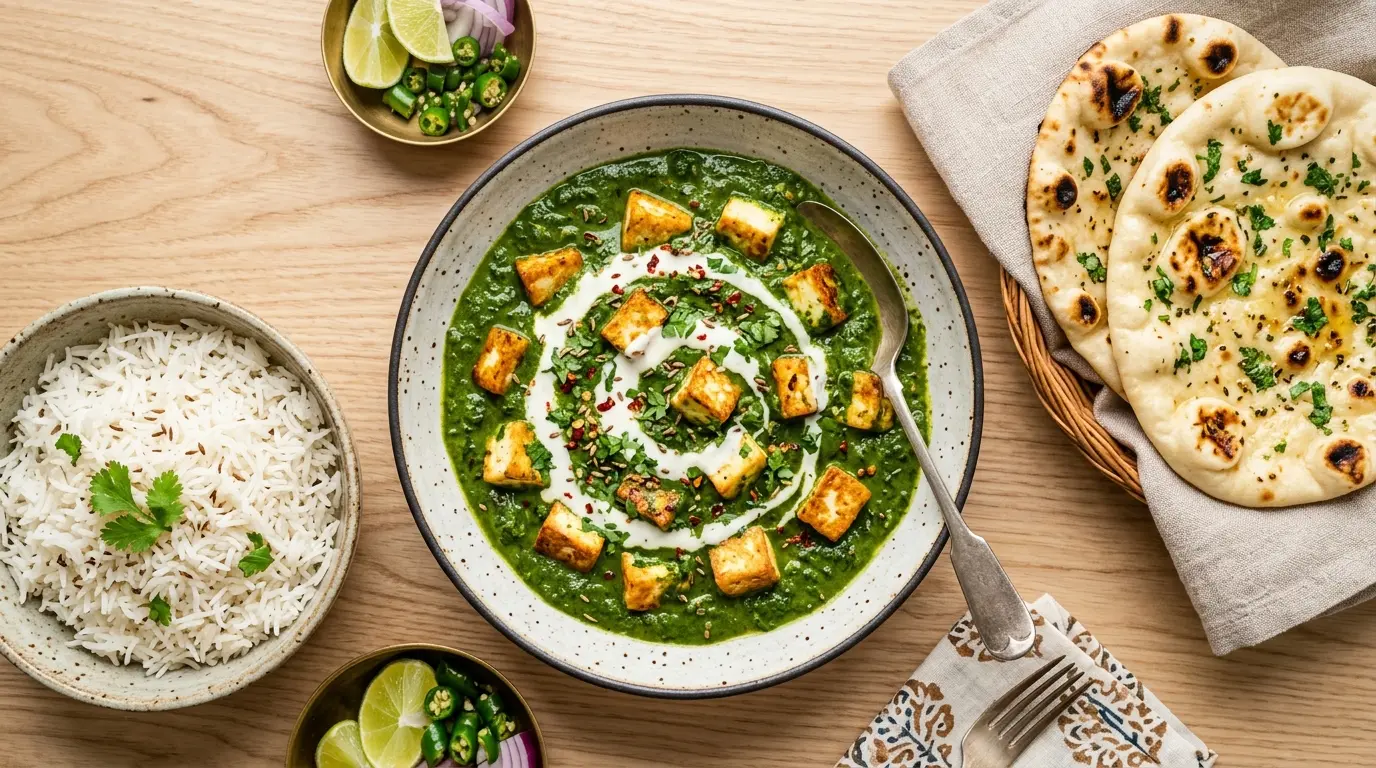
If you’ve ever sat down at an Indian restaurant and ordered a bowl of that velvety, vibrant green curry, you already know the magic of a great palak paneer recipe. This iconic North Indian dish brings together fresh spinach, golden-fried paneer, and a fragrant blend of spices into something that feels indulgent yet wholesome all at once.
The beauty of making palak paneer at home is that you control everything. The spice level, the creaminess, the freshness of ingredients — it all comes together in one pot and lands on your table in under an hour.
What makes this dish special is not just the taste. It’s the technique. Blanching the spinach and shocking it in ice water locks in that deep emerald color. Toasting the whole spices first releases their oils and builds a flavor base that no shortcut can replicate.
This recipe follows the traditional North Indian method — the one you’d find at a proper Punjabi-style restaurant. Simple enough for a weeknight, impressive enough for guests.
You might also love this Chicken Tikka Masala Recipe for another restaurant-style Indian classic to add to your rotation.

Why You’ll Love This Palak Paneer Recipe
This dish is one of those rare recipes that checks every box you could ask for.
It’s vegetarian, naturally gluten-free, and genuinely satisfying without needing any meat. The creamy spinach sauce wraps around every cube of paneer and pulls in the spices in a way that’s deeply flavorful without being overwhelming.
It comes together faster than most people expect. Once your spinach is blanched and blended, the curry itself takes about 20 minutes on the stovetop.
The ingredients are accessible. Fresh spinach, paneer, garlic, ginger, and a handful of spices are all you need. Many of these likely live in your pantry already.
- Perfect for vegetarians and meat-eaters alike
- Ready in under 1 hour from start to finish
- Restaurant-quality flavor made in your own kitchen
- Naturally gluten-free
- Great for meal prep — the sauce actually tastes better the next day
- Freezer-friendly for easy future meals
- Easily adjustable for spice level
Read Also: Authentic Butter Chicken Recipe
Ingredients
This palak paneer recipe uses a balance of fresh produce and dried spices to build its signature depth of flavor. Stick to fresh spinach for the best color and taste, but quality frozen spinach can work in a pinch.
- 1 lb (450g) fresh baby spinach, washed and stems removed
- 14 oz (400g) paneer cheese, cut into ¾-inch cubes
- 3 tablespoons ghee (or neutral oil)
- 1 large yellow onion, finely diced
- 1 can (14 oz / 400g) diced tomatoes (or 2 fresh medium tomatoes, diced)
- 5 cloves garlic, minced
- 1-inch piece fresh ginger, grated
- 1–2 green chilies (serrano or jalapeño), finely chopped (adjust to taste)
- 1 teaspoon cumin seeds
- 1 teaspoon ground coriander
- 1 teaspoon garam masala
- ½ teaspoon ground cumin
- ½ teaspoon turmeric powder
- ½ teaspoon Kashmiri red chili powder (or mild paprika for less heat)
- 1 tablespoon dried fenugreek leaves (kasoori methi), crushed between your palms
- ¼ cup (60ml) heavy cream, plus more for garnish
- Salt to taste
- 2 tablespoons water or oil for searing the paneer
Pair this with a side of Jeera Rice for a complete, comforting Indian meal.
Kitchen Equipment Needed
Having the right tools makes this recipe much smoother, especially the blanching and blending steps.
- Large pot (for blanching spinach)
- Large bowl filled with ice water (for the ice bath)
- Blender or immersion blender
- Large skillet or cast iron pan
- Wooden spoon or heat-resistant spatula
- Colander or strainer
- Cutting board and sharp knife
- Measuring spoons and cups
Read Also: Basmati Rice Recipe
Recommended Products for This Recipe
These are products genuinely worth having on hand when making palak paneer at home. Each one improves the process or the final result in a meaningful way.
1. Amul Paneer (Frozen)
This is one of the most trusted paneer brands available, used widely in Indian households and restaurants. It has a firm texture that holds up beautifully when pan-seared without crumbling, and a clean milky flavor that absorbs the spinach sauce perfectly. If you struggle to find fresh paneer locally, this is the next best thing.
2. Pure Indian Foods Grassfed Ghee
Ghee is the traditional fat used in Indian cooking, and the quality matters more than you might expect. A good grassfed ghee adds a rich, slightly nutty depth to the dish that regular oil simply can’t replicate. This brand is well-regarded for its clean flavor and high quality.
3. Rani Brand Kashmiri Red Chili Powder
Kashmiri chili powder is different from regular cayenne. It gives a deep red-orange color and a mild, slightly smoky heat rather than a sharp burn. It’s a key ingredient for achieving that restaurant-style appearance and balanced spice level in this dish.
4. Everest Garam Masala
Garam masala is the finishing spice blend that ties everything together. The Everest brand is a staple in many South Asian kitchens and delivers a consistently warm, aromatic punch that elevates the finished dish. It’s worth keeping a tin of this stocked if you plan to cook Indian food regularly.
5. Dried Fenugreek Leaves (Kasoori Methi)
This is the ingredient many home cooks skip, but it makes a real difference. Kasoori methi adds a subtle bitter-savory note that is distinctly “restaurant palak paneer.” You crush it between your palms before adding to release the aroma. A little goes a long way, and one bag will last you through many batches.
Another favorite to serve alongside this dish: Garlic Naan Bread Recipe

Step-by-Step Instructions
1. Blanch the Spinach
- Bring a large pot of water to a rolling boil and add a generous pinch of salt.
- Add the fresh spinach leaves all at once and stir gently.
- Blanch the spinach for exactly 2 minutes. You want it wilted and bright green, not overcooked and dull.
- Immediately drain the spinach through a colander.
- Transfer the spinach right away into your large bowl of ice water. This step — called shocking — is what keeps the spinach a vivid, deep green instead of an army-brown color.
- Let it sit in the ice bath for about 2 minutes, then drain thoroughly and squeeze out as much water as you can with your hands.
2. Blend the Spinach Puree
- Add the blanched, drained spinach to a blender.
- Blend on high until completely smooth. If needed, add 2–3 tablespoons of water to help it blend evenly.
- The puree should be a thick, silky, vibrant green paste. Set it aside while you prepare the rest of the dish.
- Do not add the spinach puree to the pan yet — you’ll use it later in the cooking process.
3. Sear the Paneer
- Cut your paneer block into ¾-inch (2cm) cubes. Try to keep them uniform so they cook evenly.
- Heat 1½ tablespoons of ghee (or oil) in your large skillet over medium-high heat until shimmering.
- Add the paneer cubes in a single layer, making sure not to crowd the pan. Work in batches if needed.
- Let the paneer cook undisturbed for 2–3 minutes until the bottom side is golden and lightly crispy.
- Flip each cube and cook for another 1–2 minutes on the other side.
- Season lightly with a small pinch of salt and remove from the pan. Place on a plate and set aside. The searing step adds texture and a slightly savory crust that keeps the paneer from going mushy in the curry.
4. Build the Flavor Base
- In the same skillet, add the remaining 1½ tablespoons of ghee over medium heat.
- Once the ghee is hot, add the cumin seeds. Let them sizzle for about 30 seconds until fragrant. This step blooms the spice and unlocks its oil — it happens fast, so watch closely.
- Add the finely diced onion and cook, stirring frequently, for 10–12 minutes until soft and deeply golden brown. Don’t rush this step. Well-caramelized onion is the backbone of a flavorful curry.
- Add the minced garlic, grated ginger, and green chilies. Stir and cook for 2 more minutes until the raw smell fades and everything is fragrant.
5. Add the Tomatoes and Cook Down
- Add the diced tomatoes (canned or fresh) to the onion mixture.
- Stir everything together, then cook over medium heat for 8–10 minutes, stirring occasionally, until the tomatoes have broken down completely and the oil begins to separate from the mixture. You’ll see small pools of golden ghee at the edges of the pan — this is the sign your masala base is properly cooked.
- Use a wooden spoon to press the tomatoes as they soften to help them break down faster.
6. Add the Dry Spices
- Lower the heat to medium-low.
- Add the ground coriander, ground cumin, turmeric, Kashmiri red chili powder, and garam masala directly into the pan.
- Stir quickly and cook for 1–2 minutes. This step toasts the ground spices in the oil and deepens their flavor significantly. Be careful not to let them burn — keep stirring and add a tablespoon of water if the mixture looks too dry.
7. Add the Spinach Puree
- Pour the blended spinach puree into the skillet and stir it into the tomato-spice base until fully combined.
- Add about ¼ cup (60ml) of water to loosen the sauce if it looks too thick.
- Bring everything to a gentle simmer over medium heat.
- Cook for 5–6 minutes, stirring occasionally, until the flavors meld and the sauce deepens slightly in color.
8. Add the Cream and Fenugreek Leaves
- Pour in the heavy cream and stir gently to incorporate.
- Crush the dried fenugreek leaves between your palms directly over the pan. This releases the aroma. Add them to the sauce and stir.
- Taste the sauce and adjust salt as needed.
- Let the sauce simmer for another 2–3 minutes on low heat to bring everything together.
9. Add the Paneer and Finish
- Gently add the seared paneer cubes to the spinach sauce.
- Stir carefully so the paneer is coated on all sides without breaking the cubes apart.
- Simmer together for 3–4 minutes on low heat so the paneer absorbs the flavors of the sauce.
- Remove from heat. Drizzle a small swirl of extra cream on top for presentation if desired.
- Serve immediately over basmati rice or alongside warm naan.
This recipe pairs beautifully with Cucumber Raita as a cooling side dish.
Tips for Success
A few focused techniques separate a good palak paneer from a truly great one.
- Don’t skip the ice bath. Shocking the spinach immediately after blanching is the only thing that preserves its vivid green color. Even a delay of 30 seconds will start to dull the color.
- Caramelize the onions properly. Ten to twelve minutes might feel long, but deeply golden onions create the sweet, savory foundation of the entire curry. Pale onions produce a bland result.
- Crush the kasoori methi in your hands. Simply crumbling the dried fenugreek leaves between your palms before adding them activates their essential oils and dramatically improves their flavor impact.
- Cook the tomato-masala base until oil separates. This is a crucial sign that the moisture has cooked off and the masala is properly developed. Rushing past this point leads to a raw, flat-tasting curry.
- Sear the paneer, don’t skip it. The golden crust keeps the paneer from going spongy and soft in the sauce, and adds a slightly nutty flavor that improves the whole dish.
You might also enjoy: Chicken Korma Recipe
Serving Suggestions
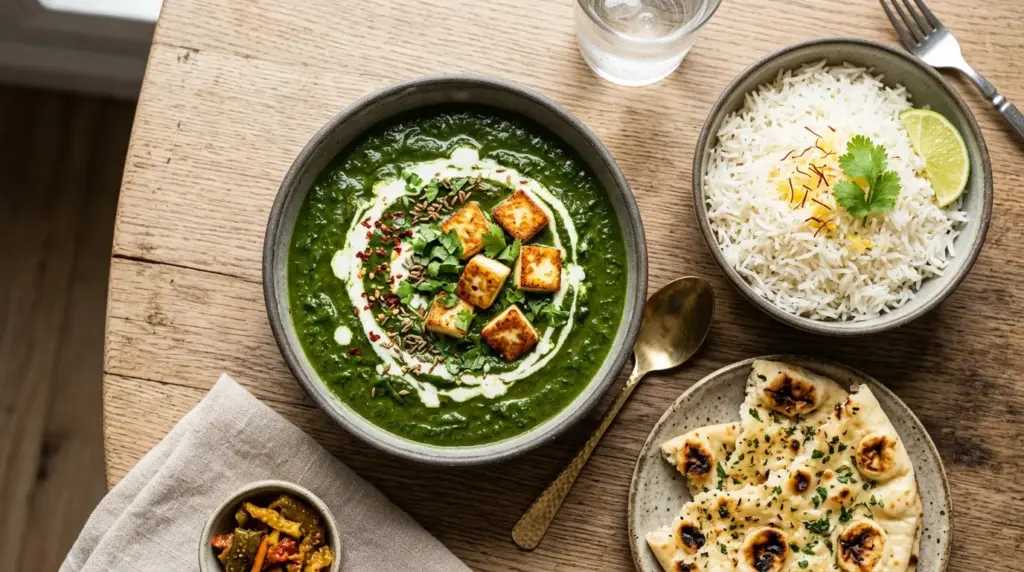
Palak paneer is incredibly versatile and pairs well with a wide variety of accompaniments, both traditional and modern.
Serve it the classic way over a bed of fluffy basmati rice, which soaks up the creamy sauce beautifully. A warm piece of naan bread on the side makes it even better, perfect for scooping.
- Basmati Rice — the classic pairing, and a natural sponge for the creamy sauce
- Jeera Rice — cumin-spiced rice that adds another aromatic layer
- Garlic Naan — soft, buttery flatbread perfect for scooping
- Cucumber Raita — cooling and refreshing, perfect for balancing the spice
- Indian Onion Salad — a crisp, tangy side that cuts through the richness of the curry
- Samosa — makes an excellent starter before a palak paneer main
Read Also: Chicken Curry Recipe
Variations to Try
Once you’ve mastered the classic, there are several excellent variations worth exploring.
- Palak Tofu: Swap paneer for extra-firm tofu for a vegan-friendly version. Press the tofu dry, cut into cubes, and sear in oil just as you would the paneer. The spinach sauce is naturally dairy-free if you substitute coconut cream for heavy cream.
- Palak Chicken: Add boneless chicken pieces instead of (or alongside) paneer. Cook the chicken through in the masala base before adding the spinach puree. This makes a heartier, protein-packed version.
- Palak Aloo (Spinach Potatoes): Replace the paneer with cubed boiled potatoes. This is a budget-friendly variation that’s equally delicious and very popular in North Indian home cooking.
- Saag Paneer: Use a mixture of spinach, mustard greens, and fenugreek leaves instead of only spinach. This version has a more complex, slightly bitter green flavor profile.
- Lighter Version: Skip the heavy cream entirely and stir in full-fat yogurt at the end instead. Temper the yogurt by whisking it with a spoonful of the hot sauce before adding to prevent curdling.
Another comforting Indian favorite: Mulligatawny Soup Recipe
Storage and Reheating
Palak paneer stores and reheats exceptionally well, making it a great meal prep option.
- Refrigerator: Store leftovers in an airtight container in the fridge for up to 4 days. The flavors deepen overnight, and many people find day-two palak paneer even better than the freshly made batch.
- Freezer: The spinach sauce freezes beautifully for up to 2 months. If you plan to freeze it, do so before adding the paneer and cream — add those fresh when reheating.
- Reheating on the stovetop: Transfer to a small saucepan and warm over low-medium heat, stirring gently. Add a splash of water or cream to loosen the sauce if it has thickened in the fridge.
- Reheating in the microwave: Place in a microwave-safe bowl, cover loosely, and heat in 60-second intervals, stirring between each one, until heated through.
- Paneer tip: If the paneer feels rubbery after reheating, soak the cubes in warm water for 5 minutes before adding them back to the warm sauce. It restores the soft texture.
Read Also: Tandoori Chicken Recipe
Nutritional Facts
Per serving (based on 4 servings). Values are approximate and may vary based on specific ingredients used.
| Nutrient | Amount Per Serving |
|---|---|
| Calories | ~390 kcal |
| Total Fat | 29g |
| Saturated Fat | 16g |
| Cholesterol | 75mg |
| Sodium | 720mg |
| Total Carbohydrates | 18g |
| Dietary Fiber | 5g |
| Sugars | 6g |
| Protein | 18g |
| Calcium | 400mg |
| Iron | 5mg |
| Vitamin A | 180% DV |
| Vitamin C | 50% DV |
Another great vegetarian option for your weekly rotation: Shakshuka Recipe
Health Benefits of Key Ingredients
This dish isn’t just delicious — it’s genuinely nutritious, with several powerhouse ingredients working in its favor.
Palak paneer combines some of the most nutrient-dense ingredients in Indian cooking into a single, satisfying bowl.
- Spinach is exceptionally high in iron, folate, vitamin K, and vitamin A. It’s one of the most nutrient-dense leafy greens available, with significant antioxidant activity that supports immune function and eye health. Blanching spinach makes it easier to digest and actually increases the bioavailability of certain nutrients.
- Paneer is a high-quality source of complete protein and calcium, making it particularly valuable for vegetarians. It also contains healthy fats and is lower in carbohydrates than most other dairy products. The protein content helps keep you full for longer.
- Garlic and ginger have long been used in Ayurvedic medicine for their anti-inflammatory properties. Modern research supports their role in supporting digestion, immune health, and circulation.
- Turmeric contains curcumin, a compound with well-documented anti-inflammatory and antioxidant effects. Combined with black pepper or fat (both present in this dish), its absorption by the body is significantly enhanced.
- Ghee provides fat-soluble vitamins A, D, E, and K, and contains butyrate — a short-chain fatty acid associated with gut health. When used in moderation, it’s a nutritious and traditionally valued cooking fat.
- Cumin and coriander are rich in iron and antioxidants, and have historically been used to support digestive health and reduce bloating.
You might also enjoy: Easy Butter Chicken Recipe
Frequently Asked Questions
1. What is palak paneer made of?
Palak paneer is a North Indian curry made of fresh spinach pureed into a smooth sauce and combined with pan-seared cubes of paneer (Indian cottage cheese). The sauce is seasoned with spices like cumin, coriander, garam masala, and turmeric, and finished with a touch of cream for richness.
2. What is the difference between palak paneer and saag paneer?
The key difference lies in the greens used. Palak paneer uses only spinach, while saag paneer uses a blend of different leafy greens, which can include mustard greens, fenugreek leaves, and others. Palak paneer is the more commonly found version at Indian restaurants worldwide, and the two are often used interchangeably, though purists will note they have distinct flavor profiles.
3. Can I use frozen spinach instead of fresh?
Yes, frozen spinach works as a practical substitute. Use about 12 oz (340g) of frozen spinach, thaw it fully, and squeeze out all the liquid before blending. Keep in mind that frozen spinach will produce a slightly duller green color than fresh, but the flavor is still excellent and it cuts down on prep time.
4. Can palak paneer be made vegan?
Absolutely. Substitute the paneer with firm tofu pressed dry and pan-seared until golden, replace the ghee with a neutral oil like avocado or grapeseed oil, and swap the heavy cream for full-fat coconut cream. The flavor profile changes slightly but remains deeply satisfying.
5. Why does my palak paneer taste bitter?
Bitterness in palak paneer usually comes from one of two things: the spinach being overcooked during blanching, or too much kasoori methi being added. Keep the blanching time to 2 minutes and shock in ice water immediately. Use kasoori methi sparingly — about 1 tablespoon is plenty. Another cause can be old or oxidized ghee, so make sure your cooking fat is fresh.
Read Also: Spinach Soup Recipe

Palak Paneer

Equipment
- Large pot - for blanching spinach
- Large bowl - for ice water bath
- Blender or immersion blender
- Large skillet or cast iron pan
- Wooden spoon or heat-resistant spatula
- Colander or strainer
- Cutting board and sharp knife
- Measuring spoons and cups
Ingredients
- 1 lb fresh baby spinach - 450g, washed and stems removed
- 14 oz paneer cheese - 400g, cut into ¾-inch cubes
- 3 tablespoons ghee - or neutral oil
- 1 large yellow onion - finely diced
- 14 oz diced tomatoes - 1 can (400g) or 2 fresh medium tomatoes, diced
- 5 cloves garlic - minced
- 1 inch fresh ginger - grated
- 1-2 green chilies - serrano or jalapeño, finely chopped (adjust to taste)
- 1 teaspoon cumin seeds
- 1 teaspoon ground coriander
- 1 teaspoon garam masala
- ½ teaspoon ground cumin
- ½ teaspoon turmeric powder
- ½ teaspoon Kashmiri red chili powder - or mild paprika for less heat
- 1 tablespoon dried fenugreek leaves - kasoori methi, crushed between your palms
- ¼ cup heavy cream - 60ml, plus more for garnish
- salt - to taste
- 2 tablespoons water or oil - for searing the paneer
For Serving (Optional)
- Basmati rice - cooked, for serving
- Naan bread - for serving
Instructions
- Blanch spinach in salted boiling water for 2 minutes, then immediately transfer to ice water. Drain thoroughly and squeeze out excess water.
- Blend blanched spinach until completely smooth, adding 2-3 tablespoons water if needed. Set aside.
- Cut paneer into ¾-inch cubes. Sear in hot ghee over medium-high heat for 2-3 minutes per side until golden. Season lightly with salt and set aside.
- In the same pan, add remaining ghee and cumin seeds. Sizzle for 30 seconds, then add onion and cook 10-12 minutes until deeply golden brown.
- Add garlic, ginger, and green chilies. Cook 2 minutes until fragrant. Add tomatoes and cook 8-10 minutes until oil separates from the masala.
- Lower heat and add ground coriander, cumin, turmeric, Kashmiri chili powder, and garam masala. Toast for 1-2 minutes, stirring constantly.
- Pour in blended spinach puree and stir to combine. Add ¼ cup water to loosen if needed. Simmer for 5-6 minutes until flavors meld.
- Stir in heavy cream and crushed kasoori methi. Season with salt to taste. Simmer for 2-3 more minutes.
- Gently add seared paneer cubes to the sauce. Simmer for 3-4 minutes on low heat until paneer absorbs the flavors. Serve hot with rice or naan.
Notes
- Don’t skip the ice bath: Shocking the spinach immediately after blanching is the only thing that preserves its vivid green color. Even a delay of 30 seconds will start to dull the color.
- Caramelize the onions properly: Ten to twelve minutes might feel long, but deeply golden onions create the sweet, savory foundation of the entire curry. Pale onions produce a bland result.
- Crush the kasoori methi: Simply crumbling the dried fenugreek leaves between your palms before adding them activates their essential oils and dramatically improves their flavor impact.
- Cook the tomato-masala base until oil separates: This is a crucial sign that the moisture has cooked off and the masala is properly developed. Rushing past this point leads to a raw, flat-tasting curry.
- Sear the paneer, don’t skip it: The golden crust keeps the paneer from going spongy and soft in the sauce, and adds a slightly nutty flavor that improves the whole dish.
- Vegan variation: Swap paneer for extra-firm tofu, use avocado or grapeseed oil instead of ghee, and replace heavy cream with full-fat coconut cream.
- Storage: Store leftovers in an airtight container in the fridge for up to 4 days. The flavors deepen overnight, making day-two palak paneer even better.
- Freezing: The spinach sauce freezes beautifully for up to 2 months. Freeze before adding the paneer and cream, then add them fresh when reheating.
- Reheating paneer: If the paneer feels rubbery after reheating, soak the cubes in warm water for 5 minutes before adding them back to the warm sauce to restore soft texture.
- Spice level: Adjust the number of green chilies and Kashmiri red chili powder to your preferred heat level. For a milder version, use mild paprika instead of chili powder.
Final Thoughts
Palak paneer is one of those dishes that rewards you for paying attention to the details. Blanch the spinach right, caramelize the onions all the way, and don’t skip the kasoori methi — and what you get is something genuinely special.
This recipe is the version you’d find at a proper North Indian restaurant, made achievable in your home kitchen with straightforward steps and accessible ingredients.
Give it a try this week, and don’t be surprised when it becomes a regular in your rotation. Leave a comment below to share how yours turned out, or tag us if you share it on social media — we’d love to see your bowl!
Recommended:
- Chicken Curry Recipe
- Chicken Tikka Masala Recipe
- Samosa Recipe
- Indian Onion Salad Recipe
- Cucumber Raita Recipe
- Easy Naan Bread Recipe
- Chicken Korma Recipe
- Bibimbap Recipe
- Tom Yum Soup Recipe
- Easy Butter Chicken Recipe