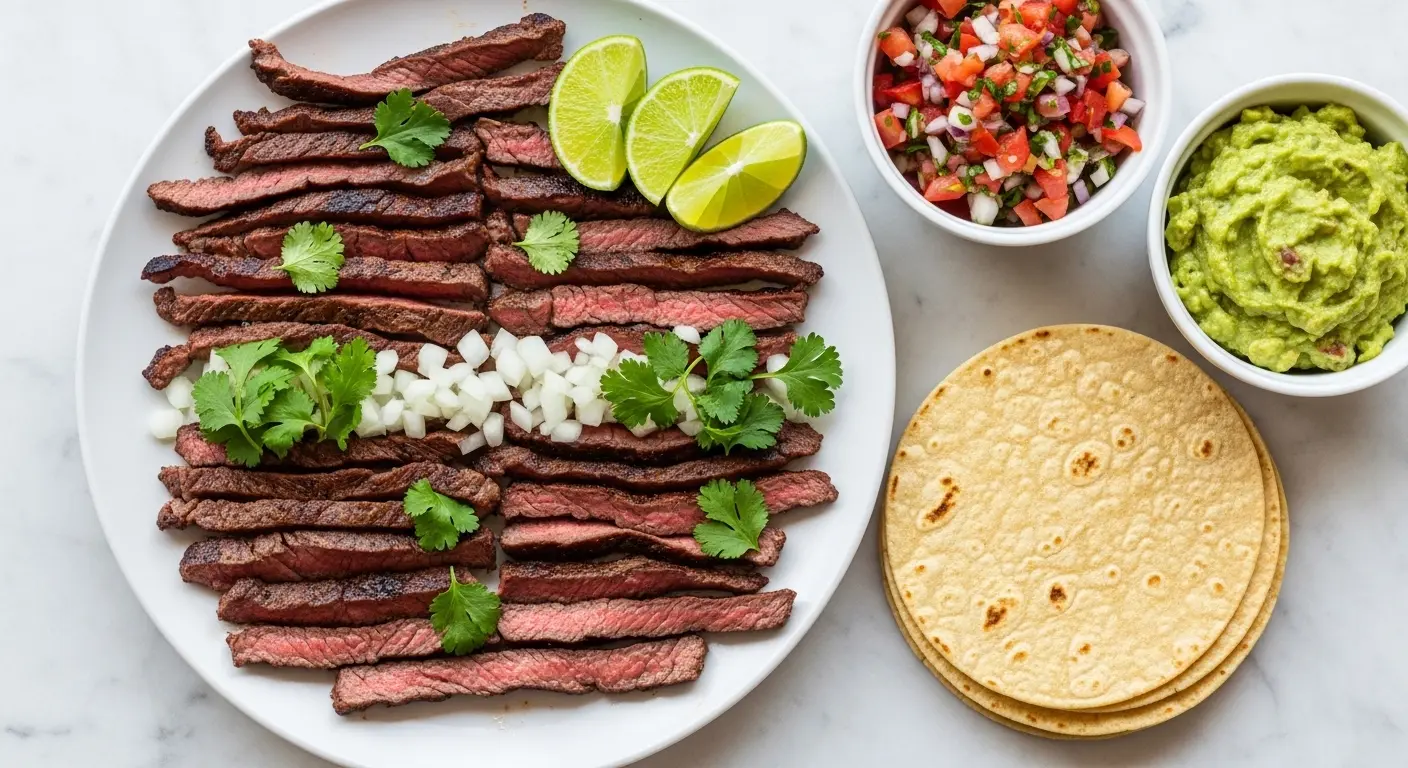
If you’ve been searching for the ultimate classic carne asada recipe, your search ends here. This is the version you’ve tasted at your favorite Mexican restaurant or your neighbor’s backyard cookout: boldly marinated flank or skirt steak, kissed by high heat on a hot grill until charred on the outside and tender and juicy within.
Carne asada literally translates to “grilled meat” in Spanish, but that name barely scratches the surface of what makes this dish so unforgettable. The magic is in the marinade: a citrus-forward blend of orange juice, lime juice, garlic, cumin, and a handful of dried chiles that tenderizes the beef while building layers of smoky, tangy flavor.
This isn’t a recipe that needs fancy equipment or hours of effort. What it does need is a little patience with the marinating time (a minimum of 2 hours, but overnight is best) and a fearlessly hot grill. The result is something that tastes like you really know what you’re doing in the kitchen, even if this is your first time making it.
Slice it for street-style carne asada tacos, pile it over rice, or serve it straight off the cutting board with a squeeze of lime. This recipe delivers every single time.
Why You’ll Love This Classic Carne Asada Recipe
The flavor profile here is hard to beat. The citrus marinade does double duty: it tenderizes the meat through its natural acidity while simultaneously infusing it with bright, savory flavor.
This recipe uses pantry-friendly ingredients that you likely already have on hand. No specialty store run required. Just good quality beef and a few basic staples.
It’s incredibly versatile, too. Serve it as tacos, burritos, nachos, rice bowls, or simply with roasted veggies and tortillas on the side.
The prep is mostly hands-off. Once the marinade comes together and the steak goes in the bag, you can walk away and let the flavors do their thing.
Here’s why this recipe stands out:
- Perfectly balanced marinade: Citrus, garlic, cumin, and a touch of heat create complex flavor without overpowering the beef
- Quick cook time: High heat grilling means the steak is done in 8-12 minutes, ideal for weeknight dinners and weekend gatherings alike
- Uses affordable cuts: Flank steak and skirt steak are budget-friendly compared to premium cuts, but deliver fantastic results when marinated and sliced correctly
- Stays juicy: Resting the steak before slicing locks in all those flavorful juices
- Crowd-pleasing: This is universally loved and it works for family dinners, potlucks, and taco nights
For another beloved Mexican-inspired beef dish, check out this hearty Birria Tacos Recipe.
Ingredients
The classic carne asada marinade is citrus-heavy with earthy, warming spices. Skirt steak is the most traditional cut for this recipe, though flank steak works beautifully as well. Both are thin, flavorful, and respond perfectly to high-heat grilling.
Here’s what you’ll need:
For the Marinade:
- 2 lbs (900g) skirt steak or flank steak
- 1/3 cup (80ml) fresh orange juice (about 1 large orange)
- 3 tablespoons (45ml) fresh lime juice (about 2 limes)
- 3 tablespoons (45ml) olive oil
- 4 cloves garlic, minced
- 1 teaspoon (3g) ground cumin
- 1 teaspoon (2g) chili powder
- 1/2 teaspoon (1g) smoked paprika
- 1/2 teaspoon (1.5g) dried oregano (Mexican oregano preferred)
- 1/2 teaspoon (3g) salt
- 1/4 teaspoon (0.5g) black pepper
- 1/4 teaspoon (0.5g) red pepper flakes (optional, for heat)
- 1/4 cup (10g) fresh cilantro, roughly chopped
- 1 jalapeño, seeded and minced (optional)
For Serving:
- Corn tortillas (for tacos)
- Fresh lime wedges
- Chopped white onion and fresh cilantro
- Sliced radishes (optional)
If you want to start with a standalone marinade, our Carne Asada Marinade Recipe is a great reference.
Kitchen Equipment Needed
You don’t need a lot of specialized tools to pull this recipe off, but the right equipment makes a real difference, especially when it comes to achieving that proper char on the steak.
Here’s what to have ready:
- Cast iron grill pan or outdoor gas/charcoal grill
- Gallon zip-lock bags or a large shallow dish (for marinating)
- Meat thermometer (instant-read is best)
- Sharp chef’s knife (for slicing against the grain)
- Cutting board (large enough for the full steak)
- Tongs (for turning the steak on the grill)
- Citrus juicer or reamer
- Mixing bowl (for the marinade)
- Aluminum foil (for resting the steak)
Read Also: Taco Casserole Recipe
Recommended Products for This Recipe
These are handpicked products based on quality and performance that genuinely make a difference when preparing classic carne asada at home.
1. Lodge Cast Iron Grill Pan
A cast iron grill pan is the single best tool for making carne asada indoors. It gets ripping hot and holds that heat consistently, which is exactly what you need to achieve those beautiful char marks and a proper sear. It also mimics the effect of an outdoor grill perfectly, even in the middle of winter.
2. Instant Read Meat Thermometer
Taking the guesswork out of doneness is the easiest way to protect an expensive cut of meat. A quality instant-read thermometer tells you in seconds whether your steak is at the perfect medium-rare (130-135°F / 54-57°C). This is especially important with skirt and flank steak, which can go from perfect to tough quickly.
3. Dried Guajillo Chiles
Many traditional carne asada recipes call for reconstituted dried chiles in the marinade, and guajillo chiles offer a mildly earthy, slightly fruity depth that takes the flavor to another level. If you want to upgrade your marinade beyond the standard spice blend, these are worth having.
4. OXO Good Grips Citrus Juicer
Fresh citrus is non-negotiable in a great carne asada marinade. A handheld citrus press makes juicing limes and oranges fast and efficient, ensuring you get every last drop of juice without seeds or extra pulp in your marinade.
5. Mortar and Pestle
Freshly ground cumin and other whole spices add remarkable depth to the marinade that pre-ground spices can’t fully replicate. A simple mortar and pestle lets you toast and grind whole cumin seeds in seconds for a noticeably more aromatic, complex result.
For a close variation on the classic, take a look at this Authentic Carne Asada Recipe.
Step-by-Step Instructions
1. Prepare the Marinade
- Combine the orange juice, lime juice, and olive oil in a medium mixing bowl.
- Add the minced garlic, ground cumin, chili powder, smoked paprika, dried oregano, salt, black pepper, and red pepper flakes.
- Add the roughly chopped fresh cilantro and the minced jalapeño, if using.
- Whisk everything together until the oil and juices are fully combined and the spices are evenly distributed.
- Taste the marinade: it should be bright and tangy from the citrus, with a warm, earthy backbone from the cumin and chili powder. Adjust salt if needed.
2. Prepare the Steak
- Remove the skirt steak or flank steak from its packaging and pat it completely dry with paper towels. This step is important: moisture on the surface of the meat prevents a proper sear later.
- If using skirt steak, look for any particularly thick portions and use a sharp knife to butterfly or trim them slightly for more even thickness across the whole piece.
- If the steak is very long, cut it into 2-3 manageable pieces so it fits easily in your marinade bag and later on the grill.
- Inspect both sides for any large pockets of silverskin (the tough, thin white membrane). Use a paring knife to carefully trim these away, as they don’t tenderize during cooking.
3. Marinate the Steak
- Place the prepared steak into a large gallon zip-lock bag or a wide, shallow baking dish.
- Pour the marinade over the steak, making sure to coat every surface evenly.
- If using a bag, press out the excess air before sealing and massage the marinade into the meat through the bag.
- If using a dish, turn the steak once or twice to coat, then cover tightly with plastic wrap.
- Refrigerate for a minimum of 2 hours. For the best, deepest flavor, marinate overnight. Up to 8 hours is ideal. Do not exceed 24 hours, as the citrus acid can begin to “cook” the outside of the meat and affect its texture.
- Remove the steak from the refrigerator 30-45 minutes before cooking to allow it to come to room temperature. This ensures more even cooking throughout.
4. Preheat the Grill
- If using a gas grill, preheat all burners on high for 10-15 minutes. You want the grates to be extremely hot, around 450-500°F (230-260°C).
- If using a charcoal grill, light your coals and allow them to fully ash over, then arrange them for direct high-heat cooking.
- If using an indoor cast iron grill pan, place it over high heat and allow it to preheat for 4-5 minutes until it is smoking slightly. Add a very thin coat of a high-smoke-point oil (like avocado or canola oil) to the grates or pan surface.
- Clean the grill grates with a grill brush, then lightly oil them using tongs and a folded paper towel dipped in oil.
5. Grill the Carne Asada
- Remove the steak from the marinade and let the excess marinade drip off. Discard the remaining marinade. Do not reuse it for basting.
- Place the steak directly onto the hottest part of the grill in a single layer. Do not crowd the steak. Cook in batches if needed.
- Cook for 3-4 minutes without moving it, allowing a proper crust and char marks to develop. Resist the urge to peek or press down on the steak.
- Flip the steak using tongs and cook for another 3-4 minutes on the second side.
- For medium-rare doneness (recommended for this recipe), the internal temperature should read 130-135°F (54-57°C) on an instant-read thermometer. For medium, aim for 140-145°F (60-63°C). Skirt and flank steak are best served no more than medium. They become tough and chewy when overcooked.
- Adjust cooking time based on thickness: a thinner skirt steak may only need 2-3 minutes per side, while a thicker flank steak may need 4-5 minutes per side.
6. Rest and Slice the Steak
- Transfer the cooked steak to a clean cutting board and tent loosely with aluminum foil.
- Allow it to rest for 5-10 minutes. This is crucial: resting allows the juices that have been pushed toward the center during cooking to redistribute throughout the meat. Cutting too early will result in all those flavorful juices running out onto the board.
- After resting, identify the direction of the muscle grain running through the steak. The grain will appear as long parallel lines.
- Hold your knife at a slight angle (about 45 degrees) and slice across the grain, meaning your cuts should run perpendicular to those lines. This shortens the muscle fibers and is the single most important factor in whether the steak is tender or tough.
- Slice into thin strips, about 1/4 inch (6mm) thick.
- Squeeze a little fresh lime juice over the sliced meat and serve immediately.
Read Also: Easy Carne Asada Recipe
Tips for Success
Even a beginner can nail this recipe when armed with the right knowledge. These are the most impactful tips for getting this dish right every single time.
Here’s what to keep in mind:
- Don’t skip the resting period: Resting the steak after grilling is not optional. It is what separates a juicy, restaurant-quality result from a dry, disappointing one
- Always slice against the grain: With skirt and flank steak especially, slicing direction is everything. Cutting with the grain results in tough, chewy meat; cutting against it makes it tender
- Use fresh citrus, not bottled: Bottled lime and orange juice lack the brightness and volatile aromatics of fresh-squeezed juice, and the marinade will taste flat in comparison
- Get the grill genuinely hot: A moderately hot grill will steam and braise the steak; a very hot grill will sear and char it the way carne asada is meant to be cooked
- Pat the steak dry before grilling: Even after marinating, blotting off excess surface moisture helps the steak sear rather than steam on the grill
- Don’t over-marinate: More than 24 hours in an acidic marinade will break down the surface proteins and leave you with a mushy exterior texture
- Rest the steak at room temperature before grilling: Cold steak straight from the fridge takes longer to cook through and can end up overcooked on the outside before the center reaches temperature
For a rich, slow-cooked beef dish to round out your repertoire, this Caldo de Res Recipe is a fantastic complement.
Serving Suggestions
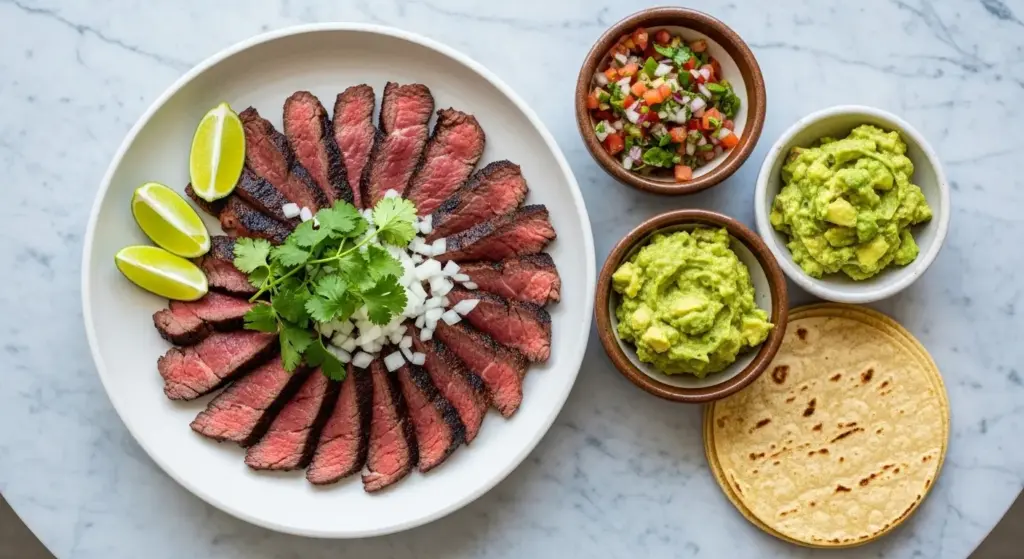
Classic carne asada is wonderfully versatile. It can be the star of a simple weeknight taco night or the centerpiece of a full-on backyard feast. The most traditional way to serve it is in street-style tacos with warm corn tortillas, but the possibilities go far beyond that.
Here are some of the best ways to serve it:
- Street-style tacos: Pile sliced carne asada onto warm Corn Tortillas with diced white onion, fresh cilantro, a squeeze of lime, and your favorite salsa
- Loaded nachos: Layer over tortilla chips with cheese, jalapeños, and beans for an incredible crowd-pleaser; our Loaded Nachos are the perfect canvas
- Rice bowls: Serve over cilantro-lime rice with black beans, shredded cheese, sour cream, and fresh Pico de Gallo
- Carne asada burritos: Wrap in a large flour tortilla with rice, beans, guacamole, and salsa for a hearty, portable meal
- Alongside classic sides: Serve with Guacamole and a fresh Fresh Salsa for a complete spread
- As a salad topping: Slice thinly and lay over chopped romaine with avocado, cotija cheese, tomatoes, and a lime vinaigrette
You might also enjoy: Enchilada Sauce
Variations to Try
Once you have the classic version mastered, there are some fantastic ways to put your own spin on it. Each of these maintains the soul of traditional carne asada while adding a distinct twist.
Some of the best variations to explore:
- Chipotle Carne Asada: Add 1-2 chipotle peppers in adobo sauce to the marinade for a smoky, spicy depth reminiscent of the popular fast-casual chain’s version
- Slow Cooker Carne Asada: Perfect for set-it-and-forget-it days. The slow cooker yields incredibly tender, shreddable meat great for burritos and bowls
- Pork Carne Asada: Use pork shoulder or pork steaks with the same marinade for a different spin that’s just as delicious
- King Taco Style Carne Asada: Inspired by the iconic Los Angeles taco stand, this version includes additional seasoning for a distinctly regional flavor
- Spicier version: Double the jalapeño and red pepper flakes, or add a serrano pepper and a teaspoon of cayenne to the marinade for serious heat lovers
- Beer marinade addition: Replace 2 tablespoons of orange juice with a dark Mexican beer (like Negra Modelo) for an even richer, more complex flavor base
For another excellent variation, try this Mexican Carne Asada Recipe for a slightly different regional take.
Storage and Reheating
Carne asada stores well and actually develops even more flavor as it sits in the fridge, making it a great recipe to make ahead for the week.
Here’s how to store and reheat it properly:
- Refrigerator: Store sliced or whole leftover carne asada in an airtight container for up to 4 days. Keep any accumulated juices in the container. They add moisture when reheating
- Freezer: Freeze cooked carne asada in a freezer-safe zip-lock bag or container for up to 3 months. Lay flat to freeze for quicker thawing
- Thawing: Thaw frozen carne asada in the refrigerator overnight before reheating
- Reheating on the stovetop (recommended): Heat a skillet over medium-high heat, add a small drizzle of oil, and cook sliced carne asada for 1-2 minutes per side until warmed through. This method preserves the best texture
- Reheating in the microwave: Place in a microwave-safe dish with a damp paper towel over the top, and heat in 30-second intervals at 70% power to avoid drying it out
- Avoid overcooking when reheating: Skirt and flank steak that have been cooked to medium-rare are already close to the overcooked zone. Heat gently and briefly, just until warmed through
Read Also: Taco Seasoning Recipe
Nutritional Facts
The following is an approximate nutritional breakdown per serving (based on 4 servings, using flank steak and olive oil, without tortillas or toppings):
| Nutrient | Amount Per Serving |
|---|---|
| Calories | 340 kcal |
| Protein | 38g |
| Total Fat | 19g |
| Saturated Fat | 6g |
| Carbohydrates | 3g |
| Sugars | 2g |
| Fiber | 0.5g |
| Sodium | 380mg |
| Cholesterol | 105mg |
| Iron | 3.5mg |
| Vitamin C | 8mg |
Note: Nutritional values are approximate and will vary based on the specific cut of beef used, marinade absorption, and any additional toppings or sides.
Pairing this protein-rich steak with Mexican Street Corn and beans creates a well-rounded, balanced meal that hits all the major macronutrient groups.
Health Benefits of Key Ingredients
Beyond its bold flavor, the classic carne asada recipe features several genuinely nutritious ingredients that make it more than just a delicious indulgence.
Here’s a look at what makes this dish nutritious:
- Flank/Skirt Steak: Beef is one of the most bioavailable sources of complete protein, iron, and zinc. A single serving provides well over 30g of high-quality protein that supports muscle repair, immune function, and satiety. The iron in red meat is heme iron, which the body absorbs far more efficiently than plant-based iron sources
- Citrus Juice (Lime & Orange): Both are excellent sources of Vitamin C, which supports immune function and helps the body absorb the iron in the beef, a genuinely synergistic pairing. Fresh lime juice also contains antioxidants that fight oxidative stress
- Garlic: A well-researched functional food, garlic contains allicin and other sulfur compounds with documented antimicrobial, anti-inflammatory, and cardiovascular-protective properties
- Cumin: Beyond its warm, earthy flavor, cumin is rich in iron and has been studied for its potential to support digestion, reduce inflammation, and improve blood sugar regulation
- Olive Oil: The marinade’s olive oil base provides heart-healthy monounsaturated fats and fat-soluble vitamins. It also helps the marinade adhere evenly to the meat and assists with the fat-soluble spice compounds absorbing into the beef
- Cilantro: A good source of Vitamin K and antioxidants, cilantro also has a reputation in traditional medicine as a digestive aid and has been studied for potential detoxifying properties
- Jalapeño: Contains capsaicin, the compound responsible for heat, which has been associated with boosted metabolism, anti-inflammatory effects, and appetite regulation
This Mexican Beef and Rice Skillet Recipe is another great way to enjoy many of these same wholesome ingredients in a complete, one-pan meal.
Frequently Asked Questions
1. What cut of beef is best for classic carne asada?
Skirt steak is the most traditional and widely preferred cut for carne asada. It has great marbling, robust beefy flavor, and a loose grain that slices beautifully when cut against it. Flank steak is an excellent alternative. It is slightly thicker and leaner, which makes it a little more forgiving on the grill. Both cuts benefit enormously from a good marinade and must be sliced against the grain to achieve tenderness.
2. How long should I marinate carne asada?
A minimum of 2 hours is required to get meaningful flavor penetration and tenderization from the marinade. For the best results, marinate overnight. Anywhere from 4 to 8 hours is the sweet spot. Do not marinate for longer than 24 hours, as the citrus juice acids will begin to denature the surface proteins, resulting in a mushy, mealy texture on the exterior of the meat.
3. Can I make carne asada without a grill?
Absolutely. A heavy cast iron grill pan on your stovetop set over high heat is the best indoor alternative. It can reach the high temperatures needed for a proper sear and char. You can also use a regular cast iron skillet or stainless steel pan, though you won’t get the classic grill marks. The broiler in your oven is another solid option: place the marinated steak on a foil-lined baking sheet and broil on high, about 4-6 inches from the heating element, for 4-5 minutes per side.
4. What does “slicing against the grain” mean, and why does it matter?
Every cut of beef has muscle fibers that run in one direction. This is the grain. When you slice with the grain, you are cutting along those long fibers, which means each bite contains a full-length muscle fiber that is tough and chewy. When you slice against the grain, you are cutting those fibers short, so each bite contains a tiny cross-section of fiber that is much easier to chew. With skirt and flank steak in particular, this technique is the difference between carne asada that is tender and one that feels like cardboard.
5. Can I use this marinade on chicken or other meats?
Yes, this marinade works wonderfully on chicken, particularly boneless, skinless chicken thighs. The citrus-cumin-garlic combination is naturally suited to poultry. Reduce the marinating time to 1-2 hours for chicken, as the acids work faster on poultry than on beef. It also works well on pork tenderloin or pork steaks. The same principles of resting and slicing against the grain apply to all proteins you marinate this way.
Final Thoughts
This classic carne asada recipe is one of those dishes that delivers maximum payoff for a relatively simple process. Once you taste it, you’ll understand why it has been a staple of Mexican and Mexican-American cooking for generations: bold, juicy, smoky, and deeply satisfying in a way that simple food often is.
The most important things to remember are: marinate long enough, grill hot enough, rest the meat, and slice against the grain. Nail those four things, and you will have a plate of carne asada that rivals anything from your favorite restaurant.
Give this recipe a try this week. You will not be disappointed. Drop a comment below to share how it turned out, or tag us if you share your creation. We would love to hear your spin on it!
Recommended:
- Best Carne Asada Recipe
- Trader Joes Carne Asada Recipe
- Picadillo Recipe
- Taco Skillet Recipe
- Red Pozole Recipe
- Flour Tortilla Recipe
- Enchiladas Suizas Recipe
- Chicken Tortilla Soup Recipe
- Beef and Barley Soup Recipe
- Beef Pozole Recipe