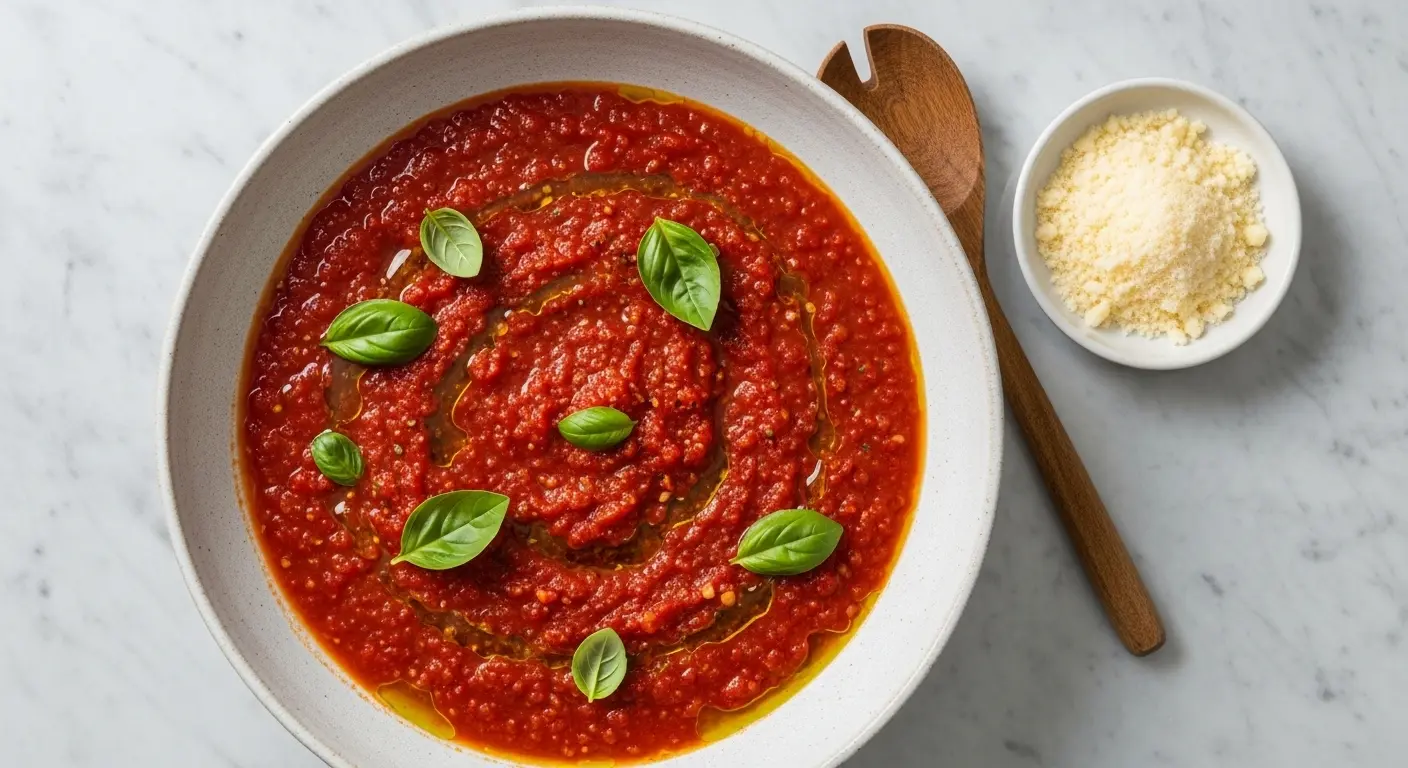
Making a truly great tomato sauce recipe from scratch is one of those kitchen skills that will change everything about the way you cook Italian food.
This isn’t just a basic pasta sauce. It’s a deeply flavored, slow-simmered sauce that transforms a handful of pantry staples into something that tastes like it came straight from a Italian grandmother’s kitchen.
The secret is in the simplicity. Using quality canned San Marzano tomatoes, golden sautéed aromatics, fresh basil, and a slow simmer that coaxes out every drop of rich tomato flavor, this sauce comes together in under an hour with very little effort.
It works beautifully over pasta, spaghetti, rigatoni, or penne. It doubles as a pizza sauce, a base for shakshuka, and a braising liquid for meatballs or chicken.
Once you make it at home, you will never go back to the jar.
You might also enjoy: Marinara Sauce Recipe

Why You’ll Love This Tomato Sauce Recipe
This sauce earns a permanent spot in your weekly rotation for so many good reasons.
It uses simple ingredients you likely already have in your pantry, and comes together without any special technique.
The flavor is rich, balanced, and layered. The onion adds sweetness, the tomato paste deepens the umami, and the fresh basil at the end brightens everything up.
It is also incredibly versatile. Make a big batch and you have dinner covered for the whole week.
Here’s why this recipe stands out:
- Made with San Marzano tomatoes for a naturally sweet, low-acid flavor that canned crushed tomatoes simply cannot match
- Ready in under an hour with mostly hands-off simmering time
- Uses fresh basil stirred in at the very end to keep the flavor vibrant and aromatic
- Completely customizable for chunky, smooth, meaty, or spicy variations
- Freezes beautifully so you can batch-cook and always have sauce on hand
- Works for everything from pasta to pizza to baked dishes like lasagna and stuffed shells
The same rich base works wonderfully in this Vodka Sauce Recipe if you want to take things in a creamier direction.
Ingredients
This sauce keeps things beautifully simple. Every ingredient has a clear job, and quality matters here more than quantity.
A splash of good olive oil, a generous amount of garlic, a proper can of San Marzano tomatoes, and fresh basil at the end — that’s really all it takes to make something extraordinary.
- 3 tablespoons (45 ml) extra-virgin olive oil
- 1 medium yellow onion, finely diced (about 1 cup / 150 g)
- 6 garlic cloves, minced
- 2 tablespoons (30 g) tomato paste
- 2 cans (28 oz / 794 g each) whole peeled San Marzano tomatoes, crushed by hand
- 1 teaspoon (5 g) granulated sugar
- 1 teaspoon (3 g) dried oregano
- 1/2 teaspoon (1 g) red pepper flakes (optional, for a little heat)
- 1 teaspoon (6 g) kosher salt, plus more to taste
- 1/2 teaspoon (1 g) freshly ground black pepper
- 1 small bunch fresh basil (about 10–12 leaves), torn
- 1 tablespoon (15 g) unsalted butter (optional, for a silkier finish)
Read Also: Spaghetti Sauce Recipe
Kitchen Equipment Needed
You don’t need fancy equipment for this recipe. A good heavy-bottomed pot makes all the difference because it distributes heat evenly and prevents the sauce from scorching at the bottom while it simmers.
Here’s everything you’ll need:
- Large heavy-bottomed saucepan or Dutch oven (at least 4 quarts / 3.8 liters)
- Wooden spoon or heat-resistant silicone spatula
- Immersion blender (optional, for a smoother sauce)
- Sharp chef’s knife and cutting board
- Measuring spoons
- Can opener
- Large bowl (for crushing the tomatoes by hand)
- Ladle
- Airtight glass storage jars or containers
This sauce pairs perfectly with Italian Meatballs for a classic, comforting dinner.
Recommended Products for This Recipe
These are products that genuinely improve the quality of your finished sauce based on performance and kitchen-tested results.
1. San Marzano Whole Peeled Tomatoes (DOP Certified)
Not all canned tomatoes are created equal. DOP-certified San Marzano tomatoes are grown in a specific region of Italy and have a naturally sweeter, less acidic flavor than standard canned tomatoes. Using them in your sauce produces a noticeably better result with less need for added sugar or seasoning.
2. Enameled Cast Iron Dutch Oven
A heavy-bottomed Dutch oven is the single best pot for slow-simmered tomato sauce. It holds heat evenly, prevents hot spots that can scorch your sauce, and the enameled interior is completely non-reactive with acidic tomatoes. It’s an investment that will last decades and improve every sauce you make.
3. Double-Concentrated Tomato Paste
Tomato paste deepens the savory, umami quality of your sauce and helps it thicken beautifully. Double-concentrated paste gives you twice the flavor punch per tablespoon, so a little goes a long way. Look for it in a tube rather than a can — it stays fresh in the fridge for weeks after opening.
4. High-Quality Extra-Virgin Olive Oil
Since olive oil is the very first flavor you build in this sauce, using a good one matters. A fruity, well-balanced extra-virgin olive oil adds depth and richness that a lower-quality oil won’t provide. Look for cold-pressed, single-origin options for the best flavor.
This sauce is the foundation of a great Baked Ziti Recipe — one of the easiest weeknight pasta bakes you’ll ever make.

Step-by-Step Instructions
Step 1: Prepare Your Tomatoes
- Open both cans of San Marzano tomatoes and pour them into a large bowl.
- Use your hands to squeeze and crush each whole tomato, breaking it up into rough pieces. This releases the juices and gives you a slightly chunky, rustic texture.
- If you prefer a smoother sauce, you can use a potato masher or blender at this stage to process the tomatoes more finely. Set the crushed tomatoes aside.
- Reserve any juices from the can — you will add all of it to the sauce.
Step 2: Sauté the Aromatics
- Set your large Dutch oven or heavy-bottomed saucepan over medium heat and pour in the 3 tablespoons (45 ml) of extra-virgin olive oil.
- Let the oil heat for about 1 to 2 minutes until it shimmers but does not smoke.
- Add the finely diced onion to the pot and stir to coat it in the oil.
- Cook the onion over medium heat, stirring occasionally, for 8 to 10 minutes until it becomes soft, translucent, and lightly golden at the edges. This step builds the sweet, savory base of your sauce — don’t rush it.
- Once the onion is fully softened, add the 6 minced garlic cloves to the pot.
- Stir the garlic into the onion and cook for 1 to 2 minutes, stirring frequently, until fragrant. Watch carefully — garlic burns quickly and will turn bitter if overcooked.
Step 3: Add the Tomato Paste
- Push the onion and garlic mixture to the sides of the pot to create a small clear space in the center.
- Add the 2 tablespoons (30 g) of tomato paste directly to the cleared center of the pot.
- Let the tomato paste cook in that hot spot for 1 to 2 minutes, stirring it slightly. You’ll notice it will deepen in color from bright red to a darker, brick-red tone. This is called “blooming” the tomato paste and it intensifies the flavor significantly.
- After 1 to 2 minutes, stir the caramelized tomato paste into the onion and garlic mixture until everything is evenly combined.
Step 4: Add the Crushed Tomatoes and Seasonings
- Pour all of the hand-crushed San Marzano tomatoes and their juices from the bowl into the pot.
- Stir everything together so the tomatoes combine fully with the aromatic base.
- Add the 1 teaspoon (5 g) of granulated sugar, 1 teaspoon (3 g) of dried oregano, 1/2 teaspoon (1 g) of red pepper flakes (if using), 1 teaspoon (6 g) of kosher salt, and 1/2 teaspoon (1 g) of freshly ground black pepper.
- Stir well to distribute all the seasonings evenly throughout the sauce.
Step 5: Simmer Low and Slow
- Increase the heat to medium-high and bring the sauce to a gentle boil, stirring occasionally.
- Once it reaches a boil, reduce the heat to medium-low so the sauce maintains a steady, gentle simmer with occasional bubbles breaking the surface.
- Partially cover the pot, leaving a small gap to allow some steam to escape and the sauce to reduce and thicken.
- Let the sauce simmer for 30 to 45 minutes, stirring every 10 minutes or so to prevent sticking. The longer it simmers, the more the flavors will develop and the thicker the sauce will become.
- Taste the sauce partway through and adjust the salt, sugar, or pepper as needed.
Step 6: Finish and Blend (Optional)
- If you want a very smooth sauce, remove the pot from the heat and use an immersion blender to purée the sauce directly in the pot until it reaches your desired consistency. Alternatively, you can carefully transfer the sauce in batches to a countertop blender. If blending hot liquids, make sure to hold the lid down firmly and blend in short pulses.
- If you prefer a rustic, chunky sauce, simply leave it as is and use a wooden spoon to break up any larger pieces.
- If you are adding the optional 1 tablespoon (15 g) of unsalted butter for extra silkiness, stir it into the hot sauce now until it melts fully.
Step 7: Add Fresh Basil and Serve
- Remove the pot from the heat.
- Tear the fresh basil leaves by hand and stir them into the sauce. Adding basil off the heat preserves its bright, fresh flavor instead of cooking it into bitterness.
- Taste the sauce one final time and season with additional salt or pepper if needed.
- Serve immediately over your favorite pasta, use it as a pizza sauce, or cool it completely and store it for later use.
For another incredible Italian classic, try pairing this sauce with a Classic Chicken Parmesan Recipe — it’s a match made in comfort food heaven.
Tips for Success
A great tomato sauce comes down to technique as much as ingredients. Keep these pointers in mind and your sauce will turn out perfectly every time.
Here are the most important tips:
- Use San Marzano tomatoes when possible. They have lower acidity and a naturally sweeter, plummier flavor than regular canned tomatoes. Look for the DOP (Protected Designation of Origin) label for the authentic product.
- Don’t rush the onion. Cooking the onion slowly until golden and soft is what builds the sweet, savory foundation of the sauce. If you rush this step, the sauce will taste flat.
- Bloom the tomato paste. Cooking the tomato paste directly in the pan for a minute or two before adding the tomatoes deepens the flavor dramatically. It becomes caramelized and richer, which adds a layer of complexity to the final sauce.
- Crush the tomatoes by hand. Squeezing the whole tomatoes by hand gives you a chunkier, more textured sauce with irregular pieces. If you want a smoother sauce, use an immersion blender at the end rather than starting with pre-crushed tomatoes.
- Add basil at the very end. Fresh basil loses its aromatic oils quickly when exposed to heat. Stirring it in off the heat keeps the flavor bright and fresh rather than cooked and flat.
- Taste and adjust throughout. Every can of tomatoes varies slightly in acidity and sweetness. Season the sauce to your taste rather than following the recipe measurements rigidly.
- Simmer uncovered to thicken. If your sauce seems too thin after 45 minutes, remove the lid and continue simmering uncovered for another 10 to 15 minutes to allow more liquid to evaporate.
This same slow-simmer method works beautifully in a Stuffed Shells Recipe — a crowd-pleasing baked pasta dish that’s perfect for feeding a group.
Serving Suggestions
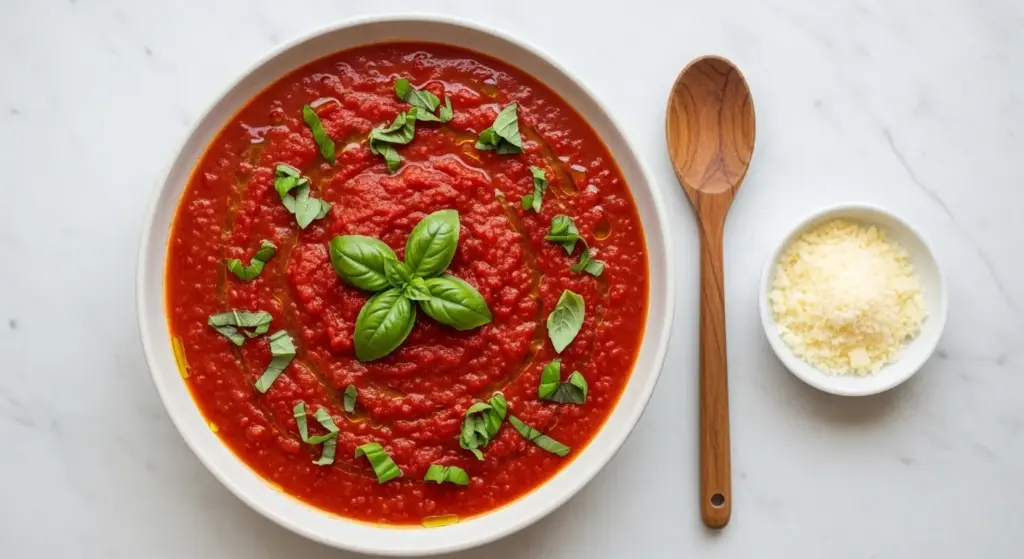
Homemade tomato sauce is endlessly versatile, and it deserves to be shown off in as many ways as possible.
The most classic use is simply tossed with pasta — spaghetti, rigatoni, penne, or pappardelle all work beautifully — finished with freshly grated Parmigiano-Reggiano and a drizzle of good olive oil.
Here are some other delicious ways to use it:
- Spoon it generously over Italian Meatballs and serve over pasta or with crusty bread for dipping
- Use it as a pizza sauce spread over homemade or store-bought dough, topped with fresh mozzarella
- Layer it into a classic Easy Lasagna with ricotta, mozzarella, and bolognese
- Simmer eggs directly in the sauce to make a quick Shakshuka for brunch
- Use it as a dipping sauce for mozzarella sticks, garlic bread, or crispy fried chicken
- Spoon it over creamy polenta with a scatter of fresh Parmesan for a hearty vegetarian dinner
- Use it as the base for Chicken Cacciatore — chicken pieces braised right in the sauce until fall-off-the-bone tender
Another great way to use this sauce: spread it thick over homemade dough and top with mozzarella — the Easy Pizza Dough Recipe on the site makes it incredibly simple.
Variations to Try
Once you’ve mastered the classic version, there are so many delicious directions you can take this sauce.
Each variation starts from the same base and adds a simple twist to completely change the character of the sauce.
- Spicy Arrabbiata: Double the red pepper flakes to 1 teaspoon (2 g) and add an extra clove or two of garlic. Skip the basil and finish with flat-leaf parsley instead for a bright, fiery sauce.
- Meaty Bolognese-Style: Brown 1 pound (450 g) of ground beef or Italian sausage in the pot before adding the onions. Drain any excess fat, then continue the recipe as written for a hearty meat sauce.
- Creamy Tomato Sauce: Stir in 1/4 cup (60 ml) of heavy cream or crème fraîche after the sauce has finished simmering. This mellows the acidity and creates a silky, rosy sauce similar to a vodka sauce.
- Roasted Garlic Version: Instead of sautéed fresh garlic, use a full head of roasted garlic, squeezed directly into the sauce. Roasted garlic is much sweeter and more mellow, giving the sauce a subtle depth.
- Garden Vegetable Sauce: Add finely diced zucchini, bell pepper, or eggplant along with the onion and cook until tender before adding the tomatoes. Great for packing in extra vegetables.
- Herb-Forward Version: Add a sprig of fresh rosemary or thyme to the sauce while it simmers, then remove it before serving. The woody herbs add an earthy, fragrant note that pairs especially well with hearty pasta shapes.
Read Also: Pizza Sauce Recipe
Storage and Reheating
Homemade tomato sauce stores exceptionally well, making it a great candidate for batch cooking and meal prep throughout the week.
Here’s everything you need to know about keeping it fresh:
- Refrigerator: Allow the sauce to cool completely at room temperature, then transfer it to an airtight container or glass jar. It will keep in the fridge for up to 4 to 5 days.
- Freezer: Pour cooled sauce into freezer-safe containers or zip-lock bags, leaving about an inch of headspace for expansion. Label with the date. The sauce keeps in the freezer for up to 3 months.
- Ice Cube Tray Method: Freeze the sauce in an ice cube tray first, then transfer the frozen cubes into a zip-lock bag. This allows you to thaw small portions at a time as needed — perfect for using as a quick pizza sauce or adding to soups.
- Reheating from the fridge: Pour the sauce into a small saucepan and warm it over medium-low heat, stirring occasionally, until it is heated through. Add a splash of water if it has thickened too much in the fridge.
- Reheating from frozen: Thaw overnight in the refrigerator, then reheat on the stovetop as described above. Alternatively, you can reheat directly from frozen in a covered saucepan over low heat, stirring occasionally, until fully warmed through.
You might also enjoy: Easy Tomato Soup Recipe
Nutritional Facts
The following nutrition information is based on a serving size of approximately 1/2 cup (120 ml) of sauce. This recipe makes about 6 to 8 servings total.
| Nutrient | Amount Per Serving |
|---|---|
| Calories | 95 kcal |
| Total Fat | 6 g |
| Saturated Fat | 1 g |
| Cholesterol | 0 mg |
| Sodium | 410 mg |
| Total Carbohydrates | 10 g |
| Dietary Fiber | 2 g |
| Sugars | 6 g |
| Protein | 2 g |
| Vitamin A | 20% DV |
| Vitamin C | 22% DV |
| Iron | 10% DV |
Nutrition values are approximate and will vary depending on the specific brands and exact measurements used.
Another fantastic way to use extra sauce is in this warming Creamy Tomato Soup Recipe — comfort in a bowl.
Health Benefits of Key Ingredients
Homemade tomato sauce isn’t just delicious — it’s genuinely good for you, especially when made from scratch with whole, quality ingredients.
Here’s a look at why each key ingredient earns its place:
- Tomatoes are packed with lycopene, a powerful antioxidant that gives them their red color and has been linked to reduced risk of certain chronic diseases. Interestingly, lycopene becomes more bioavailable when tomatoes are cooked in oil, meaning a slow-simmered tomato sauce is one of the best ways to absorb it.
- Garlic contains allicin, a compound with well-documented antimicrobial and anti-inflammatory properties. Regular consumption of garlic has been associated with improved heart health and immune function.
- Extra-virgin olive oil is rich in monounsaturated fats and oleocanthal, a natural anti-inflammatory compound. It is a cornerstone of the Mediterranean diet, which is consistently ranked among the healthiest eating patterns in the world.
- Fresh basil provides vitamin K, which is important for blood clotting and bone health, along with a range of volatile oils that have demonstrated antibacterial properties in research settings.
- Onions are a good source of quercetin, a flavonoid antioxidant that supports cardiovascular health and has anti-inflammatory effects.
Another nutrient-rich dish you’ll love is this Minestrone Soup Recipe — a hearty, vegetable-packed Italian classic that also uses a tomato-based broth.
Frequently Asked Questions
1. Can I use fresh tomatoes instead of canned?
Yes, absolutely. Fresh, ripe tomatoes work beautifully in this recipe, especially during summer when tomatoes are at peak flavor.
To use fresh tomatoes, blanch them briefly in boiling water, then peel and remove the seeds. You’ll need approximately 3 to 3.5 pounds (1.3 to 1.6 kg) of fresh tomatoes to replace the two standard 28-ounce cans. Keep in mind that fresh tomatoes have higher water content, so you may need to simmer the sauce for 15 to 20 minutes longer to reach the right consistency.
2. Why do I add sugar to tomato sauce?
The sugar acts as a balancing ingredient rather than a sweetener. Canned tomatoes can sometimes be more acidic than fresh ones, and even a small amount of sugar — just one teaspoon — helps offset that sharpness and creates a more rounded, balanced flavor.
If your tomatoes are naturally very sweet (especially ripe summer tomatoes or high-quality San Marzanos), you may not need sugar at all. Taste the sauce as it simmers and adjust to your preference.
3. How do I make the sauce thicker?
If your sauce is thinner than you’d like after the full simmer time, simply remove the lid and continue simmering over medium-low heat for another 10 to 15 minutes uncovered.
The additional open-air simmering time allows more moisture to evaporate and the sauce will concentrate and thicken naturally. Another option is to stir in an extra tablespoon of tomato paste, which will thicken the sauce immediately and also deepen the flavor.
4. Can I double or triple this recipe?
Yes, this sauce scales up very easily, which is one of the reasons it’s such a great batch-cooking recipe.
Use a larger pot (at least 6 to 8 quarts / 5.7 to 7.6 liters) to accommodate the increased volume. The simmering time may increase slightly — add 10 to 15 minutes for a doubled batch — to allow the extra liquid to reduce properly. Cool the sauce in smaller portions before storing or freezing.
5. What’s the difference between tomato sauce and marinara sauce?
The terms are often used interchangeably, but there are subtle traditional differences.
Classic tomato sauce typically uses onion as the primary aromatic, sometimes simmered in the sauce whole and removed at the end (as in Marcella Hazan’s iconic version), resulting in a slightly sweeter, smoother sauce. Marinara sauce, by contrast, tends to be a quicker-cooked sauce built on olive oil and garlic, finished with fresh or dried herbs, and has a slightly brighter, more assertive tomato flavor. Both are delicious, and the lines between them have blurred considerably in modern Italian-American cooking.
Read Also: Bechamel Sauce Recipe

Homemade Tomato Sauce

Equipment
- Large heavy-bottomed saucepan or Dutch oven - At least 4 quarts (3.8 liters)
- Wooden spoon - or heat-resistant silicone spatula
- Immersion Blender - optional, for a smoother sauce
- Sharp chef's knife
- Cutting board
- Measuring spoons
- Can opener
- Large bowl - for crushing the tomatoes by hand
- Ladle
- Airtight glass storage jars - or containers
Ingredients
- 3 tablespoons extra-virgin olive oil - 45ml
- 1 medium yellow onion - finely diced, about 1 cup or 150g
- 6 garlic cloves - minced
- 2 tablespoons tomato paste - 30g
- 2 cans whole peeled San Marzano tomatoes - 28 oz or 794g each, crushed by hand
- 1 teaspoon granulated sugar - 5g
- 1 teaspoon dried oregano - 3g
- 0.5 teaspoon red pepper flakes - 1g, optional, for a little heat
- 1 teaspoon kosher salt - 6g, plus more to taste
- 0.5 teaspoon freshly ground black pepper - 1g
- 1 small bunch fresh basil - about 10–12 leaves, torn
- 1 tablespoon unsalted butter - 15g, optional, for a silkier finish
Instructions
- Open both cans of tomatoes and pour them into a large bowl. Use your hands to squeeze and crush each tomato into rough pieces. Set aside with all juices.
- Heat olive oil in a Dutch oven over medium heat. Add diced onion and cook for 8-10 minutes until soft and translucent. Add minced garlic and cook for 1-2 minutes until fragrant.
- Push onion and garlic to the sides, add tomato paste to the center, and cook for 1-2 minutes until it deepens to a brick-red color. Stir into the aromatics.
- Pour in crushed tomatoes and their juices. Add sugar, oregano, red pepper flakes (if using), salt, and black pepper. Stir well to combine.
- Bring sauce to a gentle boil, then reduce heat to medium-low and partially cover. Simmer for 30-45 minutes, stirring every 10 minutes, until thickened.
- For a smooth sauce, use an immersion blender to purée directly in the pot. For a rustic sauce, leave chunky and break up any large pieces with a spoon.
- Stir in optional butter until melted. Remove from heat, add torn fresh basil, and season to taste. Serve immediately or store for later.
Notes
- Use DOP-certified San Marzano tomatoes for the best flavor and naturally lower acidity. They make a noticeable difference in the finished sauce.
- Don’t rush the onion step – cooking it slowly until golden builds the sweet, savory foundation of the sauce.
- Bloom the tomato paste for 1-2 minutes to deepen its flavor and add complexity to the sauce.
- Crush tomatoes by hand for a rustic, chunky texture. If you prefer a smooth sauce, use an immersion blender at the end rather than starting with pre-crushed tomatoes.
- Add fresh basil off the heat to preserve its bright, aromatic flavor – cooking it makes it bitter.
- Taste and adjust seasoning throughout, as every can of tomatoes varies in acidity and sweetness.
- If the sauce seems thin after simmering, remove the lid and continue cooking uncovered for 10-15 more minutes to reduce and thicken.
- This sauce freezes beautifully for up to 3 months. Cool completely before storing in freezer-safe containers or zip-lock bags.
- Use this sauce as a base for meatballs, pizza, shakshuka, lasagna, or as a braising liquid for chicken.
- For a creamy version, stir in 1/4 cup (60ml) of heavy cream after simmering.
Final Thoughts
Homemade tomato sauce is one of those recipes that rewards you far beyond the effort it takes to make.
With just a handful of quality ingredients and under an hour of mostly hands-off cooking, you end up with something that is deeply flavorful, endlessly versatile, and genuinely better than anything from a store shelf.
Make it once and you’ll find yourself coming back to it every week.
Try it over a big bowl of pasta first — that’s the best way to taste it in all its simple glory. Then explore all the other ways it can anchor your meals throughout the week.
If you give this recipe a try, I’d love to hear how it turned out for you! Drop a comment below and let me know what you served it with. And if you share it on social media, tag us so we can see your beautiful sauce in action.
Recommended:
- Easy Lasagna Recipe
- Lasagna Recipe With Ricotta
- Easy Meatballs Recipe
- Creole Sauce Recipe
- Enchilada Sauce Recipe
- Easy Pesto Recipe
- Basil Pesto Recipe
- Easy Garlic Bread Recipe
- Cheesy Garlic Bread Recipe
- Easy Ratatouille Recipe