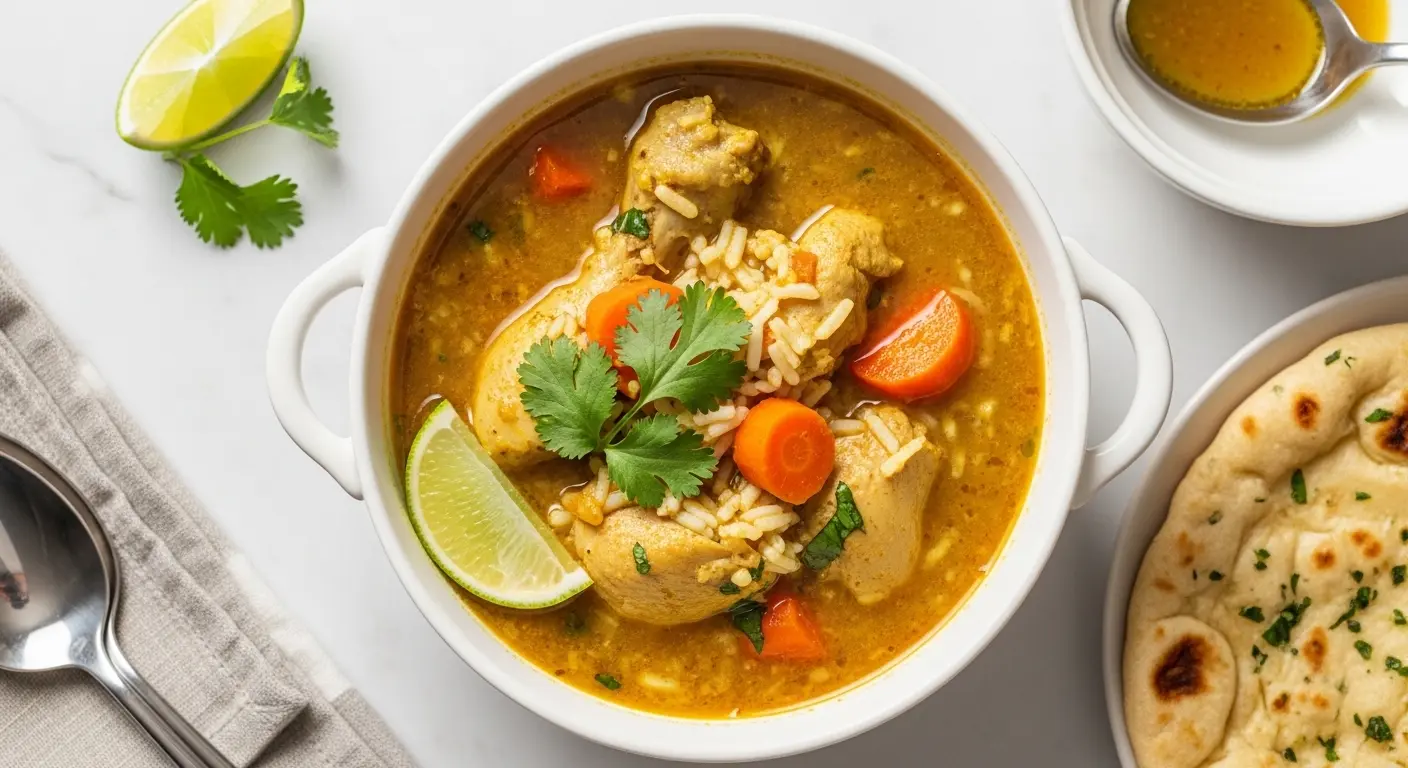
If you’ve been searching for a mulligatawny soup recipe that truly delivers on flavor, you’ve landed in the right place. This Anglo-Indian classic is a beautifully spiced, creamy, and hearty bowl of comfort that combines tender chicken, fragrant curry spices, sweet apple, and coconut milk into something that feels both exotic and deeply familiar. It’s the kind of soup that warms you from the inside out and leaves everyone at the table asking for more.
Mulligatawny means “pepper water” in the Tamil language, and while the original dish was little more than a thin, spiced lentil broth, the version most of us know and love today is a rich, thick, and satisfying meal in a bowl. The soup gained widespread popularity during the British colonial period in India, and over time it evolved into a heartier preparation packed with vegetables, meat, and coconut milk.
What makes this particular recipe so special is the balance of flavors. The curry powder and garam masala provide depth and warmth. The apple adds a gentle sweetness that cuts through the richness. The coconut milk rounds everything out with a velvety, creamy texture that makes each spoonful feel luxurious.
This is the kind of recipe that looks impressive but is surprisingly simple to pull together. With one pot and about 45 minutes, you’ll have a restaurant-quality soup on the table that tastes like it simmered for hours.
If you love warming, hearty soups, you’ll also adore this Chicken Rice Soup for another cozy weeknight bowl.

Why You’ll Love This Mulligatawny Soup Recipe
This mulligatawny soup recipe checks every box for a winning weeknight dinner or weekend showstopper.
It’s a one-pot meal, which means less cleanup and less stress. Everything comes together in a single Dutch oven or large soup pot, making the whole process streamlined and simple.
The flavors are bold but not overwhelming. The curry powder and garam masala work together to create layers of warmth, while the coconut milk tames any sharpness for a perfectly balanced bowl.
It’s incredibly versatile. You can make it with chicken, lamb, or even keep it vegetarian with lentils or chickpeas.
The apple might sound unusual, but it’s one of the dish’s most important ingredients. It melts into the broth as it cooks, adding a subtle sweetness that brings all the spices into harmony.
It reheats beautifully, making it ideal for meal prep. In fact, many people find the flavors deepen even further the next day.
- It’s a complete meal in one pot with protein, vegetables, and rice
- Ready in under an hour from start to finish
- Naturally gluten-free with easy dairy-free options
- Packed with warming spices that are deeply satisfying on cold days
- Crowd-pleasing for everyone from picky eaters to adventurous food lovers
- Stores well in the fridge for up to 4 days and freezes beautifully
Another great crowd-pleasing soup to add to your rotation is this Chicken Tortilla Soup, which is equally cozy and full of flavor.
Ingredients
Making mulligatawny soup from scratch requires a handful of pantry staples and a few key flavor-builders. The most important thing is to use a good quality curry powder, as it forms the backbone of the entire dish.
- 1.5 lbs (680g) boneless, skinless chicken thighs, cut into bite-sized pieces
- 2 tablespoons unsalted butter or ghee
- 1 medium yellow onion, finely diced (about 1 cup / 150g)
- 3 medium carrots, peeled and diced (about 1 cup / 130g)
- 3 stalks celery, diced (about 1 cup / 110g)
- 4 cloves garlic, minced
- 1 tablespoon fresh ginger, grated or minced
- 1 large tart apple (such as Granny Smith), peeled, cored, and diced
- 2 tablespoons curry powder
- 1 teaspoon garam masala
- 1/2 teaspoon ground turmeric
- 1/4 teaspoon ground cumin
- 1/4 teaspoon cayenne pepper (adjust to taste)
- 6 cups (1.4L) low-sodium chicken broth
- 1 can (13.5 oz / 400ml) full-fat coconut milk
- 1/2 cup (90g) basmati rice, rinsed
- 1 tablespoon fresh lime juice
- Salt and freshly ground black pepper, to taste
- Fresh cilantro or parsley, for garnish
- Lime wedges, for serving
For an aromatic spin on chicken and spice, you might also enjoy this Authentic Butter Chicken recipe that uses many of the same warming spices.
Kitchen Equipment Needed
You don’t need any specialized gadgets to make this soup. A few reliable kitchen essentials will get you through the entire recipe with ease.
- Large Dutch oven or heavy-bottomed soup pot (at least 6-quart / 5.7L capacity)
- Sharp chef’s knife
- Cutting board
- Wooden spoon or heat-safe silicone spatula
- Measuring spoons and measuring cups
- Box grater or microplane (for grating the ginger)
- Ladle for serving
- Immersion blender (optional, for a creamier texture)
You might also want to explore this Lentil Soup recipe that uses a similar setup and is equally hearty and comforting.
Recommended Products for This Recipe
These are products I genuinely recommend based on quality and how much they improve the final result.
1. Lodge Enameled Cast Iron Dutch Oven
A heavy-bottomed Dutch oven is essential for even heat distribution when sauteing the aromatics and simmering the soup. The enamel coating prevents sticking and makes cleanup effortless, even after a long simmer. This is an investment piece that will serve you well for decades of soup-making.
2. Priya Organic Curry Powder
The quality of your curry powder makes or breaks this soup. A high-quality, freshly ground blend will give you a depth of flavor that generic grocery store brands simply can’t match. Priya’s organic blend has excellent reviews for its balanced heat and aromatic complexity.
3. Thai Kitchen Full-Fat Coconut Milk
Full-fat coconut milk is non-negotiable in this recipe. Lite versions will make the broth watery and thin rather than rich and creamy. Thai Kitchen’s full-fat coconut milk is consistently creamy, smooth, and widely available.
4. Vitamix Immersion Blender
If you prefer a creamier, partially pureed soup, an immersion blender is the easiest way to achieve it without dirtying a second appliance. The Vitamix immersion blender is powerful enough to blend through the vegetables and rice with ease.
5. Tilda Pure Basmati Rice
Basmati rice is the traditional choice for mulligatawny, and using a good quality brand makes a noticeable difference. Tilda Pure Basmati has long, fluffy grains that hold their shape in the soup without turning mushy.
You might also love this Curry Chicken Salad recipe, which uses the same beautiful curry flavor profile in a totally different format.

Step-by-Step Instructions
Step 1: Prep All Your Ingredients
- Dice the onion, carrots, and celery into roughly even 1/4-inch (6mm) pieces so they cook at the same rate.
- Mince the garlic finely or use a garlic press.
- Grate or mince the fresh ginger. If using a microplane, hold the piece of ginger over the pot and grate directly into a small bowl.
- Peel, core, and dice the apple into 1/2-inch (12mm) cubes. Set aside.
- Trim any excess fat from the chicken thighs and cut into 1-inch (2.5cm) bite-sized pieces. Season lightly with salt and pepper.
- Rinse the basmati rice under cold water until the water runs mostly clear. This removes excess starch and prevents the rice from making the soup overly thick or gummy.
- Measure out all your spices into a small bowl so they’re ready to add at once: curry powder, garam masala, turmeric, cumin, and cayenne.
Step 2: Sear the Chicken
- Heat your Dutch oven or soup pot over medium-high heat.
- Add 1 tablespoon of the butter or ghee and let it melt and shimmer.
- Add the chicken pieces in a single layer. Do not crowd the pot. If necessary, sear in two batches.
- Cook the chicken for 2 to 3 minutes per side until lightly golden on the outside. The chicken does not need to be fully cooked through at this stage.
- Remove the seared chicken from the pot and transfer to a plate. Set aside.
- Searing the chicken first adds a layer of flavor to the final soup through the browned bits left in the pot.
Step 3: Saute the Aromatics
- Reduce the heat to medium and add the remaining tablespoon of butter or ghee to the pot.
- Add the diced onion, carrots, and celery to the pot. Season lightly with a pinch of salt.
- Cook, stirring occasionally, for 5 to 7 minutes until the onion is softened and translucent and the carrots begin to soften.
- Add the minced garlic and grated ginger. Stir well and cook for 1 additional minute until fragrant. Be careful not to let the garlic burn.
- Add the diced apple to the pot and stir to combine with the vegetables.
Step 4: Toast the Spices
- Add all the measured spices to the pot: curry powder, garam masala, turmeric, cumin, and cayenne.
- Stir everything together so the spices coat the vegetables and aromatics completely.
- Cook the spice mixture for 1 to 2 minutes, stirring constantly. This step is called “blooming” the spices, and it deepens their flavor significantly by toasting them in the fat before adding liquid.
- The mixture will become fragrant and the color will deepen to a rich golden-orange.
Step 5: Add the Liquid and Chicken
- Pour in the chicken broth and the coconut milk. Stir well to combine and scrape up any browned bits from the bottom of the pot.
- Add the rinsed basmati rice and stir to distribute evenly.
- Return the seared chicken pieces to the pot, along with any juices that collected on the plate.
- Stir everything together and bring the soup to a boil over medium-high heat.
Step 6: Simmer Until Done
- Once the soup reaches a boil, reduce the heat to low or medium-low.
- Partially cover the pot with a lid, leaving a small gap for steam to escape.
- Simmer for 15 to 20 minutes, stirring occasionally, until the rice is tender and cooked through and the chicken is fully cooked and tender.
- The soup will naturally thicken as the rice cooks and begins to release some of its starch.
Step 7: Finish and Adjust Seasoning
- Squeeze the fresh lime juice into the soup and stir to combine. The lime brightens all the flavors and adds a welcome acidity to balance the richness.
- Taste the soup and adjust the seasoning. Add more salt, black pepper, or cayenne if desired.
- If you prefer a slightly creamier and thicker texture, use an immersion blender to partially puree a portion of the soup directly in the pot. Just a few quick pulses will do it. Leave plenty of texture and chunks intact.
- If the soup is thicker than you’d like, add an additional 1/2 to 1 cup (120 to 240ml) of chicken broth and stir to incorporate.
Step 8: Garnish and Serve
- Ladle the hot soup into bowls.
- Top each bowl with a generous handful of fresh chopped cilantro or parsley.
- Add a lime wedge on the side for squeezing.
- Serve immediately while piping hot.
Read Also: Chicken Soup Recipe
Tips for Success
Following a few simple guidelines will ensure your mulligatawny soup turns out perfectly every single time.
- Use chicken thighs, not breasts. Thighs are far more forgiving during simmering and will stay tender and juicy. Chicken breast can become dry and stringy if cooked too long in the broth.
- Don’t skip toasting the spices. That 1 to 2 minute bloom in the hot fat makes the flavor of the finished soup dramatically deeper and more complex. It’s a step that requires almost no extra effort but pays off enormously.
- Rinse your rice. Unwashed basmati can make the soup overly thick and pasty rather than pleasantly hearty.
- Add the lime juice at the end. Acid added early in cooking loses its brightness. Stirring it in at the very end gives the soup a fresh, lively finish.
- Taste and adjust. Curry powders vary widely in heat and flavor. Always taste your soup before serving and adjust the seasoning, adding more salt, cayenne, or lime juice as needed.
Another warming soup with bold flavors worth bookmarking is this Tom Yum Soup, which delivers an equally vibrant and aromatic bowl.
Serving Suggestions

Mulligatawny soup is hearty enough to stand alone as a full meal, but a few well-chosen accompaniments make it feel extra special.
Warm flatbread or naan is the most traditional pairing. Use it to scoop up the thick, creamy broth and catch all those tender pieces of chicken and rice. It’s a combination that feels intentional and deeply satisfying.
Plain basmati rice served alongside is another classic option. You can serve the soup over a small scoop of rice in the bowl for an even heartier meal, which is close to how the original dish would have been served during the colonial era.
- Garlic Naan Bread for dipping and scooping
- A simple green salad dressed with lemon and olive oil to balance the richness
- Warm, crusty bread or sourdough for a more casual, Western-style pairing
- Easy Naan Bread if you’d like to make your own from scratch
Variations to Try
The base recipe is fantastic on its own, but mulligatawny is wonderfully open to customization depending on your preferences or what you have on hand.
Try these creative spins to keep the recipe fresh and exciting every time you make it.
- Vegetarian version: Omit the chicken and use vegetable broth. Add 1 cup (200g) of rinsed red lentils or a can of drained chickpeas in place of the meat. The lentils will cook right in the broth and add both protein and a thicker texture.
- Lamb mulligatawny: Substitute cubed boneless lamb shoulder for the chicken. Brown the lamb well before adding the aromatics, and extend the simmering time to about 45 minutes to ensure tenderness.
- Extra creamy version: Stir in an additional 1/2 can of coconut milk at the end for a richer, more luxurious texture.
- Slow cooker version: Complete steps 2 through 4 on the stovetop, then transfer everything to a slow cooker. Add the broth, coconut milk, and rice. Cook on LOW for 6 to 8 hours or HIGH for 3 to 4 hours.
- Spicier version: Add 1/2 teaspoon of red chili flakes along with the spices, or increase the cayenne to 1/2 teaspoon for more pronounced heat.
For another soup with beautiful spiced depth and global roots, check out this Moroccan Lentil Soup.
Storage and Reheating
Mulligatawny soup stores exceptionally well, making it a wonderful candidate for batch cooking and meal prep.
Keep the following in mind so your leftovers taste just as good as the day you made them.
- Refrigerator: Transfer cooled soup to an airtight container and refrigerate for up to 4 days.
- Freezer: Pour fully cooled soup into freezer-safe containers or zip-lock bags, leaving about an inch of headspace for expansion. Freeze for up to 3 months.
- Reheating from the fridge: Reheat in a saucepan over medium-low heat, stirring occasionally, until hot. The rice will absorb liquid as it sits, so add a splash of chicken broth or water to loosen the consistency to your liking.
- Reheating from frozen: Thaw overnight in the refrigerator, then reheat as above. Add extra broth as needed since the soup will have thickened considerably.
- Microwave reheating: Transfer individual portions to a microwave-safe bowl, add a splash of broth, cover loosely, and microwave on high in 90-second intervals, stirring between each, until heated through.
Another great make-ahead soup to have in your weekly rotation is this Vegetable Soup.
Nutritional Facts
The following nutritional information is an estimate based on one serving of mulligatawny soup, assuming the recipe yields 6 servings. Actual values may vary depending on specific brands and ingredient quantities used.
| Nutrient | Per Serving (approx.) |
|---|---|
| Calories | 370 kcal |
| Protein | 28g |
| Total Carbohydrates | 24g |
| Dietary Fiber | 3g |
| Total Fat | 18g |
| Saturated Fat | 11g |
| Cholesterol | 95mg |
| Sodium | 520mg |
| Potassium | 680mg |
| Vitamin A | 65% DV |
| Vitamin C | 15% DV |
| Iron | 18% DV |
| Calcium | 6% DV |
Percent Daily Values are based on a 2,000 calorie diet.
For another nourishing, vegetable-rich bowl worth comparing, check out this Chicken Vegetable Soup.
Health Benefits of Key Ingredients
This mulligatawny soup isn’t just delicious. It’s also genuinely nourishing, thanks to several powerhouse ingredients.
The combination of spices, vegetables, and lean protein makes this one of the more nutritionally complete soups you can make from scratch.
- Turmeric: Contains curcumin, a well-studied anti-inflammatory compound. Pairing turmeric with black pepper, as this recipe does naturally, increases the bioavailability of curcumin significantly.
- Ginger: A digestive aid with anti-nausea properties. Fresh ginger also has well-documented anti-inflammatory and antioxidant effects.
- Garlic: Rich in allicin, a compound with antimicrobial and immune-boosting properties. Cooking garlic briefly before adding liquid preserves much of its beneficial content.
- Carrots: An excellent source of beta-carotene, which the body converts to vitamin A for healthy vision, immune function, and skin health.
- Coconut milk: Provides medium-chain triglycerides (MCTs), a type of fat that is metabolized differently from long-chain fats and has been associated with sustained energy.
- Chicken thighs: Higher in iron and zinc than chicken breast, and the collagen content supports joint and gut health.
- Apple: Provides soluble fiber in the form of pectin, which supports healthy digestion and helps maintain balanced blood sugar levels.
If you love cooking with red lentils for their nutritional benefits, this Red Lentil Soup is another fantastic, nutrient-dense bowl to explore.
Frequently Asked Questions
1. What does mulligatawny soup taste like?
Mulligatawny soup has a complex, layered flavor profile that is warm, mildly spicy, slightly sweet, and creamy all at once. The curry powder and garam masala provide a savory, aromatic depth, while the apple adds a gentle sweetness and the coconut milk rounds everything out with richness. Most people describe it as exotic yet deeply comforting.
2. Is mulligatawny soup very spicy?
This recipe is mild to medium in heat, making it accessible for most people including those who are sensitive to spice. The cayenne pepper contributes a gentle warmth, but it is easily adjustable. You can reduce or omit the cayenne entirely for a milder soup, or increase it to suit your preference.
3. Can I make mulligatawny soup ahead of time?
Mulligatawny soup is actually one of the best soups to make ahead because the flavors continue to deepen as it rests. Make it a day or two in advance and store it in the refrigerator. When reheating, add a splash of chicken broth to restore the original consistency since the rice will have absorbed some of the liquid.
4. Can I use rotisserie chicken instead of raw chicken?
Absolutely. Using pre-cooked rotisserie chicken is a great time-saving option. Skip the searing step entirely and simply stir in the shredded or diced rotisserie chicken in the last 5 minutes of simmering, just long enough to heat it through. This reduces the active cooking time significantly.
5. What type of apple works best in mulligatawny soup?
A tart, firm apple like Granny Smith is the best choice because its acidity and firm texture hold up well during cooking. It softens into the soup without becoming mushy and its tartness balances the richness of the coconut milk beautifully. Sweeter apple varieties like Fuji or Gala can also work but will result in a slightly sweeter broth.
Read Also: Pumpkin Soup Recipe

Mulligatawny Soup

Equipment
- Large Dutch oven or heavy-bottomed soup pot - At least 6-quart or 5.7L capacity
- Sharp chef's knife
- Cutting board
- Wooden spoon or heat-safe silicone spatula
- Measuring spoons
- Measuring cups
- Box grater or microplane - For grating the ginger
- Ladle - For serving
- Immersion Blender - Optional, for a creamier texture
Ingredients
- 1.5 lbs boneless skinless chicken thighs - 680g, cut into bite-sized pieces
- 2 tbsp unsalted butter or ghee - Divided
- 1 medium yellow onion - about 1 cup or 150g, finely diced
- 3 medium carrots - about 1 cup or 130g, peeled and diced
- 3 celery stalks - about 1 cup or 110g, diced
- 4 garlic cloves - minced
- 1 tbsp fresh ginger - grated or minced
- 1 large tart apple - Granny Smith recommended, peeled, cored, and diced
- 2 tbsp curry powder
- 1 tsp garam masala
- 0.5 tsp ground turmeric
- 0.25 tsp ground cumin
- 0.25 tsp cayenne pepper - Adjust to taste
- 6 cups low-sodium chicken broth - 1.4L
- 13.5 oz coconut milk - 400ml can, full-fat
- 0.5 cup basmati rice - 90g, rinsed
- 1 tbsp fresh lime juice
- salt and freshly ground black pepper - to taste
For Serving
- fresh cilantro or parsley - chopped, for garnish
- lime wedges - for serving
Instructions
- Dice onion, carrots, and celery; mince garlic; grate ginger; dice apple; trim and cut chicken into pieces; rinse rice; measure spices.
- Heat 1 tbsp butter in a Dutch oven over medium-high. Sear chicken in a single layer for 2-3 minutes per side until golden. Remove and set aside.
- Reduce heat to medium, add remaining butter, and saute onion, carrots, and celery for 5-7 minutes until softened. Add garlic and ginger; cook 1 minute until fragrant. Stir in diced apple.
- Add curry powder, garam masala, turmeric, cumin, and cayenne. Stir constantly for 1-2 minutes to toast the spices until fragrant and deepened in color.
- Pour in chicken broth and coconut milk, stirring to scrape up browned bits. Add rinsed rice and return seared chicken with juices to the pot. Bring to a boil.
- Reduce heat to low, partially cover, and simmer for 15-20 minutes until rice is tender and chicken is cooked through, stirring occasionally.
- Stir in lime juice and adjust seasoning with salt, pepper, or cayenne. For a creamier texture, partially puree with an immersion blender. Add extra broth if too thick.
- Ladle into bowls and garnish with fresh cilantro or parsley. Serve immediately with lime wedges on the side.
Notes
- Use chicken thighs, not breasts, for tender, juicy meat that won’t dry out during simmering.
- Don’t skip toasting the spices in hot fat – this blooms their flavor for a much deeper, more complex soup.
- Rinse the basmati rice before adding to remove excess starch and prevent a gummy texture.
- Add lime juice at the very end for maximum brightness – acid loses its freshness when cooked too long.
- Curry powders vary widely in heat and flavor, so taste and adjust seasonings before serving.
- For a vegetarian version, omit chicken, use vegetable broth, and add 1 cup of rinsed red lentils or a can of chickpeas.
- Substitute cubed lamb shoulder for chicken and extend simmering time to 45 minutes for a lamb version.
- Store leftovers in the fridge for up to 4 days or freeze for up to 3 months. The soup thickens as it sits; add broth when reheating.
- This soup tastes even better the next day as the flavors continue to meld and deepen.
- Serve with warm naan, flatbread, or crusty sourdough for soaking up every last drop of the creamy broth.
Final Thoughts
Mulligatawny soup is one of those rare recipes that manages to feel both adventurous and deeply comforting at the same time. It’s the kind of bowl that tells a story: a blend of cultures, spices, and traditions that has traveled across centuries and continents to land on your kitchen table.
Once you make it the first time, it becomes the soup you come back to again and again. The aroma that fills your kitchen as the spices bloom in the pot is reason enough to make it on a regular basis.
Give this mulligatawny soup recipe a try and let it become your new cold-weather go-to. Drop a comment below to let me know how it turned out, and feel free to share it with anyone who needs a little more warmth in their day.
Recommended:
- Chicken Gnocchi Soup
- Turkish Lentil Soup
- Greek Lentil Soup
- Mediterranean Lentil Soup
- Udon Noodle Soup
- Lemon Chicken Orzo Soup
- Curried Cauliflower Soup
- Jamaican Chicken Soup
- Italian Wedding Soup
- Corn Soup