If you’ve been searching for the ultimate squash casserole recipe, you’ve landed in exactly the right place.
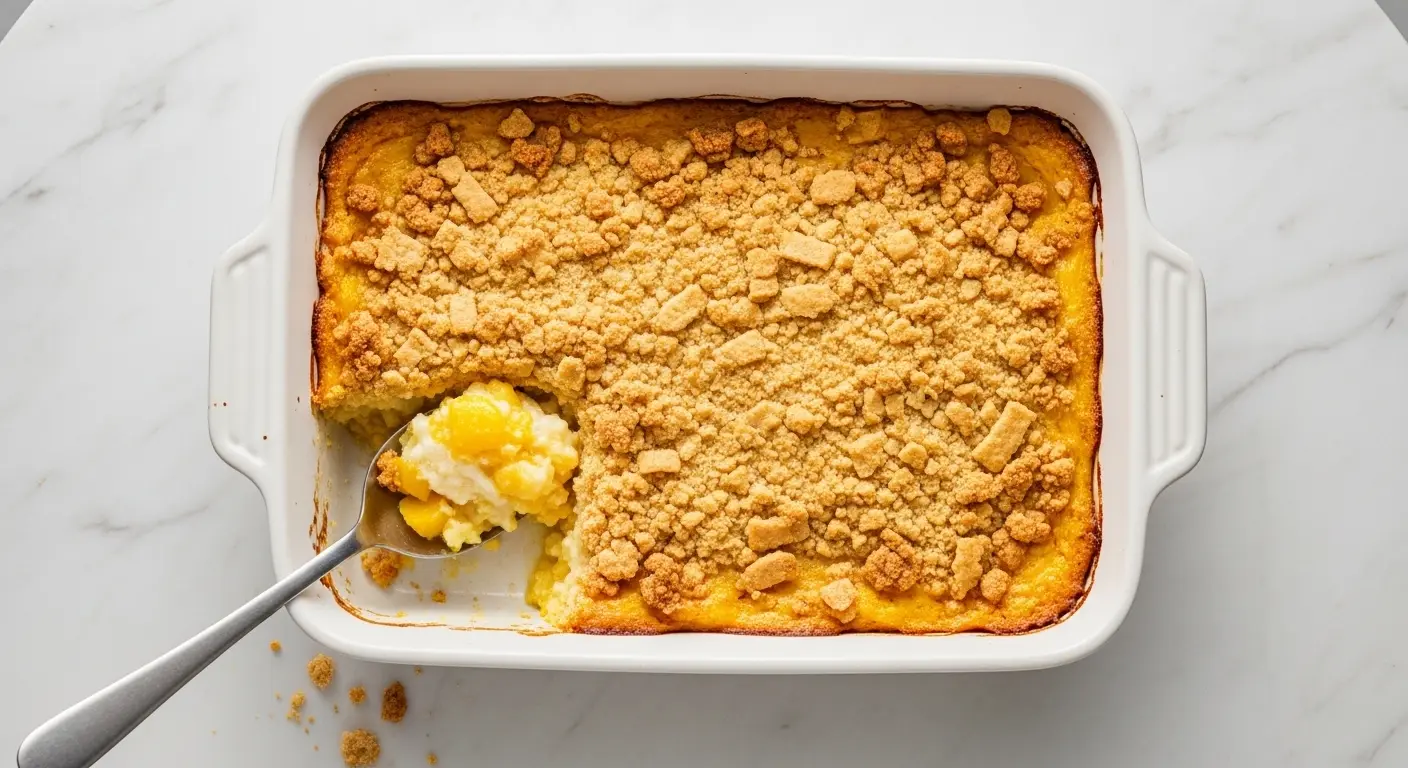
This classic Southern dish is a staple at holiday tables, summer potlucks, and Sunday family dinners for a reason. It combines tender yellow summer squash with a creamy, cheesy filling and a golden, buttery cracker topping that bakes up irresistibly crisp.
The magic here is all about technique. Sautéing the squash instead of boiling it helps drive off excess moisture, which is the number one key to a casserole that’s rich and scoopable rather than watery and thin.
Whether this is your first time making it or you’re returning to a beloved favorite, this recipe walks you through every step so you can nail it on the very first try.
You might also enjoy: Corn Casserole Recipe
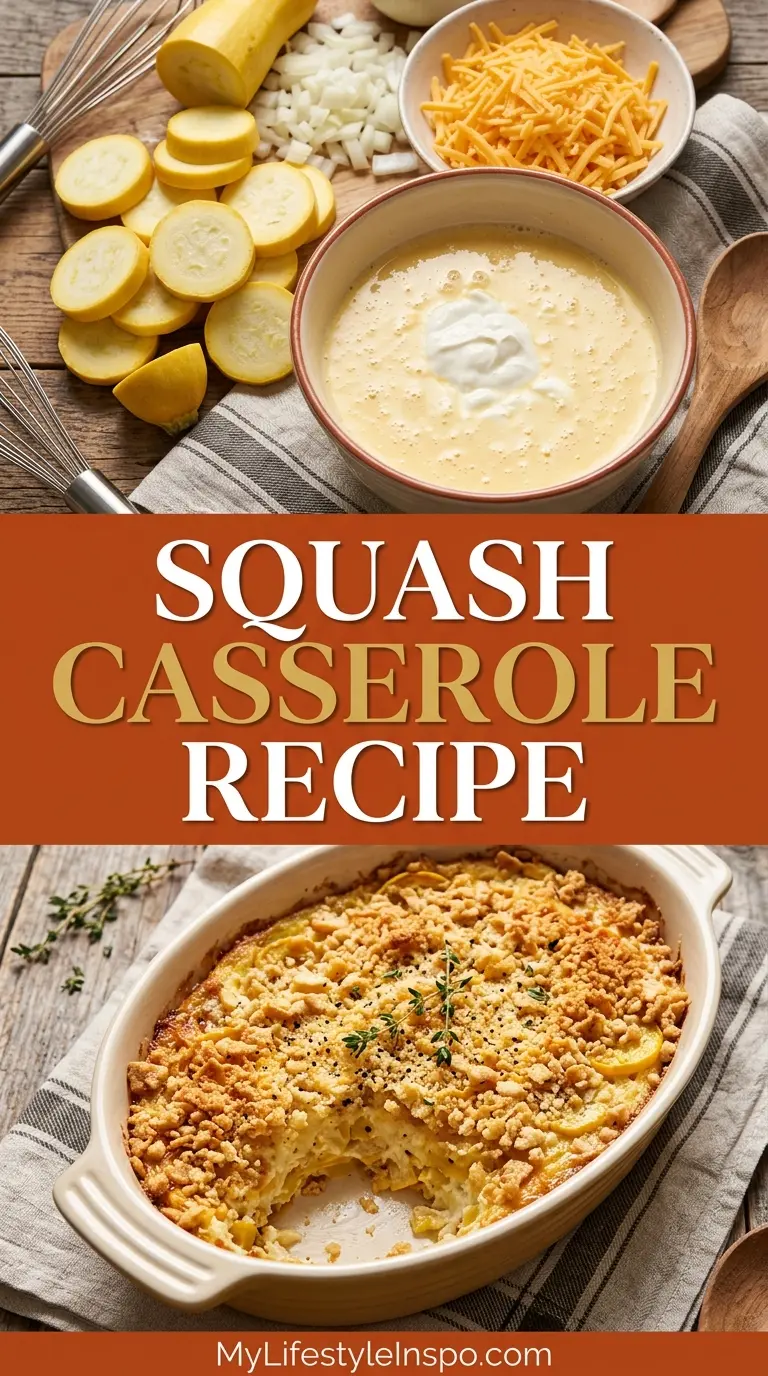
Why You’ll Love This Squash Casserole Recipe
This dish hits every comfort food note without requiring any complicated techniques.
It’s approachable for beginner cooks but satisfying enough to bring to a fancy holiday spread. The combination of melted cheddar, tangy sour cream, and savory sautéed squash creates layers of flavor in every bite.
The buttery Ritz cracker topping adds the perfect crunchy contrast to the creamy filling underneath. It’s the kind of topping that makes people hover near the casserole dish just a little too long.
It’s also incredibly versatile. You can prep it ahead, freeze it for later, or tweak it with different cheeses and mix-ins.
Here’s a quick summary of what makes it so special:
- Made with simple, budget-friendly ingredients you likely already have on hand
- Ready to serve in under an hour from start to finish
- Can be fully assembled the day before and baked when you’re ready
- A reliable crowd-pleaser that even squash skeptics tend to love
- Easily scaled up to feed a large group
- Naturally gluten-free with a simple cracker swap
Read Also: Sweet Potato Casserole Recipe
Ingredients
This recipe keeps things simple and relies on quality, fresh ingredients to deliver a deeply satisfying result. Fresh yellow squash is non-negotiable here since it has the ideal mild sweetness and tender texture that holds up well in a baked casserole.
- 2 lbs (900g) yellow summer squash, sliced into ¼-inch (6mm) rounds
- ½ cup (75g) yellow onion, finely diced
- 2 cloves garlic, minced
- 4 tablespoons (56g) salted butter, divided
- 1 cup (240g) full-fat sour cream
- 2 tablespoons (30g) mayonnaise
- 2 large eggs, lightly beaten
- 1½ cups (170g) sharp cheddar cheese, freshly shredded and divided
- ½ teaspoon salt
- ¼ teaspoon black pepper
- ¼ teaspoon cayenne pepper (optional, for a subtle kick)
- 1 sleeve (about 36 crackers / 140g) Ritz crackers, coarsely crushed
- Cooking spray for greasing the dish
This pairs beautifully as a side dish alongside Chicken Casserole Recipe for a complete comfort food meal.
Kitchen Equipment Needed
Having the right tools on hand makes the process smooth and stress-free. A good-quality baking dish is especially important here because even heat distribution is what gives the filling its creamy texture and the cracker topping its golden color.
- 9×9-inch baking dish (or a similar 2-quart dish)
- Large skillet or sauté pan
- Fine mesh colander or strainer (for draining squash)
- Large mixing bowl
- Medium mixing bowl
- Whisk
- Wooden spoon or silicone spatula
- Box grater (for freshly shredding the cheese)
- Zip-top bag or resealable bag (for crushing crackers)
- Rolling pin or a heavy cup (for crushing crackers)
- Measuring cups and spoons
- Paper towels (for pressing moisture from cooked squash)
Read Also: Broccoli Casserole Recipe
Recommended Products for This Recipe
These are products I genuinely recommend based on their quality and how much they improve the final result. Using the right tools and ingredients makes a real difference.
1. Le Creuset Enameled Stoneware Baking Dish
A high-quality baking dish distributes heat evenly throughout the casserole, which means no hot spots that overcook the edges while the center stays underdone. The smooth interior also makes serving and cleanup much easier. This is a kitchen investment that pays off with every casserole you bake.
2. OXO Good Grips Fine Mesh Strainer
Draining excess liquid from the cooked squash is one of the most important steps in this recipe. A sturdy fine mesh strainer with solid handles makes it effortless to press out moisture without losing any of the squash. It’s an inexpensive tool that prevents a watery casserole every time.
3. Tillamook Sharp Cheddar Cheese Block
Freshly shredded cheese melts far more smoothly than pre-shredded cheese because it doesn’t contain the anti-caking starches that prevent proper melting. A quality sharp cheddar block, like Tillamook, brings a bold, tangy flavor that makes the filling noticeably richer and more complex. Always shred it yourself for the creamiest result.
4. Lodge Cast Iron Skillet
Sautéing the squash in a cast iron skillet helps evaporate moisture quickly and builds a light, savory sear on the squash slices that adds depth to the finished casserole. Cast iron also retains heat beautifully for consistent cooking. If you don’t already own one, this is one of the best general-purpose kitchen investments you can make.
5. Daisy Brand Full-Fat Sour Cream
The sour cream in this casserole is what makes the filling so lusciously creamy. Full-fat varieties produce a richer, more stable filling that doesn’t separate during baking. Daisy is a consistently reliable brand that’s available at most grocery stores and performs well in baked dishes.
Another favorite: Green Bean Casserole Recipe
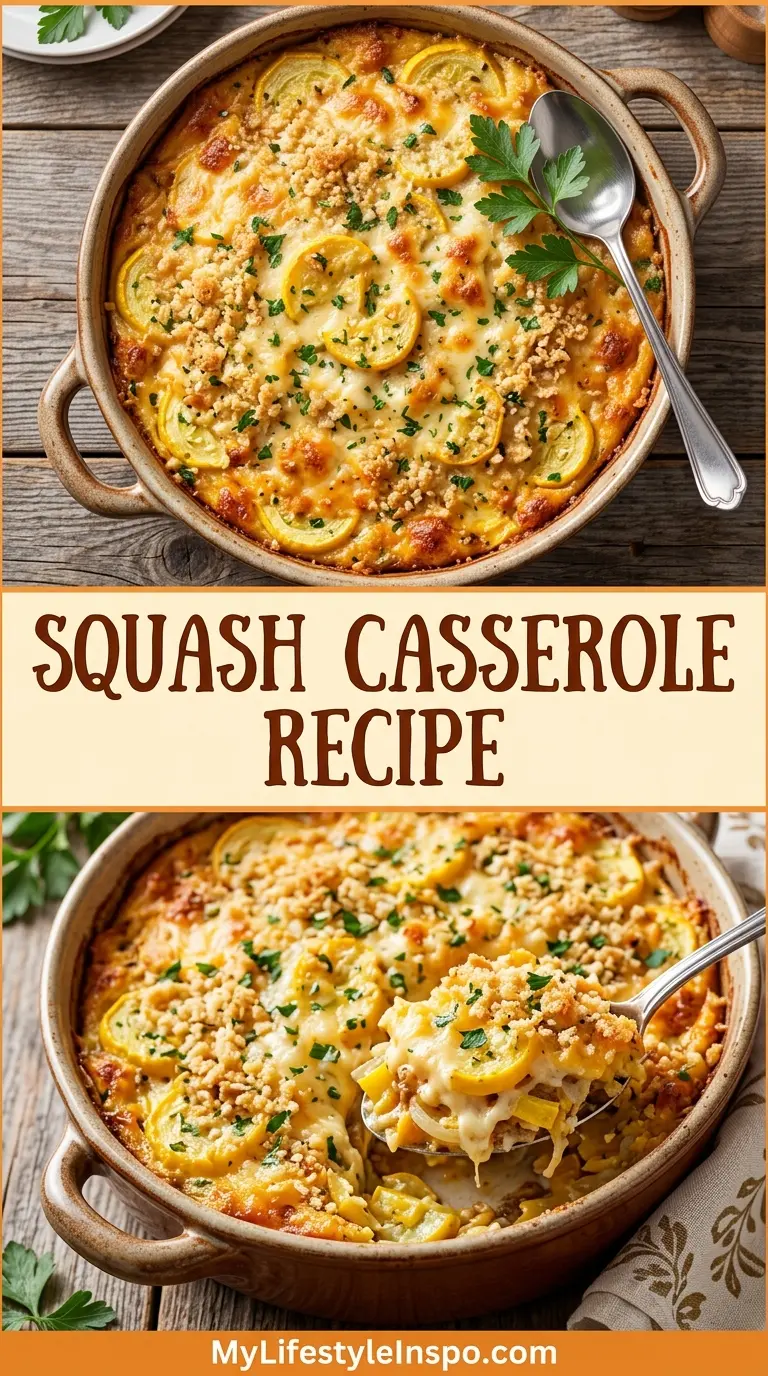
Step-by-Step Instructions
1. Preheat the Oven and Prepare the Baking Dish
- Set your oven to 350°F (175°C) and allow it to fully preheat before placing anything inside. A properly preheated oven ensures the casserole bakes evenly from the start.
- Lightly grease your 9×9-inch baking dish with cooking spray, making sure to coat the sides and all four corners so nothing sticks.
- Set the prepared baking dish aside on the counter within easy reach for when you’re ready to assemble.
2. Prep the Squash and Aromatics
- Wash each yellow squash under cool running water, scrubbing gently to remove any dirt. There is no need to peel the squash since the skin is tender and fully edible once cooked.
- Slice the squash into rounds approximately ¼ inch (6mm) thick. Uniform slices help the squash cook evenly in the skillet. If any squash are particularly large in diameter, you can cut those rounds in half to make them bite-sized.
- Finely dice your yellow onion into small pieces, about ¼ inch. Smaller pieces will soften fully during cooking and blend more seamlessly into the casserole filling.
- Mince your 2 garlic cloves and set them aside. Garlic added early in the sauté adds warm depth to the overall flavor without being overpowering.
3. Sauté the Squash, Onion, and Garlic
- Heat a large skillet over medium heat and melt 2 tablespoons (28g) of the butter.
- Once the butter is melted and beginning to bubble, add the diced onion. Cook, stirring occasionally, for about 3 minutes until the onion softens and becomes translucent.
- Add the minced garlic and cook for 30 additional seconds, stirring constantly to prevent the garlic from burning.
- Add the sliced squash to the skillet in an even layer. Season with ½ teaspoon of salt, ¼ teaspoon of black pepper, and the cayenne pepper if using. Stir gently to coat everything with the butter and seasonings.
- Cook the squash over medium heat, stirring often, for 8 to 10 minutes. You want the squash to become fully tender and the liquid it releases to mostly evaporate. Frequent stirring helps encourage even moisture release and prevents the squash from steaming rather than sautéing. This is the step that prevents a watery casserole.
- Once the squash is soft and most liquid has evaporated, remove the skillet from the heat.
4. Drain the Squash Thoroughly
- Transfer the sautéed squash mixture to a fine mesh colander or a strainer set over a bowl or the sink.
- Allow the squash to drain for at least 5 minutes. Do not skip this step. Even well-sautéed squash retains quite a bit of liquid that will make your casserole watery if not removed.
- After draining, press the squash gently with a folded paper towel to absorb any remaining surface moisture. The mixture should feel damp but not wet before you move on to the next step.
5. Make the Creamy Cheese Filling
- In a large mixing bowl, add the sour cream, mayonnaise, and 2 lightly beaten eggs. Whisk these three ingredients together until smooth and fully combined.
- Add 1 cup (about 113g) of the freshly shredded sharp cheddar cheese to the bowl. Stir to incorporate it into the creamy base.
- Add the drained squash and onion mixture to the bowl. Fold everything together gently with a spatula until the squash is evenly coated in the creamy filling. Try not to over-stir since you want some texture remaining in the squash pieces.
- Taste the mixture and adjust the seasoning with a little extra salt or pepper if needed.
6. Transfer to Baking Dish
- Pour the squash filling into your prepared baking dish, spreading it into an even layer using your spatula.
- Sprinkle the remaining ½ cup (about 57g) of shredded cheddar cheese evenly over the top of the filling. This layer of cheese will melt directly into the casserole and create a cheesy base beneath the cracker topping.
7. Make the Cracker Topping
- Place the remaining 2 tablespoons (28g) of butter in a small microwave-safe bowl and microwave in 15-second intervals until fully melted.
- Add the crushed Ritz crackers to a zip-top bag. Seal the bag and crush the crackers by pressing and rolling with a rolling pin or heavy cup until you have coarse, uneven crumbs. You want some variation in size for a better texture. Aim for pieces ranging from coarse crumbs to small chunks rather than fine powder.
- Open the bag and pour the melted butter over the crushed crackers. Seal the bag and shake or massage the butter through the crackers until every piece is lightly coated.
- Spread the buttered cracker crumbs evenly over the top of the casserole, covering the cheese layer completely.
8. Bake the Casserole
- Place the assembled casserole on the center rack of your preheated 350°F (175°C) oven.
- Bake uncovered for 30 to 35 minutes, until the cracker topping is deep golden brown and the filling is bubbling around the edges and set in the center. You’ll know it’s ready when a slight jiggle in the center settles quickly rather than sloshing.
- Remove the casserole from the oven and let it rest on a wire rack or heat-safe surface for 5 minutes before serving. The resting time allows the filling to firm up slightly, which makes serving much cleaner and easier.
This recipe makes a great companion dish to Tater Tot Casserole for a full comfort food spread.
Tips for Success
Getting this recipe right comes down to a handful of small details that make a big difference. The most important one is moisture management, but the tips below will help you achieve the best possible result every time.
- Sauté, don’t boil. Boiling squash causes it to absorb water. Sautéing does the opposite and drives moisture out, resulting in a better flavor and texture.
- Drain and press firmly. After sautéing, don’t just let the squash drain passively. Press it with paper towels to remove every bit of extra moisture possible.
- Shred your own cheese. Pre-shredded cheese contains anti-caking coatings (usually potato starch or cellulose) that interfere with smooth melting. A freshly shredded block of sharp cheddar produces a creamier, more cohesive filling.
- Don’t over-crush the crackers. Leaving some variation in cracker size, from coarse crumbs to small chunks, creates a more interesting topping texture. Fine powder will produce a dense, almost paste-like crust.
- Let it rest before serving. Five minutes of resting after baking allows the filling to firm up slightly, making it much easier to portion cleanly.
- Taste the filling before baking. Since the eggs go in raw, you can’t taste a cooked bite, but you can still assess the seasoning of the filling mixture before it goes into the oven and adjust as needed.
- Don’t crowd the skillet. If your squash barely fits in the pan, cook it in two batches. Overcrowding prevents proper moisture evaporation and causes steaming instead of sautéing.
Read Also: Hashbrown Casserole Recipe
Serving Suggestions
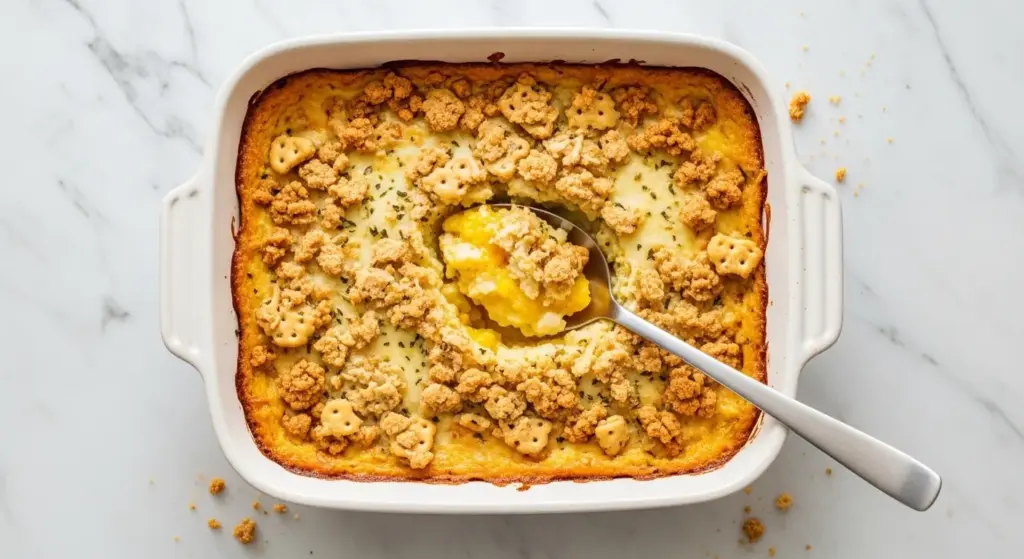
Squash casserole is a Southern side dish that pairs effortlessly with a wide range of main courses and other side dishes, making it one of the most versatile casseroles you can have in your repertoire.
It’s especially beloved at Thanksgiving and Christmas alongside roast turkey or ham, but it’s equally at home at a casual summer cookout or a weeknight family dinner. The creamy, cheesy filling and crunchy topping complement grilled meats, roasted chicken, and slow-cooked pot roast beautifully.
Here are some great ways to round out the meal:
- Roast chicken or oven-baked chicken thighs
- Glazed spiral ham or smoked pork tenderloin
- Creamy Mashed Potatoes
- Collard Greens
- Cornbread or dinner rolls
- Macaroni and cheese for a full comfort food spread
- A simple green salad with vinaigrette to balance the richness
Variations to Try
Once you’ve made the classic version, there’s plenty of room to experiment. The base recipe is quite adaptable and lends itself well to different flavor profiles and add-ins.
- Add zucchini: Use a 50/50 blend of yellow squash and zucchini for a more colorful casserole with a slightly different texture.
- Spice it up: Increase the cayenne to ½ teaspoon or stir in a teaspoon of smoked paprika for a bolder, more complex flavor profile.
- Swap the cheese: Try Gruyère, Monterey Jack, or Pepper Jack in place of cheddar for a unique flavor twist.
- Add protein: Stir in 1 cup of shredded rotisserie chicken or cooked crumbled bacon to make this more of a complete one-dish meal.
- Use breadcrumbs: Swap Ritz crackers for panko breadcrumbs tossed in butter and a pinch of garlic powder for a lighter, crispier topping.
- Cream of mushroom version: Stir in ½ cup of cream of mushroom soup in place of the mayonnaise for a different flavor dimension and a slightly more savory profile.
- Make it lower-calorie: Substitute light sour cream and reduced-fat mayonnaise and use only 1 cup of shredded cheese to reduce the overall calorie count without sacrificing too much flavor.
You might also enjoy making Roasted Acorn Squash as an alternative when you want to showcase squash in a different way.
Storage and Reheating
This casserole keeps very well and actually gets better the next day once the flavors have had more time to meld together. Proper storage ensures you can enjoy leftovers just as much as the freshly baked original.
- Refrigerator: Allow the casserole to cool completely, then cover the dish tightly with plastic wrap or transfer portions to an airtight container. It will keep in the refrigerator for up to 4 days.
- Freezer: Freeze the assembled but unbaked casserole, without the cracker topping, wrapped in a double layer of plastic wrap and then foil, for up to 3 months. Add fresh crackers just before baking. Alternatively, freeze baked leftovers in individual airtight containers for up to 2 months.
- Reheating from refrigerator: Place leftovers in an oven-safe dish, cover loosely with foil to prevent the topping from over-browning, and bake at 325°F (163°C) for 15 to 20 minutes until heated through. You can also reheat individual portions in the microwave in 60-second increments.
- Reheating from frozen: Thaw the casserole overnight in the refrigerator, add the cracker topping if frozen before baking, and bake according to original instructions.
- Make-ahead tip: Assemble the casserole completely up to the night before, cover it, refrigerate it, then bake straight from the refrigerator adding 5 to 10 extra minutes to the bake time.
This recipe also shares some structural similarities with the Chicken Broccoli Rice Casserole, which stores and reheats just as beautifully.
Nutritional Facts
The following values are approximate and based on the recipe as written, divided into 8 servings.
| Nutrient | Per Serving |
|---|---|
| Calories | ~240 kcal |
| Total Fat | 18g |
| Saturated Fat | 9g |
| Cholesterol | 75mg |
| Sodium | 390mg |
| Total Carbohydrates | 13g |
| Dietary Fiber | 1.5g |
| Sugars | 4g |
| Protein | 8g |
Note: Nutritional values will vary depending on the specific brands and quantities used.
Read Also: Potato Casserole Recipe
Health Benefits of Key Ingredients
While this casserole is definitely comfort food territory, some of its key ingredients do bring genuine nutritional benefits to the table.
Yellow summer squash is a particularly impressive vegetable that often gets overlooked in nutrition conversations. It’s low in calories and carbohydrates while offering a solid amount of vitamins, minerals, and dietary fiber.
Here’s a closer look at some of the nutritional highlights:
- Yellow squash is an excellent source of vitamin C, vitamin B6, and manganese. It also provides antioxidants including lutein and zeaxanthin, which support eye health and reduce inflammation.
- Eggs bring complete protein and are rich in choline, which is essential for brain function and liver health. They also provide fat-soluble vitamins A, D, E, and K.
- Sharp cheddar cheese is a good source of calcium and phosphorus, both of which support bone density and strength. It also contains vitamin K2 and riboflavin.
- Garlic contains allicin, a bioactive compound that has been studied for its potential to support immune function and cardiovascular health.
- Sour cream contributes probiotics that support gut microbiome health, particularly when choosing brands that contain live active cultures.
Another great vegetable-forward side: Roasted Broccoli
Frequently Asked Questions
1. Can I make squash casserole the day before?
Yes, this casserole is an excellent make-ahead dish.
Assemble it fully through the point of adding the cheese layer, but leave the cracker topping off. Cover and refrigerate overnight. When you’re ready to bake, add the buttered cracker topping and bake as directed, adding an extra 5 to 10 minutes to account for the cold starting temperature.
2. Why is my squash casserole watery?
A watery casserole almost always comes down to not removing enough moisture from the squash before mixing it into the filling.
Make sure you sauté the squash until most of the liquid has evaporated, then drain it in a colander for at least 5 minutes and press with paper towels before mixing. Skipping any of these steps will result in a loose, watery casserole.
3. Can I use zucchini instead of yellow squash?
Yes, zucchini is the closest substitute in terms of texture and flavor.
You can use it as a complete replacement or do a half-and-half blend with yellow squash. Just make sure to drain the zucchini just as thoroughly since it tends to release even more moisture than yellow squash.
4. How do I keep the cracker topping crispy?
The key is to bake the casserole uncovered so steam can escape and the topping can crisp properly.
Make sure the buttered crackers are spread in an even, single layer. If reheating leftovers, you can restore some crunch by placing the dish under the broiler for 1 to 2 minutes at the very end of reheating, watching carefully to prevent burning.
5. Can I freeze squash casserole?
Yes, it freezes well either baked or unbaked.
For best results, freeze it before baking and without the cracker topping. Wrap it tightly in plastic wrap and foil, freeze for up to 3 months, and add a fresh cracker topping just before baking. If freezing already-baked casserole, expect the topping to lose some of its crunch after reheating, but the filling will still taste great.
Read Also: Cowboy Casserole Recipe
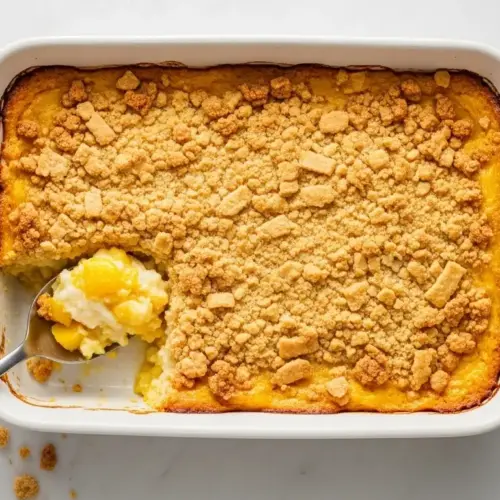
Classic Southern Squash Casserole

Equipment
- 9×9-inch Baking Dish - or similar 2-quart dish
- Large skillet
- Fine Mesh Colander - or strainer
- Large mixing bowl
- Medium mixing bowl
- Whisk
- Wooden spoon - or silicone spatula
- Box grater - for freshly shredding cheese
- Zip-top bag - for crushing crackers
- Rolling Pin - or heavy cup for crushing crackers
- Measuring cups
- Measuring spoons
- Paper towels - for pressing moisture from cooked squash
Ingredients
- 2 lbs yellow summer squash - 900g, sliced into ¼-inch (6mm) rounds
- ½ cup yellow onion - 75g, finely diced
- 2 cloves garlic - minced
- 4 tablespoons salted butter - 56g, divided
- 1 cup full-fat sour cream - 240g
- 2 tablespoons mayonnaise - 30g
- 2 large eggs - lightly beaten
- 1½ cups sharp cheddar cheese - 170g, freshly shredded and divided
- ½ teaspoon salt
- ¼ teaspoon black pepper
- ¼ teaspoon cayenne pepper - optional, for a subtle kick
- 1 sleeve Ritz crackers - about 36 crackers or 140g, coarsely crushed
- cooking spray - for greasing the dish
Instructions
- Preheat oven to 350°F (175°C). Lightly grease a 9×9-inch baking dish with cooking spray.
- Wash squash and slice into ¼-inch rounds. Finely dice onion and mince garlic.
- Melt 2 tablespoons butter in a large skillet over medium heat. Cook onion for 3 minutes until soft, add garlic for 30 seconds.
- Add squash, salt, pepper, and cayenne. Cook for 8-10 minutes, stirring often, until tender and most liquid has evaporated.
- Transfer squash to a colander and drain for 5 minutes. Press gently with paper towels to remove excess moisture.
- In a large bowl, whisk sour cream, mayonnaise, and eggs until smooth. Stir in 1 cup of shredded cheddar.
- Fold the drained squash into the creamy mixture until evenly coated. Transfer to the prepared baking dish.
- Sprinkle remaining ½ cup of shredded cheddar over the filling.
- Melt remaining 2 tablespoons butter. Crush crackers in a zip-top bag, then toss with melted butter until coated.
- Spread buttered cracker crumbs evenly over the casserole.
- Bake uncovered for 30-35 minutes until topping is golden and filling is bubbling. Let rest for 5 minutes before serving.
Notes
- Moisture is key: Sautéing rather than boiling the squash removes excess water. Be sure to drain and press the squash well before mixing into the filling to prevent a watery casserole.
- Shred your own cheese: Pre-shredded cheese contains anti-caking agents that prevent smooth melting. Freshly shredded cheddar gives you a creamier, more cohesive filling.
- Make it ahead: Assemble the casserole through adding the cheese layer, cover, and refrigerate overnight. Add the cracker topping just before baking, and add 5-10 minutes to the bake time.
- Freezing instructions: Freeze unbaked casserole (without topping) for up to 3 months. Wrap tightly in plastic wrap and foil. Add fresh cracker topping just before baking.
- Cracker texture: Don’t over-crush the crackers. Leave some coarse crumbs and small chunks for the best crispy, textured topping.
- Variation – add zucchini: Use a 50/50 blend of yellow squash and zucchini for a more colorful dish. Zucchini releases more moisture, so drain extra well.
- Spice it up: Increase cayenne to ½ teaspoon or add 1 teaspoon of smoked paprika for a bolder flavor profile.
- Cheese swaps: Try Gruyère, Monterey Jack, or Pepper Jack in place of cheddar for a different flavor twist.
- Add protein: Stir in 1 cup of shredded rotisserie chicken or cooked crumbled bacon to turn this into a more complete one-dish meal.
- Leftovers: Store in the refrigerator for up to 4 days. Reheat in a 325°F oven for 15-20 minutes, covered with foil to prevent over-browning.
Final Thoughts
This squash casserole recipe is the kind of dish that earns a permanent spot in your recipe rotation after just one bite.
It’s humble, honest comfort food at its very best, full of flavor, easy to make, and guaranteed to disappear quickly at the table. Whether you’re bringing it to a potluck, adding it to your holiday spread, or just looking for a satisfying weeknight side dish, this one delivers every time.
Give it a try and make it your own. Add a little extra cheese, toss in some bacon, or spice it up with Pepper Jack — the base recipe is endlessly adaptable.
We’d love to hear how it turns out for you! Drop a comment below and let us know how you made it yours, or share a photo of your finished casserole.
Recommended:
- Tuna Noodle Casserole Recipe
- Breakfast Casserole Recipe
- French Toast Casserole Recipe
- Stuffed Acorn Squash Recipes
- Roasted Butternut Squash Soup Recipe
- Baked Acorn Squash Recipe
- Garlic Mashed Potatoes Recipe
- Scalloped Potatoes Recipe
- Corn Souffle Recipe
- Tuna Casserole Recipe