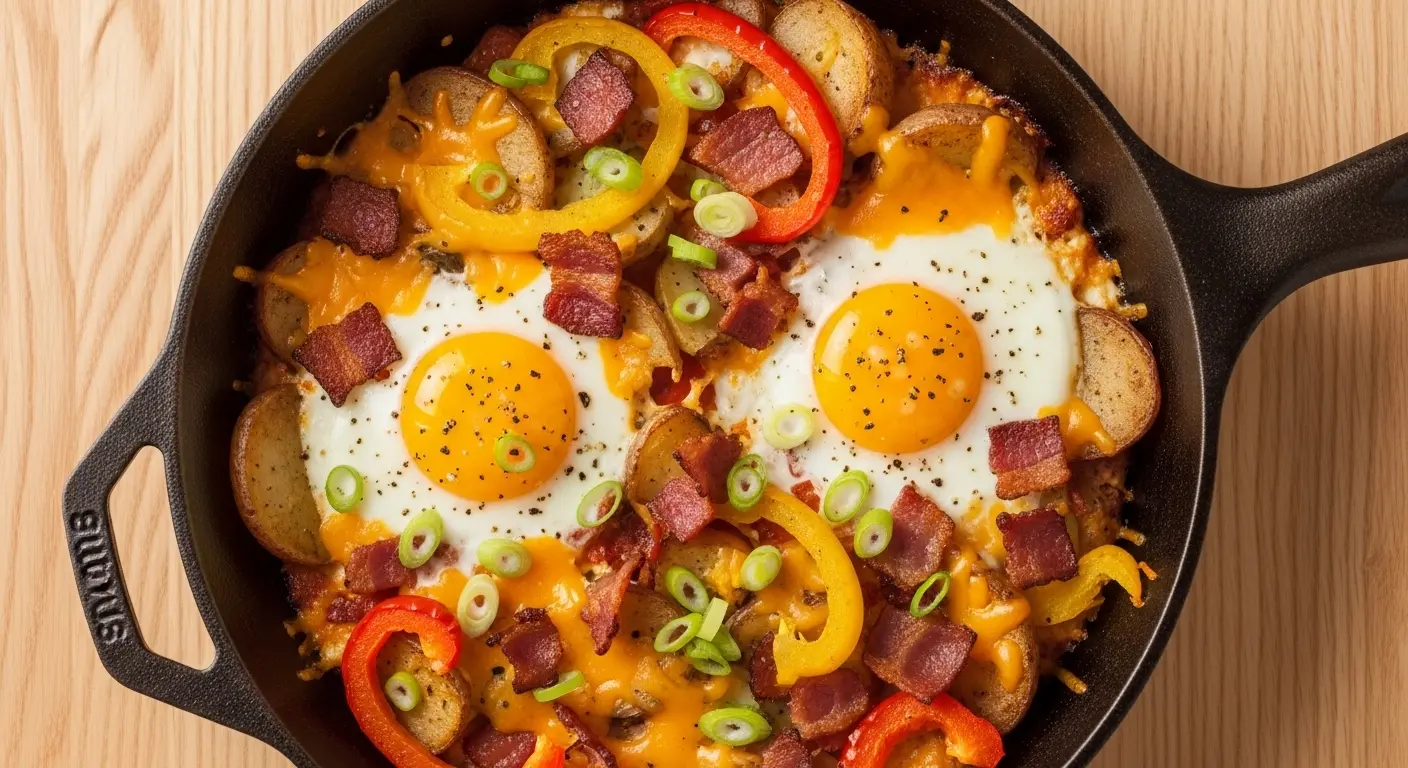
If you’re looking for a foolproof egg skillet recipe that checks every box — satisfying, simple, and seriously delicious — you’ve found it.
This one-pan breakfast brings together crispy golden potatoes, sautéed onions, colorful bell peppers, smoky bacon, and perfectly cooked eggs, all finished with a generous blanket of melted cheddar cheese.
It’s the kind of meal that feels like you put in way more effort than you actually did.
The best part? It comes together in a single skillet, which means minimal cleanup and maximum flavor in about 30 minutes flat.
This is the recipe I reach for on lazy weekend mornings when I want something that actually fills me up and tastes like a proper breakfast.
For another hearty egg-based breakfast, check out this Loaded Breakfast Skillet that’s equally satisfying and packed with bold flavors.

Why You’ll Love This Egg Skillet Recipe
This egg skillet recipe has everything going for it.
It’s endlessly customizable, coming together with whatever protein and veggies you happen to have on hand.
One pan means one cleanup, and that alone makes mornings so much easier.
The combination of textures — crispy potatoes, tender peppers, creamy eggs, and melty cheese — makes every single bite exciting.
Here’s a quick rundown of why this recipe works so well:
- One-pan meal: Everything cooks in a single skillet, keeping cleanup to a minimum
- 30-minute cook time: Fast enough for a weekday morning, satisfying enough for a weekend brunch
- Completely customizable: Swap bacon for ham or sausage, add spinach or mushrooms, change up the cheese
- Crowd-friendly: Easily scaled up to feed a family or group
- Versatile: Works equally well as breakfast, brunch, or a quick weeknight dinner
- Budget-friendly: Uses pantry staples and affordable ingredients
Another great option for a savory egg-forward breakfast is this Breakfast Skillet Recipe with all the classic flavors you love.
Ingredients
A classic egg skillet relies on simple, quality ingredients that work beautifully together.
The potatoes form a hearty, crispy base, the peppers and onions add sweetness and color, the bacon brings smokiness, and the cheese ties it all together with rich, melty goodness.
Here’s everything you’ll need (serves 4):
- 4 strips of bacon (or 1 cup diced ham)
- 1 lb (450g) red potatoes, diced into ½-inch cubes
- 1 medium yellow onion, diced
- 1 red bell pepper, diced
- 1 green bell pepper, diced
- 2 cloves garlic, minced
- 6 large eggs
- 1 cup (115g) shredded cheddar cheese
- 2 tablespoons (30ml) olive oil or butter
- ½ teaspoon garlic powder
- ½ teaspoon smoked paprika
- Salt and black pepper, to taste
- Optional toppings: sliced green onions, hot sauce, sour cream
You might also enjoy this Cowboy Skillet Recipe if you want a similarly hearty skillet dish with a bold, Western-inspired flavor profile.
Kitchen Equipment Needed
You don’t need much to make this egg skillet recipe — just a few basic pieces of kitchen equipment.
A good cast iron skillet is the number one tool here, as it distributes heat evenly and creates that gorgeous crispy bottom on the potatoes.
Here’s what you’ll need:
- 12-inch cast iron skillet: The best choice for even heat and a beautiful sear on the potatoes
- Cutting board: For dicing potatoes, peppers, and onions
- Chef’s knife: A sharp knife makes prep work fast and safe
- Wooden spoon or silicone spatula: For stirring and making wells in the skillet
- Skillet lid or aluminum foil: Essential for trapping steam and cooking the eggs through
- Measuring spoons: For seasoning
- Paper towel-lined plate: For draining cooked bacon
Read Also: Chicken Skillet Recipe
Recommended Products for This Recipe
These products are recommended based on quality and performance to help you get the best results from this egg skillet recipe.
1. Lodge 12-Inch Cast Iron Skillet
A well-seasoned cast iron skillet is the secret weapon for this recipe. It distributes heat evenly so the potatoes crisp up beautifully without burning, and it holds heat well once those eggs go in. This is a kitchen investment that will last you a lifetime.
2. Smoked Paprika (Premium Quality)
Smoked paprika adds a warm, subtly smoky depth to this egg skillet that regular paprika just can’t replicate. A high-quality smoked paprika makes a noticeable difference in the final flavor of the dish.
3. Freshly Shredded Cheddar Cheese Block
Pre-shredded cheese contains anti-caking agents that prevent it from melting as smoothly. Buying a block of quality cheddar and shredding it yourself results in a creamier, silkier melt over those eggs.
4. Universal Skillet Lid
If your cast iron skillet doesn’t come with a lid, a universal tempered glass lid is a must-have for this recipe. Covering the skillet traps steam and cooks the egg whites through while keeping the yolks at your desired level of doneness.
You might also love this Taco Skillet Recipe for a flavorful, one-pan dinner that’s just as easy to put together.

Step-by-Step Instructions
Step 1: Prep Your Ingredients
- Wash and dice the red potatoes into small ½-inch (1.25cm) cubes — uniform sizing is key here so they cook evenly and crisp up at the same rate
- Dice the yellow onion and both bell peppers into similarly sized pieces (about ½ inch)
- Mince the garlic cloves finely and set aside
- If using a block of cheddar, shred it now and set aside
Step 2: Cook the Bacon
- Place your cast iron skillet over medium heat and let it warm up for about 1 minute before adding anything
- Lay the bacon strips flat in the skillet and cook for 3 to 4 minutes per side until crispy and golden
- Transfer the cooked bacon to a paper towel-lined plate to drain, and allow it to cool slightly before roughly chopping it into bite-sized pieces
- Leave about 1 tablespoon of the rendered bacon grease in the skillet — this is liquid gold for cooking your potatoes and adds incredible flavor
Step 3: Cook the Potatoes
- With the bacon grease still in the skillet over medium-high heat, add the diced potatoes in a single layer
- Season them immediately with the garlic powder, smoked paprika, and a generous pinch of salt and black pepper
- Let the potatoes cook undisturbed for 3 to 4 minutes to develop a golden-brown crust on the bottom — resist the urge to stir too soon
- Stir and flip the potatoes, then continue cooking for another 4 to 5 minutes, stirring occasionally, until they’re golden and fork-tender on the inside
- If the potatoes are browning too quickly before cooking through, reduce the heat slightly to medium
Step 4: Sauté the Vegetables
- Push the cooked potatoes to the edges of the skillet to create space in the center
- Add the remaining olive oil or butter to the center of the skillet, then add the diced onion and both bell peppers
- Sauté the vegetables for 3 to 4 minutes, stirring occasionally, until the onion is translucent and the peppers are softened
- Add the minced garlic and cook for 30 to 60 seconds, stirring constantly, until fragrant — be careful not to let it burn
Step 5: Combine Everything
- Stir the sautéed vegetables and the chopped bacon back together with the potatoes until everything is evenly distributed throughout the skillet
- Taste the mixture and adjust seasoning with additional salt and pepper if needed
- Spread the mixture into an even layer across the bottom of the skillet
Step 6: Add the Eggs
- Use the back of a wooden spoon or spatula to create 6 evenly spaced wells in the potato and vegetable mixture
- Carefully crack one egg into each well — if you’re nervous about broken yolks, crack each egg into a small bowl first, then gently pour it in
- Season the eggs lightly with a pinch of salt and pepper
- Sprinkle the shredded cheddar cheese evenly over the entire skillet, covering both the eggs and the potato mixture
Step 7: Cook the Eggs and Melt the Cheese
- Reduce the heat to low and place the lid (or a sheet of aluminum foil) over the skillet
- Cook for 5 to 8 minutes, checking frequently, until the egg whites are fully set and opaque but the yolks are still slightly runny (or cook longer for fully set yolks)
- The steam trapped under the lid is what gently cooks the eggs through — don’t lift the lid too often or you’ll release that heat
Step 8: Garnish and Serve
- Remove the skillet from heat and top with sliced green onions and any other optional garnishes like hot sauce or sour cream
- Serve directly from the skillet for a beautiful, rustic presentation, or scoop portions onto individual plates
- This egg skillet is best served immediately while the cheese is still gooey and the eggs are perfectly warm
This recipe uses the same satisfying technique as a Stuffed Pepper Skillet — simple, one-pan cooking that delivers big flavor.
Tips for Success
A few small tweaks make a big difference when it comes to nailing this egg skillet recipe.
Following these tips will help you get perfectly crispy potatoes, beautifully cooked eggs, and a skillet that comes together without any stress.
- Dice potatoes small and evenly: Small ½-inch cubes crisp up beautifully and cook through without burning on the outside — larger chunks stay mushy inside
- Don’t skip the bacon grease: It adds an unbeatable smoky, savory flavor to the potatoes that butter or oil alone can’t replicate
- Let the potatoes sit: Avoid stirring too frequently in the first few minutes — leaving them alone lets the bottoms develop a gorgeous golden crust
- Use freshly shredded cheese: Pre-shredded cheese has additives that prevent smooth melting — block cheese shredded at home melts far more creamily
- Cook eggs on low heat: Once the eggs go in, low and slow with a lid is the key — too much heat scrambles the whites before the yolks set
- Pre-crack eggs into a bowl: This prevents shell fragments and broken yolks, especially when adding multiple eggs to the skillet at once
- Adjust the heat as needed: Cast iron holds heat intensely — if things are browning too fast, don’t hesitate to lower the temperature
For another skillet meal that benefits from these same technique tips, try this Salmon Skillet Recipe.
Serving Suggestions
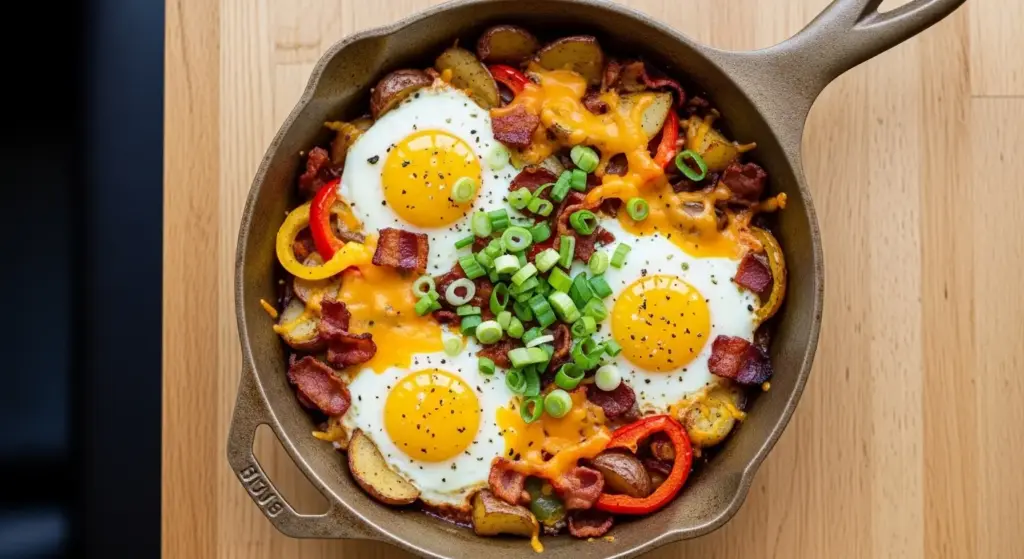
This egg skillet recipe is a complete meal on its own, but it pairs wonderfully with a few simple sides that complement its hearty, savory flavors.
Think fresh, bright accompaniments that balance the richness of the eggs and cheese.
Here are some great ideas for serving:
- Buttermilk biscuits: A flaky Buttermilk Biscuit is perfect for scooping up every last bit of egg and potato
- Fresh fruit salad: A light Fruit Salad cuts through the richness and adds a refreshing contrast
- Avocado toast: Serve alongside Avocado Toast for a trendy brunch spread
- Warm tortillas: Wrap the skillet filling in flour tortillas for an easy breakfast burrito situation
- Classic deviled eggs: If you’re doing a big brunch spread, Classic Deviled Eggs are a crowd-pleasing addition
- Hot sauce: A drizzle of your favorite hot sauce brings everything to life
- Sour cream: A cool dollop of sour cream contrasts beautifully with the warm, cheesy skillet
You might also enjoy: Scrambled Eggs Recipe
Variations to Try
The classic egg skillet recipe is already wonderful on its own, but it’s also incredibly easy to customize based on what you have in the fridge or what flavors you’re craving.
Don’t be afraid to experiment — this is one of those recipes where creativity is always rewarded.
Here are some fun variations to explore:
- Spicy Southwest version: Add diced jalapeños, substitute pepper jack cheese, and top with salsa and cilantro for a bold Tex-Mex twist
- Sausage skillet: Swap bacon for crumbled Italian sausage or breakfast sausage for a different flavor profile — this is the direction the Cowboy Skillet leans
- Veggie-packed version: Skip the meat entirely and add mushrooms, spinach, cherry tomatoes, and zucchini for a vegetarian-friendly option
- Sweet potato base: Replace red potatoes with diced sweet potatoes for a slightly sweet, nutritious twist
- Shakshuka-style: Use a tomato-based sauce instead of the plain potato base and bake the eggs right in the sauce — similar to a Shakshuka
- Ham and cheese: Replace bacon with diced leftover ham and use Swiss or Gruyère cheese for a more classic flavor combination
- Goat cheese and herb: Crumble fresh goat cheese over the top instead of cheddar, and finish with fresh chives and dill for an elegant twist
Read Also: Mexican Beef and Rice Skillet Recipe
Storage and Reheating
This egg skillet recipe stores well, making it a smart choice for meal prep or next-day breakfast.
The key is keeping the eggs from overcooking on reheating, which a little attention to heat levels will prevent.
Here are the best storage and reheating methods:
- Refrigerator: Store leftovers in an airtight container in the fridge for up to 3 days
- Avoid freezing: Cooked eggs don’t freeze well and tend to become rubbery after thawing — this dish is best enjoyed fresh or refrigerated
- Skillet reheat (recommended): Warm leftovers in a lightly greased skillet over low to medium-low heat, stirring gently, until heated through — this preserves the potato texture best
- Microwave reheat: Place in a microwave-safe dish and heat in 30-second intervals, stirring between each, until warmed through
- Breakfast burritos: Leftovers taste incredible stuffed into warm flour tortillas the next day for a quick, on-the-go breakfast burrito
- Add fresh eggs: If reheating the potato and veggie base without leftover eggs, simply fry or scramble fresh eggs separately and serve on top
Read Also: Egg Bake Recipe
Nutritional Facts
Nutritional values are approximate and based on 1 of 4 servings using bacon and cheddar cheese.
| Nutrient | Amount Per Serving |
|---|---|
| Calories | ~420 kcal |
| Total Fat | 26g |
| Saturated Fat | 10g |
| Cholesterol | 320mg |
| Sodium | 550mg |
| Total Carbohydrates | 22g |
| Dietary Fiber | 3g |
| Sugars | 4g |
| Protein | 24g |
| Vitamin A | 25% DV |
| Vitamin C | 60% DV |
| Calcium | 20% DV |
| Iron | 15% DV |
Nutritional values will vary depending on ingredient substitutions, portion sizes, and optional toppings used.
Another egg-forward recipe worth checking out for breakfast variety is this Egg Bites Recipe.
Health Benefits of Key Ingredients
This egg skillet isn’t just delicious — it’s also genuinely nourishing, thanks to a lineup of ingredients that each bring real nutritional value to the table.
Here’s a closer look at what makes this meal a smart choice:
- Eggs: One of nature’s most complete protein sources, eggs contain all nine essential amino acids along with choline, which supports brain health, and vitamins D, B12, and selenium
- Red potatoes: A great source of complex carbohydrates for sustained energy, red potatoes also provide potassium, vitamin C, and B vitamins — and their thin skins are packed with fiber
- Bell peppers: Among the most vitamin C-rich vegetables available, bell peppers also provide antioxidants like beta-carotene and quercetin that support immune function
- Garlic: A small but mighty ingredient, garlic contains allicin, a sulfur compound with well-documented anti-inflammatory and immune-supporting properties
- Cheddar cheese: Provides calcium for bone health and protein for muscle maintenance, along with fat-soluble vitamins A, D, and K2
- Olive oil/butter: Heart-healthy fats that support nutrient absorption from the vegetables and contribute to the satisfying richness of this dish
- Onions: Rich in quercetin and other antioxidants, onions also contain prebiotic fibers that support gut health
For a comforting egg-based option with a slightly different approach, check out this Air Fryer Egg Cups Recipe.
Frequently Asked Questions
1. Can I make the egg skillet without potatoes?
You can absolutely skip the potatoes if you want a lower-carb version.
Replace them with diced zucchini, mushrooms, or a mix of your favorite low-carb vegetables. The cooking time will be shorter without the potatoes, so keep an eye on things.
2. What is the best skillet to use for this recipe?
A 12-inch cast iron skillet is the gold standard for this recipe.
It distributes heat very evenly, retains that heat beautifully once the eggs go in, and creates an unbeatable crispy crust on the potatoes. A stainless steel or nonstick skillet will also work in a pinch.
3. How do I keep the eggs from overcooking?
The two key moves are reducing the heat to low before adding the eggs and using a lid to trap steam.
The steam gently cooks the egg whites from above while the low heat prevents the bottoms from becoming rubbery. Check the eggs frequently after the 5-minute mark.
4. Can I make this egg skillet ahead of time?
The potato and vegetable base can be cooked ahead of time and refrigerated for up to 2 days.
When you’re ready to eat, reheat the base in your skillet, then add fresh eggs and cook as directed. The eggs themselves are always best cooked fresh.
5. How can I make this recipe vegetarian?
Simply leave out the bacon and use olive oil or butter instead of bacon grease to cook the potatoes.
The dish is still incredibly flavorful with just the vegetables, eggs, and cheese. For extra protein, add a can of drained, rinsed black beans or white beans to the skillet before adding the eggs.
Read Also: Air Fryer Cloud Eggs Recipe

Classic Egg Skillet

Equipment
- 12-inch cast iron skillet - Distributes heat evenly for crispy potatoes
- Cutting board
- Chef’s knife - Sharp knife for dicing vegetables
- Wooden spoon or silicone spatula - For stirring and making wells
- Skillet lid or aluminum foil - Essential for trapping steam to cook eggs
- Measuring spoons
- Paper towel-lined plate - For draining cooked bacon
Ingredients
- 4 strips bacon - or 1 cup diced ham
- 1 lb red potatoes - 450g, diced into ½-inch cubes
- 1 medium yellow onion - diced
- 1 red bell pepper - diced
- 1 green bell pepper - diced
- 2 cloves garlic - minced
- 6 large eggs
- 1 cup cheddar cheese - 115g, shredded
- 2 tablespoons olive oil or butter - 30ml
- ½ teaspoon garlic powder
- ½ teaspoon smoked paprika
- salt and black pepper - to taste
Optional Toppings
- green onions - sliced
- hot sauce
- sour cream
Instructions
- Wash and dice potatoes into ½-inch cubes. Dice onion and bell peppers. Mince garlic and shred cheese if using a block.
- Cook bacon in a cast iron skillet over medium heat until crispy, 3-4 minutes per side. Transfer to paper towel, chop, and reserve 1 tablespoon of bacon grease in the skillet.
- Add diced potatoes to the skillet with garlic powder, smoked paprika, salt, and pepper. Cook undisturbed for 3-4 minutes, then stir and cook 4-5 minutes more until golden and tender.
- Push potatoes to the edges. Add olive oil or butter to the center, then sauté onion and bell peppers for 3-4 minutes until softened. Add garlic and cook 30-60 seconds until fragrant.
- Stir vegetables and chopped bacon back into the potatoes until evenly combined. Spread mixture into an even layer across the skillet.
- Make 6 wells in the mixture and crack an egg into each. Season eggs with salt and pepper. Sprinkle shredded cheddar over the entire skillet.
- Reduce heat to low, cover with a lid or foil, and cook 5-8 minutes until egg whites are set and yolks reach desired doneness.
- Remove from heat, garnish with green onions, hot sauce, or sour cream. Serve directly from the skillet while warm and gooey.
Notes
- Dice potatoes uniformly into small ½-inch cubes so they cook evenly and crisp up at the same rate.
- Use the reserved bacon grease to cook the potatoes for unbeatable smoky, savory flavor.
- Avoid stirring the potatoes too frequently in the first few minutes to let them develop a golden-brown crust.
- Shred cheese from a block for the creamiest melt — pre-shredded cheese contains anti-caking agents that prevent smooth melting.
- Cook eggs on low heat with the lid on to trap steam and gently cook the egg whites through without overcooking the bottoms.
- Pre-crack eggs into a small bowl first to prevent shell fragments and broken yolks when adding to the skillet.
- For a lower-carb version, replace potatoes with diced zucchini, mushrooms, or other low-carb vegetables.
- Store leftovers in an airtight container in the fridge for up to 3 days. Reheat in a skillet over low heat for best texture.
- Make the potato and vegetable base ahead and refrigerate for up to 2 days, then add fresh eggs when ready to serve.
- Serve with warm tortillas for easy breakfast burritos using leftovers.
Final Thoughts
This egg skillet recipe is one of those reliable, back-pocket meals that never lets you down.
It’s warm, filling, full of flavor, and comes together with minimal effort and minimal cleanup — exactly what mornings call for.
Once you make it once, you’ll find yourself coming back to it again and again, tweaking it with different proteins, veggies, and cheeses to keep things fresh.
Give this egg skillet a try this weekend and see just how easy a truly satisfying breakfast can be.
If you make it, drop a comment below — I’d love to hear how it turned out and what variations you tried!
Recommended:
- Breakfast Casserole Recipe
- Hashbrown Casserole Recipe
- Quiche Lorraine Recipe
- Cloud Eggs Recipe
- Starbucks Egg Bites Recipe
- Air Fryer Quiche Recipe
- Dutch Baby Recipe
- Breakfast Burrito Recipe
- Baked Oatmeal Recipe
- Skillet Cornbread Recipe