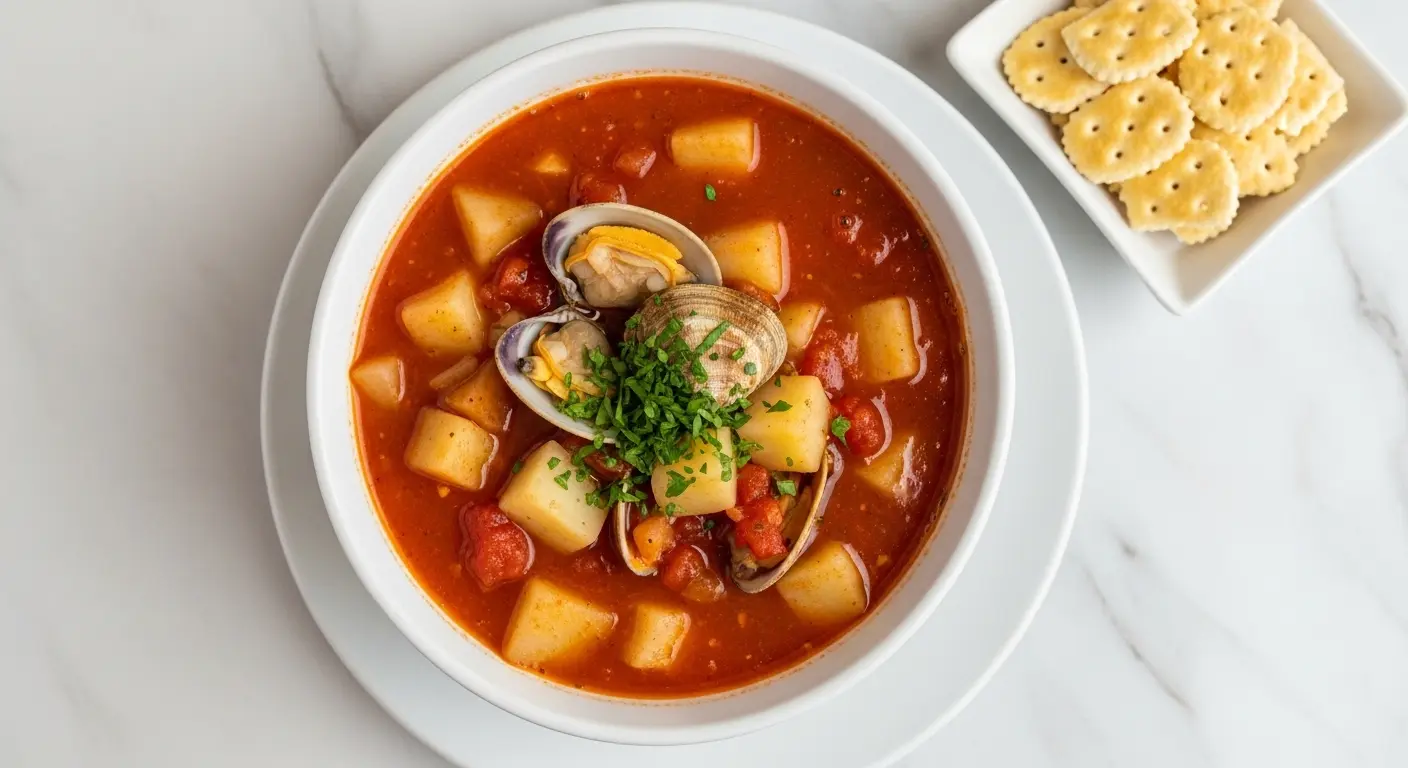
A steaming bowl of manhattan clam chowder recipe is one of those things that just hits differently on a cold day. This bold, tomato-based soup is packed with tender clams, smoky bacon, hearty potatoes, and a medley of vegetables all simmered in a rich, herb-perfumed broth.
It’s the kind of soup that has been sparking debates at dinner tables for over a century.
If you’ve only ever had the creamy New England version, you’re in for a revelation. Manhattan clam chowder ditches the cream entirely in favor of a vibrant tomato broth that lets the natural sweetness of the clams take center stage.
The origins of this recipe trace back to the Portuguese fishing communities of Rhode Island in the mid-1800s, who were known for their love of tomato-based stews. By the 1930s, the style had spread to New York City and officially earned the name we know today.
This version stays true to the classic, using canned clams for convenience, a base of smoky bacon and aromatic vegetables, diced tomatoes, tomato paste, and a generous pour of bottled clam juice.
Every single ingredient earns its place in the pot.
If you love seafood soups, you’ll also want to bookmark this Lobster Bisque for your next cozy cooking night.
Why You’ll Love This Manhattan Clam Chowder Recipe
This soup is a genuine crowd-pleaser, and once you understand why each element works, you’ll be making it on repeat.
- It’s lighter than New England chowder. Without any cream or milk, this recipe is naturally lower in fat and calories, but it doesn’t sacrifice any satisfaction.
- The tomato base brings incredible depth. Tomato paste caramelizes in the bacon fat before the liquid goes in, which gives the broth a rich, slightly sweet foundation that you just can’t replicate with canned soup.
- Bacon fat is the secret weapon. Cooking the aromatics in bacon drippings infuses the entire soup with a subtle smokiness that ties everything together.
- Canned clams make it weeknight-friendly. You get all the briny, oceanic flavor without the effort of shucking fresh clams. Look for brands with minimal additives for the best result.
- It gets better as it sits. Like most soups and stews, the flavors deepen overnight, making leftovers arguably more delicious than the first serving.
- It feeds a crowd. This recipe makes six generous servings, making it perfect for family dinners or casual entertaining.
You might also enjoy: New England Clam Chowder
Ingredients
This recipe uses straightforward ingredients that are easy to find at any grocery store. The key is using waxy potatoes (like red or Yukon Gold), which hold their shape in the broth instead of falling apart.
- 4 slices thick-cut bacon, diced
- 1 medium yellow onion, diced (about 1 cup / 150g)
- 3 stalks celery, diced
- 2 medium carrots, peeled and diced
- 1 medium green bell pepper, diced
- 4 cloves garlic, minced
- 2 tablespoons tomato paste
- 1 can (28 oz / 794g) diced tomatoes, with juices
- 3 bottles (8 oz / 240ml each) bottled clam juice
- 1 cup (240ml) chicken broth or seafood broth
- 1 lb (450g) red potatoes or Yukon Gold potatoes, cut into ¾-inch cubes
- 3 cans (6.5 oz / 184g each) chopped or minced clams, drained (reserve the juice)
- 1 teaspoon dried thyme
- 1 bay leaf
- ½ teaspoon smoked paprika
- ¼ teaspoon cayenne pepper (optional, for heat)
- Salt and black pepper, to taste
- 2 tablespoons fresh flat-leaf parsley, chopped
Read Also: Clam Chowder Recipe
Kitchen Equipment Needed
You don’t need any specialized equipment to pull this off. A sturdy pot is really all that stands between you and a perfect bowl of chowder.
- Large Dutch oven or heavy-bottomed stockpot (at least 6-quart / 5.7L capacity)
- Wooden spoon or heat-resistant silicone spatula
- Sharp chef’s knife
- Cutting board
- Measuring cups and spoons
- Ladle for serving
- Can opener
For a richer, deeper flavor, a Dutch oven distributes heat more evenly than a thin-bottomed pot and prevents the tomato base from scorching.
You might also enjoy: Seafood Chowder
Recommended Products for This Recipe
These products are recommended based on quality, performance, and the difference they make in the final dish.
1. Snow’s Chopped Clams (Canned)
Canned clams are the backbone of this recipe, and Snow’s is one of the most trusted brands among home cooks. Their chopped clams have a clean, briny flavor without any off-putting additives, and the juice inside the can is just as valuable as the clams themselves.
2. Bar Harbor Clam Juice (Bottled)
Bar Harbor’s bottled clam juice is made with just two ingredients, sea clams and water, which means you’re getting a pure, intensely flavored seafood broth. It forms the liquid backbone of this chowder and makes a noticeable difference compared to generic brands.
3. Lodge Enameled Cast Iron Dutch Oven
A good Dutch oven is the single best investment you can make for soups, stews, and chowders. Lodge’s enameled cast iron version retains and distributes heat beautifully, keeping your chowder at a perfect simmer without hot spots that can scorch the tomato base.
4. Smoked Paprika (Sweet or Hot)
Most grocery store paprika is mild and almost flavorless. A quality smoked paprika adds a subtle, wood-fired depth to the chowder that regular paprika simply cannot replicate. A little goes a long way and it transforms the flavor of the broth.
This recipe also pairs beautifully with a warm bowl of Fish Chowder if you want to explore more chowder territory.
Step-by-Step Instructions
Step 1: Render the Bacon
- Place your Dutch oven or heavy stockpot over medium heat.
- Add the diced bacon to the cold pot (starting in a cold pan helps render the fat slowly and evenly).
- Cook, stirring occasionally, for about 6 to 8 minutes until the bacon is golden, crispy, and has released most of its fat.
- Using a slotted spoon, transfer the cooked bacon to a paper towel-lined plate and set aside. Leave the rendered bacon fat in the pot.
Step 2: Sauté the Aromatics
- With the bacon fat remaining in the pot over medium heat, add the diced onion, celery, carrots, and green bell pepper.
- Stir to coat the vegetables in the fat and cook for 7 to 9 minutes, stirring frequently, until they are softened and the onion is translucent. Do not rush this step; properly softened aromatics form the flavor base of the entire soup.
- Add the minced garlic and cook, stirring constantly, for an additional 1 minute until fragrant. Be careful not to let the garlic brown or it will turn bitter.
Step 3: Add the Tomato Paste
- Push the vegetables to the sides of the pot to create a small clearing in the center.
- Add the 2 tablespoons of tomato paste directly to the center of the pot.
- Let the tomato paste cook undisturbed for 1 full minute, then stir it into the vegetables and continue cooking for another 1 to 2 minutes. This step, called “blooming” the tomato paste, caramelizes the sugars and deepens the flavor of the entire broth significantly.
Step 4: Build the Broth
- Pour in the entire can of diced tomatoes along with all their juices, stirring to combine with the tomato paste and vegetable mixture.
- Add all three bottles of clam juice, plus the reserved liquid from the canned clams.
- Pour in the cup of chicken or seafood broth.
- Add the dried thyme, bay leaf, smoked paprika, and cayenne pepper (if using).
- Stir everything together and bring the mixture to a boil over medium-high heat.
Step 5: Add the Potatoes and Simmer
- Add the cubed red or Yukon Gold potatoes to the pot and stir to submerge them in the broth.
- Reduce the heat to medium-low and allow the soup to simmer, partially covered, for 15 to 20 minutes until the potatoes are fork-tender. Test them by piercing a cube with a fork; it should slide through easily with no resistance.
- Stir the soup occasionally during simmering to prevent anything from sticking to the bottom.
Step 6: Add the Clams and Finish
- Once the potatoes are tender, reduce the heat to low.
- Add the drained chopped or minced clams to the pot and stir gently to distribute them throughout the soup.
- Return the reserved crispy bacon to the pot as well.
- Remove and discard the bay leaf.
- Taste the soup and adjust seasoning with salt and black pepper as needed. Keep in mind that clams and clam juice are naturally salty, so taste before adding any additional salt.
- Simmer on low for just 3 to 5 more minutes to heat the clams through. Do not overcook the clams as they will turn rubbery.
- Stir in the fresh chopped parsley just before serving.
Step 7: Serve
- Ladle the hot chowder into bowls.
- Top with additional fresh parsley and, if desired, a sprinkle of extra crumbled bacon.
- Serve immediately with oyster crackers, crusty bread, or warm cornbread alongside.
The same depth-building technique of blooming tomato paste also makes this Seafood Stew absolutely outstanding.
Tips for Success
A few smart habits will take this chowder from good to genuinely restaurant-quality.
- Don’t skip the tomato paste step. Cooking the paste in the bacon fat before adding any liquid caramelizes it and adds a layer of savory depth that canned tomatoes alone cannot provide.
- Use waxy potatoes only. Red potatoes or Yukon Golds hold their shape during simmering. Russet potatoes are too starchy and will fall apart, turning your broth cloudy and gluey.
- Reserve the clam juice from the cans. The liquid inside the canned clams is intensely flavored. Adding it to the broth gives you extra depth without any extra cost.
- Add the clams at the very end. Canned clams are already cooked. They only need a few minutes to heat through. Simmering them too long will make them tough and rubbery.
- Taste before seasoning. Clam juice and canned clams are quite salty on their own. Always taste the finished soup before reaching for the salt shaker.
- Let it rest before serving. If time allows, let the chowder sit off the heat for 10 minutes before serving. The flavors meld and deepen during that resting period.
Read Also: Corn Chowder Recipe
Serving Suggestions
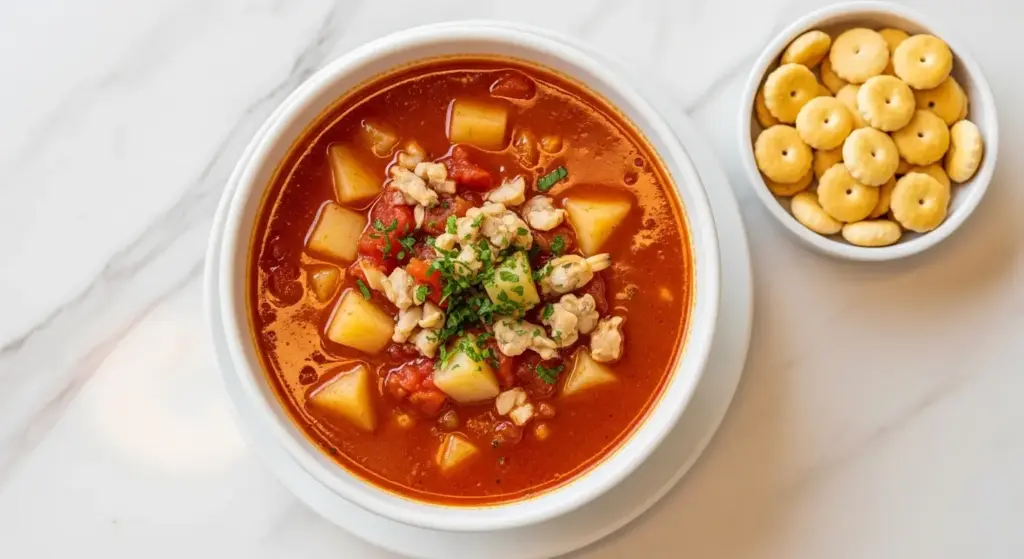
Manhattan clam chowder is a complete meal on its own, but the right accompaniments make it even more special.
- Oyster crackers are the classic garnish and add a satisfying crunch to each bite.
- Crusty sourdough bread is perfect for mopping up every last drop of that tomato broth.
- A simple side of Creamy Coleslaw adds a cool, crunchy contrast to the warm, hearty soup.
- Warm cornbread is a Southern-inspired pairing that complements the smoky bacon notes beautifully.
- A light green salad dressed with a simple vinaigrette keeps the overall meal balanced and fresh.
- Garlic bread makes any soup better, and this chowder is no exception.
Variations to Try
Once you’ve mastered the base recipe, there are several easy ways to customize it to your tastes.
- Make it spicier: Add a pinch of red pepper flakes along with the aromatics, or increase the cayenne pepper to ½ teaspoon for noticeable heat.
- Use fresh clams: Replace the canned clams with 36 littleneck or cherrystone clams, scrubbed clean. Add them during the last 5 to 8 minutes of cooking and discard any that do not open.
- Turn it into a seafood chowder: Add 8 oz (225g) of peeled, deveined shrimp and 8 oz (225g) of fish fillets cut into bite-sized pieces along with the clams during the final step.
- Slow cooker version: Complete steps 1 through 3 on the stovetop, then transfer everything to a slow cooker along with the broth, tomatoes, potatoes, and seasonings. Cook on low for 6 to 8 hours, then stir in the clams during the final 20 minutes.
- Add corn: Stir in 1 cup (165g) of frozen or fresh corn kernels along with the potatoes for a sweeter, heartier chowder.
- Salt pork instead of bacon: Traditionalists often use salt pork instead of bacon. It provides a milder, fattier flavor that is slightly more authentic to older versions of the recipe.
If you love hearty one-pot seafood meals, you’ll definitely want to try Shrimp Chowder.
Storage and Reheating
Manhattan clam chowder stores beautifully and the flavor genuinely improves after a day in the refrigerator.
- Refrigerator: Allow the chowder to cool completely, then transfer it to an airtight container. It will keep well in the refrigerator for up to 3 days.
- Freezer: This soup freezes reasonably well, though the potatoes may become slightly softer after thawing. Store in freezer-safe containers for up to 2 months. Thaw overnight in the refrigerator before reheating.
- Reheating on the stovetop: Pour the desired amount into a small saucepan and warm over medium-low heat, stirring occasionally, until heated through. Do not boil, as this can make the clams tough.
- Reheating in the microwave: Transfer to a microwave-safe bowl and heat in 1-minute increments, stirring between each interval, until steaming throughout.
- Avoid reheating multiple times: Each time the chowder is reheated, the clams lose a little tenderness. Try to only reheat what you plan to eat.
Read Also: Salmon Chowder Recipe
Nutritional Facts
Per serving (approximately 1.5 cups / 360ml), based on 6 servings:
| Nutrient | Amount |
|---|---|
| Calories | 220 kcal |
| Total Fat | 7g |
| Saturated Fat | 2g |
| Cholesterol | 45mg |
| Sodium | 780mg |
| Total Carbohydrates | 24g |
| Dietary Fiber | 4g |
| Sugars | 7g |
| Protein | 16g |
Nutritional values are estimates and may vary based on specific brands used.
The tomato base and vegetable-heavy composition make this a notably lighter choice compared to cream-based chowders, which can contain two to three times the calories per serving.
Another light and nutritious seafood option worth trying is Baked Cod.
Health Benefits of Key Ingredients
This soup isn’t just delicious, it’s genuinely nutritious thanks to a lineup of whole-food ingredients with serious health credentials.
Beyond being a satisfying meal, each bowl of Manhattan clam chowder delivers a meaningful dose of nutrients that your body will thank you for.
- Clams are one of the most nutrient-dense seafoods available. They are exceptionally high in vitamin B12, iron, zinc, and lean protein. A single 3-ounce serving provides more than 1,400% of the daily recommended value for B12.
- Tomatoes are rich in lycopene, a powerful antioxidant that has been linked to reduced risk of heart disease and certain types of cancer. Cooking tomatoes actually increases the availability of lycopene compared to eating them raw.
- Carrots provide a meaningful dose of beta-carotene, which the body converts to vitamin A, supporting eye health, immune function, and skin health.
- Celery contributes antioxidants and anti-inflammatory compounds along with a satisfying crunch in the base of the soup.
- Garlic contains allicin, a sulfur compound that has been studied for its potential to support immune health and reduce blood pressure.
- The broth-based format means this chowder is hydrating and lighter than cream soups, making it easier on digestion while still being deeply filling.
This recipe pairs well with Baked Salmon for a complete seafood-forward dinner spread.
Frequently Asked Questions
1. What is the difference between Manhattan and New England clam chowder?
The primary difference is the broth. New England clam chowder uses a cream or milk base, which creates a thick, white soup. Manhattan clam chowder uses a tomato base, resulting in a thinner, red-tinted, herb-forward broth.
New England chowder is generally richer and higher in calories, while Manhattan chowder is lighter and more vegetable-forward.
2. Can I use fresh clams instead of canned?
Absolutely. Use 36 littleneck or cherrystone clams, scrubbed well under cold running water.
Add them to the pot after the potatoes are fork-tender and simmer for 5 to 8 minutes until all the shells have opened. Discard any clams that remain closed.
3. Why is my Manhattan clam chowder too thin?
Manhattan clam chowder is naturally a brothy soup, not a thick one. If you prefer it a bit heartier, you can mash a few of the cooked potato cubes against the side of the pot to release their starch.
Alternatively, a slurry of 1 tablespoon cornstarch mixed with 2 tablespoons cold water, stirred in during the last 5 minutes of cooking, will thicken the broth slightly.
4. Can I make Manhattan clam chowder ahead of time?
Yes, and it is actually encouraged. The flavors deepen and meld considerably after the soup rests overnight in the refrigerator.
Make it the day before, store it in an airtight container in the fridge, and gently reheat it on the stovetop before serving. Just add a splash of broth or clam juice if it seems too thick after refrigerating.
5. Is Manhattan clam chowder gluten-free?
The core ingredients in this recipe are naturally gluten-free. However, always double-check your bottled clam juice, canned clams, and any broth you use, as some brands include additives or flavorings that contain gluten.
If you are serving someone with celiac disease or a gluten sensitivity, verify all packaged ingredients before cooking.
Read Also: Chicken Corn Chowder Recipe
Final Thoughts
Manhattan clam chowder deserves far more attention than it typically gets in the shadow of its creamy New England counterpart.
With its vibrant tomato broth, smoky bacon base, and tender clams simmered with a rainbow of vegetables, this soup is bold, nourishing, and deeply satisfying without being heavy.
It comes together in about an hour and tastes even better the next day, which makes it one of the most rewarding weeknight soups in a home cook’s repertoire.
Give this manhattan clam chowder recipe a try this week, and you just might find it becomes your new cold-weather staple.
We’d love to hear how it turned out! Drop a comment below with your experience, any tweaks you made, or photos of your finished bowl.
Recommended:
- Seafood Chowder Recipe
- Fish Chowder
- Chicken Chowder
- Oyster Stew
- Lobster Bisque
- Minestrone Soup
- Vegetable Soup
- Chicken Tortilla Soup
- Tom Yum Soup
- Hamburger Soup