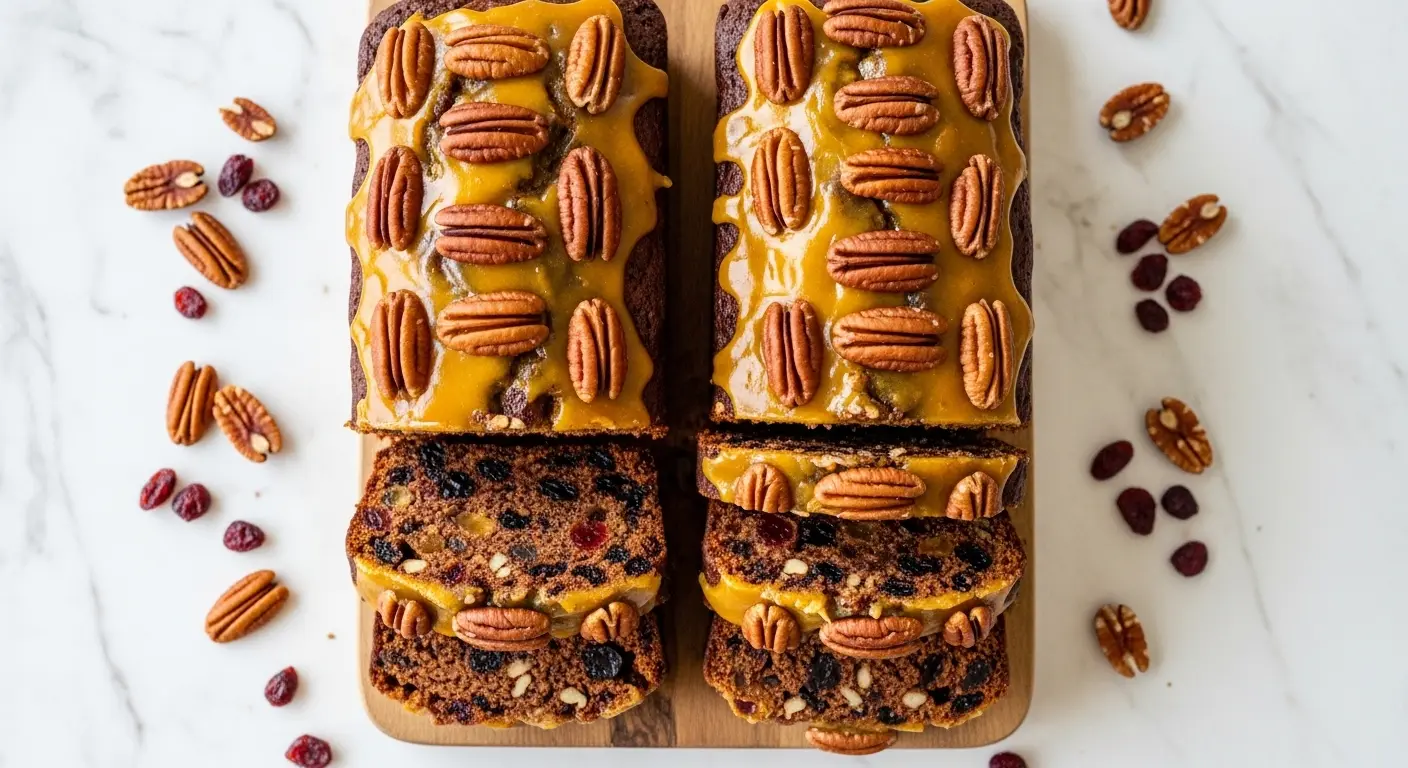
If you’ve written off fruitcake as a dry, dense holiday doorstop, this fruitcake recipe is about to prove you wrong. The classic homemade version is nothing like those shelf-stable bricks wrapped in cellophane. It’s rich, warmly spiced, and absolutely loaded with plump brandy-soaked dried fruits and toasted nuts. The kind of cake that fills your kitchen with the most incredible holiday aroma and keeps tasting better with every passing day.
This recipe follows the most traditional approach: a brown sugar and butter batter seasoned with cinnamon, nutmeg, cloves, and allspice, then studded generously with dried fruit and pecans. The real magic happens when you soak the baked loaves in brandy, which keeps them impossibly moist and deepens every single flavor note.
The best part? You can make this cake weeks ahead of time, and it only gets better as it sits. That means one less thing to worry about during the holiday rush.
Once you taste a slice of this properly made fruitcake, you’ll understand why it’s been a beloved tradition for centuries. Serve it at Christmas, give it as a gift, or bake it for anyone who thinks they don’t like fruitcake. The first bite always changes minds.
Looking for another festive baked treat to add to your holiday spread? Try this Icebox Fruitcake for a no-bake version that’s just as impressive.
Why You’ll Love This Fruitcake Recipe
This isn’t your grandmother’s dry holiday doorstop. This fruitcake is genuinely delicious, and here’s exactly why it works so well.
The combination of dried fruits creates a beautiful balance. You get tartness from cranberries, sweetness from raisins and dates, and chewiness from apricots, all working together in every bite.
Brandy does double duty in this recipe. It plumps the fruit during soaking and keeps the finished loaves moist for weeks, which means this is actually a great make-ahead cake.
The warm spice blend gives the cake incredible depth. Cinnamon, nutmeg, cloves, and allspice make every slice smell and taste like the holidays.
Toasted pecans add a welcome crunch against the chewy fruit and dense cake. That textural contrast is part of what makes this cake so satisfying.
- Makes two full loaves, perfect for gifting
- Stays fresh and moist for weeks when properly stored
- Can be made with or without alcohol to suit your preferences
- Rich holiday flavor from molasses, brown sugar, and warm spices
- Better the longer it sits, so it’s ideal for advance baking
Read Also: White Fruitcake Recipe
Ingredients
The secret to a great fruitcake is using high-quality dried fruit and toasting your nuts before adding them to the batter. Both steps make a noticeable difference in the final flavor.
- 1 cup (150g) dried cranberries
- 1 cup (150g) golden raisins
- 1 cup (150g) dark raisins
- 1 cup (150g) dried apricots, roughly chopped
- 1 cup (175g) dried dates, pitted and chopped
- ½ cup (120ml) brandy (or fresh orange juice for a non-alcoholic version)
- 1 cup (225g) unsalted butter, softened to room temperature
- 1 cup (200g) dark brown sugar, packed
- 2 tablespoons (40g) molasses
- 4 large eggs, at room temperature
- 1 teaspoon pure vanilla extract
- 2 cups (250g) all-purpose flour
- 1 teaspoon ground cinnamon
- ½ teaspoon ground nutmeg
- ½ teaspoon ground allspice
- ¼ teaspoon ground cloves
- ½ teaspoon baking powder
- ½ teaspoon fine sea salt
- 1½ cups (170g) pecan halves, toasted and roughly chopped
- Zest of 1 large orange
- Zest of 1 large lemon
- Additional brandy for brushing the finished loaves (about ¼ cup / 60ml)
For a beautiful apricot glaze (optional):
- 3 tablespoons apricot jam
- 1 tablespoon water
- Whole pecans for topping
You might also enjoy: Figgy Pudding Recipe
Kitchen Equipment Needed
Having the right tools makes this recipe significantly easier, especially for the creaming stage, which benefits enormously from a stand or hand mixer.
- Two 9×5-inch loaf pans (or one standard 10-inch tube pan)
- Stand mixer or hand mixer
- Large mixing bowls
- Baking parchment paper
- Rubber spatula
- Serrated knife for slicing
- Wire cooling rack
- Small saucepan (for the glaze)
- Pastry brush (for applying brandy and glaze)
- Plastic wrap and cheesecloth (for storing)
- Kitchen scale (strongly recommended for measuring dried fruit)
Read Also: Sticky Toffee Pudding Recipe
Recommended Products for This Recipe
These are products I genuinely recommend based on quality and real-world performance. Each one makes a noticeable difference when baking this fruitcake.
1. USA Pan Aluminized Steel Loaf Pan
This heavy-gauge loaf pan heats evenly, which is critical for a dense cake like fruitcake. Thin or flimsy pans can cause the outside edges to overbake before the center sets. The nonstick coating also makes clean release much easier.
2. Premium Dried Mixed Fruit Blend
Using a high-quality pre-mixed dried fruit blend saves prep time and ensures great flavor balance. Look for one without added sulfites or excessive sugar. The better the fruit, the better your fruitcake.
3. KitchenAid 5-Quart Stand Mixer
Creaming butter and sugar thoroughly is the foundation of this cake’s texture. A stand mixer makes this effortless and ensures you get the light, fluffy batter that keeps the finished cake from being dense in the wrong way.
4. Organic Unsulfured Molasses
Molasses is what gives this fruitcake its deep, rich color and slightly bittersweet complexity. Organic, unsulfured molasses has a cleaner, more robust flavor than the standard variety, and it’s well worth seeking out.
5. Fine Cheesecloth for Wrapping Fruitcake
Wrapping your finished loaves in brandy-soaked cheesecloth is the traditional method for keeping fruitcake moist and developing flavor over weeks. Culinary-grade cheesecloth is reusable and far more effective than plastic wrap alone for this purpose.
This recipe also pairs beautifully with a warm slice of Bread Pudding if you’re building a full holiday dessert spread.
Step-by-Step Instructions
Step 1: Soak the Dried Fruit Overnight
- Combine the cranberries, golden raisins, dark raisins, chopped apricots, and chopped dates in a large non-reactive bowl (glass or stainless steel works best).
- Pour the brandy over the fruit and stir to combine. If you’re making a non-alcoholic version, use fresh orange juice instead.
- Cover the bowl tightly with plastic wrap and let the fruit soak at room temperature for at least 8 hours, or overnight. The fruit will absorb most of the liquid and become plump and fragrant.
- If you’re short on time, microwave the fruit and liquid together for 1 minute until steaming, cover, and let it rest for at least 1 hour. The fruit won’t be quite as deeply flavored, but it will still work well.
Step 2: Toast the Pecans
- Place the pecan halves in a single layer on a dry baking sheet.
- Bake at 350°F (175°C) for 8 to 10 minutes, stirring once halfway through, until the nuts are fragrant and lightly golden.
- Remove from the oven and let them cool completely before adding to the batter. Toasting deepens the nutty flavor and adds a crunch that raw pecans can’t provide.
- Roughly chop the cooled pecans into large pieces. You want noticeable chunks, not a fine powder.
Step 3: Prepare Your Pans and Preheat the Oven
- Preheat your oven to 300°F (150°C). The low temperature is intentional. Fruitcake needs to bake slowly and gently so the dense batter cooks all the way through without the outside burning.
- Grease two 9×5-inch loaf pans generously with butter or cooking spray.
- Line the bottoms and sides with parchment paper, pressing it into the corners so the paper sits flush. Allow a small overhang on the long sides to help with removal later.
- Set the pans aside.
Step 4: Cream the Butter and Sugar
- Place the softened butter and dark brown sugar in the bowl of your stand mixer fitted with the paddle attachment (or in a large bowl if using a hand mixer).
- Beat on medium speed for 4 to 5 minutes, stopping to scrape down the sides of the bowl halfway through. The mixture should be noticeably lighter in color and very fluffy. Don’t rush this step. Proper creaming creates air pockets that help the cake bake evenly.
- Add the molasses and beat for another 30 seconds until fully incorporated.
Step 5: Add the Eggs and Vanilla
- Add the eggs to the creamed butter mixture one at a time, beating for about 30 seconds after each addition before adding the next.
- If the batter looks slightly curdled or separated after adding the eggs, don’t worry. It will come together once the flour is added.
- Add the vanilla extract and beat briefly to incorporate.
Step 6: Combine the Dry Ingredients
- In a separate medium bowl, whisk together the all-purpose flour, cinnamon, nutmeg, allspice, cloves, baking powder, and salt.
- Whisking the dry ingredients together first ensures the spices and leavening are evenly distributed throughout the flour before they go into the batter. This prevents pockets of bitter baking powder or uneven spice distribution.
Step 7: Mix the Batter Together
- Add the dry ingredient mixture to the creamed butter and egg mixture all at once.
- Mix on low speed just until the flour is incorporated and no dry streaks remain. Do not overmix. Overworking the batter develops gluten and can make the cake tough.
- Add the orange zest and lemon zest, and stir gently with a rubber spatula.
Step 8: Fold in the Fruit and Pecans
- Drain any excess liquid from the soaked dried fruit and add the fruit to the batter.
- Add the chopped toasted pecans.
- Using a rubber spatula, fold everything together gently until the fruit and nuts are evenly distributed throughout the batter. The batter will be very thick and dense. This is exactly what you want.
Step 9: Fill the Pans and Bake
- Divide the batter evenly between the two prepared loaf pans. Use the back of a spoon or offset spatula to smooth the tops.
- Gently tap each pan on the counter a few times to remove any large air bubbles.
- Place the pans in the center of the preheated 300°F (150°C) oven. If you want extra moisture in the oven (a helpful technique for dense cakes), place a small pan of hot water on the lowest rack beneath the loaf pans.
- Bake for 1 hour 30 minutes to 1 hour 45 minutes, or until a toothpick or thin skewer inserted into the center comes out clean with no wet batter. The tops should be a deep golden brown.
- If the tops brown too quickly before the centers are set, tent the pans loosely with aluminum foil.
Step 10: Soak and Cool the Finished Loaves
- Remove the loaves from the oven and let them cool in the pans for 10 minutes.
- While still warm, use a thin skewer or toothpick to poke holes all over the top of each loaf (about 20 to 30 holes per loaf).
- Use a pastry brush to generously brush approximately 2 tablespoons of brandy over the top of each warm loaf. The warm cake will absorb it almost immediately.
- Allow the loaves to cool completely in the pans on a wire rack, about 1 to 2 hours.
Step 11: Add the Optional Apricot Glaze
- In a small saucepan, combine the apricot jam and water over low heat.
- Stir until the jam melts and the glaze is smooth and thin. If it becomes too thick, add another teaspoon of water.
- Brush the glaze over the top of each cooled loaf using a pastry brush.
- Immediately press whole pecan halves on top in a decorative pattern before the glaze sets.
Step 12: Wrap and Age the Fruitcake
- Once completely cool, wrap each loaf tightly in a double layer of plastic wrap.
- For the best flavor, wrap each loaf additionally in brandy-soaked cheesecloth before the plastic wrap layer.
- Store in a cool, dark place or in the refrigerator.
- For peak flavor, allow the fruitcake to age for at least 1 to 2 weeks before serving. Brush with additional brandy every few days if desired.
For another show-stopping holiday bake, try this Rum Cake with Cake Mix.
Tips for Success
Small details make a big difference with fruitcake. These tips address the most common issues home bakers run into.
- Soak the fruit properly. Overnight soaking produces the most plump, flavorful fruit. Skipping this step or rushing it results in dried, tough pieces in the finished cake.
- Don’t skip toasting the pecans. Raw nuts in fruitcake turn soft and bland during the long bake. Toasting first preserves the crunch and enhances the flavor considerably.
- Bake at a low temperature. The 300°F (150°C) oven is deliberate. High heat burns the outside before the dense center can cook through.
- Check for doneness with a skewer. A toothpick may not reach the true center of a dense fruitcake. Use a long thin skewer to test the very middle.
- Brush with brandy while still warm. The warm cake absorbs the liquid far more readily than a cooled one. This is the single best thing you can do for moisture.
- Age it if you possibly can. A fruitcake baked today will taste good. A fruitcake baked two weeks ago will taste extraordinary.
- Use parchment paper in the pan. Fruitcake’s high sugar content makes it prone to sticking. Parchment paper is non-negotiable for a clean release.
Another favorite: Pumpkin Roll Recipe
Serving Suggestions
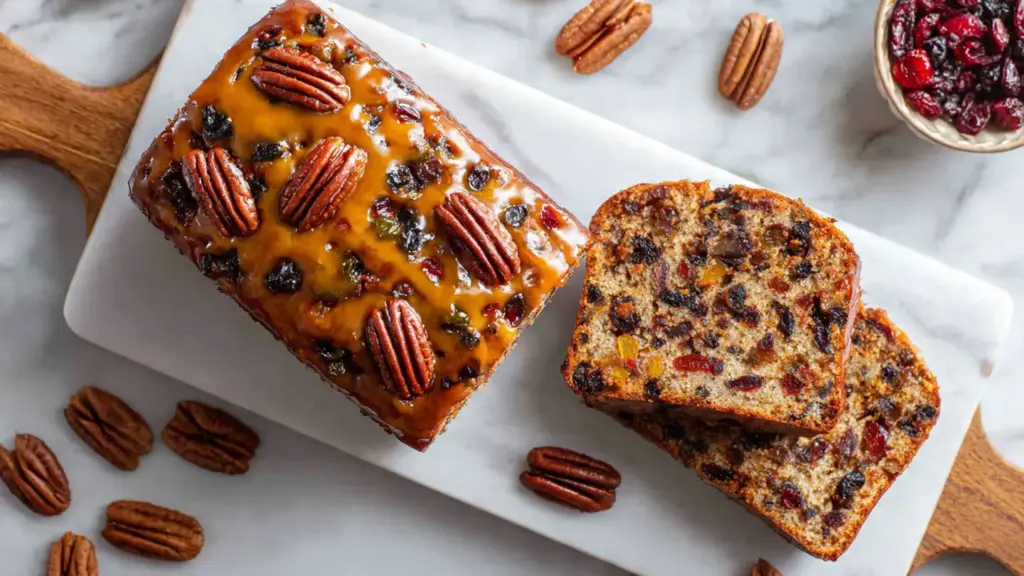
This fruitcake is wonderful on its own, but a few thoughtful pairings really elevate the experience.
Serve thin slices alongside a generous mug of Hot Chocolate for the ultimate holiday pairing. The warmth and sweetness complement each other beautifully.
A cup of strong black tea or freshly brewed coffee balances the richness of the cake perfectly. Traditional British-style fruitcake is almost always served this way.
For a more indulgent presentation, spread each slice with a small amount of salted butter. The contrast of the salty butter against the sweet, spiced cake is genuinely wonderful.
- Pair it with a glass of Eggnog for a classic holiday combination
- Serve alongside a platter of Gingerbread Cookies for a full festive dessert spread
- Add a dollop of fresh whipped cream or a drizzle of cream cheese glaze for extra richness
- Bring to a slice to room temperature before serving; cold fruitcake loses some of its aromatic complexity
- Serve in thin slices with a few whole pecans and dried cranberries as a simple garnish
Variations to Try
The base recipe is a classic, but there are several delicious ways to customize it to your taste.
- White Fruitcake: Swap dark brown sugar for white granulated sugar, use golden raisins and dried pineapple as the primary fruits, and skip the molasses. The result is a lighter, less intensely flavored cake. Check out this dedicated White Fruitcake recipe for full details.
- Icebox Fruitcake: A no-bake version made by pressing the mixture into a loaf pan and chilling. Try the Icebox Fruitcake recipe for a fun alternative.
- Tropical Fruitcake: Replace the cranberries and apricots with dried mango, dried pineapple, and macadamia nuts. Use coconut rum in place of brandy for a completely different flavor profile.
- Non-Alcoholic Fruitcake: Soak the fruit in fresh orange juice instead of brandy, and brush the finished loaves with a simple syrup flavored with a teaspoon of vanilla and orange extract.
- Mini Loaf Fruitcakes: Divide the batter among 6 to 8 small mini loaf pans and reduce the bake time to 55 to 65 minutes. Mini loaves are ideal for gifting and make adorable holiday presents.
Read Also: Fruit Cocktail Cake Recipe
Storage and Reheating
Fruitcake is one of the most forgiving baked goods when it comes to storage. With proper technique, it can actually last for months.
- Room temperature: Wrap tightly in brandy-soaked cheesecloth, then in a double layer of plastic wrap or foil. Store in a cool, dark location for up to 4 to 6 weeks. Re-brush with brandy every week to maintain moisture.
- Refrigerator: Well-wrapped fruitcake keeps in the refrigerator for up to 3 months. Always bring slices to room temperature for 20 to 30 minutes before serving.
- Freezer: Fruitcake freezes exceptionally well. Wrap individual loaves tightly in plastic wrap, then in foil, and freeze for up to 12 months. Thaw overnight in the refrigerator.
- Reheating individual slices: Fruitcake is best served at room temperature, not reheated. If it seems dry, wrap the slice in a damp paper towel and microwave for just 10 to 15 seconds.
- Gifting: If giving fruitcake as a gift, wrap in cheesecloth, then in decorative wax paper tied with twine or ribbon.
For another dessert that stores beautifully over the holidays, check out this Toffee Recipe.
Nutritional Facts
Per serving (based on 20 slices across 2 loaves):
| Nutrient | Amount |
|---|---|
| Calories | 285 kcal |
| Total Fat | 13g |
| Saturated Fat | 6g |
| Cholesterol | 62mg |
| Sodium | 95mg |
| Total Carbohydrates | 38g |
| Dietary Fiber | 2g |
| Total Sugars | 24g |
| Protein | 4g |
| Vitamin A | 8% DV |
| Iron | 8% DV |
| Potassium | 180mg |
Note: Nutritional values are estimates and will vary based on exact ingredients used and the type of dried fruit blend selected. Values do not include the optional apricot glaze.
This Baklava Recipe is another nutrient-dense holiday treat worth adding to your baking list.
Health Benefits of Key Ingredients
Fruitcake gets an unfair reputation as pure indulgence, but several of its core ingredients bring genuine nutritional value to the table.
While this is certainly a treat to enjoy in moderation, the ingredients work together in ways that go beyond just flavor.
- Dried cranberries are packed with antioxidants, particularly proanthocyanidins, which are compounds linked to urinary tract and cardiovascular health. They also provide a meaningful amount of vitamin C and fiber.
- Dried dates are one of the most nutrient-dense dried fruits available. They are rich in potassium, magnesium, and B vitamins, and their natural sugars provide quick energy alongside fiber that helps moderate the blood sugar response.
- Dried apricots are an excellent source of beta-carotene, which the body converts to vitamin A. They also supply iron and potassium in meaningful amounts per serving.
- Pecans are among the most antioxidant-rich nuts on the market. They provide healthy monounsaturated fats, zinc, magnesium, and vitamin E. Research suggests regular nut consumption supports heart health and healthy cholesterol levels.
- Molasses is the most nutrient-rich byproduct of cane sugar refining. Just two tablespoons contain significant amounts of iron, calcium, magnesium, potassium, and vitamin B6, making it genuinely one of the more nutritious sweeteners available.
- Eggs supply complete protein and important nutrients including choline, lutein, and fat-soluble vitamins A, D, E, and K.
Another bake that highlights nutritious ingredients: Best Carrot Cake Recipe
Frequently Asked Questions
1. Can I make fruitcake without alcohol?
Yes, absolutely. Simply substitute the brandy with an equal amount of fresh orange juice or apple juice when soaking the dried fruit. Instead of brushing the finished loaves with brandy, use a warm simple syrup flavored with vanilla extract or a mix of orange and vanilla extract. Keep in mind that the alcohol-free version will not have the same shelf life. Store it in the refrigerator and consume within 2 to 3 weeks.
2. Why does my fruitcake turn out dry?
Dryness in fruitcake is almost always caused by overbaking or skipping the post-bake soaking step. Use a long skewer to test doneness accurately, and always brush generously with brandy or simple syrup while the cake is still warm. The warm cake absorbs liquid readily. If you’re aging the cake, continue to add small amounts of brandy every 5 to 7 days to keep it moist throughout the aging period.
3. How far in advance can I make fruitcake?
Fruitcake genuinely improves with time, and many bakers make their loaves 4 to 6 weeks before the holidays. The absolute minimum for good flavor development is 1 to 2 weeks. You can also make fruitcake several months ahead and freeze it. Thaw it in the refrigerator overnight before serving or gifting.
4. Can I use candied fruit instead of dried fruit?
Yes, you can substitute candied fruit (also called glacé fruit) for some or all of the dried fruit in this recipe. Candied cherries, candied pineapple, and mixed peel are traditional choices. Keep in mind that candied fruit is significantly sweeter and more intensely colored than dried fruit. If using candied fruit, you may want to reduce the brown sugar slightly, by about 2 tablespoons, to compensate for the added sweetness.
5. Why does my fruitcake sink in the middle?
A sunken center usually means the cake was underbaked or removed from the oven too early. The dense, heavy batter takes a long time to set completely at the center. Always test with a long skewer that reaches the very middle of the loaf. Also, avoid opening the oven door before the 75-minute mark, as sudden temperature drops can cause the cake to collapse. Baking at the correct low temperature of 300°F (150°C) is also critical for even cooking throughout.
You might also enjoy: Eggnog Cake Recipe
Final Thoughts
If this recipe has convinced you to give homemade fruitcake a real chance, I genuinely think you’re going to love the results.
Made from scratch with quality dried fruits, warm spices, and a proper brandy soak, this is a completely different experience from anything you’d find in a store.
It’s the kind of cake that becomes a tradition. One that people ask for every year and that fills your home with the most wonderful holiday fragrance while it bakes.
Bake a loaf (or two) this season and see what everyone’s been missing. If you try this fruitcake recipe, drop a comment below and let me know how it turned out. Did you convert any skeptics?
Recommended:
- Figgy Pudding
- Bourbon Balls
- Sticky Toffee Pudding
- Eggnog Cookies
- Gingerbread Cookies
- Classic Pumpkin Pie
- Snickerdoodle Cookies
- Dinner Rolls
- Pecan Pie
- Fruit Tart