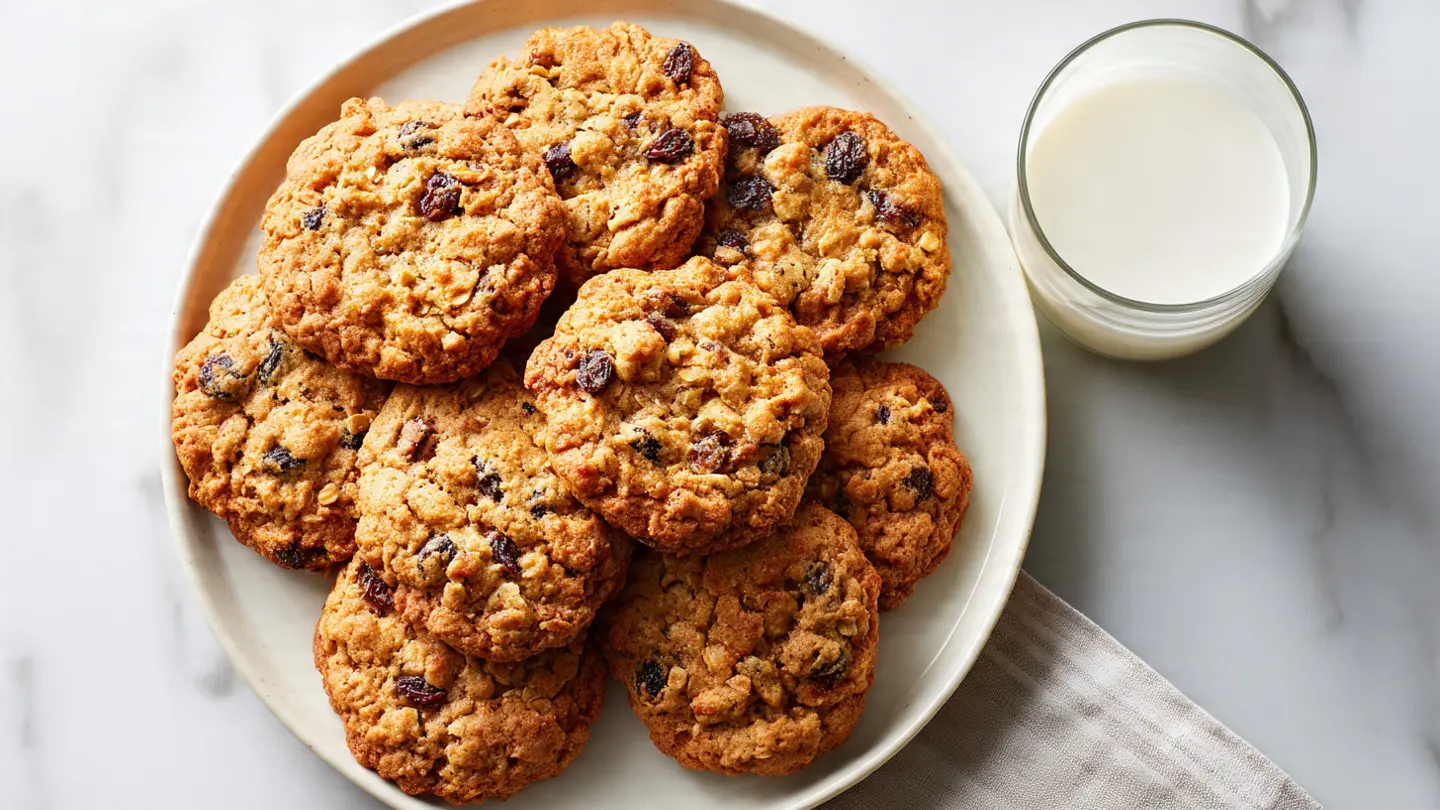
Few cookies have stood the test of time quite like a classic oatmeal raisin cookie recipe. That signature combination of hearty rolled oats, sweet plump raisins, warm cinnamon, and buttery brown sugar dough is something cookie lovers have reached for generation after generation.
What makes this recipe special is the technique behind it. Using melted butter instead of creamed butter, resting the dough, and getting the oat-to-flour ratio just right are the little details that separate a forgettable cookie from one people ask for by name.
If you love classic cookies with real texture and depth, this one is going to become a regular in your kitchen. And if you’re already a fan of Chewy Oatmeal Chocolate Chip Cookies, this raisin version is a must-try spin on the same cozy base.
Why You’ll Love This Oatmeal Raisin Cookie Recipe
These cookies hit all the right notes without requiring any fancy equipment or hard-to-find ingredients.
They bake up with crispy edges and a soft, chewy center that holds up beautifully even a day or two after baking.
The brown sugar adds a subtle caramel depth that pairs perfectly with warm cinnamon and nutmeg.
Raisins add natural sweetness and a slight chewiness that balances the oats in every bite.
This is also one of those recipes that’s hard to mess up. The dough is forgiving, the bake time is straightforward, and the results are consistently delicious.
Here’s why bakers keep coming back to this recipe:
- Made with simple pantry staples most people already have on hand
- No chilling required (though resting helps if you have the time)
- Produces thick, bakery-style cookies without any guesswork
- Easily customizable with nuts, chocolate chips, or different dried fruits
- Freezer-friendly dough for baking fresh cookies anytime
You might also enjoy: Oatmeal Cookie Recipe
Ingredients
These are everyday baking ingredients, but quality matters. Using good unsalted butter, real vanilla extract, and fresh spices will give you noticeably better results than older or lower-quality versions.
- 1 cup (227g / 2 sticks) unsalted butter, at room temperature
- 1 cup (200g) granulated sugar
- 1 cup (220g) packed light brown sugar
- 2 large eggs, at room temperature
- 2 teaspoons pure vanilla extract
- 1 ½ cups (190g) all-purpose flour
- 1 teaspoon baking soda
- 1 ½ teaspoons ground cinnamon
- ¼ teaspoon ground nutmeg
- ½ teaspoon salt
- 3 cups (270g) old-fashioned rolled oats (not quick oats)
- 1 ½ cups (225g) raisins
Read Also: No Bake Cookie Recipe
Kitchen Equipment Needed
You don’t need much for this recipe, but a good stand mixer or hand mixer will make the creaming process much easier on your wrists.
- Stand mixer or hand mixer
- Large mixing bowl
- Medium mixing bowl
- Baking sheets
- Silicone baking mats or parchment paper
- Cookie scoop (2-tablespoon size)
- Wire cooling rack
- Spatula
- Measuring cups and spoons
This technique works well with a baked oatmeal recipe too if you’re in an oat-loving mood.
Recommended Products for This Recipe
These are products that genuinely make a difference in the quality of your oatmeal raisin cookies, based on consistent performance and baker feedback.
1. OXO Good Grips Medium Cookie Scoop
A 2-tablespoon cookie scoop ensures every cookie bakes evenly and comes out the same size. This prevents the frustrating situation where smaller cookies burn while larger ones are still underdone. The spring-loaded mechanism makes portioning dough quick and clean.
2. Silpat Premium Non-Stick Silicone Baking Mat
Silpat mats are a go-to for cookie baking. They distribute heat evenly, prevent sticking without any greasing, and produce cookies with golden bottoms rather than burnt ones. Reusable and easy to clean, they’re a long-term investment that pays off fast.
3. Bob’s Red Mill Old Fashioned Rolled Oats
Old-fashioned rolled oats are non-negotiable in this recipe. Bob’s Red Mill oats are thick, minimally processed, and hold their shape during baking, giving you that hearty chewy texture that makes oatmeal cookies so satisfying. Quick oats will give you a mushier result.
4. Nielsen-Massey Pure Vanilla Extract
Pure vanilla extract (not imitation) adds a richness to baked goods that you can actually taste. Nielsen-Massey is a favorite among home bakers for its clean, complex flavor that elevates everything from cookies to cakes.
5. Nordic Ware Natural Aluminum Half Sheet Pans
Heavy-gauge aluminum baking sheets heat evenly and resist warping. Nordic Ware’s half sheets are a staple in many serious home kitchens. They’re the difference between cookies that spread and brown correctly versus ones that come out uneven or underbaked in the center.
Read Also: Peanut Butter Cookie Recipe
Step-by-Step Instructions
1. Preheat the Oven and Prepare Your Baking Sheets
- Preheat your oven to 350°F (175°C). Allow at least 15 minutes for the oven to fully come up to temperature before baking.
- Line two large baking sheets with silicone baking mats or parchment paper. This prevents sticking and ensures even heat distribution on the bottom of each cookie.
- If you only have one baking sheet, you can still use this recipe but will need to bake in multiple batches, allowing the sheet to cool completely between each batch. A hot baking sheet causes cookies to spread too quickly before they set.
2. Whisk Together the Dry Ingredients
- In a medium mixing bowl, add 1 ½ cups (190g) of all-purpose flour.
- Add 1 teaspoon of baking soda, 1 ½ teaspoons of ground cinnamon, ¼ teaspoon of ground nutmeg, and ½ teaspoon of salt.
- Whisk everything together thoroughly until no streaks remain. Combining the dry ingredients separately first ensures the baking soda and spices distribute evenly throughout the dough, preventing any pockets of bitterness or uneven flavor.
- Set this bowl aside.
3. Cream the Butter and Sugars
- Place 1 cup (227g) of room-temperature unsalted butter into the bowl of your stand mixer fitted with the paddle attachment, or a large mixing bowl if using a hand mixer.
- Add 1 cup (200g) of granulated sugar and 1 cup (220g) of packed light brown sugar.
- Beat on medium speed for 3 to 4 minutes until the mixture is pale, fluffy, and noticeably lighter in color. This step is important because it incorporates air into the dough, which helps give the cookies lift and a soft texture. Do not rush it.
- Stop and scrape down the sides of the bowl with a spatula halfway through.
4. Add the Eggs and Vanilla
- Crack 2 large eggs into a small bowl first, then add them to the butter-sugar mixture one at a time. Adding them one at a time helps the mixture emulsify evenly without curdling.
- Beat on medium speed for about 30 seconds after each addition until fully incorporated.
- Add 2 teaspoons of pure vanilla extract.
- Mix again on medium for another 30 seconds until combined. The mixture should look smooth, creamy, and slightly glossy at this point.
5. Combine the Wet and Dry Ingredients
- With the mixer on low speed, gradually add the flour mixture to the wet ingredients in two or three additions. Adding it all at once can cause the flour to puff up and create a cloud of dust, and can also lead to overmixing.
- Mix just until no dry streaks remain. Overmixing at this stage activates the gluten in the flour, which can make the cookies tough rather than tender. Stop as soon as everything is combined.
- Scrape down the sides and bottom of the bowl with a spatula.
6. Fold In the Oats and Raisins
- Add 3 cups (270g) of old-fashioned rolled oats to the dough. Stir with a spatula or wooden spoon (not the mixer) to gently fold them in. You want to keep the oats intact rather than break them down.
- Add 1 ½ cups (225g) of raisins. Fold them in until they’re evenly distributed throughout the dough.
- If the dough feels very sticky at this point, that is completely normal. It will firm up slightly as it rests.
7. Rest the Dough (Optional but Recommended)
- Cover the bowl with plastic wrap and let the dough rest at room temperature for 30 minutes, or refrigerate it for up to 24 hours.
- This resting period allows the oats to absorb some of the moisture from the dough, resulting in a thicker cookie that spreads less during baking.
- If you’re short on time, you can skip this step and bake right away. The cookies will still be delicious, just slightly flatter.
8. Portion the Dough
- Using a 2-tablespoon cookie scoop or a large spoon, portion the dough into balls and place them onto your prepared baking sheets.
- Space each cookie ball about 2 inches (5cm) apart to allow for spreading during baking. Crowding them will cause them to bake together.
- For bakery-style cookies, gently press the top of each ball down just slightly with your fingertips to help them bake into a round, even shape rather than domed.
9. Bake the Cookies
- Place the baking sheet on the center rack of your preheated oven.
- Bake for 11 to 13 minutes. The edges should look set and golden brown, but the centers will still look slightly underdone and glossy. This is intentional.
- Do not overbake. Cookies continue to bake from the residual heat of the pan even after you remove them from the oven, a process called carryover cooking. Pulling them when they look slightly underdone is the key to getting a soft and chewy center once they cool.
- If you prefer a crisper cookie, add an extra 2 to 3 minutes to the bake time.
10. Cool the Cookies
- Remove the baking sheet from the oven and allow the cookies to cool on the pan for exactly 5 minutes. This gives them time to firm up enough to hold their shape when you move them.
- After 5 minutes, use a spatula to carefully transfer the cookies to a wire cooling rack.
- Allow them to cool completely, which takes about 15 to 20 minutes, before stacking or storing. Stacking warm cookies traps steam and makes the bottoms soggy.
For another classic treat to bake alongside these, check out this Snickerdoodle Cookie Recipe.
Tips for Success
Getting this recipe right is all about a few small habits that make a big difference in the final texture and flavor.
- Use room-temperature butter. Cold butter will not cream properly with the sugars. The mixture should be visibly fluffy after creaming, not dense. Take your butter out of the fridge 30 to 45 minutes before baking.
- Measure flour correctly. Scoop the flour into your measuring cup with a spoon and level it off with a straight edge. Packing flour directly with the measuring cup compresses it, leading to too much flour in the dough and dry, crumbly cookies.
- Use old-fashioned rolled oats, not quick oats. Quick oats are more finely ground and absorb more liquid, resulting in a denser, mushier cookie. Rolled oats give you that hearty, chewy texture that defines a good oatmeal raisin cookie.
- Don’t skip creaming the butter. Properly creamed butter is pale and fluffy and incorporates air that helps the cookies rise slightly and stay soft. Three to four minutes is the minimum, not a suggestion.
- Soak the raisins for extra plumpness. For the juiciest, plumpest raisins, soak them in warm water or apple juice for 10 minutes before adding them to the dough. Drain and pat them dry, then fold them in as directed.
- Rotate the pan halfway through baking. Most ovens have hot spots. Rotating the pan front to back at the halfway mark ensures even browning on all cookies.
- Bake one sheet at a time. For the most consistent results, bake one sheet at a time on the center rack rather than stacking two sheets.
For another satisfying homemade baked treat, this Gingerbread Cookie Recipe uses similar spice-forward techniques you’ll love.
Serving Suggestions
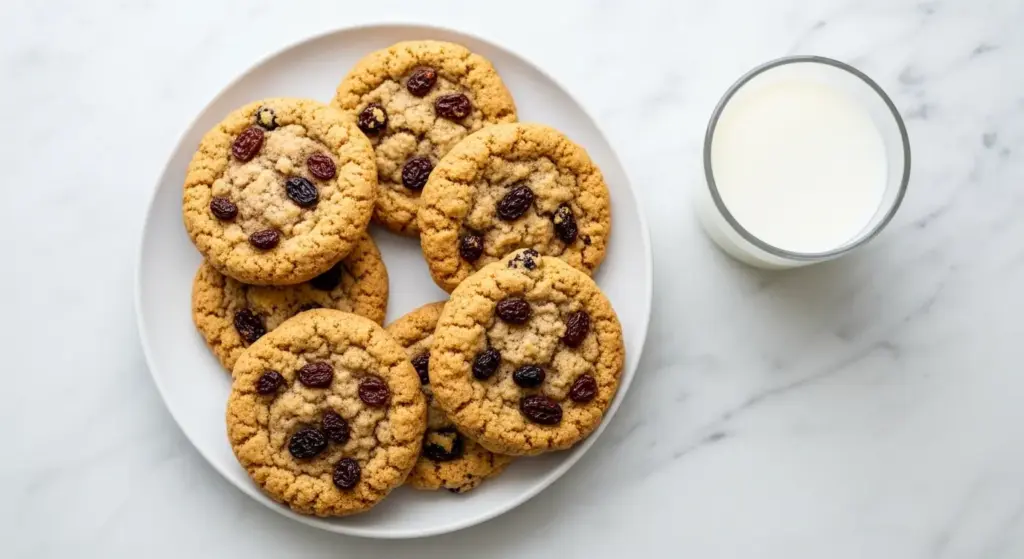
These cookies are incredibly satisfying on their own, but pairing them thoughtfully takes the experience up a notch.
A tall glass of cold milk is the most classic pairing, and for good reason. The richness of the milk balances the sweetness of the cookie perfectly.
Here are some other great ways to serve and enjoy this oatmeal raisin cookie recipe:
- Warm them slightly in the microwave (about 10 seconds) before serving for that fresh-from-the-oven effect
- Sandwich vanilla ice cream between two cookies for a simple, crowd-pleasing ice cream sandwich
- Crumble over yogurt or oatmeal for a dessert-inspired breakfast treat
- Serve alongside hot coffee, tea, or a mug of Hot Chocolate for a cozy afternoon snack
- Pack them in lunchboxes, as they hold up well for several days without becoming stale
- Arrange them on a platter with Peanut Butter Blossom Cookies and Sugar Cookies for a holiday cookie tray
Another great pairing: Easy Granola Recipe
Variations to Try
The base recipe here is classic, but it’s also wonderfully flexible for those who like to customize.
Once you’ve made the original version once and feel comfortable with the dough, these variations are easy to try on your next batch.
- Chocolate chip oatmeal cookies: Replace half the raisins with semi-sweet chocolate chips for a flavor combination that’s hard to resist. Chewy Oatmeal Chocolate Chip Cookies use this approach beautifully.
- Cranberry oatmeal cookies: Swap the raisins for dried cranberries and add a teaspoon of orange zest to the dough for a bright, tart variation.
- Walnut oatmeal raisin cookies: Add ¾ cup of chopped walnuts or pecans along with the raisins for added crunch and richness.
- Maple oatmeal cookies: Replace 2 tablespoons of the brown sugar with pure maple syrup and add a pinch of extra cinnamon for a deeply autumnal flavor.
- Coconut oatmeal raisin cookies: Add ½ cup of sweetened shredded coconut to the dough for a slightly tropical twist.
- Gluten-free version: Substitute the all-purpose flour with a 1:1 gluten-free baking flour blend and use certified gluten-free oats. The texture will be slightly different but still very satisfying.
- Spiced date cookies: Try this Date Filled Cookie Recipe as another warm-spiced, fruit-forward alternative.
Read Also: Monster Cookie Recipe
Storage and Reheating
These cookies store exceptionally well, making them great for baking ahead.
Proper storage keeps them soft and fresh far longer than you’d expect from a homemade cookie.
- Room temperature: Store fully cooled cookies in an airtight container at room temperature for up to 5 days. Place a piece of bread in the container with the cookies to help maintain moisture.
- Refrigerator: Cookies can be stored in an airtight container in the fridge for up to 1 week. Bring to room temperature before eating for the best texture.
- Freezer (baked cookies): Freeze baked cookies in a single layer on a baking sheet until solid, then transfer to a freezer-safe bag or container. They’ll keep for up to 3 months. Thaw at room temperature for about 30 minutes before serving.
- Freezer (cookie dough): Scoop dough balls onto a parchment-lined baking sheet and freeze until solid, about 2 hours. Transfer to a freezer bag. Bake from frozen at 350°F (175°C) for 13 to 15 minutes without thawing.
- Reheating: Place individual cookies on a microwave-safe plate and heat for 10 to 15 seconds for a warm, just-baked feel. For multiple cookies, warm them in a 300°F (150°C) oven for 5 minutes.
This pairs beautifully with a homemade Easy Overnight Oats Recipe for a full oat-inspired day of eating.
Nutritional Facts
The following nutrition information is an estimate based on one standard cookie (approximately 45g / 1.6oz), with this recipe yielding about 30 cookies.
| Nutrient | Amount Per Cookie |
|---|---|
| Calories | 185 kcal |
| Total Fat | 7g |
| Saturated Fat | 4g |
| Cholesterol | 28mg |
| Sodium | 85mg |
| Total Carbohydrates | 28g |
| Dietary Fiber | 1.5g |
| Total Sugars | 17g |
| Protein | 2.5g |
| Iron | 1mg |
| Calcium | 18mg |
Note: Values will vary slightly based on specific brands used and the size of your portioned dough balls.
Another classic baked good worth knowing the nutrition breakdown for: Best Carrot Cake Recipe
Health Benefits of Key Ingredients
While this is absolutely a treat, a few of the core ingredients in this oatmeal raisin cookie recipe carry some genuine nutritional value.
It’s one of the reasons oatmeal cookies have always felt like the slightly more wholesome choice in the cookie jar.
Here are some of the notable benefits of the key ingredients:
- Rolled oats are a whole grain rich in beta-glucan, a soluble fiber that has been linked to improved cholesterol levels and better blood sugar regulation. They also provide a slow-burning source of complex carbohydrates that keeps you feeling fuller longer than refined-grain cookies.
- Raisins are a concentrated source of natural sugars, iron, potassium, and antioxidants including polyphenols. They provide quick energy and some minerals often lacking in standard snack foods.
- Cinnamon contains cinnamaldehyde, a compound studied for its anti-inflammatory properties and potential benefits for blood sugar management. It also brings a warming depth of flavor that means you need less added sugar to feel satisfied.
- Eggs contribute high-quality complete protein and important fat-soluble vitamins including A, D, E, and K, as well as choline which supports brain health.
- Butter in moderate amounts provides fat-soluble vitamins and is a source of conjugated linoleic acid (CLA), which some research associates with anti-inflammatory effects.
You might also enjoy: Baked Oatmeal Recipe
Frequently Asked Questions
1. Why are my oatmeal raisin cookies flat?
Flat cookies are almost always caused by one of three things: butter that was too warm or melted before creaming, too little flour, or skipping the dough rest. If your butter is soft enough to leave a deep fingerprint when pressed, it may be too warm. Also make sure your baking soda is fresh. Old baking soda loses its leavening power and won’t give the cookies any lift.
2. Can I use quick oats instead of old-fashioned oats?
Technically yes, but the texture will be noticeably different. Quick oats are more finely processed and absorb more liquid, resulting in a denser, less chewy cookie that loses some of the hearty character that makes oatmeal raisin cookies distinctive. Old-fashioned rolled oats are strongly recommended for this recipe.
3. How do I make softer, chewier cookies?
There are a few reliable tricks. First, underbake them slightly and pull them when the centers still look glossy. Second, use more brown sugar than white (the molasses in brown sugar retains moisture). Third, add an extra egg yolk to the dough. The extra fat from the yolk adds richness and chewiness without affecting the overall structure of the cookie.
4. Can I make the dough ahead of time?
Yes, and it actually improves the cookies. The dough can be refrigerated for up to 72 hours before baking. This rest time allows the oats to hydrate, the flavors to deepen, and the butter to firm back up, all of which result in a thicker, chewier, more flavorful cookie. You can also freeze portioned dough balls for up to 3 months and bake them directly from frozen.
5. Why do my cookies spread too much?
Excess spreading usually comes from dough that is too warm (especially if your kitchen is hot), too much butter relative to flour, or a greased baking sheet. Use room-temperature (not melted or overly soft) butter, and line your pans with parchment or silicone mats rather than grease. If your cookies are still spreading too much, chill the portioned dough balls in the fridge for 20 minutes before baking.
For another crowd-pleasing cookie, this Best Chocolate Chip Cookies Recipe uses similar troubleshooting principles.
Final Thoughts
A great oatmeal raisin cookie recipe is the kind of thing you make once and keep coming back to. The warm spices, chewy texture, and sweet raisins create something deeply familiar and comforting that holds up time and again.
This version uses classic techniques that deliver reliable results: proper creaming, the right oat variety, and that all-important resist to pull the cookies out before they look done.
Give this recipe a try the next time you’re craving something homemade and wholesome. And if you do bake a batch, leave a comment below sharing how they turned out. Did you add nuts? Try a variation? We’d love to hear about it!
Recommended:
- Chewy Chocolate Chip Cookies Recipe
- Old Fashioned Chocolate Chip Cookie Recipe
- Cut Out Sugar Cookie Recipe
- Easy Sugar Cookie Recipe
- Almond Macaroon Cookie Recipe
- Fig Cookie Recipe
- Eggnog Cookies Recipe
- Pumpkin Bar Recipe
- Cookie Skillet Recipe
- Basic Overnight Oats Recipe