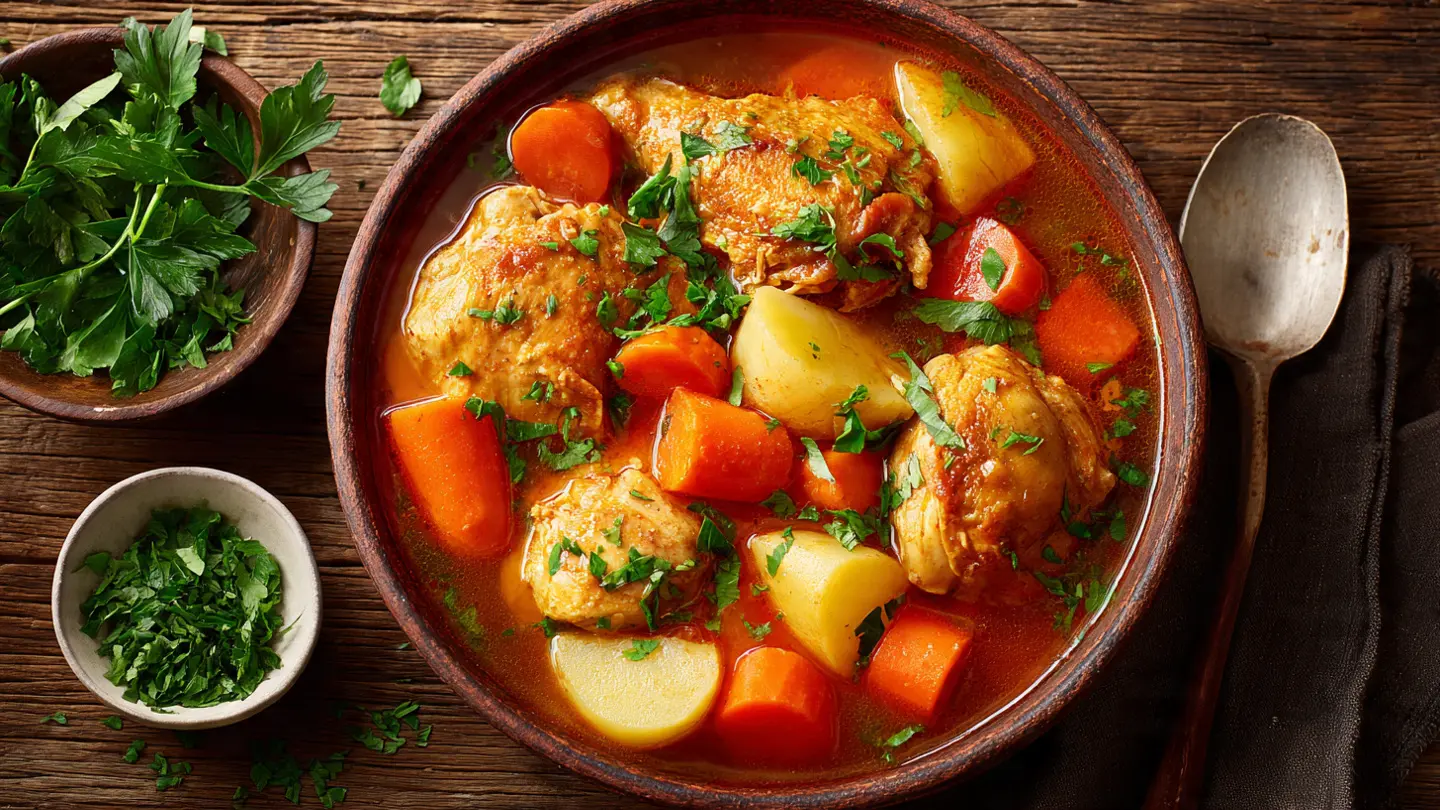
A truly great chicken stew recipe is the kind of meal that makes the whole house smell incredible. It is slow-simmered, deeply savory, and packed with tender chicken and vegetables in a rich, thick broth that clings to every bite.
This is the classic, traditional version that most people grew up eating. Bone-in chicken pieces (or boneless thighs) are braised low and slow with potatoes, carrots, celery, and onion in a herb-forward broth that gets thicker and more flavorful as it cooks.
What makes this version stand out is the layering of flavor. You start by browning the chicken first, which builds a fond on the bottom of the pot that becomes the backbone of the entire stew. Then aromatics go in, followed by a splash of flour to thicken things up before the broth is added. That technique alone is the difference between a thin soup and a proper, velvety stew.
Whether you are feeding a hungry family on a weeknight or cooking a big batch to have leftovers all week, this chicken stew recipe delivers every single time.
For another cozy chicken dish, chicken and dumplings is another classic comfort food that uses a very similar base.
Why You’ll Love This Chicken Stew Recipe
This chicken stew recipe checks every box when it comes to a satisfying, no-fuss dinner.
It is made with simple, affordable ingredients you likely already have in your kitchen. No specialty items, no complicated techniques, just honest home cooking done right.
The stew is incredibly versatile. You can make it on the stovetop, in a Dutch oven, or adapt it for a slow cooker with very little adjustment.
It only gets better the next day. The flavors deepen overnight, making leftovers even more delicious than the original batch.
It freezes beautifully, which makes it a great candidate for meal prepping or stocking your freezer with ready-to-reheat dinners.
It is naturally gluten-adaptable. Simply swap the flour for a cornstarch slurry and you have a completely gluten-free version.
- One-pot meal with minimal cleanup
- Family-friendly and crowd-pleasing
- Ready in about 1 hour on the stovetop
- Packed with vegetables and lean protein
- Budget-friendly ingredients
You might also enjoy: Chicken Vegetable Soup
Ingredients
This chicken stew recipe uses a straightforward list of whole, real-food ingredients. Each one plays a role in building the final flavor of the stew.
- 2 lbs (900g) boneless, skinless chicken thighs (or bone-in chicken pieces), cut into 1.5-inch chunks
- 3 tablespoons olive oil, divided
- 1 large yellow onion, diced
- 4 cloves garlic, minced
- 3 medium carrots, peeled and sliced into 1/2-inch rounds
- 3 stalks celery, sliced
- 1.5 lbs (680g) Yukon Gold potatoes, cut into 1-inch chunks
- 3 tablespoons all-purpose flour
- 4 cups (960ml) chicken broth (low-sodium recommended)
- 1 cup (240ml) water
- 2 tablespoons tomato paste
- 1 teaspoon dried thyme
- 1 teaspoon dried rosemary
- 1 bay leaf
- 1 teaspoon paprika
- Salt and black pepper, to taste
- Fresh parsley, chopped, for garnish
Read Also: Chicken Tortilla Soup Recipe
Kitchen Equipment Needed
Having the right equipment makes this stew straightforward and stress-free to put together.
- Large Dutch oven or heavy-bottomed pot (at least 6 quarts)
- Wooden spoon or silicone spatula for stirring
- Sharp chef’s knife and cutting board
- Measuring cups and measuring spoons
- Ladle for serving
- Instant-read thermometer (optional but helpful for checking chicken doneness)
Read Also: Crockpot Beef Stew Recipe
Recommended Products for This Recipe
These are products I genuinely recommend based on quality and performance for making the best possible chicken stew.
1. Enameled Cast Iron Dutch Oven
A good enameled cast iron Dutch oven is the single best tool for making stew. It distributes heat evenly, retains temperature beautifully, and can go from stovetop to oven without any issues. The heavy lid traps steam and moisture, which creates a self-basting effect that keeps the chicken incredibly tender.
2. Low-Sodium Chicken Broth
The quality of your broth directly affects the depth of flavor in this stew. A high-quality low-sodium chicken broth lets you control the salt level while still getting a rich, meaty base. Look for one with a short ingredient list and no added MSG.
3. Herb and Spice Set
Fresh dried herbs make a noticeable difference in flavor. A quality herb and spice set that includes thyme, rosemary, paprika, and bay leaves will serve you well for this recipe and countless others. Spices that are less than 6 months old are noticeably more aromatic and flavorful.
4. Yukon Gold Potatoes (5 lb Bag)
Yukon Gold potatoes hold their shape during long cooking and have a naturally buttery flavor that works beautifully in stews. Unlike russets, they do not fall apart and turn mushy, which gives your stew a better texture overall.
5. Kitchen Ladle Set
A good stainless steel ladle set is something every home cook should have. It makes serving stew clean and easy, and the right size ladle ensures you get a good ratio of broth to solids in every bowl.
This recipe also pairs wonderfully with a batch of chicken rice soup if you are looking for another simple, wholesome chicken dinner idea.
Step-by-Step Instructions
1. Prep All Your Ingredients
- Cut the boneless chicken thighs into 1.5-inch (about 4cm) chunks, ensuring the pieces are roughly the same size so they cook evenly.
- Season the chicken generously on all sides with salt, black pepper, and the teaspoon of paprika. Set aside.
- Dice the onion into medium pieces, approximately 1/2 inch.
- Mince the garlic cloves finely.
- Peel the carrots and slice them into 1/2-inch rounds.
- Slice the celery into similarly sized pieces.
- Scrub the Yukon Gold potatoes and cut them into 1-inch chunks. You do not need to peel them, but you can if you prefer.
- Measure out your broth, water, tomato paste, flour, and dried herbs before you begin cooking. This way everything is within reach when you need it.
2. Sear the Chicken
- Heat 2 tablespoons of olive oil in your Dutch oven or heavy-bottomed pot over medium-high heat.
- Once the oil shimmers and is hot, add the seasoned chicken pieces in a single layer. Do not crowd the pot. Work in two batches if necessary.
- Let the chicken cook undisturbed for 3 to 4 minutes until a deep golden-brown crust forms on the bottom.
- Flip the pieces and brown the other side for another 2 to 3 minutes.
- The chicken does not need to be cooked through at this stage, only seared. The interior will finish cooking in the broth.
- Remove the browned chicken from the pot and place it on a plate. Set aside.
3. Sauté the Aromatics
- Reduce the heat to medium and add the remaining 1 tablespoon of olive oil to the same pot.
- Add the diced onion and cook, stirring occasionally, for 4 to 5 minutes until it becomes soft and translucent.
- Add the minced garlic and cook for another 1 minute, stirring constantly so the garlic does not burn. It should be fragrant and golden, not brown.
- Add the tomato paste and stir it into the onion and garlic mixture. Cook for 2 minutes, stirring frequently. This step deepens the color and adds a subtle richness to the stew’s base.
4. Build the Stew Base
- Sprinkle the 3 tablespoons of flour directly over the onion mixture in the pot.
- Stir well to coat the vegetables and cook for 1 to 2 minutes. This step cooks out the raw flour taste and creates the thickening base for your stew.
- Slowly pour in about 1 cup of the chicken broth while stirring continuously to prevent lumps from forming.
- Once the flour is fully incorporated, add the remaining 3 cups of chicken broth and the 1 cup of water.
- Stir in the dried thyme, dried rosemary, bay leaf, and a pinch more salt and pepper.
5. Add the Vegetables and Chicken
- Add the sliced carrots, celery, and potato chunks to the pot.
- Return the browned chicken pieces (and any accumulated juices from the plate) back into the pot.
- Stir everything together gently to combine.
- The broth should just cover or nearly cover all the ingredients. If not, add a little more water or broth to bring it up.
6. Simmer Until Tender
- Bring the stew to a gentle boil over medium-high heat, then immediately reduce the heat to low.
- Cover the pot with the lid slightly ajar to allow some steam to escape. This helps the broth reduce and thicken slightly.
- Simmer the stew for 35 to 40 minutes, stirring every 10 minutes or so to make sure nothing sticks to the bottom.
- The stew is ready when the potatoes are fork-tender, the carrots are soft, and the chicken is cooked through (internal temperature of 165°F / 74°C).
- Remove the bay leaf and discard it.
- Taste and adjust seasoning with additional salt and pepper as needed.
7. Finish and Serve
- If you prefer a thicker stew, use the back of a wooden spoon to lightly mash a few of the potato pieces against the side of the pot, then stir to incorporate.
- Ladle the stew into wide, deep bowls.
- Garnish generously with freshly chopped parsley.
- Serve hot with crusty bread, biscuits, or over a scoop of mashed potatoes if desired.
Read Also: Chicken Soup Recipe
Tips for Success
These practical tips will help you get the most out of this chicken stew recipe every time you make it.
- Do not skip the sear. Browning the chicken creates flavor compounds through the Maillard reaction. That fond on the bottom of the pot is pure flavor that gets scraped up and distributed into the entire stew.
- Use chicken thighs over breasts. Thighs have more fat and connective tissue, which means they stay moist and tender during the longer cooking time. Chicken breast can dry out or become rubbery if overcooked.
- Cut vegetables uniformly. When all your pieces are a similar size, they cook at the same rate. This prevents some pieces from turning mushy while others are still firm.
- Season in layers. Season the chicken before browning, season the broth after adding it, and taste again at the end. Layering seasoning throughout the cooking process creates a more complex, rounded flavor.
- Cook low and slow. A vigorous boil will toughen the chicken. A gentle simmer is what produces the silky, fall-apart texture you want.
- Let it rest before serving. Like most braises and stews, this one benefits from 5 to 10 minutes of resting off the heat before you ladle it out. The flavors settle and the broth tightens up slightly.
For another deeply flavored braised chicken dish, chicken cacciatore uses a similar technique with an Italian-inspired tomato base.
Serving Suggestions
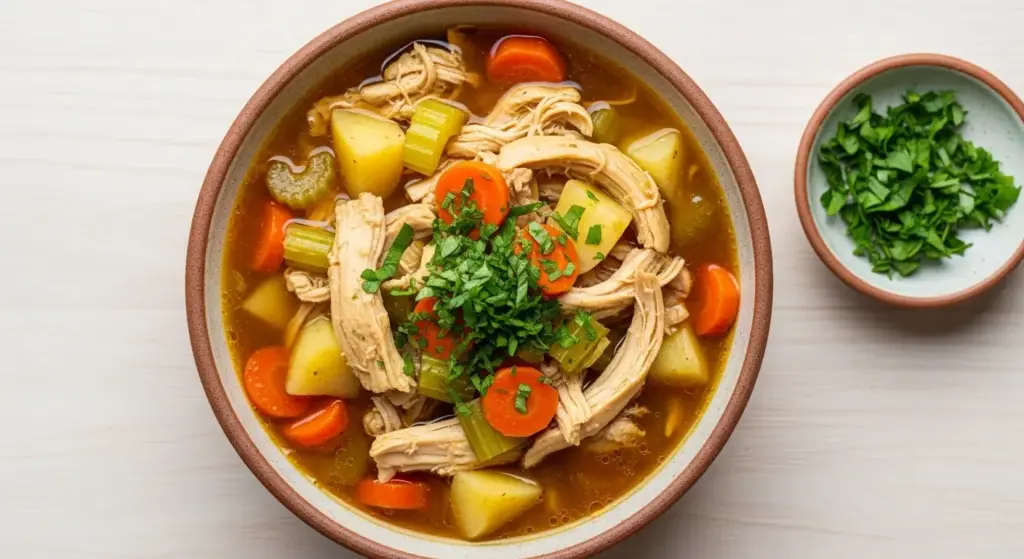
This chicken stew is a full meal on its own, but a few well-chosen sides can really round out the dinner table.
Serve it with warm, crusty skillet cornbread for soaking up every last drop of that rich broth.
- Warm dinner rolls or homemade biscuits work beautifully alongside
- A simple broccoli salad on the side adds a fresh, crunchy contrast to the warm stew
- Spoon the stew directly over creamy mashed potatoes for an extra-hearty serving
- A light green salad with a vinaigrette dressing balances the richness of the dish
- A glass of dry white wine or apple cider pairs wonderfully with the herbed broth
Variations to Try
Once you have mastered the classic version of this chicken stew recipe, there are plenty of delicious ways to change it up.
- Slow Cooker Chicken Stew: Brown the chicken and sauté the aromatics on the stovetop as directed, then transfer everything to a slow cooker. Cook on LOW for 6 to 8 hours or HIGH for 3 to 4 hours. This hands-off method results in incredibly tender chicken.
- Creamy Chicken Stew: Stir in 1/2 cup (120ml) of heavy cream or coconut cream in the last 5 minutes of cooking for a luscious, creamy version.
- Chicken and Mushroom Stew: Add 8 oz (225g) of sliced cremini mushrooms along with the celery and carrots for an earthy, umami-rich variation.
- Spicy Chicken Stew: Add 1 teaspoon of cayenne pepper or a diced jalapeño along with the aromatics for a version with some heat.
- Chicken Stew with Barley: Swap the potatoes for 1/2 cup (100g) of pearl barley added in Step 5. The barley cooks in the broth and makes the stew extra thick and hearty.
For a Southern spin on this type of comfort stew, brunswick stew is a classic that is well worth trying.
Storage and Reheating
This chicken stew stores exceptionally well, making it one of the best meal-prep-friendly recipes you can have in your rotation.
- Refrigerator: Allow the stew to cool completely before transferring it to an airtight container. It will keep in the refrigerator for up to 4 days. The flavors actually improve after a day or two as the stew sits.
- Freezer: Store in freezer-safe containers or zip-top bags for up to 3 months. Leave a bit of headspace in the containers since the liquid will expand when frozen. Thaw overnight in the refrigerator before reheating.
- Stovetop Reheating: Transfer the desired amount to a small saucepan and reheat over medium-low heat, stirring occasionally, until warmed through. Add a splash of broth or water if the stew has thickened too much in the fridge.
- Microwave Reheating: Place in a microwave-safe bowl, cover loosely, and heat in 60-second intervals, stirring between each, until hot throughout.
Note: If you plan to freeze this stew, you may find that the potatoes become a bit softer in texture after thawing. This is perfectly normal and does not affect the taste.
Read Also: Brunswick Stew Recipe
Nutritional Facts
The following nutrition information is an estimate per serving, based on a recipe that makes 6 servings. Exact values will vary depending on the specific ingredients and quantities used.
| Nutrient | Amount Per Serving |
|---|---|
| Calories | ~380 kcal |
| Protein | 32g |
| Total Fat | 12g |
| Saturated Fat | 2.5g |
| Carbohydrates | 32g |
| Dietary Fiber | 4g |
| Sugars | 5g |
| Sodium | ~520mg |
| Potassium | ~850mg |
| Vitamin A | 120% DV |
| Vitamin C | 30% DV |
| Iron | 15% DV |
Percent Daily Values are based on a 2,000-calorie diet.
For another hearty, protein-rich comfort meal to add to your weekly rotation, chicken casserole is another reader favorite that comes together quickly.
Health Benefits of Key Ingredients
This chicken stew recipe is not just comforting, it is genuinely nutritious.
The core ingredients work together to deliver a meal that is high in protein, rich in vitamins, and packed with anti-inflammatory compounds.
- Chicken thighs are an excellent source of complete protein, providing all essential amino acids needed for muscle repair and immune function. They also contain B vitamins, including niacin and B6, which support energy metabolism.
- Carrots are loaded with beta-carotene, the precursor to vitamin A, which is critical for eye health and immune function. One serving of this stew provides well over 100% of the daily recommended vitamin A intake.
- Celery contains antioxidants and anti-inflammatory compounds, including apigenin and luteolin. It is also a good source of vitamin K and folate.
- Yukon Gold potatoes are a surprising source of potassium, vitamin C, and resistant starch, which feeds beneficial gut bacteria and supports digestive health.
- Garlic contains allicin, a sulfur compound with well-documented antimicrobial and cardiovascular benefits.
- Thyme and rosemary are both rich in antioxidants and have been traditionally used to support respiratory and digestive health.
This recipe is also a naturally gluten-free-adaptable dish, easy to modify for a wide range of dietary needs.
Frequently Asked Questions
1. Can I use chicken breast instead of chicken thighs?
Yes, you can use boneless, skinless chicken breasts in this recipe. However, keep in mind that chicken breast is leaner and more prone to drying out during long cooking times. If using breasts, reduce the simmering time slightly and check for doneness at around 25 to 30 minutes. Cutting the pieces a bit larger, around 2 inches, also helps prevent them from overcooking.
2. How do I make the stew thicker?
There are a few easy ways to thicken chicken stew. The flour added in Step 4 already gives the broth a nice body, but if you want it even thicker, you can mash a handful of the cooked potato pieces against the side of the pot and stir them in. Alternatively, mix 1 tablespoon of cornstarch with 2 tablespoons of cold water and stir the slurry into the simmering stew during the last 5 minutes.
3. Can I make this in a slow cooker?
Absolutely. For the best flavor, brown the chicken and sauté the aromatics on the stovetop first. Then transfer everything to your slow cooker and cook on LOW for 6 to 8 hours or HIGH for 3 to 4 hours. The slow cooker method produces an incredibly tender stew with very little active effort.
4. What kind of potatoes work best in chicken stew?
Yukon Gold potatoes are the top choice because they hold their shape well during long cooking while still becoming beautifully tender. Red potatoes are another good option for the same reason. Avoid russet (baking) potatoes, as they tend to break down and become mushy, which can make the stew cloudy and gluey.
5. Can I add other vegetables to this recipe?
Definitely. This is one of the most flexible stew recipes you will find. Green beans, peas (added in the last 5 minutes), parsnips, turnips, corn, or sweet potatoes all work well. Just be mindful of cooking times. Heartier vegetables like parsnips and turnips can go in with the carrots and potatoes, while tender vegetables like peas and green beans should be added toward the end.
For another chicken-forward comfort food with a similar warm, homey flavor profile, chicken and dumplings is a must-try.
Final Thoughts
This chicken stew recipe is the kind of cooking that never goes out of style. It is warm, filling, endlessly adaptable, and made from ingredients that are always within reach.
Once you make it once, you will understand why it has been a staple in home kitchens for generations. The smell alone as it simmers on the stove is worth it.
Give this recipe a try and make it your own. Add a vegetable your family loves, toss in extra herbs, or ladle it over a big pile of mashed potatoes. There is no wrong way to enjoy a bowl of homemade chicken stew.
If you make this recipe, leave a comment below and let me know how it turned out! I would love to hear your variations and any tips you picked up along the way.
Recommended:
- Chicken Soup Recipe
- Irish Stew Recipe
- Lamb Stew Recipe
- Cowboy Stew Recipe
- Beef Bourguignon Recipe
- Chicken Marsala Recipe
- Garlic Mashed Potatoes Recipe
- Sweet Cornbread Recipe
- Vegetable Soup Recipe
- Classic Chicken Pot Pie Recipe