A great scrambled eggs recipe is one of the most underrated skills in the kitchen. Most people have been making them their whole lives, yet so many end up with rubbery, dry, or bland eggs that barely resemble what they’re capable of being.
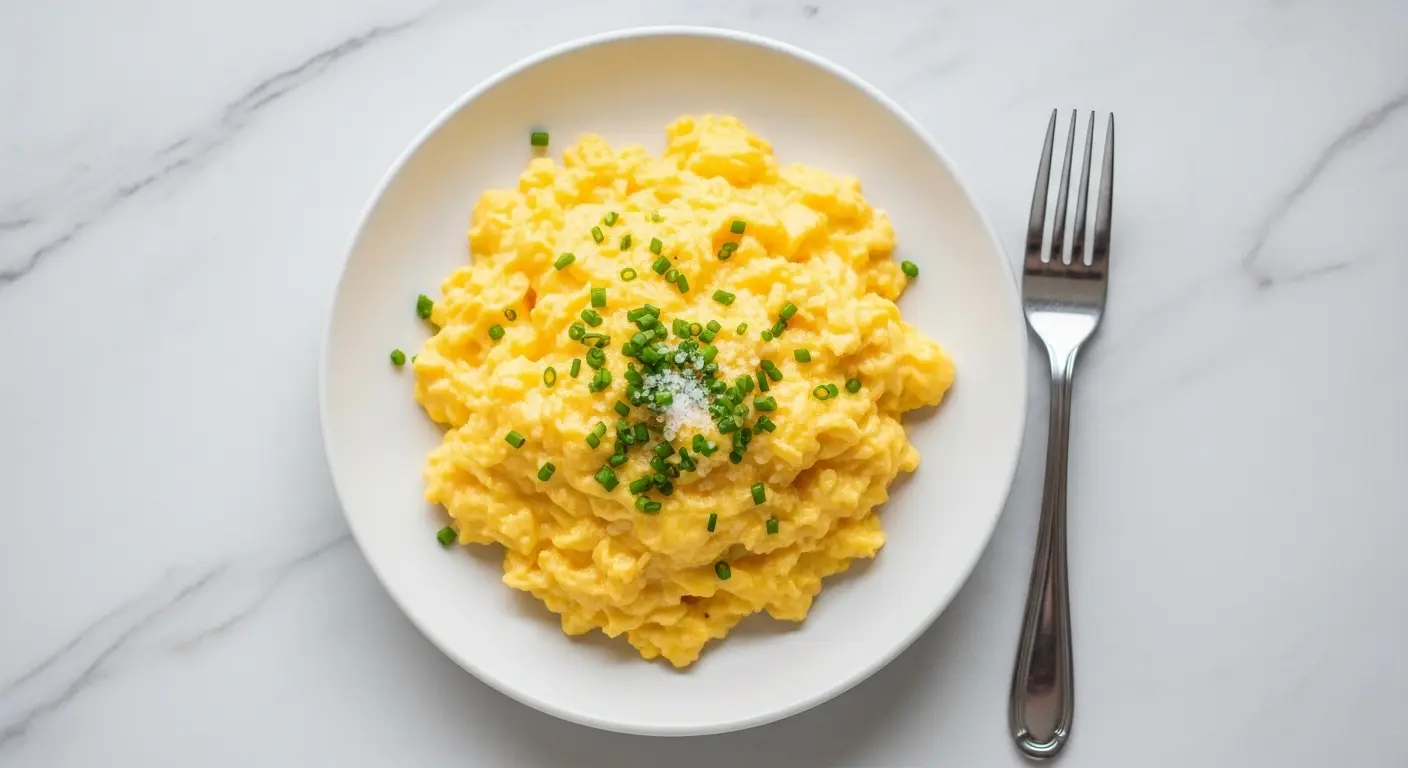
The truth is, scrambled eggs done right are silky, soft, and almost custardy, with a richness that feels genuinely satisfying even in their simplicity.
This recipe focuses on the classic stovetop method, using just a handful of pantry staples and a technique that delivers consistently creamy results every single time.
It takes under 10 minutes from start to finish, requires no special tools, and works beautifully as a quick weekday breakfast or a lazy weekend brunch centerpiece.
If you’ve ever wondered why restaurant scrambled eggs taste better than the ones you make at home, this guide breaks down exactly why, and how to replicate that magic in your own kitchen.
For another fantastic egg-based breakfast that’s just as quick and satisfying, check out this Air Fryer Egg Toast.
Why You’ll Love This Scrambled Eggs Recipe
This recipe has earned a permanent spot in regular breakfast rotation for good reason.
It’s endlessly reliable, requires almost no prep, and delivers results that feel far more special than the effort involved.
Here’s what makes it so hard to resist:
- Genuinely creamy texture — the low-and-slow cooking method keeps the eggs soft and custardy rather than tough or rubbery.
- Ready in under 10 minutes — perfect for busy mornings when you still want a real, satisfying meal.
- Minimal ingredients — eggs, butter, a splash of dairy, salt, and pepper is all you need.
- Highly customizable — once you master the base recipe, you can take it in dozens of directions with add-ins and toppings.
- Beginner-friendly — even if you’ve never made eggs before, the step-by-step instructions make this completely foolproof.
- Works for any meal — breakfast, brunch, or even a quick protein-rich dinner when you need something fast.
If you love easy egg dishes for breakfast, you’ll also want to try these Air Fryer Egg Bites for another fuss-free morning option.
Ingredients
Only a few simple ingredients stand between you and the creamiest scrambled eggs of your life. The key is using the best quality eggs you can find, since there’s nowhere to hide with such a minimal recipe.
- 4 large eggs
- 1 tablespoon (14 g) unsalted butter
- 2 tablespoons (30 ml) whole milk or heavy cream
- 1/4 teaspoon (1.5 g) fine salt, or to taste
- 1/8 teaspoon (0.3 g) freshly ground black pepper
- 1 tablespoon (3 g) fresh chives, finely chopped (optional, for garnish)
Read Also: Egg Bites Recipe
Kitchen Equipment Needed
You don’t need fancy equipment to make incredible scrambled eggs. A good pan and a flexible spatula are really the only two things that make a meaningful difference.
- Non-stick skillet (8 or 10-inch / 20 or 25 cm)
- Silicone spatula
- Mixing bowl
- Whisk or fork
- Measuring spoons
For an alternative egg breakfast method, this Air Fryer Quiche is another easy option worth bookmarking.
Recommended Products for This Recipe
These are products that genuinely make a difference when it comes to making perfect scrambled eggs, selected for quality and performance.
1. T-fal Professional Non-Stick Fry Pan
A truly non-stick pan is non-negotiable for soft, creamy scrambled eggs that don’t stick or tear. The T-fal Professional line heats evenly and has an indicator that shows when the pan is perfectly preheated, which is exactly the kind of control this recipe benefits from. It’s durable, easy to clean, and one of the best value non-stick pans available.
2. OXO Good Grips Silicone Spatula
The gentle folding technique that creates creamy scrambled eggs requires a flexible, heat-resistant spatula. The OXO Good Grips silicone spatula is soft enough not to scratch your pan and firm enough to give you control over every fold. It’s a small investment that makes a real difference.
3. Organic Free-Range Eggs
The flavor of your scrambled eggs is only as good as the eggs themselves. Organic, pasture-raised eggs have noticeably richer, more golden yolks and a more complex, buttery flavor. When you’re working with just a handful of ingredients, the quality of each one matters enormously.
4. Kerrygold Grass-Fed Butter
Butter is one of just two fats in this recipe, so using a high-quality, grass-fed butter like Kerrygold makes a genuine flavor difference. It has a higher fat content and a creamier, more complex taste than standard butter, which translates directly into richer scrambled eggs.
Read Also: Egg Bake Recipe
Step-by-Step Instructions
1. Crack and Whisk the Eggs
- Crack 4 large eggs into a mixing bowl.
- Add 2 tablespoons (30 ml) of whole milk or heavy cream. The dairy helps create a looser, more tender curd. Whole milk gives a lighter texture; heavy cream makes them even richer and more custardy.
- Add 1/4 teaspoon (1.5 g) of fine salt and 1/8 teaspoon (0.3 g) of black pepper.
- Whisk everything together vigorously for about 30 seconds until the mixture is fully combined and slightly frothy. You want to see no streaks of white or yolk — just a uniform, pale yellow mixture.
- Do not add salt after cooking. Salting the eggs before cooking seasons them all the way through rather than just on the surface.
2. Preheat the Pan
- Place your non-stick skillet over low to medium-low heat. This is the most important part of the whole process. High heat is the number one cause of tough, rubbery scrambled eggs.
- Add 1 tablespoon (14 g) of butter to the cold pan and let it melt slowly as the pan warms up.
- Watch the butter carefully. You want it to melt and begin to foam gently, but it should not brown or sizzle aggressively. Gently foaming butter is your signal that the pan is at the right temperature.
- If the butter starts browning or you hear loud sizzling, remove the pan from the heat briefly to let it cool down slightly before continuing.
3. Add the Eggs
- Once the butter is melted and foamy, pour the whisked egg mixture into the center of the pan.
- Let the eggs sit undisturbed for about 15 to 20 seconds. You’ll start to see the edges just beginning to set — they’ll look slightly opaque around the very outer rim of the pan.
- This short pause allows the bottom layer to just barely start cooking before you begin moving them, which helps form larger, softer curds rather than tiny, broken pieces.
4. Cook Low and Slow with Gentle Folding
- Using your silicone spatula, begin gently pushing and folding the eggs from the outside edges toward the center of the pan.
- Use slow, deliberate strokes rather than scrambling quickly. The goal is to fold large, pillowy curds rather than breaking them up into fine pieces.
- Every 5 to 8 seconds, make another gentle fold, rotating around the pan to ensure even cooking.
- The eggs should move slowly and look glossy and wet throughout this stage. If they’re setting too fast or look dry, reduce the heat immediately.
- If the eggs start cooking too quickly at any point, lift the pan off the heat entirely for 5 to 10 seconds while continuing to fold, then return to the burner. This off-heat technique is used by professional chefs and gives you much greater control over the final texture.
5. Remove from Heat While Still Slightly Underdone
- This is the step most home cooks miss. Remove the pan from the heat when the eggs still look slightly underdone and glossy — not fully set.
- The residual heat in the pan will continue cooking the eggs for another 20 to 30 seconds after you take them off the stove.
- If you wait until the eggs look perfectly done before removing them, they’ll be overcooked by the time they hit the plate.
- At this point, give them one final gentle fold to bring everything together into soft, creamy curds.
6. Plate and Garnish
- Immediately slide the scrambled eggs onto your plate. Don’t leave them sitting in the hot pan or they’ll continue to cook and dry out.
- Garnish with fresh chives if using, and add an extra pinch of flaky sea salt on top if desired.
- Serve immediately. Scrambled eggs are best enjoyed right away while they’re still hot and creamy.
You might also enjoy: Shakshuka as another impressive, egg-forward breakfast option.
Tips for Success
Mastering scrambled eggs comes down to a handful of principles that are easy to follow once you understand why they work.
- Use low heat, always — high heat is the single biggest mistake people make when cooking scrambled eggs. Low heat keeps the proteins from seizing up too quickly and results in larger, more tender curds.
- Don’t overcrowd the pan — for this recipe, an 8 to 10-inch (20 to 25 cm) pan is ideal for 4 eggs. Too large a pan spreads the eggs too thin and they cook too fast.
- Remove from heat early — pull the eggs off the stove when they still look slightly wet. Carryover cooking will finish them perfectly.
- Use butter, not oil — butter adds flavor, emulsifies the egg proteins, and helps create that characteristic richness.
- Whisk thoroughly — fully incorporating the eggs before cooking ensures even texture and flavor throughout.
- Add dairy for creaminess — a small splash of whole milk or heavy cream loosens the egg proteins and produces softer, more custardy curds.
- Season before cooking — salting eggs before they go into the pan seasons them evenly rather than just on the surface.
Another fantastic breakfast to add to your morning lineup is this Dutch Baby.
Serving Suggestions
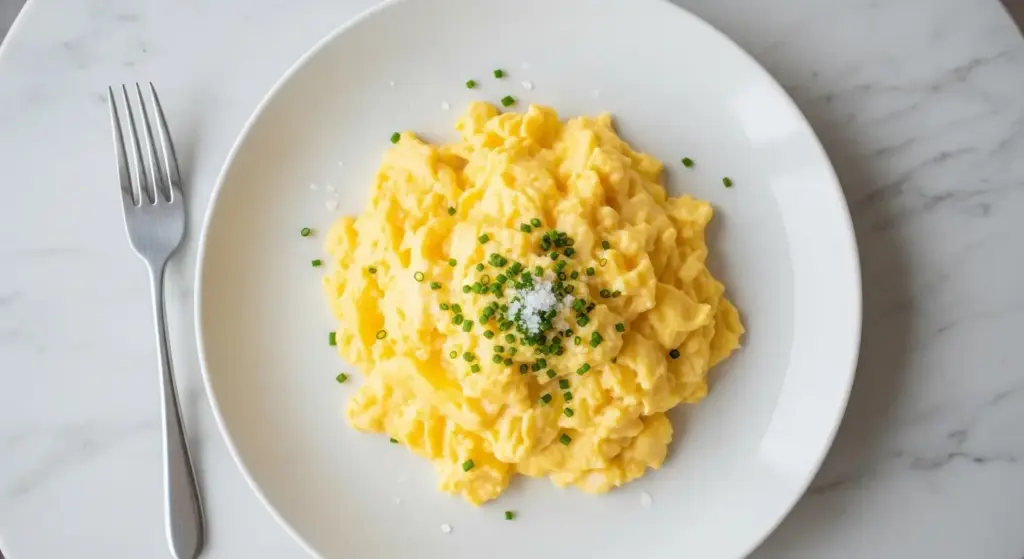
Scrambled eggs are incredibly versatile and pair well with so many things. Here are some of the best ways to serve them:
These eggs are wonderful on top of buttered toast or an English muffin for a classic, simple breakfast. They also pair beautifully with a generous side of Breakfast Potatoes and crispy Air Fryer Bacon for a full, satisfying spread.
- Serve alongside Avocado Toast for a trendy and nutritious breakfast
- Pair with toasted bagels and smoked salmon for an elevated weekend brunch
- Serve inside a warm Breakfast Burrito with cheese, salsa, and avocado
- Add alongside a full Breakfast Skillet spread for a crowd-pleasing brunch
- Top with fresh herbs, a drizzle of hot sauce, or a spoonful of salsa for extra flavor
Variations to Try
Once you’ve nailed the classic version, scrambled eggs are a great canvas for experimentation. Here are some delicious directions to take them.
Each variation uses the exact same base recipe and technique, with simple additions that make them feel completely new.
- Cheesy scrambled eggs — stir in 2 to 3 tablespoons (15 to 25 g) of grated cheddar, Gruyere, or Parmesan cheese in the last 30 seconds of cooking and fold gently until melted.
- Herb scrambled eggs — fold in fresh dill, tarragon, or flat-leaf parsley just before serving for a bright, aromatic version.
- Smoked salmon scrambled eggs — gently fold in 2 oz (55 g) of flaked smoked salmon just as the eggs come off the heat, and top with a small dollop of cream cheese and capers.
- Spicy scrambled eggs — whisk a pinch of red pepper flakes or a dash of hot sauce directly into the egg mixture before cooking.
- Cream cheese scrambled eggs — add 1 tablespoon (15 g) of softened cream cheese to the egg mixture before whisking for an even richer, more velvety result.
- Veggie scrambled eggs — saute diced bell peppers, mushrooms, or spinach in the butter before adding the eggs for a heartier, vegetable-forward version.
For more satisfying egg-based dishes, check out this Quiche Lorraine.
Storage and Reheating
Scrambled eggs are absolutely best the moment they come off the stove. However, if you do have leftovers, they can be stored and reheated with good results if handled correctly.
Follow these guidelines to keep them as fresh and appetizing as possible:
- Refrigerator storage — allow the cooked scrambled eggs to cool completely, then transfer to an airtight container. They will keep in the refrigerator for up to 2 days.
- Freezer storage — scrambled eggs can be frozen for up to 1 month, though the texture does soften slightly after thawing. Freeze in individual portions in airtight freezer bags.
- Reheating on the stovetop — warm leftover eggs in a non-stick pan over the lowest possible heat, stirring very gently. Add a small knob of butter to help restore some moisture and richness. This takes about 1 to 2 minutes.
- Reheating in the microwave — place eggs in a microwave-safe dish and heat on 50% power in 20-second intervals, stirring gently between each interval, until just warmed through. Avoid full power as it will make them rubbery.
- Do not overcook when reheating — since the eggs are already cooked, the goal is just to warm them, not cook them further.
Read Also: Cloud Eggs Recipe
Nutritional Facts
The following nutritional information is based on one serving, which is approximately half of the full recipe (2 eggs with butter and milk). Actual values may vary slightly depending on specific ingredients and brands used.
| Nutrient | Per Serving |
|---|---|
| Calories | 195 kcal |
| Total Fat | 15 g |
| Saturated Fat | 6.5 g |
| Cholesterol | 380 mg |
| Sodium | 330 mg |
| Total Carbohydrates | 1.5 g |
| Protein | 13 g |
| Calcium | 75 mg |
| Iron | 1.8 mg |
| Vitamin D | 2.2 mcg |
Another nutritious egg-based breakfast to explore is this Air Fryer Cloud Eggs Recipe.
Health Benefits of Key Ingredients
This simple scrambled eggs recipe packs a surprisingly impressive nutritional punch for such a minimalist dish.
Each ingredient has been chosen for both flavor and function, and together they form a genuinely nourishing meal.
- Eggs are one of nature’s most complete foods, containing all nine essential amino acids, along with high-quality protein, vitamins D and B12, choline (which is critical for brain health), and lutein and zeaxanthin, which support eye health.
- Egg yolks contain the bulk of the nutrients, including healthy fats, fat-soluble vitamins A, D, E, and K, as well as selenium and phosphorus.
- Butter provides fat-soluble vitamins and short-chain fatty acids. Using grass-fed butter adds a meaningful boost of omega-3 fatty acids and conjugated linoleic acid (CLA), which has been associated with metabolic health.
- Whole milk adds small amounts of calcium, vitamin D, and additional protein, all of which contribute to bone and muscle health.
- Chives (optional garnish) are a surprisingly potent source of vitamin K and antioxidants, and they add a fresh, onion-like flavor that complements eggs beautifully.
- High-quality protein in eggs supports muscle maintenance, provides lasting satiety, and helps stabilize blood sugar levels compared to carbohydrate-heavy breakfasts.
For another breakfast that starts the day with good nutrition, check out this Baked Oatmeal.
Frequently Asked Questions
1. Why are my scrambled eggs rubbery?
Rubbery scrambled eggs are almost always the result of too much heat.
When eggs are cooked at a high temperature, the proteins in the whites and yolks seize up rapidly, squeezing out moisture and creating a tough, chewy texture. The fix is simple: lower your heat and cook more slowly, removing the pan from the burner before the eggs look fully set.
2. Should I use milk or cream in scrambled eggs?
Both work well, and the choice comes down to the texture you prefer.
Whole milk creates softer, lighter curds with a subtle creaminess. Heavy cream produces an even richer, more custardy result. Either way, use just a small amount — about 1 tablespoon per 2 eggs — as too much dairy can actually make the eggs watery.
3. How many eggs per person for scrambled eggs?
A standard serving is 2 to 3 eggs per person, depending on appetite and what else is being served.
For a light breakfast or when paired with other dishes, 2 eggs per person is usually sufficient. For a main meal or for heartier appetites, 3 eggs per person is a more filling portion.
4. Can I make scrambled eggs without butter?
Yes, though butter adds the best flavor and texture.
You can substitute olive oil or a neutral oil like avocado oil. For a dairy-free option, a small amount of coconut oil or a plant-based butter substitute works well. The cooking technique remains exactly the same regardless of the fat you choose.
5. How do I keep scrambled eggs warm for a crowd?
The best method is to slightly undercook them and transfer to a warm (not hot) oven set to 170°F (75°C).
Place the eggs in an oven-safe dish, cover loosely with foil, and hold for up to 15 to 20 minutes. Avoid keeping them warm for longer than this, as they’ll continue to dry out over time. For the best results, cook scrambled eggs in batches and serve them fresh.
Read Also: Easy Egg Salad Recipe
Final Thoughts
A perfect scrambled eggs recipe is one of those recipes that rewards patience and attention even though it takes almost no time at all.
Once you understand that low heat, gentle folding, and removing the pan early are the real secrets, you’ll never go back to making them any other way.
These eggs are rich, custardy, and satisfying in a way that a basic recipe has absolutely no right to be.
Give this method a try tomorrow morning and see for yourself. If you make it, drop a comment below and let me know how they turned out, or share a photo to inspire someone else to try them!
Recommended:
- Breakfast Casserole
- French Toast Casserole
- Easy French Toast
- Cracker Barrel Pancakes
- Easy Waffle Recipe
- Homemade Biscuit Recipe
- Sausage Gravy
- Hashbrown Casserole
- Hollandaise Sauce
- Classic Deviled Eggs