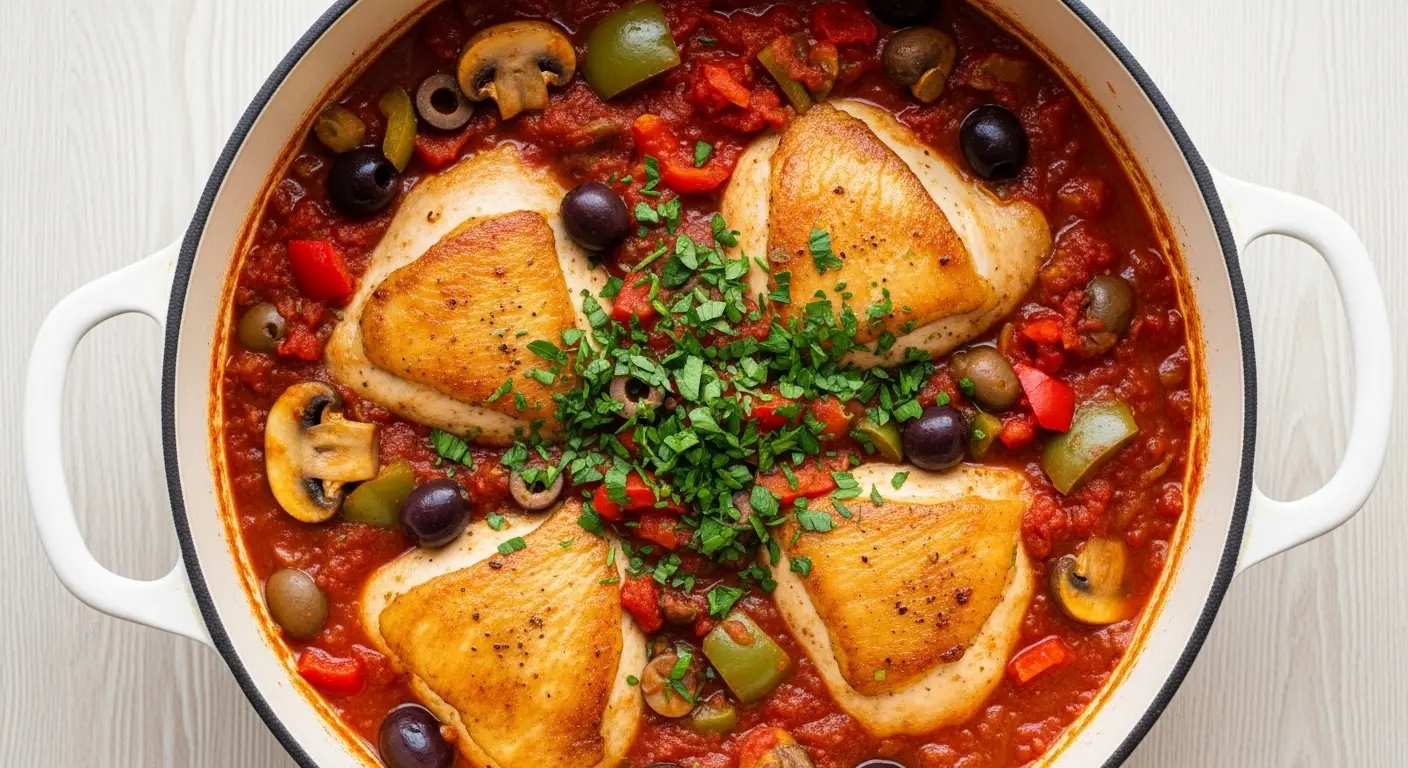
If you’ve been searching for the ultimate chicken cacciatore recipe, your weeknight dinner just got a major upgrade. This classic Italian dish, known as pollo alla cacciatora, brings together bone-in chicken thighs, a rich tomato-herb sauce, bell peppers, mushrooms, olives, and a splash of red wine into one deeply satisfying, one-pot meal.
The name “cacciatore” means “hunter” in Italian, and that rustic, hunter’s-style spirit comes through in every bite.
This recipe has been a staple in Italian kitchens for centuries for a reason: the combination of browning the chicken first and then slow-simmering it in the sauce builds layers of flavor that are hard to beat.
You do not need to be an experienced cook to pull this off. The steps are straightforward, the ingredients are easy to find, and the result looks (and tastes) like something straight from a trattoria.
If you love slow-cooked, deeply flavorful chicken dinners, you will also enjoy this Chicken Stew for more hearty, comforting inspiration.
Why You’ll Love This Chicken Cacciatore Recipe
This dish checks every box for a satisfying family dinner.
It comes together in one pot, which keeps cleanup to a minimum and lets the flavors meld together beautifully as everything simmers.
The combination of bone-in chicken, tomatoes, mushrooms, bell peppers, and red wine creates a sauce that is layered, aromatic, and absolutely incredible spooned over pasta, polenta, or crusty bread.
It is also one of those recipes that gets even better the next day, making it ideal for meal prep or make-ahead dinners for busy weeks.
- One-pot meal: Everything cooks in a single skillet or Dutch oven, simplifying both cooking and cleanup
- Bold, slow-simmered flavor: Browning the chicken and building the sauce from the same pan creates incredible depth
- Beginner-friendly: The steps are simple and forgiving, even if you have never made Italian braised chicken before
- Versatile serving options: Pairs beautifully with pasta, polenta, mashed potatoes, rice, or bread
- Great for meal prep: Leftovers taste even more flavorful the next day as the sauce continues to develop
- Naturally gluten-free: No flour or thickeners needed (unless you choose to dust the chicken)
- Crowd-pleaser: This is the kind of dish that disappears fast at family dinners and dinner parties alike
Read Also: Chicken Marsala Recipe
Ingredients
Chicken cacciatore uses simple pantry-friendly ingredients, but each one plays an important role in building that signature rich, savory sauce. Using bone-in, skin-on chicken thighs and legs is highly recommended for the best flavor and texture, though boneless thighs will also work well.
- 3 lbs (1.36 kg) bone-in, skin-on chicken thighs and drumsticks (about 6 pieces)
- 1 teaspoon kosher salt, plus more to taste
- 1/2 teaspoon black pepper, plus more to taste
- 3 tablespoons extra virgin olive oil, divided
- 1 medium yellow onion, diced
- 1 red bell pepper, sliced into strips
- 1 yellow or green bell pepper, sliced into strips
- 4 cloves garlic, minced
- 8 oz (225g) cremini or button mushrooms, sliced
- 1/2 cup (120ml) dry red wine (such as Chianti or Cabernet Sauvignon)
- 1 can (28 oz / 800g) crushed San Marzano tomatoes
- 2 tablespoons tomato paste
- 1/2 cup (120ml) low-sodium chicken broth
- 1/2 cup (about 70g) black olives, pitted and halved
- 1 teaspoon dried oregano
- 1/2 teaspoon dried thyme
- 1 sprig fresh rosemary
- 2 bay leaves
- 1/4 teaspoon red pepper flakes (optional, for a light kick)
- Fresh flat-leaf parsley, chopped, for garnish
You might also enjoy making Creamy Tuscan White Bean Skillet for another Italian-inspired weeknight dinner.
Kitchen Equipment Needed
This recipe requires minimal equipment, and most of what you need is likely already in your kitchen. A heavy-bottomed skillet or Dutch oven is key because it retains heat evenly and prevents the chicken from sticking during the browning phase.
- Large Dutch oven or deep skillet (12-inch / 30cm minimum, with a lid)
- Sharp chef’s knife for prepping vegetables
- Cutting board
- Measuring cups and spoons
- Wooden spoon or silicone spatula
- Tongs for handling chicken
- Ladle for serving
Read Also: Chicken Casserole Recipe
Recommended Products for This Recipe
These products have been selected based on quality and performance, and each one can genuinely make a difference in how this dish turns out.
1. Lodge Enameled Cast Iron Dutch Oven
A heavy-bottomed Dutch oven is the single most important tool for making chicken cacciatore properly. It distributes heat evenly, holds a steady simmer without scorching, and transitions seamlessly from stovetop browning to low-heat braising. Lodge’s enameled version is a workhorse that will last for decades.
2. Mutti or DeLallo San Marzano Crushed Tomatoes
The quality of your canned tomatoes directly affects how good your sauce tastes. San Marzano tomatoes are naturally sweeter, less acidic, and have thicker flesh than regular canned tomatoes, which creates a richer, more balanced sauce without needing to add sugar.
3. Kirkland Signature Extra Virgin Olive Oil
A good extra virgin olive oil adds genuine fruity, peppery depth to this dish both during the browning step and when it melts into the sauce. This large-format bottle is excellent quality for everyday Italian cooking without breaking the bank.
4. OXO Good Grips Tongs
Sturdy, locking tongs make it much easier to handle hot chicken pieces and flip them in the pan without splashing hot oil or tearing the skin. The OXO version has a non-slip grip and a firm locking mechanism that holds up well to heavy use.
5. Castelvetrano or Kalamata Pitted Olives
Not all olives are created equal, and using a good-quality cured olive elevates the finished dish significantly. Castelvetrano olives are buttery and mild, while Kalamata olives bring a saltier, more intense punch. Either variety adds the briny depth that is traditional to authentic cacciatore.
For another Italian-inspired classic, check out this Classic Chicken Parmesan Recipe.
Step-by-Step Instructions
Step 1: Season and Prep the Chicken
- Pat the chicken pieces completely dry with paper towels. This is a critical step: moisture on the surface of the chicken will cause it to steam rather than brown, and you will miss out on that golden, flavorful crust.
- Season the chicken generously on all sides with 1 teaspoon of kosher salt and 1/2 teaspoon of black pepper.
- Set the seasoned chicken aside at room temperature for about 10-15 minutes while you prep the vegetables. Allowing the chicken to sit briefly after seasoning helps the salt penetrate the surface.
Step 2: Brown the Chicken
- Heat 2 tablespoons of the extra virgin olive oil in your Dutch oven or large skillet over medium-high heat until shimmering but not smoking.
- Place the chicken pieces skin-side down in a single layer. Do not crowd the pan; if all pieces do not fit, work in two batches. Crowding the pan will cause the temperature to drop and result in steaming instead of browning.
- Cook the chicken without moving it for 5 to 7 minutes, until the skin is deep golden brown and releases easily from the pan. Resist the urge to move the pieces before they are ready.
- Flip the chicken and brown the other side for another 4 to 5 minutes.
- Remove the browned chicken pieces and place them on a plate. They will not be fully cooked at this stage, and that is fine. They will finish cooking in the sauce.
- If there is excessive fat in the pan, carefully tip it out, leaving about 1 tablespoon worth of drippings (which are packed with flavor).
Step 3: Sauté the Mushrooms
- In the same pan over medium-high heat, add the sliced mushrooms in a single layer.
- Cook without stirring for 3 to 4 minutes, allowing them to brown on one side before stirring. Mushrooms release water quickly, so browning them properly requires patience and a hot pan.
- Stir and cook for another 2 minutes until golden all over.
- Remove the mushrooms to the plate with the chicken and set aside. Adding them back later prevents them from becoming soggy.
Step 4: Sauté the Aromatics and Vegetables
- Reduce the heat to medium. Add the remaining 1 tablespoon of olive oil to the pan.
- Add the diced onion and both bell pepper strips to the pan. Season lightly with a pinch of salt.
- Cook, stirring occasionally, for 5 to 6 minutes until the onion is translucent and the peppers have softened slightly. Scrape up any browned bits from the bottom of the pan as the vegetables release their moisture. Those browned bits are pure flavor.
- Add the minced garlic, dried oregano, dried thyme, and red pepper flakes (if using). Stir and cook for 1 minute until the garlic is fragrant. Be careful not to let the garlic burn.
- Add the tomato paste and stir it into the vegetables. Cook for 2 minutes, stirring frequently. Cooking the tomato paste briefly deepens its flavor and removes the raw, tinny taste.
Step 5: Deglaze with Red Wine
- Pour the red wine into the pan. It will sizzle dramatically, and that is exactly what you want.
- Using your wooden spoon, scrape up all the browned bits from the bottom of the pan. Those bits (called “fond”) are incredibly flavorful and are the foundation of a great sauce.
- Let the wine simmer for 3 to 4 minutes, stirring occasionally, until it has reduced by about half. Reducing the wine cooks off the harsh alcohol flavor while concentrating the fruity, tart notes.
Step 6: Build the Tomato Sauce
- Add the crushed San Marzano tomatoes, chicken broth, fresh rosemary sprig, and bay leaves to the pan.
- Stir everything together to combine.
- Taste the sauce and adjust seasoning with salt and pepper as needed. San Marzano tomatoes are less acidic than regular canned tomatoes, but if the sauce tastes too bright, you can add a tiny pinch of sugar to balance it.
- Bring the sauce to a gentle simmer over medium heat.
Step 7: Braise the Chicken
- Nestle the browned chicken pieces back into the sauce, skin-side up. Try to submerge the thicker parts of the chicken in the sauce while leaving the top of the skin above the liquid. This keeps the skin from going completely soft while the bottom of the chicken braises.
- Bring the sauce back up to a gentle simmer.
- Cover the pan with a lid and reduce the heat to medium-low.
- Simmer for 30 minutes, adjusting the heat as needed to maintain a gentle bubble. The chicken should be very tender at this point.
- After 30 minutes, remove the lid and add the reserved mushrooms and the black olives.
- Continue to simmer uncovered for an additional 10 to 15 minutes, allowing the sauce to reduce slightly and thicken. This also helps concentrate the flavors.
- Check the internal temperature of the thickest piece of chicken using a meat thermometer. It should read 165°F (74°C) to be fully cooked through.
Step 8: Finish and Serve
- Remove and discard the rosemary sprig and bay leaves before serving.
- Taste the sauce one final time and adjust the seasoning with salt and pepper.
- Garnish generously with freshly chopped flat-leaf parsley.
- Serve immediately over pasta, polenta, mashed potatoes, rice, or alongside crusty bread to soak up the sauce.
Read Also: Chicken Soup Recipe
Tips for Success
A few simple techniques make a noticeable difference in how this dish turns out, especially when it comes to browning the chicken and building the sauce. Following these tips will help even first-time cooks get excellent results.
- Dry your chicken thoroughly: Patting the chicken dry is non-negotiable for a proper golden sear. Any surface moisture will prevent browning and affect the final flavor of the sauce.
- Don’t rush the browning step: The deep golden color on the chicken is not just cosmetic. It creates the Maillard reaction, which builds rich, complex flavor that infuses the entire sauce.
- Use bone-in, skin-on pieces: Bone-in chicken releases gelatin and fat into the sauce as it braises, creating a richer, silkier texture. Boneless thighs work but produce a slightly thinner sauce.
- Keep the simmer gentle: A rolling boil will toughen the chicken. You want a soft, lazy bubble throughout the braising time for fall-off-the-bone tenderness.
- Brown your mushrooms separately: Cooking the mushrooms first at high heat ensures they get golden and flavorful rather than steaming and turning rubbery in the sauce.
- Cook the tomato paste: Stirring the tomato paste into the vegetables and cooking it for 2 minutes removes the raw flavor and adds a deeper, almost caramelized richness to the sauce.
- Taste and adjust at the end: The salt, acid, and seasoning balance can shift during the long simmer. Always taste the final sauce and adjust before serving.
Another cozy Italian-inspired meal worth trying: Beef Bourguignon Recipe.
Serving Suggestions
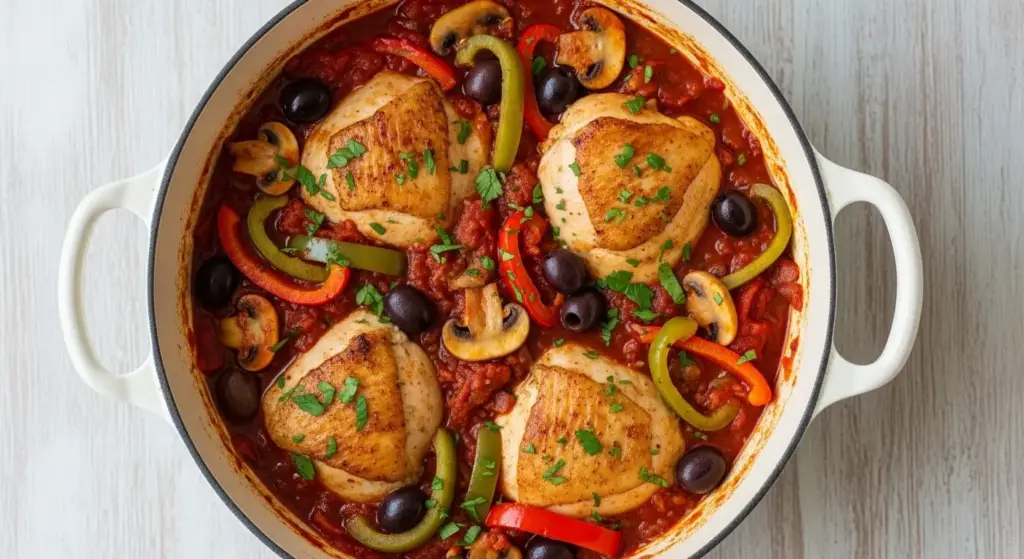
Chicken cacciatore is an incredibly versatile dish that pairs well with a wide range of sides. The key is choosing something that can soak up or complement that rich, tomatoey sauce.
The most classic Italian pairing is egg noodles or pappardelle pasta, which catch the sauce in every fold and make for a deeply satisfying plate.
- Pasta: Pappardelle, rigatoni, or egg noodles are ideal, as their texture stands up well to the rich sauce
- Polenta: Creamy, buttery polenta is arguably the most traditional Italian pairing for this dish
- Creamy Mashed Potatoes: A comforting, crowd-pleasing option that works beautifully with the braised chicken and tomato sauce
- Garlic Bread: Crusty garlic bread is perfect for mopping up every last bit of the sauce
- Rice: Plain steamed white or brown rice absorbs the sauce well and keeps things simple
- Roasted vegetables: Roasted zucchini, asparagus, or green beans make a light and balanced side
- Simple green salad: A lightly dressed arugula or mixed greens salad adds freshness to balance the richness of the dish
Variations to Try
While this classic version is hard to beat, chicken cacciatore is wonderfully adaptable. Regional Italian cooks have been tweaking this dish for centuries, so feel free to make it your own.
- Slow Cooker Chicken Cacciatore: Brown the chicken and build the sauce on the stovetop, then transfer everything to a slow cooker and cook on low for 6 to 8 hours for an effortlessly tender result.
- White Wine Version: Swap the red wine for dry white wine (such as Pinot Grigio or Sauvignon Blanc) for a lighter, more delicate sauce that pairs beautifully with chicken breasts.
- Add capers: Stir in 2 tablespoons of drained capers along with the olives for a briny, puttanesca-inspired twist.
- Tuscan-style with fennel: Replace the bell peppers with thinly sliced fennel for a more herbaceous, anise-forward flavor that is deeply traditional in central Italy.
- With artichoke hearts: Stir in a can of drained, quartered artichoke hearts in the last 15 minutes of cooking for a hearty, earthy addition.
- Spicy version: Increase the red pepper flakes to 1/2 teaspoon or add a whole dried chili to the sauce for a more assertive heat.
You might also love this Chicken Adobo Recipe for another bold, braised chicken dinner with serious depth of flavor.
Storage and Reheating
Chicken cacciatore stores exceptionally well, and many cooks find it tastes even better after a day or two in the refrigerator as the flavors continue to meld.
- Refrigerator: Allow the dish to cool completely, then transfer to an airtight container and refrigerate for up to 4 to 5 days.
- Freezer: Chicken cacciatore freezes beautifully. Store in freezer-safe containers or heavy-duty zip-lock bags for up to 3 months. Label with the date so you know when to use it.
- Thawing: Thaw overnight in the refrigerator for the best results. Avoid thawing at room temperature, which can affect both texture and food safety.
- Stovetop reheating: Place the desired portion in a saucepan over medium-low heat, adding a splash of chicken broth or water if the sauce has thickened. Stir gently and heat until warmed through.
- Microwave reheating: Transfer to a microwave-safe dish, cover loosely, and heat in 90-second intervals, stirring between each, until fully heated.
- Tip: When freezing, consider storing the chicken and sauce separately from pasta or polenta, which do not freeze and reheat as well.
For another make-ahead-friendly dish, try this Chicken Vegetable Soup.
Nutritional Facts
The following is an approximate nutritional breakdown per serving, based on 6 servings and bone-in chicken thighs and drumsticks. Values will vary based on specific ingredients and portion sizes.
| Nutrient | Per Serving |
|---|---|
| Calories | 410 kcal |
| Protein | 35g |
| Total Fat | 22g |
| Saturated Fat | 5g |
| Carbohydrates | 14g |
| Dietary Fiber | 3g |
| Sugars | 7g |
| Sodium | 680mg |
| Potassium | 780mg |
| Vitamin C | 45% DV |
| Iron | 18% DV |
Note: Nutritional values do not include pasta, polenta, or bread served alongside.
Read Also: Chicken Fajita Recipe
Health Benefits of Key Ingredients
This recipe does not just taste good. It is also built around ingredients that bring real nutritional value to your plate.
Chicken thighs are an excellent source of protein, zinc, iron, and B vitamins, including niacin and B12, which support energy metabolism and muscle function. The dark meat also contains more myoglobin, giving it a richer flavor and keeping it juicy even after extended cooking.
- Tomatoes: Rich in lycopene, vitamin C, and potassium; lycopene is a powerful antioxidant that has been linked to reduced risk of heart disease and certain cancers
- Mushrooms: A good source of selenium, B vitamins, and beta-glucans, which support immune function and may help reduce inflammation
- Bell peppers: One of the highest sources of vitamin C of any vegetable, plus a good dose of vitamin A and folate; the red variety in particular contains capsanthin, a beneficial carotenoid
- Garlic: Contains allicin and other sulfur compounds with well-documented antimicrobial and cardiovascular benefits
- Olives and olive oil: Rich in heart-healthy monounsaturated fats and polyphenols, which are associated with reduced inflammation and improved cholesterol levels
- Red wine: In moderation, red wine contains resveratrol, a polyphenol with antioxidant properties (most of the alcohol evaporates during cooking)
- Herbs (rosemary, thyme, oregano): Beyond flavor, these herbs contain rosmarinic acid, carvacrol, and other plant compounds with antioxidant and anti-inflammatory properties
Another nutrient-packed, protein-rich dinner to try: Chicken and Broccoli Recipe.
Frequently Asked Questions
1. Can I use chicken breasts instead of thighs?
Yes, you can use boneless or bone-in chicken breasts for this recipe. Keep in mind that chicken breasts are leaner and can dry out more easily than thighs during extended braising. If using boneless breasts, reduce the simmering time by about 10 to 15 minutes and check the internal temperature early. The result will be slightly less rich but still delicious.
2. What kind of red wine should I use for chicken cacciatore?
A dry, medium-bodied Italian red wine like Chianti, Montepulciano d’Abruzzo, or Barbera d’Asti works beautifully. In general, use any wine you would enjoy drinking, as cooking concentrates its flavor in the sauce. Avoid sweet or very tannic wines, as they can make the sauce taste unbalanced.
3. Can I make chicken cacciatore without wine?
Absolutely. If you prefer to skip the wine, simply replace it with additional chicken broth. You can also add a tablespoon of balsamic vinegar or red wine vinegar along with the broth to add a mild acidity that the wine would normally contribute.
4. Why is my sauce too watery?
A thin sauce usually means the lid was left on throughout the full cooking time, preventing evaporation. Remove the lid for the last 15 to 20 minutes of simmering to allow the sauce to reduce and concentrate. You can also increase the heat slightly to speed up evaporation. Avoid adding flour, which can make the sauce feel pasty.
5. Can I make this recipe ahead of time?
Yes, and it is actually encouraged. Chicken cacciatore tastes noticeably better the next day once the flavors have had time to deepen. You can make the complete dish up to 2 days ahead, store it covered in the refrigerator, and gently reheat it on the stovetop over low heat with a splash of broth if needed.
Read Also: Chicken Tortilla Soup Recipe
Final Thoughts
Chicken cacciatore is one of those timeless recipes that proves comfort food does not have to be complicated.
With a handful of pantry staples, one pot, and about 90 minutes of mostly hands-off cooking time, you end up with a dish that tastes like it took all day.
The deep tomato-herb sauce, tender fall-off-the-bone chicken, earthy mushrooms, and briny olives come together in a way that is genuinely hard to top on a chilly weeknight.
Give this chicken cacciatore recipe a try this week and see what all the fuss is about.
If you make it, drop a comment below and let me know how it turned out! Did you serve it over pasta, polenta, or something else entirely? Sharing your experience helps other readers too.
Recommended:
- Chicken Marsala Recipe
- Chicken Stew Recipe
- Classic Chicken Parmesan Recipe
- Beef Bourguignon Recipe
- Chicken Adobo Recipe
- Italian Wedding Soup Recipe
- Zuppa Toscana Recipe
- Pasta Fagioli Recipe
- Easy Ratatouille Recipe
- Minestrone Soup Recipe