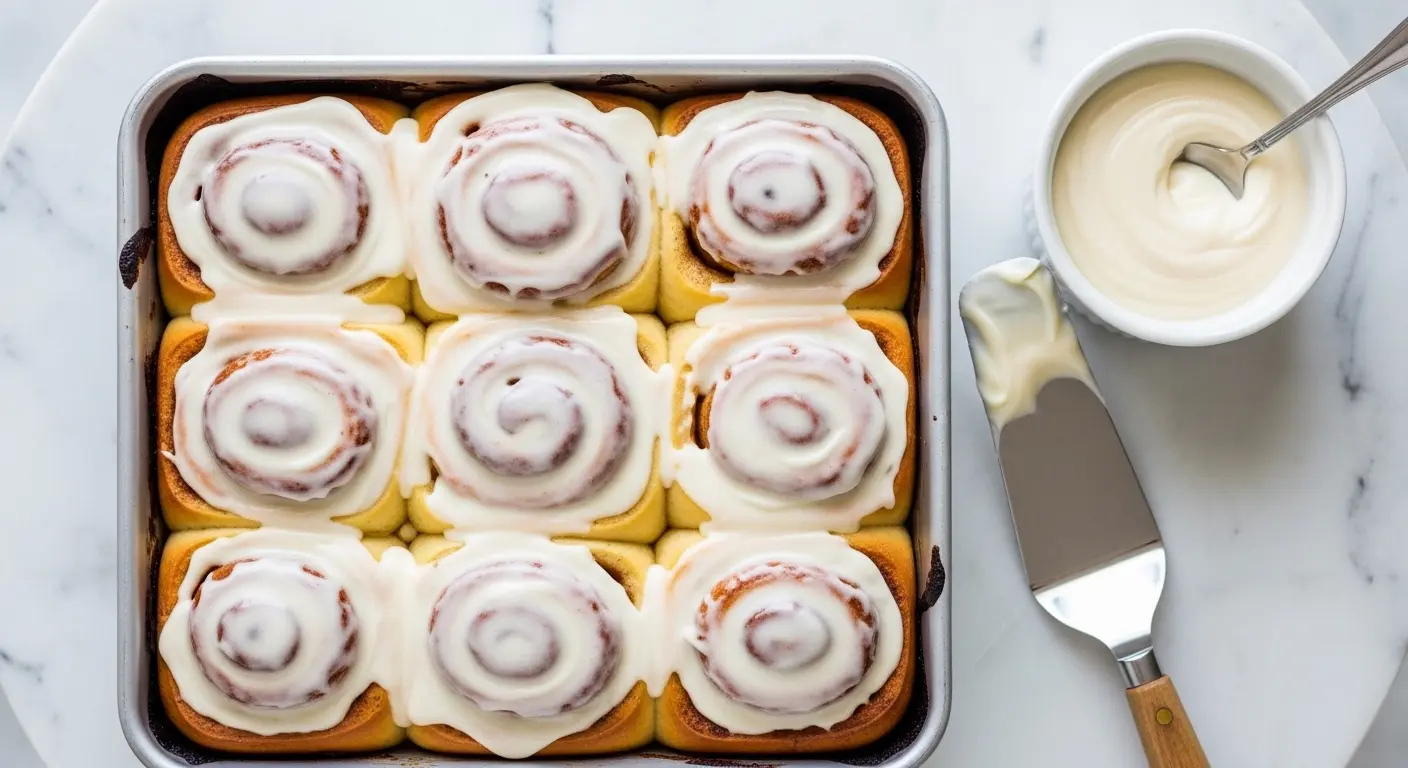
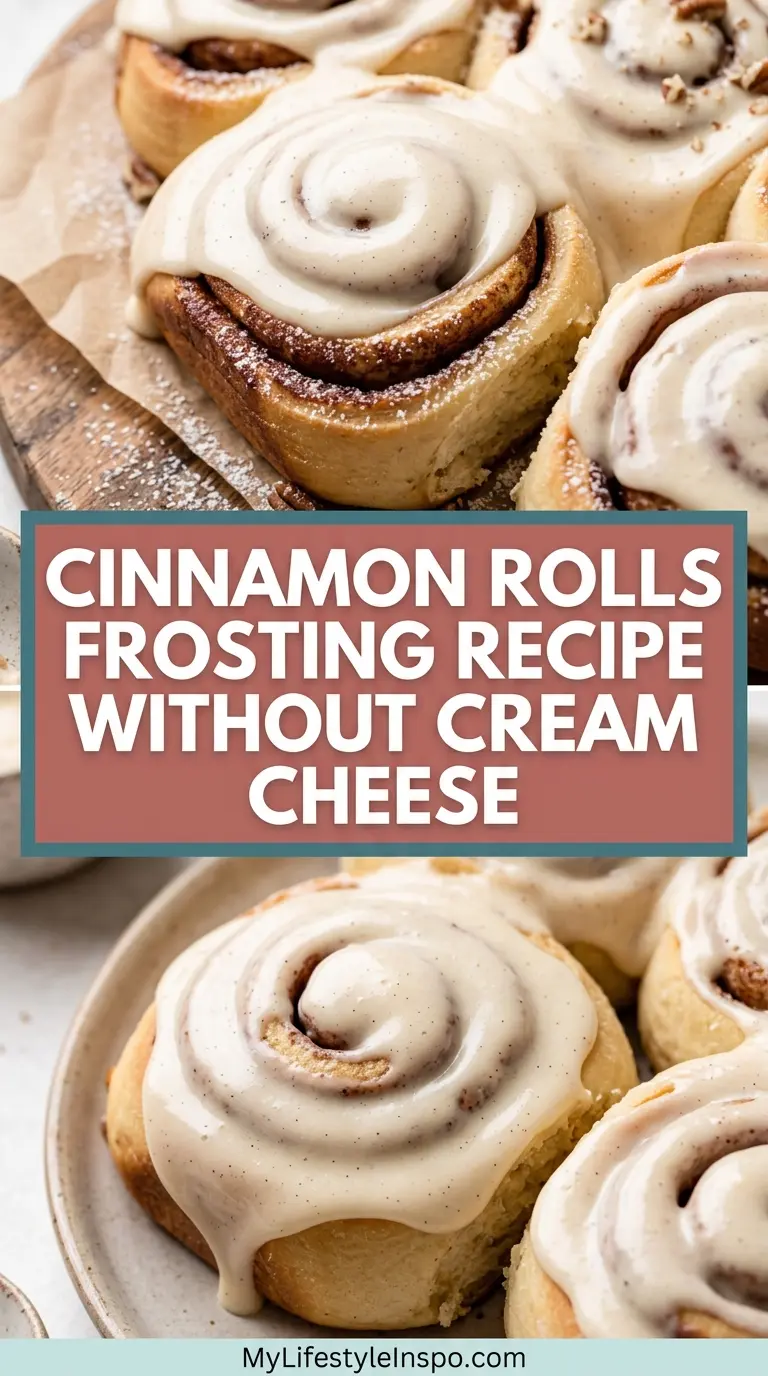
If you’ve been searching for a cinnamon rolls frosting recipe without cream cheese, you’re in the right place. This classic vanilla buttercream-style glaze is silky, rich, and perfectly sweet, delivering everything you want in a cinnamon roll topping without a single ounce of cream cheese.
It comes together in under five minutes with just a handful of pantry staples, making it one of the most practical and crowd-pleasing frostings you’ll ever make.
The secret to why this frosting works so beautifully is softened butter. When butter is properly softened before mixing, it creates a light, fluffy base that holds the powdered sugar without becoming grainy or dense. The result is a frosting that melts into warm rolls, pooling into every spiral and crevice in the most irresistible way.
Unlike cream cheese frosting, which adds a tangy sharpness to the flavor profile, this version is purely sweet and vanilla-forward. That clean, simple sweetness is exactly what many people prefer, especially for classic homemade rolls where you want the cinnamon filling to stay front and center.
You might also enjoy: Carrot Cake With Cream Cheese Frosting

Why You’ll Love This Cinnamon Rolls Frosting Recipe Without Cream Cheese
This frosting has become a staple in kitchens across the world, and for very good reason.
It uses only four to five basic ingredients that you almost certainly already have at home, so there’s never a need to make a special grocery run just to top your rolls.
The texture is completely customizable. Add a little more milk for a pourable glaze that soaks into the rolls, or use less liquid for a thicker, spreadable frosting that sits on top.
It’s also incredibly versatile. Once you’ve made it, you’ll find yourself drizzling it over quick breads, bundt cakes, muffins, and even using it as a dip for churros or apple fritters.
- Ready in under five minutes with no special equipment required
- Made with pantry staples you likely already own
- Easily adjustable to a thicker spread or a thinner drizzle
- Completely dairy-flexible (swappable with plant-based milk and vegan butter)
- No tangy flavor, just clean and sweet vanilla goodness
- Doubles as a glaze for breads, cakes, and muffins
- Kid-friendly and loved by people who aren’t fans of cream cheese
Read Also: Pumpkin Roll Recipe
Ingredients
This recipe yields enough frosting to generously cover a 9×13 pan (about 12 cinnamon rolls). The key to nailing the texture every time is making sure your butter is at true room temperature before you start, not cold, not melted.
- 1/2 cup (113g) unsalted butter, softened to room temperature
- 2 cups (240g) powdered sugar (also called confectioners’ sugar), sifted
- 2 teaspoons pure vanilla extract
- 2–4 tablespoons (30–60ml) whole milk or heavy cream, added one tablespoon at a time
- Pinch of salt (about 1/8 teaspoon)
You might also enjoy: Easy Royal Icing Recipe
Kitchen Equipment Needed
You don’t need anything fancy for this recipe. A standard hand mixer or stand mixer will give you the fluffiest result, but a sturdy whisk and a bit of arm strength will also do the job.
- Large mixing bowl
- Hand mixer or stand mixer
- Rubber spatula or silicone scraper
- Measuring cups and spoons
- Fine mesh sifter (for sifting the powdered sugar)
- Butter knife or offset spatula for spreading
Read Also: Dinner Rolls Recipe
Recommended Products for This Recipe
These are products I genuinely recommend based on quality and how much of a difference they make in your final result.
1. KitchenAid Classic Hand Mixer
A good hand mixer takes the guesswork out of whipping butter to the perfect fluffy consistency. This model is lightweight, easy to clean, and powerful enough to give you smooth, airy frosting in under a minute.
2. Nielsen Massey Pure Vanilla Extract
The quality of your vanilla extract makes a noticeable difference in this frosting. Nielsen Massey is widely considered one of the gold standard choices among bakers for its rich, complex vanilla flavor that doesn’t carry any harsh alcohol aftertaste.
3. OXO Good Grips Fine Mesh Strainer
Sifting your powdered sugar before mixing eliminates lumps before they have a chance to form in the frosting. This fine mesh strainer from OXO is sturdy, easy to hold, and fine enough to catch every clump.
4. Ateco Offset Spatula
If you want to spread your frosting evenly and beautifully across the tops of your rolls, an offset spatula makes the job effortless. The angled blade gives you total control without dragging or tearing the surface of the rolls.
This pairs beautifully with a warm batch of French Toast Casserole at your next brunch table.
Step-by-Step Instructions
Step 1: Soften Your Butter Properly
- Remove your butter from the refrigerator at least 30–45 minutes before you plan to make the frosting.
- Press your finger into the butter gently. It should leave a clear indent without any resistance, but the butter should not be oily or melted.
- If you’re short on time, cut the butter into small cubes and let it sit for 10–15 minutes. You can also microwave it in 5-second bursts, checking after each, until just softened (not melted).
- Using properly softened butter is critical. If the butter is too cold, the frosting will be dense and lumpy. If it’s too warm, it won’t hold its shape.
Step 2: Sift the Powdered Sugar
- Place your fine mesh sifter over the mixing bowl.
- Add the 2 cups (240g) of powdered sugar and sift it through the strainer into the bowl.
- Discard any hard clumps that remain in the sifter.
- Sifting is an important step because pre-sifting breaks up any compressed lumps in the powdered sugar before they get incorporated into the frosting. This is much easier than trying to beat out lumps after the fact.
Step 3: Beat the Butter Until Fluffy
- Add the softened butter to the bowl of your stand mixer or to a large mixing bowl if using a hand mixer.
- Beat the butter on medium-high speed for about 2–3 minutes until it becomes pale, creamy, and noticeably fluffy.
- Stop and scrape down the sides of the bowl with a rubber spatula, then beat again for 30 more seconds.
- This step creates the air pockets in the frosting that give it that light, pillowy texture. Don’t rush it.
Step 4: Add the Vanilla Extract and Salt
- With the mixer running on low speed, add the 2 teaspoons of pure vanilla extract and the pinch of salt (about 1/8 teaspoon) to the beaten butter.
- Mix until both are fully incorporated, about 15–20 seconds.
- The salt might seem optional, but it plays an important role. It balances the sweetness of the powdered sugar and enhances the vanilla flavor, preventing the frosting from tasting one-dimensionally sugary.
Step 5: Gradually Add the Powdered Sugar
- With the mixer on its lowest speed, add the sifted powdered sugar to the butter mixture one cup at a time.
- After each addition, mix on low until the sugar is mostly incorporated, then increase to medium speed for 15–20 seconds before adding the next cup.
- Adding the powdered sugar gradually prevents a cloud of sugar dust from billowing out of the bowl and ensures even mixing without overworking the butter.
- Once all the sugar is added, beat on medium-high for 1 full minute until the mixture is smooth and fluffy.
Step 6: Add Milk or Cream to Adjust Consistency
- Reduce the mixer speed to low and add your liquid one tablespoon at a time.
- For a thick, spreadable frosting that sits on top of your rolls: add 2 tablespoons of milk or heavy cream and stop there.
- For a thinner, pourable glaze that seeps into the rolls: add 3–4 tablespoons, or even a fifth tablespoon if needed.
- After each tablespoon, mix for about 10 seconds and assess the consistency before adding more.
- Heavy cream produces a richer, silkier result. Whole milk is slightly lighter but still delicious. Plant-based milks like oat milk or almond milk work well too and won’t significantly change the flavor.
Step 7: Do a Final Taste and Texture Check
- Dip a spoon or spatula into the frosting and let some fall back into the bowl. It should fall in a thick ribbon but not hold stiff peaks.
- Taste the frosting. If it feels too sweet, add a small additional pinch of salt and mix again. If you’d like a more pronounced vanilla flavor, add a drop or two more of vanilla extract.
- If the frosting has become too thin, add a tablespoon of sifted powdered sugar at a time and beat again.
Step 8: Frost the Cinnamon Rolls
- Allow your baked cinnamon rolls to cool for about 5–10 minutes after coming out of the oven. You want them still warm, but not scorching hot.
- Using an offset spatula or a butter knife, spread the frosting generously over the tops of the rolls. For a more dramatic glaze effect, let it drizzle down the sides.
- If you prefer a soaked-in effect, frost while the rolls are still very warm so the frosting melts into all the layers.
- Serve immediately for the best experience, when the frosting is glossy and the rolls are still soft.
The same rich vanilla flavor in this frosting works wonderfully in Homemade Biscuit Recipe glazes as well.
Tips for Success
A few small details can make a big difference between a good frosting and a truly excellent one.
- Always use room temperature butter. This is the single most important tip. Cold butter won’t whip properly and will leave the frosting with a lumpy, dense texture instead of a light, fluffy one.
- Sift the powdered sugar every single time. Powdered sugar can form hard clumps during storage, and no amount of mixing will fully remove a lump once it’s incorporated.
- Use high-quality pure vanilla extract. Imitation vanilla works in a pinch, but pure vanilla extract delivers a deeper, more rounded flavor. Nielsen Massey and Watkins are both excellent choices.
- Add liquid slowly and stop early. It’s very easy to make the frosting too thin by adding too much milk at once. Go tablespoon by tablespoon and stop as soon as you reach your desired consistency.
- Don’t frost rolls that are piping hot. If the rolls are too hot, the frosting will fully melt and pool at the bottom of the pan instead of coating the surface of the rolls.
- Scrape the bowl often. Butter and sugar can hide in the corners of your mixing bowl without fully incorporating. Scraping the sides and bottom ensures a uniformly smooth frosting.
Read Also: Coffee Cake Recipe Without Sour Cream
Serving Suggestions
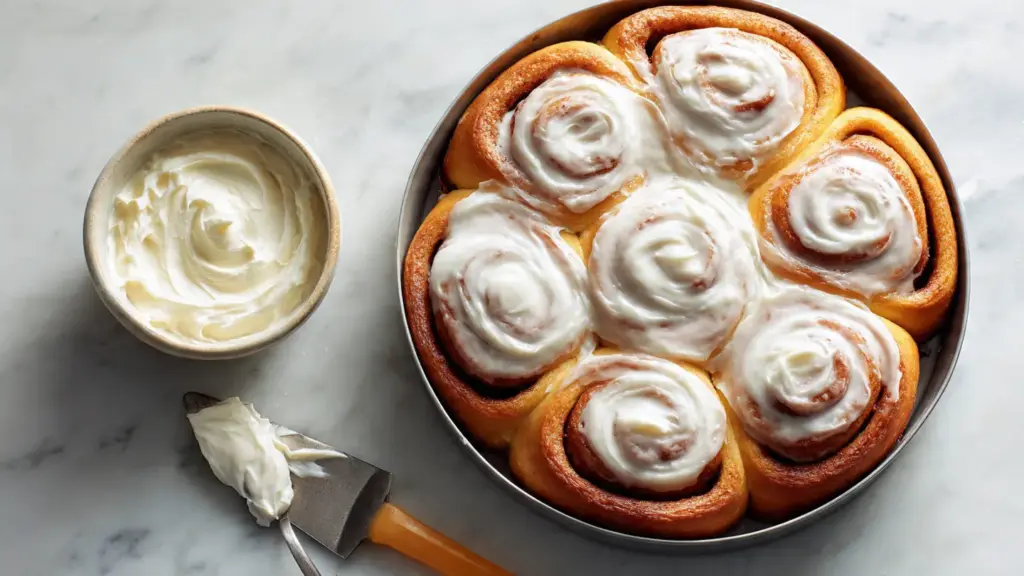
This frosting is incredibly versatile and works beautifully beyond just cinnamon rolls.
Once you’ve made a batch, you’ll find yourself reaching for it in all kinds of situations, whether as a glaze, a dip, or a spread on freshly baked goods.
- Serve alongside a plate of Breakfast Potatoes for a satisfying sweet-and-savory weekend brunch spread
- Use it as a glaze over a Pumpkin Muffin for a cozy seasonal treat
- Spread it over a slice of warm Sweet Potato Bread instead of butter
- Use it as a dipping sauce for Easy Churros
- Drizzle over a freshly baked Banana Bread for a more indulgent loaf
- Frost a Mug Cake for a single-serve dessert with a bakery-style finish
- Pour over a warm Baked Oatmeal for a lightly sweet breakfast treat
You might also enjoy: Dutch Baby Recipe
Variations to Try
The base recipe is a classic that stands on its own, but there are plenty of ways to customize it to suit different flavors and occasions.
- Brown Butter Frosting: Before softening the butter, brown it in a small saucepan over medium heat until it smells nutty and the milk solids turn golden. Let it cool and solidify back to room temperature before using. The result has a deep, caramel-like richness that takes this frosting to another level.
- Almond Vanilla Frosting: Replace half of the vanilla extract with almond extract (use 1 teaspoon of each). Almond extract pairs especially well with cinnamon and creates a slightly more complex, marzipan-like flavor.
- Maple Frosting: Swap 1 tablespoon of the milk for pure maple syrup and reduce the vanilla extract to 1 teaspoon. This adds a warm, woodsy sweetness that is perfect for fall baking.
- Lemon Glaze: Omit the vanilla extract and substitute the milk with fresh lemon juice (2–3 tablespoons). Add 1 teaspoon of lemon zest for extra brightness. This version works particularly well as a thin, pourable glaze.
- Cinnamon Spiced Frosting: Add 1/2 teaspoon of ground cinnamon and a pinch of nutmeg to the powdered sugar before mixing it in. This doubles down on the cinnamon flavor in the rolls themselves.
- Orange Zest Frosting: Add 1 teaspoon of fresh orange zest along with the vanilla extract. The citrus lifts the sweetness and adds a subtle brightness that complements the warm spices in the filling.
Read Also: Old Fashioned Pumpkin Bread Recipe
Storage and Reheating
This frosting stores well and can easily be made ahead of time, which makes it great for prepping before a baking day.
- Refrigerator: Transfer leftover frosting to an airtight container and store in the refrigerator for up to 5 days. Before using, take it out and let it sit at room temperature for 20–30 minutes to soften again.
- Freezer: You can freeze this frosting in a sealed freezer bag or airtight container for up to 2–3 months. Thaw it overnight in the refrigerator, then let it come to room temperature before stirring and using.
- Re-softening: After chilling, the frosting will firm up significantly. Beat it briefly with a hand mixer or stir vigorously with a spatula, adding a splash of milk (half a teaspoon at a time) to restore its spreadable consistency.
- Already-frosted rolls: Store frosted rolls in a covered container at room temperature for up to 2 days, or in the refrigerator for up to 4 days. To reheat, microwave individual rolls for 15–20 seconds until warm and the frosting softens.
This technique also works well for re-softening frosting used on Chocolate Chip Bread.
Nutritional Facts
The following nutritional information is based on the full batch of frosting divided into approximately 12 servings (enough for one 9×13 pan of cinnamon rolls). Actual values may vary based on specific brands and exact measurements used.
| Nutrient | Per Serving (approx.) |
|---|---|
| Calories | ~120 kcal |
| Total Fat | ~8g |
| Saturated Fat | ~5g |
| Cholesterol | ~20mg |
| Sodium | ~40mg |
| Total Carbohydrates | ~13g |
| Total Sugars | ~12g |
| Protein | ~0g |
Nutritional values are estimates only and should not be used as a substitute for professional dietary advice.
For another sweet baked treat, check out the Homemade Granola Recipe for a lighter morning option.
Health Benefits of Key Ingredients
This frosting is an indulgent treat, but a few of its core ingredients do carry some modest nutritional notes worth knowing about.
It’s also helpful to understand what each ingredient actually does in your body, so you can enjoy this frosting as part of a balanced approach to eating.
- Unsalted butter is a source of fat-soluble vitamins including vitamin A, D, E, and K. When used in moderate amounts, butter contributes to satiety and adds richness without requiring any processed additives or stabilizers.
- Powdered sugar provides quick-digesting carbohydrates for a fast energy source. It is refined sugar, so it’s best enjoyed in moderation as part of an overall balanced diet.
- Vanilla extract contains small amounts of antioxidants called vanillin. Some research suggests vanillin has anti-inflammatory properties, and pure vanilla extract also carries trace minerals including magnesium, calcium, and potassium.
- Whole milk or heavy cream contributes calcium and phosphorus, both important for bone and dental health. Heavy cream also provides a small amount of vitamin D and fat-soluble vitamins alongside its fat content.
- Salt (pinch) plays a functional role in balancing sweetness and enhancing other flavors. A small pinch contributes virtually nothing in terms of daily sodium intake.
This approach to using real, recognizable ingredients in your baked goods is something you’ll also find in the Best Carrot Cake Recipe.
Frequently Asked Questions
1. Can I make this frosting without butter?
Yes, though the texture will be noticeably different. Without butter, the frosting becomes a simple powdered sugar glaze, made by mixing sifted powdered sugar with milk or water until smooth. It will be thinner and more translucent. For a richer no-butter version, you can use a few tablespoons of heavy whipping cream in place of the butter to get a slightly creamier consistency, though it won’t be quite as fluffy as the full butter version.
2. Why is my frosting grainy or lumpy?
Graininess almost always comes from two culprits: unsifted powdered sugar or butter that was too cold when you started mixing. Always sift your powdered sugar before adding it to the bowl, and make sure your butter is genuinely soft (meaning it dents easily under your finger) before you begin. If you notice lumps after mixing, beat the frosting on high speed for an additional 1–2 minutes and add a tiny splash of warm milk, which can help dissolve the sugar granules.
3. Can I make this frosting dairy-free?
Absolutely. Substitute the unsalted butter with a good quality vegan butter (such as Miyoko’s Creamery or Earth Balance) and use oat milk, almond milk, or any plant-based milk in place of regular milk or cream. The technique and ratios remain exactly the same. The flavor will be very similar, though plant-based butters can sometimes have a slightly different finish depending on the brand.
4. How do I make the frosting thinner (more like a glaze)?
Simply add more milk or cream, one tablespoon at a time, until you reach a consistency that pours freely. For a very thin, translucent glaze, you can actually skip the butter entirely and just combine sifted powdered sugar with 2–3 tablespoons of milk and 1 teaspoon of vanilla extract, stirring until completely smooth. This produces a glossy, light glaze that soaks into warm rolls beautifully.
5. Can I use salted butter instead of unsalted?
Yes, you can use salted butter without any major problems in this recipe. Just omit the additional pinch of salt called for in the recipe and taste before adding any extra. The amount of salt in salted butter varies by brand, so it’s always best to taste as you go rather than adding the pinch of salt automatically.
For more delicious baking inspiration, browse the Easy Waffle Recipe and make a complete sweet breakfast spread.
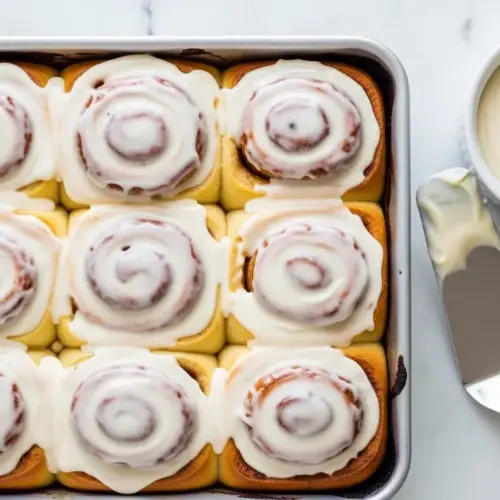
Cinnamon Rolls Frosting Without Cream Cheese

Equipment
- Large mixing bowl
- Hand mixer or stand mixer
- Rubber spatula or silicone scraper
- Measuring cups and spoons
- Fine mesh sifter
- Butter knife or offset spatula - For spreading
Ingredients
- 0.5 cup unsalted butter - 113g, softened to room temperature
- 2 cups powdered sugar - 240g, sifted
- 2 teaspoons pure vanilla extract
- 2-4 tablespoons whole milk - 30-60ml, or heavy cream, added one tablespoon at a time
- 0.125 teaspoon salt - pinch, about 1/8 teaspoon
Instructions
- Remove butter from refrigerator 30-45 minutes ahead of time until it leaves a clear indent when pressed but is not oily or melted.
- Place fine mesh sifter over mixing bowl and sift powdered sugar, discarding any hard clumps left in the strainer.
- Beat softened butter in stand mixer or large bowl on medium-high for 2-3 minutes until pale, creamy, and fluffy.
- With mixer on low, add vanilla extract and salt, then mix until fully incorporated, about 15-20 seconds.
- Add sifted powdered sugar one cup at a time on lowest speed, mixing on medium for 15-20 seconds after each addition, then beat on medium-high for 1 full minute until smooth and fluffy.
- Add milk or heavy cream one tablespoon at a time on low speed until desired consistency is reached: 2 tablespoons for thick spreadable frosting or 3-4 tablespoons for thinner glaze.
- Check consistency with a spoon; frosting should fall in a thick ribbon but not hold stiff peaks. Adjust seasoning with extra salt or vanilla if needed.
- Allow cinnamon rolls to cool for 5-10 minutes before frosting. Spread generously over warm rolls using an offset spatula or butter knife.
Notes
- Always use room temperature butter for the fluffiest texture; cold butter will result in lumpy, dense frosting.
- Sift powdered sugar every time to prevent lumps from forming in the frosting.
- Use high-quality pure vanilla extract like Nielsen Massey for the best, richest flavor.
- Add liquid slowly and stop early; it’s much easier to thin frosting than to thicken it.
- Don’t frost piping hot rolls or the frosting will melt and pool at the bottom of the pan.
- For a dairy-free version, substitute vegan butter and plant-based milk (oat or almond work well).
- Store leftover frosting in an airtight container in the refrigerator for up to 5 days or freeze for 2-3 months.
- To re-soften chilled frosting, let it sit at room temperature for 20-30 minutes, then beat briefly with a splash of milk.
- This versatile frosting also works great on quick breads, muffins, cakes, and as a dip for churros.
- For a brown butter variation, brown the butter first, let it solidify back to room temperature, then proceed with the recipe.
Final Thoughts
This cinnamon rolls frosting recipe without cream cheese is proof that the simplest recipes are often the most satisfying.
With just a handful of pantry staples and about five minutes of your time, you get a frosting that’s creamy, sweet, vanilla-rich, and perfectly suited to freshly baked cinnamon rolls.
Whether you’re making rolls from scratch on a Sunday morning or dressing up a store-bought batch to make them feel homemade, this frosting always delivers.
Give it a try the next time cinnamon roll cravings strike, and don’t be surprised if you find yourself spooning a little extra straight from the bowl.
If you make this recipe, leave a comment below and let me know how it turned out! Sharing your results or creative twists makes this community such a wonderful place, and I’d love to hear from you.
Recommended:
- Rugelach Recipe
- Snickerdoodle Cookie Recipe
- Peanut Butter Blossom Cookies Recipe
- Gingerbread Cookie Recipe
- Bread Pudding Recipe
- Banana Pudding Recipe
- Sticky Toffee Pudding Recipe
- Easy Crepe Recipe
- Cut Out Sugar Cookie Recipe
- Chewy Chocolate Chip Cookies Recipe