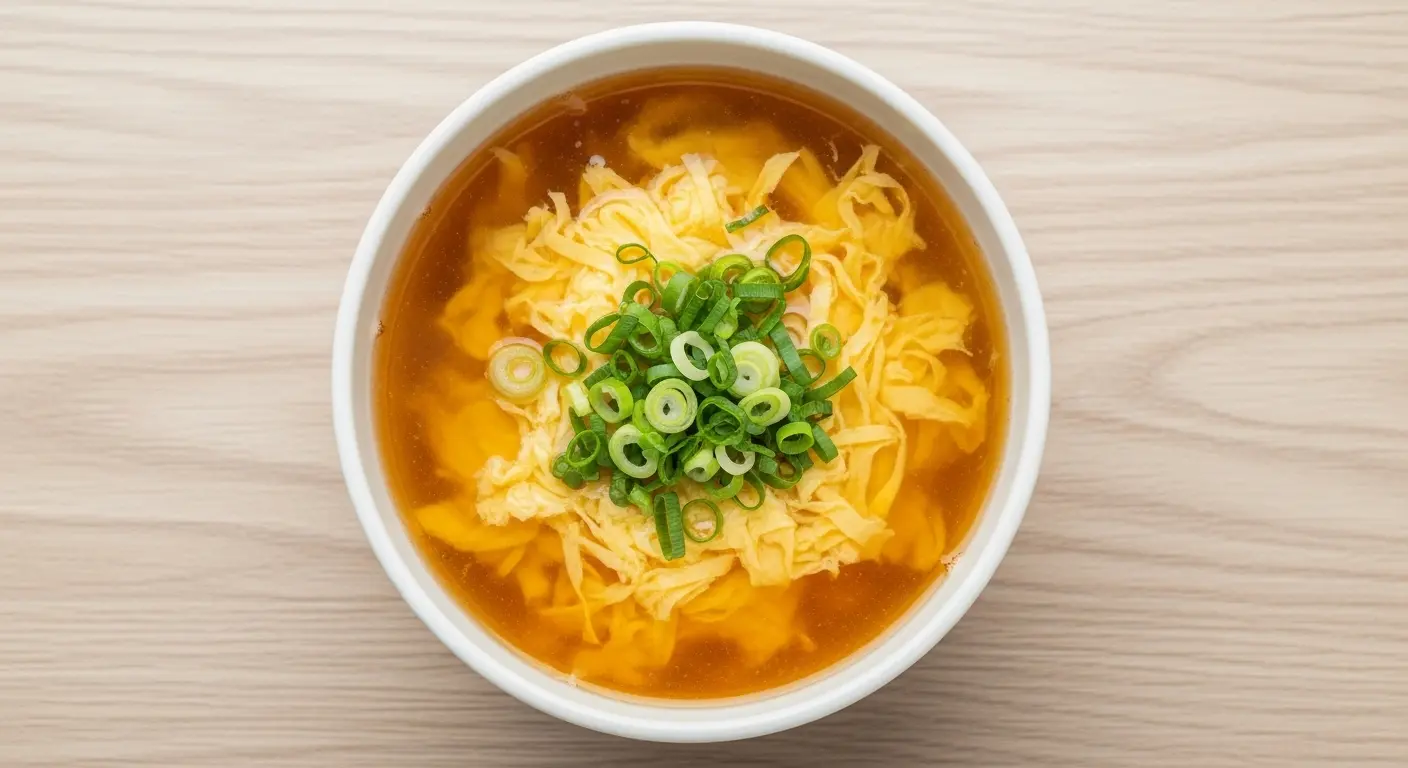
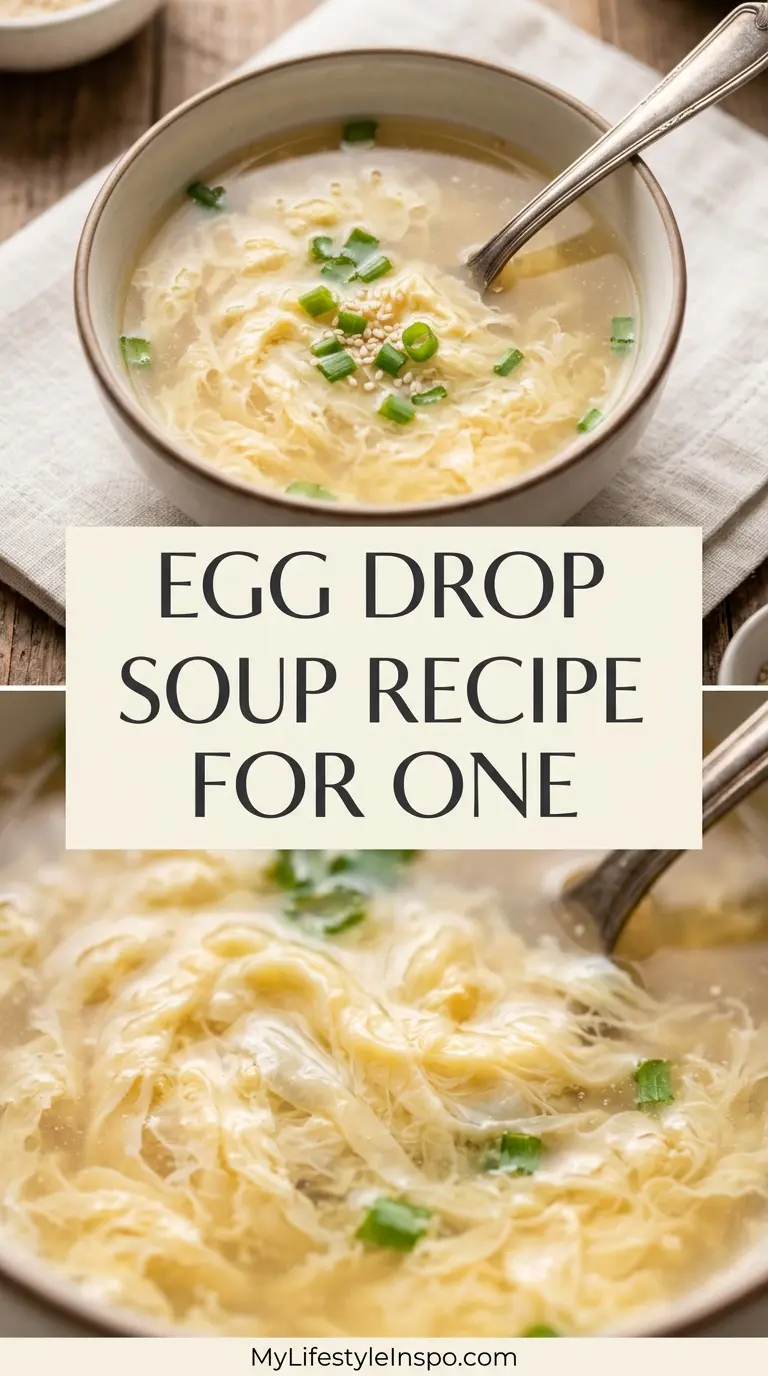
Sometimes all you want is a warm, silky bowl of soup that takes almost no effort to make. This egg drop soup recipe for one is exactly that: a single-serving version of the beloved Chinese restaurant classic, made from scratch in about 10 minutes with ingredients you likely already have on hand.
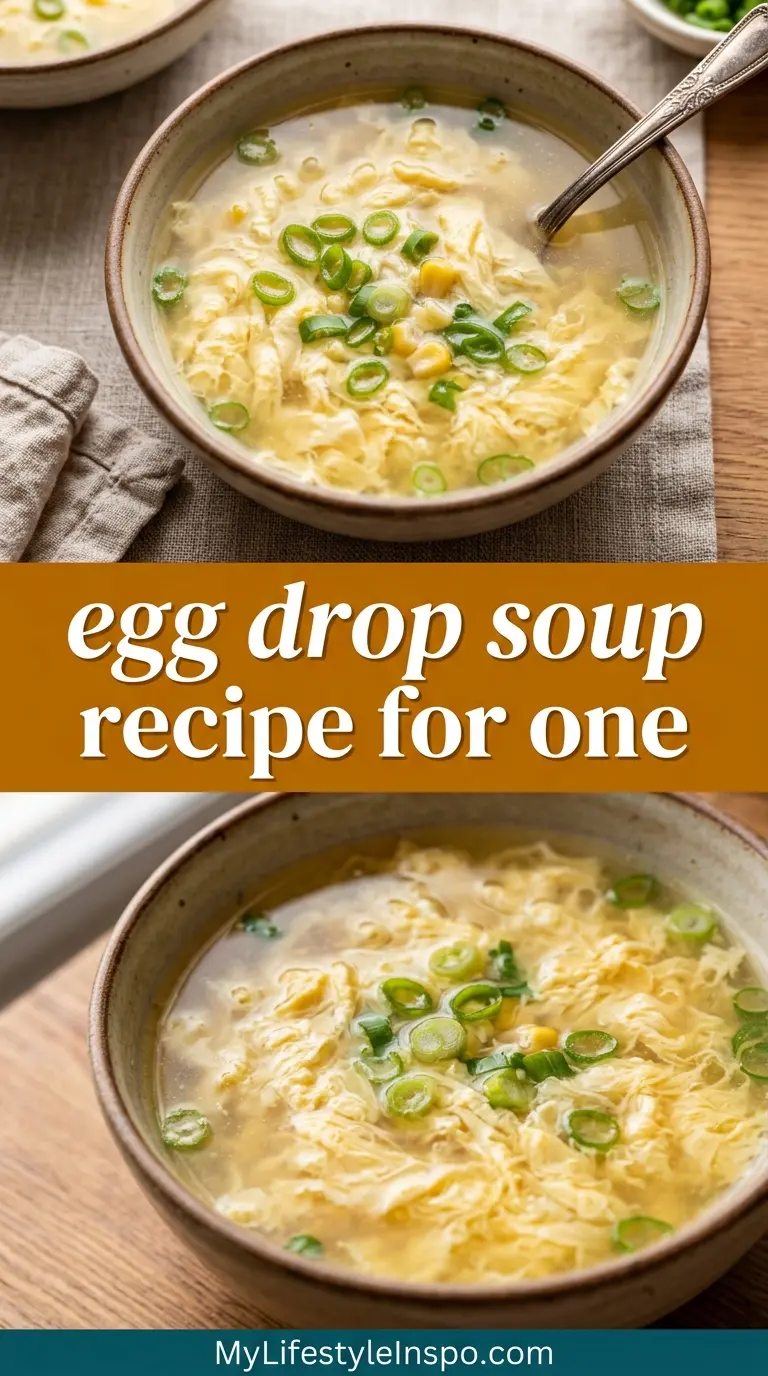
What makes egg drop soup so special is the technique behind those gorgeous, wispy egg ribbons. Pouring a beaten egg in a slow, steady stream into simmering broth while stirring creates those delicate, feathery strands that make every spoonful feel luxurious.
The broth itself is seasoned simply with soy sauce, a touch of sesame oil, and a pinch of white pepper, which gives the soup that subtle, distinctly Asian flavor profile you get at your favorite takeout spot.
Scaling this recipe down to one serving means no leftovers, no waste, and no reheating required. You get a perfectly portioned bowl that feels indulgent without being heavy, and it comes together faster than any delivery order ever could.
If you love comforting Asian-inspired soups, you might also enjoy this Homemade Egg Drop Soup for a fuller batch version.
Why You’ll Love This Egg Drop Soup Recipe for One
This recipe hits every mark when you need something fast, warming, and genuinely satisfying.
It uses just a handful of pantry staples, so you never have to make a special trip to the grocery store just to make it.
The whole thing is done in under 15 minutes from start to finish, making it ideal for a quick lunch, a light dinner, or a soothing snack when you’re feeling under the weather.
It’s naturally low in calories and carbohydrates, and it delivers a solid hit of protein from the egg without feeling heavy.
The recipe is also incredibly adaptable. You can dress it up with tofu, mushrooms, or corn, or keep it beautifully minimal with just the basics.
- Ready in about 10 minutes from start to finish
- Made with simple, everyday pantry ingredients
- Light yet genuinely filling thanks to the egg protein
- Naturally gluten-free when using tamari instead of soy sauce
- Easily customizable with add-ins you already have on hand
- Perfectly portioned for one, so nothing goes to waste
- Tastes just like your favorite Chinese restaurant version
Another favorite for a cozy solo meal: Miso Soup
Ingredients
Making this soup for one requires very few ingredients, but the quality of your broth matters most. A rich, flavorful chicken broth is the backbone of this recipe, so using a good store-bought version or homemade broth will give you the best results.
- 1 ½ cups (360 ml) low-sodium chicken broth
- 1 large egg
- 1 teaspoon (5 ml) cornstarch
- 1 tablespoon (15 ml) cold water
- 1 teaspoon (5 ml) low-sodium soy sauce (or tamari for gluten-free)
- ¼ teaspoon (1.25 ml) toasted sesame oil
- ⅛ teaspoon white pepper (or black pepper)
- Pinch of salt, to taste
- 1 green onion (scallion), thinly sliced, for garnish
Read Also: Easy Egg Drop Soup Recipe
Kitchen Equipment Needed
You really don’t need much to make this recipe, which is part of what makes it so appealing for a quick solo meal. A small saucepan is all you need on the cooking side.
- Small saucepan (1–2 quart capacity)
- Small bowl for mixing the egg and cornstarch slurry
- Fork or small whisk for beating the egg
- Measuring spoons and cups
- Ladle or large spoon for stirring
- Fine mesh strainer (optional, for smooth broth)
- Soup bowl for serving
You might also enjoy making: Hot and Sour Soup
Recommended Products for This Recipe
These are products I genuinely recommend based on quality and how much they improve the final result of this soup.
1. All-Clad Stainless Steel Small Saucepan
A high-quality, heavy-bottomed small saucepan heats broth evenly and prevents scorching, which matters for a delicate recipe like this. The even heat distribution also helps you maintain a steady simmer, which is key to getting those beautiful egg ribbons. It’s a kitchen workhorse that will serve you well for years beyond this recipe.
2. Swanson Low-Sodium Chicken Broth
The broth is the foundation of this soup, and a clean, well-seasoned broth makes a noticeable difference in flavor. Swanson’s low-sodium version gives you control over saltiness while still delivering that rich, savory base the soup needs. Starting with a good broth means you won’t need to over-season to compensate.
3. Kadoya Pure Sesame Oil
Sesame oil is the finishing touch that makes egg drop soup taste like the real deal. Kadoya is a widely trusted brand with a deeply aromatic, nutty flavor that elevates the whole bowl. Just a small drizzle at the end transforms the soup from good to truly restaurant-quality.
4. OXO Good Grips 3-Piece Mixing Bowl Set
Having a small mixing bowl available makes it easy to beat your egg and prepare the cornstarch slurry separately before adding them to the soup. OXO’s bowls are lightweight, stackable, and have non-slip bases so they stay put while you whisk. A solid set like this makes even simple recipes feel more organized and enjoyable.
You might also love this comforting bowl of Tom Yum Soup
Step-by-Step Instructions
1. Prepare the Cornstarch Slurry
The cornstarch slurry is what gives egg drop soup its characteristic silky, slightly thickened consistency. Without it, the broth stays thin and watery rather than taking on that glossy, velvety texture.
- Measure 1 teaspoon (2.5 g) of cornstarch into a small bowl.
- Add 1 tablespoon (15 ml) of cold water to the bowl.
- Stir the mixture with a fork or small whisk until the cornstarch is fully dissolved and no lumps remain. Set aside.
- It is important to use cold water, not warm, so the cornstarch dissolves smoothly rather than clumping.
2. Beat the Egg
The way you beat the egg directly affects the texture of the ribbons in your finished soup. A well-beaten egg creates those fine, feathery strands that are the hallmark of a great egg drop soup.
- Crack 1 large egg into a separate small bowl.
- Beat the egg with a fork until the yolk and white are fully combined and the mixture looks uniformly pale yellow.
- Set the beaten egg aside near the stove so it’s ready to pour quickly once the broth is hot.
3. Heat the Broth
The broth needs to reach a vigorous simmer before you add the cornstarch slurry or the egg. Starting with a properly heated base ensures the egg cooks immediately on contact and forms those signature wispy ribbons rather than sinking to the bottom in clumps.
- Pour 1 ½ cups (360 ml) of chicken broth into your small saucepan.
- Place the saucepan over medium-high heat.
- Add 1 teaspoon (5 ml) of soy sauce and ⅛ teaspoon of white pepper to the broth.
- Allow the broth to come to a vigorous simmer, which should take about 3 to 4 minutes. You want to see active bubbles, not just a gentle steam.
4. Add the Cornstarch Slurry
Adding the slurry at this stage thickens the broth before you add the egg, which helps the egg strands set properly and stay suspended in the soup rather than sinking.
- Give the cornstarch slurry one more quick stir to make sure it hasn’t settled at the bottom of the bowl.
- Pour the slurry into the simmering broth in a slow, steady stream while stirring the broth constantly.
- Continue to stir for about 30 seconds to 1 minute as the broth thickens slightly and turns a bit glossy.
- Reduce the heat to medium to maintain a steady simmer without aggressive boiling.
5. Create the Egg Ribbons
This is the most satisfying step of the whole recipe and the one that requires a bit of technique. The goal is thin, feathery egg ribbons, and the secret is a slow, steady pour combined with gentle stirring.
- Hold the bowl of beaten egg in one hand and a spoon or chopstick in the other.
- Using the spoon or chopstick, stir the broth in a slow, gentle circular motion to create a slight swirl.
- While the broth is gently swirling, pour the beaten egg in a slow, thin stream from a height of about 6 inches (15 cm) above the pot. The higher the pour, the thinner and more wispy the ribbons will be.
- Continue pouring slowly and steadily until all the egg has been incorporated. The egg should cook almost instantly upon contact with the hot broth.
- If you prefer chunkier egg pieces rather than fine ribbons, simply stop stirring the broth before you pour the egg in.
6. Season and Finish
The final seasoning is what brings the whole bowl together. The sesame oil especially is non-negotiable here: it adds a nutty, aromatic depth that signals to your taste buds that this is the real deal.
- Remove the saucepan from heat.
- Add ¼ teaspoon (1.25 ml) of toasted sesame oil and stir gently to incorporate.
- Taste the soup and add a pinch of salt if needed.
- Ladle the soup into a bowl.
- Garnish with the sliced green onion.
- Serve immediately for the best texture and flavor.
Read Also: Authentic Egg Drop Soup Recipe
Tips for Success
A few key tips make the difference between a soup that’s just okay and one that genuinely tastes restaurant-quality. These small details are worth paying attention to.
- Use quality broth: Since broth is the primary ingredient, the quality matters enormously. A rich, flavorful broth produces a noticeably better soup.
- Don’t skip the cornstarch: It might seem optional, but it gives the soup that signature velvety texture that sets it apart from plain broth.
- Always use cold water for the slurry: Cold water prevents the cornstarch from clumping. Warm water causes it to partially cook before it reaches the hot broth.
- Beat the egg thoroughly: A well-beaten egg creates finer, more delicate ribbons than an incompletely mixed one.
- Pour the egg slowly: The slower your pour, the thinner and more elegant your egg ribbons will be. Rushing this step results in big egg chunks rather than delicate strands.
- Don’t boil after adding the egg: Once the egg is in, keep the heat at a gentle simmer. Vigorous boiling will break up the ribbons and make the broth cloudy.
- Add sesame oil off the heat: Adding it to a very hot pan can diminish its fragrant, nutty aroma. Off-heat addition preserves maximum flavor.
For another warming single-serve option, try this Corn Soup
Serving Suggestions
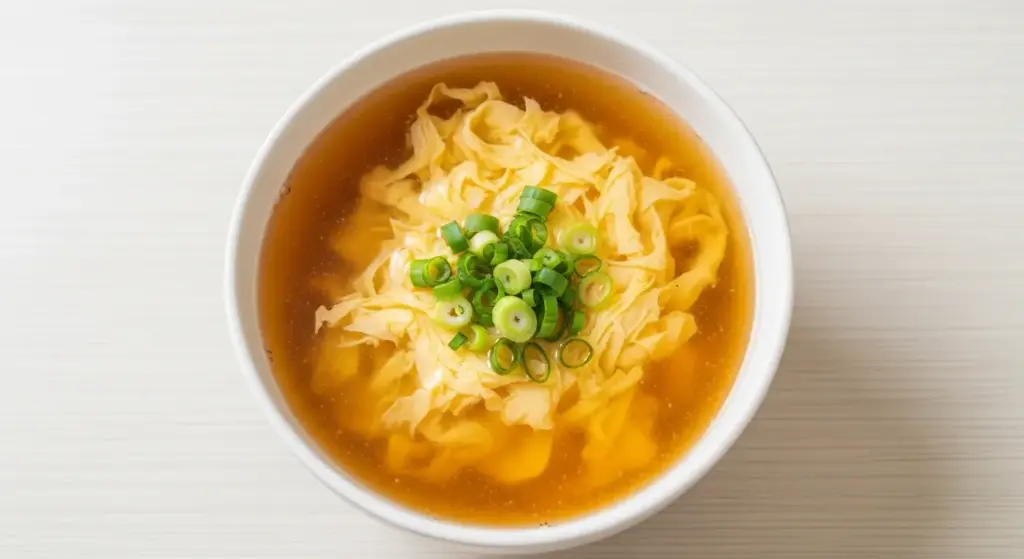
Egg drop soup for one is a satisfying standalone dish, but it pairs beautifully with several other favorites if you want to round out a meal.
Serve it alongside a small portion of Chicken Fried Rice for a classic Chinese restaurant experience right at home.
It also works wonderfully as a starter before a main dish like Easy Orange Chicken or a fresh and simple meal like steamed dumplings.
A small side of Easy Fried Rice makes this soup feel like a complete takeout-style meal without the wait or expense.
- Steamed white or brown rice
- Chicken Fried Rice
- Potstickers or steamed dumplings
- Easy Orange Chicken
- A small portion of lo mein or fried noodles
- Spring rolls or egg rolls
- Steamed bok choy with garlic
Read Also: Udon Noodle Soup Recipe
Variations to Try
Once you’ve mastered the basic version, this recipe is incredibly easy to customize based on your taste or what you have available in your pantry.
- Corn Egg Drop Soup: Add 2 tablespoons of canned or frozen corn kernels to the broth when you add the soy sauce. This version is especially popular in Chinese-American restaurants and adds a natural sweetness to the soup.
- Chicken Egg Drop Soup: Stir in a couple tablespoons of pre-cooked, shredded chicken breast for added protein. This turns the soup into a more substantial, filling bowl.
- Vegetarian Egg Drop Soup: Swap the chicken broth for a flavorful vegetable broth and add a few sliced mushrooms. The result is every bit as satisfying as the original.
- Keto Egg Drop Soup: Skip the cornstarch entirely. The soup will be thinner but still delicious, and it keeps the carbohydrate count extremely low.
- Tomato Egg Drop Soup: Add 2 tablespoons of finely diced fresh or canned tomato to the broth. Tomato and egg are a classic pairing in Chinese cooking, and the slight acidity adds a lovely brightness.
You can explore more full-batch versions like the Chicken Egg Drop Soup or Corn Egg Drop Soup for when you’re cooking for more than one.
Storage and Reheating
Egg drop soup is always best enjoyed fresh because the egg ribbons tend to change texture when refrigerated and reheated. That said, if you do have leftovers, here’s how to handle them properly.
- Refrigerating: Store any leftover soup in an airtight container in the refrigerator for up to 2 days. Keep in mind that the egg ribbons will absorb some of the broth and become slightly thicker and less wispy over time.
- Reheating: Reheat gently on the stovetop over low to medium heat, stirring occasionally. Avoid bringing it to a full boil during reheating, as this will break down the egg ribbons significantly and make the broth cloudy.
- Microwave reheating: If using a microwave, heat in 30-second intervals, stirring between each interval to prevent uneven heating.
- Freezing: Egg drop soup does not freeze well. The egg ribbons break down entirely after freezing and thawing, resulting in an unpleasant, grainy texture.
- Best practice: Since this recipe is designed for one serving, it’s always better to make it fresh. The whole process takes only about 10 minutes.
Read Also: Wonton Egg Drop Soup Recipe
Nutritional Facts
The following nutritional estimates are based on one serving of this recipe using low-sodium chicken broth and one large egg. Values are approximate and will vary based on specific brands and ingredient quantities used.
| Nutrient | Amount Per Serving |
|---|---|
| Calories | ~90 kcal |
| Total Fat | 5g |
| Saturated Fat | 1.5g |
| Cholesterol | 185mg |
| Sodium | 580mg (varies with broth brand) |
| Total Carbohydrates | 3g |
| Dietary Fiber | 0g |
| Sugars | 0g |
| Protein | 7g |
This soup is a naturally low-calorie, high-protein option that fits comfortably into a variety of dietary approaches, including low-carb, gluten-free (with tamari), and calorie-conscious eating plans.
For another light and nourishing option, try this Spinach Soup
Health Benefits of Key Ingredients
Every ingredient in this simple soup brings something beneficial to the table, making it as nourishing as it is delicious.
Eggs are one of the most nutrient-dense foods you can eat. They’re an excellent source of high-quality protein, containing all nine essential amino acids, as well as vitamins B12, D, and choline, which supports brain and liver health.
Chicken broth provides collagen-supporting gelatin when made from bones, along with trace minerals like potassium and phosphorus. Even a store-bought version contributes a meaningful amount of sodium and some protein to the soup.
Sesame oil contains antioxidants including sesamol and sesamin, and has been linked to anti-inflammatory properties in several studies. A small amount goes a long way in both flavor and nutritional contribution.
Ginger, if added as an optional extra, is a powerful anti-inflammatory and digestive aid that pairs naturally with the flavors of this soup.
- Eggs: Complete protein with all essential amino acids, plus vitamins B12, D, and choline
- Chicken broth: Contributes minerals like potassium and phosphorus, and supports hydration
- Sesame oil: Rich in antioxidants and has anti-inflammatory properties
- Green onions: Provide small amounts of vitamin K, vitamin C, and prebiotic fiber
- White pepper: Contains piperine, which has been shown to have antioxidant and anti-inflammatory properties
For another egg-based comfort dish, check out these Air Fryer Egg Bites
Frequently Asked Questions
1. Can I use vegetable broth instead of chicken broth?
Absolutely. Vegetable broth works well in this recipe and makes it suitable for vegetarians and vegans (just note the egg makes it non-vegan). Choose a broth with a rich, savory flavor for best results, as lighter vegetable broths can produce a thinner-tasting soup.
2. What if I don’t have cornstarch?
You can skip the cornstarch altogether, and the soup will still be delicious, just thinner in consistency. Some recipes use arrowroot powder as a 1:1 substitute for cornstarch if you want to maintain the silky texture. Flour is not recommended as it can make the broth taste pasty and cloudy.
3. Why did my egg cook into chunks instead of ribbons?
This usually happens when the egg is poured too quickly or when the broth is boiling too aggressively. Pouring in a slow, thin stream while the broth is at a gentle simmer, and stirring gently at the same time, is the key to getting those fine, feathery ribbons. Slower is always better for this step.
4. How can I make the soup more flavorful?
If the soup tastes flat to you, the broth is usually the culprit. Start with a higher-quality or homemade broth, or add a small piece of fresh ginger to the broth while it heats, then remove it before adding the egg. A few drops of fish sauce or a tiny bit of oyster sauce can also deepen the savory flavor significantly.
5. Is egg drop soup healthy?
Yes, in general. It’s low in calories, relatively high in protein, and naturally free of refined carbohydrates. The main nutritional consideration is sodium, particularly if you use a regular (not low-sodium) broth and soy sauce. Choosing low-sodium versions of both brings the sodium content down considerably without sacrificing flavor.
For another light, comforting soup option, try this Vegetable Soup
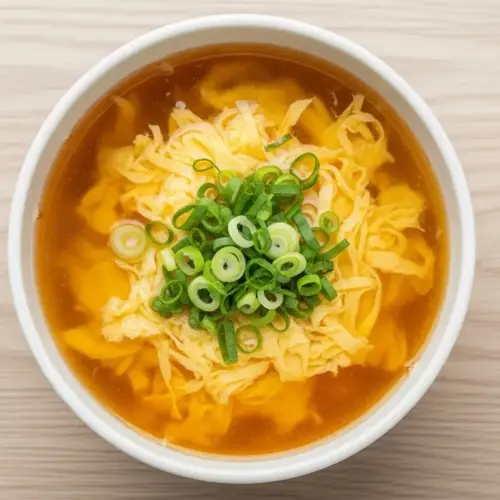
Egg Drop Soup for One

Equipment
- Small saucepan (1-2 quart capacity) - For heating the broth
- Small bowl - For mixing the egg
- Small bowl - For the cornstarch slurry
- Fork - For beating the egg and mixing the slurry
- Measuring spoons
- Measuring cups
- Ladle - For stirring and serving
- Fine-mesh strainer - (optional, for a smoother broth)
- Soup bowl - For serving
Ingredients
- 1 ½ cups low-sodium chicken broth - 360ml
- 1 large egg
- 1 teaspoon cornstarch - 2.5g
- 1 tablespoon cold water - 15ml
- 1 teaspoon low-sodium soy sauce - 5ml; or tamari for gluten-free
- ¼ teaspoon toasted sesame oil - 1.25ml
- ⅛ teaspoon white pepper - or black pepper
- salt - pinch, to taste
- 1 green onion (scallion) - thinly sliced, for garnish
Instructions
- Mix cornstarch and cold water in a small bowl until fully dissolved to form a slurry. Set aside.
- Beat the egg in a separate small bowl with a fork until the yolk and white are fully combined and pale yellow.
- In a small saucepan over medium-high heat, bring the chicken broth, soy sauce, and white pepper to a vigorous simmer.
- Stir the cornstarch slurry once more, then pour it into the simmering broth in a slow stream while stirring constantly. Cook for 30 seconds to 1 minute until the broth thickens slightly, then reduce heat to medium.
- Stir the broth in a gentle circular motion and pour the beaten egg in a slow, thin stream from about 6 inches above the pot. The egg will cook into wispy ribbons on contact.
- Remove from heat, stir in the toasted sesame oil, and season with a pinch of salt to taste. Ladle into a bowl and garnish with sliced green onion. Serve immediately.
Notes
- Use a high-quality broth for the best flavor as it’s the base of the soup.
- Always use cold water for the cornstarch slurry to prevent clumping.
- Beat the egg thoroughly for finer, more delicate ribbons.
- Pour the egg very slowly to create thin, feathery strands instead of large chunks.
- Do not let the soup boil after adding the egg; keep it at a gentle simmer.
- Add the sesame oil off the heat to preserve its nutty aroma and flavor.
- For a vegetarian version, use vegetable broth and add sliced mushrooms.
- To make it keto-friendly, simply omit the cornstarch.
- Leftovers can be stored in the fridge for up to 2 days but are best eaten fresh as the egg ribbons change texture.
- Reheat gently on the stovetop or in the microwave in short intervals; avoid boiling.
Final Thoughts
This egg drop soup recipe for one proves that a restaurant-quality, deeply comforting bowl of soup doesn’t require a lot of ingredients, a lot of time, or a lot of cooking skill.
It’s the kind of recipe you’ll return to again and again, whether you need a quick lunch between meetings, something soothing when you’re not feeling well, or a simple starter before a larger meal.
Give it a try the next time the craving for something warm and silky hits, and don’t be surprised when it becomes your new go-to for easy solo meals.
If you make it, drop a comment below and let me know how it turned out, and feel free to share your favorite add-ins too!
Recommended:
- Best Egg Drop Soup Recipe
- Chinese Egg Drop Soup Recipe
- P.F. Chang’s Egg Drop Soup Recipe
- Egg Drop Soup Recipe Without Cornstarch
- Vegetarian Egg Drop Soup Recipe
- Keto Egg Drop Soup Recipe
- Tomato Egg Drop Soup Recipe
- Hot and Sour Soup
- Miso Soup
- Chicken Rice Soup