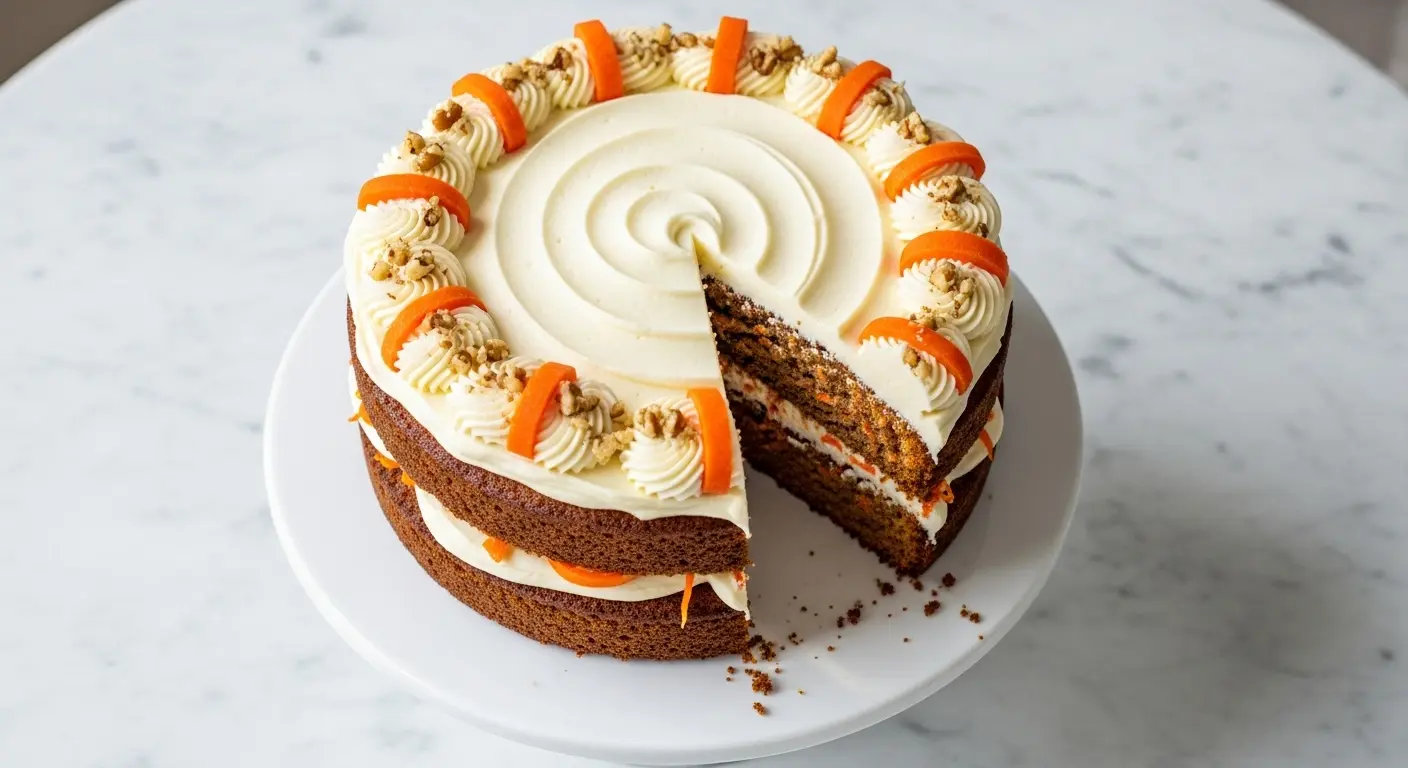
Nothing compares to a homemade carrot cake with cream cheese frosting when you want a dessert that feels both classic and special. This cake combines warm spices, freshly grated carrots, and a tangy, sweet frosting that makes every bite memorable.
The beauty of this carrot cake with cream cheese frosting lies in its perfect balance. The cake stays incredibly moist thanks to the oil and carrots, while cinnamon and nutmeg add warmth without overpowering the subtle sweetness.
The cream cheese frosting brings everything together with its creamy texture and slight tang that cuts through the sweetness beautifully. This recipe works just as well for a casual weekend baking project as it does for special occasions like birthdays or holiday gatherings.
I’ve made this cake dozens of times, and it never fails to impress. The recipe uses straightforward techniques that work reliably every time, even if you’re new to layer cakes.
One of my favorite things about this cake is how the flavors develop over time. It tastes amazing fresh from the oven, but it’s even better the next day when the spices have had time to meld together.
The texture is what really sets this apart from other cakes. The crumb is tender and moist without being dense or gummy, and it stays that way for several days when stored properly.
Another favorite: German Chocolate Cake Bars
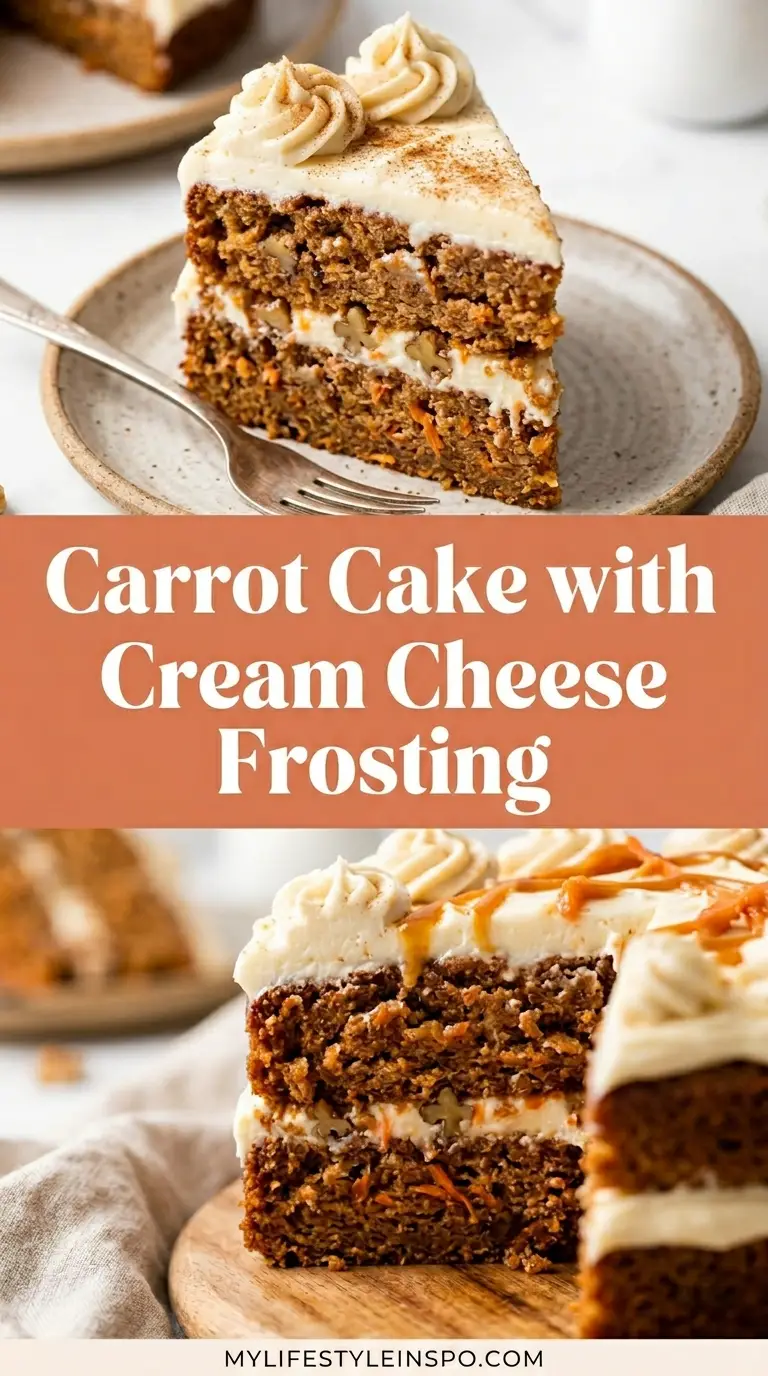
Why You’ll Love This Carrot Cake with Cream Cheese Frosting Recipe
This recipe delivers everything you want in a carrot cake without any unnecessary complications. It uses simple pantry ingredients and comes together with just a couple of bowls and a whisk.
The oil-based batter means you don’t need to wait for butter to soften, and it creates a cake that stays moist for days. The grated carrots not only add moisture but also natural sweetness and a beautiful color to the crumb.
- Perfectly moist texture: The combination of oil and carrots creates a tender cake that never dries out
- Balanced sweetness: Not too sweet, with warm spices that complement rather than overpower
- Impressive presentation: A two-layer cake that looks professional but requires minimal decorating skills
- Make-ahead friendly: Both the cake layers and frosting can be prepared in advance
- Crowd-pleaser: Appeals to people who love classic desserts without being too trendy or experimental
- Reliable results: This recipe has been tested extensively and produces consistent results every time
Ingredients
This recipe uses classic carrot cake ingredients that work together to create the perfect texture and flavor. Each component serves a specific purpose in achieving that signature moist, flavorful crumb.
For the Cake:
- 2 cups (250g) all-purpose flour
- 2 teaspoons baking powder
- 1 1/2 teaspoons baking soda
- 1 teaspoon salt
- 2 teaspoons ground cinnamon
- 1/2 teaspoon ground nutmeg
- 1/4 teaspoon ground ginger
- 4 large eggs, at room temperature
- 1 1/2 cups (300g) granulated sugar
- 1/2 cup (100g) packed light brown sugar
- 1 1/4 cups (300ml) vegetable oil or canola oil
- 1/2 cup (120ml) applesauce
- 2 teaspoons vanilla extract
- 3 cups (300g) freshly grated carrots (about 4-5 medium carrots)
For the Cream Cheese Frosting:
- 16 ounces (450g) cream cheese, softened to room temperature
- 1/2 cup (113g) unsalted butter, softened to room temperature
- 4 cups (480g) powdered sugar, sifted
- 1 tablespoon vanilla extract
- Pinch of salt
If you’re looking for another classic dessert, try Classic Tiramisu.
Kitchen Equipment Needed
Having the right tools makes this recipe come together smoothly. The good news is that you probably already own most of what you need for this carrot cake.
- Two 9-inch round cake pans
- Parchment paper
- Box grater or food processor with grater attachment
- Large mixing bowls (at least 2)
- Whisk
- Electric hand mixer or stand mixer
- Rubber spatula
- Wire cooling rack
- Offset spatula or butter knife for frosting
Recommended Products for This Recipe
After making this carrot cake countless times, I’ve found that certain products genuinely make a difference in both the process and the final result. These recommendations are based on quality and performance.
1. Nordic Ware Natural Aluminum Commercial Baker’s Half Sheet
This sheet pan is perfect for prepping your ingredients and organizing your workspace when making layer cakes. The heavy-gauge aluminum heats evenly and the reinforced rim prevents warping.
2. OXO Good Grips Box Grater
Freshly grated carrots are essential for this recipe, and this grater makes the job quick and safe. The non-slip base keeps it steady while you work, and the sharp grating surface handles carrots effortlessly.
3. Fat Daddio’s Anodized Aluminum Cake Pans
These professional-quality pans heat evenly, ensuring your cake layers bake perfectly without dark edges or uneven rising. The anodized aluminum is durable and releases cakes cleanly every time.
4. Ateco Offset Spatula
This tool is a game-changer for frosting layer cakes. The angled blade lets you spread frosting smoothly and evenly across the top and sides, creating that professional bakery look.
5. Madagascar Vanilla Extract
Pure vanilla extract makes a noticeable difference in both the cake and frosting. This high-quality extract has a rich, complex flavor that enhances all the other ingredients without tasting artificial.
You might also enjoy: Easy Tiramisu
Step-by-Step Instructions
Follow these detailed steps to create a perfectly moist carrot cake with smooth, tangy cream cheese frosting. I’ve broken down each phase so even beginners can achieve bakery-quality results.
1. Prepare Your Pans and Preheat the Oven
- Position a rack in the center of your oven and preheat to 350°F (175°C).
- Generously grease two 9-inch round cake pans with butter or cooking spray, making sure to coat the bottom and sides completely.
- Cut two circles of parchment paper to fit the bottom of each pan.
- Press the parchment circles into the greased pans, then grease the top of the parchment as well.
- Lightly dust the pans with flour, tapping out any excess. This double-layer approach (grease, parchment, grease, flour) ensures the cakes release cleanly.
2. Grate the Carrots
- Peel 4-5 medium carrots and trim off any brown spots or blemishes.
- Using the medium-sized holes on a box grater (not the largest or smallest), grate the carrots until you have 3 cups.
- If you’re using a food processor with a grater attachment, pulse briefly after grating to break up any long shreds.
- Set the grated carrots aside in a bowl while you prepare the batter.
3. Mix the Dry Ingredients
- In a large mixing bowl, whisk together the flour, baking powder, baking soda, salt, cinnamon, nutmeg, and ginger.
- Whisk for about 30 seconds to ensure all the leavening agents and spices are evenly distributed throughout the flour.
- Set this bowl aside while you work on the wet ingredients.
4. Combine the Wet Ingredients
- In another large mixing bowl, crack the eggs and whisk them briefly just to break up the yolks.
- Add both the granulated sugar and brown sugar to the eggs.
- Whisk vigorously for about 1-2 minutes until the mixture becomes lighter in color and slightly thickened.
- Pour in the vegetable oil, applesauce, and vanilla extract.
- Whisk everything together until completely smooth and emulsified, with no streaks of oil visible (this should take about 1 minute of continuous whisking).
5. Bring the Batter Together
- Pour the dry ingredient mixture into the bowl with the wet ingredients.
- Using a rubber spatula or wooden spoon, gently fold the dry ingredients into the wet mixture.
- Stir just until no streaks of flour remain, being careful not to overmix (overmixing can lead to a tough, dense cake).
- The batter will be thick but pourable at this stage.
6. Add the Carrots
- Add all 3 cups of grated carrots to the batter.
- Gently fold the carrots in with a rubber spatula, working slowly to ensure they’re evenly distributed throughout the batter.
- Continue folding just until the carrots are incorporated and you don’t see any pockets of plain batter.
- The finished batter should be thick, with carrots visible throughout.
7. Divide and Bake
- Divide the batter evenly between your two prepared cake pans (using a kitchen scale helps ensure even layers, but you can also eyeball it).
- Use the back of a spoon or an offset spatula to spread the batter evenly in each pan, smoothing the tops.
- Gently tap each pan on the counter 2-3 times to release any air bubbles trapped in the batter.
- Place both pans on the center rack of your preheated oven (make sure they’re not touching each other or the oven walls).
- Bake for 35-40 minutes, or until a toothpick inserted into the center of each cake comes out clean or with just a few moist crumbs (no wet batter).
- The cakes should spring back when lightly pressed in the center, and the edges will start to pull away slightly from the pan sides.
8. Cool the Cake Layers
- Remove the pans from the oven and place them on wire cooling racks.
- Let the cakes cool in their pans for exactly 10 minutes (this cooling period helps them firm up enough to handle without falling apart).
- After 10 minutes, run a butter knife around the edge of each pan to loosen any stuck spots.
- Place a wire cooling rack over the top of one pan, then carefully flip both the rack and pan over in one smooth motion.
- Lift the pan off, peel away the parchment paper, then place another wire rack on the bottom of the cake and flip it right-side up.
- Repeat this process with the second cake layer.
- Allow both layers to cool completely to room temperature before frosting (this takes about 1-2 hours, and it’s crucial because warm cake will melt the frosting).
9. Make the Cream Cheese Frosting
- Make sure your cream cheese and butter are truly at room temperature (they should be soft enough to leave an indent when pressed but not greasy or melted).
- In a large mixing bowl, combine the softened cream cheese and butter.
- Using an electric hand mixer or stand mixer fitted with the paddle attachment, beat on medium-high speed for 2-3 minutes until the mixture is completely smooth, light, and fluffy with no lumps remaining.
- Add the vanilla extract and pinch of salt, beating for another 30 seconds to incorporate.
- Turn the mixer to low speed and gradually add the sifted powdered sugar, about 1/2 cup at a time.
- Once all the sugar is added and just barely combined, increase the speed to medium-high and beat for 2-3 minutes until the frosting is fluffy and smooth.
- Stop the mixer and scrape down the bottom and sides of the bowl with a rubber spatula to make sure everything is evenly mixed.
- Beat for a final 30 seconds on medium-high speed to achieve a perfectly smooth, pipeable consistency.
10. Assemble and Frost the Cake
- Choose which cake layer looks flatter and more level (this will be your top layer).
- Place the other layer on a serving plate or cake stand, bottom-side down (if needed, use a serrated knife to level the top if it domed significantly during baking).
- Scoop about 1 to 1 1/4 cups of frosting onto the first layer.
- Using an offset spatula or butter knife, spread the frosting evenly across the top of the layer, going all the way to the edges.
- Carefully place the second cake layer on top, bottom-side up (this gives you the flattest possible top surface).
- Press down gently to secure the layers together and ensure the cake is level.
- Scoop about 1 cup of frosting onto the top of the cake.
- Spread it evenly across the top, working from the center outward and letting some frosting spill over the edges.
- Use the remaining frosting to cover the sides of the cake, working in smooth, even strokes.
- If you want a rustic “naked” cake look, apply a thin layer of frosting that lets some of the cake show through.
- For a fully frosted look, apply a generous coating and smooth it with your offset spatula.
- Once frosted, refrigerate the cake for 30 minutes to let the frosting set before slicing and serving.
Read Also: Best Carrot Cake
Tips for Success
These tips will help you avoid common pitfalls and ensure your carrot cake turns out perfectly every time. Small details make a big difference in the final texture and flavor.
- Use freshly grated carrots: Pre-shredded bagged carrots are too dry and coarse for carrot cake. Fresh carrots have more moisture and create a better texture in the finished cake.
- Room temperature ingredients matter for frosting: Cold cream cheese creates lumps that won’t fully smooth out, while melted ingredients make runny frosting. Aim for soft but not greasy.
- Don’t skip the parchment paper: Even with greasing, carrot cake can stick because of its moisture content. Parchment ensures clean release every time.
- Measure flour correctly: Spoon flour into your measuring cup and level it off with a knife rather than scooping directly from the bag, which packs in too much flour and creates dense cake.
- Check for doneness carefully: A few moist crumbs on a toothpick are fine, but wet batter means it needs more time. Overbaking creates dry cake, so start checking at 35 minutes.
- Let cakes cool completely: Warm cake layers will cause the frosting to melt and slide off. Be patient and let them reach room temperature.
- Sift the powdered sugar: This prevents lumps in your frosting and creates a smoother, more professional finish.
Serving Suggestions
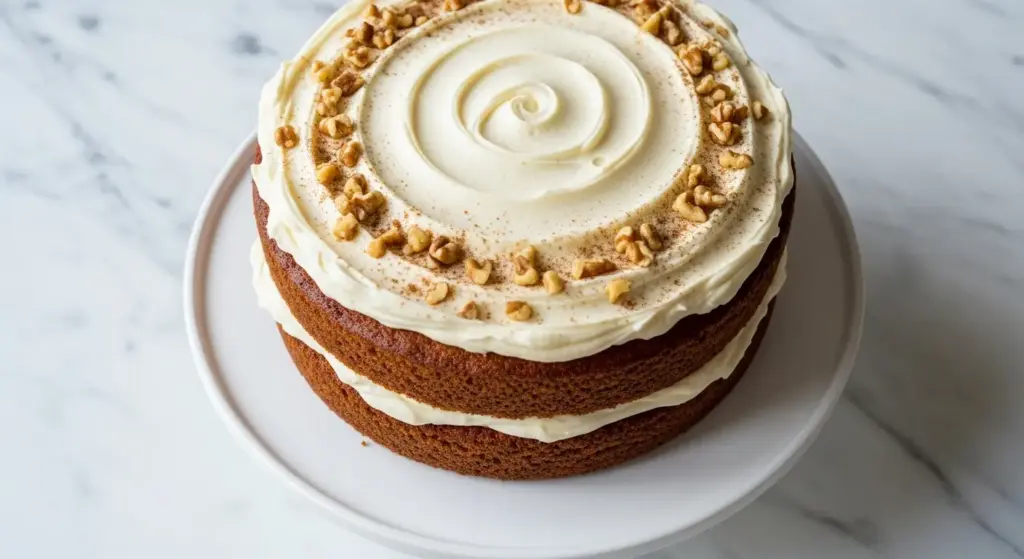
This carrot cake with cream cheese frosting pairs beautifully with a variety of accompaniments and works for different occasions. Here are some ideas for serving and presenting this classic dessert.
Serve slices of this cake with a cup of hot coffee or tea for a perfect afternoon treat. The warm spices complement coffee especially well.
- Simple elegance: Dust the frosted cake with a light sprinkle of cinnamon just before serving
- Extra crunch: Press chopped toasted pecans or walnuts around the sides of the frosted cake
- Fresh contrast: Serve slices with a dollop of lightly sweetened whipped cream on the side
- Fruit pairing: Add fresh berries like strawberries or raspberries to the plate for color and a tart contrast
- Ice cream upgrade: A scoop of vanilla or cinnamon ice cream alongside a slice creates an indulgent dessert
- Holiday presentation: Decorate the top with small marzipan carrots for Easter or spring celebrations
- Afternoon tea: Cut smaller slices and serve on pretty plates with Classic Deviled Eggs for a complete spread
Variations to Try
Once you’ve mastered the basic recipe, these variations let you customize the cake to your preferences or dietary needs. Each one brings something different to the classic carrot cake.
- Add nuts: Fold in 3/4 to 1 cup of chopped walnuts or pecans along with the carrots for extra crunch and flavor
- Include raisins: Stir in 1/2 cup of raisins or golden raisins with the carrots for bursts of sweetness
- Pineapple version: Replace the applesauce with 1/2 cup of well-drained crushed pineapple for tropical sweetness
- Coconut addition: Mix in 1/2 cup of sweetened shredded coconut with the carrots for a hummingbird cake twist
- Sheet cake format: Pour all the batter into a greased 9×13-inch pan and bake for 40-50 minutes for easier serving
- Cupcakes: Divide batter among lined muffin tins, filling each 2/3 full, and bake for 18-22 minutes for individual servings
- Spice it up: Add 1/4 teaspoon of ground cardamom or allspice to the dry ingredients for more complex flavor
- Cream cheese variation: Add 1 tablespoon of fresh lemon juice to the frosting for extra tang
- Less sweet frosting: Reduce the powdered sugar in the frosting by 1/2 to 1 cup for a less sweet, more tangy result
This pairs wonderfully with Homemade Granola for a special brunch.
Storage and Reheating
Proper storage keeps your carrot cake moist and fresh for several days. The cream cheese frosting requires refrigeration, so plan your storage accordingly.
- Refrigerator storage: Cover the cake with a cake dome or large bowl turned upside down and refrigerate for up to 5 days. The frosting requires refrigeration, so this isn’t optional.
- Bring to room temperature: Remove the cake from the fridge 30-60 minutes before serving for the best flavor and texture.
- Freezing unfrosted layers: Wrap each cooled, unfrosted layer tightly in two layers of plastic wrap, then in aluminum foil. Freeze for up to 3 months.
- Freezing frosted cake: This isn’t ideal as the frosting doesn’t thaw well, but if needed, freeze individual slices wrapped in plastic wrap and foil for up to 2 months.
- Thawing frozen layers: Transfer wrapped layers to the refrigerator and thaw overnight before bringing to room temperature and frosting.
- Individual slices: Wrap leftover slices in plastic wrap and store in an airtight container in the fridge for easy grab-and-go servings.
Another favorite: Easy Carrot Cake with Cake Mix
Nutritional Facts
Per serving (1 slice, based on 12 servings):
- Calories: 625
- Total Fat: 35g
- Saturated Fat: 12g
- Cholesterol: 110mg
- Sodium: 420mg
- Total Carbohydrates: 75g
- Dietary Fiber: 2g
- Sugars: 58g
- Protein: 6g
Nutritional information is approximate and based on standard ingredient calculations. Actual values may vary depending on specific brands and measurements used.
Health Benefits of Key Ingredients
While this is definitely an indulgent dessert, some of the main ingredients do offer nutritional value. Understanding what each component brings to the table can help you appreciate this treat even more.
Carrots provide vitamin A, which supports eye health and immune function, along with antioxidants that benefit overall wellness. Even though they’re baked into a cake, they still retain some of their nutritional properties.
- Carrots: Rich in beta-carotene (converted to vitamin A), fiber, and antioxidants that support vision and immune health
- Eggs: Provide high-quality protein, vitamin D, B vitamins, and choline for brain health
- Cinnamon: Contains antioxidants and may help regulate blood sugar levels when consumed regularly
- Nutmeg: Offers anti-inflammatory compounds and aids digestion in small amounts
- Walnuts (if added): Packed with omega-3 fatty acids, protein, and healthy fats that support heart health
- Whole grain option: Substituting half the all-purpose flour with whole wheat pastry flour adds fiber and nutrients
You might also enjoy: Classic Pumpkin Pie
Frequently Asked Questions
1. Can I use pre-shredded carrots from a bag?
I strongly recommend against it. Pre-shredded carrots are much drier than fresh ones because they’ve been sitting in packaging and often have a coating to prevent clumping. They’re also cut thicker, which creates an unpleasant stringy texture in the cake. Freshly grated carrots have more moisture and create that tender, moist crumb that makes carrot cake so good.
2. Why is my cream cheese frosting runny?
This usually happens because the cream cheese or butter was too warm when you started mixing. If your frosting is runny, refrigerate it for 15-20 minutes to firm up, then re-whip it. To prevent this, make sure your ingredients are at cool room temperature (soft but not greasy). Also, avoid overmixing after adding the powdered sugar, as this can break down the structure.
3. Can I make this cake ahead of time?
Absolutely! You can bake the cake layers up to 2 days in advance, wrap them tightly in plastic wrap, and store them in the refrigerator. The frosting can be made 1 day ahead and stored in the fridge (bring it to room temperature and re-whip before using). For longer storage, freeze the unfrosted layers for up to 3 months. The assembled, frosted cake tastes even better the day after it’s made because the flavors have time to meld.
4. How do I prevent my cake from sticking to the pan?
The key is proper pan preparation using a three-step method: grease the pan, line the bottom with parchment paper, then grease and flour everything. Don’t skip the parchment paper step, as carrot cake has high moisture content that can cause sticking. Also, let the cakes cool in their pans for exactly 10 minutes before turning them out (too soon and they fall apart, too long and they stick).
5. Can I substitute oil with butter or applesauce?
Oil is what gives this cake its signature moist texture because it stays liquid at room temperature, unlike butter which solidifies. I don’t recommend replacing all the oil with butter as it will change the texture significantly. You can replace up to 1/4 cup of the oil with additional applesauce if you want to reduce fat slightly, but more than that will make the cake gummy and dense. The oil-to-applesauce ratio in this recipe is already optimized for the best texture.
Read Also: Old Fashioned Pancake
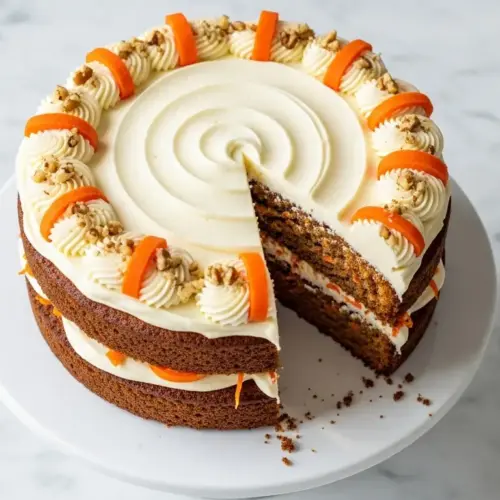
Carrot Cake with Cream Cheese Frosting

Equipment
- Two 9-inch round cake pans
- Parchment paper
- Box grater or food processor with grater attachment
- Large mixing bowls - at least 2
- Whisk
- Electric hand mixer or stand mixer
- Rubber spatula
- Wire cooling rack
- Offset spatula or butter knife - for frosting
Ingredients
- 2 cups all-purpose flour - 250g
- 2 teaspoons baking powder
- 1 1/2 teaspoons baking soda
- 1 teaspoon salt
- 2 teaspoons ground cinnamon
- 1/2 teaspoon ground nutmeg
- 1/4 teaspoon ground ginger
- 4 large eggs - at room temperature
- 1 1/2 cups granulated sugar - 300g
- 1/2 cup packed light brown sugar - 100g
- 1 1/4 cups vegetable oil or canola oil - 300ml
- 1/2 cup applesauce - 120ml
- 2 teaspoons vanilla extract
- 3 cups freshly grated carrots - 300g, about 4-5 medium carrots
For the Cream Cheese Frosting
- 16 ounces cream cheese - 450g, softened to room temperature
- 1/2 cup unsalted butter - 113g, softened to room temperature
- 4 cups powdered sugar - 480g, sifted
- 1 tablespoon vanilla extract
- salt - pinch
Instructions
- Preheat oven to 350°F (175°C). Grease two 9-inch round cake pans, line bottoms with parchment paper, grease again, and lightly flour.
- Peel and grate 4-5 medium carrots using the medium holes of a box grater to yield 3 cups. Set aside.
- In a large bowl, whisk together flour, baking powder, baking soda, salt, cinnamon, nutmeg, and ginger.
- In another large bowl, whisk eggs briefly, add both sugars and whisk 1-2 minutes until lighter. Add oil, applesauce, and vanilla; whisk until smooth.
- Fold dry ingredients into wet mixture just until no flour streaks remain. Do not overmix.
- Gently fold in the grated carrots until evenly distributed throughout the thick batter.
- Divide batter evenly between prepared pans, smooth tops, and tap pans gently to release air bubbles. Bake 35-40 minutes until toothpick comes out clean.
- Cool cakes in pans on wire racks for 10 minutes, then invert onto racks, peel off parchment, and cool completely to room temperature.
- Beat softened cream cheese and butter until smooth and fluffy. Add vanilla and salt. Gradually add sifted powdered sugar on low, then beat on medium-high until fluffy.
- Place one cooled layer on a serving plate. Spread 1-1 1/4 cups frosting on top. Add second layer, then frost top and sides. Refrigerate 30 minutes to set.
Notes
- Use freshly grated carrots rather than pre-shredded for best moisture and texture.
- Ensure cream cheese and butter are at cool room temperature to avoid runny or lumpy frosting.
- Do not skip parchment paper in pans; carrot cake is moist and can stick.
- Measure flour by spooning into cup and leveling off to avoid dense cake.
- Cakes taste even better the next day as spices meld.
- Store frosted cake covered in refrigerator up to 5 days; bring to room temperature before serving.
- Freeze unfrosted layers wrapped tightly up to 3 months.
- Optional additions: fold in 3/4-1 cup chopped walnuts or pecans, or 1/2 cup raisins with the carrots.
- For less sweetness, reduce powdered sugar in frosting by 1/2 to 1 cup.
Final Thoughts
This carrot cake with cream cheese frosting is one of those recipes that becomes a staple in your baking repertoire. Once you make it, you’ll understand why it’s remained popular for generations.
The combination of moist cake, warm spices, and tangy frosting creates something truly special. It’s the kind of dessert that makes people ask for seconds and request the recipe.
Give this recipe a try for your next gathering or special occasion. I’d love to hear how it turns out for you, so feel free to leave a comment below and let me know what you think!
Recommended:
- Easy Waffle
- Belgian Waffle
- Classic French Toast
- Easy French Toast
- Buttermilk Pancake
- Classic Apple Pie
- Dutch Apple Pie
- From Scratch Pumpkin Pie
- Best Chocolate Chip Cookies
- Chewy Chocolate Chip Cookies