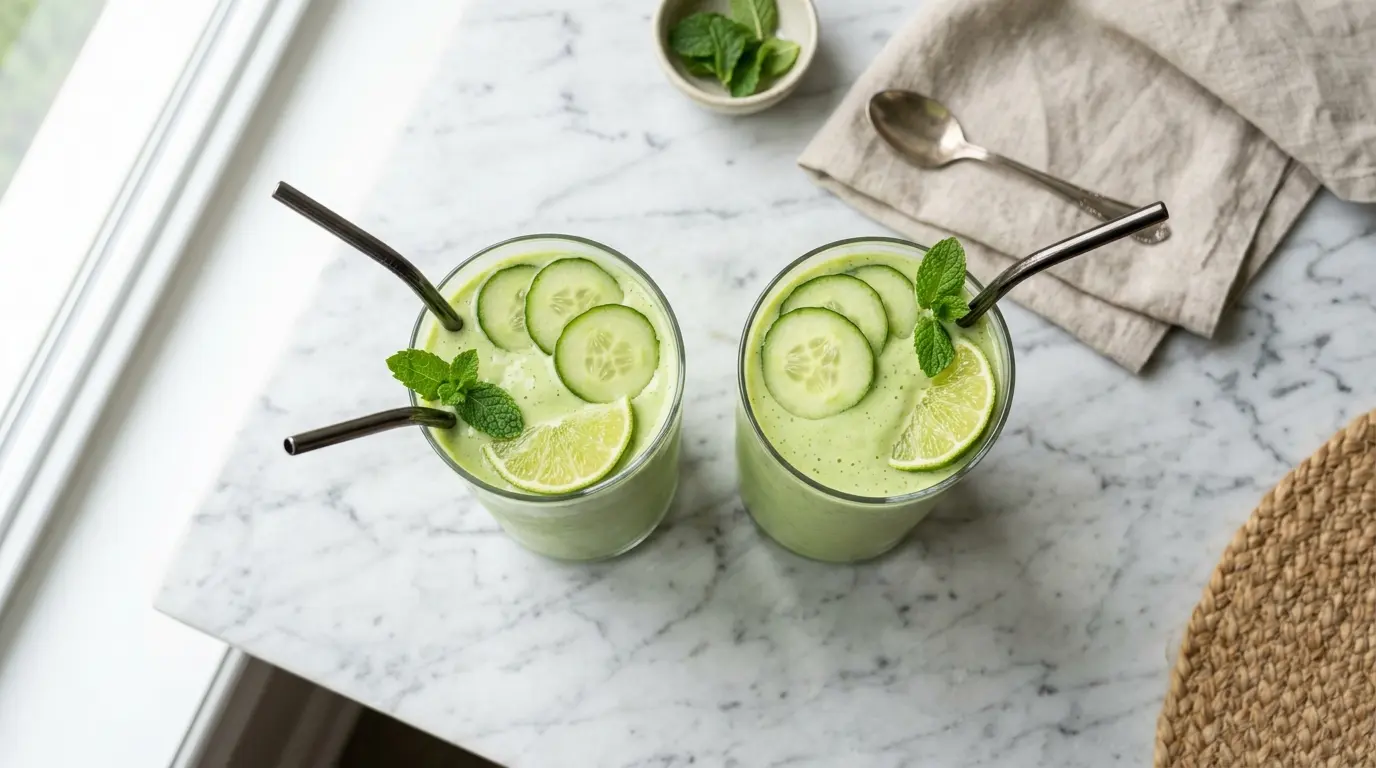
If you’ve never tried a cucumber smoothie recipe, you’re in for a seriously pleasant surprise. Cucumbers bring a cool, spa-like freshness that pairs beautifully with tropical fruits like pineapple and banana, creating a green smoothie that’s as tasty as it is nourishing.
This isn’t a complicated recipe. You need one blender, a handful of simple ingredients, and about five minutes of your time.
The result is a creamy, lightly sweet smoothie with a clean, refreshing flavor that works brilliantly as a breakfast, post-workout refuel, or afternoon snack.
What makes this particular combination work so well is the balance of textures and flavors. Frozen banana adds body and natural sweetness without refined sugar. Pineapple brings a bright tropical tang that complements the mild, slightly earthy flavor of cucumber. Greek yogurt rounds everything out with creaminess and a hit of protein.
Whether you’re looking for a way to use up that cucumber sitting in your fridge or you’re trying to sneak more vegetables into your day, this smoothie delivers on every front.
You might also enjoy this Green Smoothie if you love blending vegetables into your drinks.
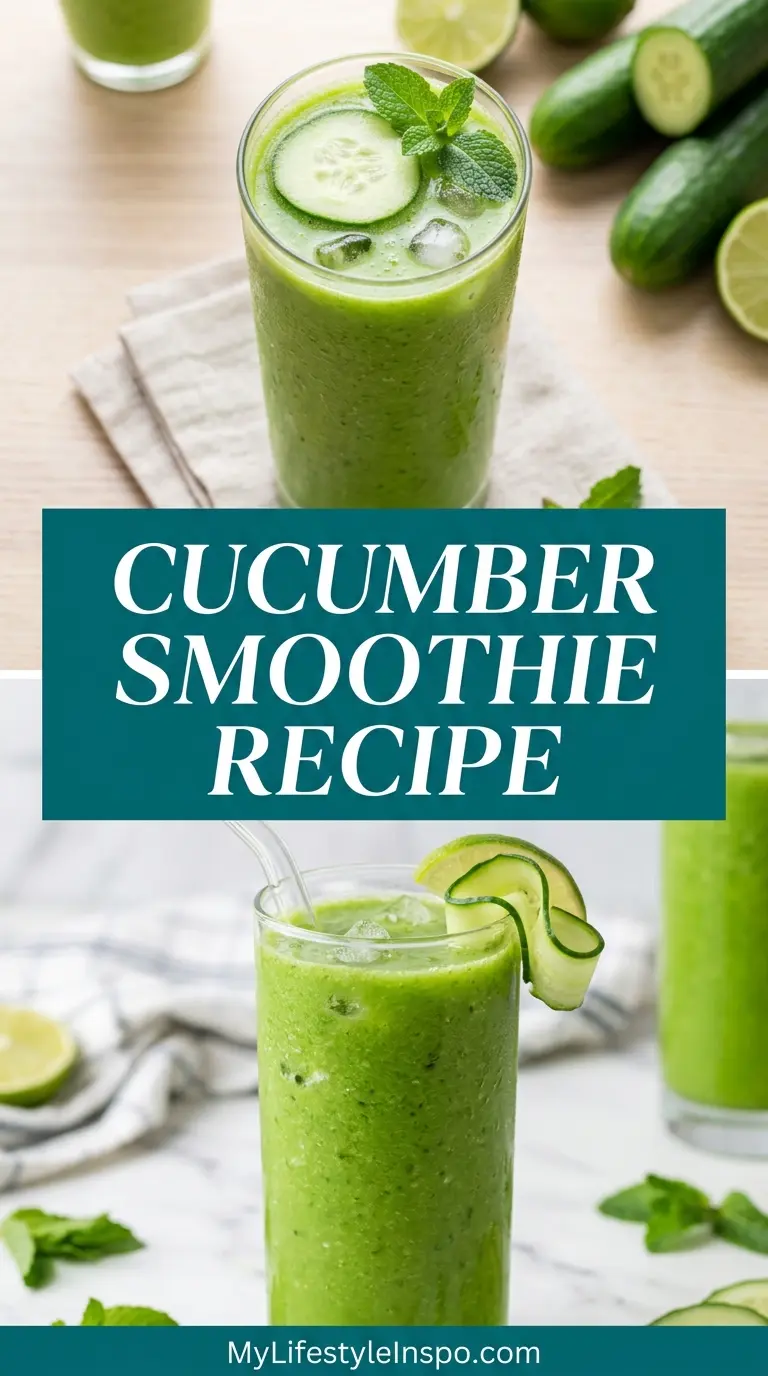
Why You’ll Love This Cucumber Smoothie Recipe
This drink hits a sweet spot between healthy and genuinely delicious, which isn’t always easy to find with vegetable-forward smoothies.
Cucumber is around 95% water, so it naturally hydrates your body from the inside out without adding bulk or heaviness to the smoothie.
The flavor is subtle enough that even picky drinkers won’t feel like they’re sipping a salad. It genuinely tastes like a tropical fruit smoothie with a cool, refreshing twist.
It’s also incredibly fast to make. If you keep a bag of frozen banana chunks in your freezer, you can blend this up in under five minutes on a busy morning.
The ingredients are affordable and easy to find year-round in most grocery stores.
- Naturally hydrating thanks to the high water content of cucumber
- Creamy texture from frozen banana and Greek yogurt
- Tropical sweetness from pineapple that balances the mild cucumber flavor
- No added sugar needed since the fruit provides all the natural sweetness
- High in vitamins C and K, plus potassium and antioxidants
- Customizable for dairy-free, vegan, or high-protein variations
- Ready in 5 minutes with minimal cleanup
Read Also: Spinach Smoothie Recipe
Ingredients
You only need a few wholesome ingredients for this smoothie. Using an English cucumber is recommended because the skin is thinner and doesn’t need to be peeled, which saves time and keeps more of the fiber and nutrients intact. If you’re using a standard cucumber, peel it first since the waxed skin can taste bitter.
- 1 English cucumber (about 10 oz / 280g), roughly chopped (or 1 standard cucumber, peeled and chopped)
- 1 medium frozen banana (about 4 oz / 115g), broken into chunks
- 1 cup (165g) frozen pineapple chunks
- ½ cup (120g) plain Greek yogurt (full-fat or 2% works best for creaminess)
- ½ cup (120ml) coconut water (or regular water, or unsweetened almond milk)
- 1 tablespoon fresh lime juice (about half a lime)
- ½ teaspoon freshly grated or ground ginger (optional but highly recommended)
- A few ice cubes (optional, for a colder smoothie)
Another great smoothie to try with similar tropical vibes is the Coconut Smoothie Recipe.
Kitchen Equipment Needed
This smoothie comes together entirely in a blender, so having a reliable one makes a real difference. A high-speed blender like a Vitamix or NutriBullet will blend the cucumber skin and frozen fruit into a completely smooth, silky texture without any fibrous bits. A standard blender will work too, but you may want to peel the cucumber and let the frozen fruit thaw for a couple of minutes first to make blending easier.
- High-speed blender (Vitamix, NutriBullet, or similar)
- Cutting board
- Sharp knife
- Measuring cups and spoons
- Citrus juicer or reamer (for squeezing the lime)
- Tall glasses for serving
- Reusable smoothie straws (optional but nice for thick smoothies)
For another smoothie that benefits from a great blender, check out this Kiwi Smoothie Recipe.
Recommended Products for This Recipe
These are products I genuinely recommend based on how much they improve the overall experience of making this smoothie.
1. Vitamix E310 Explorian Blender
A high-powered blender makes all the difference with cucumber smoothies. It fully pulverizes the cucumber skin and frozen fruit into a silky, completely lump-free texture in seconds. Without a powerful blender, you may end up with stringy bits of cucumber skin that aren’t pleasant to drink. This model is quieter than older Vitamix versions and comes with a tamper for thick blends.
2. Organic Frozen Pineapple Chunks
Using frozen pineapple instead of fresh eliminates the need for as much ice, which keeps the smoothie extra creamy rather than watered-down. Organic frozen pineapple is picked and frozen at peak ripeness, so the flavor is consistently sweet and bright. It’s one of the easiest freezer staples to keep on hand for smoothies year-round.
3. Fage Total 2% Greek Yogurt
Greek yogurt is what gives this smoothie its creamy body and a gentle tang. Fage is consistently thick and protein-rich without unnecessary additives or sweeteners. Using a 2% rather than fat-free version gives you better texture and a more satisfying, filling smoothie without going overboard on fat.
4. OXO Good Grips Citrus Juicer
Freshly squeezed lime juice brightens up the whole smoothie and keeps it from tasting flat. A handheld citrus juicer like this one extracts every last drop from the lime with minimal effort. You’d be surprised how much more juice you get compared to squeezing by hand.
5. Reusable Wide-Mouth Smoothie Straws
This smoothie has a lovely thick consistency that drinks beautifully through a wide straw. Reusable stainless steel or silicone straws are a small upgrade that makes the whole experience feel more enjoyable and reduces plastic waste in the process.
You might also love the Pineapple Smoothie Recipe if tropical flavors are your thing.
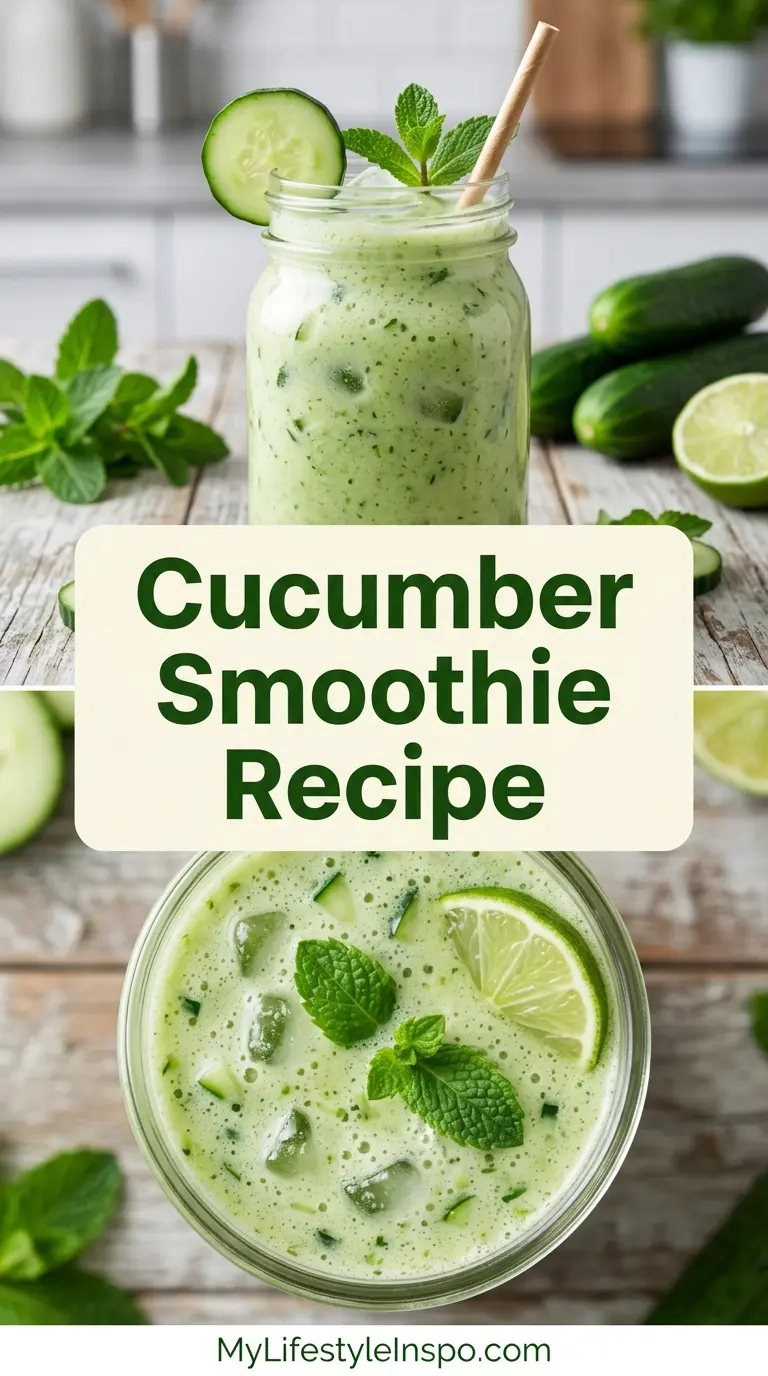
Step-by-Step Instructions
Step 1: Prep Your Cucumber
- Rinse the cucumber thoroughly under cold running water, scrubbing the skin gently to remove any surface residue.
- If using an English cucumber, there’s no need to peel it. The thin skin blends completely smooth and adds extra fiber.
- If using a standard cucumber, use a vegetable peeler to remove the thicker, waxed outer skin. The skin of a regular cucumber can taste quite bitter and may not blend as smoothly.
- Trim off both ends of the cucumber.
- Cut the cucumber into rough 1-inch (2.5cm) chunks. They don’t need to be perfect since they’re going into the blender.
Step 2: Prep Your Frozen Fruit
- If your frozen banana is in large chunks, break or cut them into smaller pieces about 1-2 inches (2.5-5cm). Smaller pieces are easier on your blender motor.
- Measure out 1 cup (165g) of frozen pineapple chunks directly from the freezer. Keep them frozen until the moment you blend, since thawed pineapple can make the smoothie watery.
- If you don’t have pre-frozen banana, peel a ripe banana, cut it into coins, and freeze it on a flat tray for at least 2 hours before using.
Step 3: Juice the Lime
- Roll the lime firmly on your countertop with the palm of your hand. This breaks up the juice cells inside and helps you get more juice out.
- Cut the lime in half crosswise.
- Use a citrus juicer or squeeze by hand over a small bowl, catching any seeds.
- You need about 1 tablespoon (15ml) of lime juice. This might look like a small amount, but it makes a noticeable difference in brightening the overall flavor.
Step 4: Add Liquids to the Blender First
- Pour the coconut water (or your liquid of choice) into the blender first. This step is important because adding liquid before the solid ingredients helps the blender blades move more freely right from the start.
- Add the Greek yogurt on top of the liquid.
- Add the fresh lime juice.
Step 5: Add the Solid Ingredients
- Add the cucumber chunks on top of the yogurt and liquid. They’ll break down quickly since cucumber is mostly water.
- Add the frozen pineapple chunks next.
- Add the frozen banana pieces on top.
- If using ginger, add it now. Fresh grated ginger gives the most vibrant flavor, but ground ginger works well too.
- Add a few ice cubes if you like your smoothie extra cold.
Step 6: Blend Until Completely Smooth
- Secure the blender lid firmly. If your blender has a tamper, keep it nearby.
- Start blending on low speed for about 10 seconds to break up the larger pieces.
- Increase to high speed and blend for 45 to 60 seconds, until the smoothie is completely smooth with no visible chunks.
- If the blender is struggling or the mixture is too thick, add a splash more coconut water (1 to 2 tablespoons at a time) and blend again.
- Stop and scrape down the sides of the blender if needed, then blend for another 10 seconds.
Step 7: Taste and Adjust
- Remove the blender lid carefully and taste the smoothie.
- If it’s not sweet enough, add a small drizzle of honey or a pitted Medjool date and blend again for 20 seconds.
- If it’s too thick, add a splash more liquid and blend briefly.
- If it tastes flat, add a bit more lime juice, half a teaspoon at a time.
Step 8: Pour and Serve Immediately
- Pour the smoothie into tall glasses right away. Cucumber smoothies are best drunk fresh because the high water content in cucumber means the smoothie can separate or become watery as it sits.
- For a nice presentation, garnish the glass with a thin slice of cucumber or a small wedge of lime on the rim.
- If you’re taking it to go, pour it into a sealed insulated cup or mason jar with a tight-fitting lid.
For another vibrant green drink, check out the Matcha Green Tea Smoothie Recipe.
Tips for Success
Getting this smoothie right is easy, but a few small techniques make the difference between a great result and a watery, under-blended one.
- Freeze your banana in advance. A fully frozen banana is what gives this smoothie its thick, creamy milkshake-like texture. A fresh (unfrozen) banana will produce a noticeably thinner, less satisfying drink.
- Keep fruit frozen until the last second. Don’t let your pineapple or banana sit on the counter while you prep everything else. The colder the fruit, the creamier the blend.
- Add liquid first, always. This is a blender technique that helps the motor create a vortex more efficiently and prevents airlock, which is when the blades spin but the ingredients don’t move.
- Don’t over-add liquid. It’s tempting to add more when the blender struggles, but too much liquid makes the smoothie thin. Start conservatively and add small amounts as needed.
- Use a ripe banana. A banana with a few brown spots is sweeter than a yellow one, and it blends more smoothly with less resistance.
- Taste before serving. Everyone’s palate is different. A quick taste test lets you adjust sweetness, tartness, or thickness before you pour it out.
Read Also: Avocado Smoothie Recipe
Serving Suggestions
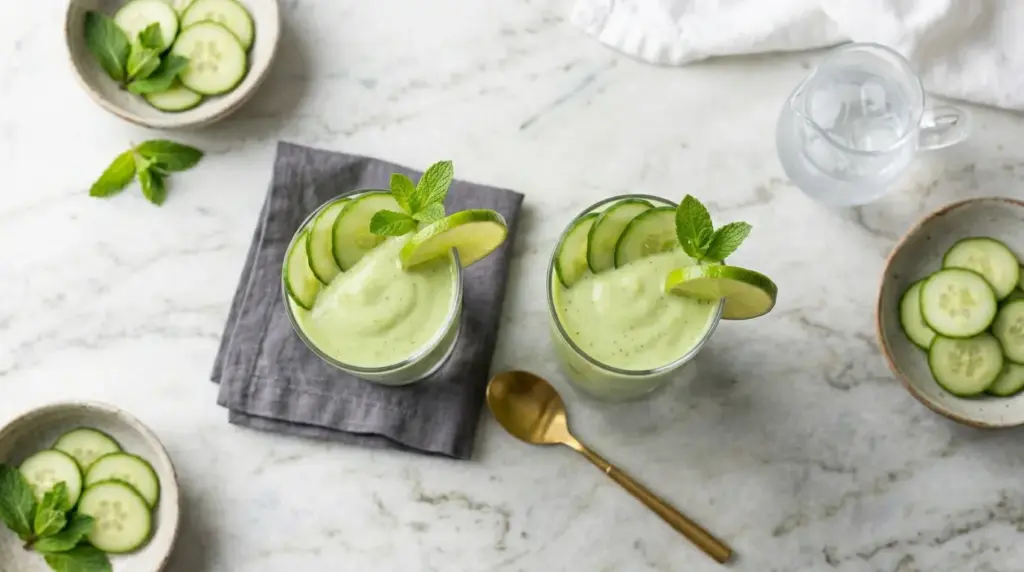
This cucumber smoothie works beautifully as a standalone breakfast, but it also pairs well with a variety of light dishes for a more complete meal.
- Serve alongside Avocado Toast for a filling, nutrient-packed breakfast that covers both healthy fats and hydration.
- Pair it with soft Scrambled Eggs for a high-protein morning meal that keeps you satisfied until lunch.
- Enjoy it as an afternoon snack with a small handful of almonds or walnuts on the side for some crunch and extra protein.
- Pour it into popsicle molds and freeze for a refreshing summer treat that kids and adults both love.
- Serve it at a brunch spread alongside fresh fruit, yogurt parfaits, and pastries as a healthy drink option.
- Use it as a post-workout recovery drink, especially in warm weather when you want something cold and hydrating but not heavy.
Variations to Try
Once you’ve made the basic version, this is a smoothie that’s incredibly easy to customize depending on what you have on hand or what flavor profile sounds good to you.
- Cucumber Mint Smoothie: Add a small handful of fresh mint leaves (about 8 to 10 leaves) before blending. Mint and cucumber are a classic spa combination and the flavor is incredibly refreshing, especially in summer.
- Cucumber Mango Smoothie: Swap the pineapple for 1 cup of frozen mango chunks. Mango is sweeter and a bit creamier than pineapple, and it gives the smoothie a beautiful golden-green color.
- Vegan Cucumber Smoothie: Replace the Greek yogurt with full-fat canned coconut milk. Use 3 to 4 tablespoons and blend as usual. You can also add a tablespoon of chia seeds or almond butter for extra protein and creaminess.
- High-Protein Cucumber Smoothie: Add one scoop of vanilla or unflavored protein powder to the blender before mixing. This version is perfect as a post-workout recovery drink.
- Cucumber Ginger Detox Smoothie: Double the ginger to 1 teaspoon and add a small knob of fresh turmeric (about half an inch, peeled) or a quarter teaspoon of ground turmeric. This adds a warm, slightly earthy note and a lovely golden hue.
- Cucumber Lemon Smoothie: Replace the lime juice with fresh lemon juice and add a tiny pinch of lemon zest for a brighter, more citrus-forward flavor.
Also try the Kale and Fruit Smoothie for another green smoothie variation packed with nutrients.
Storage and Reheating
Cucumber smoothies are best enjoyed immediately after blending because the high water content in cucumber causes the smoothie to separate quickly as it sits.
- Refrigerator: If you need to make it ahead, store the smoothie in a sealed mason jar or airtight container in the fridge for up to 24 hours. Give it a good shake or stir before drinking since separation is normal.
- Freezer: Pour leftover smoothie into ice cube trays and freeze solid. Store the frozen cubes in a zip-lock bag for up to 1 month. When ready to drink, add the frozen cubes to your blender with a small splash of coconut water and re-blend until smooth.
- Meal prep tip: You can pre-portion the solid ingredients (cucumber chunks and frozen fruit) into individual zip-lock bags and freeze them. When you’re ready for a smoothie, just dump a bag into the blender with the liquids and blend. This makes mornings much faster.
- Avoid: Don’t leave the smoothie at room temperature for more than 1 to 2 hours, especially in warm weather.
Read Also: Breakfast Smoothie Recipe
Nutritional Facts
The following values are approximate for one serving (the full recipe as written, about 2 cups / 480ml), based on standard ingredient measurements.
| Nutrient | Amount Per Serving |
|---|---|
| Calories | 240 kcal |
| Total Fat | 3g |
| Saturated Fat | 1g |
| Cholesterol | 5mg |
| Sodium | 75mg |
| Total Carbohydrates | 50g |
| Dietary Fiber | 6g |
| Total Sugars | 32g (all naturally occurring) |
| Protein | 9g |
| Vitamin C | 45mg (50% DV) |
| Vitamin K | 25mcg (21% DV) |
| Potassium | 780mg |
| Calcium | 150mg |
| Iron | 1.2mg |
Note: Nutritional values will vary based on the specific brand of yogurt used, the exact size of your cucumber, and the ripeness of the banana. Using full-fat coconut milk in place of Greek yogurt will increase the fat content significantly while reducing the protein content.
For a lower-calorie option, you can reduce the banana to half and skip the yogurt, replacing it with unsweetened almond milk for a lighter smoothie around 150 calories per serving.
You might also enjoy the Keto Smoothie Recipe if you’re watching your carbohydrate intake.
Health Benefits of Key Ingredients
Each ingredient in this smoothie was chosen not just for flavor, but because it brings genuine nutritional value to the glass.
This is the kind of drink where every sip is actually doing something good for your body, not just tasting pleasant.
- Cucumber: Made up of approximately 95% water, cucumber is one of the most hydrating foods you can eat. It provides vitamin K for bone health, vitamin C for immune function, and potassium for blood pressure regulation. The skin contains silica, a mineral associated with stronger hair and nails. Cucumbers also contain cucurbitacins, compounds with anti-inflammatory and antioxidant properties.
- Frozen Banana: Rich in potassium, vitamin B6, and resistant starch (when slightly underripe), banana provides sustained energy without the sharp blood sugar spike you’d get from refined sugars. It also makes the smoothie naturally creamy without needing additional sweeteners.
- Frozen Pineapple: Pineapple is one of the few natural sources of bromelain, a proteolytic enzyme that aids digestion and has anti-inflammatory properties. It’s also high in vitamin C and manganese, a mineral that supports bone formation and energy metabolism.
- Greek Yogurt: A single half-cup serving of Greek yogurt adds around 8 to 9 grams of protein, which makes this smoothie significantly more filling than a fruit-only blend. It also provides calcium, probiotics for gut health, and a creamy texture that holds the smoothie together.
- Coconut Water: Unlike plain water, coconut water contains electrolytes, including potassium, sodium, and magnesium, which make it an excellent base for a post-workout smoothie. It adds a subtle sweetness without refined sugar.
- Lime Juice: Beyond brightening the flavor, lime juice is a source of vitamin C and citric acid, which slows enzymatic browning in the smoothie and helps preserve its fresh green color for longer.
- Ginger: Even the small amount used in this recipe provides gingerols and shogaols, bioactive compounds known for their anti-nausea, anti-inflammatory, and digestive-support properties.
Another great smoothie loaded with health benefits is the Acai Smoothie Recipe.
Frequently Asked Questions
1. Do I need to peel the cucumber before adding it to the smoothie?
It depends on the type of cucumber you’re using. English cucumbers (the long, thin ones typically sold wrapped in plastic) have a very thin, tender skin that blends completely smooth and doesn’t taste bitter. You can blend them skin-on without any issue. Standard cucumbers have a thicker, waxed skin that can taste bitter and may leave fibrous bits in the smoothie, so it’s better to peel those before blending.
2. Can I use fresh pineapple instead of frozen?
Yes, you can use fresh pineapple, but the texture of your smoothie will be different. Frozen pineapple helps make the smoothie cold and thick without needing as much ice. If you use fresh pineapple, add at least a cup of ice cubes to compensate and expect a slightly thinner consistency. You could also freeze the fresh pineapple for a couple of hours before using it if you have time.
3. What can I use instead of Greek yogurt?
Full-fat coconut milk is the best dairy-free substitute. Use about 3 to 4 tablespoons in place of the half-cup of Greek yogurt. It gives the smoothie a similar creaminess and adds a lovely coconut flavor that pairs well with the pineapple. You can also use unsweetened cashew yogurt, coconut yogurt, or silken tofu for a protein-rich vegan version.
4. Why does my cucumber smoothie taste bland?
The most common reason is that the cucumber overpowered the other flavors, or the fruit wasn’t ripe or sweet enough. To fix it, add an extra squeeze of lime juice, which will immediately brighten the flavor. You can also add a small drizzle of honey, a few extra pineapple chunks, or a Medjool date and re-blend. A pinch of sea salt can also help all the flavors come forward more clearly.
5. Can I make this smoothie the night before?
You can, but there are a couple of things to keep in mind. Cucumber has a very high water content, which means the smoothie will begin to separate within a few hours of blending. Store it in a tightly sealed jar in the refrigerator and shake or stir it well before drinking. The flavor and texture are best within the first 12 hours. Beyond 24 hours, the smoothie starts to lose its fresh, vibrant taste and the texture becomes noticeably watery.
For more smoothie inspiration, check out the Fruit Smoothie Recipe.
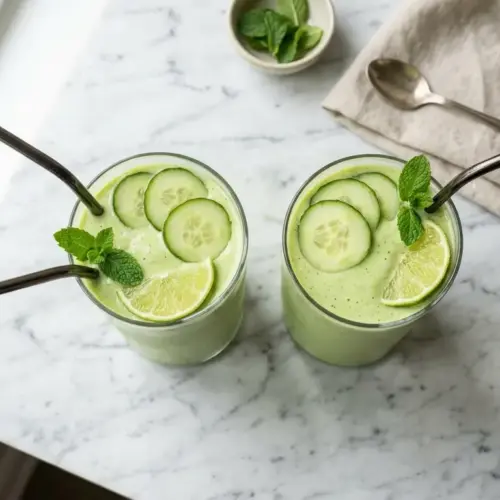
Cucumber Smoothie

Equipment
- High-speed blender (Vitamix, NutriBullet, or similar) - Pulverizes cucumber skin and frozen fruit into a silky smooth texture
- Cutting board
- Sharp knife
- Measuring cups and spoons
- Citrus juicer or reamer - For squeezing the lime
- Tall glasses - For serving
- Reusable smoothie straws - Optional but nice for thick smoothies
Ingredients
- 1 English cucumber - about 10 oz / 280g, roughly chopped (or 1 standard cucumber, peeled and chopped)
- 1 frozen banana - medium, about 4 oz / 115g, broken into chunks
- 1 cup frozen pineapple chunks - 165g
- 0.5 cup plain Greek yogurt - 120g, full-fat or 2% works best for creaminess
- 0.5 cup coconut water - 120ml (or regular water, or unsweetened almond milk)
- 1 tablespoon fresh lime juice - about half a lime, 15ml
- 0.5 teaspoon ginger - freshly grated or ground (optional but highly recommended)
- ice cubes - a few, optional for a colder smoothie
- honey - small drizzle, optional for additional sweetness
- Medjool date - pitted, optional for additional sweetness
- cucumber slice - for garnish (optional)
- lime wedge - for garnish (optional)
Instructions
- Rinse the cucumber, trim off both ends, and cut into rough 1-inch chunks. If using an English cucumber, leave the skin on. For a standard cucumber, peel it first.
- Break or cut frozen banana into smaller pieces if needed. Keep the frozen pineapple and banana frozen until blending time.
- Roll the lime on the counter, cut it in half, and juice it until you have about 1 tablespoon. Catch any seeds in a small bowl.
- Pour the coconut water into the blender first, then add the Greek yogurt and fresh lime juice on top. This helps the blades move freely.
- Add the cucumber chunks, frozen pineapple chunks, frozen banana pieces, and ginger (if using) to the blender. Add a few ice cubes if desired.
- Secure the lid and blend on low for 10 seconds, then increase to high and blend for 45-60 seconds until completely smooth and no visible chunks remain.
- Taste the smoothie and adjust if needed. Add a drizzle of honey or a pitted Medjool date for sweetness, a splash more liquid if too thick, or more lime juice if it tastes flat.
- Pour into tall glasses immediately and garnish with a cucumber slice or lime wedge if desired. Drink fresh for the best texture.
Notes
- Use an English cucumber for the best results since the skin is thin and blends smoothly without bitterness. Standard cucumbers should be peeled first.
- Always freeze your banana in advance for a thick, creamy milkshake-like texture. A fresh banana will produce a noticeably thinner drink.
- Keep pineapple and banana frozen until the moment you blend to achieve the creamiest consistency without using too much ice.
- For a dairy-free or vegan version, replace Greek yogurt with full-fat canned coconut milk (3-4 tablespoons) or unsweetened coconut yogurt.
- To make a high-protein version, add one scoop of vanilla or unflavored protein powder before blending.
- For a Cucumber Mint Smoothie, add a small handful of fresh mint leaves (8-10 leaves) before blending.
- Store leftover smoothie in a sealed mason jar in the fridge for up to 24 hours. Shake or stir well before drinking, as separation is normal.
- Freeze leftovers in ice cube trays, then store cubes in a zip-lock bag for up to 1 month. Re-blend with a splash of coconut water when ready to drink.
- Meal prep tip: Pre-portion cucumber chunks and frozen fruit into individual zip-lock bags and freeze. Just dump a bag into the blender with liquids and blend for a super-fast morning smoothie.
- Don’t leave the smoothie at room temperature for more than 1-2 hours, especially in warm weather.
Final Thoughts
A good cucumber smoothie recipe is one of those simple pleasures that genuinely delivers every single time you make it.
It’s cool, hydrating, naturally sweet, and loaded with nutrients that your body actually notices. The combination of cucumber, pineapple, banana, and Greek yogurt creates a flavor that’s bright and tropical without being overpowering.
Once you try it, it has a way of becoming a regular part of your morning routine, especially during warmer months when you want something refreshing rather than heavy.
Give it a blend this week and see what you think. If you make it, leave a comment below to share your experience, or tag a friend who needs a new favorite smoothie in their life.
Recommended:
- Carrot Smoothie Recipe
- Watermelon Smoothie Recipe
- Dragon Fruit Smoothie Recipe
- Papaya Smoothie Recipe
- Almond Milk Smoothie Recipe
- Coconut Milk Smoothie Recipe
- Greek Yogurt Smoothie Recipe
- Protein Smoothie Recipe
- Beet Smoothie Recipe
- Peanut Butter Smoothie Recipe