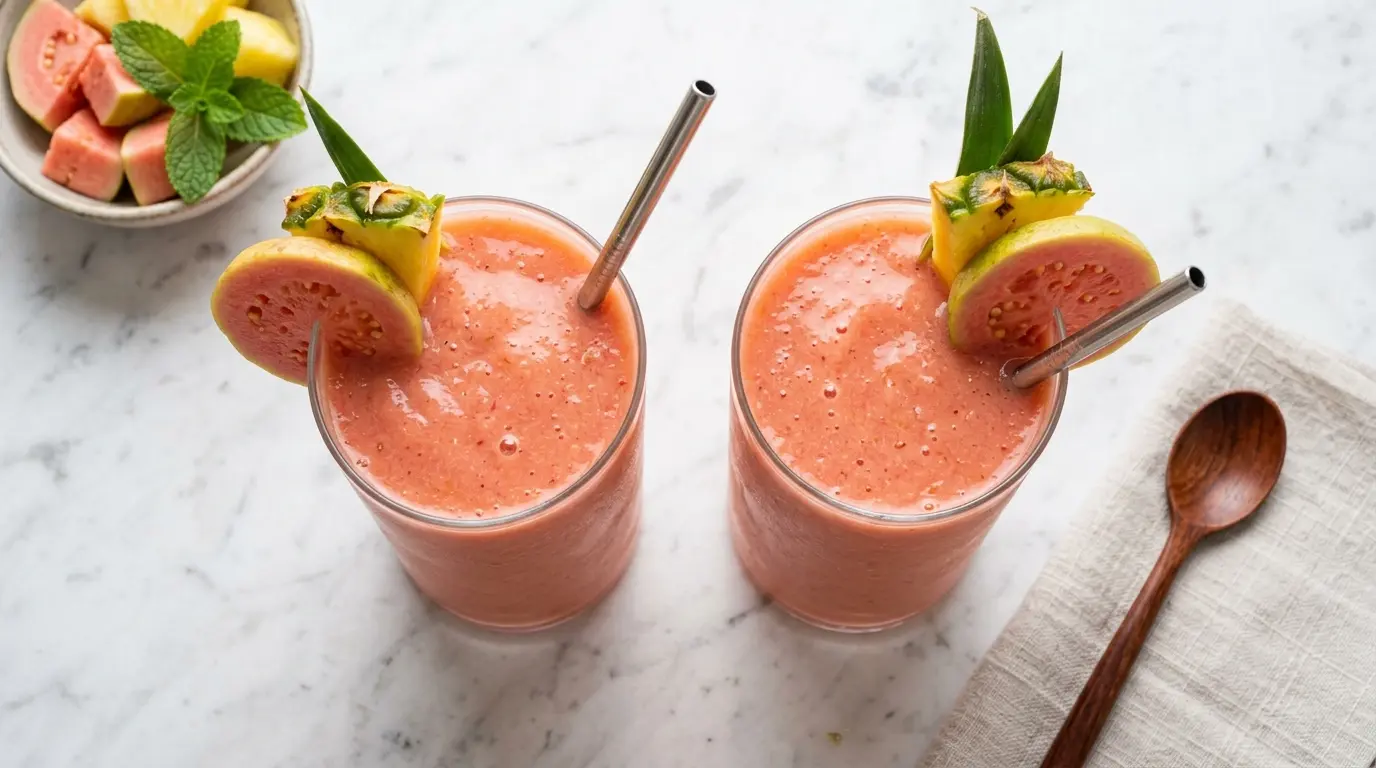
Craving something fruity, refreshing, and just a little exotic? This guava smoothie recipe is everything you need right now. Made with ripe guava, frozen banana, pineapple, and creamy coconut milk, it blends up into a thick, vibrant drink that tastes like a tropical vacation in a glass.
Guava is one of those fruits that deserves way more attention than it gets. It has a uniquely sweet and slightly tangy flavor that pairs beautifully with other tropical fruits, and it brings a gorgeous pink or yellow hue to anything you put it in.
This smoothie comes together in about 5 minutes and requires nothing more than a blender and a handful of fresh or frozen ingredients. It’s naturally dairy-free, packed with vitamin C, and refreshing enough to drink every single day.
If you love tropical fruit drinks, you’re going to keep coming back to this one.
For more tropical blending inspiration, this Fruit Smoothie is another great starting point for experimenting with seasonal fruits.
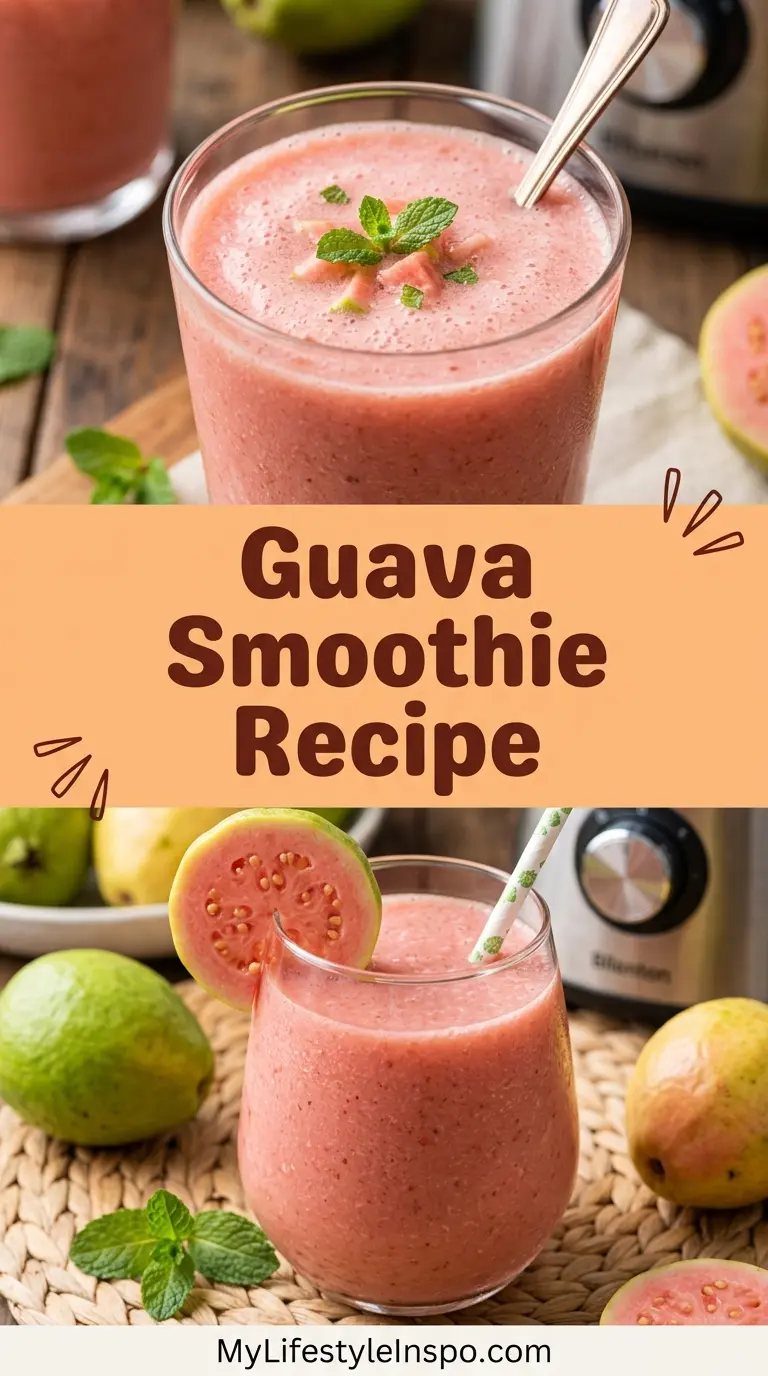
Why You’ll Love This Guava Smoothie Recipe
Guava smoothies are one of those recipes that punch well above their weight for how simple they are.
The combination of guava’s sweet-tangy flavor with creamy coconut milk and banana creates a texture that feels almost like a milkshake, without any dairy or added thickeners.
It’s naturally sweetened by the fruit, so there’s no need for sugar or sweeteners unless you prefer things a little more indulgent.
The recipe works with both fresh and frozen guava, making it flexible enough to enjoy year-round, even when fresh guava isn’t in season.
Here’s a quick look at what makes this smoothie such a winner:
- Quick to make: Everything goes in the blender and you’re done in 5 minutes.
- Dairy-free by default: Coconut milk keeps it creamy without any dairy products.
- Naturally rich in nutrients: Guava is loaded with vitamin C, fiber, and antioxidants.
- Kid-friendly: The sweet tropical flavor is a huge hit with younger family members.
- Customizable: Easy to adjust the thickness, sweetness, and flavor profile to your taste.
- Works as breakfast or a snack: Filling enough to start your morning but light enough as an afternoon refresher.
Another favorite tropical blend worth trying: Pineapple Smoothie
Ingredients
The ingredients for this guava smoothie are straightforward, with most being easy to find at any grocery store. The key is using ripe guava for the best flavor. Look for guavas that give slightly when pressed and have a fragrant, sweet aroma.
Here’s everything you’ll need:
- 2 medium ripe guavas (about 1 cup / 150g of flesh), peeled, seeded, and chopped (or 1 cup frozen guava pulp)
- 1 medium frozen banana (about 120g), broken into chunks
- 1/2 cup (75g) frozen pineapple chunks
- 3/4 cup (180ml) coconut milk (light or full-fat depending on your preference), plus extra to adjust consistency
- 1/2 cup (120ml) orange juice, freshly squeezed or store-bought
- 1 tablespoon (15ml) fresh lime juice
- 1/2 cup (75g) ice cubes (optional, reduce or omit if using frozen fruit)
- 1-2 teaspoons (5-10ml) honey or agave syrup (optional, to sweeten if needed)
Using a frozen banana is the key to getting that thick, creamy smoothie texture without needing yogurt or ice cream. The frozen pineapple also helps keep everything cold and gives the smoothie a bright, tropical pop.
You might also enjoy: Coconut Milk Smoothie
Kitchen Equipment Needed
You don’t need much equipment for this smoothie, but having the right tools makes the process faster and gives you a silkier result.
Here’s what to have ready:
- High-speed blender: Essential for blending guava seeds and peel smoothly (if leaving them in). A standard blender works too but may leave a slightly grainier texture.
- Sharp knife and cutting board: For peeling and slicing the guava.
- Measuring cups and spoons: For accurate liquid measurements.
- Citrus juicer: Makes squeezing the lime and orange juice quick and easy.
- Fine mesh strainer (optional): If your blender isn’t high-powered, straining the blended mixture removes any remaining seed fragments for a silky-smooth finish.
- Tall smoothie glasses: For serving. A 16 oz (475ml) glass is the perfect size for this recipe.
- Reusable smoothie straws: Optional but nice to have for a thick smoothie like this one.
Read Also: Greek Yogurt Smoothie Recipe
Recommended Products for This Recipe
These are products I genuinely recommend based on quality and how much they improve the smoothie-making experience.
1. Vitamix 5200 High-Speed Blender
A powerful high-speed blender is the single most important tool for a guava smoothie. Guava seeds can be tough, and a standard blender may leave them gritty. The Vitamix blends everything, seeds included, into a completely silky finish. It’s an investment that pays off across hundreds of recipes.
2. Goya Frozen Guava Pulp
When fresh guava isn’t available, frozen guava pulp is the next best option and often produces even more consistent results. Goya’s frozen guava pulp is widely available, already seedless, and delivers an authentic tropical flavor every time. Just thaw slightly before blending.
3. Nutiva Organic Coconut Milk
The richness of full-fat coconut milk makes a noticeable difference in this smoothie’s creaminess. Nutiva’s organic coconut milk is smooth, has no stabilizers or fillers, and blends perfectly without curdling. A splash more or less adjusts the smoothie’s thickness beautifully.
4. OXO Good Grips 3-Piece Citrus Juicer Set
Fresh lime and orange juice elevate the brightness of this smoothie considerably compared to bottled juice. The OXO citrus juicer set is easy to use, handles limes and oranges equally well, and captures every drop of juice with minimal effort.
Another great blend to try next: Frozen Fruit Smoothie
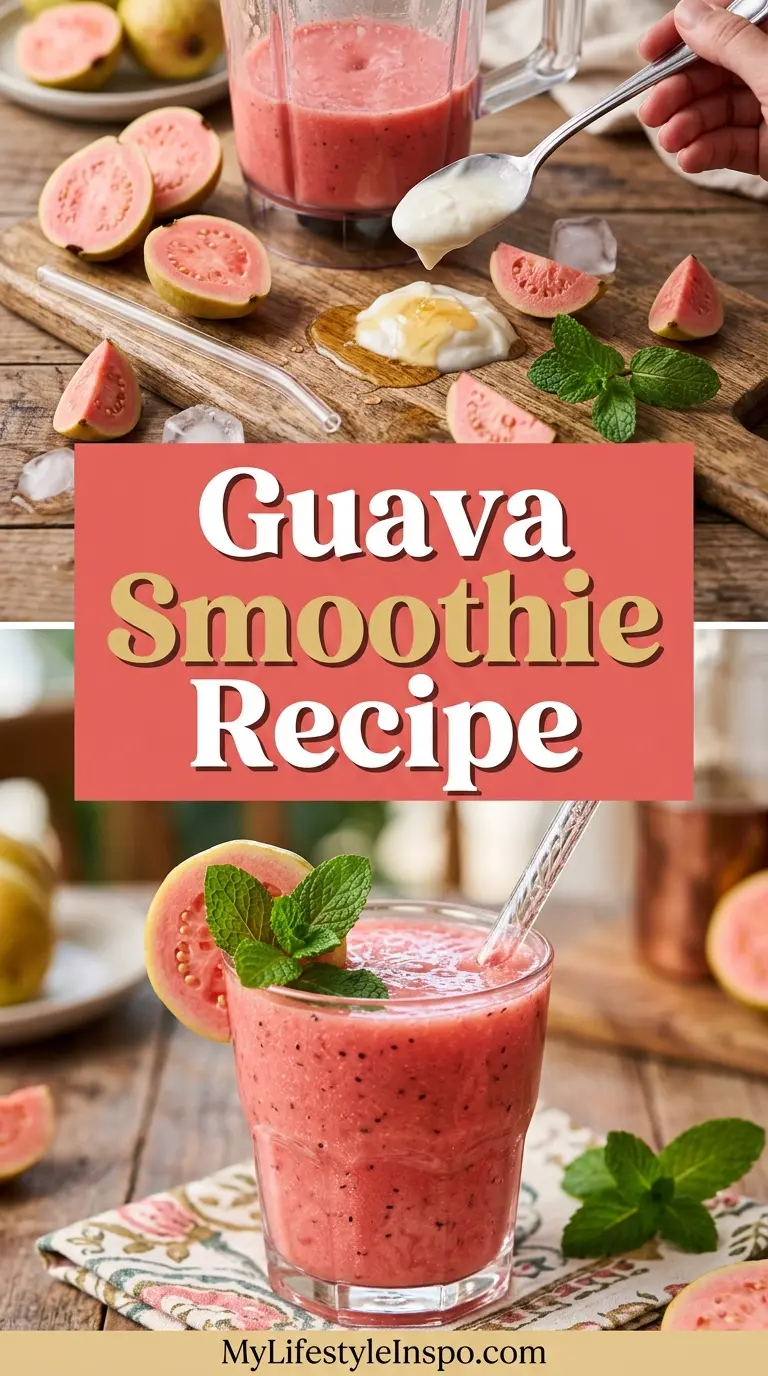
Step-by-Step Instructions
Step 1: Prepare the Guava
- Start by rinsing the guavas thoroughly under cool running water to remove any dirt or residue from the skin.
- Place each guava on your cutting board. Using a sharp knife, slice off the top and bottom ends of each fruit.
- Cut each guava in half lengthwise. You’ll see the seed-filled center surrounded by the softer flesh.
- Use a small spoon to scoop out the seeds and the fibrous core from the center of each half. Discard the seeds.
- Peel the skin away from the flesh using the knife or a vegetable peeler. The skin is edible, but removing it ensures the smoothie is silky rather than slightly bitter.
- Chop the guava flesh into rough chunks, about 1-inch (2.5cm) pieces. You need approximately 1 cup (150g) of chopped guava flesh.
- If using frozen guava pulp instead of fresh, measure out 1 cup (150g) and allow it to thaw at room temperature for about 5 minutes to soften slightly before blending.
Step 2: Prepare the Remaining Ingredients
- Remove your frozen banana from the freezer. Peel it if you haven’t already frozen it peeled (which is always easier), and break it into 3 to 4 chunks. Using a frozen banana rather than a fresh one makes the smoothie thick and cold without needing as much ice.
- Measure out 1/2 cup (75g) of frozen pineapple chunks. If using fresh pineapple, cut a slice from a fresh pineapple, remove the core and skin, and chop into chunks. Then either use fresh (the smoothie will be less cold and thick) or freeze for at least 2 hours before using.
- Squeeze one medium orange using a citrus juicer to get 1/2 cup (120ml) of juice. Alternatively, use a good quality store-bought orange juice.
- Cut one small lime in half and squeeze to get 1 tablespoon (15ml) of fresh lime juice. The lime juice adds brightness and balances the sweetness of the guava and banana.
- If you prefer a sweeter smoothie, measure out 1-2 teaspoons (5-10ml) of honey or agave syrup and set aside. Taste the finished smoothie before adding, as ripe guava and banana often provide enough natural sweetness.
Step 3: Add Ingredients to the Blender
- Open your blender and add the ingredients in this specific order for the best blending results: liquids first, then soft ingredients, then frozen or harder items on top.
- Pour in the coconut milk first (3/4 cup / 180ml). This goes in first so the liquid is closest to the blade, which helps the blender start smoothly without the motor straining.
- Add the freshly squeezed orange juice (1/2 cup / 120ml).
- Add the fresh lime juice (1 tablespoon / 15ml).
- Add the chopped fresh guava chunks or thawed guava pulp.
- Add the frozen banana chunks on top of the guava.
- Add the frozen pineapple chunks on top.
- Finally, add the ice cubes (1/2 cup / 75g) if using. If all your fruit is frozen, you may skip the ice to avoid over-diluting the flavor.
- If adding sweetener, pour the honey or agave in now.
Step 4: Blend Until Completely Smooth
- Secure the blender lid firmly. If your blender has a center cap on the lid, keep it in place for the first few seconds.
- Start blending on the lowest speed setting for about 10-15 seconds. This breaks down the larger chunks and brings everything into initial contact with the blades.
- Increase to medium speed for another 15 seconds to further break down the frozen fruit.
- Finally, increase to the highest speed and blend for a full 45-60 seconds. This final high-speed blend ensures the guava flesh and any remaining fibrous bits are completely smooth.
- Stop the blender and remove the lid. Use a spoon to taste the smoothie. If it’s too thick, add an extra splash of coconut milk or orange juice (about 2 tablespoons / 30ml at a time) and blend for another 10 seconds. If it seems too thin, add a couple more ice cubes and blend briefly.
- If the texture is slightly grainy and you don’t have a high-speed blender, pour the smoothie through a fine mesh strainer into a pitcher, pressing with the back of a spoon to push through all the liquid. This step is optional but produces the silkiest result.
Step 5: Taste and Adjust
- Before pouring, taste the smoothie directly from the blender.
- If it needs more sweetness, add 1 teaspoon (5ml) of honey or agave and blend for 5 seconds.
- If it needs more tartness, squeeze in a tiny bit more lime juice and pulse once.
- If it tastes too strongly of any one ingredient, you can balance it with a little more coconut milk to mellow the flavors.
- If you want a more intense guava flavor, add an extra tablespoon (about 30g) of guava pulp and blend again.
Step 6: Pour and Serve
- Pour the smoothie immediately into tall glasses (about 16 oz / 475ml each). This recipe fills approximately 2 regular-sized glasses.
- Serve right away for the best texture and temperature. Smoothies made with frozen fruit are best consumed immediately after blending, while they’re cold and thick.
- Optional garnishes include a thin slice of fresh guava on the rim of the glass, a pineapple wedge, a wedge of lime, or a light dusting of shredded coconut on top.
- Insert a wide straw (the smoothie is thick) and enjoy immediately.
Start your mornings right with this Breakfast Smoothie as well for more energizing morning options.
Tips for Success
Getting a guava smoothie just right comes down to a few simple tricks that make a big difference in the final texture and flavor.
Here are the most important tips to keep in mind:
- Use ripe guava: Ripe guavas will be slightly soft to the touch and fragrant. Under-ripe guava is harder, starchy, and much less flavorful. The skin turns from bright green to a softer yellow-green when fully ripe.
- Freeze your banana ahead of time: A frozen banana is the secret to a thick, creamy smoothie without added dairy. Peel bananas before freezing and store them in a zip-lock bag for up to 3 months.
- Add liquids to the blender first: Always put the liquid in before the frozen fruit. This keeps the blender blades from getting stuck and ensures a smooth start.
- Don’t over-add ice: If you’re using frozen fruit, you may not need much or any ice at all. Too much ice dilutes the flavor and creates a watery texture.
- Taste before sweetening: Ripe guava, banana, and pineapple are all naturally sweet. Always taste first before adding any honey or agave to avoid making it too sweet.
- Strain if needed: If you don’t have a high-speed blender, pour the finished smoothie through a fine mesh strainer for a perfectly silky, seed-free result.
- Don’t blend too long: Over-blending generates heat that can slightly melt your frozen fruit and produce a thinner smoothie. 45-60 seconds on high is the sweet spot.
For another silky, beautifully blended option, the Almond Milk Smoothie is worth bookmarking too.
Serving Suggestions
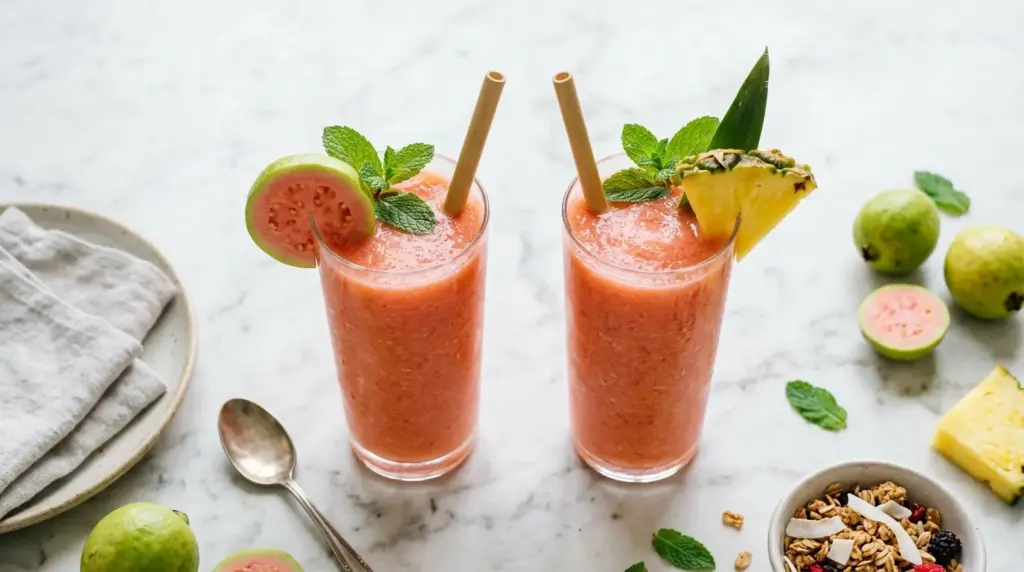
This guava smoothie is delicious on its own, but it also pairs really well with simple breakfast or brunch foods that complement its tropical, fruity character.
The natural sweetness and bright flavor make it a natural match for lighter, fresh-tasting dishes rather than heavy or savory foods.
Here are some great ideas for what to serve alongside it:
- Avocado Toast: The creamy, savory avocado toast balances the sweet tropical smoothie beautifully.
- Fruit Salad: A simple mixed fruit salad doubles down on the fresh and fruity vibe of the meal.
- Easy Crepe: Light, thin crepes with a drizzle of honey and fresh berries pair wonderfully with this smoothie.
- Baked Oatmeal: A warming, hearty baked oatmeal is a great complement to a cold smoothie for a balanced breakfast.
- Easy Overnight Oats: Make them the night before and pair with this smoothie for a 5-minute complete breakfast.
- Easy Acai Bowl: For a full tropical breakfast spread, serve this smoothie alongside an acai bowl.
Another refreshing fruity drink to keep in your rotation: Acai Smoothie
Variations to Try
Once you’ve made the base recipe, it’s easy and fun to switch things up with a few simple swaps or additions.
Here are some variations worth experimenting with:
- Strawberry Guava Smoothie: Add 1/2 cup (75g) of frozen strawberries to the base recipe. The strawberries add a beautiful deep pink color and a berry-forward twist to the tropical flavor.
- Guava Mango Smoothie: Replace the pineapple with frozen mango chunks. Mango and guava are a natural pairing, both bold and sweet with a similar tropical depth.
- Guava Coconut Cream Smoothie: Use full-fat coconut milk instead of light and add 2 tablespoons of coconut cream. This creates an ultra-thick, indulgent drink that’s more like a tropical shake.
- Guava Protein Smoothie: Add one scoop of vanilla protein powder to the base recipe after blending, then pulse briefly to combine. Great for a post-workout recovery drink.
- Green Guava Smoothie: Add a large handful of fresh baby spinach or kale before blending. The greens blend in without significantly affecting the flavor but dramatically boost the nutritional profile.
- Spiced Guava Smoothie: Add a pinch of ground ginger (about 1/4 teaspoon) and a pinch of cinnamon for a warmly spiced tropical smoothie that’s especially good in cooler weather.
- Guava Banana Smoothie Bowl: Reduce the liquid by half to create a very thick mixture, pour into a bowl, and top with sliced fresh fruit, granola, and a drizzle of honey.
For another beautifully exotic option, the Passion Fruit Smoothie is worth adding to your weekly rotation.
Storage and Reheating
Smoothies are always best enjoyed immediately after blending, when the texture is at its thickest and the temperature is perfectly cold.
That said, you can store leftovers or prepare ahead with a few simple tricks.
- Refrigerator storage: Pour any leftover smoothie into an airtight jar or container with a lid. Store in the refrigerator for up to 24 hours. The smoothie may separate slightly, so shake or stir well before drinking.
- Freezer storage: Pour the smoothie into a freezer-safe container or ice cube tray. Freeze for up to 1 month. To serve, thaw in the refrigerator overnight or blend the frozen cubes with a splash of coconut milk to refresh the texture.
- Smoothie packs: Prepare individual servings by portioning the frozen banana, guava, and pineapple into zip-lock bags and freezing them. When ready to blend, simply empty a smoothie pack into the blender with the liquids and blend fresh.
- Avoid refrigerating blended smoothies with banana for too long: Banana oxidizes quickly and can give the smoothie a slightly brown color and off flavor after 24 hours. The taste is usually still fine, but the appearance suffers.
- Do not freeze in glass: Always use a freezer-safe plastic container or silicone molds when freezing smoothies to avoid cracking.
This Smoothie Recipe with Protein Powder offers great ideas for making your smoothies more substantial and meal-prep friendly.
Nutritional Facts
The following nutritional information is an estimate per serving (approximately 1 generous cup or about 350ml), based on the standard recipe using light coconut milk and no added sweetener.
| Nutrient | Per Serving |
|---|---|
| Calories | 210 kcal |
| Carbohydrates | 38g |
| Sugars | 24g |
| Dietary Fiber | 5g |
| Protein | 2.5g |
| Total Fat | 7g |
| Saturated Fat | 6g |
| Vitamin C | 180mg (200% DV) |
| Vitamin A | 450 IU |
| Potassium | 520mg |
| Folate (B9) | 38mcg |
| Calcium | 30mg |
| Iron | 0.8mg |
Nutritional values will vary depending on the size of the guava, whether you use full-fat or light coconut milk, and whether you add honey.
For a lower-calorie version, replace the coconut milk with unsweetened almond milk, which reduces the fat content significantly.
This Green Smoothie is another excellent option if you’re looking to further increase your daily vitamin and mineral intake with a simple blended drink.
Health Benefits of Key Ingredients
The ingredients in this guava smoothie aren’t just delicious. They’re genuinely packed with nutrients that support your health in real, meaningful ways.
Here’s a breakdown of what each key ingredient brings to the table:
- Guava: One of the richest fruit sources of vitamin C, with a single guava providing more than double your daily requirement. Guava is also high in dietary fiber, which supports digestive health and keeps you feeling full. It contains lycopene and other antioxidants that help reduce inflammation and protect cells from damage.
- Banana: Rich in potassium, which supports heart health and healthy blood pressure. Frozen banana is also a source of vitamin B6, which supports brain health and mood regulation. Its natural sugars provide a quick but sustained energy boost.
- Pineapple: Contains bromelain, a unique enzyme that aids protein digestion and has natural anti-inflammatory properties. Pineapple is also an excellent source of vitamin C and manganese, a mineral essential for bone health and metabolism.
- Coconut Milk: Provides medium-chain triglycerides (MCTs), a type of healthy fat that is metabolized differently from other fats and may support energy levels and brain function. It also adds creaminess and makes the smoothie more satiating.
- Orange Juice: Adds another generous dose of vitamin C along with folate and potassium. The natural citric acid in orange juice also helps preserve the color of the smoothie and brightens the overall flavor.
- Lime Juice: A small amount of lime juice contributes additional vitamin C and acts as a natural antioxidant. The acidity also helps balance the sweetness and adds a lively pop of flavor that ties the tropical profile together.
Read Also: Dragon Fruit Smoothie Recipe
Frequently Asked Questions
1. Can I use guava juice instead of fresh or frozen guava?
Yes, guava juice works as a substitute, though the smoothie will be thinner and less creamy than when using whole fruit.
If using guava juice, replace the guava flesh with about 3/4 cup (180ml) of 100% pure guava juice and reduce the orange juice slightly to avoid an overly liquid result. Look for guava juice with no added sugar for the healthiest option.
2. What kind of guava should I use for a smoothie?
Pink guava tends to produce the most vibrant color and has a sweeter, more aromatic flavor than white guava, making it the preferred choice for smoothies.
White guava works perfectly well too and will still produce a delicious smoothie, just with a more subtle color. Both types are equally nutritious.
3. Can I make this guava smoothie without banana?
Yes, you can omit the banana, though the smoothie will be slightly less creamy and thick.
To compensate, add an extra 1/2 cup (75g) of frozen pineapple or mango chunks. You could also add 2-3 tablespoons of Greek yogurt or a tablespoon of chia seeds to help with thickness and creaminess.
4. Can I use fresh pineapple instead of frozen?
Absolutely. Fresh pineapple works fine, but the smoothie will be less cold and thick than when using frozen.
To compensate, increase the ice cubes to about 1 cup (150g) and reduce the coconut milk slightly. For best results, freeze fresh pineapple chunks for at least 2 hours before using in the smoothie.
5. Is this guava smoothie suitable for a vegan diet?
Yes, the base recipe is completely vegan. All the ingredients including guava, banana, pineapple, coconut milk, orange juice, and lime juice are plant-based.
Just make sure to use agave syrup rather than honey if you’re strictly vegan and want to add a sweetener.
For more refreshing tropical inspiration, the Watermelon Smoothie is another beautifully simple vegan-friendly blend worth trying.
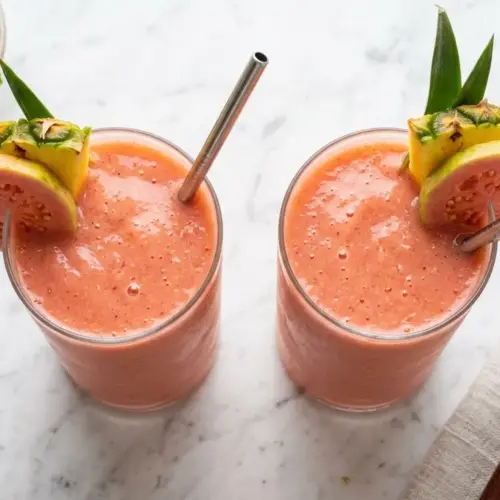
Guava Smoothie

Equipment
- High-speed blender - Essential for blending guava seeds and peel smoothly
- Sharp knife
- Cutting board
- Measuring cups
- Measuring spoons
- Citrus juicer - For fresh lime and orange juice
- Fine-mesh strainer - Optional, if your blender isn’t high-powered
- Tall smoothie glasses - 16 oz / 475ml size recommended
- Reusable smoothie straws - Optional, nice for thick smoothies
Ingredients
- 2 ripe guavas - about 1 cup or 150g flesh, peeled, seeded, and chopped, or 1 cup frozen guava pulp
- 1 frozen banana - medium, about 120g, broken into chunks
- 1/2 cup frozen pineapple chunks - 75g
- 3/4 cup coconut milk - 180ml, light or full-fat, plus extra to adjust consistency
- 1/2 cup orange juice - 120ml, freshly squeezed or store-bought
- 1 tablespoon fresh lime juice - 15ml
- 1/2 cup ice cubes - 75g, optional, reduce or omit if using frozen fruit
- 1-2 teaspoons honey or agave syrup - 5-10ml, optional, to sweeten if needed
- Fresh guava slices - for garnish, optional
- Pineapple wedge - for garnish, optional
- Lime wedge - for garnish, optional
- Shredded coconut - for garnish, optional
Instructions
- Rinse guavas, cut off ends, slice in half, scoop out seeds and fibrous core, peel, and chop flesh into 1-inch pieces.
- Measure frozen banana chunks and pineapple. Squeeze fresh orange juice and lime juice.
- Add coconut milk, orange juice, and lime juice to the blender first. Then add guava, frozen banana, frozen pineapple, ice (if using), and sweetener.
- Start on low speed for 10-15 seconds, increase to medium for 15 seconds, then blend on high for 45-60 seconds until completely smooth.
- Taste and adjust sweetness with more honey or tartness with extra lime juice. Strain through a fine mesh sieve if desired for an ultra-smooth texture.
- Pour into tall glasses, garnish with guava slices, pineapple, lime wedges, or shredded coconut, and serve immediately.
Notes
- Ripe guava: Choose guavas that are slightly soft to the touch and fragrant. Under-ripe guava is starchy and less flavorful.
- Freeze banana ahead: Peel and freeze bananas in a zip-lock bag for up to 3 months for the best creamy texture.
- Liquids first: Always add liquids to the blender before frozen fruit to prevent the motor from straining and ensure smooth blending.
- Ice usage: If using all frozen fruit, skip the ice to avoid a watery, diluted flavor. Add ice only if using fresh fruit.
- Strain for silkiness: If you don’t have a high-speed blender, pour the finished smoothie through a fine mesh strainer for a perfectly smooth, seed-free result.
- Storage: Store leftovers in an airtight container in the refrigerator for up to 24 hours. Shake or stir well before drinking as separation may occur.
- Freeze for later: Pour into freezer-safe containers or ice cube trays and freeze for up to 1 month. Thaw overnight or blend frozen cubes with a splash of coconut milk.
- Make smoothie packs: Portion frozen banana, guava, and pineapple into zip-lock bags. When ready, empty the pack into the blender with liquids for a quick 5-minute smoothie.
Final Thoughts
This guava smoothie recipe is one of those happy discoveries that makes you wonder why you didn’t start making it sooner.
It’s simple, fast, naturally nutritious, and tastes like something you’d pay good money for at a tropical smoothie bar.
Once you try it, it has a way of becoming a regular in your weekly routine, especially on warm mornings when you want something refreshing that still keeps you fueled.
Give this recipe a try and see for yourself. Drop a comment below to let me know how it turned out, and feel free to share it with anyone who loves tropical flavors!
Recommended:
- Mango Smoothie without Yogurt
- Avocado Smoothie
- Papaya Smoothie
- Banana Mango Smoothie
- Yogurt Smoothie
- Kale and Fruit Smoothie
- Spinach Smoothie
- Matcha Green Tea Smoothie
- Coffee Smoothie
- Chia Banana Boost Tropical Smoothie