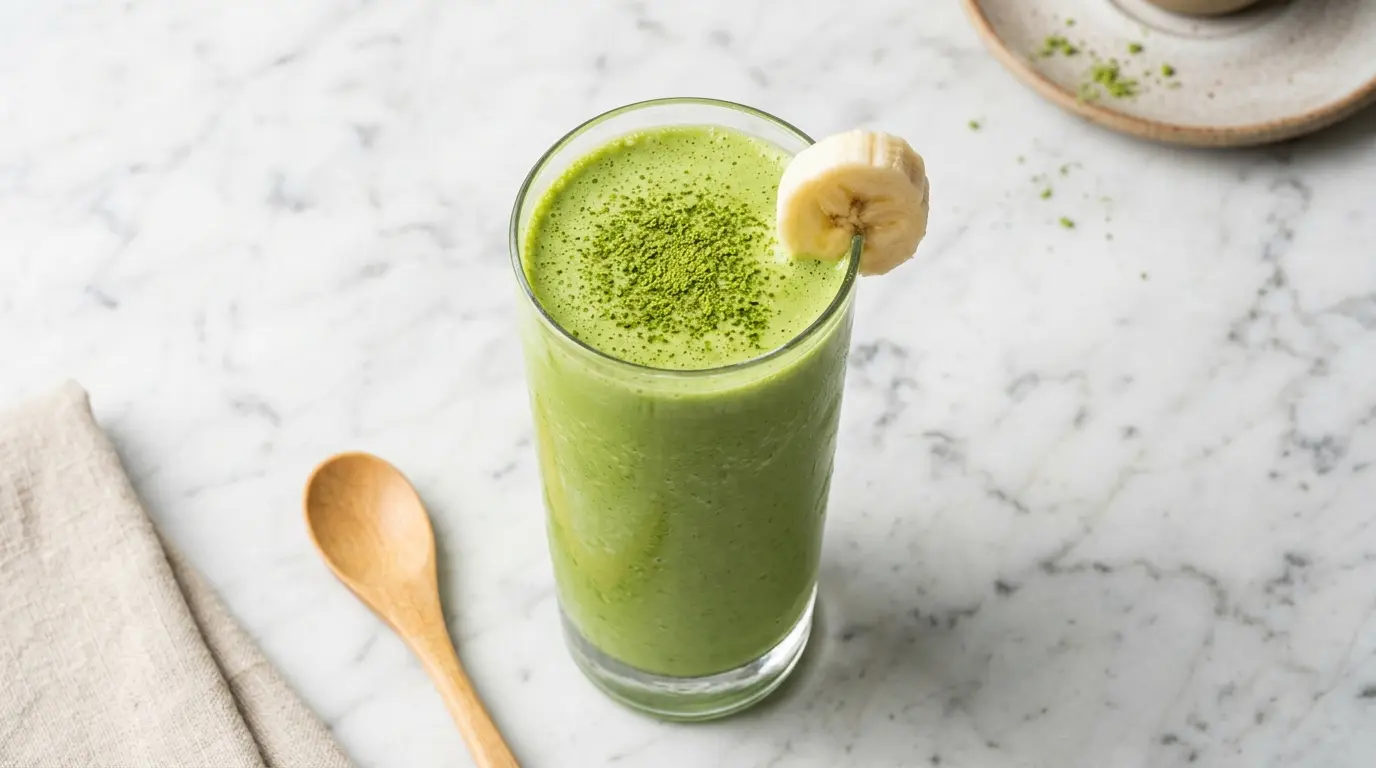
If you’ve been looking for a drink that’s equal parts beautiful and nourishing, this Matcha Green Tea Smoothie Recipe is exactly what you need.
Packed with antioxidants, naturally energizing, and ready in under five minutes, this smoothie delivers all the calm alertness of matcha in a thick, creamy, ice-cold glass.
The base of this recipe is simple: ceremonial or culinary grade matcha powder, a frozen banana for creaminess and natural sweetness, Greek yogurt for protein and tang, a splash of milk, and a drizzle of honey.
These five core ingredients are the version you’ll find across the most trusted food blogs and kitchen counters around the world, and for good reason. They balance the earthy bitterness of the green tea with enough sweetness and body to make this feel like an indulgent treat, not just a health drink.
The trick to keeping the color vibrant and the flavor smooth? Use cold or frozen ingredients, and never blend with warm liquid. Heat kills both the color and the antioxidant compounds in matcha.
You might also enjoy: Green Smoothie Recipe

Why You’ll Love This Matcha Green Tea Smoothie Recipe
This is the kind of recipe that earns a permanent spot in your morning rotation.
It takes five minutes from start to finish, requires no cooking, and packs a genuinely impressive nutritional profile into a single glass.
The matcha gives you a slow-burning, jitter-free energy lift thanks to its combination of caffeine and L-theanine, an amino acid that promotes calm focus.
Unlike coffee, which can spike and crash your energy, matcha keeps you steady. And unlike a matcha latte, this smoothie adds fiber, protein, and potassium from the banana and yogurt.
Here’s why readers come back to this recipe again and again:
- Smooth, creamy texture with no graininess from the matcha powder
- Naturally sweet without refined sugar when you use ripe bananas and honey
- Ready in 5 minutes with no prep beyond peeling a banana
- Gorgeous bright green color that looks stunning in a glass
- Flexible and customizable for dairy-free, vegan, or high-protein versions
- Genuinely filling enough to replace breakfast on busy mornings
- Nutritionally dense with antioxidants, probiotics, vitamins, and minerals
For another nourishing morning option, this pairs beautifully with a Breakfast Smoothie Recipe that works just as well for a full-energy start to your day.
Ingredients
The standard matcha smoothie relies on a handful of wholesome, easy-to-find ingredients that work together perfectly. Using a frozen banana is the key to achieving that thick, milkshake-like consistency without adding ice, which can water down the flavor.
- 1 tsp (2 g) ceremonial or culinary grade matcha powder
- 1 medium frozen banana (about 4 oz / 115 g), sliced before freezing
- 1/2 cup (120 g) plain Greek yogurt, full-fat or low-fat
- 3/4 cup (180 ml) milk of choice (dairy, almond milk, or oat milk)
- 1 tbsp (21 g) honey or maple syrup, plus more to taste
- 1/2 tsp vanilla extract (optional, but recommended)
- 4-5 ice cubes (optional, for an even colder, thicker smoothie)
Read Also: Almond Milk Smoothie Recipe
Kitchen Equipment Needed
You don’t need anything fancy here, just a few reliable kitchen basics. That said, a high-powered blender genuinely makes a difference for smoothies with matcha, since it ensures the powder disperses completely without any gritty pockets.
- High-powered blender (Vitamix, Ninja, or similar)
- Measuring spoons
- Measuring cup
- Knife and cutting board (for the banana)
- Tall glass or smoothie cup for serving
Read Also: Greek Yogurt Smoothie Recipe
Recommended Products for This Recipe
These are hand-picked recommendations based on quality and performance. Each one can meaningfully improve your smoothie results.
1. Ceremonial Grade Matcha Powder
The quality of your matcha defines the color, flavor, and nutrition of your smoothie. Ceremonial grade matcha is made from the youngest tea leaves, giving you a bright green color and a smoother, less bitter flavor than culinary grade. It dissolves cleanly in the blender without any residue.
2. Vitamix High-Speed Blender
A high-speed blender is the single biggest upgrade you can make for smoothie quality. It pulverizes frozen banana completely, blends the matcha powder without clumping, and produces a silky-smooth texture in under 60 seconds. The difference compared to a standard blender is noticeable.
3. Wide-Mouth Smoothie Cups with Lids
These reusable cups are perfect for taking your matcha smoothie on the go. They keep the drink cold, come with a straw, and are sized right for a single serving. No more losing half your smoothie in transit.
4. Silicone Freezer Tray for Banana Slices
Freezing pre-sliced bananas on a flat tray before storing them in a bag makes blending dramatically easier. The slices separate cleanly, your blender doesn’t struggle, and the smoothie comes out consistently creamy every time.
You might also enjoy: Coconut Milk Smoothie Recipe
Step-by-Step Instructions
Step 1: Freeze Your Banana in Advance
- Peel a ripe banana (the riper, the sweeter) and slice it into 1/2-inch (1.5 cm) rounds.
- Lay the slices flat on a parchment-lined baking sheet or silicone tray.
- Place the tray in the freezer for at least 2 hours, or overnight for best results.
- Once frozen solid, transfer the slices to a zip-lock bag and store in the freezer for up to 2 months.
- Using a frozen banana is essential for a thick, creamy smoothie. A fresh banana produces a thinner, less satisfying texture.
Step 2: Measure and Sift the Matcha
- Measure 1 tsp (2 g) of matcha powder into a small bowl or directly into the blender.
- If your matcha powder has any visible clumps, use a fine-mesh sieve to sift it before adding. Clumps mean uneven flavor pockets in the finished smoothie.
- Use ceremonial grade if you can. It dissolves more easily and has a smoother, less bitter taste than culinary grade.
- Start with 1 tsp if you’re new to matcha. You can always add a little more once you’ve tasted the finished smoothie, but you can’t take it away.
Step 3: Add All Ingredients to the Blender
- Add the milk to the blender first. Pouring liquid in first helps protect the blender motor and makes it easier for the blades to catch the other ingredients.
- Add the Greek yogurt next. Spoon it in directly from the container.
- Add the frozen banana slices. Drop them in evenly so they blend uniformly.
- Add the sifted matcha powder.
- Add the honey or maple syrup. If your banana is very ripe and sweet, you can start with just 1/2 tbsp and adjust after tasting.
- Add the vanilla extract if using.
- Add ice cubes now if you want a colder, thicker smoothie. Skip them if your frozen banana is sufficient.
Step 4: Blend Until Completely Smooth
- Secure the blender lid tightly before starting. Matcha smoothies have a tendency to splash if the lid is loose.
- Start blending on low speed for 10-15 seconds to break down the frozen banana pieces, then increase to high speed.
- Blend on high for 30-60 seconds, or until the mixture is completely smooth with no visible chunks or green specks.
- If the smoothie is too thick to blend, add milk one tablespoon at a time and blend again. Avoid adding too much at once or you’ll lose the thick consistency.
- If the blender has a tamper (like a Vitamix), use it to push ingredients toward the blades while the machine is running.
Step 5: Taste and Adjust
- Stop the blender and taste the smoothie using a clean spoon.
- If it’s too bitter, add a little more honey and blend for 10 seconds.
- If you want a stronger matcha flavor, add an extra 1/4 tsp of matcha and blend again.
- If it’s too thick, add a splash more milk. If it’s too thin, add a couple more ice cubes or a few more frozen banana slices and blend again.
- This step matters. Every banana is a slightly different sweetness, and every matcha powder is a slightly different intensity.
Step 6: Pour, Garnish, and Serve Immediately
- Pour the smoothie into a tall glass. Tilt the glass slightly as you pour for a cleaner presentation.
- For an optional garnish, dust a tiny pinch of matcha powder over the top using a sieve, or add a slice of fresh banana to the rim.
- Serve immediately. Matcha smoothies are best within 10-15 minutes of blending, as the color can dull slightly if left to sit.
- If you’re making this for meal prep, it’s better to pre-freeze the banana portions and measure out the ingredients the night before, then blend fresh in the morning.
For an equally quick and energizing option, try a Coffee Smoothie Recipe on days when you want an extra caffeine kick.
Tips for Success
A few targeted tips will take your matcha smoothie from good to genuinely great. These are the small adjustments that make a real difference.
- Always freeze your banana before blending. This is the single most important tip. A frozen banana is what gives the smoothie its thick, creamy, almost ice-cream-like texture.
- Sift the matcha powder before adding it to the blender, especially if the container has been stored for a while. Clumps lead to uneven flavor.
- Add liquid first to protect your blender motor and help the blades blend more efficiently from the start.
- Don’t over-blend. Once everything is smooth, stop. Over-blending can warm the smoothie and dull the bright green color.
- Use cold milk straight from the fridge. Warm or room-temperature milk will make the smoothie thinner and less vibrant in color.
- Taste before serving. Matcha powder and banana sweetness vary by brand and ripeness, so always adjust sweetener at the end.
- Use a high-powered blender if possible. Budget blenders often leave small bits of frozen banana or matcha specks that affect both texture and flavor.
Another smoothie that benefits from the same frozen-banana technique is this Peanut Butter Banana Smoothie Recipe.
Serving Suggestions
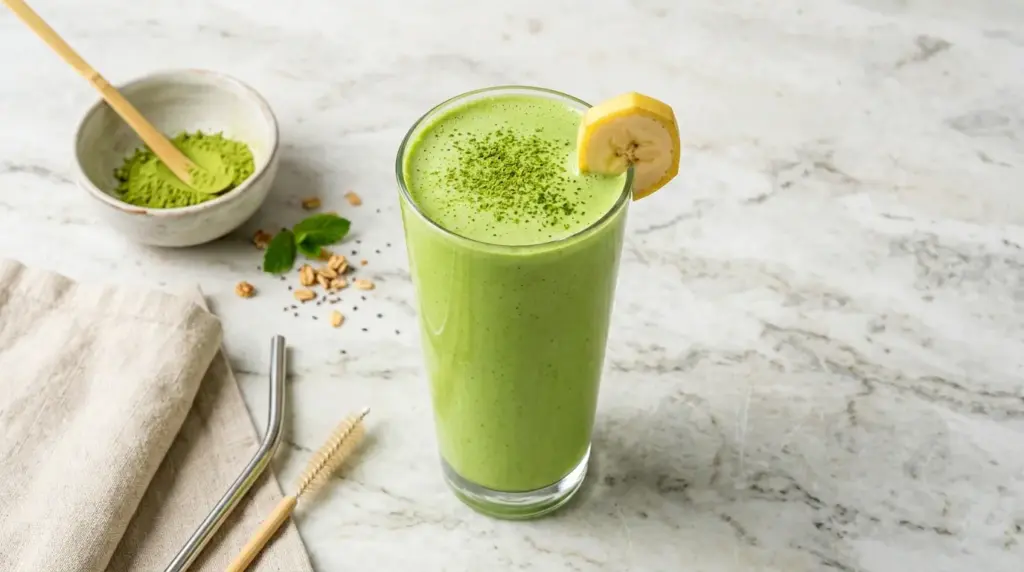
This smoothie is satisfying on its own but shines even more as part of a larger spread.
A matcha smoothie pairs naturally with light, fresh foods that complement its earthy, mildly sweet flavor. Here are some favorite pairings:
- Avocado Toast for a filling, wholesome breakfast
- Easy Granola sprinkled on top to serve it as a smoothie bowl
- Baked Oatmeal alongside for a satisfying weekend brunch
- Fruit Salad for a refreshing and colorful pairing
- Easy Acai Bowl served side by side for a superfood breakfast spread
- Easy Overnight Oats as a grab-and-go prep alongside your smoothie
For another vibrant and refreshing pairing option, try a Dragon Fruit Smoothie.
Variations to Try
The base recipe is easy to customize for different dietary needs, flavor preferences, or nutritional goals. These variations all work with the same basic method.
- Dairy-Free / Vegan Version: Swap the Greek yogurt for coconut yogurt or silken tofu, and use oat milk or almond milk instead of dairy.
- High-Protein Version: Add one scoop of vanilla protein powder or 2 tablespoons of hemp seeds. This makes it genuinely meal-replacement worthy.
- Matcha Mango Smoothie: Replace the frozen banana with 1 cup (150 g) of frozen mango chunks. The tropical sweetness pairs beautifully with matcha.
- Matcha Spinach Smoothie: Add a large handful (1 cup / 30 g) of baby spinach before blending. The color gets even deeper green, and the flavor barely changes thanks to the matcha and banana.
- Matcha Pineapple Smoothie: Add 1/2 cup (80 g) of frozen pineapple for a tart, tropical twist that brightens the earthy matcha.
- Keto Matcha Smoothie: Use full-fat coconut milk, replace the banana with 1/2 avocado, and sweeten with a few drops of liquid stevia instead of honey.
- Iced Matcha Smoothie Bowl: Use 1/4 less milk for a thicker base, then pour into a bowl and top with granola, sliced strawberries, chia seeds, and a dusting of matcha.
Read Also: Spinach Smoothie Recipe
Storage and Reheating
Matcha smoothies are best consumed fresh, but you have options if you want to prepare ahead.
- Refrigerator: Store the blended smoothie in a sealed jar or airtight container for up to 24 hours.
- Shake or stir before drinking, as the ingredients can separate slightly in the fridge.
- Freezer option: Pour the smoothie into ice cube trays and freeze. When you’re ready to drink, blend the cubes with a splash of milk for a freshly blended result.
- Do not microwave or apply heat to a matcha smoothie. Heat destroys both the color and the antioxidant compounds in matcha.
- Pre-freeze your smoothie packs: Place all ingredients except the milk into a zip-lock bag and freeze. In the morning, dump the bag into the blender, add the milk, and blend. This prep takes 30 seconds.
- Avoid making too far in advance. Even in the fridge, the banana can brown slightly and the bright green color can fade after 24 hours.
For another make-ahead breakfast idea, try this Keto Smoothie Recipe.
Nutritional Facts
The following values are approximate for one standard serving made with full-fat Greek yogurt, honey, and dairy milk. Values will vary based on specific brands and ingredient choices.
| Nutrient | Per Serving |
|---|---|
| Calories | ~280 kcal |
| Total Fat | 4 g |
| Saturated Fat | 1.5 g |
| Carbohydrates | 50 g |
| Dietary Fiber | 3 g |
| Sugars | 33 g (mostly from banana and honey) |
| Protein | 12 g |
| Sodium | 75 mg |
| Potassium | 540 mg |
| Calcium | 200 mg |
| Vitamin C | 10 mg |
| Caffeine | ~35-70 mg (depending on matcha amount and grade) |
Substituting a plant-based yogurt reduces calories by roughly 20-30 kcal and eliminates saturated fat. Using a riper banana increases the sugar content slightly but removes the need for added honey.
You might also enjoy: Protein Smoothie Recipe
Health Benefits of Key Ingredients
Every ingredient in this smoothie brings something meaningful to the table, and together they make it one of the most nutritionally well-rounded five-minute meals you can make.
Here’s a closer look at what each key ingredient contributes:
- Matcha powder is one of the most antioxidant-dense foods available. It’s particularly high in a catechin called EGCG (epigallocatechin gallate), which has been linked to reduced inflammation and improved brain function. The combination of caffeine and L-theanine in matcha promotes alert, calm focus without the jitteriness associated with coffee.
- Frozen banana provides potassium for muscle function and heart health, natural resistant starch that feeds beneficial gut bacteria, and enough natural sugar to make the smoothie genuinely satisfying without refined sweeteners.
- Greek yogurt adds a substantial protein boost alongside live probiotic cultures, which support a healthy gut microbiome. The protein content also slows digestion, keeping you full longer than a fruit-only smoothie would.
- Milk (dairy or plant-based) contributes calcium and vitamin D for bone health, plus fat-soluble vitamins that help your body absorb other nutrients in the smoothie.
- Honey provides trace minerals and antimicrobial compounds. While it’s still a sugar, raw honey has a lower glycemic index than refined white sugar and contains small amounts of beneficial enzymes.
- Vanilla extract adds depth of flavor and contains small amounts of vanillin, which has been studied for its antioxidant properties.
For another antioxidant-packed option, try this Beet Smoothie Recipe.
Frequently Asked Questions
1. Can I use matcha tea bags instead of matcha powder?
You can, but the result won’t be quite the same. Matcha powder is made from finely ground whole tea leaves, while tea bags contain steeping-grade leaf pieces that don’t dissolve. If you only have tea bags, brew a very strong cup (2-3 bags in 1/4 cup hot water), let it cool completely in the fridge, then use it in place of the milk and reduce the added milk slightly. The flavor will be lighter and less vibrant than with proper matcha powder.
2. What grade of matcha is best for smoothies?
Both ceremonial and culinary grades work well. Ceremonial grade has a smoother, sweeter flavor and a more vivid green color, making it ideal if you drink matcha often and enjoy a refined flavor. Culinary grade is more affordable and slightly more bitter, but in a smoothie with banana and honey, that bitterness is well-masked. Either grade works for this recipe. Start with 1 tsp and adjust from there.
3. Why is my matcha smoothie not bright green?
The most common culprits are low-quality matcha (older stock or culinary grade with added fillers), warm ingredients (heat dulls the chlorophyll in matcha), or over-blending. To keep the color vibrant, use cold milk, a frozen banana, and blend for the minimum time needed to get a smooth consistency. Also check the expiry on your matcha container: old matcha oxidizes and turns dull green or even brownish.
4. Can I make this smoothie without a banana?
Yes. The banana mainly serves as a sweetener and thickener. To replace it, use 1/2 cup (80 g) of frozen mango or frozen pineapple for sweetness, or 1/2 a ripe avocado for thickness and creaminess without the sweetness. You may need to add a little extra honey to compensate for the lost natural sugar.
5. Is this smoothie safe during pregnancy?
Matcha does contain caffeine, roughly 35-70 mg per teaspoon depending on grade, which falls within the generally recommended limit of 200 mg per day for pregnant women. One serving of this smoothie should be fine for most people, but it’s always worth checking with your healthcare provider if you have specific concerns about caffeine intake during pregnancy. The Greek yogurt, banana, and milk in this recipe are all pregnancy-friendly and provide valuable nutrients.
Read Also: Frozen Fruit Smoothie Recipe

Matcha Green Tea Smoothie

Equipment
- High-powered blender - Vitamix, Ninja, or similar
- Measuring spoons
- Measuring cup
- Knife
- Cutting board
- Tall glass or smoothie cup - For serving
- Fine-mesh sieve - Optional, for sifting matcha
- Silicone freezer tray - Optional, for freezing banana slices
Ingredients
- 1 tsp ceremonial or culinary grade matcha powder - 2g
- 1 medium frozen banana - about 4 oz / 115g, sliced before freezing
- 0.5 cup plain Greek yogurt - 120g, full-fat or low-fat
- 0.75 cup milk - 180ml, dairy, almond, or oat milk
- 1 tbsp honey or maple syrup - 21g, plus more to taste
- 0.5 tsp vanilla extract - optional but recommended
- 4 ice cubes - optional, for an even colder, thicker smoothie
Garnish
- matcha powder - tiny pinch, for dusting
- fresh banana - slice, for garnish on glass rim
Instructions
- Freeze your banana in advance by peeling a ripe banana and slicing it into 1/2-inch rounds. Place the slices flat on a parchment-lined baking sheet and freeze for at least 2 hours, then transfer to a zip-lock bag for up to 2 months.
- Measure 1 tsp of matcha powder and sift it through a fine-mesh sieve into the blender to remove any clumps for a smooth, evenly flavored smoothie.
- Add the milk to the blender first to protect the motor, then add the Greek yogurt, frozen banana slices, sifted matcha powder, honey, vanilla extract, and ice cubes if using.
- Blend on low speed for 10-15 seconds to break down the frozen banana, then increase to high speed and blend for 30-60 seconds until completely smooth with no visible chunks or green specks.
- Taste the smoothie and adjust as needed—add more honey for sweetness, an extra 1/4 tsp of matcha for a stronger flavor, or more milk or frozen banana to adjust consistency.
- Pour the smoothie into a tall glass, garnish with a tiny dusting of matcha powder or a fresh banana slice, and serve immediately within 10-15 minutes for the best color and flavor.
Notes
- Always use a frozen banana for the thickest, creamiest texture—a fresh banana will make the smoothie thin and less satisfying.
- Sifting the matcha powder is key to avoiding clumps and ensuring an even, smooth flavor throughout the smoothie.
- For a dairy-free version, swap Greek yogurt for coconut yogurt or silken tofu, and use oat or almond milk instead of dairy milk.
- To make this a high-protein meal replacement, add one scoop of vanilla protein powder or 2 tablespoons of hemp seeds.
- For a tropical twist, replace the frozen banana with 1 cup of frozen mango or add 1/2 cup of frozen pineapple.
- Store leftovers in a sealed jar in the refrigerator for up to 24 hours, but shake or stir before drinking as ingredients may separate.
- For meal prep, pre-freeze smoothie packs with all ingredients except the milk in a zip-lock bag, then just add milk and blend in the morning.
- Do not microwave or apply heat to this smoothie—heat destroys the color and antioxidant compounds in matcha.
- Use cold milk straight from the fridge to keep the color vibrant and the consistency thick.
Final Thoughts
This Matcha Green Tea Smoothie Recipe hits a rare sweet spot: it’s fast enough for weekday mornings, impressive enough for guests, and nourishing enough to feel like a real investment in your day.
The earthy depth of matcha, the creamy sweetness of frozen banana, and the protein-rich tang of Greek yogurt come together in a way that’s genuinely greater than the sum of its parts.
Once you nail the basic version, the variations are endless. Whether you go full superfood bowl, add a scoop of protein powder, or just enjoy it exactly as written, this smoothie is a keeper.
Give it a try this week and let me know in the comments how it turned out! Did you swap in a different milk? Add spinach? Try the mango version? I’d love to hear your take.
Recommended:
- Kale and Fruit Smoothie Recipe
- Banana Mango Smoothie Recipe
- Watermelon Smoothie Recipe
- Pineapple Smoothie Recipe
- Yogurt Smoothie Recipe
- Banana Protein Smoothie Recipe
- Passion Fruit Smoothie Recipe
- Avocado Smoothie Recipe
- Papaya Smoothie Recipe
- Smoothie Recipe with Protein Powder