If you’ve ever sat down at an Italian-American restaurant and ordered something that made you immediately wish you could make it at home, this Chicken Francese recipe is probably exactly what you were thinking of.
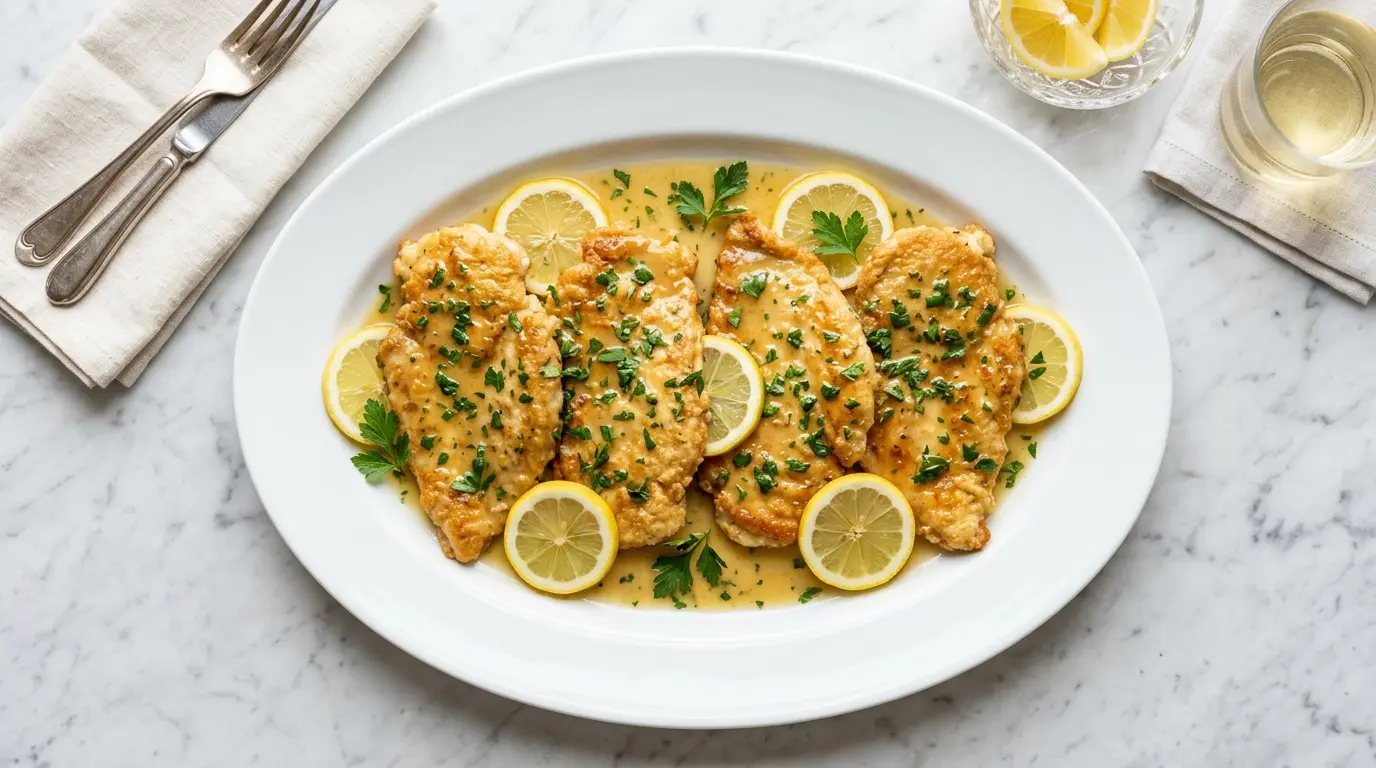
This is the dish that turns a plain chicken breast into something elegant, flavorful, and deeply satisfying. Thin cutlets dredged in seasoned flour, dipped in a light egg batter, pan-fried until golden, and then finished in a silky lemon butter white wine sauce — every component earns its place.
Chicken Francese (also spelled Chicken Française or called “Chicken French” in parts of upstate New York) is an Italian-American classic with roots in the Rochester, New York area. Unlike its cousin Chicken Piccata, which uses capers and goes heavy on the briny flavors, Francese is all about that delicate egg-coated crust and the bright, buttery lemon sauce that soaks right into it.
What makes this dish so craveable is the balance. The egg coating creates a light, almost crepe-like crust that’s tender rather than crunchy. The sauce is tart without being sharp, rich without being heavy.
The whole thing comes together in about 30 to 35 minutes, which means it’s genuinely doable on a weeknight — but it looks and tastes impressive enough for company.
Once you make this at home, you’ll see just why Chicken Francese has been a staple on Italian-American menus for decades. This Classic Chicken Parmesan is another Italian-American favorite worth bookmarking once you’ve mastered this one.

Why You’ll Love This Chicken Francese Recipe
This dish punches well above its weight when it comes to the flavor-to-effort ratio.
You only need about 30 minutes and a handful of ingredients most people already have, but the finished result genuinely tastes like a restaurant plate. The egg-battered crust is what sets Chicken Francese apart from other skillet chicken recipes.
Rather than a thick, crispy breadcrumb coating, the egg wash creates a delicate, golden layer that soaks up the lemon butter sauce beautifully without turning soggy. That texture is everything.
The sauce itself is built with dry white wine, chicken broth, fresh lemon juice, and cold butter — the combination creates an emulsified, glossy sauce with depth you can’t fake.
Here’s why this recipe is one you’ll keep coming back to:
- Quick and achievable. Everything is done in one skillet in under 35 minutes, start to finish.
- Restaurant-quality results at home. The lemon butter sauce is the real star — bright, silky, and absolutely delicious.
- No specialty ingredients needed. Everything you need is available at any grocery store.
- Versatile. Serve it over pasta, rice, or mashed potatoes — the sauce works beautifully with all of them.
- Endlessly impressive. It looks elegant enough for a dinner party but is straightforward enough for a Tuesday night.
- Kid-friendly. The lemon flavor is present but not overpowering, making it a hit with the whole family.
You might also enjoy: Chicken Marsala Recipe
Ingredients
For a dish this simple, quality matters. Use freshly squeezed lemon juice — not bottled — and a dry white wine you’d actually enjoy drinking. Pinot Grigio, Sauvignon Blanc, and Chardonnay all work beautifully here.
Here’s everything you’ll need to make this Chicken Francese recipe (serves 4):
- 2 large boneless, skinless chicken breasts (about 1.5 lbs / 680g total), halved horizontally to create 4 thin cutlets
- 1/2 cup (60g) all-purpose flour, divided
- 1 tsp kosher salt, plus more for seasoning
- 1/2 tsp black pepper, plus more for seasoning
- 3 large eggs
- 2 tbsp whole milk
- 3 tbsp (45ml) extra virgin olive oil
- 2 tbsp (30g) unsalted butter, for frying
- 1 medium shallot, finely minced
- 3 cloves garlic, finely minced
- 1/2 cup (120ml) dry white wine (Pinot Grigio or Sauvignon Blanc recommended)
- 3/4 cup (180ml) low-sodium chicken broth
- 3 tbsp (45ml) freshly squeezed lemon juice (about 1.5 lemons)
- 3 tbsp (45g) cold unsalted butter, cubed (for the sauce)
- 1 lemon, thinly sliced into rounds (for garnish and sauce simmering)
- 2 tbsp fresh flat-leaf parsley, finely chopped (for garnish)
This recipe makes perfect use of the Copycat CPK Chicken Piccata technique if you’re interested in exploring that close cousin next.
Kitchen Equipment Needed
You don’t need anything fancy for this recipe — just a few reliable kitchen tools that make the process smooth and efficient.
- Large stainless steel or nonstick skillet (12-inch / 30cm recommended)
- Meat mallet or rolling pin, for pounding chicken cutlets
- 2 shallow bowls or pie dishes, for dredging
- Whisk
- Tongs, for flipping chicken
- Paper towels
- Cutting board and sharp knife
- Citrus juicer or reamer
- Measuring cups and spoons
Read Also: Chicken Cacciatore Recipe
Recommended Products for This Recipe
These are products I genuinely recommend based on quality and performance for making the best possible Chicken Francese at home.
1. Lodge Cast Iron Skillet (12-Inch)
A well-seasoned cast iron skillet delivers even, consistent heat that’s perfect for getting that golden crust on the chicken without burning the butter. It also transitions seamlessly from stovetop to oven if you need to keep things warm. It’s a workhorse piece of cookware that will serve you for years.
2. OXO Good Grips Meat Tenderizer / Mallet
Pounding the chicken to an even thickness is one of the most important steps in this recipe — it ensures even cooking and helps the egg coating adhere properly. A quality mallet with a flat face makes this step quick and precise. A flat mallet (rather than a textured one) keeps the chicken surface smooth, which is exactly what you want for Francese.
3. Microplane Premium Zester / Grater
For adding a touch of lemon zest to the sauce or plating, a good Microplane makes it effortless. You get fine, fragrant zest without any of the bitter white pith. It’s also great for zesting directly over the finished dish for an extra pop of lemon aroma.
4. Pinot Grigio or Sauvignon Blanc (Dry White Wine)
Using a wine you’d actually drink makes a noticeable difference in the sauce. Avoid “cooking wine,” which is loaded with sodium and delivers an off flavor. A crisp, dry white wine brings the proper acidity and fruity undertone that makes the sauce sing.
5. Zwilling Pro Chef’s Knife
A sharp chef’s knife makes slicing chicken breasts in half horizontally fast and safe. Dull knives are a liability when trying to butterfly delicate chicken cutlets. A reliable 8-inch chef’s knife handles everything from mincing shallots and garlic to slicing lemon rounds cleanly.
Another favorite: Lemon Chicken Recipe

Step-by-Step Instructions
Step 1: Prepare the Chicken Cutlets
- Place one chicken breast flat on a cutting board. Hold it steady with your palm on top.
- Using a sharp knife, slice it horizontally through the middle, starting at the thick end and working toward the thin end, to create two even cutlets. Repeat with the second breast, giving you 4 cutlets total.
- Place each cutlet between two sheets of plastic wrap or inside a zip-lock bag.
- Using the flat side of a meat mallet or a rolling pin, gently pound each cutlet to an even thickness of about 1/4 inch (6mm). You’re not trying to thin them drastically — just even them out so they cook at the same rate.
- Season both sides of each cutlet lightly with kosher salt and black pepper. Set aside on a clean plate.
Step 2: Set Up the Dredging Station
- In a shallow bowl or pie dish, combine 6 tablespoons (about 45g) of the all-purpose flour with 1 teaspoon kosher salt and 1/2 teaspoon black pepper. Whisk together to distribute the seasoning evenly.
- In a second shallow bowl, crack the 3 eggs and add 2 tablespoons of whole milk. Whisk vigorously until the yolks, whites, and milk are completely combined and no streaks remain. The milk lightens the egg wash slightly and helps it adhere without getting too thick.
- Keep the remaining 2 tablespoons of flour aside — you’ll use this to thicken the sauce later.
- Line a clean plate with paper towels and keep it nearby for the fried chicken.
Step 3: Dredge the Chicken
- Working one cutlet at a time, place it in the seasoned flour and coat both sides, pressing gently to help it adhere.
- Shake off any excess flour by holding the cutlet and giving it a gentle tap. Too much flour will create a pasty coating rather than a light crust.
- Immediately transfer the floured cutlet into the egg wash and coat both sides, letting any excess egg drip off before placing the cutlet on a clean plate or rack.
- Repeat with all 4 cutlets. Work in batches if needed — you want to keep the dredging consistent so all the cutlets hit the pan at the same level of readiness.
Step 4: Pan-Fry the Chicken
- Add 3 tablespoons of olive oil and 2 tablespoons of unsalted butter to your large skillet over medium-high heat.
- Wait until the butter is fully melted and the foam begins to subside — this is your sign that the pan is at the right temperature. If the butter immediately turns dark brown, lower the heat slightly.
- Carefully lay 2 of the egg-coated chicken cutlets into the pan in a single layer. Do not crowd the pan — working in batches ensures proper browning rather than steaming.
- Cook for 2.5 to 3 minutes on the first side without moving the chicken. You’re looking for a deep golden-brown color on the bottom before flipping.
- Flip each cutlet using tongs and cook the second side for another 2 to 2.5 minutes, until golden brown and cooked through (internal temperature should read 165°F / 74°C).
- Transfer the cooked cutlets to the paper towel-lined plate. Repeat with the remaining 2 cutlets.
- If the butter and oil in the pan look very dark after the first batch, wipe out the pan carefully with paper towels and start fresh with new oil and butter for the second batch to prevent overly browned chicken.
Step 5: Build the Lemon Butter Sauce
- Reduce the heat to medium. If needed, add a small drizzle of olive oil to the skillet.
- Add the minced shallot to the pan and cook, stirring, for about 1 to 2 minutes until softened and translucent. Then add the minced garlic and cook for another 30 seconds until fragrant — be careful not to let it brown.
- Sprinkle the reserved 2 tablespoons of flour over the shallots and garlic. Stir and cook for 1 to 2 minutes, scraping up any browned bits from the bottom of the pan. This creates a light roux that will give your sauce body.
- Pour in the 1/2 cup of dry white wine, stirring constantly. Let it cook and reduce for 2 minutes, allowing the alcohol to cook off and the wine to concentrate slightly.
- Add the 3/4 cup of chicken broth and 3 tablespoons of freshly squeezed lemon juice. Stir everything together and bring to a gentle simmer.
- Add the sliced lemon rounds to the pan — they’ll soften slightly in the sauce and add an aromatic, visual touch.
- Allow the sauce to reduce for 3 to 5 minutes, stirring occasionally, until it thickens slightly and coats the back of a spoon. Taste and adjust salt, pepper, or lemon juice as needed.
Step 6: Finish with Butter and Return the Chicken
- Reduce the heat to low. Add the 3 tablespoons of cold cubed butter to the sauce, one cube at a time, swirling or whisking the pan as you add each piece. This technique — called “mounting” with butter — creates a velvety, glossy sauce without breaking it. Cold butter is essential here; warm butter will cause the sauce to break rather than emulsify.
- Gently return all 4 chicken cutlets to the pan in a single layer. Spoon the sauce over each piece.
- Let the chicken warm through for 2 to 3 minutes, turning once and continuing to baste with the sauce. Do not let the sauce boil at this stage or it may break.
- Remove from heat.
Step 7: Plate and Garnish
- Transfer the chicken cutlets to individual plates or a serving platter, overlapping slightly if needed.
- Spoon generous amounts of the lemon butter sauce over each piece.
- Arrange a few lemon rounds on top for presentation.
- Finish with a generous sprinkle of freshly chopped flat-leaf parsley over everything.
- Serve immediately while the sauce is hot and the crust is still light and tender.
Read Also: Chicken Skillet Recipe
Tips for Success
A few small techniques make the difference between a good Chicken Francese and a truly great one. Here are the most important ones to keep in mind:
- Even thickness is non-negotiable. Uneven cutlets cook unevenly — one end will be overcooked and dry while the other is still underdone. Take the extra minute to pound them properly.
- Pat the chicken dry before dredging. Any surface moisture will cause the flour to clump rather than form a smooth, even coating.
- Don’t skip the flour-first step. Coating in flour before the egg wash helps the egg adhere much better, creating a more cohesive crust.
- Use cold butter for the sauce. Adding cold butter to the reduced wine and broth creates emulsification and a glossy, silky texture. Softened or melted butter won’t give you the same result.
- Don’t overcrowd the pan. Frying all four cutlets at once will drop the pan temperature drastically, leading to steamed rather than golden, crisp chicken.
- Use a wine you’d actually drink. Pinot Grigio or Sauvignon Blanc both work beautifully. Avoid “cooking wine” — the added sodium throws off the balance of the sauce.
- Fresh lemon juice makes a difference. Bottled lemon juice has an off, slightly bitter flavor that really shows up in a simple sauce like this.
This technique for building a pan sauce also works wonderfully for the Copycat Ina Garten Chicken Piccata Recipe.
Serving Suggestions
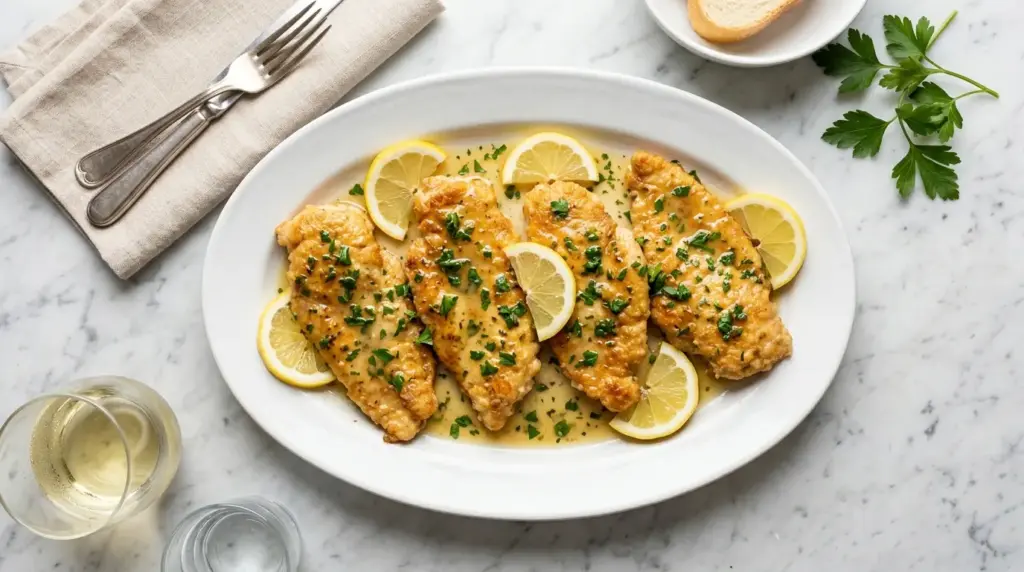
Chicken Francese is versatile and pairs well with almost anything starchy that can soak up that gorgeous lemon butter sauce.
The sauce is truly the star, so you want to serve this over or alongside something that makes the most of every drop.
Here are some of the best ways to serve it:
- Over pasta. Angel hair or spaghetti are the most traditional pairings — the delicate noodles let the sauce shine. Try it over a bowl of Baked Spaghetti with Alfredo Sauce for a more indulgent meal.
- With Creamy Mashed Potatoes. The sauce poured over fluffy mashed potatoes is absolutely heavenly.
- Alongside roasted asparagus or broccolini. The bitterness of roasted green vegetables balances the richness of the butter sauce perfectly.
- With crusty bread. A good loaf of Italian bread or garlic bread for mopping up the sauce is never a bad idea.
- Over rice or risotto. Plain white rice or a simple risotto makes a neutral base that showcases the lemon sauce beautifully.
- With a simple green salad. A lightly dressed arugula or mixed greens salad adds freshness and contrast.
- With sautéed spinach. Garlicky sautéed spinach is one of the most classic pairings for any Italian-American chicken dish.
Variations to Try
The classic version of this recipe is hard to beat, but there are a few fun ways to change things up once you’ve got the base down.
Here are some popular variations worth exploring:
- Chicken Francese with capers. Add 2 tablespoons of rinsed capers to the sauce along with the lemon juice. It brings a briny, slightly salty note that adds complexity.
- Creamy Chicken Francese. Stir 1/4 cup of heavy cream into the sauce before adding the butter for a richer, creamier version of the sauce. This variation is especially good served over pasta.
- Veal Francese. The original version of this dish before chicken became the default. Use thin veal cutlets and follow the same exact method — the cook time will be slightly shorter.
- Fish Francese. Thin tilapia or sole fillets can be prepared exactly the same way. The cook time per side is only 1.5 to 2 minutes since the fish is more delicate.
- Gluten-free Chicken Francese. Substitute the all-purpose flour with a 1:1 gluten-free flour blend. The crust will be slightly more fragile but still delicious.
- Add artichoke hearts. Drain and quarter canned artichoke hearts and add them to the sauce while simmering. This combination is particularly popular in Sicilian-American cooking.
You might also enjoy: Gluten Free Chicken Piccata Recipe
Storage and Reheating
Chicken Francese is best enjoyed fresh, but leftovers are still very good if stored and reheated properly.
The egg coating will soften over time as it absorbs the sauce, but the flavor is still wonderful the next day.
Here are the key storage and reheating guidelines:
- Refrigerator storage. Store leftover chicken and sauce together in an airtight container for up to 3 days.
- Freezing. Freezing is possible but not ideal — the egg coating becomes soft and slightly gummy after thawing. If you do freeze it, store in an airtight freezer-safe container for up to 2 months and thaw overnight in the refrigerator.
- Reheating on the stovetop. The best method. Add the chicken and sauce to a skillet over low heat with a splash of chicken broth. Cover loosely and heat for 4 to 6 minutes, turning once, until warmed through.
- Reheating in the microwave. Works in a pinch. Reheat at 50% power in 60-second intervals to prevent the chicken from drying out.
- Keep sauce and chicken together. When storing, keep the chicken submerged in the sauce — this prevents the coating from drying out and keeps everything more flavorful.
- Make-ahead tip. You can fry the chicken cutlets up to 2 hours ahead, keep them at room temperature on a rack, and make the sauce just before serving. Combine everything and simmer together briefly before plating.
Read Also: Chicken Stew Recipe
Nutritional Facts
The following nutritional estimates are based on one serving (one cutlet plus sauce), with the recipe divided into 4 servings.
| Nutrient | Per Serving |
|---|---|
| Calories | ~420 kcal |
| Protein | 34g |
| Total Fat | 22g |
| Saturated Fat | 9g |
| Carbohydrates | 14g |
| Fiber | 1g |
| Sugar | 1g |
| Sodium | ~680mg |
| Cholesterol | 210mg |
| Vitamin C | ~18mg |
| Calcium | ~45mg |
| Iron | ~2mg |
Note: These are estimates and may vary based on exact ingredient quantities, chicken size, and specific brands used. Use a nutrition calculator with exact ingredient weights for precise tracking.
This recipe is naturally high in lean protein and moderate in fat, making it a well-balanced dinner option. For a lower-fat variation, reduce the butter in the sauce by half and substitute with a bit of extra chicken broth.
For another Italian-American chicken dish with a similar nutritional profile, the Creamy Chicken Piccata Recipe is worth a look.
Health Benefits of Key Ingredients
This recipe isn’t just delicious — several of its core ingredients bring genuine nutritional benefits to the table.
Here’s a look at what makes Chicken Francese more than just comfort food:
- Chicken breast is one of the leanest sources of high-quality complete protein available. A single serving provides around 25 to 34 grams of protein, supporting muscle repair, immune function, and satiety.
- Lemon juice is rich in vitamin C, a potent antioxidant that supports immune health, collagen production, and iron absorption. Fresh lemon juice also contains flavonoids linked to heart health and anti-inflammatory effects.
- Garlic contains allicin, a sulfur compound with well-documented antimicrobial and anti-inflammatory properties. Regular garlic consumption has been associated with improved cardiovascular markers in multiple studies.
- Shallots are a great source of quercetin, an antioxidant flavonoid that may help reduce inflammation and support heart health. They also provide small amounts of folate, iron, and vitamin B6.
- Olive oil is central to the Mediterranean diet and provides monounsaturated fats — particularly oleic acid — that support heart health and reduce LDL cholesterol. It also contains antioxidants like polyphenols.
- Eggs are nutritionally dense, providing high-quality protein, choline (essential for brain function), and fat-soluble vitamins including D, E, and K2 in the yolks.
- Dry white wine (used in the sauce) is consumed in small quantities per serving. In moderation, it adds antioxidants and depth of flavor without significant caloric impact.
The same bright, lemon-forward flavors appear in the Lemon Chicken Orzo Soup Recipe, which is another great way to enjoy lemon and chicken together.
Frequently Asked Questions
1. What is the difference between Chicken Francese and Chicken Piccata?
Both dishes feature pan-fried chicken cutlets in a lemon butter sauce, but there are key differences in both the coating and the sauce. Chicken Francese uses an egg-and-flour dredge (egg-first or flour-then-egg, depending on the source), which creates a soft, crepe-like coating rather than a crispy crust.
Chicken Piccata uses only a flour dredge, no egg, and the sauce almost always includes capers and uses significantly more lemon juice. Francese is generally richer and silkier, while Piccata is sharper and more briny.
2. Can I make Chicken Francese without wine?
Yes, you can substitute the white wine with additional chicken broth plus a tablespoon of white wine vinegar or apple cider vinegar for a similar tangy note. The sauce will be slightly less complex in flavor, but still very good.
Some versions also use a splash of dry vermouth as a substitute, which actually works beautifully.
3. Why is my sauce not thickening?
A thin sauce is usually a result of not reducing long enough or not using enough flour in the roux step. Make sure you let the sauce reduce by about half before adding the cold butter.
If it’s still too thin after adding butter, you can mix a teaspoon of flour with a teaspoon of softened butter and whisk that paste into the simmering sauce. Alternatively, allow the sauce to reduce for a few additional minutes over medium heat.
4. Can I use chicken thighs instead of chicken breasts?
Boneless, skinless chicken thighs can work for this recipe, but they require a bit more preparation. They’ll need to be pounded to an even thickness just like the breasts — and they have slightly more connective tissue, so they benefit from a few extra minutes in the sauce during the finishing step.
The flavor is actually excellent with thighs since the extra fat keeps the meat very moist.
5. How do I prevent the egg coating from falling off during cooking?
The most common reason the coating falls off is a pan that’s not hot enough when the chicken is added. If the pan isn’t sufficiently preheated, the egg batter will stick to the surface rather than immediately setting up.
Make sure the butter and oil are hot and shimmering before adding the chicken, and resist the urge to move the cutlets during the first 2 minutes of cooking. Letting them release naturally prevents tearing.
Read Also: Chicken Noodle Soup Recipe

Chicken Francese

Equipment
- Large stainless steel or nonstick skillet - 12-inch / 30cm recommended
- Meat mallet or rolling pin - for pounding chicken cutlets
- Shallow bowls or pie dishes - 2, for dredging
- Whisk
- Tongs - for flipping chicken
- Paper towels
- Cutting board
- Sharp knife - for slicing chicken and mincing
- Citrus juicer or reamer - optional but recommended
- Measuring cups and spoons
Ingredients
- 2 large boneless, skinless chicken breasts - about 1.5 lbs / 680g total, halved horizontally
- 0.5 cup all-purpose flour - 60g, divided
- 1 tsp kosher salt - plus more for seasoning
- 0.5 tsp black pepper - plus more for seasoning
- 3 large eggs
- 2 tbsp whole milk
- 3 tbsp extra virgin olive oil - 45ml
- 2 tbsp unsalted butter - 30g, for frying
- 1 medium shallot - finely minced
- 3 cloves garlic - finely minced
- 0.5 cup dry white wine - 120ml, Pinot Grigio or Sauvignon Blanc recommended
- 0.75 cup low-sodium chicken broth - 180ml
- 3 tbsp freshly squeezed lemon juice - 45ml, about 1.5 lemons
- 3 tbsp cold unsalted butter - 45g, cubed, for the sauce
- 1 lemon - thinly sliced into rounds, for garnish and sauce simmering
- 2 tbsp fresh flat-leaf parsley - finely chopped, for garnish
Instructions
- Slice chicken breasts horizontally to create 4 thin cutlets. Pound each cutlet between plastic wrap to an even 1/4-inch thickness. Season both sides with salt and pepper.
- In a shallow bowl, combine 6 tablespoons flour with salt and pepper. In another bowl, whisk eggs with milk until smooth. Coat each cutlet in flour, shake off excess, then dip in egg wash.
- Heat olive oil and 2 tablespoons butter in a large skillet over medium-high heat. Fry cutlets in batches for 2.5-3 minutes per side until golden brown and cooked through. Transfer to a paper towel-lined plate.
- Reduce heat to medium. Cook shallot until softened (1-2 minutes), then add garlic for 30 seconds. Sprinkle with reserved 2 tablespoons flour, cook 1-2 minutes, scraping up browned bits.
- Pour in wine, stir and reduce for 2 minutes. Add broth and lemon juice, bring to a gentle simmer. Add lemon slices and cook 3-5 minutes until sauce thickens slightly.
- Reduce heat to low. Whisk in cold butter cubes one at a time until melted and glossy. Return chicken to pan, spoon sauce over, and warm through 2-3 minutes without boiling.
- Transfer chicken to plates, spoon generous sauce over each piece, garnish with lemon rounds and fresh parsley. Serve immediately.
Notes
- Even thickness is crucial: Pound cutlets to an even 1/4-inch thickness to ensure they cook evenly and the coating adheres properly.
- Use cold butter for the sauce: Adding cold butter to the reduced sauce creates emulsification and a silky, glossy texture. Warm butter will cause the sauce to break.
- Don’t skip the flour-first step: Coating the chicken in seasoned flour before the egg wash helps the batter adhere much better, creating a more cohesive crust.
- Avoid overcrowding: Fry the cutlets in batches. Overcrowding drops the pan temperature and leads to steamed, soggy chicken instead of golden brown.
- Use a wine you’d drink: Pinot Grigio or Sauvignon Blanc work beautifully. Avoid “cooking wine” which has added sodium that throws off the sauce’s balance.
- Fresh lemon juice only: Bottled lemon juice has an off, slightly bitter flavor that really shows up in this simple sauce.
- Storage tip: Store leftovers in an airtight container for up to 3 days. The coating will soften but the flavor remains wonderful.
- Reheat gently: Warm leftovers in a skillet over low heat with a splash of chicken broth for 4-6 minutes. Cover loosely and turn once.
- Make-ahead option: Fry the chicken up to 2 hours ahead and keep at room temperature on a rack. Make the sauce just before serving and combine briefly.
- Serve over pasta or with mashed potatoes: The sauce is the star, so serve over angel hair, spaghetti, or creamy mashed potatoes to soak up every drop.
Final Thoughts
Chicken Francese is one of those recipes that feels special every single time you make it, even when it becomes part of your regular rotation.
The combination of that delicate egg-battered crust and the glossy, bright lemon butter sauce is just genuinely timeless. It’s the kind of dish that makes people ask for the recipe at the table.
If you’ve been intimidated by it before, don’t be. With a few simple techniques — even thickness, proper pan temperature, and cold butter for the sauce — it comes together with minimal effort and maximum reward.
Give this Chicken Francese recipe a try this week and see for yourself why it’s been a beloved Italian-American classic for generations.
If you make it, leave a comment below and let me know how it turned out. And if you have your own favorite tips or variations, I’d love to hear them — share this post with a fellow food lover who needs this recipe in their life!
Recommended:
- Classic Chicken Parmesan Recipe
- Chicken Marsala Recipe
- Authentic Italian Chicken Piccata Recipe
- White Wine Chicken Piccata Recipe
- Chicken Cacciatore Recipe
- Easy Fried Chicken Recipe
- Baked Chicken with Alfredo Sauce Recipe
- Garlic Mashed Potatoes Recipe
- Roasted Broccoli Recipe
- Cheesy Garlic Bread Recipe